
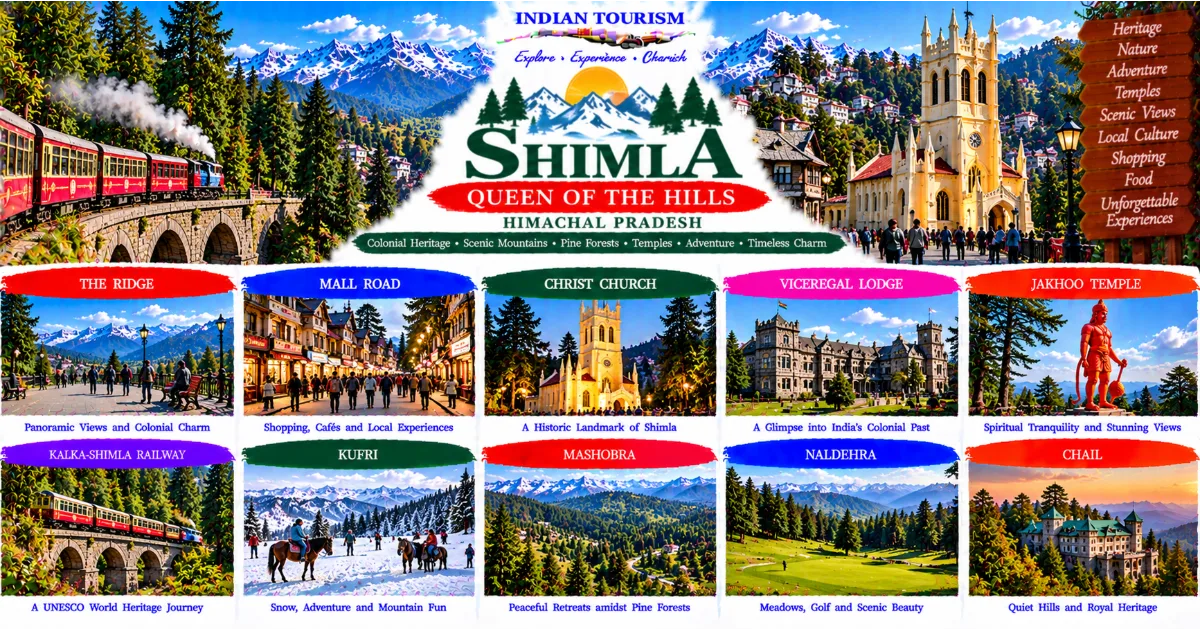
Discovering the Queen of the Hills
Shimla, the capital of Himachal Pradesh, is one of India's most recognisable mountain destinations. Set among the forested ridges of the lower Himalayas, the city combines colonial-era architecture, lively pedestrian streets, historic railway heritage, mountain viewpoints and a cultural atmosphere shaped by generations of visitors and residents. For some travellers, Shimla is a place to escape the heat of the plains and enjoy cool mountain air. For others, it is a destination for romantic holidays, family sightseeing, architectural exploration, shopping, photography and journeys into the surrounding hills. Its appeal comes from the way history and modern mountain life exist side by side, allowing visitors to experience both the legacy of the past and the everyday rhythm of a busy Himalayan city.
Shimla's history as a major hill station developed during British rule, when its elevation and comparatively cool climate made it an attractive retreat from the summer heat of northern India. The town eventually became the summer capital of British India, bringing government officials, military personnel, merchants, architects and service workers into the region. Roads, churches, institutional buildings and public spaces gradually transformed the settlement into an important administrative and social centre. The architectural character of historic Shimla still reflects this period, although the city has also developed into a modern state capital with schools, universities, offices, markets and residential neighbourhoods.
The city is often described as the Queen of the Hills, a name associated with its elevated position, mountain scenery and historic reputation as a fashionable hill station. Yet Shimla is more than a picturesque destination. It is a living city where residents manage daily life on steep slopes, where public spaces become gathering points, and where tourism supports many local businesses. Understanding this balance makes a visit more rewarding. Travellers can admire the scenery while also appreciating the challenges of transport, water supply, construction and waste management in a densely populated mountain environment.
Shimla also works as a starting point for exploring the wider region. Kufri, Mashobra, Naldehra, Chail and other destinations offer different landscapes and experiences within reach of the city. Some are known for forest walks and golf, others for mountain views, heritage buildings or quieter surroundings. However, the best itinerary depends on the season, the time available and the travel experience a visitor wants. A short holiday can focus on the historic centre, while a longer trip can combine Shimla with nearby villages, orchards and forested areas.
This guide explores Shimla's history, principal attractions, surrounding destinations, cultural experiences, cuisine, seasonal travel, accommodation, transport and practical planning. It is intended to help visitors understand not only where to go, but also how to make the most of their time in this historic Himalayan city.
The History of Shimla: From Mountain Settlement to Summer Capital
Shimla's transformation into a major hill station took place during the nineteenth century. Before it became an important British administrative centre, the surrounding hills were inhabited by local communities and formed part of a wider region of small settlements, agricultural land and princely territories. The town's elevation and climate gradually attracted British officials seeking relief from the heat of the plains, and its importance increased as administrative functions expanded.
During the nineteenth century, Shimla became associated with the seasonal movement of British Indian administration. The town offered a cooler setting for government offices and social life during the summer months. Officials, diplomats and other members of the colonial establishment spent extended periods there, encouraging the construction of residences, offices, churches, clubs and public buildings. The resulting architecture reflected British preferences while adapting to the steep terrain and mountain climate.
The Viceregal Lodge, now home to the Indian Institute of Advanced Study, is among the most significant reminders of Shimla's administrative past. Its imposing structure and landscaped surroundings reflect the political importance the town once held. Other historic buildings and churches contribute to an architectural landscape that distinguishes Shimla from many newer hill stations.
The town's colonial history is also connected to important events in modern South Asian history. The Simla Conference of 1945, for example, was part of the political negotiations concerning India's constitutional future. In 1947, the end of British rule transformed the political setting in which Shimla had developed. After independence, the town continued to serve as an important administrative and educational centre. Following the formation of Himachal Pradesh as a full state in 1971, Shimla became its capital.
Today, the historic centre reflects multiple layers of history. Colonial buildings stand alongside Indian institutions, shops, hotels and residential structures. The city is therefore best understood as a place whose identity has changed over time rather than as a preserved colonial museum. Exploring its streets offers insight into the relationship between mountain geography, political history and urban development.
The Ridge: Shimla's Most Recognisable Public Space
The Ridge is one of Shimla's most famous attractions and a central gathering place for residents and visitors. Located above the main commercial streets, it offers open space, mountain views and access to several important landmarks. Its broad pedestrian area provides a welcome contrast to the narrow roads and steep lanes found throughout much of the city.
Visitors often begin their exploration of central Shimla at the Ridge because it provides a convenient point from which to discover nearby attractions. On clear days, the surrounding hills form a beautiful backdrop, and the changing light can create excellent opportunities for photography. During festive periods, the area becomes a centre for public celebrations, cultural events and seasonal decorations.
The Ridge also serves a practical role in city life. People meet friends, take evening walks, enjoy the mountain air and gather during public events. Travellers who spend time observing the space can gain a sense of Shimla's social character beyond its tourist attractions. The area is particularly pleasant in the early morning and later in the afternoon, when visitors can enjoy a slower pace before or after exploring the busier streets.
The open setting can make the Ridge feel spacious, but it becomes crowded during school holidays, weekends and major festivals. Visitors should be prepared for pedestrian traffic and should take care when photographing other people. Keeping public areas clean and respecting the needs of local residents helps preserve the experience for everyone.
A visit to the Ridge is most rewarding when combined with a walk through the historic centre rather than treated as an isolated photo stop. Its position makes it a natural starting point for discovering Shimla's churches, shopping streets, viewpoints and architectural heritage.
Mall Road: Shopping, Cafés and the Everyday Life of Shimla
Mall Road is one of Shimla's principal pedestrian-oriented commercial areas and an essential part of the city's visitor experience. Its shops, cafés, restaurants, bookshops and historic façades create an atmosphere that encourages walking and unhurried exploration. Unlike a destination where attractions are separated by long drives, much of central Shimla can be experienced on foot, although the steep slopes and changes in elevation require a reasonable level of mobility.
The road is popular with families, couples, students and visitors who enjoy browsing local products. Shops sell woollen clothing, souvenirs, handicrafts, snacks and other goods suited to mountain holidays. Travellers can also find cafés and restaurants offering Indian meals, bakery items and refreshments. The experience is not limited to shopping. Sitting in a café and watching the movement of people can be a pleasant way to appreciate the city's atmosphere.
Mall Road becomes particularly lively during the peak summer holiday period and winter celebrations. The crowds can create a festive mood, but they may also make walking slower. Visitors who prefer a quieter experience should consider exploring earlier in the day or travelling outside major holiday periods.
Shopping can be an opportunity to support local businesses, but travellers should compare quality and prices before making purchases. Traditional crafts, locally produced food items and practical woollen garments can be useful souvenirs. Visitors should ask about the origin of products when authenticity matters, particularly if they are interested in handmade goods.
Because the area is designed around pedestrian movement, visitors should follow local restrictions and use designated transport points. Walking comfortably requires sensible footwear, especially when moving between Mall Road, the Ridge and lower parts of the city. The slopes may seem manageable at first, but repeated climbs can be tiring for visitors who are not accustomed to mountain terrain.
Christ Church: A Landmark of Shimla's Architectural Heritage
Christ Church stands prominently near the Ridge and is one of Shimla's best-known historic buildings. Its location, architectural style and long association with the town make it an important stop for visitors interested in history and heritage. The church is especially recognisable for its tower and its position against the surrounding mountain landscape.
Constructed during the nineteenth century, Christ Church reflects the influence of British religious architecture in the hill station. Its design contributes to the historic character of central Shimla and provides a visual reminder of the institutions that developed during the colonial period. The church has remained an important landmark even as the town has expanded into a modern capital.
Visitors interested in architecture should take time to observe the building's exterior details and its relationship to the surrounding public spaces. Its position near the Ridge means that it can be included naturally in a walking tour of the historic centre. The changing weather and light can create different photographic impressions, particularly when mist moves across the hills.
Christ Church is also a place of worship. Visitors should therefore maintain respectful behaviour, avoid disturbing services and follow any restrictions on photography or access. Religious buildings are not simply decorative elements in a tourist landscape. They continue to serve communities and retain meaning for people who visit for spiritual reasons.
The church can be explored alongside nearby heritage buildings, the Ridge and Mall Road, making it a convenient part of a half-day sightseeing itinerary. Its historical importance is best appreciated when considered within the wider story of Shimla's development as a hill station.
The Viceregal Lodge: Understanding Shimla's Political Past
The Viceregal Lodge, situated on Observatory Hill, is among the most historically significant buildings in Shimla. It was constructed during the colonial period as a residence for the Viceroy of India and became a centre for high-level administration and political meetings. Today, it houses the Indian Institute of Advanced Study, an institution devoted to advanced scholarship and research.
The building's architecture reflects the grandeur associated with British imperial administration. Its stone exterior, formal design and landscaped grounds create a strong visual impression. The location also offers a sense of how the colonial establishment selected elevated sites for prominent institutional buildings, combining views, space and relative separation from the busiest commercial areas.
The lodge is especially important for visitors interested in modern Indian history. Shimla was not merely a seasonal retreat. It was a place where important political discussions and administrative decisions took place. The building's association with significant events helps explain why the town occupies an important position in the historical narrative of colonial India and the transition to independence.
Access arrangements, guided visits and opening conditions can vary, so travellers should check current visitor information before planning their visit. Because the building is used by an academic institution, visitors should follow the applicable rules and respect areas that may be restricted.
The grounds and architectural setting can be appreciated even by visitors who are not specialists in history. For those who enjoy heritage tourism, however, the experience becomes richer when combined with an understanding of the building's role in the political history of the subcontinent.
Gaiety Theatre: Culture and Performance in the Hills
Gaiety Theatre is an important cultural landmark in Shimla and forms part of the town's historic architectural heritage. Located in the central area, it has a long association with theatre, performance and the social life of the hill station. Its presence demonstrates that Shimla's historical identity was shaped not only by government administration but also by entertainment, literature and artistic activity.
The theatre was established during the colonial era and became a venue for performances and social gatherings. Its architecture reflects the cultural institutions that developed alongside the town's official buildings and residences. Over time, it has continued to attract interest from visitors who want to learn about Shimla's artistic heritage.
Depending on current arrangements, visitors may be able to explore parts of the complex, learn about its history or attend cultural events. Travellers should verify the schedule and access rules before visiting, as performance programmes and visitor facilities can change.
Theatre and cultural venues add depth to a holiday that might otherwise focus entirely on scenery and shopping. A performance, exhibition or guided visit can help visitors understand how the town's cultural life has evolved. Those interested in architecture can also compare Gaiety Theatre with the churches, administrative buildings and commercial structures found elsewhere in central Shimla.
Including cultural landmarks in an itinerary makes the trip more balanced. It provides a reminder that the city has been a place of ideas, public gatherings and artistic exchange as well as a destination for mountain holidays.
The Kalka-Shimla Railway: A Historic Journey Through the Mountains
The Kalka-Shimla Railway is one of the most celebrated parts of Shimla's tourism heritage. This narrow-gauge railway connects Kalka in the foothills with Shimla through a route characterised by steep gradients, tunnels, bridges and mountain scenery. It is recognised as part of the UNESCO-listed Mountain Railways of India, making it an important attraction for railway enthusiasts, heritage travellers and visitors who enjoy scenic journeys.
The railway was developed to connect Shimla more effectively with the plains and played an important role in the growth of the hill station. Its construction required engineering solutions suited to challenging terrain. The route passes through numerous tunnels and over bridges that follow the contours of the mountains, offering passengers changing views of forests, settlements and valleys.
For travellers, the journey is an experience in its own right. The slower pace allows passengers to observe the landscape rather than simply pass through it at road speed. Small stations, curves and tunnels create a sense of travelling through the history of mountain transport. The railway also provides an alternative to reaching Shimla entirely by road, although the most suitable option depends on the starting point, schedule and availability of tickets.
Demand can be high during popular travel seasons and holidays. Travellers should check current train schedules, seat availability and operating conditions before making plans. Weather or operational issues can occasionally affect services, so it is wise to avoid arranging an extremely tight onward connection.
The Kalka-Shimla Railway demonstrates how transport infrastructure can become part of a destination's cultural identity. Its value is not limited to reaching Shimla. It offers a memorable way to experience the mountains and understand the engineering history of the Himalayan region.
Jakhoo Temple: A Sacred Viewpoint Above Shimla
Jakhoo Temple is one of Shimla's most important religious attractions and occupies a high point above the main town. Dedicated to Lord Hanuman, the temple is associated with religious traditions that draw devotees as well as travellers interested in its elevated setting and panoramic views.
The approach involves an uphill journey, and visitors should consider their fitness, footwear and weather conditions before setting out on foot. Some travellers use available transport options to reach the area, while others enjoy the walk as part of a broader exploration of Shimla's forested slopes. The route can be steep in places, and care is required in wet or icy weather.
The temple's location provides views over the town and the surrounding mountains when visibility is good. Its elevated setting also gives visitors a different perspective on Shimla's geography. From above, the compact historic centre and the spread of residential areas across the ridges become easier to understand.
As with any religious destination, respectful behaviour is essential. Visitors should follow local instructions, avoid disturbing worshippers and take care around animals in the area. Monkeys may be present near the temple, and feeding or teasing wildlife is not advisable. Food and personal belongings should be kept secure.
Jakhoo Temple can be combined with other central Shimla attractions, but the time needed depends on the chosen transport and the pace of the visit. Travellers who want to appreciate the site properly should allow time for the ascent or transfer, the temple visit and the return journey rather than attempting to fit it into an overly crowded schedule.
Kufri: Mountain Views and Seasonal Outdoor Activities
Kufri is a popular excursion destination located near Shimla and is particularly associated with mountain scenery, seasonal snow and outdoor recreation. Its proximity to the city makes it a common addition to short holidays, especially for visitors who want to experience a more open landscape beyond the busy central streets.
During warmer months, the surrounding hills and forested areas provide opportunities for sightseeing and enjoying the fresh air. In winter, snow may transform parts of the landscape, attracting visitors interested in snow play and seasonal activities. However, snowfall is weather-dependent, and travellers should not assume that snow will be present on a specific date.
Kufri's popularity means that some areas can become crowded, especially during school holidays and periods of snowfall. Commercial activities may be available, but visitors should understand the costs, safety requirements and suitability of each option before participating. For activities involving animals, travellers should pay attention to animal welfare and avoid experiences that appear to involve poor treatment or unsafe conditions.
The journey to Kufri can offer scenic views, but road conditions and traffic may affect travel time. During winter weather, icy roads and snowfall can create additional risks. Travellers should confirm current conditions and use appropriate transport arrangements rather than relying on assumptions based on the season alone.
Kufri is most rewarding when treated as a flexible excursion rather than a destination that must deliver a specific weather experience. The mountains, forests and open viewpoints remain attractive even when snow is absent, and a visit can be combined with other nearby destinations if time permits.
Mashobra: Forests, Quiet Walks and a Slower Mountain Experience
Mashobra offers a quieter alternative to the busy central areas of Shimla. Surrounded by forested slopes and mountain scenery, it attracts travellers who prefer a slower pace, nature-oriented accommodation and opportunities to spend time away from crowded commercial streets.
The area's forests include conifers and other Himalayan vegetation, creating a landscape suited to walks, photography and relaxation. Depending on the season and local conditions, visitors may encounter misty mornings, fresh spring growth, autumn colours or cold winter air. The appeal lies in the atmosphere rather than in a long list of major attractions.
Mashobra can suit couples seeking a peaceful break, families looking for a quieter setting and visitors interested in spending more time in one place. Accommodation ranges from established properties to smaller stays, and the choice should reflect access, budget and personal preferences. Some properties are located along winding roads, so travellers should confirm transport arrangements if they do not have their own vehicle.
Visitors should remain on permitted paths, avoid littering and respect private land. Forest environments are valuable habitats, and casual exploration should not involve disturbing wildlife or damaging vegetation. If a walk enters a more remote area, travellers should check the route, weather and daylight hours before setting out.
Mashobra is particularly suitable for people who want to combine a visit to Shimla's historic centre with a quieter stay in the surrounding hills. Spending a night or two in the area can create a more balanced holiday, allowing time for both sightseeing and rest.
Naldehra: Meadows, Deodar Forests and Golf Heritage
Naldehra is known for its scenic surroundings, forested slopes and golf heritage. Located beyond Shimla's central area, it offers a different atmosphere from the busy shopping streets and historic landmarks of the city. Visitors often come for the open landscapes, walks and opportunity to enjoy a quieter day in the mountains.
The area is associated with a historic golf course set among deodar trees and rolling terrain. The natural setting gives the course a distinctive character, with the forest and mountain landscape forming an important part of the experience. Access to golf facilities depends on the applicable arrangements, and visitors should confirm whether playing or other forms of access are available during their visit.
Even for travellers who are not interested in golf, Naldehra can be appealing because of its natural environment. The surrounding forested areas provide opportunities for walks and photography, while the cooler climate makes it attractive during warmer periods. Conditions change seasonally, so visitors should bring suitable clothing and check local weather forecasts.
Naldehra can be included in a day trip from Shimla or as part of a longer stay in the surrounding countryside. Because mountain roads can be winding, it is sensible to avoid packing too many distant stops into a single day. A relaxed visit allows travellers to enjoy the setting rather than rushing between viewpoints.
The destination is a good example of the variety available around Shimla. While the city offers architecture, shopping and public spaces, nearby areas such as Naldehra provide opportunities to experience forests and open landscapes within a relatively short journey.
Chail: Forested Hills and a Distinctive Heritage
Chail is another popular excursion destination in the wider Shimla region. Known for its forested setting, mountain views and association with the former princely state of Patiala, it offers a quieter atmosphere than Shimla's busiest commercial areas.
The town's heritage is connected with Maharaja Bhupinder Singh of Patiala, who developed Chail as a retreat in the late nineteenth century. The area is associated with the Chail Palace, whose architecture and grounds contribute to its historical character. The property has become one of the region's best-known landmarks and attracts visitors interested in heritage buildings and mountain scenery.
Chail is also known for a cricket ground situated at a high elevation. The ground is part of the area's distinctive identity, although access and activities should be confirmed before a visit. The surrounding forests and winding roads provide opportunities for scenic drives and relaxed exploration.
Compared with the busy centre of Shimla, Chail may appeal to travellers seeking a less crowded environment. However, its popularity can increase during holiday periods, and accommodation availability may be limited at certain times. Visitors planning an overnight stay should compare location, facilities and transport arrangements in advance.
The journey to Chail is part of the experience, but mountain travel requires patience. Travellers should allow sufficient time, avoid unsafe driving and check weather conditions before departure. A visit can be combined with other destinations in the region if the itinerary is planned realistically.
Annandale: Open Space and the Changing Landscape of Shimla
Annandale is a broad open area within Shimla that has long been associated with recreation and public use. Its relatively level terrain contrasts with the steep ridges and narrow streets that define much of the city. Historically, the area was used for outdoor activities and gatherings, and it remains an interesting part of Shimla's wider landscape.
The area is associated with sports and recreational facilities, including a golf course and other institutional uses. Its setting provides an alternative perspective on the city, showing how open spaces have been incorporated into a mountainous urban environment.
Visitor access to particular facilities may depend on current rules, institutional arrangements and activities taking place. Travellers should check local guidance before planning a specific activity rather than assuming that every part of the area is freely accessible.
Annandale can be included by visitors interested in Shimla's varied history and recreational spaces. It may be particularly appealing to those who have already explored the Ridge, Mall Road and the main heritage landmarks and want to understand more of the city's geography.
The area also highlights the importance of protecting open spaces in mountain cities. As settlements expand and land becomes increasingly valuable, recreational grounds and green areas contribute to residents' quality of life as well as to the experience of visitors.
Summer in Shimla: A Refreshing Escape from the Plains
Summer is one of the busiest seasons for Shimla tourism. As temperatures rise across many parts of northern India, travellers arrive in the hills to enjoy cooler air, scenic walks and a change of atmosphere. The period from May through June is especially popular among families and people travelling during school holidays.
During this season, the Ridge, Mall Road and nearby attractions become lively. Outdoor cafés, shops and public spaces see increased activity, while day trips to Kufri, Mashobra and Naldehra attract visitors who want to explore the surrounding landscape. The weather can be pleasant for walking, although sunny afternoons can still feel warm and mountain conditions can change.
The main challenge of summer travel is crowding. Accommodation prices may rise, roads can become congested and popular viewpoints may be busy. Visitors can improve their experience by booking accommodation in advance, starting sightseeing early and keeping their itinerary flexible.
Summer is a suitable time for exploring Shimla's historic centre and nearby forested areas, but it is not necessary to visit every attraction in one day. A balanced schedule that combines sightseeing with breaks will be more comfortable, especially for families travelling with children or older adults.
Travellers should also remember that the city's popularity places pressure on infrastructure. Responsible water use, proper waste disposal and consideration for local residents are especially important during periods of high visitor numbers.
Monsoon in Shimla: Green Hills and Weather Awareness
The monsoon season brings rain to the Shimla region and transforms the surrounding landscape into a greener environment. Forests appear fresh, vegetation grows vigorously and clouds move across the hills, creating atmospheric scenery that can appeal to photographers and travellers who enjoy quieter periods.
However, the monsoon also presents challenges. Heavy rainfall can cause landslides, falling rocks, road closures and disruptions to transport. Walking paths may become slippery, visibility can be reduced and outdoor activities may need to be cancelled. Travellers should never assume that a route is safe simply because it was open on a previous day.
Visitors planning a monsoon holiday should monitor official weather information and local travel advisories. It is wise to keep spare time in the itinerary, choose accommodation with reliable access and avoid unnecessary journeys during severe weather. Anyone travelling by road should use a qualified driver familiar with mountain conditions and should never stop beneath unstable slopes or in areas where falling debris is possible.
The season can still be rewarding for visitors who prioritise relaxation, cafés, heritage buildings and short excursions when conditions permit. The key is flexibility. If heavy rain prevents a day trip, travellers can focus on accessible indoor attractions or simply enjoy the atmosphere of the town.
Monsoon travel also highlights the need for responsible infrastructure and environmental management. Visitors can support better practices by avoiding litter, respecting closures and not encouraging operators to continue activities when conditions are unsafe.
Autumn and Winter: Clear Views, Cold Weather and Seasonal Experiences
Autumn can be a pleasant period to visit Shimla, especially when the weather is stable and the air is clear. The surrounding forests and hills take on seasonal changes, and the town may feel less crowded than during the peak summer period. Visitors interested in architecture, walking and photography can often enjoy a more relaxed experience.
Winter introduces colder temperatures and the possibility of snowfall. Shimla's historic streets, mountain viewpoints and surrounding forests can take on a different character during cold weather. Snowfall attracts many visitors, but it is variable and should never be treated as guaranteed. Some winters bring more snow than others, and conditions may differ substantially between the city centre and higher surrounding areas.
Travellers visiting in winter should pack warm layers, a waterproof outer layer, gloves and footwear with good grip. Roads can become icy, and transport services may be affected by snow or severe weather. Anyone planning excursions outside the city should confirm current conditions before departure.
Winter holidays can be especially enjoyable for visitors who like cafés, historic buildings and a slower pace between outdoor activities. However, the cold can be uncomfortable for people who are not prepared, and some outdoor experiences may be unavailable.
A winter trip should be built around realistic expectations. The city remains interesting even without snowfall, thanks to its heritage, shops, public spaces and surrounding mountain scenery. Visitors who focus on the overall experience rather than a single weather event are more likely to enjoy their holiday.
What to Eat in Shimla: Local Flavours and Mountain Comfort Food
Shimla's food scene reflects both Himachali traditions and the broader influences of a busy tourist town. Visitors can find local dishes, Indian regional cuisine, bakery products, cafés and restaurants serving a range of familiar meals. Food is an important part of the travel experience because it provides a connection to local agriculture, household traditions and the practical demands of mountain life.
Dham is one of the traditional meals associated with Himachal Pradesh. Usually prepared for special occasions and community gatherings, it can include rice, lentils, curd-based dishes and other regional preparations. The menu varies by area, and travellers may encounter different versions depending on the community and occasion.
Siddu is a steamed bread preparation found in parts of Himachal Pradesh. It may be served with ghee, chutney or other accompaniments. Babru, a stuffed bread, is another regional speciality. These dishes provide an introduction to the state's food traditions and can often be found in establishments serving local cuisine.
Shimla also has a long association with bakeries and cafés. Visitors can enjoy bread, pastries, cakes, hot drinks and casual meals while taking a break from walking. Mall Road and the surrounding commercial streets contain many dining options, although prices and quality vary.
Travellers interested in local food should look beyond familiar tourist menus and ask about seasonal dishes. Small restaurants and homestays may offer a more personal introduction to regional cooking. Visitors with dietary restrictions should communicate them clearly and confirm ingredients when necessary.
Eating locally can support smaller businesses and help travellers discover the diversity of Himachali cuisine. The best food experiences often come from taking time to enjoy a meal rather than treating dining as a brief stop between sightseeing activities.
Shopping in Shimla: Handicrafts, Woollens and Local Products
Shopping is a popular activity in Shimla, particularly along Mall Road and the surrounding markets. Visitors can browse woollen clothing, shawls, handicrafts, souvenirs, food products and items associated with the wider Himachal Pradesh region. Shopping provides a practical way to prepare for cold weather while also supporting local businesses.
Woollen garments and shawls are among the most useful purchases for travellers visiting the mountains. Quality varies, so buyers should compare materials, workmanship and prices. Visitors interested in traditional crafts can ask shopkeepers about the origin of products and whether they were made locally.
Handicrafts can make meaningful souvenirs because they represent the skills and artistic traditions of the region. However, travellers should distinguish between genuinely handmade products and mass-produced items marketed as traditional goods. Purchasing directly from artisans or reputable local sellers can provide greater confidence about authenticity.
Food products such as locally made preserves and other packaged goods may also be available. Travellers should check packaging, ingredients and expiry dates before buying items to take home.
Shopping should be enjoyable rather than rushed. Taking time to compare options, asking polite questions and supporting responsible businesses can improve the experience. Visitors should also avoid purchasing items made from protected wildlife or other materials that raise conservation concerns.
Shimla for Families: Comfortable Sightseeing and Relaxed Holidays
Shimla is a popular family destination because it combines accessible sightseeing, pedestrian areas, scenic excursions and a wide range of accommodation. Families can explore the Ridge, walk along Mall Road, visit historic landmarks and plan short trips to nearby destinations according to the ages and interests of their children.
The city requires some attention to mobility because of its steep slopes and stairways. Parents travelling with young children should consider how far they are comfortable walking and whether their accommodation is easily accessible. Families travelling with older adults may prefer to group nearby attractions together and arrange transport for steeper journeys.
A family itinerary should include breaks, meals and time to rest. Trying to visit every attraction in a single day can be tiring, particularly for children who are not used to walking uphill. A more relaxed plan might include the Ridge and Mall Road on one day, a heritage attraction on another and a nearby excursion if weather permits.
Accommodation should be selected according to practical needs, including room size, heating during cold periods, access to restaurants and transport arrangements. During peak travel seasons, advance booking can help families avoid last-minute difficulties.
Shimla can also provide opportunities for children to learn about history, architecture, railways and the natural environment. Explaining the town's development and the challenges of living in the mountains can turn a holiday into a meaningful educational experience.
Shimla for Couples: Romantic Walks and Mountain Retreats
Shimla has long been associated with romantic mountain holidays. Its historic streets, cool weather, cafés, forested surroundings and scenic viewpoints create opportunities for couples to enjoy time together at a relaxed pace. The destination can be especially appealing to those who prefer a mixture of sightseeing and quiet moments rather than a highly scheduled holiday.
Couples can spend time walking along the Ridge, exploring Mall Road, visiting heritage buildings and enjoying meals at cafés with mountain views. Nearby destinations such as Mashobra and Naldehra may provide a quieter atmosphere for visitors who want to spend more time in nature.
Accommodation choices range from centrally located hotels to properties in the surrounding hills. Couples should decide whether they prefer easy access to shops and restaurants or a more secluded setting. Transport access is important when selecting a property outside the main town, particularly during winter or heavy rain.
A romantic itinerary does not need to involve expensive activities. A slow walk through the historic centre, a scenic drive, a local meal or time spent enjoying the mountain landscape can be memorable. The best experience often comes from leaving space for spontaneous discoveries.
Seasonal conditions should still guide planning. Clear days can offer expansive views, while mist and rain create a different atmosphere. Winter requires suitable clothing and careful transport arrangements, but it can also provide a cosy setting for a quiet holiday.
A Suggested Three-Day Shimla Itinerary
A three-day visit provides enough time to explore the historic centre and experience some of the surrounding region without spending the entire holiday travelling. The following itinerary is a flexible suggestion, and visitors should adjust it according to their arrival time, mobility, weather and interests.
On the first day, focus on central Shimla. Begin with the Ridge and Christ Church, then explore Mall Road and its shops, cafés and historic buildings. Depending on the time available and current access arrangements, include Gaiety Theatre or another heritage attraction. Leave space for an unhurried meal and an evening walk. This first day helps visitors understand the layout of the town before exploring further.
On the second day, visit a combination of heritage and religious landmarks. The Viceregal Lodge is a useful choice for travellers interested in history, while Jakhoo Temple offers a spiritual destination and elevated views. The order should depend on opening hours, transport arrangements and physical comfort. Avoid packing too many activities into the day, particularly if the weather is uncertain.
On the third day, choose one nearby excursion. Kufri is a popular option for mountain scenery and seasonal outdoor experiences. Mashobra may be more suitable for visitors seeking forested surroundings and a quieter atmosphere, while Naldehra offers a combination of scenery and golf heritage. Chail can also be considered if sufficient travel time is available. It is generally better to explore one area properly than to attempt all of them in a single day.
Travellers staying longer can add more time for museums, markets, local food and additional excursions. Those arriving by the Kalka-Shimla Railway should plan their itinerary around the train schedule and allow time for transfers to their accommodation.
How Many Days Are Enough for Shimla?
The ideal length of stay depends on whether the traveller wants to explore only the city or include the surrounding region. One full day can provide a brief introduction to the Ridge, Mall Road and a few central landmarks, but the experience will be rushed. Two days allow more time for heritage sightseeing and a relaxed pace.
Three days are a practical choice for many first-time visitors because they provide time for central attractions and one excursion. Four or five days allow a slower experience, with additional time for nearby destinations such as Mashobra, Naldehra or Chail. Visitors who enjoy photography, walking and cultural exploration may prefer a longer stay.
Travel time should be included when calculating the holiday. Reaching Shimla from the plains can take a substantial part of the day, depending on the starting point and transport option. Departures may also be affected by road traffic or railway schedules. It is wise not to plan an important activity immediately after a long journey.
Visitors should also account for weather-related changes. A flexible itinerary is especially valuable during the monsoon and winter. If a road excursion becomes unsuitable, central Shimla still offers historic buildings, shops, cafés and public spaces to explore.
Responsible Tourism: Protecting Shimla's Mountain Environment
Shimla's popularity creates environmental and infrastructure challenges. The city is built across steep slopes, and its water supply, roads, waste systems and public spaces must support both residents and seasonal visitors. Tourism can contribute to local employment and business activity, but unmanaged growth can place pressure on the natural environment and urban services.
Visitors can help by using water carefully, avoiding littering and carrying reusable items where practical. Waste should be placed in appropriate facilities rather than left at viewpoints, roadside stops or forest paths. Travellers should avoid damaging vegetation, feeding wildlife or entering restricted areas.
Transport choices also matter. When practical, visitors can walk between central attractions or use authorised transport services rather than making repeated short vehicle trips. Because many roads are narrow and traffic can be heavy, careful transport planning benefits both travellers and residents.
Respect for local communities is equally important. Visitors should avoid excessive noise near residential areas, ask permission before photographing people and follow rules at religious and heritage sites. Supporting local shops, restaurants, guides and artisans helps tourism benefits reach the people who live in the region.
Travellers should also understand that Shimla is a functioning city, not simply a holiday setting. Residents depend on its roads, markets, water systems and public spaces throughout the year. A thoughtful visitor makes room for everyday life and treats the city with the same consideration they would expect in their own community.
Practical Travel Tips for Visiting Shimla
Planning a comfortable trip begins with choosing accommodation that suits the itinerary. Staying near the central area can make walking to the Ridge, Mall Road and nearby landmarks easier. A property farther from the centre may offer quieter surroundings, but travellers should confirm road access, parking and transport availability.
Footwear is important because Shimla has steep roads, stairs and uneven walking surfaces. Comfortable shoes with good grip are useful in all seasons, while waterproof footwear may be particularly helpful during rain or snow. Layered clothing allows visitors to adjust to changing temperatures throughout the day.
Travellers should check the forecast before setting out on excursions and confirm current road conditions for nearby destinations. Weather can change rapidly in the mountains, and heavy rainfall or winter conditions may affect access. If travelling to remote areas, keep essential information available offline and avoid relying entirely on mobile connectivity.
Visitors arriving during peak summer holidays, major festivals or winter snowfall periods should consider booking accommodation and transport in advance. Prices and availability can change with demand. It is also sensible to keep some flexibility in the schedule so that unexpected delays do not disrupt the entire trip.
Anyone travelling with young children, older adults or people with mobility limitations should consider the physical demands of the terrain when planning sightseeing. Many central attractions are connected by walking routes, but the elevation changes can be tiring. Grouping nearby places together and allowing rest periods can make the experience more comfortable.
Conclusion: Why Shimla Deserves a Place on Your Travel List
Shimla remains one of India's most distinctive mountain destinations because it offers far more than scenic views. Its colonial-era architecture, historic railway, churches, temples, cultural venues, shopping streets and public spaces reveal a layered history that continues to influence the city. At the same time, its surrounding forests, mountain viewpoints and nearby destinations provide opportunities for nature, adventure and peaceful retreats.
The Ridge and Mall Road introduce visitors to the heart of the city, while Christ Church, Gaiety Theatre and the Viceregal Lodge reveal important aspects of its heritage. The Kalka-Shimla Railway adds a memorable journey through the mountains, and Jakhoo Temple provides a connection to local religious traditions. Excursions to Kufri, Mashobra, Naldehra and Chail allow travellers to experience different landscapes beyond the central town.
Shimla can suit families, couples, history enthusiasts, photographers and visitors who simply want a few days in the mountains. The experience becomes more rewarding when the itinerary reflects the season, the available time and the traveller's interests. A relaxed pace, realistic transport planning and attention to local weather can make the difference between a tiring trip and a memorable holiday.
Above all, Shimla is a living Himalayan city. Its charm comes not only from its historic buildings and scenic setting, but also from the people, businesses and communities that sustain it. Visitors who respect local life, conserve resources and travel responsibly help protect the qualities that make the destination special.
As part of our Indian Tourism series, this guide introduces Shimla as one of the most important destinations in Himachal Pradesh. Exploring the city provides a strong foundation for discovering the wider state, from the valleys of Kullu to the high-altitude landscapes of Spiti and the cultural traditions of Kinnaur. For travellers seeking a blend of history, nature and mountain atmosphere, Shimla offers a journey worth experiencing at a thoughtful pace.
#Shimla #ShimlaTourism #HimachalPradesh #IndianTourism #ExploreShimla #QueenOfTheHills #TheRidgeShimla #MallRoadShimla #KalkaShimlaRailway #JakhooTemple #Kufri #Mashobra #Naldehra #Chail #HimachalTourism #MountainTravel #IncredibleIndia #ResponsibleTourism
