
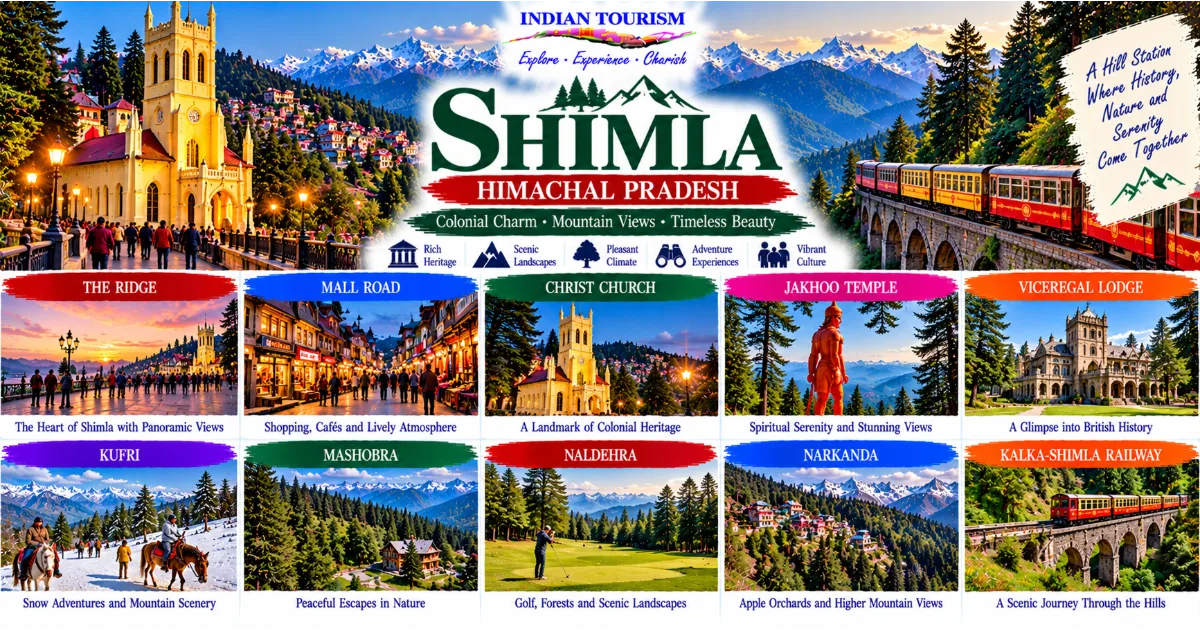
Discovering Shimla, the Queen of the Hills
Shimla, the capital of Himachal Pradesh, is one of India's most recognisable hill stations. Located among the forested mountains of the western Himalayas, the city is known for its colonial-era architecture, lively shopping streets, panoramic viewpoints, historic railway, religious landmarks and pleasant mountain surroundings. For generations, travellers have visited Shimla to enjoy its cool climate, walk through its historic centre and experience the distinctive atmosphere of a Himalayan town.
Shimla offers more than a collection of scenic viewpoints. Its streets and buildings tell the story of a settlement that grew into an important administrative centre during British rule. The Ridge, Mall Road, Christ Church and the surrounding heritage buildings preserve visible traces of that period, while local markets, temples and neighbourhoods reflect the city's continuing cultural life. The result is a destination where history, tourism and everyday urban activity exist side by side.
The city also provides access to several destinations in the surrounding region. Kufri is known for mountain scenery and seasonal snow experiences, while Narkanda offers forested landscapes, apple-growing areas and access to higher mountain viewpoints. Mashobra and Naldehra provide opportunities for quieter escapes among trees and open landscapes. These places can be visited as day trips or incorporated into a longer journey through the Shimla district.
The best experience depends on the season and the interests of the traveller. Summer attracts visitors seeking relief from the heat of the plains, spring brings fresh greenery, autumn often provides attractive mountain views, and winter creates the possibility of snowfall during suitable weather conditions. However, snowfall is never guaranteed on a particular date, and winter travel requires attention to road conditions and local advisories.
This guide explores Shimla's major attractions, heritage, surrounding destinations, food, shopping, accommodation and practical travel considerations. It is designed to help visitors plan a rewarding journey while appreciating the history, natural environment and local communities that make Shimla special.
The Ridge: The Heart of Shimla
The Ridge is one of Shimla's most famous public spaces and a natural starting point for exploring the city. Situated in the central part of the hill station, it provides open views across the surrounding mountains and connects visitors with several of the city's best-known landmarks.
Unlike a conventional shopping street, the Ridge is primarily valued for its open atmosphere, views and role as a gathering place. Residents and visitors walk through the area, meet friends, take photographs and attend public celebrations when events are organised. Its central location makes it convenient to include in a walking itinerary.
The Ridge is closely associated with Shimla's colonial history. Historic buildings and public spaces around it reflect the city's development as an important administrative centre. The architecture provides a visible connection to the period when Shimla played a significant role in British India's political life.
The area is especially attractive when the weather is clear. The surrounding hills create a layered mountain panorama, and changes in sunlight can alter the appearance of the landscape throughout the day. Photographers often use the open space to capture both the city and its mountain setting.
The Ridge is also a useful reference point for navigating central Shimla. Mall Road, Christ Church and other attractions are within walking distance, although the town's slopes and steps mean that visitors should allow time for movement between locations.
During peak tourist periods, the area can become crowded. Visitors should keep public passages clear, supervise children and remain aware of changing weather. In winter, cold temperatures and potentially slippery surfaces make appropriate footwear important.
A visit to the Ridge provides an introduction to Shimla's character. It combines historic surroundings, public life and mountain scenery in a way that makes it one of the city's essential attractions.
Mall Road: Shopping, Cafés and the Social Life of Shimla
Mall Road is among Shimla's best-known commercial and pedestrian areas. It contains shops, cafés, restaurants, bakeries and businesses serving both local residents and tourists. The street is a popular place for an evening walk, a relaxed meal or a little shopping after a day of sightseeing.
The atmosphere changes throughout the day. Mornings can feel relatively calm, while evenings often bring larger crowds, particularly during summer holidays and long weekends. The combination of shops, historic buildings and mountain views gives the area a distinctive hill-station character.
Visitors can explore clothing shops, woollen garments, souvenirs, handicrafts, books and local food products. Product selection and prices vary, so travellers should compare quality before purchasing expensive items. When buying handmade goods, asking about materials and production methods can help establish what is being offered.
Mall Road is also a useful place to sample Shimla's café culture. Visitors can find bakeries, tea and coffee shops, casual restaurants and establishments serving Indian and regional dishes. It is a convenient area for taking a break between attractions.
The pedestrian environment makes walking enjoyable, but the surrounding terrain should not be underestimated. Shimla is built across steep slopes, and routes that appear close on a map may involve stairs or changes in elevation. Travellers with mobility difficulties should check access arrangements and choose routes carefully.
Shopping and dining prices may be higher in prominent tourist locations than in less central areas. Checking menus and prices before ordering can help visitors manage their budget.
Mall Road is not simply a place to buy souvenirs. It is one of the main spaces where Shimla's commercial activity, visitor culture and everyday urban life come together.
Christ Church: A Landmark of Shimla's Colonial Heritage
Christ Church stands prominently near the Ridge and is one of Shimla's most recognisable historic buildings. Its architectural appearance reflects the city's colonial past, and its position makes it an important part of the central heritage landscape.
The church is known for its neo-Gothic style and distinctive presence against the mountain surroundings. Its structure, windows and interior features offer visitors an opportunity to appreciate the architectural traditions that influenced public buildings during the colonial period.
Christ Church remains a place of Christian worship, so visitors should approach it respectfully. Religious services may take place, and access to particular areas can depend on the church's arrangements. Photography rules should be checked and followed, especially inside.
The church can be included easily in a walking route covering the Ridge and Mall Road. Its location makes it convenient for travellers who want to explore Shimla's heritage without arranging separate transport.
Visitors interested in history may find it useful to learn about the broader development of Shimla during British rule. The church's presence is part of a wider architectural landscape that includes public buildings, former administrative structures and residential areas.
The surrounding area can become busy during holidays, and visitors should allow enough time to appreciate the building rather than stopping only for a quick photograph.
Christ Church demonstrates how architecture can preserve historical memory within a modern tourist destination. It remains one of the essential landmarks for anyone interested in understanding Shimla's development and cultural landscape.
Gaiety Heritage Cultural Complex: Theatre and Cultural History
The Gaiety Heritage Cultural Complex is another important attraction near Mall Road. Its historic theatre is associated with Shimla's cultural life during the colonial period and reflects the role of performance, social gatherings and public entertainment in the development of the hill station.
The building is architecturally significant and forms part of the heritage character of central Shimla. It has been associated with theatrical productions and cultural activities, while restoration and continued use have helped preserve its historic identity.
Visitors interested in architecture and performance may find the complex particularly rewarding. The interior and exterior details offer insight into the design of historic public entertainment spaces, while exhibitions or cultural programmes may provide additional context when available.
Access arrangements and the availability of guided visits can vary. Travellers should check current opening information before planning a visit specifically around the complex.
The Gaiety complex can be combined with Christ Church, the Ridge and Mall Road as part of a heritage walk. This makes it suitable for visitors who prefer exploring on foot rather than travelling between distant attractions.
Shimla's history is not limited to political administration and colonial architecture. Cultural institutions such as the Gaiety complex help illustrate how performance, literature and public life contributed to the town's identity.
A visit adds depth to the usual sightseeing experience and encourages travellers to appreciate Shimla as a cultural centre as well as a mountain retreat.
Jakhoo Temple: Spiritual Traditions Above the City
Jakhoo Temple is one of Shimla's best-known religious attractions. Dedicated to Lord Hanuman, the temple is located on Jakhoo Hill, one of the prominent elevated areas overlooking the city.
The hilltop setting offers impressive views of Shimla and the surrounding mountains when visibility is good. The temple is an important place of worship and attracts devotees as well as visitors interested in religious architecture and panoramic scenery.
Reaching the temple involves a climb or a journey using available transport arrangements. The route may include steep sections, so visitors should consider their fitness and mobility before choosing to walk. Comfortable footwear, drinking water and enough time are useful, particularly during warmer weather.
Monkeys are commonly associated with the area. Visitors should avoid feeding or provoking them and should keep food, glasses and loose belongings secure. Animals may approach people carrying food, so caution is important.
The temple can become busy during religious occasions and holiday periods. Visitors should follow local instructions, respect worshippers and avoid obstructing religious activities for photographs.
Weather can affect visibility and walking conditions. During winter, icy or slippery sections may make the climb more difficult, while rain can also create hazards.
Jakhoo Temple offers a combination of spiritual significance and mountain scenery. Its value lies in both its religious role and its location above Shimla, making it an important destination for travellers who want to explore the city's cultural and natural dimensions.
The Viceregal Lodge: A Window Into Colonial India
The Viceregal Lodge, now associated with the Indian Institute of Advanced Study, is one of Shimla's most significant historic buildings. Situated on Observatory Hill, the structure is known for its imposing architecture, landscaped grounds and association with the administrative history of British India.
The building served as the residence of the British Viceroy during the period when Shimla functioned as an important summer administrative centre. It was also connected with significant political discussions during the final years of British rule.
The architecture reflects the grand style used for major colonial institutions. Stonework, formal proportions and carefully designed surroundings contribute to its distinctive appearance. The grounds provide space for appreciating the building within its landscape setting.
Visitors should check current access rules, visiting hours and any restrictions before travelling to the site. As the complex is associated with an academic institution, not every area should be assumed to be freely accessible at all times.
A guided visit, where available, can help explain the building's architectural features and historical associations. Travellers interested in modern Indian history may find the site particularly meaningful because of its connection with important political developments.
The surrounding grounds can also provide a quieter alternative to the crowded centre of Shimla. Visitors should respect the institutional setting and follow instructions concerning photography and access.
The Viceregal Lodge offers a deeper understanding of Shimla's historical importance. It demonstrates how the city's geography and climate helped shape its political role and left a lasting mark on its architecture.
Annandale: Open Grounds and Mountain Views
Annandale is a broad open area in Shimla that has historically been associated with outdoor recreation and organised activities. Surrounded by forested slopes, it provides a contrast to the narrow streets and densely developed central areas of the hill station.
The area has been used for sporting and recreational purposes, and parts of it are associated with the Indian Army. Access to particular facilities may be restricted, so visitors should confirm what can be visited before making plans.
The open landscape and surrounding trees give Annandale a different atmosphere from Shimla's commercial centre. It can be interesting for travellers who want to understand how public and recreational spaces fit into the city's wider geography.
The site may be included in sightseeing routes depending on access arrangements and transport. Visitors should avoid entering restricted areas or assuming that every part of the grounds is open to the public.
Annandale's setting also illustrates the challenges of creating open spaces in a mountainous city. The terrain, forest cover and limited flat land have influenced how recreational areas have developed.
Travellers who are particularly interested in history or the geography of Shimla may appreciate the area, while those with limited time may prefer to prioritise the central heritage attractions.
A visit should be planned around current access information rather than relying solely on general tourist descriptions.
Kufri: Mountain Scenery and Seasonal Snow Experiences
Kufri is a popular destination near Shimla, known for mountain scenery, forested slopes and seasonal winter activities. Its location makes it a common day trip for visitors staying in the capital.
During warmer months, Kufri offers opportunities to enjoy green surroundings, open views and suitable walking routes. In winter, snowfall may create conditions for seasonal snow activities, although the timing and extent of snow vary from year to year.
Some commercial attractions in Kufri offer activities such as horse rides or recreational experiences. Visitors should ask about the route, total cost, safety measures and any additional charges before agreeing to an activity. Animal welfare and appropriate handling should also be considered when choosing services involving animals.
The area's popularity can lead to traffic congestion and crowded viewpoints during peak travel periods. Travellers should allow sufficient time for road journeys and avoid assuming that a short distance will always translate into a quick trip.
Weather conditions should guide activity choices. Cold temperatures, snow and wet paths can make walking difficult, so suitable footwear and warm clothing are important during winter.
Visitors should avoid littering and should stay on designated paths. Mountain slopes and forested areas can be vulnerable to damage from uncontrolled visitor movement.
Kufri is useful for travellers who want to explore beyond central Shimla without undertaking a long journey. It provides a seasonal mountain experience, but the quality of that experience depends on current weather, access and visitor management.
Mashobra: A Peaceful Escape Among Forests
Mashobra is a quieter destination near Shimla, known for forested surroundings, mountain views and a more relaxed atmosphere than the central tourist district. It can appeal to travellers who want to spend time among trees and enjoy a slower pace without travelling far from the capital.
The surrounding landscape includes forest areas, settlements and scenic roads. Visitors may enjoy short walks, viewpoints and time at accommodation properties that offer access to the natural surroundings.
Mashobra's appeal changes with the season. Spring brings fresh growth, summer provides pleasant conditions for outdoor exploration, autumn can offer clear views and changing foliage, while winter brings cold weather and the possibility of snow depending on conditions.
The area is suitable for visitors interested in peaceful accommodation and nature-based experiences. However, travellers should confirm the location and access arrangements of their chosen property, as some accommodation may be reached through narrow or steep roads.
Walking routes should be selected according to local guidance and personal ability. Visitors should not enter forest areas without understanding the route, weather and any restrictions.
Mashobra can be combined with other destinations in the Shimla district, but travellers should allow enough time to enjoy the surroundings rather than treating it only as a quick stop.
The destination offers an alternative to the busy centre of Shimla. It is particularly attractive to visitors who value forest scenery, quiet stays and opportunities to appreciate the mountain environment at a relaxed pace.
Naldehra: Golf, Deodar Forests and Scenic Landscapes
Naldehra is a scenic destination near Shimla known for its golf course, deodar trees and mountain surroundings. It offers a different kind of hill-station experience, combining recreational facilities with forested landscapes.
The Naldehra golf course is one of the area's recognised attractions. Its setting among tall trees and rolling terrain gives it a distinctive character, although access to playing facilities depends on current arrangements and eligibility requirements.
Visitors who are not interested in golf can still appreciate the surrounding landscape and the peaceful atmosphere of the area. The forested setting offers opportunities for suitable walks and photography, subject to local access rules.
Naldehra's weather varies by season. Spring and summer can be pleasant for outdoor visits, while winter brings colder conditions and possible snow. Rain can make paths slippery, so footwear should match the conditions.
The destination can be included in a wider itinerary covering Mashobra and other parts of the Shimla district. Road conditions and travel times should be checked before departure, particularly during peak tourist periods or poor weather.
Visitors should protect the forest environment by avoiding litter, damaging vegetation or disturbing wildlife. Recreational areas can attract heavy use, and responsible behaviour helps maintain their quality.
Naldehra is particularly suitable for travellers who want a scenic excursion without the intensity of a crowded commercial attraction. Its combination of trees, open terrain and recreational heritage makes it a worthwhile addition to a Shimla journey.
Narkanda: Apple Orchards and Higher Mountain Views
Narkanda is a mountain town located beyond Shimla on the route towards parts of the upper Shimla district. It is known for its forested surroundings, apple-growing areas and access to scenic viewpoints.
The town provides a different atmosphere from central Shimla. Its setting is more closely associated with mountain roads, orchards and rural landscapes, making it attractive to travellers who want to explore beyond the main hill station.
Hatu Peak is one of the best-known attractions in the Narkanda area. The route offers mountain scenery and access to a higher viewpoint, but road and walking conditions vary according to season. Visitors should confirm current access and weather before travelling.
Apple orchards are an important part of the wider regional landscape. The appearance of the orchards changes through the year, from blossom periods to fruit development and harvest. Travellers interested in agricultural tourism should ask local businesses about appropriate visiting opportunities and should not enter private orchards without permission.
Winter can bring cold weather and snowfall, while spring and summer provide different landscape conditions. Mountain roads may be affected by snow, rain or other hazards, so reliable travel information is essential.
Narkanda is useful for travellers who have extra time and want to experience a less urban part of the Shimla district. It can be combined with a longer mountain journey, provided enough time is allowed for road travel.
The destination illustrates how agriculture, forestry and tourism coexist in the mountain environment. Visitors can appreciate the scenery while supporting local businesses and respecting the work of orchard owners.
Tattapani: Hot Springs and Riverside Scenery
Tattapani is a destination in the wider Shimla district associated with natural hot springs and the Sutlej River landscape. It offers a different experience from the colonial architecture and shopping streets of central Shimla.
The area's hot springs have traditionally attracted visitors seeking a bathing experience. However, access to natural springs and bathing facilities can depend on current river conditions, infrastructure and local arrangements. Travellers should verify what is available rather than assuming that a particular facility is operating.
The Sutlej River adds to the area's landscape character. River views and surrounding hills create opportunities for photography and relaxed sightseeing, but water levels and currents can change rapidly.
Visitors should not enter the river or attempt water activities without appropriate local guidance. Mountain rivers can be dangerous even when the surface appears calm, and seasonal conditions may create additional risks.
Tattapani can be included in a broader journey through the Shimla region, but travellers should account for road travel and confirm accommodation if planning an overnight stay.
The destination's appeal lies in the combination of natural water features, river scenery and a quieter environment. It provides an alternative for visitors who want to explore a different aspect of the region beyond the most familiar hill-station attractions.
Best Time to Visit Shimla
Shimla can be visited throughout much of the year, but the best season depends on the experience a traveller wants.
Spring is a pleasant time for walking, sightseeing and enjoying fresh vegetation. Temperatures can vary, and higher surrounding areas may remain cold, so carrying layers is sensible.
Summer is one of Shimla's busiest periods. Visitors come from the plains to enjoy the relatively cooler mountain climate. The Ridge, Mall Road and nearby attractions can become crowded, and accommodation prices may rise during holidays. Booking ahead and allowing extra time for transport can improve the experience.
The monsoon season brings greener landscapes but also increases the risk of landslides, road closures and slippery paths. Travellers should check official weather and road advisories and remain flexible if conditions change.
Autumn can provide clear mountain views and cooler temperatures. It is often attractive for photography and walking, although mornings and evenings can be cold.
Winter offers a chance to experience Shimla in colder conditions, and snowfall is possible. However, snow is not guaranteed on any specific date. Roads may become slippery, and travellers should carry warm clothing and confirm transport conditions.
Visitors planning a special activity should check the current situation rather than relying entirely on seasonal averages. Weather in the mountains can change quickly, and a flexible itinerary is more useful than a rigid schedule.
How to Reach Shimla
Shimla is connected to other parts of Himachal Pradesh and northern India by road, rail and nearby air services. The best route depends on the traveller's starting point, budget and preferences.
By Road
Road travel is one of the most common ways to reach Shimla. Buses, taxis and private vehicles connect the city with Chandigarh and other destinations in northern India. The route includes winding mountain roads, so travel times depend on traffic, weather and road conditions.
Travellers arriving during peak summer periods or long weekends should allow extra time because congestion can occur on approach roads. Winter and monsoon travel require additional caution.
By Rail
The Kalka-Shimla railway is a well-known mountain railway route that offers a scenic journey through the hills. The narrow-gauge line passes through tunnels, bridges and mountain landscapes, providing an experience different from road travel.
Train schedules, ticket availability and operating conditions should be checked before booking. Travellers may need to connect with other transport services to reach Kalka from their starting point.
By Air
The Shimla area is served by Jubbarhatti Airport, although flight availability and schedules can be limited and subject to change. Many travellers use larger airports in the region and continue by road.
Before choosing air travel, confirm current flight operations and consider the road journey required to reach the final destination.
Where to Stay in Shimla
Shimla offers a range of accommodation, from budget guesthouses and hostels to heritage properties, family hotels and higher-end resorts. The best option depends on budget, accessibility and the type of experience desired.
Staying near the central area can make it easier to explore the Ridge, Mall Road and nearby heritage attractions on foot. However, some properties are located on steep roads or involve stairways, so travellers with mobility needs should confirm access details before booking.
Accommodation farther from the centre may provide quieter surroundings and mountain views, but transport arrangements become more important. Visitors should check how easily they can reach shops, restaurants and public transport.
During peak summer holidays, major festivals and popular winter periods, demand can increase significantly. Booking in advance can provide more choice and help avoid last-minute price increases.
Travellers should compare what is included in the room price, including heating, breakfast, parking and cancellation terms. Winter visitors should pay particular attention to heating arrangements, while those travelling during the monsoon should check road access and the property's location.
Homestays can offer a more personal experience, especially for visitors interested in local food and community life. Guests should communicate their expectations clearly and respect household customs.
Choosing accommodation according to the itinerary, rather than selecting it only for its advertised view, can make the overall trip more comfortable.
Shimla's Food: Cafés, Bakeries and Himachali Flavours
Food is an enjoyable part of a Shimla visit. The city offers cafés, bakeries, restaurants and small eateries serving a mixture of Indian, international and regional dishes.
Bakeries have a longstanding place in Shimla's visitor culture. Travellers can find cakes, pastries, breads and other baked products in the central commercial area. Cafés provide places to rest during sightseeing and enjoy views of the surrounding hills.
Visitors should also look for Himachali dishes where available. Siddu, a traditional wheat-based preparation, is associated with parts of the state, while dham is a festive meal tradition found in different regional forms. Menus vary between restaurants, and some dishes may be easier to find outside the main tourist streets.
North Indian meals, snacks, tea and coffee are widely available. Travellers with dietary restrictions should ask about ingredients and preparation methods rather than relying solely on dish names.
Food prices can differ considerably between prominent tourist restaurants and smaller establishments. Checking the menu before ordering is a simple way to manage spending.
Visitors who want a deeper food experience can explore local markets and ask about regional ingredients and cooking traditions. Food offers insight into the relationship between mountain agriculture, climate and everyday life.
Trying local dishes adds a cultural dimension to a Shimla journey and supports the businesses that contribute to the city's hospitality industry.
Shopping in Shimla: Souvenirs and Local Products
Shopping in Shimla ranges from modern retail stores to small shops selling woollens, handicrafts, souvenirs and regional products. Mall Road and nearby commercial areas are convenient places to browse, while markets in other parts of the city may offer different selections.
Woollen shawls, caps, scarves and winter clothing are popular purchases, especially during colder months. Kullu shawls and other regional textiles may be available, although the origin, material and manufacturing method vary between products.
Travellers should ask about fibre content, workmanship and care instructions when purchasing textiles. A product's appearance alone does not establish whether it is handmade or made from a particular material.
Wooden objects, decorative items and packaged regional foods can also make useful souvenirs. Buyers should inspect quality, check packaging and ask about any special requirements for transport.
For expensive items, request a receipt and confirm return or exchange arrangements. If a seller offers delivery, clarify the cost, timeline and responsibility for damage.
Responsible shopping recognises the value of local skill and fair business practices. Visitors should compare products without assuming that the lowest price always represents the best value.
Shopping can be a rewarding part of the trip when travellers choose items thoughtfully and learn about the region's crafts rather than buying souvenirs simply because they are widely marketed.
Responsible Tourism in Shimla
Shimla's popularity creates challenges related to traffic, waste, water use and pressure on local infrastructure. Responsible visitors can help reduce these impacts through a few practical choices.
Walking between central attractions where suitable can reduce unnecessary vehicle use. However, visitors should consider their physical ability and avoid routes that are unsafe or inaccessible.
Waste should be placed in appropriate bins, and travellers should avoid leaving litter on viewpoints, forest paths or roadside areas. Reusable water bottles and careful consumption can help reduce unnecessary waste.
Visitors should respect historic buildings and religious sites. Climbing on structures, damaging plants or ignoring photography restrictions can harm the heritage experience for others.
Supporting local businesses helps ensure that tourism contributes to the regional economy. Visitors can consider locally owned accommodation, responsible guides and genuine regional products.
Mountain weather and road conditions should be taken seriously. Travellers should follow official warnings, avoid blocked routes and change plans when conditions become unsafe.
Shimla is both a tourist destination and a place where people live and work. Respecting residents, keeping noise under control and avoiding obstruction of public spaces are essential parts of responsible travel.
The long-term appeal of Shimla depends on preserving its heritage, natural surroundings and quality of life. Thoughtful visitor behaviour helps protect all three.
A Suggested Three-Day Shimla Itinerary
A three-day visit provides enough time to explore the central heritage area and visit selected nearby destinations without rushing excessively.
On the first day, focus on central Shimla. Begin with the Ridge and Christ Church, then explore Mall Road and the Gaiety Heritage Cultural Complex. Allow time for a relaxed meal and an evening walk through the commercial district.
On the second day, explore Jakhoo Temple and the Viceregal Lodge, depending on opening arrangements and personal interests. If time permits, visit another accessible attraction or enjoy a slower afternoon at a café. Travellers should account for the walking distances and elevation changes between sites.
On the third day, choose a nearby excursion based on weather and interest. Kufri is a common option for mountain scenery and seasonal activities, while Mashobra or Naldehra may appeal to visitors seeking forest landscapes and a quieter atmosphere. Travellers with more time could consider Narkanda, although it generally requires a longer journey.
The itinerary should remain flexible. Weather, traffic and seasonal access can affect travel times, and visitors should not attempt to fit every destination into a short trip.
Those arriving by train may want to allow additional time for the Kalka-Shimla railway experience and connections. Visitors travelling in winter should confirm road conditions before planning an excursion outside the city.
A well-paced itinerary allows travellers to enjoy Shimla's heritage and natural surroundings while leaving time for unexpected discoveries.
Conclusion: Why Shimla Deserves a Place on Your Travel List
Shimla remains one of India's most distinctive hill stations because it combines mountain scenery with history, architecture, shopping and access to the wider Himalayan landscape. The Ridge and Mall Road provide a lively centre for visitors, while Christ Church, the Gaiety Heritage Cultural Complex and the Viceregal Lodge reveal important aspects of the city's past.
Jakhoo Temple adds a spiritual dimension, while destinations such as Kufri, Mashobra, Naldehra and Narkanda provide opportunities to explore the forests, orchards and mountain landscapes around the capital. Each destination offers a different experience, making it possible to plan a visit according to personal interests and available time.
The best time to visit depends on whether travellers prefer warm-weather sightseeing, autumn views or the possibility of winter snow. Seasonal conditions should always be checked because weather and road access can change quickly in the mountains.
Good planning improves the experience. Choosing suitable accommodation, allowing realistic travel times, checking current opening arrangements and respecting local guidance can help avoid unnecessary difficulties.
Shimla is not only a scenic holiday destination. It is a living mountain city whose identity reflects colonial history, regional culture and modern tourism. Visitors who take time to explore beyond the most famous photographs can gain a deeper appreciation of its architecture, communities and natural surroundings.
For the Indian Tourism series, Shimla provides the next step in discovering Himachal Pradesh. Future destination guides can explore the state's other hill stations, valleys, villages, temples and high-altitude landscapes in greater detail.
#IndianTourism #HimachalPradesh #ShimlaTourism #ShimlaTravelGuide #TheRidgeShimla #MallRoadShimla #ChristChurchShimla #JakhooTemple #ViceregalLodge #Kufri #Mashobra #Naldehra #Narkanda #HimachalTravel #HillStationTourism #ColonialHeritage #MountainTravel #FamilyTravel #ResponsibleTourism #ExploreIndia
