
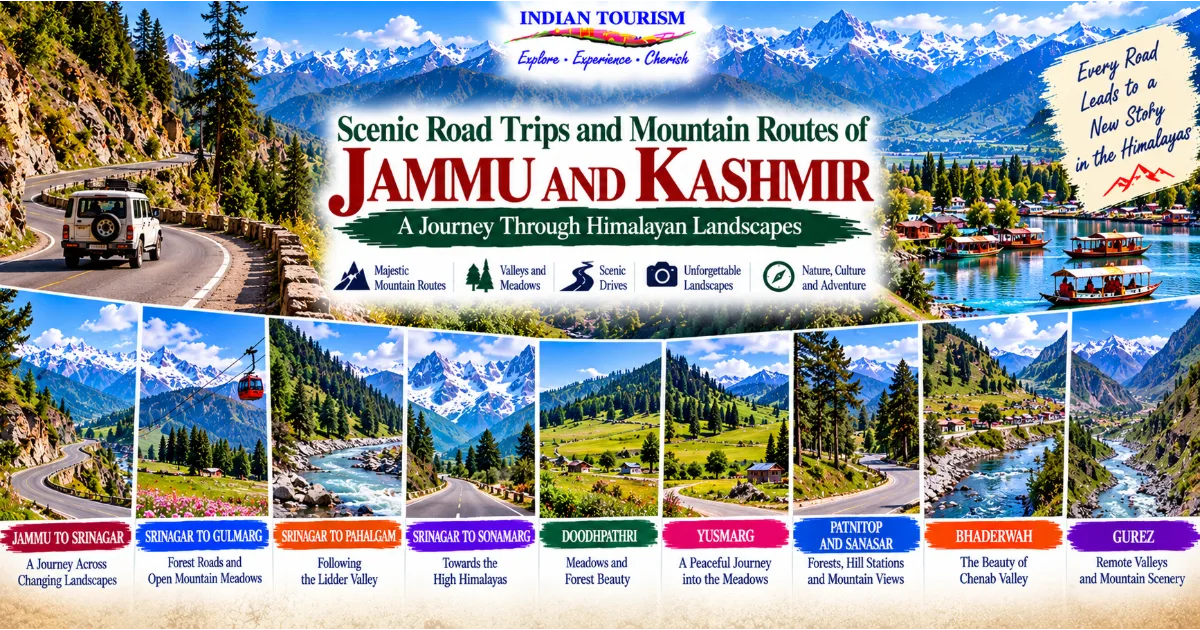
Discovering Jammu and Kashmir Through Its Roads
Jammu and Kashmir is a destination where the journey can be as memorable as the place you are travelling towards. Mountain highways, winding valley roads, riverside routes and high-altitude passes connect historic towns with lakes, meadows, forests and remote settlements. For travellers who enjoy exploring landscapes at a relaxed pace, a road trip offers an opportunity to experience the changing geography of the region and discover places that may be missed during a tightly scheduled sightseeing holiday.
A journey through Jammu and Kashmir can begin among the busy streets of Jammu, continue through the forested foothills and reach the broad valleys of Kashmir. Along the way, the scenery changes from warmer lowland landscapes to mountain slopes, pine forests, river valleys and snow-covered peaks. The road itself becomes a moving introduction to the region's natural diversity.
Some routes are suitable for ordinary sightseeing trips, while others cross challenging mountain terrain and require more careful preparation. The Jammu to Srinagar journey, the road towards Pahalgam, the route to Gulmarg and the journey towards Sonamarg offer different experiences. Travellers may also explore roads around Doodhpathri, Yusmarg, Gurez and other destinations when access conditions permit.
Road trips in the region require flexibility. Weather can change quickly, landslides may affect mountain roads and snowfall can disrupt travel during winter. Certain routes have seasonal restrictions or special access requirements. Travellers should check current road conditions, local advisories and official instructions before setting out.
This guide explores some of the most rewarding scenic road trips and mountain routes in Jammu and Kashmir, along with planning advice, seasonal considerations and responsible travel practices.
The Jammu to Srinagar Highway: A Journey Across Changing Landscapes
The journey between Jammu and Srinagar is one of the most important road trips in the region. It connects Jammu, the principal city of the southern part of the territory, with Srinagar, the major urban centre of the Kashmir Valley. The route passes through changing landscapes that reveal the geographical diversity of Jammu and Kashmir.
Leaving Jammu, travellers gradually move away from the urban environment and enter the foothills. The scenery develops into a mixture of hills, forested slopes, valleys and settlements. As the journey continues, the terrain becomes increasingly mountainous, with sections of road following river valleys and cutting through rugged landscapes.
The highway is an important transport corridor, so it should not be treated as a leisurely sightseeing road at every point. Traffic, construction, weather and security arrangements can affect journey times. Travellers should avoid stopping at unsafe locations for photographs and should use authorised stopping areas whenever possible.
The journey can be especially attractive to people who enjoy observing how geography influences settlement. Towns and villages appear along the route, often near river valleys or areas where the terrain allows easier movement. Roadside markets and local food establishments provide glimpses of everyday life beyond the main tourist destinations.
The experience changes with the seasons. Spring brings fresh greenery, while summer can provide clearer access through many mountain sections. Autumn creates warm colours in parts of the landscape, and winter can introduce snow and cold weather that affect road conditions.
Travellers should plan the journey with enough time for delays and rest breaks. Checking official traffic updates before departure is essential, particularly during periods of heavy rainfall, snowfall or major road works.
For visitors arriving in Jammu and travelling towards Srinagar, this route offers a practical introduction to the region's landscapes. It also provides a reminder that mountain travel requires patience and respect for changing conditions.
Srinagar to Gulmarg: Forest Roads and Open Mountain Meadows
The road journey from Srinagar to Gulmarg is one of the popular excursions for visitors staying in the Kashmir Valley. The route leads from the urban surroundings of Srinagar towards forested hills and the open meadows associated with Gulmarg.
As travellers move away from the city, the built environment gradually gives way to rural settlements, cultivated areas and wooded slopes. The landscape becomes more mountainous as the road approaches Gulmarg, creating a sense of transition from the valley to a highland destination.
Gulmarg is known for its broad meadows, surrounding forests and views of the Pir Panjal mountain range. During warmer months, the area can offer green landscapes and opportunities for walking, photography and outdoor recreation. In winter, snow transforms the setting and attracts visitors interested in snow-based activities.
The road experience varies considerably with the season. Summer and early autumn may provide easier access under suitable weather conditions, while winter travel can require additional preparation. Snowfall, icy surfaces and reduced visibility can affect driving, and visitors should follow local instructions about vehicle requirements and road safety.
A day trip from Srinagar may be sufficient for travellers who want to see Gulmarg's main attractions, but staying overnight can provide more time to experience the landscape. Accommodation availability, weather and personal interests should guide the decision.
Travellers should avoid assuming that every viewpoint or mountain route is accessible. Conditions can change rapidly, and some activities require authorised operators or specialist equipment.
The road to Gulmarg is particularly rewarding for visitors who enjoy the gradual transformation of scenery. It offers a convenient way to experience the contrast between the urban Kashmir Valley and its surrounding highland environment.
Srinagar to Pahalgam: Following the Lidder Valley
The journey from Srinagar to Pahalgam takes travellers towards one of Kashmir's best-known mountain destinations. The route passes through settlements and cultivated landscapes before reaching the forested surroundings and river scenery of the Pahalgam area.
Pahalgam is closely associated with the Lidder River, pine forests and views of surrounding mountain slopes. The town serves as a base for visitors interested in nature, walking, local culture and outdoor activities. Its setting makes it attractive for families, couples and travellers who want to spend time away from the busiest parts of Srinagar.
The drive provides opportunities to observe the relationship between the Kashmir Valley's agricultural landscapes and the mountains beyond. Depending on the route and traffic conditions, travellers may pass through market towns and rural areas where local businesses support both residents and visitors.
The scenery changes according to the season. Spring brings fresh growth, summer offers green slopes and flowing rivers, autumn creates warm tones in trees and fields, and winter can bring cold weather and snow to higher areas.
Pahalgam is also a gateway to locations that may have separate access arrangements. Visitors should confirm which places can be reached by ordinary vehicles and whether local transport, permits or authorised services are required. Road access to particular valleys and attractions can change because of weather, security arrangements or seasonal restrictions.
Travellers should not stop on narrow roads or river bridges for photographs. Designated parking and safe viewpoints are preferable, particularly where traffic moves through winding sections.
The route is suitable for a relaxed excursion, but visitors should leave enough time to explore Pahalgam itself. A road trip becomes more rewarding when the destination is experienced at a comfortable pace rather than treated only as a brief photo stop.
Srinagar to Sonamarg: The Road Towards the High Himalayas
The journey from Srinagar to Sonamarg introduces travellers to increasingly dramatic mountain scenery. The road follows the broad Kashmir Valley towards the upper reaches of the Sindh River landscape, with mountain slopes and high peaks becoming more prominent as the journey progresses.
Sonamarg is known for its open meadows, river views and access to high-altitude landscapes. The surrounding mountains create a powerful visual setting, and the area attracts visitors interested in photography, nature and mountain experiences.
The road is particularly sensitive to seasonal conditions. Snowfall, heavy rain, falling rocks and other hazards can affect access, especially during colder months. Travellers should confirm whether the route is open and whether any restrictions apply before beginning the journey.
Summer is generally an important period for visiting Sonamarg, although conditions still depend on weather and official arrangements. Snow may remain at higher elevations, while rivers and meadows create contrasting colours in the landscape.
Visitors should distinguish between the main accessible tourist areas and more demanding high-altitude routes. Reaching a mountain destination by road does not mean that every nearby valley or glacier-associated location is safe to explore independently. Some activities require authorised transport, experienced guides or additional precautions.
The route offers excellent opportunities to appreciate the scale of the Himalayas, but photography should never take priority over safety. Avoid stopping in exposed places, near unstable slopes or on sections where other vehicles cannot see you clearly.
Sonamarg is best approached with a flexible schedule. Allow enough time for changing weather, road delays and rest stops, and avoid planning a return journey so tightly that there is no room for unexpected interruptions.
For travellers who enjoy dramatic mountain scenery, this road trip offers a memorable introduction to the higher Himalayan environment of Jammu and Kashmir.
Srinagar to Doodhpathri: Meadows and Forested Hills
Doodhpathri is a scenic destination in the Budgam district of Kashmir, known for its meadows, grassy slopes and surrounding forested hills. The journey from Srinagar offers a different experience from the more heavily visited routes towards Gulmarg and Pahalgam.
The landscape around Doodhpathri can feel spacious and peaceful, particularly when the meadows are green and the surrounding hills are clearly visible. The destination attracts visitors who enjoy outdoor scenery, photography and relaxed time in nature.
The road journey passes through settlements and rural landscapes before reaching the higher meadows. Depending on the season, visitors may see cultivated fields, wooded slopes and streams along the way. These transitions provide a useful opportunity to understand the variety of landscapes within a relatively short journey from Srinagar.
Summer is a popular time to visit because the meadows are generally greener and access may be easier under suitable conditions. However, rain, road works and local restrictions can affect the journey. Travellers should verify current road conditions and any arrangements required for the final section of the route.
Facilities may be more limited than in major tourist towns. Visitors should carry drinking water, keep essential items with them and avoid assuming that food, fuel or medical services will be readily available everywhere.
Doodhpathri's natural setting deserves careful protection. Visitors should not leave rubbish, damage grassland or disturb grazing animals. It is also important to respect local livelihoods, particularly where meadows and surrounding areas are used by residents.
The journey is suitable for travellers who want to explore a quieter side of Kashmir. Spending time walking in permitted areas and appreciating the changing landscape can make the experience more rewarding than rushing through several viewpoints.
Srinagar to Yusmarg: A Peaceful Journey into the Meadows
Yusmarg, in the Budgam district, is another destination for travellers interested in open landscapes and forested surroundings. Its meadows and mountain views provide a different atmosphere from the busier tourist centres in the Kashmir Valley.
The road towards Yusmarg passes through rural areas where the scenery gradually becomes more open and mountainous. Visitors may notice changing patterns of agriculture, traditional settlements and wooded slopes along the way.
Yusmarg is generally associated with walking, scenic views and time spent in nature. It can appeal to travellers who prefer a quieter day trip rather than a packed schedule of commercial activities. The surrounding landscape changes with the season, offering fresh greenery in warmer months and a different atmosphere during colder weather.
Road conditions and available facilities should be checked before travel. Weather can affect access, and visitors should not assume that every route beyond the main destination is suitable for ordinary vehicles.
A day trip can work well for people staying in Srinagar, although the amount of time available for walking will depend on the departure time and road conditions. Travellers who want to explore at a relaxed pace should leave early enough to avoid rushing the return journey.
As with other meadow destinations, responsible behaviour is important. Stay on permitted paths, avoid disturbing livestock and carry waste back to suitable disposal points. Visitors should also ask before photographing residents or private property.
Yusmarg demonstrates that scenic travel in Jammu and Kashmir does not always require a long journey to a famous mountain resort. Some of the most rewarding experiences come from quieter places where the landscape encourages visitors to slow down and observe their surroundings.
Jammu to Patnitop: Forests, Hill Stations and Mountain Views
Patnitop is a popular hill destination in the Jammu region, situated amid forested hills and open mountain scenery. The road journey from Jammu introduces travellers to the changing landscapes of the southern Himalayan foothills.
As the route moves away from the plains and lower urban areas, the terrain becomes increasingly hilly. Roads wind through valleys and slopes, while the surrounding vegetation changes with elevation. The journey itself provides an opportunity to appreciate the geography of the Jammu region.
Patnitop is known for its open spaces, pine forests and views across the surrounding hills. It offers opportunities for walking, photography and outdoor recreation, depending on the season and current facilities.
During warmer months, the area can provide a refreshing change from the heat of lower elevations. In winter, cold weather and occasional snow can create a different landscape, although visitors should confirm road conditions and the availability of activities before travelling.
The route can be included in a longer road trip through the Jammu region or visited as part of a shorter holiday. Travellers should consider the time required for the drive, particularly if they plan to continue beyond Patnitop to other mountain destinations.
Mountain driving requires attention to speed, visibility and road conditions. Drivers should avoid overtaking on blind bends, use suitable stopping areas and follow instructions from traffic authorities.
Patnitop is a useful destination for travellers who want to explore the Himalayan foothills without immediately undertaking a demanding high-altitude journey. Its forests and open views provide a different perspective on the landscapes of Jammu and Kashmir.
Patnitop to Sanasar: A Scenic Extension into the Hills
Sanasar is a small mountain destination associated with open meadows, surrounding forests and outdoor recreation. Travellers visiting Patnitop may consider extending their journey towards Sanasar when road conditions and available time permit.
The road connects two distinct but related mountain environments. Patnitop is known for its hill-station atmosphere, while Sanasar offers a setting that can feel more open and secluded. The drive provides views of forested slopes and changing mountain scenery.
Sanasar is often associated with outdoor activities and relaxed time in nature. Depending on current arrangements, visitors may encounter opportunities for walking and other recreation. Activities should only be undertaken through authorised operators where required, with attention to weather and safety conditions.
The area is especially attractive when the surrounding vegetation is green and the skies are clear. However, mountain weather can change quickly, and the appearance of the landscape varies significantly throughout the year.
Travellers should confirm road conditions, accommodation options and activity availability before planning an overnight stay. Facilities may be more limited than in larger towns, so carrying essential items and arranging transport in advance can be helpful.
The destination is also suitable for people who want to photograph the relationship between open meadows and surrounding forests. Visitors should remain in permitted areas and avoid disturbing the natural environment.
A trip to Sanasar can be combined with Patnitop, but the itinerary should allow sufficient time for the drive and for enjoying the destination. Travelling slowly through the hills often creates a better experience than attempting to cover too many locations in one day.
Jammu to Bhaderwah: A Journey Through the Chenab Valley Region
Bhaderwah, located in the Doda district, is known for its green landscapes, mountain surroundings and cultural traditions. It is often associated with the natural beauty of the Chenab Valley region and can be a rewarding destination for travellers seeking a different side of Jammu and Kashmir.
The journey towards Bhaderwah passes through mountainous terrain, with roads connecting towns and settlements across the region. The scenery includes forested slopes, valleys and river landscapes, although the precise views depend on the route and season.
Bhaderwah is sometimes described as a destination for people who enjoy nature and a quieter travel experience. Its surroundings offer opportunities to explore local landscapes, learn about regional traditions and appreciate the relationship between settlements and the mountains.
The road journey requires careful planning because mountain roads can be affected by rainfall, landslides, construction and other disruptions. Travellers should confirm current conditions before departure and avoid relying solely on old travel times.
Visitors should also consider the facilities available in the area. Accommodation, fuel and food options may differ from those in larger tourist centres, so checking arrangements in advance is sensible.
The best approach is to allow time for the journey rather than treating Bhaderwah as a quick excursion from Jammu. An overnight stay can make it easier to explore the area at a comfortable pace, depending on accommodation availability and personal preferences.
Bhaderwah highlights the diversity of the Jammu region. It demonstrates that the area's appeal extends beyond well-known hill stations to include valleys, forests and settlements that maintain their own distinct character.
The Road Towards Gurez: Remote Valleys and Mountain Scenery
Gurez is a remote valley in northern Kashmir, known for its dramatic mountain setting, river landscapes and distinctive local culture. A journey towards Gurez can be one of the more memorable road experiences in the region, but it requires significantly more preparation than an ordinary day trip from Srinagar.
The route passes through mountainous terrain and is associated with the Razdan Pass area. The road can be affected by snow and other weather conditions, and seasonal accessibility is an important factor in planning. Travellers must confirm current access arrangements and any permissions or documentation required for the journey.
The valley's landscape includes mountain slopes, river scenery and settlements that reflect the region's distinctive cultural and geographical setting. The journey offers opportunities to appreciate how communities live in areas where terrain and weather strongly influence transport and daily life.
Because Gurez is relatively remote, visitors should plan accommodation, food, fuel and communication arrangements carefully. Facilities may be limited compared with Srinagar and other major tourist destinations. Travellers should avoid assuming that every service will be available when needed.
The road should not be approached as a casual driving challenge. Weather, visibility and road conditions can change quickly, and drivers should follow local advice rather than continuing when conditions become unsafe.
Visitors should also respect the area's communities and sensitive locations. Photography near restricted or security-sensitive places should be avoided unless explicitly permitted, and local guidance should always be followed.
For travellers who have sufficient time and are prepared for the conditions, Gurez offers a powerful combination of natural scenery and cultural discovery. Its remoteness is part of its character, but it also makes responsible planning essential.
Scenic Stops, Photography and Safe Driving
One of the pleasures of a road trip through Jammu and Kashmir is the opportunity to observe landscapes that change continuously. However, safe travel requires careful decisions about where and when to stop.
Photographs should be taken from designated viewpoints, authorised parking areas or other locations where stopping is safe and permitted. Narrow mountain roads, blind bends and river bridges are not suitable places to pull over simply because the view is attractive.
Drivers should avoid using a phone or camera while the vehicle is moving. If a photograph is important, stop in a safe location first. Passengers should also avoid distracting the driver during difficult sections.
Mountain roads may contain sharp bends, steep gradients, loose gravel, uneven surfaces or sudden changes in visibility. Drivers should maintain a safe speed and allow extra distance between vehicles. Overtaking should only be attempted when visibility and road markings clearly permit it.
Travellers using hired vehicles should confirm that the driver is experienced with mountain routes and familiar with the planned destination. For remote journeys, local knowledge can be especially valuable.
Weather forecasts and road updates should be checked before departure and again when conditions may have changed. Carry water, snacks, essential medication and suitable clothing, particularly on longer journeys where services may be limited.
Photography should also respect people and places. Ask permission before taking close-up pictures of residents, and avoid photographing sensitive infrastructure or restricted locations. Responsible behaviour helps ensure that scenic travel remains enjoyable for both visitors and local communities.
Best Seasons for Road Trips in Jammu and Kashmir
The best season depends on the route, altitude and type of scenery travellers want to experience. Spring brings fresh greenery and flowering landscapes, making it attractive for journeys around Srinagar and its surrounding destinations. Weather can still be changeable, so visitors should check conditions before setting out.
Summer is an important season for many mountain road trips. Destinations such as Pahalgam, Sonamarg, Gulmarg and Gurez can attract visitors during periods when access is available. However, summer does not eliminate the possibility of rainfall, landslides or temporary road restrictions.
Autumn is appealing for travellers interested in changing foliage and softer colours across the Kashmir Valley. Roads around gardens, forests and rural settlements can provide beautiful views, although daylight hours gradually become shorter.
Winter offers a different experience, particularly in areas that receive snow. However, snowfall, icy surfaces and road closures can make some journeys difficult or impossible. Travellers should not assume that a summer itinerary will remain practical during winter.
The southern foothills and the higher mountain areas can experience very different conditions on the same day. A sunny morning in Jammu does not guarantee safe driving conditions on a high-altitude route.
Before travelling, confirm whether the intended destination is accessible, whether special arrangements are required and whether the return journey can be completed safely. Flexible plans are especially important for remote destinations.
Practical Planning for a Comfortable Mountain Road Trip
A successful road trip begins with realistic scheduling. Distances on a map can appear short, but winding roads, traffic, weather and security checks can significantly increase journey times. Avoid planning several distant destinations into one day.
Check the vehicle before departure, including tyres, brakes, lights and essential supplies. Drivers should be comfortable with hill driving and should avoid travelling when tired. On long journeys, rest breaks are important.
Travellers should carry suitable clothing because temperatures can vary with altitude. Even during warmer months, higher locations may become cold, particularly in the morning and evening. Rain protection and comfortable footwear are also useful.
Mobile connectivity may be inconsistent in remote areas. Do not rely entirely on continuous internet access for navigation or emergency communication. Share the planned route with someone where appropriate and keep important information accessible offline.
Fuel availability should be considered when planning longer trips. For remote destinations, confirm where fuel and other essential services can be obtained rather than assuming that a station will be available nearby.
Accommodation should be booked in advance during popular travel periods. This is particularly important for destinations with limited capacity or routes that require overnight stops.
Finally, maintain flexibility. If weather or road conditions deteriorate, changing the plan is the responsible choice. The purpose of a road trip is to enjoy the journey, not to reach a destination at any cost.
Responsible Road Tourism and Protecting the Himalayan Environment
Road tourism supports local businesses through accommodation, restaurants, transport services, guides and small shops. At the same time, increased traffic can create pressure on roads, waste systems, water resources and fragile mountain ecosystems.
Travellers can reduce their impact by avoiding litter, using refillable bottles where practical and disposing of waste responsibly. Plastic packaging and discarded food can remain in natural areas long after visitors have left.
Vehicles should remain on authorised roads and parking areas. Driving across meadows, riverbanks or forest clearings can damage vegetation and disturb wildlife. Visitors should also avoid loud music in quiet natural areas and respect residential communities.
Buying locally produced goods, using legitimate local services and hiring knowledgeable local guides can help distribute tourism income to communities along the route. Travellers should agree on prices and arrangements clearly before beginning an activity.
Mountain weather and terrain require special care. Avoid travelling into restricted areas, crossing flooded roads or continuing through unsafe conditions. Official road closures and local safety advice should always be respected.
Responsible road tourism also means recognising that roads are essential to local residents, not merely scenic attractions. Avoid blocking traffic, drive considerately and allow space for emergency and essential vehicles.
By travelling thoughtfully, visitors can enjoy the extraordinary landscapes of Jammu and Kashmir while helping preserve the environment and supporting the communities that live there.
Conclusion: Let the Journey Reveal Jammu and Kashmir
Scenic road trips offer a wonderful way to understand the geographical and cultural diversity of Jammu and Kashmir. The Jammu to Srinagar highway introduces travellers to the region's changing terrain, while the routes to Gulmarg, Pahalgam and Sonamarg reveal different aspects of the Kashmir Valley and the surrounding mountains.
Doodhpathri and Yusmarg provide opportunities to experience meadows and quieter landscapes, while Patnitop and Sanasar offer attractive journeys through the Jammu region's forested hills. Bhaderwah introduces travellers to the landscapes of the Chenab Valley region, and Gurez offers a more remote experience that demands careful planning.
Every route has its own character, but all require attention to weather, road conditions, safety and local guidance. Travellers should plan realistic itineraries, confirm access arrangements and avoid taking risks for photographs or scenic viewpoints.
A road trip is also an opportunity to appreciate the people and communities who live along these routes. Local markets, settlements and everyday activities reveal the human side of the landscape, while responsible travel helps protect the environment and support local livelihoods.
The most rewarding journeys are not necessarily those that cover the greatest distance. They are the ones that allow enough time to observe, rest and experience the destination without rushing. With thoughtful preparation and respect for the mountains, the roads of Jammu and Kashmir can become an unforgettable part of the journey itself.
#IndianTourism #JammuAndKashmir #KashmirRoadTrip #MountainRoads #ScenicDrives #Srinagar #Gulmarg #Pahalgam #Sonamarg #Doodhpathri #Yusmarg #Patnitop #Sanasar #Bhaderwah #GurezValley #HimalayanTravel #ResponsibleTourism #ExploreIndia
