
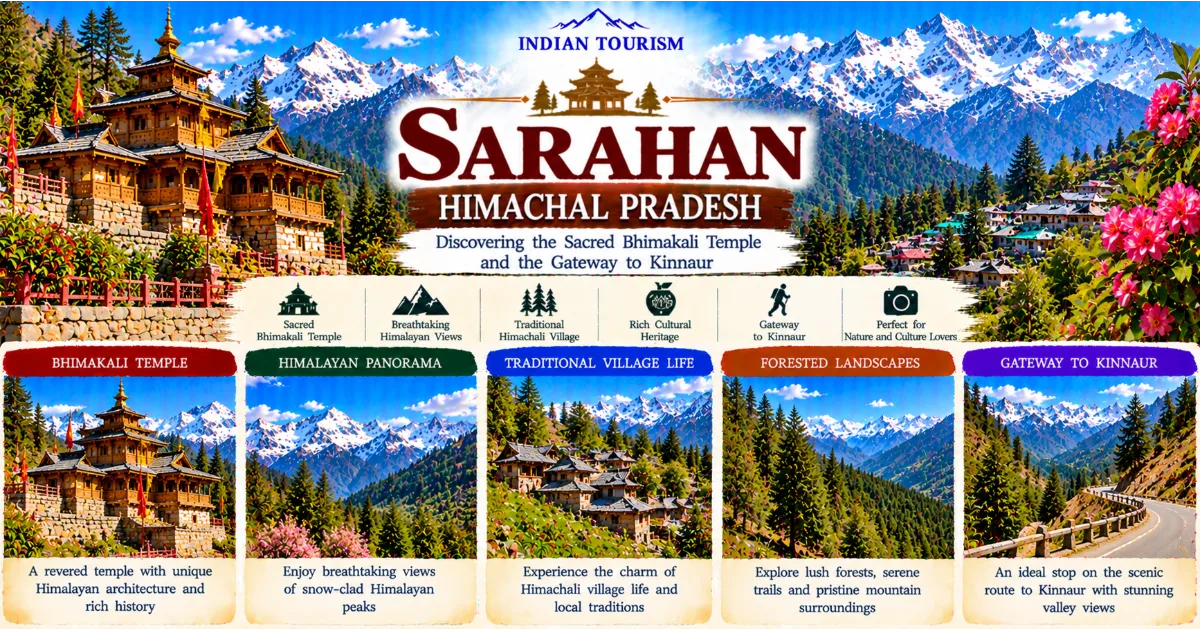
A Himalayan Destination Where Spirituality Meets Mountain Beauty
Himachal Pradesh is home to many destinations where ancient traditions, dramatic landscapes and village life come together. Among these places, Sarahan holds a special position because of its religious importance, distinctive architecture and beautiful mountain setting. Located in the Shimla district, close to the historic routes leading towards Kinnaur, Sarahan offers travellers an experience that combines spiritual discovery with the natural beauty of the western Himalayas.
The village is best known for the Bhimakali Temple, a revered religious complex associated with the regional traditions of the former Bushahr kingdom. Its distinctive architecture, wooden structures, intricate details and striking setting make it one of the most recognisable cultural landmarks in this part of Himachal Pradesh. For devotees, the temple is an important place of worship. For travellers interested in history and architecture, it provides an opportunity to understand the religious and artistic traditions that have shaped the region.
Sarahan's appeal extends beyond its temple. The village sits amid mountain scenery, with forested slopes, cultivated land and distant Himalayan peaks contributing to its peaceful atmosphere. Its location makes it a rewarding stop for visitors travelling between the Shimla region and Kinnaur. Rather than being defined by large commercial attractions, Sarahan invites travellers to explore at a slower pace, observe local traditions and appreciate the relationship between the settlement and its surroundings.
The history of Sarahan is closely connected with the cultural development of the western Himalayas. Religious institutions, local rulers, traditional building practices and mountain trade routes have all contributed to the region's identity. The Bhimakali Temple remains an important symbol of this heritage, representing the way spiritual life and regional history can be reflected in architecture and community traditions.
For travellers planning a journey through Himachal Pradesh, Sarahan can be included in a road trip that explores historic settlements, mountain valleys and the cultural landscape leading towards Kinnaur. It is particularly suitable for those who appreciate religious heritage, traditional architecture, nature photography and quieter destinations away from heavily commercialised tourist centres.
A visit to Sarahan is most rewarding when it includes time to understand the village rather than treating the temple as a quick sightseeing stop. Exploring accessible village paths, learning about local customs, enjoying the mountain views and observing the architecture can provide a deeper appreciation of the destination.
Whether you are a spiritual traveller, a history enthusiast, a photographer or someone seeking a peaceful Himalayan escape, Sarahan offers a memorable introduction to the cultural richness of Himachal Pradesh.
Understanding Sarahan and Its Location
Where Is Sarahan Located?
Sarahan is a village in the Shimla district of Himachal Pradesh, situated along the mountain routes that connect the lower Himalayan region with Kinnaur. Its geographical position makes it an interesting stop for travellers moving deeper into the eastern parts of the state.
The village occupies a mountainous landscape shaped by ridges, forested slopes and cultivated areas. The surrounding terrain provides a sense of the geographical transition between the more accessible hill regions around Shimla and the increasingly rugged landscapes encountered farther towards Kinnaur.
Sarahan is commonly approached by road from the Shimla region, with the journey passing through mountain settlements and changing scenery. Depending on the route and current road conditions, the drive can involve narrow sections, sharp bends and stretches where travel requires patience.
The village's location also makes it suitable for travellers who want to break a longer road journey into manageable stages. Rather than attempting to cover a large distance in one day, visitors can spend time in Sarahan, explore its cultural attractions and continue their journey when conditions are favourable.
Before travelling, check the current condition of the intended route and confirm accommodation arrangements. Mountain roads can be affected by rainfall, landslides, snowfall and maintenance work, so a flexible itinerary is advisable.
The Mountain Environment Around Sarahan
The landscape surrounding Sarahan reflects the varied geography of Himachal Pradesh. Forested slopes, cultivated areas and distant mountain ridges create a setting that changes with the seasons and the position of the sun.
In the warmer months, the surrounding vegetation can appear lush, particularly after periods of rainfall. During autumn, the scenery may take on softer colours, while winter can bring colder conditions and snow at higher elevations.
The mountains influence almost every aspect of life in the region. Roads follow the contours of the terrain, villages occupy suitable areas for settlement, and agricultural activity depends on the availability of land and water.
For visitors, this geography creates opportunities for photography and quiet outdoor exploration. The landscape is best appreciated from safe, accessible viewpoints and established village paths rather than by attempting unfamiliar routes without guidance.
Sarahan's natural surroundings also help explain why it has developed as both a cultural destination and a stopping point for travellers exploring the wider Himalayan region.
Sarahan's Connection with the Bushahr Kingdom
Sarahan is historically associated with the former Bushahr kingdom, an important political entity in the western Himalayas. The history of Bushahr is connected with the development of settlements, religious institutions and cultural traditions across parts of the region.
The Bhimakali Temple is closely linked with this historical legacy. Its religious role and architectural character reflect the longstanding relationship between rulers, temples and local communities in the Himalayan foothills.
Historical traditions surrounding Sarahan and Bushahr have been transmitted through local memory, religious practice and regional accounts. Some details may vary between sources, so visitors interested in the history should distinguish established historical information from traditional narratives.
Understanding this background gives Sarahan greater significance. The village is not simply a scenic stop along a mountain road. It is part of a cultural landscape in which religious institutions and regional history have influenced the identity of the surrounding communities.
Bhimakali Temple: The Spiritual Heart of Sarahan
A Major Religious Landmark of Himachal Pradesh
The Bhimakali Temple is the most important attraction in Sarahan and one of the region's best-known religious landmarks. Dedicated to Goddess Bhimakali, the temple is revered by devotees and attracts visitors interested in religious traditions, architecture and Himalayan history.
The temple complex is associated with the former rulers of Bushahr and has long held an important place in the religious life of the region. Its distinctive design combines elements of traditional Himalayan construction, creating a visual identity that differs from the more familiar stone temples found in many other parts of India.
For pilgrims, the temple is a place of devotion and prayer. For cultural travellers, it offers an opportunity to understand how religious institutions have shaped communities in the western Himalayas.
Visitors should remember that the temple remains a place of worship. Photography, entry and access to particular areas may be subject to local rules. Following the instructions of temple authorities helps preserve the sanctity of the site and ensures a respectful visit.
The Architecture of Bhimakali Temple
One of the most striking aspects of the Bhimakali Temple is its traditional architecture. The complex includes tall structures with timber elements, carefully arranged levels and decorative details that reflect regional craftsmanship.
Himalayan temple architecture often responds to local environmental conditions. Timber and stone have historically been used in different combinations according to the location, purpose and period of construction. These materials can provide practical benefits while also contributing to a distinctive architectural style.
The Bhimakali Temple's appearance reflects a tradition of building that developed within the cultural and geographical environment of the western Himalayas. Its proportions, wooden elements and overall structure make it an important example of the region's architectural heritage.
Visitors interested in architecture should take time to observe the exterior details rather than focusing only on entering the main shrine. The arrangement of the complex, the construction materials and the decorative features all contribute to its character.
However, visitors should not touch fragile elements, climb onto structures or enter restricted areas. Historic buildings require careful preservation, and respecting access rules is an important part of cultural tourism.
The Religious Significance of Goddess Bhimakali
Goddess Bhimakali is an important form of the Divine Mother in Hindu religious traditions. Devotion to the goddess is central to the identity of the temple and contributes to Sarahan's significance as a pilgrimage destination.
Religious practices associated with the temple connect individual worship with the broader traditions of the region. Devotees may visit to offer prayers, seek blessings or participate in religious occasions according to local customs.
Visitors who do not share the same religious beliefs can still appreciate the temple's cultural importance. Understanding the role of worship in community life provides insight into how religious traditions are maintained across generations.
The temple should not be treated merely as an architectural monument. Its significance comes from the combination of religious belief, local history and the community practices that continue around it.
Visiting the Temple Respectfully
A visit to Bhimakali Temple should begin with an awareness of local customs. Follow instructions concerning footwear, clothing, photography and access to different parts of the complex.
Some areas may have restrictions that are not immediately obvious to visitors. If you are uncertain about whether photography is permitted or whether a particular space is open to the public, ask temple staff rather than making assumptions.
Maintain a respectful manner, particularly when worshippers are praying or taking part in a ceremony. Avoid loud conversations, unnecessary interruptions or behaviour that could disturb religious activities.
Visitors should also be mindful that temple staff and local residents are responsible for maintaining the site. Their instructions should be followed even when they differ from expectations formed through travel photographs or online descriptions.
A respectful visit allows travellers to appreciate the architecture and religious heritage while recognising the living spiritual role of the temple.
The Cultural Heritage of Sarahan
A Village Shaped by History and Tradition
Sarahan's identity is closely connected with its religious heritage and historical association with Bushahr. These connections have influenced the village's architecture, cultural practices and importance within the surrounding region.
Historic villages often preserve aspects of the past through buildings, local customs and community memory. Their significance is not limited to a single monument, because the wider settlement reflects the relationship between people, landscape and history.
Sarahan provides an opportunity to observe this relationship. The temple complex, village pathways and surrounding mountain environment contribute to a cultural landscape that has developed over generations.
Visitors should approach the village as a living community rather than an outdoor museum. Contemporary life continues alongside traditional practices, and the needs of residents should take priority over tourist expectations.
Traditional Architecture Beyond the Temple
Although the Bhimakali Temple is the village's best-known landmark, the wider region also reflects traditional Himalayan building practices. Timber, stone and other locally available materials have historically been used to construct homes and community structures suited to the mountain environment.
Older buildings may feature wooden balconies, carved elements and roof designs adapted to local weather. Their appearance reflects the skills of local builders and the practical knowledge accumulated through generations.
Modern construction is also present in the region. New materials and changing household requirements have influenced how settlements develop, so visitors should not expect every building to reflect a single historical period.
When exploring accessible village paths, observe the relationship between homes, cultivated areas and the surrounding terrain. These details can provide insight into how communities have adapted to life in the mountains.
Always respect private property and ask permission before photographing residents or entering courtyards.
Local Customs and Community Life
Community life in Sarahan is influenced by religious traditions, household responsibilities, agricultural activity and the changing seasons. The village serves both residents and visitors, so everyday routines continue even during busy travel periods.
Local customs may be connected with festivals, temple activities, family traditions and seasonal work. The details can vary between households and occasions, making respectful conversation an important way to learn about the community.
Visitors should avoid assuming that everyone is available to explain local history or pose for photographs. A polite greeting and thoughtful questions are usually more appropriate than intrusive behaviour.
Supporting locally operated businesses can help ensure that tourism contributes to the regional economy. At the same time, travellers should recognise that the village's identity extends beyond the services it provides to visitors.
Nature and Mountain Scenery Around Sarahan
Forests, Ridges and Valley Views
The natural surroundings of Sarahan contribute significantly to its appeal. Forested mountain slopes, open viewpoints and distant ridges create a setting that rewards travellers who enjoy quiet exploration.
The scenery changes according to the season and the weather. Clear mornings can provide expansive views, while clouds may drift across the hills later in the day. The contrast between vegetation, rocky slopes and cultivated areas adds variety to the landscape.
Photography enthusiasts can capture the village and its surroundings from safe viewpoints. Rather than searching for a single perfect image, visitors may find it more rewarding to observe how the light changes over time.
Mountain weather can change rapidly, and visibility is never guaranteed. Travellers should carry suitable clothing and avoid entering unfamiliar terrain in search of a better view.
Forests and Local Biodiversity
The wider region around Sarahan includes forested areas that contribute to the ecological character of the western Himalayas. Forests provide habitats for wildlife, help support soil stability and form part of the natural systems that sustain mountain communities.
The species present in a particular location depend on elevation, vegetation and local environmental conditions. Visitors should not assume that wildlife sightings are guaranteed simply because an area is forested.
Responsible observation is important. Avoid disturbing animals, feeding wildlife or leaving rubbish in natural areas. Stay on established paths where possible and follow local instructions concerning access.
The forest environment should be treated as a living ecosystem rather than merely a scenic backdrop. Protecting it helps preserve the natural character of the region for residents and future visitors.
Enjoying the Outdoors Safely
Sarahan offers opportunities for gentle walks and scenic observation, but the suitability of outdoor activities depends on the weather, terrain and individual fitness.
Choose established paths and avoid steep or unstable slopes. Roadside viewpoints may have limited space, so visitors should stop only where parking is safe and does not obstruct traffic.
Carry drinking water, suitable footwear and clothing appropriate to the season. Even when daytime conditions feel comfortable, temperatures can fall quickly in the mountains.
If you intend to explore beyond familiar village routes, seek reliable local guidance. The absence of a marked trail or the appearance of a nearby destination does not mean the route is safe or accessible.
Local Food and Himalayan Hospitality
Traditional Flavours of the Region
Food is an important part of the travel experience in Himachal Pradesh. The cuisine reflects local ingredients, climate and the practical demands of life in a mountainous environment.
Visitors in Sarahan may find familiar North Indian dishes alongside simple regional meals, lentils, rice, seasonal vegetables, soups and warming preparations. The range of food varies by establishment and season.
Meals can be particularly enjoyable after a day of exploring the village and temple. Warm food and hot drinks offer comfort when temperatures fall in the evening.
Visitors should ask about ingredients and preparation methods if they have dietary restrictions. Carrying suitable snacks can be useful during longer road journeys when dining options may be limited.
Experiencing Local Hospitality
Homestays and small guesthouses can provide an opportunity to experience the hospitality of the region. Hosts may share information about local customs, the history of Sarahan and the surrounding landscape.
Facilities vary, so travellers should confirm heating, hot water, meal arrangements and transport access before booking. A smaller property may provide a more personal experience but fewer amenities than a larger hotel.
Respect household routines and communicate clearly about arrival times and special requirements. A homestay is also the host family's home, and guests should follow the rules provided.
Choosing locally operated accommodation and eateries, where practical, can help support the community economy and provide a closer connection with the destination.
Best Time to Visit Sarahan
Spring: Fresh Mountain Scenery
Spring brings a gradual transition from winter towards warmer conditions. Vegetation begins to change, and outdoor exploration becomes more comfortable as temperatures rise.
The surrounding landscape may appear greener in suitable areas, while snow can remain visible on higher peaks. The precise timing of seasonal changes varies according to weather and elevation.
Visitors should confirm road conditions and accommodation availability before travelling. Cold mornings and evenings may continue, so warm clothing remains important.
Spring can be suitable for travellers who prefer a quieter experience and are willing to adjust their plans according to the weather.
Summer: A Practical Season for Sightseeing
Summer is generally a convenient period for visiting Sarahan. Road conditions are often more favourable than during winter, and longer daylight hours allow visitors to explore the temple and surrounding village at a relaxed pace.
The weather can still change quickly, and rainfall may affect mountain roads. Travellers should check current advisories before beginning a road journey.
Summer is suitable for combining Sarahan with other destinations along the route towards Kinnaur. However, visitors should allow enough time for each stop rather than trying to cover too much in a single day.
Accommodation should be arranged in advance during busy travel periods, particularly if the itinerary includes several smaller destinations.
Autumn: Clear Views and Cooler Air
Autumn can offer clear mountain views and a pleasant atmosphere for cultural exploration. The air becomes cooler, and the changing season can give the surrounding landscape a different appearance.
Temperatures decline as winter approaches, particularly after sunset. Travellers should carry warm clothing and plan journeys to avoid unnecessary driving after dark.
Before travelling, confirm the availability of accommodation and the condition of the intended route. Weather conditions can change during the transition towards winter.
Winter: Cold Weather and Travel Challenges
Winter can bring low temperatures, snowfall at higher elevations and difficult road conditions. Travel may be slower, and some facilities may operate differently from the main tourist season.
Visitors planning a winter trip should confirm transport, accommodation, heating and road access before departure. Do not assume that routes remain open simply because they were accessible during a previous visit.
If local authorities or transport providers advise against travel, follow their guidance. Safety should take priority over a fixed sightseeing schedule.
For many visitors, the warmer months offer the most practical opportunity to explore Sarahan comfortably.
How to Reach Sarahan
By Road from Shimla
Sarahan can be reached by road from the Shimla region, with the journey passing through mountain terrain and settlements along the route towards Kinnaur.
Travel time depends on the starting point, road conditions, traffic and weather. The route includes mountain bends and sections where driving requires patience and attention.
Visitors should avoid planning an overly ambitious schedule. Allow time for rest stops, meals and unexpected delays, particularly if the journey continues beyond Sarahan.
Before departure, check the current condition of the road and follow local guidance. If you are unfamiliar with mountain driving, hiring a qualified local driver can be a sensible option.
By Bus and Public Transport
Public transport connects various towns and settlements in Himachal Pradesh, but schedules and onward connections can vary by route and season.
Travellers should verify current bus services before planning the journey and confirm how they will reach Sarahan from the nearest suitable transport point.
If relying on public transport, allow flexibility in the itinerary. Mountain journeys may take longer than expected, and delayed connections can affect subsequent plans.
Local accommodation providers may be able to offer practical advice about available transport options, although visitors should independently confirm important travel arrangements.
By Private Vehicle or Taxi
A private vehicle can provide flexibility for exploring Sarahan and the surrounding region. Local taxis may also be useful for travellers who prefer not to drive on unfamiliar mountain roads.
Before hiring a taxi, agree on the fare, waiting time, intended route and any additional stops. Ask about recent road conditions and whether the driver recommends adjustments to the itinerary.
Drive carefully on narrow roads, avoid risky overtaking and stop only in safe locations. If the weather deteriorates, be prepared to postpone an excursion.
A flexible plan makes mountain travel safer and more enjoyable.
Where to Stay in Sarahan
Guesthouses and Small Hotels
Sarahan has accommodation options that may include guesthouses, small hotels and other visitor facilities. Availability and amenities vary, so travellers should confirm the details for their intended dates.
Ask about room heating, hot water, meals, parking and access to the temple before booking. These practical details can be particularly important during colder periods.
Staying near the village's main attractions may make it easier to explore on foot, but travellers should confirm the actual location and walking distance rather than relying on a general description.
Advance booking is advisable during busy travel periods, especially when visiting as part of a larger road trip.
Homestays and Local Hospitality
A homestay can provide a more personal introduction to local life. Hosts may share information about the area's history, food and customs while offering a glimpse into everyday household routines.
Facilities may be simpler than those available in larger towns, so it is important to establish expectations before arrival. Confirm meal arrangements, heating and transport access.
Guests should respect household rules and communicate clearly about arrival times. Supporting local accommodation providers can help tourism contribute to the regional economy.
Choosing a Practical Base
The best place to stay depends on the length of the trip and the destinations you plan to visit. Some travellers may choose to stay in Sarahan and continue towards Kinnaur the following day, while others may use it as a short cultural stop during a longer road journey.
Avoid planning several distant destinations into a single day. A more relaxed schedule allows time for the temple, village and surrounding scenery without creating unnecessary travel pressure.
Always confirm the return route and transport arrangements before setting out for less familiar locations.
Responsible Tourism in Sarahan
Respecting Religious Heritage
The Bhimakali Temple is a living place of worship and deserves respectful treatment. Visitors should follow local rules concerning footwear, photography, clothing and access to different areas.
Do not interrupt ceremonies or enter restricted spaces. If you are unsure about a particular custom, ask temple staff for guidance.
Avoid touching fragile architectural features or attempting to climb onto structures for photographs. Respecting the site helps preserve its cultural and religious importance.
Protecting the Natural Environment
The mountain environment around Sarahan should be treated with care. Carry rubbish to appropriate disposal points, avoid damaging vegetation and do not disturb wildlife.
Use established paths wherever possible and avoid entering unfamiliar terrain without suitable guidance. The surrounding forests and slopes form part of the local ecosystem and should not be treated as disposable recreational space.
Water and waste management can be challenging in mountain communities, so visitors should use resources thoughtfully and minimise unnecessary waste.
Supporting Local Businesses
Tourism can provide income through accommodation, food, transport and guiding. Where practical, visitors can support locally operated businesses and purchase legitimate regional products.
Treat service providers fairly, honour agreed arrangements and respect the time of local residents. Avoid pressuring people to provide photographs or information without consent.
Responsible tourism recognises that the needs of the community should remain central to the way a destination is visited. The goal is to enjoy Sarahan while helping preserve the heritage and environment that make it distinctive.
A Suggested Three-Day Itinerary Featuring Sarahan
Day One: Arrive and Explore the Village
Travel to Sarahan and settle into your accommodation. Depending on the starting point, the drive may take a substantial part of the day.
If time permits, explore accessible village paths and enjoy the surrounding mountain scenery. Confirm temple visiting arrangements and ask about any local restrictions that may affect the following day's plans.
Avoid strenuous activities immediately after a long drive. A relaxed first day allows you to enjoy the destination without rushing.
Day Two: Bhimakali Temple and Cultural Exploration
Begin the day with a visit to the Bhimakali Temple, following all instructions concerning entry, footwear and photography.
Spend time observing the architectural details and learning about the temple's religious significance. If local interpretation or guidance is available, it may help explain the relationship between the temple and the history of the Bushahr kingdom.
After the temple visit, explore accessible parts of the village and enjoy the surrounding scenery. Allow time for a meal and a relaxed walk rather than trying to visit too many places.
Return to your accommodation with sufficient daylight remaining.
Day Three: Continue Towards Kinnaur
Depending on your travel plans and current road conditions, continue towards Kinnaur or return along your planned route.
Travellers with more time may include additional destinations, but distances and mountain road conditions should be considered carefully before adding stops.
Check the weather and road information before departure, confirm transport arrangements and allow extra time for delays.
A well-paced journey provides a better opportunity to appreciate the cultural and geographical diversity of the region.
Who Should Visit Sarahan?
Sarahan is particularly suitable for travellers interested in religious heritage, traditional architecture, Himalayan history and peaceful mountain settings. It can appeal to pilgrims, photographers, cultural travellers and people exploring the road routes towards Kinnaur.
Families may appreciate the opportunity to learn about temple architecture and regional traditions, provided that the journey and walking requirements are appropriate for everyone travelling.
The village may be less suitable for visitors who expect extensive nightlife, shopping complexes or large entertainment facilities. Its appeal lies in its cultural importance, scenic environment and relatively relaxed pace.
Travellers should also consider the season, road conditions and availability of accommodation when planning their visit.
For anyone seeking a destination that combines spiritual discovery with mountain scenery, Sarahan offers a rewarding experience in Himachal Pradesh.
Conclusion: Why Sarahan Deserves a Place on Your Himachal Pradesh Travel List
Sarahan is one of the culturally significant destinations in Himachal Pradesh because it combines the historic Bhimakali Temple, the legacy of the former Bushahr kingdom and the natural beauty of the surrounding Himalayan landscape.
The temple is the village's defining landmark, offering an opportunity to appreciate traditional architecture and understand the continuing importance of religious institutions in local life. Yet Sarahan's appeal extends beyond the temple itself. Its village environment, mountain views and location along the routes towards Kinnaur make it a rewarding stop for travellers interested in the wider region.
A visit becomes more meaningful when travellers take time to learn about the local culture, observe the architecture respectfully and appreciate the relationship between the community and its surroundings. The destination encourages a slower style of travel, in which understanding a place matters as much as photographing it.
Planning is essential for a comfortable journey. Check road conditions, arrange suitable accommodation, prepare for changing weather and follow local guidance at religious sites. Supporting local businesses and protecting the environment can also help ensure that tourism benefits the community.
For travellers exploring Himachal Pradesh, Sarahan provides a memorable combination of spiritual heritage, historical character and mountain beauty. It is an invitation to discover a part of the western Himalayas where traditions continue to shape the identity of the landscape and the people who call it home.
#IndianTourism #Sarahan #HimachalPradesh #BhimakaliTemple #Kinnaur #ShimlaDistrict #HimalayanHeritage #TempleArchitecture #SpiritualTourism #ExploreHimachal #MountainTravel #CulturalTourism #TravelIndia #ResponsibleTourism #IncredibleIndia
