
A Journey into One of Himachal Pradesh's Most Beautiful Valleys
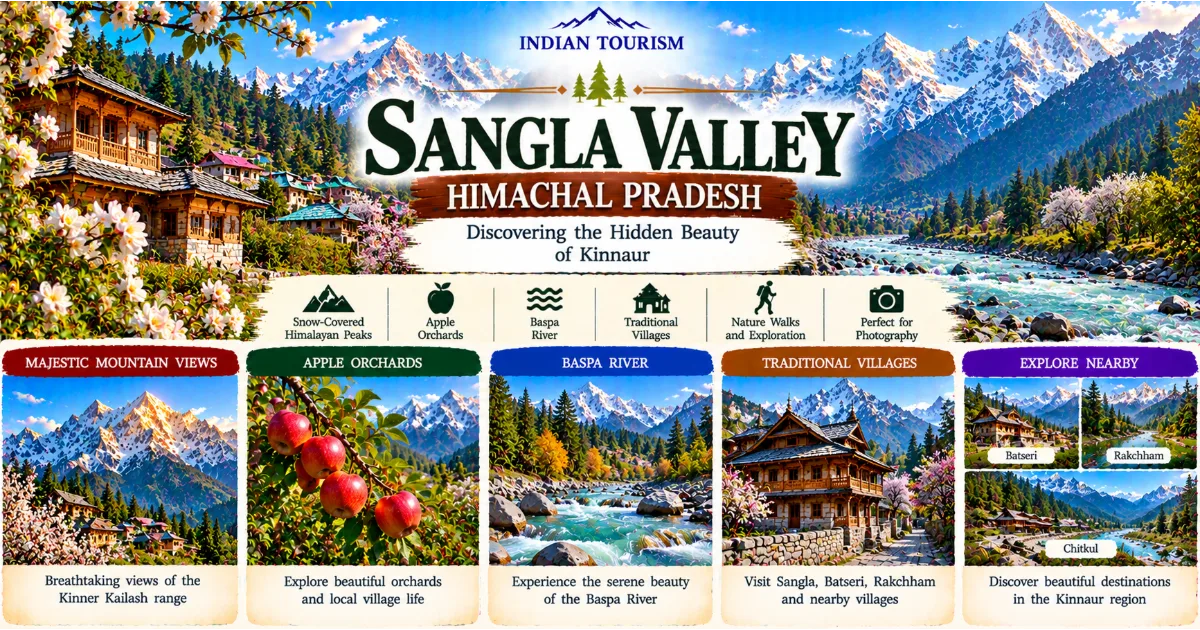
Himachal Pradesh is a land of extraordinary geographical diversity, where green foothills gradually give way to dense forests, deep river valleys, traditional mountain villages and towering Himalayan peaks. Among its many remarkable destinations, Sangla Valley stands out for its natural beauty, distinctive cultural identity and peaceful atmosphere. Located in the Kinnaur district of eastern Himachal Pradesh, the valley follows the Baspa River and offers visitors an unforgettable combination of snow-covered mountains, pine forests, apple orchards, traditional architecture and picturesque settlements.
Sangla Valley is particularly appealing to travellers who want to experience a quieter side of the Himalayas. Unlike destinations where tourism revolves around crowded markets, commercial entertainment and busy shopping streets, this valley invites visitors to appreciate the landscape at a slower pace. The sound of the river, the changing colours of the mountains, the sight of traditional houses and the rhythm of village life create an experience that feels closely connected to nature.
The valley is also culturally significant. Its settlements reflect the distinctive traditions of Kinnaur, a region shaped by centuries of interaction between Himalayan communities, neighbouring regions and different religious influences. Local architecture, agricultural practices, temples, festivals and everyday customs contribute to an identity that cannot be understood through scenery alone.
For photographers, Sangla Valley offers remarkable opportunities to capture mountain landscapes and village life. For nature lovers, it provides a chance to explore riverbanks, forests and open countryside. For cultural travellers, it presents an opportunity to learn about traditional Himalayan settlements and the people who have adapted to life in a challenging mountain environment.
Sangla Valley can be explored as part of a wider journey through Kinnaur, with Kalpa, Chitkul and other regional destinations forming possible additions to the itinerary. However, the valley deserves more than a brief stop on a long road trip. Allowing sufficient time to explore its villages, appreciate its landscapes and experience its changing seasons can turn a simple mountain holiday into a memorable journey through one of Himachal Pradesh's most fascinating regions.
Understanding Sangla Valley and Its Geographic Importance
Where Is Sangla Valley Located?
Sangla Valley lies in the Kinnaur district of Himachal Pradesh, in the eastern Himalayan region of northern India. It is also widely known as the Baspa Valley because the Baspa River flows through the area, shaping its landscape and supporting settlements along its course.
The valley is surrounded by mountain slopes, forested areas, rocky ridges and agricultural land. Its settlements occupy different positions along the valley, creating a landscape in which villages, orchards and cultivated fields appear between steep mountains and the river corridor.
Sangla is one of the principal settlements in the valley and serves as a convenient base for exploring nearby places. The surrounding region includes smaller villages, traditional religious sites and scenic stretches of countryside that reveal different aspects of Kinnaur's natural and cultural heritage.
The geography of the valley changes as travellers move along the road. Some sections are characterised by wooded slopes and agricultural land, while others reveal more exposed mountain terrain. The river remains an important visual and geographical feature, connecting the settlements and providing a sense of continuity through the landscape.
Because the valley lies in a mountainous region, road conditions and travel times can vary significantly. Weather, landslides, snowfall and road maintenance can affect access. Travellers should always check current local conditions before setting out, particularly if their journey includes remote villages or routes beyond Sangla.
The Baspa River and the Valley Landscape
The Baspa River is central to the identity of Sangla Valley. Its course through the mountains creates a natural corridor around which roads, settlements and agricultural areas have developed. The river also contributes to the valley's visual appeal, with flowing water, rocky banks and surrounding mountain scenery creating opportunities for photography and quiet observation.
The appearance of the river changes according to the season, water levels and weather conditions. During warmer months, the surrounding landscape may look greener, while the higher mountains retain snow in suitable conditions. In colder months, the valley can take on a more dramatic appearance as temperatures fall and the surrounding slopes change colour.
Although the river may look inviting, visitors should treat it with caution. Mountain rivers can be powerful, cold and unpredictable. Water levels may rise quickly, and rocks near the water can be slippery. It is important to remain within safe areas, follow local advice and avoid entering the river without appropriate knowledge of the conditions.
The river is not merely a scenic attraction. It is part of the ecological and agricultural environment that supports life in the valley. Respecting the riverbanks, avoiding litter and protecting natural habitats are important responsibilities for everyone who visits.
Sangla Village: The Heart of the Valley
Traditional Himalayan Settlement
Sangla village offers visitors an introduction to the cultural and architectural character of Kinnaur. The settlement is surrounded by mountain scenery and agricultural land, with buildings arranged along the terrain according to the practical demands of village life.
Traditional architecture in Kinnaur often uses locally available materials, including timber and stone. Older buildings may display distinctive wooden construction, sloping roofs and decorative details influenced by regional traditions. Architectural styles vary between villages and individual structures, reflecting differences in age, purpose and local customs.
Walking through Sangla allows travellers to observe the relationship between the built environment and the natural landscape. Narrow lanes, traditional houses, cultivated plots and small religious spaces form part of the village's everyday character.
Visitors should remember that Sangla is a living community. The houses are not simply attractions, and the village lanes are used by residents going about their daily activities. Photography should be respectful, and travellers should ask permission before photographing people closely or entering private spaces.
A village walk can be more rewarding when approached without a rigid checklist. Observing how buildings fit into the landscape, noticing the agricultural patterns and taking time to appreciate the surrounding mountains can provide a stronger sense of place than rushing from one viewpoint to another.
Experiencing Local Life
Agriculture remains an important part of life in many settlements across Kinnaur. Orchards, fields and household gardens contribute to the local economy and influence the appearance of the landscape. Seasonal activities determine how the countryside looks and how families organise their daily routines.
Apple cultivation is particularly important in parts of the district. During different times of the year, visitors may see orchards in blossom, trees carrying developing fruit or agricultural activity associated with harvesting. The exact timing varies according to altitude, weather and the variety being cultivated.
Visitors can learn about local life by staying in a homestay, purchasing local produce where available or speaking respectfully with residents who are willing to share their experiences. These interactions should take place naturally rather than through intrusive questions or assumptions about how people live.
Travellers should also recognise that mountain communities face practical challenges involving transport, weather, infrastructure and access to services. Responsible tourism means appreciating the beauty of the region while respecting the people whose work and traditions sustain it.
Batseri Village: Heritage and Mountain Beauty
A Traditional Village Near Sangla
Batseri is one of the notable villages in the Sangla Valley area. It is known for its traditional settlement character and its connection with the wider cultural landscape of Kinnaur. The village offers an opportunity to explore the architectural and community traditions that distinguish the region from other parts of Himachal Pradesh.
The surrounding scenery provides a striking backdrop for village exploration. Mountain slopes, cultivated land and forested areas create a varied landscape that changes with the light and the season. For photographers, Batseri can offer a combination of traditional buildings and natural scenery.
The village is also a reminder that heritage is not limited to monuments. The arrangement of houses, the use of local materials, agricultural patterns and the relationship between public and private spaces all contribute to the cultural identity of a settlement.
When visiting Batseri, travellers should remain aware that the village is home to residents who may not wish to be photographed or interrupted. Following local guidance and keeping to recognised public routes helps ensure that tourism remains respectful.
Understanding the Value of Local Heritage
Traditional settlements preserve knowledge about how communities have adapted to their surroundings. Building materials, roof designs and the layout of homes may reflect local weather conditions, available resources and established construction practices.
In a mountainous region, these adaptations can be especially important. Homes must respond to cold winters, seasonal precipitation and the practical difficulties of transporting materials. Over time, local construction traditions develop through experience and community knowledge.
Batseri and other villages in the valley allow visitors to observe aspects of this heritage. However, it is important not to assume that every building is ancient or that all houses follow one uniform architectural style. Villages evolve, and contemporary homes often stand alongside older structures.
Responsible heritage tourism supports the preservation of traditional buildings while recognising that local communities need homes and infrastructure suited to modern life. The goal should be to appreciate cultural continuity rather than expect villages to remain unchanged for the convenience of visitors.
Chitkul: Exploring the Upper Baspa Valley
A Memorable Mountain Settlement
Chitkul is one of the best-known destinations associated with the Sangla Valley region. Situated farther along the Baspa Valley, it is famous for its dramatic mountain setting, traditional village character and position near the Indo-Tibetan border region.
The journey towards Chitkul reveals a changing landscape. The valley becomes increasingly dramatic, with mountain slopes, open spaces and river scenery creating a strong sense of entering a more remote Himalayan environment. Depending on the season, visitors may encounter green meadows, snow-covered slopes or a mixture of exposed rock and forest.
Chitkul attracts travellers who want to experience the upper reaches of the valley without necessarily undertaking a long expedition. The village offers opportunities for photography, short walks and cultural exploration, subject to local access conditions and weather.
Because Chitkul is farther from the main transport centres, visitors should plan the journey carefully. Road access may be affected by snowfall, heavy rain, landslides or maintenance work. Travellers should confirm the current route and avoid assuming that a road shown on a map is always safe or accessible.
Respecting the Environment in Chitkul
The natural environment around Chitkul is one of its greatest attractions. The landscape may appear untouched in some places, but mountain ecosystems can be vulnerable to litter, unmanaged development and pressure from increasing visitor numbers.
Travellers can help protect the area by carrying their waste back to suitable disposal points, avoiding damage to vegetation and remaining on recognised paths. Campfires should never be started without explicit permission and appropriate safety arrangements, particularly in areas where dry vegetation or strong winds create a risk.
Visitors should also respect any restrictions that apply near sensitive locations or border areas. Not every scenic place is open for unrestricted exploration, and local instructions should always be followed.
Chitkul is most rewarding when visitors appreciate the landscape without treating it as a place where ordinary rules no longer apply. Responsible behaviour helps preserve the valley for residents, wildlife and future travellers.
Rakchham: A Quiet Village in the Valley
Discovering Rakchham
Rakchham is another notable settlement along the Baspa Valley and can be considered by travellers exploring the region around Sangla and Chitkul. The village is associated with mountain scenery, traditional homes and a quieter atmosphere that appeals to people who prefer less commercialised destinations.
The landscape around Rakchham includes river scenery, mountain slopes and open areas that change with the seasons. It can provide an alternative perspective on the valley for visitors who have already explored Sangla village and want to spend more time appreciating the countryside.
Rakchham is particularly suited to slow travel. Rather than expecting a large collection of formal attractions, visitors can enjoy village walks, observe the surrounding environment and appreciate the contrast between cultivated land and the mountains beyond.
Travel arrangements should be confirmed in advance, particularly for visitors who intend to continue towards Chitkul or travel during periods of uncertain weather. The road network in the region is shaped by the terrain, and distances that appear short on a map may require more time than expected.
Photography and Quiet Exploration
The scenery around Rakchham can be attractive for landscape photography, especially when the light changes across the mountains. Early morning and late afternoon may offer softer lighting, while cloud cover can create different moods across the valley.
Visitors should avoid blocking roads, entering private fields or crossing unstable riverbanks to obtain photographs. A respectful approach allows travellers to document the landscape without disrupting local life.
The village can also appeal to those who enjoy observing small details. Traditional buildings, agricultural plots, local paths and the changing vegetation can provide a more meaningful photographic story than a collection of mountain panoramas alone.
Best Time to Visit Sangla Valley
Spring: Fresh Landscapes and Orchard Blossoms
Spring can be an appealing season for exploring Sangla Valley. As winter conditions gradually ease, the lower parts of the landscape begin to show signs of renewed growth. Depending on the elevation and weather, visitors may see blossoming orchards and changing vegetation.
Temperatures can still be cold, especially in the mornings and evenings. Travellers should carry warm layers and check road conditions before departing from their starting point.
Spring is suitable for visitors who enjoy photography and quiet village exploration. However, mountain weather can change quickly, and snowfall or road disruption may still affect higher areas. A flexible itinerary is important.
Summer: Comfortable Days for Exploration
Summer is a popular time for visiting Sangla Valley because the weather can be more favourable for sightseeing and road travel than during the coldest months. The landscape may appear greener, and longer daylight hours provide more time for village walks and nearby excursions.
This period can also bring more visitors, particularly during holidays. Booking accommodation ahead of time is sensible, and travellers should allow extra time for road journeys.
Although summer days can be pleasant, evenings may remain cool. Visitors should bring suitable clothing and avoid assuming that mountain destinations will have the same temperatures as the plains.
Monsoon: Lush Scenery and Road Challenges
The monsoon can make the valley appear particularly green, but it is also a period when mountain travel requires caution. Heavy rainfall may trigger landslides, rockfalls and road damage. Access to remote settlements can become difficult, and travel times may change with little notice.
Anyone planning a monsoon visit should monitor weather reports and local road advisories. If authorities or local officials advise against travel, their guidance should be followed.
Visitors should avoid walking below unstable slopes, crossing flooded sections or continuing towards remote areas when conditions are deteriorating. The beauty of the landscape is not worth taking unnecessary risks.
Autumn: Clear Skies and Seasonal Colour
Autumn is often an excellent period for travellers who want to enjoy mountain views and explore the villages at a relaxed pace. Weather conditions can be favourable, although temperatures begin to fall as winter approaches.
The agricultural landscape may be particularly interesting during the harvest season. Visitors may see activity in apple orchards and other cultivated areas, depending on the location and timing.
Travellers should remember that harvest periods are important working times for local families. Ask permission before entering orchards, and avoid disturbing agricultural operations.
Winter: Snow, Silence and Preparation
Winter can transform the valley into a dramatic mountain landscape, with snow and cold temperatures affecting some locations. The season can be attractive for experienced winter travellers, but it requires careful preparation.
Roads may be temporarily closed or difficult to navigate. Some accommodation businesses may reduce services or close, and local transport can become less predictable. Visitors should confirm conditions before travelling and avoid setting out without suitable clothing and a realistic contingency plan.
Winter travel is best approached with flexibility. If conditions make an excursion unsafe, remaining in a suitable settlement or postponing the journey is preferable to continuing into difficult terrain.
How to Reach Sangla Valley
By Road from Shimla
Road travel is the principal way to reach Sangla Valley. Travellers commonly approach through Shimla and continue towards the Kinnaur region along the mountain road network, passing through areas such as Rampur and further settlements along the Sutlej corridor before reaching the turn towards the Baspa Valley.
The journey offers a gradual change in scenery, from forested hills to deeper river valleys and more dramatic mountain terrain. However, the route can be demanding, particularly for drivers who have limited experience on narrow mountain roads.
Travel time depends on the starting point, road conditions, traffic and weather. Travellers should not rely solely on a standard navigation estimate. Landslides, roadworks and temporary restrictions may add significant delays.
It is advisable to begin long road journeys early, avoid driving after dark on unfamiliar stretches where possible and keep additional time in reserve. Drivers should never stop at blind corners or park in a way that obstructs local traffic.
By Bus
Travellers may investigate bus services connecting major towns with Reckong Peo and other parts of Kinnaur. From there, onward transport may be available towards Sangla, depending on the timetable and current operating conditions.
Bus services can be a practical option for people who prefer not to drive through the mountains. However, travellers should check departure times, arrival points and onward connections before booking accommodation.
If arriving late in the day, confirm whether transport to the final destination will be available. Avoid assuming that a taxi or local bus can always be arranged at short notice.
By Train or Air
Sangla Valley does not have its own railway station or commercial airport. Travellers arriving by train or air must continue by road from a suitable transport centre.
The best combination depends on the origin of the journey, the availability of connections and the amount of time available. When comparing options, consider the entire journey rather than just the flight or train duration.
Mountain road travel is an important part of the overall journey and should be planned with realistic expectations. Travellers should confirm the final route, road conditions and transport arrangements before departure.
Where to Stay in Sangla Valley
Hotels, Guesthouses and Homestays
Sangla and the surrounding valley offer different types of accommodation, including guesthouses, hotels and homestays. The available options vary by season, and facilities may differ from those found in major hill stations.
When selecting accommodation, consider location, heating, hot water, food arrangements, road access and parking. Travellers visiting during winter should confirm whether the property remains open and what heating facilities are provided.
Homestays can offer a more personal experience of the region. Staying with a local family may provide opportunities to learn about food, customs and everyday life, although visitors should respect household routines and understand that amenities may be simpler than those in larger hotels.
Booking in advance is advisable during popular holiday periods. It is also helpful to confirm cancellation arrangements in case weather or road conditions disrupt the trip.
Choosing the Right Base
Sangla village can serve as a practical base for exploring the central part of the valley. Visitors who want to explore nearby settlements may prefer to stay in or around Sangla and make day trips when road conditions allow.
Those interested in the upper valley may consider an overnight stay closer to their intended destinations, provided accommodation is available and the route is safe. However, changing accommodation too frequently can make a trip unnecessarily tiring.
The best arrangement depends on travel style. Families may value convenient facilities and reliable transport, while photographers and slow travellers may prefer a quieter property with access to scenic surroundings.
Local Food and Culinary Experiences
Food is an important part of discovering Kinnaur's culture. Visitors may find familiar North Indian meals alongside regional preparations influenced by local agricultural products and mountain traditions.
Depending on the establishment, meals may include rice, lentils, vegetables, breads and seasonal ingredients. Homestays sometimes provide opportunities to experience home-cooked food and learn about the role of seasonal produce in local households.
Apple-based products and locally grown fruit may be available during suitable seasons, although availability varies. Travellers who want to purchase regional produce should ask about its origin and buy from reputable local sellers.
Visitors with dietary requirements should confirm ingredients and preparation methods before ordering. In smaller settlements, food choices may be more limited than in larger towns, so planning ahead can be useful.
Carrying drinking water and a few snacks is sensible during longer road trips or village excursions. Travellers should avoid littering and use appropriate disposal facilities rather than leaving packaging along roadsides or riverbanks.
Activities to Enjoy in Sangla Valley
Landscape Photography
Sangla Valley is well suited to landscape photography because of its combination of mountains, river scenery, forests, orchards and traditional settlements. Each part of the valley offers a different relationship between the natural environment and village life.
Photographers can experiment with wide views, details of traditional architecture and seasonal agricultural scenes. Morning and evening light can be particularly attractive, although weather conditions determine what is visible.
Respect for residents should remain a priority. Ask before photographing people closely, avoid entering private land and do not place equipment where it obstructs roads or pathways.
Village Walks
Walking through Sangla and nearby settlements can help visitors appreciate the local environment at a slower pace. A short walk may reveal traditional houses, agricultural plots, religious spaces and everyday activities that are easy to miss when travelling by vehicle.
Choose recognised routes and ask locally about access where necessary. Some paths may cross private land or become difficult after rain or snowfall.
Visitors should wear appropriate footwear and carry water, especially when walking on uneven ground. Anyone planning a longer route should check the distance, elevation changes and return arrangements before setting out.
Nature Appreciation
The valley's natural environment includes riverbanks, forested slopes, cultivated land and mountain habitats. Visitors can spend time observing seasonal changes, vegetation and the relationship between the river and the surrounding countryside.
Wildlife should be observed from a distance. Feeding animals, disturbing nests or leaving food waste can harm local ecosystems. Travellers should avoid removing plants, rocks or other natural objects.
Nature appreciation does not require strenuous activity. Sitting at a safe viewpoint, listening to the river or observing the changing light across the mountains can be equally rewarding.
Cultural Exploration
Visiting local temples and observing traditional architecture can help travellers understand the cultural identity of Kinnaur. Religious sites may follow customs that differ from those visitors are familiar with, so local instructions should always be followed.
Ask permission before photographing religious ceremonies or entering restricted areas. Modest clothing and respectful behaviour are appropriate, particularly when a site is being used for worship.
Cultural exploration is most rewarding when it involves learning rather than simply collecting photographs. Taking time to understand local traditions helps create a more thoughtful travel experience.
A Suggested Four-Day Sangla Valley Itinerary
Day One: Arrival and Relaxation in Sangla
Arrive in Sangla Valley and settle into your accommodation. The first day should remain flexible because mountain road journeys can take longer than expected.
After resting, explore the immediate surroundings with a short village walk if conditions permit. Observe the landscape, traditional buildings and nearby orchards without rushing through the settlement.
Spend the evening enjoying a local meal and preparing for the following day's excursions. Confirm road and weather conditions before planning a longer outing.
Day Two: Sangla Village and Batseri
Begin the day with time to appreciate the valley's mountain views. Later, explore Sangla village and consider a visit to Batseri, subject to access and local conditions.
Focus on the cultural landscape, traditional architecture and relationship between the settlements and the surrounding terrain. Keep the visit respectful and avoid entering private properties without permission.
Return to your accommodation with sufficient daylight remaining. A relaxed schedule will provide more opportunities to enjoy the scenery without turning the trip into a race between destinations.
Day Three: Rakchham and Chitkul
If weather and road conditions are favourable, plan an excursion towards Rakchham and Chitkul. Confirm access before departure and allow enough time for stops along the route.
Enjoy the changing scenery, observe the river and explore accessible parts of the villages. Avoid crossing barriers or entering restricted areas, particularly near exposed terrain or sensitive locations.
Because conditions may change during the day, be prepared to shorten the excursion if necessary. Return before the road becomes difficult to navigate in fading light.
Day Four: A Slow Morning and Departure
Spend the final morning enjoying the valley at a relaxed pace. Depending on the weather, this may include a short walk, photography or time at a safe viewpoint.
Before departure, check the current road situation and confirm your onward transport. Allow additional time for the journey rather than scheduling a distant attraction immediately after leaving Sangla.
Travellers with more time can extend their stay and explore other parts of Kinnaur, provided the itinerary remains realistic and the roads are accessible.
Responsible Tourism and Safety in Sangla Valley
Protecting the Natural Environment
Sangla Valley's beauty depends on the health of its natural environment. Litter, unmanaged waste, damage to vegetation and careless activity near the river can affect both the landscape and local communities.
Carry reusable bottles where practical and take rubbish to suitable disposal points. Avoid leaving food waste, plastic packaging or cigarette ends along trails and roads.
Visitors should not remove stones from historic sites or damage traditional buildings. Supporting local businesses and choosing responsible accommodation can help ensure that tourism contributes positively to the region.
Understanding Mountain Road Risks
Mountain roads can be narrow, steep and exposed. Weather conditions may change rapidly, while landslides and rockfalls can disrupt access with little warning.
Drivers should maintain a safe speed, avoid risky overtaking and follow local restrictions. Visitors unfamiliar with mountain driving may prefer an experienced local driver.
Check current road information before every long journey, particularly during the monsoon and winter. If a route is reported unsafe or closed, do not attempt to bypass official restrictions.
Respecting Local Communities
Sangla Valley is a home for residents, not simply a tourist attraction. Visitors should avoid excessive noise, respect privacy and follow local instructions at religious sites and village spaces.
Ask before photographing people or entering private areas. Purchase local products where appropriate and avoid bargaining in ways that disregard the time and work involved in producing them.
Responsible tourism is built on mutual respect. When visitors treat the community and landscape thoughtfully, they help preserve the qualities that make the valley special.
Conclusion: Why Sangla Valley Deserves a Place on Your Himachal Pradesh Travel List
Sangla Valley offers a compelling combination of Himalayan scenery, traditional villages, river landscapes, agricultural heritage and cultural experiences. Its position along the Baspa River creates a distinctive setting where mountain slopes, forests, orchards and settlements come together in a landscape that changes with every season.
The valley's appeal extends beyond its natural beauty. Sangla, Batseri, Rakchham and Chitkul provide different perspectives on the cultural identity of Kinnaur, while the surrounding mountains and river reveal how geography shapes everyday life in the Himalayas.
For travellers who enjoy photography, nature, village walks and slow exploration, Sangla Valley can be an especially rewarding destination. It is also suitable for visitors who want to understand Himachal Pradesh beyond its most familiar hill stations and commercial centres.
The best journey is one that allows enough time for the landscape to reveal itself. A clear morning may offer sweeping mountain views, while a cloudy afternoon may encourage a quieter walk through the village. Seasonal changes, local traditions and the simple experience of being surrounded by mountains all contribute to the character of the valley.
Travellers should prepare carefully, check road conditions, respect local customs and protect the environment. With thoughtful planning, Sangla Valley can become one of the most memorable stops on a journey through Kinnaur.
For anyone seeking a deeper connection with the eastern Himalayas, Sangla Valley is more than a scenic road-trip destination. It is a place where nature, culture and mountain life come together, offering an experience that stays with visitors long after they have returned home.
#IndianTourism #HimachalPradesh #SanglaValley #Kinnaur #BaspaValley #Chitkul #Rakchham #BatseriVillage #ExploreHimachal #HimalayanTravel #MountainVillages #NatureTravel #TravelIndia #ResponsibleTourism
