
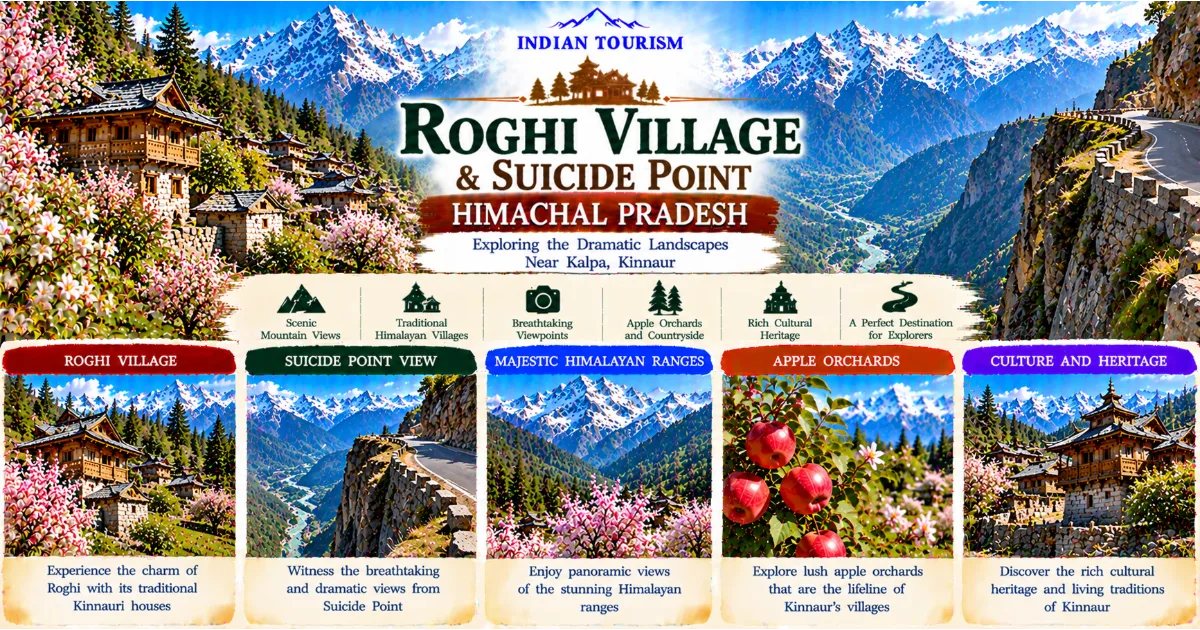
A Journey Through the Untamed Beauty of Kinnaur
Himachal Pradesh offers travellers a remarkable variety of landscapes, from forest-covered hills and apple orchards to deep valleys, ancient settlements and towering Himalayan peaks. Among its most distinctive regions is Kinnaur, a district where traditional mountain communities exist alongside some of the most dramatic scenery in northern India. Near Kalpa, the road passes through rugged slopes, quiet villages and viewpoints that reveal the extraordinary relationship between mountain geography and human settlement. One of the most widely discussed viewpoints in this area is commonly known as Suicide Point, a dramatic roadside location associated with steep cliffs and sweeping valley views.
The name can sound alarming to first-time visitors, but the place is known among travellers primarily as a natural viewpoint. Its appeal comes from the immense scale of the surrounding landscape, where exposed rock faces, steep slopes and distant mountain ridges create a powerful visual impression. It is not a conventional landscaped viewpoint with extensive facilities. Its natural setting makes caution essential, and visitors should appreciate the scenery from safe, stable areas rather than approaching cliff edges for photographs.
This guide focuses on the viewpoint near Kalpa and the wider landscape of Kinnaur. It also explains how travellers can combine the stop with a visit to nearby settlements, orchards and cultural attractions. The purpose is to encourage thoughtful exploration of the region, with an emphasis on safety, responsible tourism and respect for the people who live in these mountains.
Kinnaur is not simply a destination for dramatic photographs. It is a living cultural landscape shaped by agriculture, religious traditions, regional history and the challenges of mountain life. A journey through this area becomes more meaningful when visitors take time to understand the countryside instead of treating each viewpoint as a brief stop on a crowded itinerary.
Where Is Suicide Point Located?
The viewpoint commonly referred to as Suicide Point is associated with the Kalpa area of Kinnaur district in Himachal Pradesh. Kalpa is situated above the Sutlej Valley and is known for its mountain scenery, traditional settlement character and views towards the Kinnaur Kailash region. The surrounding terrain includes steep slopes, rocky cliffs, cultivated land and winding mountain roads.
The viewpoint is generally visited as part of a trip to Kalpa and the nearby settlements. It is not an independent tourist town with its own extensive accommodation and visitor infrastructure. Most travellers include it in a wider journey through Kinnaur, using Kalpa or Reckong Peo as a base.
The landscape around the viewpoint is shaped by the steep topography of the Himalayas. Roads follow the contours of mountain slopes, and sections of exposed terrain can appear dramatic even from a distance. This geography creates excellent opportunities to appreciate the scale of the valley, but it also means that visitors must take road safety and unstable ground seriously.
Because informal viewpoints may not have the same facilities as developed tourist attractions, the precise stopping point and current access conditions should be confirmed locally. Road works, weather, falling rocks and other mountain hazards can change the suitability of a location. Visitors should never assume that a roadside pull-off is safe simply because other vehicles have stopped there.
The name used for the viewpoint is widely repeated in travel discussions, but travellers should remember that it refers to a natural landscape feature rather than a purpose-built attraction. Its dramatic reputation should not encourage risky behaviour. The best experience comes from viewing the valley from a safe distance and appreciating the surrounding scenery without approaching unstable edges.
Why Is the Viewpoint Famous?
The viewpoint attracts attention because of its striking topography. The mountain slopes in this part of Kinnaur can fall sharply into deep valleys, creating an impression of immense height and openness. Exposed rock formations, layered ridges and distant mountains contribute to a landscape that looks very different from the gentler hills found in many other parts of Himachal Pradesh.
The region's visual character comes partly from the geological processes that have shaped the Himalayas over millions of years. Tectonic activity, erosion, river systems and changes in climate have produced steep slopes and rugged terrain. The result is a landscape where mountains rise sharply above valleys and roads sometimes pass close to dramatic drops.
Visitors often find that the scale of the terrain is difficult to appreciate from photographs alone. A wide view can reveal how the road follows the mountainside, how settlements occupy comparatively level areas and how distant ridges overlap towards the horizon. The landscape provides an opportunity to reflect on the powerful natural forces that continue to shape the region.
The viewpoint is also popular among photographers because changing light can create different effects across the cliffs and valleys. Morning and afternoon conditions may reveal different textures, while clouds can partially cover distant mountains and create a changing atmosphere. Clear weather may offer more extensive visibility, but cloud cover can also give the scenery a distinctive character.
However, visitors should not measure the quality of a visit by how close they can get to an edge. A safe viewing position can still provide impressive scenery. The landscape is powerful enough to be appreciated without unnecessary risk, and photographs taken from stable ground can capture its character effectively.
Understanding the Name and Visiting Responsibly
The term Suicide Point can be disturbing, especially for families and travellers unfamiliar with the area's reputation. It is a name used in local and tourist descriptions of certain dramatic cliffside viewpoints in the region. The name should not be treated as an invitation to engage in dangerous behaviour or as a reason to approach the edge.
Visitors should avoid sensationalising the location. It is better to understand it as a rugged natural viewpoint that requires care. Social media images sometimes reward dramatic poses or photographs taken close to drops, but these images can create misleading expectations about what is safe.
Mountain terrain can be deceptive. A surface that looks firm may contain loose stones, soil or fractured rock. Strong gusts of wind, rain, snow or ice can further increase the risk. Even experienced travellers may underestimate the distance to an edge when looking through a camera or mobile phone screen.
The responsible approach is to remain behind any barriers where they exist, keep away from unstable ground and follow instructions from local authorities or residents. Do not climb onto rocks, cross warning barriers or attempt to reach an isolated ledge for a photograph. Children should remain under close supervision, and pets should be kept secure.
Visitors should also avoid blocking traffic while stopping to take pictures. Mountain roads can be narrow, and other vehicles may have limited space to pass. Park only where it is permitted and safe to do so. If there is no suitable stopping place, continue along the route rather than forcing a roadside halt.
The name also makes sensitivity important in public discussion. Avoid turning the location into a joke or using language that romanticises self-harm. The viewpoint can be appreciated for its geology and scenery without celebrating the dangerous behaviour associated with its name.
The Natural Landscape of the Kalpa Region
The area surrounding Kalpa contains a complex mixture of steep mountains, cultivated terraces, orchards, forested slopes and rocky terrain. These features change with altitude and exposure, creating a varied landscape within a relatively small geographical area.
The Sutlej River has played an important role in shaping the wider region. Over long periods, river erosion has cut through mountain terrain and contributed to the formation of deep valleys. The resulting landscape is characterised by sharp differences in elevation and dramatic changes in the angle of the slopes.
The Kinnaur Kailash region forms an important part of the visual identity of Kalpa. On clear days, distant mountain views can dominate the horizon, while changing cloud cover may hide and reveal peaks throughout the day. The appearance of the mountains varies according to the season, sunlight and weather conditions.
Vegetation also changes across the landscape. Lower and more sheltered areas may support trees and cultivated land, while higher and more exposed slopes can appear rocky and sparsely vegetated. Apple orchards are particularly important in the wider Kinnaur economy and contribute to the visual character of settlements around Kalpa.
These elements make the region appealing to nature lovers, photographers and travellers interested in mountain geography. Yet the landscape is also a working environment. Agricultural land supports local livelihoods, and roads provide essential connections between communities. Visitors should therefore avoid treating fields, orchards and roadside areas as unrestricted recreational spaces.
The most rewarding way to experience the landscape is to observe it from safe public viewpoints, take time to appreciate the changes in light and terrain, and recognise the relationship between natural conditions and everyday life in the mountains.
Kalpa: The Ideal Base for Exploring the Area
Kalpa is one of the best-known destinations in Kinnaur and provides a useful base for exploring the surrounding countryside. The settlement is associated with traditional houses, apple orchards and mountain views, making it attractive to visitors who want both scenery and a sense of local culture.
Unlike a roadside viewpoint, Kalpa offers opportunities to spend a longer period in one place. Travellers can walk through accessible parts of the settlement, enjoy meals at local establishments and observe how homes and cultivated land are arranged across the hillside. The village environment provides a more complete introduction to the region than a short stop beside a cliff.
Kalpa is also valuable because it allows visitors to adjust their schedule according to the weather. Mountain visibility can change quickly, and an overnight stay creates more than one opportunity to see the surrounding peaks. A clear morning may provide views that were obscured by clouds the previous afternoon.
Accommodation in the area ranges from simple guesthouses and homestays to hotels with more contemporary facilities. Availability and standards vary, so travellers should confirm heating, hot water, meals and road access before booking. During colder months, these details become particularly important.
The village can also serve as a starting point for visiting nearby settlements and cultural sites. Travellers should plan distances realistically and avoid attempting to cover too many destinations in a single day. Mountain roads often require more time than expected, and a flexible itinerary is safer and more enjoyable.
By using Kalpa as a base, visitors can appreciate the wider region without making every sightseeing stop part of a hurried journey. The viewpoint then becomes one element of a broader experience rather than the sole purpose of the trip.
Best Time to Visit
The most suitable time to visit the Kalpa region depends on the type of experience a traveller wants. Weather, visibility, road conditions and temperature all influence the journey, and mountain conditions can change rapidly.
Spring: Fresh Landscapes and Orchard Activity
Spring brings gradual changes to the surrounding countryside as temperatures rise. Depending on the elevation and local weather, orchards may begin to blossom, and cultivated areas become greener. This can be an attractive period for travellers interested in rural landscapes and photography.
However, mornings and evenings may remain cold, and some routes can still be affected by winter conditions. Visitors should carry warm clothing and check current road information before travelling.
Summer: Comfortable Conditions for Sightseeing
Summer is often a convenient season for exploring Kinnaur. Daytime conditions can be comfortable for walking around Kalpa and visiting nearby attractions, while the landscape may appear greener than during the colder months.
The season can also be busy, particularly during holiday periods. Booking accommodation ahead of time may be useful, and travellers should allow enough time for mountain journeys. Clear weather is never guaranteed, so a flexible plan remains important.
Monsoon: Extra Caution on Mountain Roads
Monsoon conditions require particular attention to road safety. Rainfall can increase the risk of landslides, falling rocks and temporary closures in mountainous areas. Conditions differ across Himachal Pradesh, but travellers should not assume that a route is safe merely because it was open recently.
Before travelling, check local road information and weather forecasts. Avoid stopping below unstable slopes or beside areas where rocks are falling. If authorities or local residents advise against travel, postpone the visit.
Autumn: Crisp Air and Mountain Views
Autumn can be rewarding for visitors who appreciate clear mountain scenery and changing agricultural landscapes. The air may feel crisp, and visibility can be excellent during suitable weather conditions.
Temperatures fall as the season progresses, especially after sunset. Warm clothing is advisable, and travellers should confirm road conditions if their itinerary includes higher or more remote locations.
Winter: Cold Conditions and Possible Snow
Winter brings a quieter atmosphere but requires more preparation. Snowfall and icy conditions may affect roads, pathways and access to viewpoints. Some accommodation providers may have limited seasonal services, and travel times can increase.
Visitors should confirm that the route and stopping area are accessible before setting out. Suitable footwear and warm clothing are essential, and drivers should not attempt icy mountain roads without appropriate equipment and experience.
For many travellers, the warmer months and early autumn offer a practical balance between comfortable sightseeing and travel flexibility. Current conditions should always guide the final decision.
How to Reach the Kalpa Viewpoint
The viewpoint is generally explored as part of a journey through the Kalpa area of Kinnaur. The best route depends on the starting point and the current condition of mountain roads.
By Road
Travellers coming from Shimla and other parts of Himachal Pradesh generally follow the road network towards Kinnaur and continue to Kalpa. The journey passes through mountain terrain, with bends, narrow stretches and changes in elevation.
Travel time can vary considerably because road conditions are affected by weather, traffic, construction and landslides. Drivers should avoid relying solely on map estimates and should ask locally about current conditions.
By Bus
Public transport connects major settlements along the Kinnaur route. Travellers may be able to reach Reckong Peo or another nearby settlement and continue by local taxi or other available transport. Service frequency and onward connections vary, so schedules should be confirmed before departure.
By Train
There is no railway station in Kalpa. Visitors arriving by train must continue by road from a suitable station serving their broader itinerary.
By Air
Kalpa does not have its own airport. Travellers arriving by air need to arrange onward road transport. Because the mountain journey can be long, it is sensible to allow a generous connection window rather than relying on a tightly timed transfer.
Local Access and Roadside Safety
Before visiting the viewpoint, confirm its exact location and whether stopping is currently permitted. The area may not have formal parking, barriers or visitor facilities. If the roadside is narrow or unsafe, do not stop there.
Never leave a vehicle where it obstructs traffic, and do not stand in the roadway to take photographs. A local driver familiar with the area may be useful for visitors who are not comfortable driving on mountain roads.
Places to Explore Near the Viewpoint
A visit to the viewpoint can be combined with other destinations around Kalpa and the wider Kinnaur region. The best choices depend on the amount of time available and current road conditions.
Kalpa Village
Kalpa itself deserves time beyond a brief overnight stay. Its traditional settlement character, orchards and mountain views provide opportunities for relaxed exploration. Visitors can walk along accessible public lanes, observe local architecture and enjoy the surrounding scenery.
The village is also a practical place to arrange accommodation and meals. Spending more time in Kalpa allows travellers to experience changing mountain light and avoid rushing between attractions.
Reckong Peo
Reckong Peo is an important administrative and commercial centre in Kinnaur. It offers access to shops, transport services and other practical facilities. A visit provides a different perspective on the district, showing how regional services support smaller settlements.
Travellers may use the town to arrange onward transport or purchase supplies before continuing through the region.
Kothi Village
Kothi is a settlement in the Kalpa area known for its mountain setting and cultural character. Visitors can appreciate the traditional village environment and the relationship between buildings, religious spaces and the surrounding terrain.
As with any village, travellers should respect private property and follow local guidance when visiting religious sites.
Sangla Valley
Sangla Valley offers a different collection of landscapes and settlements within Kinnaur. The Baspa River, cultivated areas and mountain villages create a scenic environment that attracts travellers interested in nature and rural life.
The valley is not a quick detour from every part of Kinnaur. Visitors should consider the road journey carefully and allow enough time rather than attempting to fit several distant destinations into one day.
Kamru Fort
Kamru Fort is a historic landmark near Sangla, associated with the former Bushahr princely state and traditional Kinnauri architecture. It provides an opportunity to explore the historical dimension of the region alongside its natural scenery.
A visit is particularly rewarding for travellers interested in heritage, architecture and the history of mountain settlements.
Roghi Village
Roghi Village, near Kalpa, offers another perspective on the countryside of Kinnaur. Its traditional homes, orchards and mountain setting appeal to visitors who enjoy exploring smaller settlements.
As with the viewpoint, visitors should respect private property and avoid entering agricultural land without permission.
Photography Tips for the Kalpa Landscape
The region can be rewarding for photographers because its steep terrain, changing light and distant mountain ridges create strong visual contrasts. However, the safest photographic position is more important than any particular composition.
Choose Stable Viewing Areas
Photographs should be taken from stable ground well away from cliff edges and unstable slopes. Do not climb onto rocks or cross barriers to obtain a more dramatic angle. Loose material may shift unexpectedly, and a camera screen can distract from the actual terrain.
Pay Attention to Changing Light
Morning and afternoon light can reveal different textures across the mountains. Clear conditions may provide long views, while clouds can add depth and atmosphere. Travellers should allow time for changing conditions rather than assuming the landscape will look identical throughout the day.
Include the Broader Landscape
A photograph can show more than the cliff itself. Including the valley, distant ridges, road contours or nearby vegetation can help communicate the scale of the region. Safe compositions often provide a more complete view than close photographs taken from dangerous positions.
Respect People and Property
Ask permission before photographing residents at close range. Avoid pointing cameras into private homes and courtyards, and follow any restrictions at religious sites. Photographs should not interfere with traffic or the everyday activities of the community.
Food and Local Culinary Experiences
The Kalpa region provides opportunities to experience food influenced by the climate, agricultural practices and cultural traditions of Kinnaur. Meals may include grains, vegetables, pulses and seasonal ingredients, although the exact menu varies between households and establishments.
Visitors should not expect every small settlement to have extensive restaurant options. It is useful to ask about meal availability before setting out and to carry suitable snacks for longer excursions.
Local apple production is an important feature of the wider region. Depending on the season, travellers may find locally grown fruit and other agricultural products for sale. Buying from legitimate local sellers can support the community while allowing visitors to experience the area's produce.
For travellers staying in Kalpa, guesthouses and homestays may offer home-style meals. Guests should communicate dietary requirements clearly and confirm ingredients when necessary.
Waste should be handled responsibly. Do not leave food packaging or plastic bottles beside roads, on viewpoints or in natural areas. Keeping the landscape clean is an essential part of enjoying it.
Accommodation Near Kalpa
Kalpa is a practical base for travellers visiting the viewpoint and surrounding destinations. Accommodation options can include guesthouses, homestays and hotels, with facilities varying by property and season.
A homestay may offer a more personal experience of local hospitality. Guests can learn about everyday routines and enjoy home-style meals when these are available. However, a homestay is also a private household, so visitors should respect the host's rules concerning shared spaces, quiet hours and photography.
Before booking, confirm heating, hot water, meals, parking and access arrangements. These details are especially important during colder months, when temperatures may fall sharply after sunset.
Travellers visiting during popular holiday periods should consider reserving accommodation in advance. Those planning a winter journey should also check whether the property remains open and whether the approach road is accessible.
Camping should take place only where it is permitted and where the necessary permission has been obtained. Avoid lighting fires in unsafe areas and carry all waste away. The mountain environment should not be damaged for the sake of a temporary stay.
Responsible Tourism and Environmental Protection
Responsible tourism is essential in Kinnaur because the region combines fragile mountain terrain with residential settlements and agricultural land. Visitors can help protect the area by making careful choices throughout the journey.
First, avoid unsafe roadside stops. Mountain roads may have limited space, and a poorly parked vehicle can obstruct traffic or create hazards for other travellers. If a location does not provide a safe place to stop, continue along the route.
Second, keep away from unstable slopes and cliff edges. Weather, erosion and loose rock can make apparently solid ground dangerous. Follow local warnings and never cross barriers for photographs.
Third, carry waste until it can be disposed of appropriately. Plastic, cans and food packaging should never be abandoned on roadsides, in streams or among orchards. Reusable water bottles and minimal packaging can reduce the amount of rubbish produced during the trip.
Fourth, respect private property. Orchards, fields, homes and courtyards should not be entered without permission. The land surrounding a viewpoint may be part of someone's livelihood, and visitors should not damage crops or disturb agricultural work.
Finally, support local businesses when possible. Buying local products, eating at local establishments and using local accommodation can help tourism benefit residents. Fair payment and respectful communication are important parts of responsible travel.
A Suggested One-Day Itinerary
A one-day itinerary around Kalpa can combine the viewpoint with cultural exploration and time to appreciate the surrounding landscape.
Begin with breakfast at your accommodation in Kalpa. Before leaving, check the weather and confirm whether the intended stopping area is accessible and safe. Carry drinking water, a warm layer and suitable footwear.
Visit the viewpoint only if there is a safe and permitted place to stop. Appreciate the cliffs and valley from stable ground, and avoid approaching edges or standing in the roadway. If conditions are poor, skip the stop and continue with other parts of the itinerary.
Return to Kalpa and spend time exploring accessible village lanes. Observe traditional architecture, orchards and the arrangement of houses along the hillside. If local religious sites are open to visitors, follow their rules and avoid interrupting worship.
Enjoy lunch in Kalpa or at a suitable local establishment. The afternoon can be used for additional sightseeing, photography from safe locations or a visit to a nearby settlement such as Kothi, depending on time and road conditions.
Finish the day with enough time to return to the accommodation before dark. Mountain roads require attention, and unexpected delays are possible. The itinerary should remain flexible rather than being treated as a fixed schedule.
A Two-Day Itinerary for Kalpa and Kinnaur
Travellers with two days available can explore the region more comfortably and avoid rushing between distant destinations.
On the first day, travel to Kalpa and allow time to settle into the accommodation. Depending on arrival time, explore accessible parts of the village and enjoy the mountain scenery. Resting after a long drive can make the next day's activities more comfortable.
On the second day, visit the viewpoint if conditions permit and spend time exploring Kalpa's cultural landscape. Travellers with sufficient time may choose a nearby settlement or heritage attraction, provided the road journey is realistic.
Those who want to visit Sangla Valley and Kamru Fort should consider allowing additional travel time. The region's roads and changing weather can make it difficult to cover distant destinations in a single day.
A relaxed itinerary gives visitors more opportunities to appreciate the landscape and reduces the pressure to take risks. It also allows the journey to change according to weather, access and local advice.
Practical Safety Tips for Travellers
Mountain safety should guide every decision during a visit to the Kalpa region. The landscape is beautiful, but steep terrain and changing weather require attention.
Stay well away from cliff edges, even when other visitors appear to be standing close to them. Do not rely on photographs or videos as evidence that a particular spot is safe. Ground conditions may have changed, and an image cannot show every hazard.
Avoid visiting exposed viewpoints during heavy rain, snowfall, strong winds or poor visibility. Wet and icy surfaces can be slippery, while falling rocks may create hazards near steep slopes.
Drivers should maintain safe speeds and follow road instructions. Do not stop suddenly or park in narrow sections. If a safe stopping place is unavailable, continue to a more suitable location.
Children should remain under close supervision near roads and uneven ground. Visitors should also keep their attention on their surroundings rather than walking while looking at a phone screen.
Carry essential medication and keep a basic emergency plan. Mobile connectivity may be inconsistent, so do not depend entirely on continuous access to online maps or communication services.
Above all, be willing to change the plan. Missing a viewpoint is far better than taking an unnecessary risk. The mountains will remain worth exploring when conditions are safe.
Who Should Visit the Kalpa Viewpoint?
The viewpoint may appeal to travellers who enjoy dramatic landscapes, mountain photography and exploring the natural geography of Kinnaur. It can be included in a broader itinerary for couples, families and independent travellers who want to understand the region's scenery.
Nature lovers may appreciate the contrast between the steep cliffs, distant ridges and cultivated areas around Kalpa. Photographers can observe how changing light alters the appearance of the landscape, provided they work from safe locations.
Travellers interested in local culture can combine the stop with Kalpa, Kothi, Kamru Fort or other suitable destinations. These places provide a broader understanding of Kinnaur beyond its dramatic terrain.
The viewpoint may be less suitable for visitors who are uncomfortable with steep landscapes or exposed mountain roads. Those travelling with young children should be especially careful and may prefer to skip the stop if there is no safe viewing area.
Visitors seeking extensive visitor facilities should also set realistic expectations. Informal roadside viewpoints may not have toilets, parking, barriers or food services. Preparation and local guidance are therefore important.
Conclusion: Appreciating Kinnaur's Dramatic Beauty with Care
The viewpoint commonly known as Suicide Point near Kalpa has become part of the wider travel identity of Kinnaur because of its dramatic mountain setting. Steep cliffs, deep valleys and distant Himalayan ridges create a striking landscape that helps visitors appreciate the scale and complexity of the region.
Yet the best way to experience this location is through caution and respect. It should be treated as a natural viewpoint, not as a challenge to approach a dangerous edge. Safe stopping areas, current road information and awareness of changing weather are essential.
The wider Kalpa region offers much more than a dramatic roadside view. Traditional villages, apple orchards, historic structures and local cultural traditions provide opportunities to understand the relationship between people and the mountains. Combining the viewpoint with these experiences creates a more balanced and rewarding journey.
Visitors can help preserve the area by respecting private property, avoiding waste, supporting local businesses and following local advice. A responsible approach ensures that the landscape remains accessible and meaningful for future travellers and the communities who live there.
Kinnaur rewards those who travel patiently. Its beauty lies not only in the depth of its valleys or the height of its peaks but also in the villages, agricultural landscapes and traditions that exist within this demanding environment. By exploring thoughtfully, travellers can experience the region's extraordinary scenery while keeping safety, dignity and environmental care at the centre of the journey.
#IndianTourism #HimachalPradesh #Kinnaur #Kalpa #HimalayanViews #MountainTravel #ExploreHimachal #ResponsibleTourism #IncredibleIndia #NaturePhotography #HimalayanLandscapes #TravelIndia
