
Discovering the Quiet Charm of Ribba
Himachal Pradesh is a land of remarkable contrasts, where green valleys transition into rugged mountains and traditional villages preserve cultural identities shaped by centuries of life in the Himalayas. Among the lesser-known destinations of Kinnaur district, Ribba offers travellers an opportunity to explore a landscape defined by mountain agriculture, traditional architecture, local customs and the distinctive character of the Sutlej Valley. Far from the atmosphere of crowded commercial hill stations, Ribba invites visitors to experience a quieter side of Himachal Pradesh.
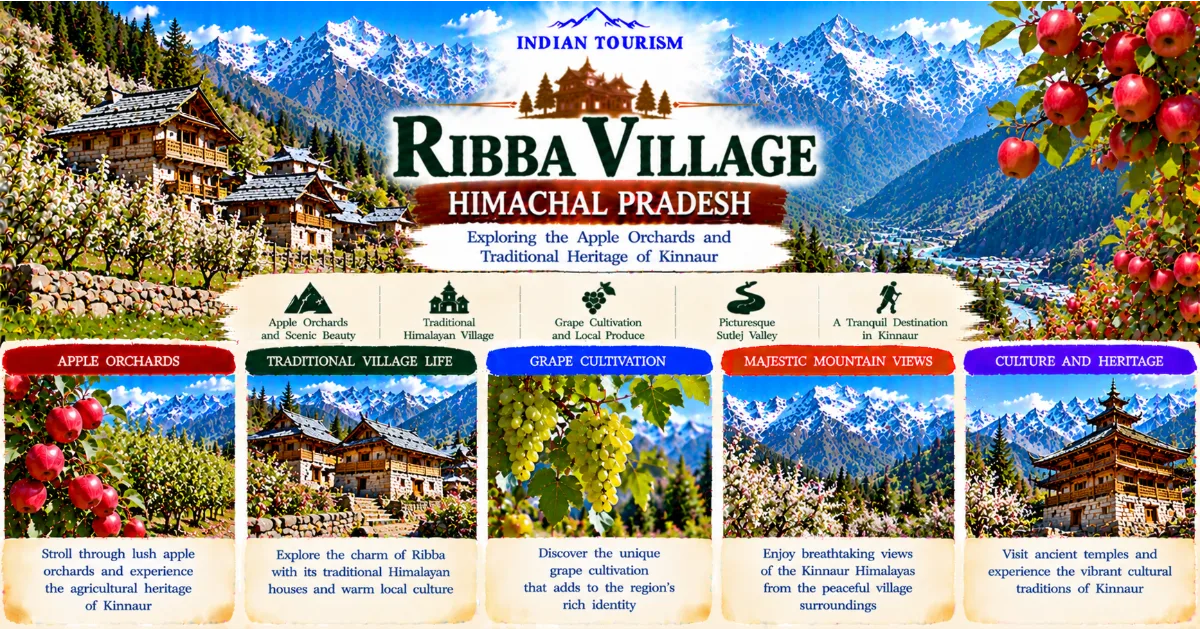
Located in the Kinnaur region, Ribba is associated with the agricultural landscape of the district, particularly the cultivation of apples and grapes. Fruit farming is an important part of the local economy, and the surrounding countryside reflects the relationship between mountain geography, agricultural knowledge and changing seasonal conditions. The village also belongs to a region with a distinctive cultural heritage, where traditional homes, religious practices and local community life remain important parts of the landscape.
A visit to Ribba can be rewarding for travellers interested in rural tourism, photography, regional food traditions and the everyday life of Himalayan communities. Rather than expecting a large collection of commercial attractions, visitors should approach the village as a place to observe, learn and appreciate. Its appeal lies in the details of the countryside, the arrangement of homes and fields, and the way local livelihoods adapt to the demands of mountain terrain.
Ribba can also form part of a wider journey through Kinnaur. Depending on the route and available time, travellers may combine it with destinations such as Reckong Peo, Kalpa, Nichar and other settlements along the Sutlej Valley. Since mountain roads can be affected by weather, landslides and maintenance work, an itinerary should always allow sufficient time for travel.
The most meaningful way to experience Ribba is to recognise that it is a living community. The orchards are working agricultural spaces, the homes belong to residents, and the cultural landscape has significance beyond tourism. By respecting local customs, supporting village businesses and travelling responsibly, visitors can appreciate Ribba while helping protect the qualities that make Kinnaur distinctive.
Where Is Ribba Village Located?
Ribba is situated in Kinnaur district in the eastern part of Himachal Pradesh. The district occupies a distinctive part of the western Himalayas, where river valleys, steep slopes, mountain settlements and agricultural terraces form a varied landscape. Ribba belongs to the wider environment of the Sutlej Valley, a region whose geography has influenced transportation, settlement patterns and economic activity for generations.
Kinnaur is known for its contrasting landscapes. Some areas contain cultivated terraces and fruit orchards, while other sections are characterised by exposed rock, steep mountain faces and high-altitude terrain. The Sutlej River has played an important role in shaping the region, creating a valley corridor through which roads connect settlements that might otherwise be difficult to reach.
Ribba's location makes it relevant to travellers exploring the agricultural and cultural side of Kinnaur. The village can be incorporated into a longer road journey through the district, although the exact route and travel time depend on the starting point and current road conditions.
The wider Kinnaur road network includes winding mountain stretches, steep gradients and sections that may be affected by landslides or falling rocks. Travellers should avoid estimating journey times from distance alone. It is sensible to confirm current conditions locally and allow extra time for delays.
Visitors should also distinguish between the village itself and the wider region. Not every road, field or settlement visible from a main route is intended for tourist access. Local guidance can help identify suitable places to stop and explore without disturbing residents or agricultural work.
For travellers interested in discovering a less commercialised destination, Ribba offers a chance to understand Kinnaur through its villages and livelihoods rather than through scenery alone.
The Natural Landscape of Ribba
The landscape around Ribba reflects the geographical diversity of Kinnaur. Mountain slopes rise above cultivated land, while roads and settlements follow the contours of the valley. The contrast between rocky terrain and productive agricultural areas is one of the defining characteristics of the district.
The Sutlej River is an important geographical feature of the wider region. Over long periods, the river and its tributaries have eroded mountain material and helped create the deep valleys through which modern roads now pass. These valleys provide routes for travel and communication while also creating areas where settlements and agriculture can develop.
Mountain terrain can appear dramatically different over relatively short distances. A sheltered slope may support trees and cultivated plots, while a nearby exposed section may be rocky and sparsely vegetated. Altitude, sunlight, soil conditions and access to water all influence the character of the landscape.
The agricultural areas around Kinnaur's villages demonstrate how communities have adapted to these conditions. Fruit orchards require suitable locations, seasonal care and an understanding of local weather. Their presence changes the appearance of the countryside and contributes to the region's economic identity.
Visitors exploring Ribba should pay attention to the relationship between the village and its surroundings. The cultivated land is not separate from the natural environment. It is the result of generations of work, knowledge and adaptation to the terrain.
The landscape also requires responsible behaviour. Steep slopes may contain loose stones, and roadside areas may be unstable after rain or snow. Travellers should avoid walking into unsafe terrain for photographs and should remain on suitable public routes.
Ribba and the Agricultural Heritage of Kinnaur
Agriculture is one of the most important aspects of Kinnaur's rural identity. The district is widely associated with fruit cultivation, especially apples, and some areas are also known for grape production. These crops reflect the region's agricultural diversity and the ability of local farmers to work within a challenging mountain environment.
Fruit cultivation requires careful planning. Farmers must consider soil conditions, temperature, water availability, slope, sunlight and seasonal weather. The growing season is influenced by altitude and local climate, so the timing of agricultural activities can vary between settlements.
Orchards require work throughout the year. Trees need maintenance, suitable irrigation and protection against weather-related problems. Harvesting involves additional labour, while transporting fruit from mountain villages to markets requires dependable road access.
The agricultural landscape also provides a connection between local households and wider economic networks. Fruit grown in Kinnaur may travel far beyond the district, linking mountain communities with markets in other parts of India. This movement of produce makes roads and transport infrastructure particularly important to the regional economy.
Visitors should remember that orchards are working properties rather than public gardens. Picking fruit, walking between trees or entering fenced areas without permission can damage crops and disrupt agricultural activity. Travellers who wish to purchase local produce should look for legitimate sellers and ask about seasonal availability.
Agricultural tourism can be meaningful when it is based on respect and genuine interest. Learning about local crops, understanding seasonal work and purchasing produce directly from authorised sellers can help visitors appreciate the relationship between farming and community life.
Apples and Grapes: The Fruit Culture of Ribba
Fruit cultivation contributes significantly to the identity of parts of Kinnaur, and Ribba is associated with both apple-growing and grape-growing traditions. The combination of these crops illustrates the agricultural variety that exists across the district.
Apples are among the most recognisable products of Kinnaur. Their cultivation depends on suitable growing conditions, orchard management and seasonal weather. Apple trees require attention throughout the agricultural year, including pruning, maintenance and preparation for harvest. The quality and timing of production can vary according to local conditions.
Grape cultivation adds another dimension to the agricultural character of the region. Grapes require suitable growing conditions and careful management, and their cultivation reflects the specialised knowledge of local growers. In areas where grapes are grown, the crop can form part of a distinctive local agricultural identity.
The presence of fruit orchards also shapes the appearance of villages. Rows of trees occupy cultivated plots, creating seasonal changes in colour and texture. During flowering periods, orchards may look different from their appearance during fruit development or harvest. The landscape therefore changes throughout the year.
Travellers should avoid assuming that fruit will be available for picking whenever they visit. Harvest schedules depend on the crop and season, and orchards may be private property. Visitors interested in agricultural experiences should ask local businesses or residents whether any organised visits or purchases are available.
Buying fruit from legitimate local sellers can support farmers and provide a direct connection with the region's agricultural economy. Visitors should also avoid bargaining in ways that disregard the labour involved in growing and transporting produce.
The fruit culture of Ribba reflects a broader story of adaptation and enterprise in the Himalayas. It shows how communities have developed agricultural practices that connect local environmental conditions with regional and national markets.
Traditional Architecture and Village Design
The architecture of Kinnaur reflects the practical demands of mountain life, the availability of local materials and the region's cultural traditions. Ribba's village environment can be appreciated through its houses, paths and the relationship between buildings and cultivated land.
Traditional Himalayan construction often makes use of stone and timber. Stone provides a durable building material, while timber can contribute structural support and flexibility. The way these materials are combined varies according to local craftsmanship, the age of a building and the resources available to the household.
Mountain architecture must respond to cold winters, temperature changes, precipitation and uneven terrain. Buildings are constructed according to the conditions of the site, and their arrangement often reflects the availability of suitable land and access routes.
Older structures may preserve traditional construction details, while newer homes may use concrete, metal roofing and contemporary facilities. These differences reveal the continuing evolution of village life. Architecture is not static, and residents adapt their homes to changing needs while maintaining connections with local building traditions.
Walking through accessible village lanes can help visitors understand how the settlement fits into the landscape. The arrangement of homes, paths and agricultural plots reflects practical decisions made over generations.
Visitors should respect private property and avoid entering courtyards or buildings without permission. Traditional homes are not simply objects for photography. They are places where people live, work and maintain family life.
Observing architecture from public paths, asking respectful questions and following local guidance can provide a rewarding introduction to the built heritage of Ribba.
Culture and Traditions of Kinnaur
Kinnaur has a distinctive cultural identity shaped by its location in the Himalayas, its historical connections with neighbouring regions and its religious traditions. Hindu practices, Buddhist influences and local forms of worship contribute to the cultural diversity of the district.
Traditions vary between settlements, and the cultural character of Ribba should be understood within its local context. Religious practices, festivals, architecture and community customs may share broader regional influences while retaining features that are particular to individual villages.
Sacred spaces can play important roles in community life. Temples, shrines and other religious places may serve as locations for worship, gatherings and the continuation of inherited traditions. Their significance is not limited to their physical appearance because they can also preserve collective memories and local identity.
Festivals and seasonal celebrations can bring communities together through music, dancing, traditional clothing and ceremonial activities. The form and timing of events vary, so visitors interested in attending a public celebration should seek current local information rather than relying on assumptions.
Language is another important part of cultural identity. Residents may use regional languages and dialects alongside Hindi and other languages depending on the setting. A polite greeting and an interest in local traditions can make interactions more meaningful.
Visitors should never assume that religious or cultural activities are organised for tourism. If a ceremony is taking place, observe quietly and follow instructions. Ask permission before taking photographs, particularly when people are worshipping or participating in private activities.
A respectful visit to Ribba can reveal how culture is maintained through everyday life. The village's identity is reflected in its homes, agricultural practices, community relationships and the traditions passed from one generation to another.
The Importance of the Sutlej Valley
The Sutlej River is one of the major geographical features of Himachal Pradesh and has played an important role in shaping the landscape of Kinnaur. Its valley forms a route through mountainous terrain, connecting settlements and influencing the development of transport infrastructure.
Mountain rivers have powerful effects on the environment. Over long periods, they erode rock, carry sediment and create deep valleys. The terrain around the Sutlej reflects these processes, with steep slopes and narrow sections that can make road construction and maintenance challenging.
For communities in Kinnaur, the valley is more than a natural feature. It provides a corridor through which people, goods and services move. Roads following the valley connect settlements with administrative centres, markets and other parts of Himachal Pradesh.
The river environment also supports ecological systems, although its flow and surrounding terrain can be affected by seasonal weather. Rainfall, snowmelt and changes in the catchment can influence water levels, making caution important near riverbanks and drainage channels.
Visitors travelling through the Sutlej Valley should appreciate its scenery from safe locations. Do not stop in narrow road sections, approach unstable banks or attempt to cross watercourses without appropriate facilities.
The valley's significance is also a reminder of the close relationship between geography and human development. The location of villages, the design of roads and the movement of agricultural produce all reflect the opportunities and limitations created by the mountain environment.
Best Time to Visit Ribba
Ribba can be explored during different seasons, but the most suitable period depends on weather, road conditions and personal interests. The climate of Kinnaur varies with altitude and exposure, so conditions can differ between nearby settlements.
Spring: A Season of Fresh Growth
Spring brings a gradual transition from winter. As temperatures rise, vegetation begins to respond to warmer conditions, and cultivated areas may show fresh growth. Depending on local weather and elevation, orchards may enter different stages of their seasonal cycle.
This period can appeal to travellers interested in village walks and agricultural landscapes. Mornings and evenings may remain cold, so warm clothing is advisable. Visitors should confirm road conditions before departure, particularly if winter weather has affected the wider region.
Summer: A Convenient Time for Exploring
Summer is often a practical season for travelling through Kinnaur. Daytime conditions can be comfortable for sightseeing, and the landscape may appear greener than during colder months.
Travellers should still prepare for changing mountain weather. A warm layer is useful, and the itinerary should allow enough time for road travel. Accommodation may be in greater demand during popular holiday periods, making advance planning helpful.
Monsoon: Careful Road Planning
Rain can affect mountain roads and slopes. Landslides, falling rocks and temporary road closures may disrupt journeys, while wet surfaces can become slippery.
Visitors should check current road information and weather forecasts before travelling. Avoid stopping beneath unstable slopes and follow local advice. If conditions deteriorate, changing the itinerary is safer than attempting to continue through a hazardous area.
Autumn: Fruit Season and Clear Mountain Air
Autumn can be an attractive period for exploring the agricultural landscape of Kinnaur. Depending on the crop and local conditions, fruit harvesting may form part of the seasonal activity. Travellers may also experience crisp air and clear mountain views.
Harvest timing varies, so visitors should not assume that apples or grapes will be available for picking during every autumn visit. Buying from legitimate local sellers is the best way to support the agricultural community.
Temperatures fall as the season advances, particularly after sunset. Warm clothing is important, and road conditions should be checked before travelling.
Winter: A Quieter and Colder Landscape
Winter can bring severe cold and snowfall to parts of Kinnaur. Roads may be affected by snow, ice or weather-related disruption, and some services may operate with limited availability.
Travellers planning a winter visit should confirm accommodation arrangements, road access and current conditions. Suitable footwear and insulated clothing are essential.
For many visitors, summer and early autumn provide a practical balance between accessible travel and comfortable sightseeing. The final decision should always be based on current weather and road information.
How to Reach Ribba Village
Ribba is reached by road through the Kinnaur region of Himachal Pradesh. The journey and travel time depend on the starting point, traffic, weather and the condition of mountain roads.
By Road
Travellers coming from Shimla and other parts of Himachal Pradesh generally follow the road network towards Kinnaur and continue along the routes serving the Sutlej Valley. The journey passes through mountainous terrain, with bends, gradients and stretches where road conditions can change quickly.
Travel times can vary substantially. Construction work, traffic, landslides and weather may cause delays, so visitors should avoid planning tightly timed connections.
Drivers unfamiliar with mountain roads may find it helpful to use a local driver with experience in the region. Vehicles should be maintained properly, and travel should be avoided when conditions are unsafe.
By Bus
Public transport connects important settlements in Kinnaur, although services to smaller villages may be limited or may require a local connection. Travellers should confirm current schedules and the most suitable stopping point before departure.
Allow sufficient time for connections and check whether local transport is available for the final section of the journey.
By Train
Ribba does not have a railway station. Travellers arriving by train must continue by road from a suitable station serving their broader itinerary.
By Air
There is no airport in Ribba. Visitors arriving by air need to arrange onward road transport. Since the mountain journey can take a substantial part of the day, a generous connection window is advisable.
Local Transport
Local taxis can be useful for visitors who do not wish to drive mountain roads themselves. Confirm the route, expected travel time and current conditions with the driver before setting out.
Do not assume that every scenic location along the road provides safe parking. Mountain roads can be narrow, and stopping in an unsuitable place may obstruct traffic or create hazards.
Places to Explore Near Ribba
Ribba can be included in a wider journey through Kinnaur. The most suitable destinations depend on the amount of time available and the current condition of the roads.
Reckong Peo
Reckong Peo is an important administrative and commercial centre of Kinnaur. It provides access to shops, transport arrangements and other practical services. A visit offers a perspective on the contemporary life of the district beyond its smaller settlements.
Travellers may use the town to arrange local transport, purchase supplies or break a longer journey into manageable sections.
Kalpa
Kalpa is known for its mountain views, orchards and traditional settlement character. Visitors can explore accessible village lanes, observe the local architecture and enjoy views of the surrounding Himalayan landscape.
Kalpa can be a practical place to stay while exploring the wider area, although accommodation and road conditions should be confirmed in advance.
Nichar
Nichar is another settlement in Kinnaur associated with the agricultural and cultural landscape of the Sutlej Valley. Its setting provides an opportunity to appreciate the variety of villages found across the district.
Visitors should confirm local access arrangements and avoid entering private agricultural land without permission.
Sangla Valley
Sangla Valley offers a different landscape within Kinnaur, with the Baspa River, traditional villages and mountain scenery. It can be combined with a wider Kinnaur itinerary, although the road journey requires realistic planning.
Travellers may prefer to stay overnight in the valley rather than attempt to cover all the destinations in one day.
Kamru Fort
Kamru Fort, near Sangla, is a historic landmark associated with the former Bushahr princely state and traditional Kinnauri architecture. It offers an opportunity to explore the region's political and cultural history.
Because it lies in a different part of Kinnaur from Ribba, visitors should consider the travel time carefully before adding it to the same day's itinerary.
Things to Do in Ribba
Ribba is best suited to activities that encourage visitors to appreciate the landscape, agricultural traditions and cultural environment. A relaxed itinerary can be more rewarding than trying to fill the day with numerous stops.
Observe the Agricultural Landscape
Fruit orchards are an important part of the region's identity. Visitors can observe the cultivated landscape from public paths and suitable viewpoints, noting how agricultural plots fit into the mountain terrain.
Do not enter orchards or pick fruit without permission. If local produce is available for sale, buying from legitimate sellers can support the community.
Explore Accessible Village Areas
A walk through public village lanes provides an opportunity to observe traditional homes, paths and the relationship between the settlement and its surroundings.
Comfortable footwear is important because surfaces may be uneven. Visitors should respect private property and avoid entering courtyards or buildings without permission.
Learn About Local Architecture
Traditional homes can reveal how construction methods respond to the climate and terrain. Observe building materials, roof forms and the arrangement of houses from public paths.
Avoid touching fragile features or climbing onto structures. Respectful observation helps protect the village's built heritage.
Enjoy the Mountain Scenery
The wider Kinnaur landscape provides opportunities for photography and quiet observation. Changing light can alter the appearance of the slopes, cultivated areas and distant ridges.
Choose safe viewing locations and avoid standing on unstable ground or stopping in narrow road sections.
Experience Local Hospitality
A meal or stay at a locally operated establishment can provide a more personal introduction to the region. Visitors may learn about local food, agriculture and daily life through ordinary interactions.
Be polite, respect people's time and ask before photographing residents at close range.
Food and Local Culinary Experiences
Food in Kinnaur reflects the region's climate, agricultural traditions and connections with neighbouring Himalayan communities. Meals may include grains, vegetables, pulses and seasonal ingredients, although menus vary between households and establishments.
Food options in smaller villages can be limited compared with those in larger towns. Visitors should confirm meal availability before setting out, especially outside the main travel season. Carrying suitable snacks and drinking water is sensible for longer excursions.
Guesthouses and homestays may offer home-style meals and opportunities to experience local hospitality. Travellers with dietary requirements should communicate their needs clearly and confirm ingredients when necessary.
Fruit is an important part of the agricultural identity of Kinnaur. Depending on the season, visitors may find apples, grapes or other local produce available for sale. Buying from legitimate sellers can help support local farmers.
Visitors should dispose of food packaging responsibly and avoid leaving waste along roads, in fields or near streams. Protecting the environment is part of a positive food and travel experience.
Accommodation Near Ribba
Travellers exploring Ribba can consider accommodation in the wider Kinnaur region, depending on their route and preferences. Options may include hotels, guesthouses and homestays in larger nearby settlements, although facilities and availability vary by season.
Staying in a locally operated guesthouse or homestay can provide a more personal introduction to regional hospitality. Guests should respect household rules, meal arrangements and privacy.
Before booking, confirm heating arrangements, hot water, meals, parking and road access. These details are especially important during colder months when temperatures can fall sharply.
During popular travel periods, booking ahead can reduce uncertainty. Visitors planning a winter trip should confirm whether the accommodation is open and whether essential services are available.
Camping should only take place where it is permitted and with the necessary approval. Avoid lighting fires in unsafe areas, damaging vegetation or leaving waste behind.
Responsible Tourism in Ribba
Responsible tourism helps protect the agricultural landscape and cultural character of small Himalayan communities. Visitors can make a positive contribution by respecting local routines and minimising their environmental impact.
Carry rubbish out and dispose of it appropriately. Avoid leaving plastic, cans, food packaging or other waste on village paths, in fields or beside roads.
Respect private property and agricultural land. Orchards are working spaces, and crops represent the labour and income of local households. Do not enter fields or pick fruit without permission.
Keep noise at a reasonable level, particularly near residential areas and religious sites. Residents should not have to change their routines because tourists have arrived.
Support local businesses where possible. Choosing local accommodation, eating at local establishments and purchasing legitimate local products can help ensure that tourism benefits the community.
Follow local advice about road conditions and weather. If the route becomes unsafe, revise the itinerary rather than taking unnecessary risks.
By travelling thoughtfully, visitors can appreciate Ribba while helping preserve the natural and cultural environment on which its identity depends.
A Suggested One-Day Itinerary
A one-day visit to Ribba works best when the schedule remains flexible and focuses on the village and surrounding agricultural landscape.
Begin the day from your accommodation in Kinnaur after checking the weather and road conditions. Carry water, snacks, warm clothing and comfortable footwear. Allow sufficient time for mountain travel rather than relying solely on map estimates.
Travel to Ribba and explore accessible public areas. Observe the village architecture and the relationship between homes, orchards and the surrounding slopes. If local produce is available for sale, consider purchasing it from legitimate sellers.
Take a break for lunch or refreshments at a suitable local establishment or in a nearby settlement where services are available. The afternoon can be used for additional exploration or a visit to another destination along the route, provided there is enough time.
Avoid trying to combine Ribba with several distant places simply to make the itinerary longer. Mountain travel requires patience, and the village is more rewarding when explored without rushing.
Begin the return journey with sufficient daylight remaining. Unexpected road delays are possible, so a flexible schedule is safer and more comfortable.
A Two-Day Itinerary for the Kinnaur Region
Travellers with two days available can explore Ribba and nearby destinations at a more relaxed pace.
On the first day, travel to a suitable base in the Kinnaur region and settle into the accommodation. Depending on arrival time, explore accessible parts of the settlement and enjoy the surrounding mountain scenery.
On the second day, visit Ribba and spend time observing the agricultural landscape, traditional architecture and village environment. Return to the accommodation for a meal and, if conditions permit, explore another nearby destination.
Travellers who want to include Kalpa, Nichar or Sangla Valley should consider extending the trip if the road distances make a one-day combination impractical.
A longer itinerary provides flexibility when weather or road conditions change. It also gives visitors more time to appreciate the region's cultural and agricultural features rather than simply passing through.
Practical Travel Tips
Carry clothing that can be layered because temperatures can change quickly in the mountains. Mornings and evenings may be cold even during warmer months, and comfortable shoes are important for walking on uneven surfaces.
Bring essential medication and personal supplies. Do not assume that a small village will have every service readily available.
Mobile connectivity can be inconsistent in mountainous areas. Download maps in advance and keep important travel information accessible without an internet connection.
Carry some cash for small purchases where digital payment facilities may be unreliable. Keep valuables secure and avoid carrying unnecessary amounts of money.
Check weather and road conditions before departure and remain flexible. If rainfall, snowfall or road disruption affects the journey, revise the plan.
Respect local customs and privacy. Ask permission before photographing residents or entering private spaces, and follow instructions at religious sites.
Most importantly, treat the village as a living community. Appreciate the agricultural landscape without disturbing the work and livelihoods of the people who maintain it.
Conclusion: Discovering the Agricultural and Cultural Heritage of Ribba
Ribba offers travellers a valuable opportunity to explore the quieter side of Himachal Pradesh. Its connection with fruit cultivation, traditional village life and the wider landscape of Kinnaur makes it an appealing destination for visitors interested in rural tourism and cultural discovery.
The village's significance lies in the relationship between its agricultural land, traditional architecture and mountain environment. Apple and grape cultivation reflect local knowledge and economic activity, while the wider cultural traditions of Kinnaur give the settlement a distinctive identity.
A visit to Ribba can be combined with destinations such as Kalpa, Reckong Peo and other parts of Kinnaur. Careful planning is important because mountain roads, weather and seasonal conditions can affect travel. Visitors should allow sufficient time and avoid trying to cover too many places in one day.
Responsible tourism helps preserve the qualities that make Ribba special. By respecting private property, supporting legitimate local businesses, managing waste and following local guidance, travellers can contribute positively to the community.
For anyone exploring Kinnaur, Ribba provides a reminder that the Himalayas are not defined only by their high peaks and dramatic viewpoints. Their identity also lives in the orchards, villages, agricultural traditions and everyday experiences of the people who call these mountains home. A thoughtful visit offers a deeper appreciation of that relationship while keeping respect, safety and environmental care at the centre of the journey.
#IndianTourism #HimachalPradesh #RibbaVillage #Kinnaur #SutlejValley #AppleOrchards #GrapeCultivation #HimalayanVillages #RuralTourism #ExploreHimachal #ResponsibleTourism #IncredibleIndia #TravelIndia
