
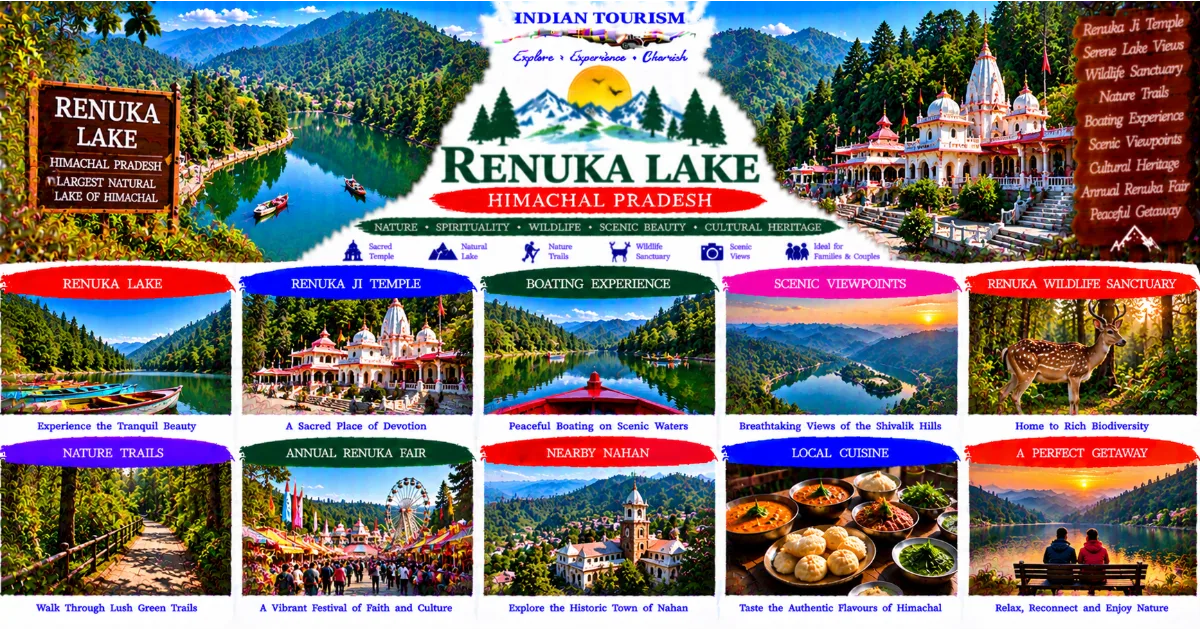
Discover the Natural Beauty of Renuka Lake
Himachal Pradesh is known for its dramatic mountain ranges, pine forests, historic hill towns and sacred landscapes. Beyond its celebrated destinations, the state also contains peaceful natural retreats where water, forests, wildlife and religious traditions come together. Renuka Lake, situated in the Sirmaur district, is one of these remarkable places. Surrounded by green hills and associated with an important Hindu legend, the lake offers a distinctive experience for travellers interested in nature, spirituality, local culture and quiet exploration.
Renuka Lake is widely recognised as the largest natural lake in Himachal Pradesh. Its elongated shape, wooded surroundings and calm waters distinguish it from many of the state's better-known mountain attractions. The lake is associated with Goddess Renuka, who is deeply respected in local religious traditions. The nearby Renuka Ji Temple and other sacred sites make the area an important pilgrimage destination, especially during religious gatherings and the annual Renuka Fair.
Unlike high-altitude destinations that attract visitors with snow-covered peaks and alpine scenery, Renuka Lake offers the beauty of a lower Himalayan landscape. The surrounding hills are often covered with vegetation, the water reflects the changing sky, and the area provides opportunities for gentle walks and wildlife observation. Visitors can enjoy a peaceful day by the lake, learn about the stories associated with the region and explore nearby attractions without needing to undertake strenuous mountain activities.
The destination is suitable for families, couples, photographers, nature enthusiasts and pilgrims. It can be visited as a day trip from parts of the Sirmaur region or included in a longer Himachal Pradesh itinerary. Travellers who prefer slower journeys will find that Renuka Lake rewards time spent observing its surroundings rather than rushing between attractions.
A successful visit depends on choosing a suitable season, planning road transport and respecting the lake's natural and religious significance. With thoughtful preparation, Renuka Lake can become one of the most memorable stops on a journey through the quieter side of Himachal Pradesh.
Where Is Renuka Lake Located?
Renuka Lake lies in the Sirmaur district of Himachal Pradesh, in the lower Himalayan region. It is situated in a landscape of wooded hills, small settlements and winding roads, away from the busy atmosphere of the state's major tourist centres. The destination is associated with Renuka Ji, a settlement that developed around the lake and its religious importance.
The lake's location makes it a useful destination for travellers exploring the Sirmaur region. It can be combined with visits to Nahan and other nearby places, depending on the route and available time. However, road travel through the foothills may take longer than expected because of bends, changing gradients and local traffic.
Renuka Lake is not a high-altitude alpine lake. Its surroundings have a greener and more accessible character than the landscapes associated with some of Himachal Pradesh's higher mountain destinations. The area is especially attractive to visitors who enjoy water, forested hills and a quieter environment.
Before travelling, visitors should confirm the condition of the road, accommodation availability and the operating arrangements of local attractions. A property described as being near Renuka Lake may still require a drive or walk to reach the main lakeside area, so checking the exact location is useful.
The Natural Character of Renuka Lake
Renuka Lake is known for its distinctive elongated shape and its position within a green valley. The surrounding vegetation, hills and quiet water create a landscape that changes noticeably with the weather and season. During clear conditions, the water can reflect the sky and nearby slopes, while cloudy weather may give the area a softer appearance.
The lake is more than a scenic attraction. It is part of a local environment that supports plant life, birds and other wildlife. The wider Renuka area includes protected natural surroundings and is associated with the Renuka Wildlife Sanctuary. This makes the region interesting for visitors who want to learn about biodiversity as well as enjoy the scenery.
The natural environment should be approached with care. Visitors should avoid throwing food or rubbish into the water, feeding wild animals without authorisation or disturbing birds along the shore. Lakeside ecosystems can be sensitive to pollution and excessive human activity, so small acts of responsible behaviour make a difference.
Travellers should also understand that the appearance of the lake can vary. Water levels, vegetation, visibility and wildlife activity change throughout the year. A visit is best planned around an appreciation of the environment rather than an expectation that every season will look exactly the same.
The Legend of Goddess Renuka
Renuka in Hindu Tradition
Renuka Lake is closely associated with Goddess Renuka, who holds an important place in Hindu religious tradition. The lake and the surrounding pilgrimage area are connected with stories about Renuka and her son, Parashurama, an incarnation of Lord Vishnu in Hindu belief. These traditions have shaped the religious identity of the region and continue to attract devotees.
The legend of Renuka appears in different forms across religious texts and regional storytelling traditions. In the version commonly associated with the lake, Renuka is remembered as the mother of Parashurama and as a figure whose story involves devotion, obedience, conflict and divine intervention. The details can vary according to the tradition in which the story is told.
For many devotees, the lake is not simply a natural feature. It is a sacred place connected with the presence and memory of the goddess. This religious significance influences the atmosphere of the area, the rituals performed at nearby temples and the importance attached to the annual fair.
Visitors who do not share the same religious beliefs can still appreciate the cultural role of the legend. Understanding the stories associated with a destination provides insight into the relationship between landscape, faith and local identity.
Parashurama and the Sacred Landscape
Parashurama is an important figure in Hindu tradition, and his association with Renuka gives the area an additional religious dimension. The relationship between mother and son forms the centre of several traditional narratives, and the local pilgrimage landscape preserves the memory of these stories through temples, rituals and festivals.
The surrounding sacred sites are places of worship for devotees, so visitors should behave respectfully. Appropriate clothing, quiet conduct and attention to temple instructions help maintain a welcoming environment. During major religious gatherings, the area may become crowded, and travellers should allow additional time for movement and parking.
The legend is also a reminder that sacred landscapes often combine natural features with stories passed down over generations. The lake, its surrounding hills and the temples together form a cultural environment that cannot be understood through scenery alone.
Top Attractions and Experiences at Renuka Lake
1. Renuka Lake
The lake itself is the central attraction and the main reason many visitors travel to the area. Its long, narrow shape, green surroundings and relatively peaceful atmosphere make it a pleasant place for a relaxed outing. Visitors can spend time observing the water, enjoying the landscape and photographing the reflections of the surrounding hills.
The experience is especially appealing to travellers who prefer calm destinations over crowded commercial centres. Families can enjoy a gentle visit, while photographers may find opportunities to capture changing light and the relationship between the lake and its wooded surroundings.
Visitors should remain within permitted areas and follow local rules concerning the shoreline. Not every section of the lake may be suitable for unrestricted access, and water safety should never be taken lightly. Swimming should not be attempted unless it is explicitly permitted and supervised by the responsible authorities.
2. Renuka Ji Temple
Renuka Ji Temple is one of the most important religious landmarks associated with the lake. Dedicated to Goddess Renuka, the temple attracts devotees from different parts of Himachal Pradesh and beyond. Its religious significance is closely connected with the stories that explain the sacred character of the lake.
Visitors can observe the devotional atmosphere, learn about local traditions and appreciate the role of the temple in community life. During festivals and religious gatherings, the surroundings may be particularly active, with pilgrims arriving for worship and participation in rituals.
Temple visits should be approached with respect. Follow any instructions regarding footwear, photography, queues and access to particular areas. If a ceremony is taking place, avoid interrupting worship or moving into spaces reserved for devotees.
For travellers interested in cultural tourism, the temple provides an opportunity to understand how faith shapes the identity of a destination. The lake and the temple are closely connected, and visiting both offers a fuller picture of Renuka Ji's significance.
3. Parashurama Temple
The Renuka area is also associated with Lord Parashurama, and the local temple traditions reflect his relationship with Goddess Renuka. For devotees, these sites form part of a sacred landscape in which family relationships, religious stories and regional identity are closely connected.
Visitors can include the temple in a cultural exploration of the area, subject to access arrangements and local guidance. The temple's significance is best understood in the context of the broader Renuka pilgrimage tradition rather than as an isolated sightseeing stop.
Religious sites may have different opening hours or access arrangements during ordinary days and festivals. Travellers should ask locally about the most appropriate time to visit and follow the customs observed by worshippers.
4. Renuka Wildlife Sanctuary
The Renuka Wildlife Sanctuary is one of the region's important natural attractions. The protected area is associated with the lake and its surrounding environment, providing a setting for wildlife and vegetation characteristic of the lower Himalayan foothills.
Nature enthusiasts may enjoy learning about the sanctuary's ecology and the role of protected areas in conserving habitats. The landscape offers an opportunity to consider how forests, water and wildlife interact within a relatively small geographical region.
Wildlife sightings are never guaranteed. Animals may be hidden by vegetation, active at different times or disturbed by human presence. Visitors should avoid feeding wildlife, making loud noises or approaching animals for photographs. The best approach is to observe from a safe distance and follow all instructions issued by the relevant authorities.
Access to particular parts of the sanctuary may be regulated. Visitors should check which areas are open, whether a guide is required and whether there are seasonal restrictions before planning an excursion.
5. Nature Walks Around the Lake
The surroundings of Renuka Lake offer opportunities for gentle walks and quiet observation. Visitors can enjoy the landscape at a comfortable pace, noticing the vegetation, birds and changing views across the water. These walks can be particularly rewarding for people who want to experience the natural setting without undertaking a strenuous trek.
Choose routes that are open to visitors and suitable for your fitness level. Some paths may become slippery after rainfall, and uneven ground can be challenging for young children or older travellers. Comfortable footwear and drinking water are useful even for short walks.
Early morning can be a pleasant time for a walk, although conditions vary by season. During hot weather, avoid prolonged activity in direct sunlight and take regular breaks. During the monsoon, follow local advice and avoid walking near unstable slopes or areas affected by heavy rain.
6. Birdwatching and Nature Observation
The lake and surrounding vegetation provide opportunities to observe birds and other wildlife. Visitors who enjoy nature photography may find interest in the variety of habitats around the water and forested slopes. Even without specialised equipment, a quiet walk can reveal birds calling from trees, insects among the vegetation and other signs of life.
Birdwatching is most rewarding when it is done patiently. Rather than moving rapidly from one place to another, visitors can stop at suitable public areas and observe without disturbing the environment. Binoculars can be useful, but they are not essential for casual nature appreciation.
Avoid using loud calls or playback sounds to attract birds, and never disturb nests or attempt to handle wild animals. Responsible observation protects wildlife and helps maintain the peaceful atmosphere of the sanctuary.
7. Lakeside Photography
Renuka Lake offers opportunities for landscape, reflection and cultural photography. The water provides a natural foreground, while the surrounding hills and vegetation create layers in the composition. Depending on the weather, visitors may capture bright green landscapes, soft mist or the warm light of the late afternoon.
Photographers interested in cultural subjects can also document the wider pilgrimage environment, provided photography is permitted at the relevant location. Always ask before photographing people, especially during worship or private family activities.
The lake can look different at different times of day. Early morning may offer a quieter atmosphere, while afternoon light can reveal more detail in the surrounding vegetation. Weather and access conditions should guide the choice of location.
Best Time to Visit Renuka Lake
Spring: March to April
Spring can be a pleasant season to visit Renuka Lake. The weather is generally suitable for sightseeing, and the surrounding vegetation contributes to the area's green appearance. Visitors can explore the lake, visit temples and enjoy short walks without the intense heat that may develop later in the year.
Mornings and evenings can be comfortable, while afternoons may become warmer. Carry a light layer for cooler periods and drinking water for outdoor activities. Spring is suitable for families, couples and travellers who want a relaxed cultural and nature-focused trip.
Summer: May to June
Summer attracts visitors seeking a break from the heat of the plains, although Renuka Lake is located at a lower elevation than many famous Himalayan hill stations. Temperatures can become warm, so the destination should not be treated as a consistently cold mountain retreat.
The lake and its green surroundings can still provide an enjoyable setting for a short visit. Plan outdoor activities for the cooler parts of the day, wear comfortable clothing and protect yourself from the sun.
If travelling with children or older family members, allow time for rest and avoid lengthy walks during the hottest hours. Accommodation should be booked ahead during busy holiday periods if you require particular facilities.
Monsoon: July to September
The monsoon can make the surrounding hills lush and visually striking. The landscape may appear especially green, and clouds can create dramatic scenes around the lake. Nature enthusiasts may appreciate the season's fresh vegetation and changing atmosphere.
However, heavy rainfall can cause slippery paths, reduced visibility and road disruptions in parts of Himachal Pradesh. Visitors should check the weather forecast and local travel advisories before setting out. Avoid unsafe walking routes and follow instructions concerning sanctuary access.
A monsoon visit requires flexibility. If rainfall becomes heavy, focus on accessible areas and postpone outdoor activities until conditions improve.
Autumn: October to November
Autumn can be one of the most comfortable periods for exploring Renuka Lake. Conditions may be clearer after the monsoon, and outdoor sightseeing can be more pleasant. Visitors can combine the lake with temple visits, wildlife observation and excursions into the wider Sirmaur region.
The annual Renuka Fair is generally held around the period of Kartik Purnima, with dates varying according to the Hindu calendar. The event is an important cultural and religious gathering associated with the area. Visitors who wish to experience the fair should confirm the dates for the relevant year and prepare for increased crowds and transport demand.
Winter: December to February
Winter can offer a quieter atmosphere, with cool mornings and evenings. Visitors who prefer a peaceful trip may appreciate the lower level of seasonal activity outside major events. The lake and surrounding hills remain the main attractions, while temple visits provide a cultural dimension to the journey.
Pack clothing suitable for cool conditions and check the forecast before travelling. Renuka Lake is not a high-altitude snow destination, so snowfall should not be expected as a regular feature.
The Renuka Fair: A Major Cultural Experience
The Renuka Fair is one of the most important events associated with the lake. It is linked with the religious traditions surrounding Goddess Renuka and Lord Parashurama, and it attracts devotees and visitors from different parts of the region. The fair reflects the way religious belief, local identity and community gathering come together in Himachal Pradesh.
The event is traditionally associated with the period around Kartik Purnima. Its precise dates vary each year according to the Hindu calendar, so visitors should confirm the official schedule before planning a trip specifically for the fair.
During the event, the area can become much busier than usual. Religious ceremonies, gatherings and other festival activities create a different atmosphere from an ordinary visit. Travellers may have an opportunity to observe local traditions, devotional practices and the movement of pilgrims through the sacred landscape.
Visitors attending the fair should plan transport and accommodation early. Roads and parking areas may be busy, and queues can form around important sites. Keep personal belongings secure, follow crowd-management instructions and allow additional time for travel.
The fair should be approached primarily as a religious and cultural gathering rather than a spectacle. Respectful behaviour, appropriate clothing and attention to local customs help visitors experience the event without disturbing worshippers.
How to Reach Renuka Lake
By Road
Road travel is the main way many visitors reach Renuka Lake. The destination is connected to the wider Sirmaur region through mountain and foothill roads. Travellers commonly approach from Nahan or other nearby towns, while those coming from Chandigarh and surrounding cities can plan a road journey into the district.
Journey times depend on the starting point, traffic, road conditions and weather. Even moderate distances may take longer than expected on winding roads, so it is sensible to avoid building an itinerary around tight connections.
Drivers should be cautious on bends, maintain safe speeds and check the forecast before departure. During heavy rain, follow local advisories and avoid routes that authorities have identified as unsafe.
By Train
There is no major railway station directly beside the lake that serves as a simple rail-to-lakeside connection for all visitors. Travellers may use railway stations in the wider region and continue by road, depending on the route selected.
Kalka is a useful railhead for some journeys into the Himalayan foothills, but the most practical connection depends on the visitor's starting point and onward transport. Check current train services and road connections before booking.
Visitors should allow sufficient time between the train arrival and their onward journey. A pre-arranged taxi can be useful when travelling with family members or carrying luggage.
By Air
Chandigarh Airport is one option for travellers coming from distant parts of India. From the airport, visitors can continue by road towards the Sirmaur region. The total journey time depends on traffic, the selected route and weather conditions.
If arriving late in the day, consider arranging transport in advance. Visitors should also check the location of their accommodation and confirm whether the driver can reach it directly.
Suggested Itineraries for Renuka Lake
One-Day Renuka Lake Visit
A one-day trip is suitable for travellers already staying in the Sirmaur region or nearby areas. Begin in the morning and spend time at the lake, observing the water and surrounding landscape. Continue to Renuka Ji Temple and other accessible religious sites, allowing enough time to understand their cultural significance.
Have lunch at a suitable local establishment or at your accommodation if meals are arranged. In the afternoon, explore permitted walking areas or learn more about the nearby wildlife sanctuary, depending on current access arrangements.
Keep the schedule flexible and avoid attempting to visit every attraction in a single day. The lake and temple surroundings are best appreciated when there is enough time to walk slowly and observe the environment.
Two-Day Renuka Lake and Nahan Trip
A two-day itinerary allows visitors to combine the natural beauty of Renuka Lake with the cultural and historical character of Nahan. Spend the first day exploring the lake, temple sites and accessible nature areas. Stay overnight in suitable accommodation within the region.
On the second day, travel to Nahan and explore its town centre, local markets and cultural landmarks. The exact schedule will depend on road conditions and the places you wish to visit.
This combination provides a balanced experience of nature, pilgrimage and local town life without requiring a rushed schedule.
Three-Day Sirmaur Region Journey
A three-day trip allows travellers to explore Renuka Lake, Nahan and selected nearby destinations at a relaxed pace. The first day can focus on the lake and its religious significance, the second on Nahan and its surroundings, and the third on another accessible destination in the Sirmaur region.
Choose additional stops according to your interests, available transport and current road conditions. It is better to explore a few places properly than to spend most of the trip travelling between distant locations.
A Pilgrimage-Focused Visit
Visitors travelling primarily for religious reasons may want to devote more time to the Renuka Ji Temple and other associated sacred sites. The itinerary can include time for worship, learning about local traditions and observing the surrounding landscape.
If the visit coincides with the Renuka Fair, plan for larger crowds and additional travel time. Confirm the event schedule, temple arrangements and accommodation availability well before departure.
Exploring Nearby Destinations
Nahan
Nahan is one of the best-known towns in the Sirmaur district and can be combined with Renuka Lake. It offers a different atmosphere from the lakeside pilgrimage area, with local markets, historic character and access to other regional attractions.
Visitors can use Nahan as a base for exploring the district, particularly if they prefer a town with a wider range of accommodation and dining options. The exact journey time to Renuka Lake depends on road conditions and the route.
Solan
Solan is a larger town in Himachal Pradesh known for its markets, religious landmarks and association with mushroom cultivation. Travellers moving through the wider region may consider it as part of a longer journey, although the most practical route depends on the rest of the itinerary.
Solan can provide additional dining and accommodation choices. Visitors should avoid assuming that every nearby destination can be covered in one day, particularly when travelling through mountain roads.
Barog
Barog is associated with the historic Kalka to Shimla railway and its famous tunnel. Its forested surroundings and railway heritage make it an appealing destination for travellers who enjoy a combination of history and nature.
Barog is a separate excursion rather than a lakeside attraction. Visitors should check road distances and plan it as part of a broader itinerary if they have sufficient time.
Dagshai
Dagshai is known for its historic cantonment and older buildings associated with the colonial period. It offers a different type of heritage experience from the religious traditions of Renuka Lake.
Travellers interested in history can include Dagshai in a longer journey through the Solan district. Access to individual sites may vary, so check permissions and opening arrangements before visiting.
Local Food to Try Around Renuka Lake
The food available around Renuka Lake may include simple local meals and familiar North Indian dishes. The range of restaurants and food outlets can be more limited than in larger towns, so visitors staying overnight should confirm meal availability in advance.
Himachali Dham
Dham is a traditional celebratory meal associated with Himachal Pradesh. It is commonly served during weddings, festivals and community gatherings. Depending on the region, it may include rice, lentils and a variety of carefully prepared curries.
A complete traditional dham may not be available every day around the lake. Visitors interested in trying it should ask local hosts or restaurants whether it is offered during their visit.
Siddu
Siddu is a traditional Himachali preparation made from fermented wheat dough and commonly served with ghee or other accompaniments. Its texture and flavour make it a distinctive regional food worth trying when available.
Availability varies across the state, and smaller settlements may have limited options. Travellers can ask local residents for recommendations.
Chana Madra
Chana madra is a traditional dish often prepared with chickpeas in a yoghurt-based gravy and seasoned with regional spices. It is associated with the broader culinary traditions of Himachal Pradesh and is often served with rice or bread.
The recipe can vary between cooks and regions, so the taste may differ from one establishment to another.
Babru
Babru is a traditional Himachali snack made from dough filled with a spiced black gram mixture and fried. It can be a good option for travellers looking to sample regional flavours beyond familiar snacks.
Visitors may find more options in larger nearby towns. Ask locally rather than assuming that every restaurant near the lake will offer it.
Simple Meals and Refreshments
Simple meals such as dal, rice, roti, seasonal vegetables and soups can be convenient during a day of sightseeing. Tea and other hot beverages are also popular choices for visitors taking a break from outdoor exploration.
Choose clean food outlets and carry drinking water, especially when travelling with children. If you have dietary restrictions, confirm ingredients before ordering.
Accommodation Near Renuka Lake
Guesthouses and Small Hotels
Accommodation in the Renuka area may include guesthouses, small hotels and other local stays. These can be convenient for visitors who want to spend more time around the lake and avoid a long return journey on the same day.
Before booking, confirm the exact distance from the lake, the availability of meals, parking facilities, hot water and room arrangements. Some properties may be simple rather than resort-style, so it is important to match expectations with the facilities provided.
If visiting during the Renuka Fair or another busy period, reserve accommodation early. Demand can increase significantly around major religious gatherings.
Staying in Nahan
Nahan can be a practical base for travellers who prefer a larger town with more services. It may provide a wider choice of dining and accommodation options, depending on the season and current availability.
Visitors staying in Nahan should plan transport to and from Renuka Lake and allow enough time for the road journey. If relying on taxis, confirm the fare and return arrangements in advance.
Choosing the Right Stay
The best accommodation depends on the purpose of the trip. Pilgrims may prefer convenient access to religious sites, nature enthusiasts may prioritise a quieter location, and families may value reliable meals and straightforward road access.
Check recent guest feedback, cancellation conditions and the final booking details before confirming a reservation. Travellers with mobility requirements should ask about steps, slopes and access to the room.
Renuka Lake for Different Types of Travellers
Families
Renuka Lake can be a pleasant destination for families who want a combination of nature and cultural learning. Children can observe the lake and surrounding landscape, while temple visits can introduce them to local religious traditions.
Parents should supervise children closely near the water and follow any barriers or access rules. Avoid allowing children to feed wildlife or approach unfamiliar animals.
Couples
Couples may appreciate the peaceful setting, scenic walks and opportunity to explore the lake at an unhurried pace. The destination is better suited to a nature-focused escape than a holiday centred on nightlife or large entertainment complexes.
A comfortable itinerary can include time by the lake, a visit to the temple and a relaxed meal before returning to accommodation.
Pilgrims
For devotees, Renuka Lake is a significant religious destination associated with Goddess Renuka and Lord Parashurama. A pilgrimage can include worship, visits to associated temples and participation in the Renuka Fair when dates align.
Visitors should check festival schedules and temple arrangements before travelling. During busy periods, patience and respect for other devotees are especially important.
Nature Enthusiasts
Nature enthusiasts can enjoy the lake, surrounding vegetation and the wider sanctuary landscape. The area offers opportunities for quiet observation, photography and learning about local ecology.
Wildlife sightings cannot be guaranteed, and visitors should avoid disturbing animals. Follow sanctuary rules and use permitted routes.
Photography Enthusiasts
Photographers can focus on reflections, changing light, vegetation, cultural architecture and everyday activity around the pilgrimage area. The best conditions depend on weather and time of day.
Ask permission before photographing people and respect restrictions at religious sites. Avoid entering protected areas or approaching the water in unsafe locations to obtain a particular composition.
Photography Guide to Renuka Lake
Renuka Lake provides a variety of photographic subjects, from the broad water surface to the surrounding hills and religious landmarks. The elongated shape of the lake can create interesting leading lines, while the surrounding greenery adds depth to landscape compositions.
Morning and late afternoon may offer softer light, but actual conditions depend on season and weather. Mist, clouds and changing reflections can make the same location look different across the day. A smartphone camera is sufficient for casual photography, while binoculars or a longer lens may help visitors observe birds from a respectful distance.
Photography at temples should be guided by local rules. Some areas may restrict cameras, and worshippers should not be photographed without consideration. The same respect applies to local residents and families visiting the lake.
Safety should always take priority. Do not climb barriers, stand on unstable banks or enter restricted areas for a photograph. A thoughtful image can be captured without disturbing the landscape or putting anyone at risk.
Responsible Tourism at Renuka Lake
Renuka Lake's natural and religious significance makes responsible tourism especially important. Visitors should avoid throwing rubbish into the water, leaving plastic packaging along the shore or damaging vegetation. Use designated waste facilities where available and carry waste away when bins are not accessible.
Respect the religious character of the area. Dress appropriately for temple visits, keep noise low and follow instructions regarding footwear, photography and access. During festivals, avoid blocking routes used by pilgrims and follow crowd-management directions.
The lake and surrounding sanctuary support wildlife and plant life. Do not feed animals, chase birds or attempt to touch wild creatures. Feeding wildlife can alter natural behaviour and create risks for both animals and visitors.
Visitors should also respect local residents and businesses. Ask permission before photographing people, avoid blocking private entrances and purchase goods responsibly. Small acts of consideration help maintain the destination's welcoming character.
During the monsoon, follow weather advisories and avoid unsafe paths near water or steep slopes. If local authorities close an area, respect the restriction rather than trying to find an alternative route into it.
Practical Travel Tips for Renuka Lake
Before travelling, check the weather forecast, road conditions and any local advisories. If you plan to visit the Renuka Wildlife Sanctuary, confirm which areas are open and whether permits or guided access are required.
Wear comfortable walking shoes and carry drinking water. During warmer months, use sun protection and plan outdoor activities for cooler parts of the day. In winter, bring an additional layer for the morning and evening.
If you are travelling with children or older family members, allow enough time for rest and avoid a tightly packed schedule. Visitors with mobility limitations should check the accessibility of the lakeside area and religious sites before arrival.
Plan transport in advance if you are not travelling by private vehicle. Confirm the return journey, particularly if you are visiting from a nearby town and expect to travel back in the evening. During the Renuka Fair, reserve accommodation and allow extra time for traffic and crowds.
Most importantly, treat the lake as both a natural environment and a sacred place. A respectful and flexible approach will make the experience more rewarding.
Is Renuka Lake Worth Visiting?
Renuka Lake is worth visiting for travellers who want to explore a quieter and culturally significant part of Himachal Pradesh. Its natural beauty, religious traditions and association with the Renuka Wildlife Sanctuary provide a combination of experiences that differs from the state's more commercial hill stations.
The lake is suitable for a relaxed outing, a family excursion, a pilgrimage or a nature-focused journey. Its appeal lies in the combination of water, vegetation, surrounding hills and sacred heritage. Visitors who enjoy learning about local legends and traditions may find the destination especially meaningful.
The area can also form part of a wider itinerary through Sirmaur and the Solan region. Nahan offers a town experience, while Barog, Dagshai and Solan provide different forms of railway heritage, historical interest and local culture. These places should be planned according to available time and road conditions rather than crowded into an unrealistic schedule.
A visit to Renuka Lake is most rewarding when travellers allow time to appreciate the environment and respect its religious significance. With thoughtful planning, it can be a memorable stop on a journey through Himachal Pradesh.
Conclusion: Experience the Sacred Beauty of Renuka Lake
Renuka Lake is one of Himachal Pradesh's distinctive natural and cultural destinations. Its green surroundings, calm water and connection with Goddess Renuka create an atmosphere that combines scenic beauty with spiritual significance. The nearby temples and annual Renuka Fair add depth to the experience, while the wider sanctuary landscape offers opportunities for nature observation.
Travellers can explore the lake as a day trip or include it in a longer journey through the Sirmaur region. Combining the visit with Nahan and selected nearby destinations can provide a balanced experience of nature, history and local life.
Choosing a suitable season, confirming road conditions and respecting the lake's ecological and religious importance will help make the journey smoother. For those who want to discover a quieter side of Himachal Pradesh, Renuka Lake offers a meaningful opportunity to experience the state's natural beauty and cultural heritage.
#IndianTourism #RenukaLake #HimachalPradesh #RenukaJi #Sirmaur #RenukaLakeTourism #ExploreHimachal #HimachalTravel #NatureTourism #WildlifeSanctuary #SpiritualTourism #RenukaFair #TravelIndia #ExploreIndia #ResponsibleTourism
