
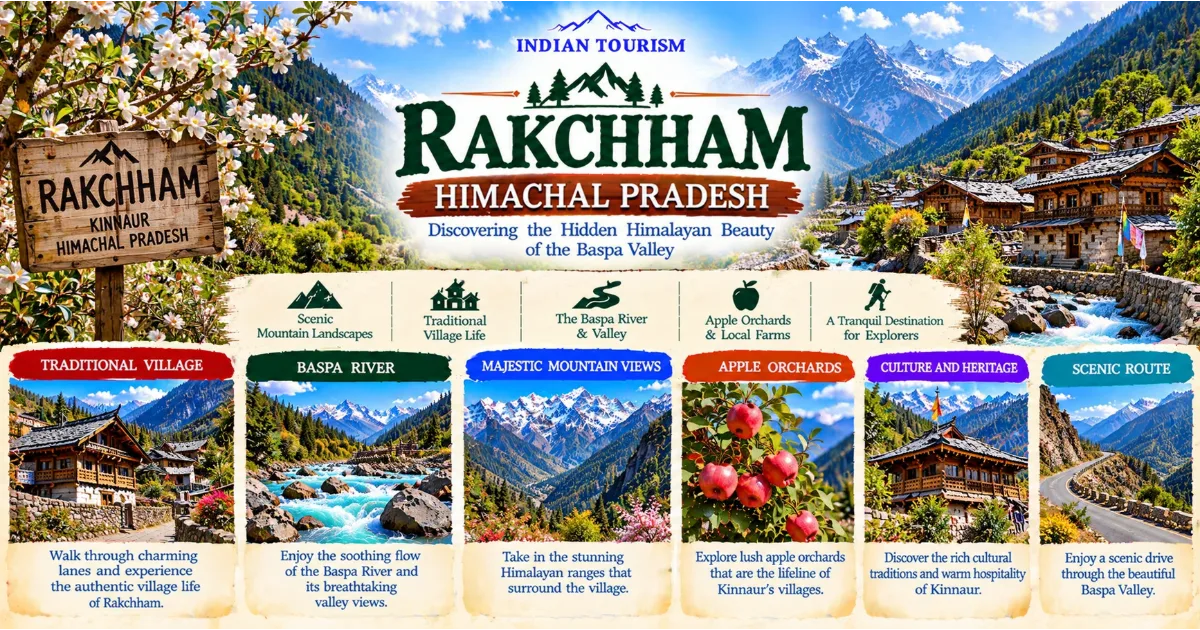
A Peaceful Village Surrounded by the Himalayas
Himachal Pradesh is home to many destinations where natural beauty and traditional mountain life exist in close connection. While Shimla and Manali attract large numbers of visitors, the remote valleys of Kinnaur offer a different kind of travel experience. Here, rivers flow through deep mountain corridors, traditional houses stand against rugged slopes, and small settlements preserve customs shaped by generations of life in the Himalayas. Rakchham, a scenic village in the Baspa Valley, is one of the places where this quieter side of Himachal Pradesh can be experienced.
Situated between Sangla and Chitkul, Rakchham is known for its mountain setting, the Baspa River, traditional village architecture and surrounding forests. The village offers a distinctive combination of river scenery and high Himalayan landscapes. It is an appealing destination for travellers who enjoy peaceful surroundings, photography, nature walks and exploring settlements beyond the most commercial tourist centres.
Rakchham's beauty does not depend on large attractions or extensive visitor facilities. Its appeal lies in the landscape itself. The river provides a natural centre for the valley, while forests, rocky slopes and cultivated areas create a changing pattern of colours and textures. Traditional buildings reflect the practical needs of mountain life, and the surrounding environment provides a glimpse into the relationship between settlement and geography.
The village is also a useful stop for visitors travelling through the Baspa Valley. Its location makes it possible to combine Rakchham with Sangla, Chitkul and other destinations in Kinnaur, provided the itinerary allows enough time for mountain roads and changing weather conditions. Travellers who stay longer can experience the valley at a slower pace, enjoying the landscape at different times of the day.
A visit to Rakchham is most rewarding when approached with realistic expectations. It is a living community rather than a purpose-built tourist attraction. Visitors should respect private property, protect the river environment, follow local guidance and support local businesses when possible. These simple practices help preserve the qualities that make the village special.
Where Is Rakchham Located?
Rakchham is located in Kinnaur district in the eastern part of Himachal Pradesh. The village lies along the Baspa Valley road between Sangla and Chitkul, making it a natural stop for travellers exploring the upper valley.
Kinnaur is known for its varied mountain geography. The district includes river valleys, forested slopes, agricultural settlements and higher terrain where vegetation becomes more limited. The Baspa Valley forms an important part of this landscape, with the river connecting settlements and shaping the surrounding terrain.
Rakchham occupies a position where the relationship between the river and the mountains is particularly noticeable. The settlement is surrounded by slopes that rise above the valley floor, while the Baspa River flows through the wider landscape. The combination of water, vegetation and rugged terrain gives the village a distinctive appearance.
The road connecting Sangla and Chitkul passes through this part of the valley. However, mountain journeys can take longer than expected because roads follow the contours of the terrain and may be affected by weather, traffic, maintenance work or landslides. Travellers should allow sufficient time and avoid building an itinerary around optimistic travel estimates.
Sangla is a practical base for visitors who want to explore Rakchham and the wider valley. Chitkul can also be included in the same journey, although visitors should confirm current road conditions and allow enough time for the return trip.
Before travelling, it is advisable to ask locally about access, weather and any restrictions. This is particularly important during periods of heavy rain, snowfall or road disruption.
The Natural Landscape of Rakchham
Rakchham's natural environment is one of its greatest attractions. The village lies within a valley shaped by the Baspa River and surrounded by mountain slopes, forests and rocky terrain. The landscape changes with altitude, exposure and season, creating a variety of natural features within a relatively compact area.
The Baspa River is central to the valley's visual character. Its course follows the terrain, passing through rocky sections and areas where the valley opens more widely. The sound of flowing water can add to the sense of tranquillity, particularly away from traffic and busy village areas.
The surrounding mountains create a dramatic backdrop. Their slopes vary from forested areas to exposed rock, while higher ridges can appear especially striking during clear weather. Clouds and changing sunlight alter the appearance of the landscape throughout the day, making the valley attractive to photographers and travellers who enjoy observing natural scenery.
Vegetation also contributes to the village's character. Forests, shrubs and seasonal plants occupy different parts of the terrain, while cultivated land appears where the slopes and soil conditions allow agriculture. This combination of natural vegetation and human-managed land creates a landscape that reflects both environmental conditions and local livelihoods.
The region experiences strong seasonal changes. During warmer months, vegetation may appear greener and the river valley can feel more accessible. Autumn can bring changes in foliage and agricultural activity, while winter introduces colder conditions and the possibility of snow in the surrounding mountains.
Visitors should remember that the landscape is fragile. Riverbanks can be unstable, slopes may contain loose stones, and weather can change quickly. Staying on appropriate paths, avoiding dangerous river crossings and carrying waste away from natural areas helps protect both visitors and the environment.
The Baspa River and Its Importance
The Baspa River is one of the defining features of the valley and an important part of Rakchham's natural identity. Its waters flow through a landscape of steep slopes, forests and settlements, connecting different parts of the valley.
Mountain rivers play an important role in shaping the terrain. Over long periods, flowing water erodes rock, carries sediment and creates channels through mountain landscapes. The river environment also supports vegetation and provides habitats for various forms of life.
For local communities, rivers are part of the broader environmental system that supports settlement and agriculture. Water availability, seasonal flows and the surrounding terrain influence how people use the land and organise their activities. The river's presence also affects transport routes, recreation and the appearance of the valley.
The Baspa River can be visually striking, especially where the water passes over rocks or runs between steep banks. However, visitors should not assume that a river is safe to approach simply because it looks calm. Water levels and currents can change because of rainfall, snowmelt and upstream conditions.
Avoid swimming or entering the river without reliable local guidance and suitable facilities. Do not attempt to cross fast-moving water, and stay away from unstable banks or wet rocks that may be slippery. Children should remain under close supervision near the water.
The best way to appreciate the Baspa River is from safe, accessible locations. Visitors can observe the river's movement, photograph the surrounding landscape and enjoy the atmosphere without disturbing the natural environment.
Traditional Architecture and Village Life
Rakchham reflects the architectural traditions of Kinnaur, where buildings have historically been designed to respond to mountain weather, available materials and the practical demands of daily life.
Traditional Himalayan construction often makes use of stone and timber. Stone can provide durable walls and a solid base, while timber can contribute structural support and flexibility. The exact construction method varies between buildings and depends on age, local craftsmanship and the resources available to the household.
The village contains a mixture of traditional and newer structures. Some homes preserve older construction details, while others incorporate modern materials and facilities. These changes reflect the continuing evolution of a living settlement rather than a loss of cultural identity.
The arrangement of buildings also reflects the terrain. Homes and paths follow the available land, and the relationship between the village and the surrounding slopes influences movement through the settlement. Travellers can learn a great deal by observing these details during a quiet walk.
Village lanes should be treated as working spaces. Residents use them to reach homes, fields and other parts of the settlement. Visitors should avoid blocking access, entering private courtyards or walking through cultivated land without permission.
Photography can be rewarding, particularly when the architecture is seen against the mountains. However, travellers should ask before photographing residents at close range or looking into private spaces. Respect for privacy is an essential part of responsible cultural tourism.
Culture and Traditions of Kinnaur
Kinnaur has a distinctive cultural identity shaped by its Himalayan location, historical connections and religious traditions. Hindu practices, Buddhist influences and local forms of worship contribute to the region's cultural diversity. Traditions vary between villages, so Rakchham should be understood within its own local context.
Religious sites can play important roles in community life. Temples, shrines and other sacred spaces may serve as places of worship, gathering and the preservation of local customs. Their significance often extends beyond their physical appearance.
Festivals and community celebrations can include music, dancing, traditional clothing and ceremonial activities. Their timing and form vary, and visitors should not expect every celebration to be organised for tourism. Anyone hoping to experience a local event should seek current information from residents or local tourism providers.
Language is another important part of cultural identity. People in Kinnaur may use regional languages and dialects alongside Hindi and other languages depending on the setting. A polite greeting and a willingness to listen can help visitors establish respectful interactions.
Travellers should avoid treating cultural practices as performances. If a religious ceremony or community gathering takes place during a visit, observe respectfully and follow any instructions. Ask before taking photographs, particularly when people are engaged in worship or private activities.
The cultural experience of Rakchham may emerge through ordinary moments: observing a traditional home, learning about local farming or sharing a meal at a small establishment. These interactions offer a deeper understanding of the community than a hurried visit focused only on scenery.
Agriculture and Local Livelihoods
Agriculture remains an important part of the wider Kinnaur economy. The district is known for fruit cultivation, particularly apples in suitable areas, as well as other crops and livestock-related activities. Farming practices vary according to elevation, climate and the amount of land available.
Mountain settlements often have limited flat land. Cultivated plots occupy areas where the terrain permits farming, while steeper slopes remain covered by natural vegetation or exposed rock. The arrangement of agricultural land reflects generations of practical experience in working with the local environment.
Agricultural activity follows seasonal cycles. Orchard maintenance, irrigation, soil management and harvesting take place at different times of the year. Weather and altitude influence the timing of these activities, so the appearance of the countryside changes from season to season.
Tourism has created additional opportunities for local households through accommodation, meals, transport and other services. However, agricultural activity remains an important part of the wider rural economy, and visitors should recognise that the landscape is also a place of work.
Do not enter orchards or fields without permission, pick fruit without consent or interfere with farming activities. If local produce is available for sale, buying from legitimate local sellers can help support the community.
Responsible tourism can complement agriculture when visitors respect working areas, use local services and avoid creating unnecessary pressure on roads, water supplies and waste systems.
Best Time to Visit Rakchham
Rakchham can be visited during different seasons, but the experience depends on weather, road access and personal preferences. Mountain conditions can vary from year to year, so travellers should check current information before setting out.
Spring: Fresh Growth and Changing Scenery
Spring brings gradual changes to the valley as temperatures rise and vegetation begins to respond to warmer conditions. Depending on altitude and weather, cultivated areas may show fresh growth, while the surrounding mountains can retain snow.
This period may appeal to travellers interested in quiet landscapes and photography. Mornings and evenings can remain cold, so warm clothing is advisable. Road access should be confirmed, especially if winter conditions have affected the wider region.
Summer: A Popular Season for Exploration
Summer is often a practical time to visit Rakchham because daytime conditions can be comfortable for walking and sightseeing. The river valley may appear greener, and the road journey is often easier than during periods of heavy snowfall, although conditions can still change.
This is a popular travel period, so accommodation may need to be booked in advance. Visitors should allow sufficient time for mountain driving and avoid assuming that all roads remain open throughout the day.
Monsoon: Careful Travel Planning
Rain can affect mountain roads and slopes. Landslides, falling rocks and temporary closures may disrupt journeys, while wet paths can become slippery.
Visitors should check local road information and weather forecasts before travelling. Avoid unstable slopes and do not stop beneath areas where rocks are falling. If conditions deteriorate, changing the itinerary is safer than attempting to continue.
Autumn: Crisp Air and Mountain Views
Autumn can be an attractive period for exploring Rakchham. Clear days may provide excellent views of the mountains, and the surrounding landscape can change in colour as the season progresses.
Temperatures fall as autumn advances, especially after sunset. Warm clothing is important, and visitors should confirm access conditions before travelling towards higher or more exposed locations.
Winter: Snow and Cold Conditions
Winter can bring severe cold and snowfall to the wider valley. Roads and pathways may become difficult to access, and some accommodation providers may operate with limited services or close for part of the season.
Visitors should confirm whether the road is open and whether accommodation is available. Suitable footwear, warm clothing and a flexible itinerary are essential.
For many first-time visitors, summer and early autumn offer a practical balance between accessibility and comfortable sightseeing. However, current weather and road conditions should always guide the final decision.
How to Reach Rakchham
Rakchham is reached by road through the Kinnaur region and the Baspa Valley. The journey is scenic, but mountain travel requires realistic planning and attention to current conditions.
By Road
Travellers coming from Shimla and other parts of Himachal Pradesh generally follow the road network towards Kinnaur before continuing through Sangla Valley. Rakchham lies along the route towards Chitkul.
The road includes bends, changes in elevation and sections where conditions can be affected by weather or maintenance. Travel time varies according to traffic, road conditions and seasonal disruptions. Drivers should maintain safe speeds and avoid risky overtaking.
By Bus
Public transport connects important settlements along the wider Kinnaur route, but services to smaller villages may be limited or seasonal. Travellers should confirm current schedules and connections before departure.
Depending on the service, it may be necessary to reach Sangla first and continue by local transport. Allow sufficient time for connections and avoid scheduling a tight onward journey.
By Train
Rakchham does not have a railway station. Visitors arriving by train must continue by road from a suitable station serving their broader itinerary.
By Air
There is no airport in Rakchham. Travellers arriving by air need to arrange onward road transport, and the mountain journey can take a substantial part of the day. Allow a generous time window for delays.
Local Transport
A local taxi can be useful for travellers who do not wish to drive mountain roads themselves. Before setting out, confirm the route, expected travel time and current conditions with the driver.
Visitors should not assume that a vehicle can stop at every scenic location. Roadside space may be limited, and stopping in a narrow section can create hazards for other traffic.
Places to Explore Near Rakchham
Rakchham is well positioned for exploring several destinations in the Baspa Valley. The most suitable choices depend on available time, weather and road conditions.
Sangla
Sangla is an important settlement in the valley and a practical base for exploring the surrounding region. It offers access to local services, accommodation and food establishments, along with mountain scenery and agricultural landscapes.
Travellers can spend time exploring accessible parts of the village or use it as a starting point for visiting Rakchham and Chitkul.
Chitkul
Chitkul is one of the best-known destinations in the upper Baspa Valley. It is recognised for its traditional village character, mountain scenery and location near the upper end of the road journey through the valley.
A visit can be combined with Rakchham, but travellers should allow enough time for the journey and return. Current road conditions should be confirmed before departure.
Batseri
Batseri offers another opportunity to experience traditional village life in the Baspa Valley. Its surroundings combine mountain scenery, cultivated land and settlement architecture.
Visitors should respect private property and remain on public routes. Photography should not interfere with residents' daily routines.
Kamru Fort
Kamru Fort is a historic landmark near Sangla associated with the former Bushahr princely state and traditional Kinnauri architecture. It provides a cultural and historical contrast to the natural scenery of the valley.
Travellers interested in heritage can learn about the region's past while exploring the wider area.
Kalpa
Kalpa is known for its mountain views, orchards and traditional settlement character. It can be included in a wider Kinnaur itinerary, although the journey from the Baspa Valley should be planned realistically.
Visitors may choose to stay in Kalpa before or after exploring Sangla, depending on the direction of travel and available time.
Things to Do in Rakchham
Rakchham is best suited to activities that encourage visitors to appreciate the natural environment and local culture. A simple, relaxed itinerary can be more rewarding than trying to fill every hour with sightseeing.
Walk Through Accessible Village Areas
A walk through public village lanes provides an opportunity to observe traditional homes, local paths and the relationship between the settlement and its surroundings.
Comfortable footwear is important because surfaces may be uneven. Avoid entering private courtyards or fields without permission, and keep residential access clear.
Enjoy the Mountain Scenery
The surrounding slopes and distant ridges create a dramatic backdrop. Clear conditions may provide extensive views, while changing cloud cover can alter the appearance of the valley throughout the day.
Choose safe public viewing areas and avoid standing near unstable edges. Mountain weather can change quickly, so carry a warm layer even during warmer months.
Observe the Baspa River
The river is an important part of the village's landscape. Visitors can appreciate its flow and the surrounding terrain from safe locations.
Do not enter fast-moving water or approach unstable riverbanks. Water levels and currents can change, and rocks near the water may be slippery.
Photograph the Village and Countryside
Rakchham can appeal to photographers interested in architecture, river landscapes and mountain scenery. Morning and afternoon light may create different effects across the slopes.
Ask permission before photographing residents at close range. Avoid blocking roads or entering private land to obtain a particular composition.
Learn About Local Life
If residents are comfortable speaking with visitors, a conversation about farming, village architecture or seasonal conditions can provide valuable context.
Be respectful of people's time and accept that not everyone will be available to talk. Cultural learning should be voluntary and should never interfere with daily work.
Food and Local Culinary Experiences
Food in Kinnaur reflects the region's climate, agricultural practices and cultural connections with neighbouring Himalayan areas. Meals may include grains, vegetables, pulses and seasonal ingredients, although menus vary between households and establishments.
Food options in Rakchham may be limited compared with larger tourist centres. Visitors should confirm meal availability before setting out, particularly outside the main travel season. Carrying suitable snacks and drinking water can be helpful for longer excursions.
Guesthouses and homestays may offer home-style meals and opportunities to experience local hospitality. Travellers with dietary requirements should explain their needs clearly and confirm ingredients when necessary.
The wider region is known for fruit cultivation, particularly apples in suitable areas. Local produce may be available depending on the season. Buying from legitimate local sellers can support the community.
Visitors should carry food packaging back to an appropriate disposal point. Leaving rubbish beside the river or along village paths harms the environment and reduces the quality of the destination for everyone.
Accommodation Near Rakchham
Accommodation in the Baspa Valley can include guesthouses, homestays and small hotels. Availability and facilities vary according to season and location.
Staying in Rakchham may offer a quieter experience, while Sangla can provide a practical base with access to a wider range of services. The choice depends on the itinerary, current availability and personal preferences.
Before booking, confirm heating arrangements, hot water, meals, parking and road access. These details become especially important in colder months when temperatures can fall sharply.
Homestays can provide a more personal introduction to local hospitality. Guests should respect household rules, meal times and privacy, and ask before photographing interiors or entering private spaces.
During popular travel periods, advance booking can reduce uncertainty. Visitors planning a winter journey should confirm whether accommodation is operating and whether essential services are available.
Camping should only take place where it is permitted and with the required approval. Avoid lighting fires in unsafe locations, damaging vegetation or leaving waste behind.
Responsible Tourism in Rakchham
Responsible tourism helps protect the natural and cultural environment of the Baspa Valley. Small mountain communities may have limited capacity for waste management, transport and water supply, so visitors should avoid creating unnecessary pressure.
Carry rubbish out and dispose of it appropriately. Avoid leaving plastic, cans, food packaging or other waste beside the river, on village paths or in cultivated areas.
Respect private property and agricultural land. Do not enter homes, courtyards or orchards without permission, and avoid disturbing livestock or farming activities.
Keep noise at a reasonable level, particularly near residential areas. Rakchham is a living community, not simply a tourist attraction.
Support local businesses where possible. Choosing local accommodation, eating at local establishments and purchasing legitimate local products can help tourism benefit residents.
Follow local guidance about road access and weather. If conditions deteriorate, change the plan rather than attempting to continue through unsafe terrain.
By travelling thoughtfully, visitors can help preserve the landscape and community character that make Rakchham worth exploring.
A Suggested One-Day Itinerary
A one-day visit to Rakchham can be combined with Sangla or Chitkul, depending on the starting point and road conditions.
Begin the day with breakfast in Sangla or at your accommodation. Check the weather and road conditions before setting out, and carry water, snacks, warm clothing and comfortable footwear.
Travel towards Rakchham and spend time exploring accessible village areas. Observe the architecture, enjoy the mountain scenery and appreciate the Baspa River from safe public locations.
Take a break for lunch or refreshments at a suitable local establishment if available. If time and road conditions permit, continue towards Chitkul or return to Sangla, allowing enough time for the mountain journey.
Do not attempt to include several distant destinations simply to make the itinerary more extensive. Mountain roads require time, and the landscape is more rewarding when explored without rushing.
Begin the return journey with sufficient daylight remaining. A flexible schedule makes the visit safer and more enjoyable.
A Two-Day Itinerary for the Baspa Valley
Travellers with two days available can explore the region at a more relaxed pace.
On the first day, travel to Sangla and settle into the accommodation. Depending on arrival time, explore the settlement and enjoy the surrounding scenery. Ask locally about road conditions and the most practical route for the following day.
On the second day, visit Rakchham and spend time exploring the village and river landscape. If conditions permit, continue towards Chitkul or return to Sangla for additional sightseeing.
Travellers who want to include Kamru Fort or Kalpa should consider extending the trip rather than attempting to cover too many destinations in one day. A longer itinerary allows more time to appreciate the region's cultural and natural features.
The aim is to experience the valley rather than simply pass through it. Allowing time for rest, meals and changing weather can make the journey more enjoyable.
Practical Travel Tips
Carry clothing that can be layered because temperatures can change quickly in the mountains. Mornings and evenings may be cold even during warmer months, and comfortable shoes are important for uneven village paths.
Bring essential medication and personal supplies. Do not assume that every small settlement has a pharmacy or other services readily available.
Mobile connectivity can be inconsistent in mountainous areas. Download maps in advance and keep important travel information accessible without an internet connection.
Carry some cash for small purchases where digital payment facilities may be unreliable. Keep valuables secure and avoid carrying unnecessary amounts of money.
Check weather and road conditions before departure and remain flexible. If rainfall, snowfall or road disruption affects the journey, revise the plan.
Respect local customs and privacy. Ask permission before photographing residents or entering private spaces, and follow instructions at religious sites.
Above all, treat the natural environment carefully. Stay away from unstable riverbanks, avoid damaging vegetation and carry waste out.
Conclusion: Discovering the Quiet Beauty of Rakchham
Rakchham is one of the appealing destinations of Himachal Pradesh because it combines mountain scenery, river landscapes and traditional village life within the distinctive environment of Kinnaur. Its location between Sangla and Chitkul makes it a natural part of a journey through the Baspa Valley.
The village's charm comes from the relationship between its buildings, the Baspa River and the surrounding mountains. Visitors can appreciate the landscape through quiet walks, careful observation and respectful interactions with local residents.
Rakchham is not a destination that needs a crowded itinerary. Its appeal lies in the opportunity to slow down and understand how people live within a demanding mountain environment. A visit becomes more meaningful when travellers recognise the role of agriculture, local architecture and community traditions.
Careful planning is essential because weather and road conditions can change. Visitors should allow enough time for travel, confirm accommodation arrangements and follow local advice. Responsible tourism also means respecting private property, protecting the river environment and supporting local businesses.
For travellers exploring Kinnaur, Rakchham offers a reminder that the beauty of the Himalayas extends beyond famous viewpoints. It is also found in the quiet villages, flowing rivers and everyday traditions of the communities that have made these mountains their home.
#IndianTourism #HimachalPradesh #Rakchham #Kinnaur #BaspaValley #SanglaValley #Chitkul #HimalayanVillages #ExploreHimachal #MountainTravel #ResponsibleTourism #IncredibleIndia #TravelIndia
