
A Himalayan Lake Surrounded by Mountains and Mystery
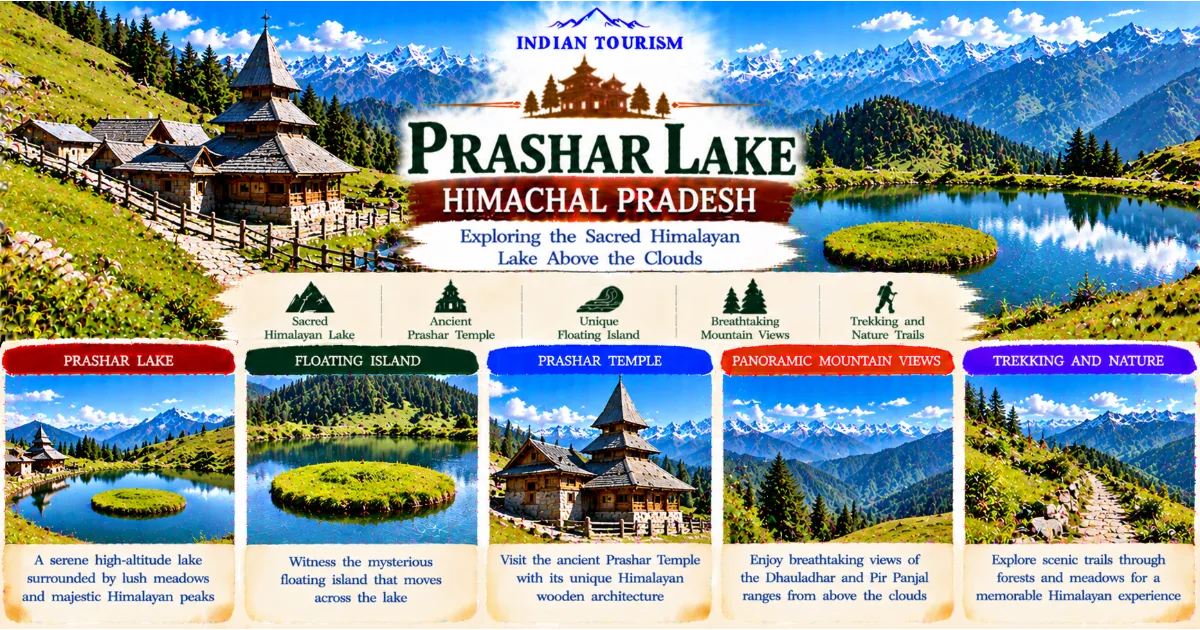
High in the mountains of Himachal Pradesh, surrounded by rolling ridges, forested slopes and sweeping views of the Himalayas, lies Prashar Lake, one of the most distinctive natural and cultural destinations in the Mandi district. The lake is known for its deep blue waters, peaceful mountain setting, traditional temple architecture and a remarkable floating island that moves across its surface. Its combination of natural beauty, spiritual significance and high-altitude scenery makes it an appealing destination for travellers seeking something different from the state's busy hill stations.
Prashar Lake stands in a mountain landscape where the weather, terrain and changing seasons shape the visitor experience. On clear days, distant Himalayan peaks may become visible above surrounding ridges, creating a dramatic backdrop for the lake and its temple. At other times, mist and low clouds can move across the landscape, giving the area a quiet and atmospheric appearance. The changing light makes the destination attractive to photographers, hikers and travellers who enjoy spending time in nature.
The lake is also associated with the sage Prashar, whose name is linked with local religious traditions. The nearby Prashar Temple is an important part of the area's cultural identity. Its traditional wooden architecture reflects the distinctive building heritage found in parts of Himachal Pradesh, where timber craftsmanship and local construction traditions have developed in response to mountain conditions.
Although Prashar Lake is often described as a peaceful escape, reaching it requires preparation. The road passes through mountainous terrain, and weather conditions can change quickly. Winter may bring snow and ice, while rainfall can affect road access and walking conditions. Visitors should plan their journey carefully, confirm current conditions and bring suitable clothing.
Prashar Lake is not simply a viewpoint or a place for photographs. It is a landscape of ecological value, local religious importance and mountain traditions. A responsible visit allows travellers to appreciate its scenery while respecting the beliefs of local communities and protecting the fragile high-altitude environment.
Where Is Prashar Lake Located?
Prashar Lake is situated in the Mandi district of Himachal Pradesh, in the western Himalayas. It lies at an elevation of approximately 2,730 metres above sea level, making it a high-altitude destination where temperatures can differ significantly from those in the lower valleys.
The lake is surrounded by mountain slopes and open alpine terrain. Its setting provides broad views across the surrounding landscape, and on suitable days visitors may see distant Himalayan ranges. The sense of openness is one of the destination's defining characteristics, especially for travellers arriving from more densely developed towns.
Mandi is an important starting point for journeys into the surrounding mountains. Prashar Lake can also be approached through the wider road network connecting the region's villages and settlements. The route includes winding mountain roads, so travel times depend on the starting point, road conditions and weather.
The area around the lake is not a large commercial resort. Facilities are comparatively limited, and visitors should not expect the same range of restaurants, shops and accommodation found in major tourist centres. Planning food, clothing, transport and overnight arrangements in advance makes the journey more comfortable.
The lake's elevation also means that visitors should pay attention to how their bodies respond to physical activity. Walking uphill may feel more demanding than at lower elevations, particularly for those who have arrived directly from the plains. Travellers should maintain a comfortable pace, drink water and avoid strenuous activity if they feel unwell.
Prashar Lake is best experienced as part of a carefully planned mountain excursion. Its remoteness, high-altitude setting and cultural significance are central to its appeal.
The Natural Beauty of Prashar Lake
The beauty of Prashar Lake comes from the relationship between the water, the surrounding meadow, the mountain ridges and the changing sky. Unlike large lakes surrounded by extensive urban development, this high-altitude lake occupies a landscape where the natural environment remains the principal attraction.
The water can appear deep blue or dark green depending on the weather, light and viewing angle. On calm days, surrounding slopes may be reflected on the surface, creating a striking visual contrast between water and land. When wind moves across the lake, the reflections change, and the surface becomes more animated.
The surrounding terrain includes open grassy areas, mountain vegetation and slopes that rise towards the nearby ridges. In warmer months, the landscape may display different shades of green, while colder seasons bring a more subdued palette of browns, greys and white snow where conditions permit.
Clouds can transform the appearance of the lake within minutes. A clear morning may provide long-distance views, while mist later in the day can obscure the surrounding peaks. These changes are part of the high-mountain environment and contribute to the area's character.
Photography is especially rewarding when visitors take time to observe the changing conditions rather than rushing through a fixed schedule. Early morning and late afternoon may offer attractive light, although the actual conditions depend on weather and season.
Visitors should remain on suitable paths and avoid trampling fragile vegetation. The open landscape can make it tempting to walk anywhere for a better photograph, but repeated foot traffic can damage the ground around the lake.
The natural beauty of Prashar Lake is best preserved when visitors enjoy it without treating every part of the surrounding terrain as an unrestricted recreation area.
The Floating Island: A Distinctive Feature of the Lake
One of the most unusual features associated with Prashar Lake is its small floating island. This patch of vegetation can move across the lake's surface, creating a distinctive sight that has attracted attention from visitors for generations.
The island's movement is part of the lake's natural character. Its position may change over time, and visitors should not expect to find it in exactly the same location during every visit. The appearance of the lake also depends on water levels, weather and seasonal conditions.
The floating island contributes to the sense of mystery surrounding Prashar Lake. It is frequently mentioned in descriptions of the destination because it differs from the more familiar appearance of lakes bordered by fixed shorelines and vegetation.
However, visitors should avoid touching, pushing or attempting to move the island. It is part of the lake's ecological system, and interference may damage its vegetation or disturb the surrounding environment.
The lake is also associated with local beliefs and stories that form part of its cultural identity. Such traditions should be understood respectfully, without confusing religious narratives with scientific explanations.
A visit to the lake provides an opportunity to observe a distinctive natural feature while learning about the ways communities understand and value their surroundings. The floating island is most meaningful when appreciated as part of the larger relationship between landscape, local knowledge and tradition.
Prashar Temple: The Spiritual Heart of the Destination
Near the lake stands Prashar Temple, a traditional wooden temple associated with the sage Prashar. It is one of the most recognisable features of the destination and contributes greatly to its cultural importance.
The temple's architecture reflects regional craftsmanship. Wooden structures in the Himalayan region often display carefully assembled components, decorative carving and distinctive roof forms. These building traditions developed through local knowledge, the availability of materials and the need to construct structures suited to mountain weather.
Prashar Temple is especially notable for its traditional appearance and its relationship with the surrounding landscape. The building stands against an open mountain setting, creating a visual contrast between the crafted structure and the natural environment.
The temple is a place of worship, not simply a tourist monument. Visitors should observe local customs, dress respectfully and follow any instructions provided by temple caretakers. Photography may be restricted in some areas, and permission should be sought when uncertain.
The temple is associated with local religious traditions connected with the sage Prashar. These stories form part of the cultural heritage of the region and help explain why the lake holds significance beyond its scenic qualities.
The exact history of individual architectural elements may require specialist local or historical sources. Visitors should avoid assuming that every popular account provides a fully documented chronology.
For travellers interested in cultural heritage, the temple offers an opportunity to appreciate traditional Himalayan architecture and the continuing importance of religious spaces in mountain communities.
The Legend of Sage Prashar
Prashar Lake is associated with the sage Prashar, a revered figure in Hindu religious tradition. Local accounts connect the lake and the surrounding landscape with stories about the sage, contributing to the area's spiritual identity.
Religious legends often connect natural features with sacred figures, events and acts of devotion. These narratives help communities explain the significance of particular places and maintain cultural connections across generations.
The stories associated with Prashar Lake are part of a wider tradition in which mountains, forests, rivers and lakes may be regarded as spiritually meaningful. In the Himalayas, such relationships between landscape and religious belief are visible at many destinations.
Visitors should approach these traditions with respect, recognising that their importance is not limited to historical documentation. For worshippers and local communities, sacred stories may be an active part of religious life.
At the same time, travellers should distinguish between religious narratives and verifiable historical claims. Different accounts may present details differently, and not every story has a single documented version.
The most respectful approach is to learn from reliable local sources, listen carefully to community explanations and avoid presenting sacred traditions as entertainment. The spiritual significance of Prashar Lake is an essential part of what makes the destination distinctive.
Traditional Architecture and the Heritage of Himachal Pradesh
Prashar Temple provides a valuable introduction to the architectural traditions of Himachal Pradesh. Across the state, local building styles reflect the influence of geography, available materials, climate and long-established craftsmanship.
Timber has historically played an important role in many mountain structures. Skilled carpenters developed methods for shaping and joining wooden elements, creating buildings that could accommodate local conditions. Stone, slate and other materials may also be used depending on the location and the purpose of the structure.
Traditional temples often have distinctive rooflines and decorative features that distinguish them from ordinary residential buildings. Their appearance can reflect local religious practices, community identity and the skills of regional artisans.
Maintaining such buildings requires specialised knowledge. Timber can be affected by moisture, insects and temperature changes, while roofs and foundations must withstand seasonal weather. Conservation work may require traditional techniques as well as modern structural assessment.
Visitors can appreciate the craftsmanship by observing the building's overall form and visible details. Touching carved surfaces, climbing onto structures or entering restricted areas can cause damage and should be avoided.
Prashar Temple also illustrates the importance of living heritage. A religious building may continue to serve its original purpose while attracting visitors interested in architecture and history. Tourism should support the preservation of this function rather than interfere with it.
The temple's setting beside the lake makes it a memorable example of how architecture and landscape can work together to create a place of cultural significance.
The Himalayan Views Around Prashar Lake
Prashar Lake is known for the wide mountain views available from its surrounding slopes and open areas. On clear days, distant ranges form a dramatic horizon, while closer ridges create layers of colour and texture across the landscape.
The exact peaks visible depend on weather, visibility and the viewing position. Clouds can conceal distant mountains even when the lake itself remains visible. Travellers should therefore treat panoramic views as a possibility rather than a guaranteed feature of every visit.
The changing light creates different photographic opportunities throughout the day. Morning may offer cooler tones and clear air, while late afternoon can produce warmer colours across the surrounding slopes. Mist and moving clouds can create atmospheric scenes, although they may also reduce visibility.
Visitors interested in mountain photography should carry suitable clothing and protect equipment against cold, moisture and dust. A phone or camera battery may perform differently in low temperatures, so spare power can be useful during winter visits.
It is important to choose safe locations for photographs. Avoid approaching steep edges, walking onto unstable ground or standing in exposed areas during strong winds or poor visibility.
The panoramic landscape can also be appreciated without photography. Taking time to sit quietly and observe the mountains offers a different experience from trying to capture every view.
For many visitors, the broad Himalayan setting is one of the strongest reasons to travel to Prashar Lake. It provides a sense of scale and openness that is difficult to experience in more developed tourist centres.
Flora and Wildlife Around the Lake
The environment around Prashar Lake changes with elevation, exposure and season. Open grassland, low vegetation and nearby forested areas create different habitats for plants, birds and other wildlife.
Plant growth is influenced by the high-altitude climate. The growing season is shorter than in warmer lowland regions, and vegetation must adapt to changing temperatures, snow cover and wind. During warmer months, visitors may notice a variety of grasses and seasonal plants, while colder conditions limit visible growth.
Birdwatching can be rewarding for travellers who move quietly and observe the landscape carefully. Birds may be seen around open areas, vegetation and nearby forest edges. Binoculars can help visitors observe wildlife without approaching it.
Wildlife sightings are never guaranteed, and visitors should not feed animals or attempt to attract them with food. Feeding can change natural behaviour and create problems for both wildlife and people.
The high-altitude environment can be sensitive to trampling, litter and unregulated recreation. Visitors should remain on suitable paths and avoid collecting plants, flowers, rocks or other natural materials.
Waste management is particularly important in remote mountain areas where disposal facilities may be limited. Carry rubbish back to appropriate disposal points rather than leaving it near the lake or temple.
Protecting the environment ensures that Prashar Lake remains a place where natural features and cultural heritage can continue to coexist.
Best Time to Visit Prashar Lake
The best time to visit Prashar Lake depends on the type of experience you want and the current weather and road conditions. Because the lake lies at high altitude, seasonal differences are significant.
Spring: March to April
Spring marks a gradual transition from winter. Temperatures begin to rise, but cold mornings and lingering snow may affect conditions, particularly at higher elevations.
The landscape can appear quiet during this period, making it appealing to travellers who prefer fewer crowds. However, visitors should confirm road access and carry warm clothing.
Summer: May to June
Summer is often a practical period for visiting Prashar Lake. The weather may be more suitable for road travel and walking, while the surrounding landscape begins to show more vegetation.
Daytime conditions can be pleasant, but evenings may remain cold. Travellers should carry layered clothing and avoid assuming that summer temperatures in the plains will be similar to those at the lake.
Monsoon: July to September
The monsoon can bring lush vegetation and dramatic cloud formations, but it also creates travel risks. Heavy rain may cause landslides, slippery trails and temporary road closures.
Visitors should check current weather and road information before departure. If authorities advise against travel, postpone the trip rather than taking unnecessary risks.
Autumn: October to November
Autumn can provide crisp air and clear periods that are favourable for mountain views. Temperatures become colder, especially in the morning and evening.
Travellers should prepare for changing weather and confirm accommodation arrangements. As winter approaches, access conditions may become more difficult.
Winter: December to February
Winter can bring snow and ice to the area, creating a dramatically different landscape. The lake and surrounding hills may look especially striking under snowy conditions, but access can become challenging.
Snow-covered roads may require suitable vehicles, experienced drivers and local guidance. Some accommodation and services may be limited or unavailable.
For many first-time visitors, late spring and early autumn offer a practical balance between scenic conditions and accessibility. Summer is also a popular option, provided travellers remain attentive to weather changes.
How to Reach Prashar Lake
Prashar Lake is generally reached by road from the Mandi region. The journey passes through mountain terrain, so visitors should plan carefully and allow enough time for unexpected delays.
By Road from Mandi
Mandi town is one of the main starting points for a road journey to Prashar Lake. The route passes through mountain villages and winding sections before reaching the lake area.
Travel time depends on road conditions, traffic, weather and the exact starting point. Check current route information before departure and avoid relying entirely on old travel estimates.
Drivers should maintain safe speeds, use appropriate gears on steep sections and avoid risky overtaking. If visibility becomes poor or road conditions deteriorate, stop at a safe location and seek local guidance.
By Road from Kullu
Travellers coming from the Kullu side can plan a journey through the wider regional road network. The most suitable route depends on current conditions and the rest of the itinerary.
Because mountain distances can take longer than expected, it is wise to plan the journey with sufficient time for breaks and possible delays.
By Bus
Public transport may be available to settlements in the surrounding region, but direct services to the lake may be limited or seasonal. Confirm current bus routes and schedules before travelling.
If the final section requires a taxi or another local connection, arrange it in advance where possible. Do not assume that transport will be available immediately upon arrival.
By Train
Prashar Lake does not have a railway station. Travellers arriving by train must continue by road from a suitable station serving the broader region.
By Air
There is no airport at Prashar Lake. Travellers arriving by air need to arrange onward road transport from an airport that fits their itinerary.
Mountain driving after a flight can be tiring, particularly if the journey involves several hours of winding roads. Consider staying overnight in a suitable town before continuing.
Trekking to Prashar Lake
Prashar Lake is also associated with trekking routes that pass through forests, open mountain terrain and villages. Trekking offers a different experience from travelling by road because it allows visitors to experience the landscape at a slower pace.
The difficulty of a trek depends on the chosen route, season, snow cover and individual fitness. A trail that feels manageable in dry summer conditions may become difficult when covered with snow or affected by rain.
Visitors should obtain current information about trail conditions before setting out. A local guide can be valuable, especially for travellers unfamiliar with the terrain or those planning a winter trek.
Suitable footwear is essential. Walking shoes or boots should provide good grip, and clothing should be appropriate for changing temperatures. Carry enough water, food, a basic first-aid kit and a charged phone.
Do not rely entirely on mobile navigation. Connectivity may be inconsistent, and downloaded maps or a reliable route description can be useful.
Travellers should inform someone about their route and expected return time. Avoid trekking alone in unfamiliar terrain, and turn back if visibility, weather or physical condition becomes concerning.
Winter trekking requires additional preparation and should not be attempted casually. Snow can conceal paths, increase the risk of slipping and make route finding more difficult. Travellers should seek experienced local guidance and use appropriate equipment.
A responsible trek prioritises safety and environmental protection over reaching a particular viewpoint.
Camping Near Prashar Lake
Camping is an experience many travellers associate with Prashar Lake because of its mountain setting and open landscape. However, camping must be planned according to current rules, local permissions and environmental conditions.
Visitors should confirm whether camping is permitted in their chosen location and whether designated sites or organised facilities are available. Do not assume that any open patch of land can be used for an overnight stay.
Night temperatures can fall significantly, even during warmer months. Appropriate sleeping bags, insulated mats, warm clothing and shelter are essential. Winter camping requires specialised equipment and experience.
Weather can change quickly at high altitude. Strong winds, rain, snow and low visibility may create uncomfortable or dangerous conditions. Check the forecast and avoid camping in exposed areas when severe weather is expected.
Open fires should be avoided wherever they are prohibited or unsafe. Fire can damage fragile vegetation and create a risk of forest fires. Use only permitted cooking arrangements and follow local instructions.
All waste must be carried out and disposed of properly. Food scraps, packaging and other rubbish should never be left beside the lake or temple.
Camping should also respect the spiritual significance of the area. Keep noise low, avoid disturbing worshippers and follow restrictions near religious spaces.
When conducted responsibly, camping can offer an opportunity to experience the mountain environment after the day visitors have departed. Safety, permission and environmental care must remain the priorities.
Food and Local Culinary Experiences
A visit to Prashar Lake can be combined with an introduction to the food traditions of the Mandi region. Himachali cuisine varies across districts and communities, but meals often reflect the availability of grains, pulses, vegetables and seasonal ingredients.
Food options near the lake may be limited, especially outside busier periods. Travellers should confirm meal availability before departure and carry suitable snacks for the journey or a walk.
In the wider Mandi region, visitors may encounter traditional dishes served during household meals, community gatherings or local celebrations. The availability of specific foods depends on the establishment and season, so it is best to ask local hosts rather than expect a particular menu.
Travellers with dietary requirements should communicate their needs clearly when booking accommodation. Carrying essential snacks can be useful if suitable alternatives are not available.
Visitors should dispose of food waste responsibly. Leaving scraps near the lake can attract animals and damage the cleanliness of the area.
A meal at a locally operated establishment can be a simple way to support the regional economy while experiencing local hospitality. Respectful interaction with hosts can also provide insight into food customs and daily life in the surrounding villages.
Accommodation Near Prashar Lake
Accommodation choices near Prashar Lake are more limited than in major tourist towns. Depending on the season and current availability, visitors may find guesthouses, homestays, basic accommodation or organised camping options in the wider area.
Facilities can vary considerably. Travellers should confirm heating, bedding, hot water, meals, transport access and overnight arrangements before booking. During winter, it is particularly important to check whether a property is operating and whether the access road is suitable.
Some visitors choose to stay in Mandi or another suitable settlement and make a day trip to the lake. This can provide access to a wider range of accommodation and food services, although the road journey still requires adequate time.
An overnight stay closer to the lake may provide more time to enjoy the scenery, but visitors should ensure that the accommodation is legitimate and suitable for the expected weather.
Advance booking is sensible during weekends, holidays and periods of higher demand. Travellers should also confirm check-in arrangements and expected arrival times.
If camping is planned, check the current rules and conditions rather than assuming that overnight camping is allowed everywhere around the lake.
The best accommodation choice depends on personal comfort, travel dates, transport arrangements and the amount of time available.
Prashar Lake for Families, Couples and Solo Travellers
Prashar Lake can appeal to a variety of visitors, but the high-altitude setting means that planning should reflect the needs of each group.
For Families
Families may enjoy the lake, temple and surrounding views, especially during favourable weather. Children should be supervised near the water, on uneven paths and around steep terrain.
Parents should consider the elevation and the amount of walking required. Very young children and visitors with mobility limitations may need additional support.
For Couples
The mountain setting and quiet atmosphere can make Prashar Lake appealing for couples seeking a peaceful break. A relaxed itinerary allows time to enjoy the landscape without rushing between activities.
Couples planning an overnight stay should confirm accommodation and heating arrangements before travelling.
For Solo Travellers
Solo travellers can visit Prashar Lake, but they should plan transport, walking routes and return arrangements carefully. Mobile connectivity may be unreliable, and weather can change quickly.
Share travel plans with someone and avoid unfamiliar trails in poor conditions. Seek local guidance before attempting longer walks.
For Nature Enthusiasts
The lake, surrounding meadows and distant mountain views offer opportunities for photography, birdwatching and quiet observation. Visitors should stay on appropriate paths and avoid disturbing wildlife.
For Cultural Travellers
The temple and associated traditions provide insight into the spiritual heritage of the region. Respect local customs and remember that religious activities may take priority over tourism.
A Suggested One-Day Itinerary
A one-day visit can provide a satisfying introduction to Prashar Lake if the journey is planned carefully.
Start early from a suitable base such as Mandi, after checking road conditions and the weather forecast. Carry warm clothing, water, snacks and any essential personal supplies.
Upon arrival, spend time appreciating the lake and surrounding mountain scenery. Walk only on suitable paths and allow enough time to explore without rushing.
Visit Prashar Temple respectfully, following local instructions and any restrictions concerning photography or access. Take time to understand the temple's cultural significance rather than treating it simply as a photo opportunity.
Enjoy a meal or refreshments where available, and avoid leaving any waste behind. If conditions are favourable, spend additional time observing the surrounding landscape.
Begin the return journey with enough daylight remaining and allow for delays. Mountain roads may be difficult after dark, especially for drivers unfamiliar with the route.
The itinerary should remain flexible. If weather or road conditions deteriorate, shorten the visit or postpone the journey.
A Two-Day Itinerary for a More Relaxed Visit
A two-day trip provides additional time to appreciate the area and reduce the pressure of a long mountain journey.
On the first day, travel to the Mandi region or another suitable base. Depending on arrival time, explore local surroundings, arrange transport and confirm the latest conditions for visiting the lake.
On the second day, begin early and travel to Prashar Lake. Spend time around the lake and temple, observing local customs and enjoying the mountain scenery. Visitors who have arranged a suitable guide may choose a short walk on an accessible route.
If staying overnight near the lake, confirm that the accommodation is open and appropriate for the expected weather. Carry warm clothing and follow the property's guidance.
Return according to the planned route, allowing sufficient time for the journey. Avoid adding distant destinations unless road conditions and the schedule make it practical.
This approach provides more flexibility and allows visitors to respond to weather changes without rushing.
Responsible Tourism at Prashar Lake
Prashar Lake is both a natural environment and a place of religious significance. Responsible tourism requires respect for both dimensions.
Carry all rubbish back to appropriate disposal points. Do not leave plastic bottles, food packaging, tissues or other waste beside the lake, temple or walking routes.
Stay on suitable paths to reduce damage to vegetation. Avoid trampling the shoreline or entering restricted areas for photographs.
Respect the temple and local religious practices. Dress appropriately, keep noise low and follow instructions from caretakers. Ask before taking photographs of people or religious activities.
Do not disturb the floating island, collect plants or remove natural materials from the area. Such actions can damage features that make the lake distinctive.
Support local businesses where possible and treat local workers respectfully. If camping or trekking, follow the applicable rules and use authorised arrangements.
Check weather and road conditions before travelling, and do not take unnecessary risks to reach a viewpoint. Protecting visitors and the environment is more important than completing a fixed itinerary.
Responsible tourism helps ensure that Prashar Lake remains a meaningful destination for future generations.
Practical Travel Tips for Prashar Lake
Carry layered clothing because temperatures can change quickly. Warm jackets, gloves and suitable footwear may be necessary even when conditions are comfortable at lower elevations.
Drink water regularly and walk at a comfortable pace. If you experience concerning symptoms at altitude, stop strenuous activity and seek appropriate assistance.
Check the road status and weather forecast before departure. Snow, heavy rain and landslides can affect access.
Bring essential medication, a basic first-aid kit and suitable snacks. Do not assume that shops or medical services will be readily available near the lake.
Download maps and travel information before leaving areas with reliable connectivity. Inform someone about your plans if you are trekking or travelling alone.
Respect temple rules and local customs. Ask permission before photographing residents or restricted areas.
Carry rubbish out and avoid disturbing wildlife. Follow all local restrictions concerning camping, fires and access to sensitive areas.
If you are driving, ensure that the vehicle is suitable for mountain roads and that the driver is comfortable with steep gradients and narrow sections.
Conclusion: Why Prashar Lake Deserves a Place on Your Himachal Pradesh Itinerary
Prashar Lake is one of the most distinctive destinations in Himachal Pradesh because it brings together natural beauty, mountain scenery, traditional architecture and spiritual heritage. Its deep waters, floating island, open ridges and the nearby temple create an experience that differs from the state's better-known commercial hill stations.
The destination is rewarding for travellers who appreciate quiet landscapes and meaningful cultural experiences. A visit can include time beside the lake, an exploration of Prashar Temple, photography, suitable walks and an opportunity to learn about the traditions associated with the area.
However, the high-altitude setting requires careful preparation. Weather conditions can change quickly, roads may be affected by snow or rain, and facilities are more limited than in larger towns. Checking current information and keeping the itinerary flexible are essential parts of responsible travel.
Prashar Lake should also be treated with respect as a sacred and environmentally sensitive place. Visitors can help preserve its character by following local customs, staying on suitable paths, carrying out rubbish and avoiding interference with the lake's natural features.
For travellers exploring Himachal Pradesh, Prashar Lake offers a memorable opportunity to experience the Himalayas through both nature and culture. Its beauty lies not only in the water and mountains, but also in the traditions and sense of place that have made this high-altitude lake important to the communities connected with it.
#IndianTourism #PrasharLake #HimachalPradesh #Mandi #PrasharTemple #HimalayanLakes #MountainTravel #HimachalTourism #NatureTravel #TrekkingIndia #CulturalHeritage #ResponsibleTourism #ExploreIndia #IncredibleIndia
