
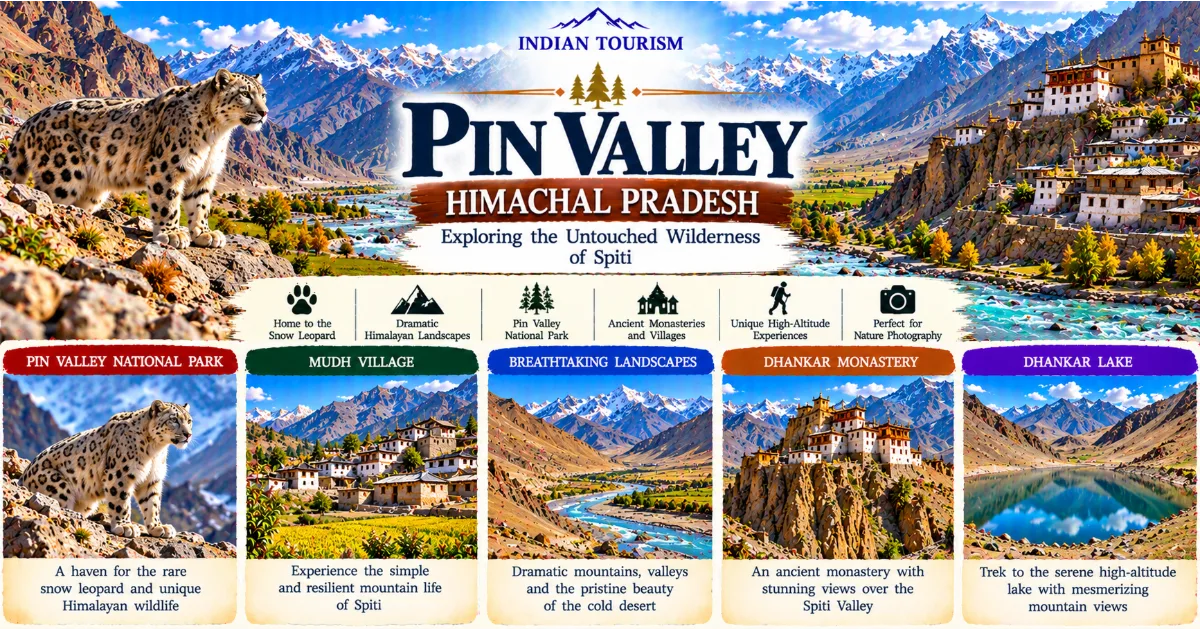
Discovering the Wild Beauty of Pin Valley
Himachal Pradesh is known for its remarkable geographical diversity, from the green valleys of the lower Himalayas to the snow-covered peaks and remote high-altitude deserts of its eastern regions. Among these extraordinary landscapes, Pin Valley stands out as a destination where rugged mountains, traditional Himalayan villages, rare wildlife and Buddhist culture come together. Located within the Lahaul and Spiti district, Pin Valley offers travellers an opportunity to experience a quieter and more remote side of the Indian Himalayas.
Unlike the heavily forested valleys and commercial hill stations found elsewhere in Himachal Pradesh, Pin Valley is characterised by steep mountain slopes, sparse vegetation, winding rivers and settlements surrounded by a dramatic cold desert landscape. Its beauty lies in the contrast between the harsh terrain and the resilience of the communities that have developed their lives within it. Small villages occupy areas where water and cultivable land are available, while the surrounding mountains create a vast natural environment that changes with the seasons.
The valley is particularly important because of Pin Valley National Park, a protected area established to conserve the region's distinctive high-altitude ecosystem. The park is associated with wildlife adapted to extreme mountain conditions, including the elusive snow leopard. Its ecological importance makes Pin Valley appealing not only to nature lovers but also to travellers interested in conservation, geology and the relationship between people and their environment.
Pin Valley is also part of the broader cultural landscape of Spiti, where Tibetan Buddhist traditions influence monasteries, village architecture, festivals and community life. Travellers can explore traditional settlements, observe local agricultural practices and appreciate the spiritual heritage that has shaped the region over generations.
A journey through Pin Valley is not a conventional holiday filled with commercial attractions and entertainment facilities. It is an experience centred on landscape, culture, wildlife and the opportunity to spend time in a remote Himalayan environment. Visitors who arrive with realistic expectations, respect for local communities and a willingness to adapt to changing weather can discover a destination of extraordinary character.
Understanding Pin Valley and Its Geographical Setting
Where Is Pin Valley Located?
Pin Valley is situated in the Spiti region of Himachal Pradesh, within the Lahaul and Spiti district. It forms part of the wider cold desert landscape of the western Himalayas and is closely connected with the Spiti River system. The Pin River flows through the valley before joining the Spiti River, creating a natural corridor around which settlements and cultivated areas have developed.
The valley lies in a high-altitude environment where steep mountains and limited rainfall shape the landscape. Unlike the greener slopes of the outer Himalayas, much of Spiti receives relatively little monsoon moisture because the major mountain ranges intercept precipitation. This creates a dry environment with exposed rocks, sparse vegetation and a striking variety of earthy colours.
Pin Valley can be explored as part of a wider journey through Spiti, with Kaza serving as an important regional base. Visitors commonly consider destinations such as Mudh village and the surrounding areas when planning their trip. The exact route and accessibility of individual locations depend on current road conditions, weather and local restrictions.
The valley's remote location makes planning particularly important. Transport services are less extensive than in major tourist centres, and road travel can be affected by landslides, snowfall, road maintenance and other disruptions. Travellers should check local conditions before setting out and avoid relying exclusively on old itineraries or navigation estimates.
The Landscape of a High-Altitude Cold Desert
The scenery of Pin Valley differs considerably from the green landscapes many people associate with Himachal Pradesh. The mountains are often bare or sparsely covered with vegetation, exposing geological layers formed over long periods. The slopes display shades of brown, grey, ochre and reddish earth, while the river corridor provides a contrasting element within the otherwise dry terrain.
The limited rainfall has influenced the distribution of vegetation and settlement. Plants must survive short growing seasons, cold temperatures and restricted water availability. Agricultural land is concentrated in locations where water can be managed, creating patches of cultivated ground around villages.
The landscape is not static. Seasonal changes affect river levels, vegetation, the appearance of mountain slopes and the accessibility of roads. Summer may bring a brief period of agricultural activity and improved travel conditions, while winter can transform the valley into a much harsher environment.
Visitors should understand that this is a fragile ecosystem. Vegetation may recover slowly after disturbance, and waste can remain visible for long periods. Staying on established paths, carrying rubbish back and respecting local conservation rules are important ways to protect the environment.
Pin Valley National Park: A Protected Himalayan Wilderness
Understanding the National Park
Pin Valley National Park is one of the most important protected areas in Himachal Pradesh. Established in 1987, the park covers a high-altitude landscape within the cold desert environment of Spiti. Its purpose includes protecting the region's distinctive wildlife and natural habitats, particularly species adapted to extreme conditions.
The park's terrain includes rugged mountains, steep slopes, river valleys and areas with limited vegetation. These conditions support a specialised ecosystem in which animals must cope with cold temperatures, scarce resources and considerable seasonal variation.
The park is particularly associated with the conservation of the snow leopard, one of the most elusive large predators of the Himalayas. Other wildlife of conservation interest in the wider region includes the Siberian ibex and several species of high-altitude birds. The exact animals seen during a visit depend on season, location and many environmental factors.
Pin Valley National Park is not a conventional wildlife park with guaranteed animal sightings or easily accessible viewing platforms. Wildlife lives in a large and challenging natural environment, and observing it requires patience, local knowledge and respect for conservation rules.
Visitors should obtain current information about permitted access, routes and any applicable requirements before travelling into the protected area. Rules may vary according to location and current management arrangements.
Why the Park Matters for Conservation
High-altitude ecosystems are shaped by demanding environmental conditions. Cold temperatures, limited vegetation and seasonal water availability influence how plants and animals survive. Changes in climate, human activity and habitat disturbance can create additional pressures.
Protected areas such as Pin Valley National Park help preserve habitats and support the conservation of species that depend on these environments. They can also contribute to scientific research and increase awareness of the ecological value of the Himalayas.
The snow leopard is an important example of the relationship between predators, prey and mountain habitats. Its presence reflects the ecological complexity of the region, although its elusive nature makes it difficult to observe directly.
Conservation also involves the people who live in and around protected landscapes. Local communities have their own livelihoods, traditions and practical needs. Responsible conservation recognises that protecting wildlife and supporting sustainable community life are connected objectives.
Travellers can contribute by following park rules, using knowledgeable local guides where appropriate, avoiding disturbance to wildlife and supporting businesses that respect the natural environment.
The Snow Leopard and Pin Valley's Wildlife
The Elusive Snow Leopard
The snow leopard is one of the most celebrated animals associated with the high mountains of Central and South Asia. Its thick coat, powerful limbs and long tail help it survive in cold, rocky environments. Its natural camouflage allows it to blend into mountain terrain, making it exceptionally difficult to spot.
Pin Valley and the wider Spiti region are known for their importance as snow leopard habitat. However, sightings are never guaranteed, even for visitors who spend considerable time in the area. The animals range across large territories and may remain hidden among cliffs and rocky slopes.
Travellers interested in snow leopards should treat wildlife observation as a conservation experience rather than a promise of a photograph. Local knowledge may improve understanding of the landscape and the signs of wildlife activity, but no guide can guarantee a sighting.
Visitors should never attempt to chase, feed or approach a snow leopard. Such behaviour can endanger both people and animals and may interfere with natural behaviour. Any wildlife excursion should prioritise safety, animal welfare and the protection of habitat.
Siberian Ibex and Other Mountain Animals
The wider Spiti landscape supports several species adapted to steep, rocky terrain. The Siberian ibex is one of the notable wild mammals associated with the region. Its climbing ability allows it to move across slopes that would be difficult for many other animals to navigate.
Ibex are important components of mountain ecosystems and can serve as prey for large predators. Their distribution depends on habitat quality, seasonal conditions and the availability of food.
Visitors may also encounter signs of other wildlife, although direct sightings are uncertain. Tracks, droppings and other evidence may provide clues to animal activity, but these should be interpreted carefully and without disturbing the environment.
It is important not to leave food scraps or approach wild animals for photographs. Feeding wildlife can alter natural behaviour and create risks for both animals and people. Observing from a safe distance is always the better approach.
Birdlife in the Cold Desert
Pin Valley and the surrounding Spiti region are also of interest to birdwatchers. High-altitude habitats support birds adapted to cold conditions, open terrain and seasonal changes in food availability.
The species present in a particular location depend on elevation, season and local habitat. Visitors who want to observe birds should carry suitable binoculars, remain quiet and avoid disturbing nesting areas.
Birdwatching can be rewarding even when rare species are not encountered. Observing how birds use rocky slopes, river corridors and cultivated areas can reveal the relationship between wildlife and the wider landscape.
Photography should never take priority over the welfare of birds. Avoid approaching nests, playing recorded calls to attract birds or entering restricted areas. Responsible observation helps preserve the wildlife experience for others.
Mudh Village: A Gateway to Pin Valley
Discovering Mudh
Mudh is one of the best-known settlements in Pin Valley and serves as a popular starting point for travellers exploring the area. The village is surrounded by dramatic mountains and cultivated land, creating a striking contrast between human habitation and the rugged environment.
Its location makes Mudh an important place for understanding how communities live within the cold desert landscape. Houses and fields occupy areas where terrain and water availability permit settlement, while steep slopes rise around the village.
The settlement attracts travellers interested in photography, village life and access to the wider valley. However, it remains a living community rather than a purpose-built tourist attraction. Visitors should respect private property, avoid disturbing agricultural activity and ask permission before photographing residents.
Mudh is also a useful place to learn about current conditions before exploring farther into the valley. Local residents and accommodation providers may have practical information about road access, weather and available services.
Traditional Architecture and Village Life
Traditional homes in Spiti reflect the challenges of high-altitude living. Building materials, roof forms and the arrangement of rooms often respond to cold winters, local resources and the practical requirements of household life.
In villages such as Mudh, the built environment sits within a wider agricultural landscape. Fields, pathways, storage areas and homes are connected through the everyday activities that sustain the community.
Visitors who walk through the settlement at a relaxed pace may notice details that are easy to miss from a vehicle. The arrangement of buildings, the use of available land and the relationship between houses and fields reveal how the village has adapted to its surroundings.
Photography should be respectful. Ask before taking close-up pictures of people or entering private spaces, and avoid treating household activities as public performances.
Agriculture in a Short Growing Season
Agriculture in Pin Valley is shaped by a relatively short period of favourable weather. Water management is important because rainfall is limited, and cultivated land is concentrated where irrigation and suitable soil conditions are available.
The crops grown in the region must be suited to the local climate and growing season. Agricultural work follows seasonal rhythms, with planting, maintenance and harvesting taking place within a limited window.
The appearance of Mudh and surrounding villages changes through the year. During the growing season, cultivated fields may add patches of green to the dry landscape. As colder weather approaches, agricultural activity slows and households prepare for winter.
Visitors should avoid walking through fields without permission or damaging crops for photographs. Buying local products where available and using locally run accommodation can help support the people whose work sustains the valley.
The Pin River and the Valley's Natural Character
The River as a Lifeline
The Pin River is central to the geography of the valley. Its course through the mountains creates a natural corridor that connects settlements and shapes the surrounding terrain. Water from the river system is essential to local agriculture and contributes to the ecological character of the region.
The river also provides a striking visual feature within the cold desert landscape. Depending on the season, its appearance may vary with water levels, surrounding vegetation and the colour of the mountains.
Visitors should treat the river with caution. Mountain rivers can be cold, fast-moving and unpredictable, and water levels may change. Rocky banks can be slippery, while apparently shallow sections may conceal strong currents.
Avoid entering the river without appropriate knowledge of local conditions. Keep children away from unsafe banks and follow local guidance about suitable viewing areas.
River Valleys and Geological Features
The terrain of Pin Valley reflects a long history of geological processes. The surrounding mountains contain exposed rock formations shaped by erosion, uplift and changes in the Himalayan landscape over immense periods of time.
The river has contributed to the development of the valley by transporting sediment and cutting through parts of the terrain. The resulting landscape includes steep slopes, exposed rock and areas of deposited material.
For travellers interested in geology, the valley offers an opportunity to observe the relationship between water and mountain formation. Changes in rock colour and texture can reveal differences in geological material, although detailed interpretation requires specialist knowledge.
Visitors should not remove rocks or geological material from sensitive locations. The landscape is valuable as a natural record, and leaving it undisturbed helps preserve its scientific and educational importance.
Best Time to Visit Pin Valley
Summer: The Main Travel Season
Summer is generally the most practical season for exploring Pin Valley. Road access is often more favourable than during the coldest months, and longer daylight hours allow visitors more flexibility when planning excursions.
The growing season brings activity to the villages, and cultivated fields may provide contrasting colours against the dry mountain slopes. Accommodation and transport services may also be more available during this period.
However, summer does not eliminate the risks associated with remote mountain travel. Weather can change quickly, roads may be disrupted and temperatures can fall sharply after sunset. Travellers should carry warm clothing and check local conditions before setting out.
Popular travel periods can bring more visitors, so booking accommodation in advance is sensible. Visitors should also allow extra time for journeys rather than relying on tight schedules.
Autumn: Clear Views and Changing Landscapes
Autumn can offer clear mountain views and a quieter travel atmosphere. The landscape may appear especially dramatic under bright sunlight, while cooler temperatures bring a stronger sense of the approaching winter.
Travellers should confirm road conditions and accommodation availability before planning a late-season visit. Some services may reduce their operations as temperatures fall, and snowfall can affect access to higher areas.
Autumn is suitable for visitors who enjoy photography and quiet exploration, provided they are prepared for colder nights and changing weather.
Winter: Extreme Cold and Limited Access
Winter in Pin Valley can be severe. Snowfall, freezing temperatures and difficult road conditions may limit travel, while accommodation and transport options can become restricted.
The region's residents continue their lives through the winter, but a tourist visit requires careful preparation. Travellers should confirm whether accommodation is operating, what heating facilities are available and whether transport can be arranged reliably.
Winter excursions into remote terrain should not be attempted without appropriate experience, equipment and current local guidance. Visitors should never assume that a summer route will remain accessible during the colder months.
Monsoon and Route Conditions
Pin Valley lies in a rain-shadow region, but routes leading into the area can still be affected by heavy rainfall, landslides and rockfalls. Weather conditions may differ significantly between the valley and lower mountain roads.
Travellers should check the entire route before departure and follow official road advisories. A dry forecast for Mudh does not necessarily mean that every road leading to the village is safe.
If road authorities advise against travel, postponing the journey is the responsible choice. Flexibility is essential in a remote mountain environment.
How to Reach Pin Valley
By Road from Kaza
Kaza is an important regional base for travellers exploring Pin Valley. Visitors generally travel by road from Kaza towards the valley, with the journey continuing to settlements such as Mudh when conditions permit.
The route follows mountain terrain, and travel time depends on road conditions, weather and the precise destination. Travellers should not assume that a short distance on a map will translate into a quick journey.
Before departure, confirm the current route and access conditions with reliable local sources. Road maintenance, landslides and other disruptions can affect travel.
Drivers should maintain safe speeds, avoid risky overtaking and stop only in places where vehicles can be parked safely without obstructing traffic.
By Bus and Local Transport
Public transport options in the wider Spiti region vary by season and route. Travellers should investigate current bus services and confirm the departure points, arrival locations and operating schedules before making plans.
Local taxis may provide more flexibility for visiting Mudh and other destinations in Pin Valley. Availability and cost depend on the season, distance and current conditions, so arrangements should be made in advance where possible.
Visitors should not assume that transport will be available at short notice in remote settlements. Planning the return journey before departure is especially important when weather conditions are uncertain.
Preparing for a Remote Road Journey
A journey into Pin Valley requires more preparation than a typical drive between major tourist towns. Travellers should carry essential medication, suitable clothing, drinking water and any necessary personal supplies.
Mobile connectivity may be limited, and roadside services can be sparse. Inform someone about your itinerary if you are exploring remote locations, and avoid travelling farther than planned without confirming conditions.
Check weather and road information before leaving Kaza and again when local guidance is available. A conservative schedule and willingness to change plans can make the journey safer and more comfortable.
Where to Stay in Pin Valley
Homestays and Guesthouses
Accommodation in Pin Valley may include homestays and guesthouses, particularly in settlements such as Mudh. Facilities vary by property and season, so travellers should confirm the details before booking.
Important considerations include heating, hot water, meal arrangements, cleanliness and access to transport. These practical details can be more important than luxury amenities in a remote high-altitude environment.
Homestays provide opportunities to learn about local food and household traditions. Visitors should respect family routines and understand that services may be simpler than those found in larger tourist centres.
During the main travel season, booking ahead is advisable. Travellers should also ask about cancellation arrangements in case road closures or weather disruptions affect the journey.
Staying in Kaza as an Alternative
Some visitors may prefer to stay in Kaza and explore parts of Pin Valley as a planned excursion. Kaza offers access to a wider range of services and can be useful for arranging transport and obtaining local information.
The suitability of a day trip depends on the intended destination, road conditions and available daylight. Travellers should avoid trying to cover too much in a single day, especially when exploring remote areas.
An overnight stay within Pin Valley may provide more time to appreciate the landscape and village life, while a stay in Kaza may be more convenient for visitors who need additional facilities.
The best choice depends on travel style, current conditions and the amount of time available.
Local Food and Cultural Experiences
Food in Pin Valley reflects the wider culinary traditions of Spiti and the practical demands of high-altitude living. Visitors may encounter familiar Indian dishes alongside meals influenced by Tibetan and local Himalayan traditions.
Depending on the accommodation or eatery, meals may include thukpa, momos, noodles, rice, lentils and seasonal vegetables. Availability varies between settlements and can be more limited outside the main travel season.
Food offers insight into the relationship between local ingredients, climate and household traditions. Warm meals can be particularly welcome after a day spent exploring the valley's rugged terrain.
Visitors with dietary requirements should ask about ingredients and preparation methods before ordering. Carrying a few suitable snacks can be helpful during longer excursions.
Travellers should follow local guidance about drinking water and avoid leaving food packaging behind. Supporting local eateries and homestays can help ensure that tourism contributes to the regional economy.
Activities to Enjoy in Pin Valley
Landscape Photography
Pin Valley offers opportunities for landscape photography because of its combination of rocky mountains, river scenery, traditional villages and open skies. The contrast between cultivated land and dry slopes creates distinctive compositions.
Morning and evening light can reveal changing colours across the mountains, while cloudy conditions may create a more dramatic atmosphere. Visitors should remain flexible because visibility depends on weather.
Photographers should use safe viewing locations and avoid standing in roadways or approaching unstable riverbanks. Respect for residents is essential, and permission should be sought before taking close-up photographs of people.
Village Walks
Walking through accessible parts of Mudh and other settlements can provide a deeper understanding of local life. Village paths reveal traditional buildings, cultivated fields and the relationship between homes and the surrounding landscape.
Visitors should ask locally about routes and avoid crossing private land without permission. Paths may become difficult after rain or snowfall, so suitable footwear is important.
A short walk can be rewarding without requiring strenuous activity. Travellers should carry water and allow enough time to return before dark.
Wildlife Observation
Pin Valley's protected landscape is associated with wildlife adapted to cold desert conditions. Visitors interested in animals should seek current local guidance and follow conservation rules.
Wildlife observation requires patience. There is no guarantee of seeing a snow leopard or other rare species, and travellers should not pressure guides to disturb animals for a sighting.
Use binoculars where appropriate, keep a safe distance and never feed wildlife. The welfare of animals and the preservation of their habitat should take priority over photography.
Cultural Exploration
Exploring village architecture, learning about regional food and observing local traditions can add depth to a visit. The cultural landscape of Pin Valley is closely connected with the wider Buddhist heritage of Spiti.
Visitors should approach religious sites respectfully and follow local instructions. Ask before taking photographs of ceremonies or entering spaces that may be restricted.
Cultural exploration is most rewarding when it involves genuine curiosity and respect for the people who live in the valley.
Responsible Tourism and Safety in Pin Valley
Protecting Wildlife and Natural Habitats
The cold desert environment is fragile, and wildlife depends on habitats that can be affected by disturbance. Visitors should avoid leaving rubbish, feeding animals or approaching wildlife for photographs.
Stay on established paths where possible and follow any restrictions that apply within protected areas. Do not remove plants, rocks or other natural objects from sensitive locations.
Supporting responsible local businesses and using knowledgeable guides where appropriate can help reduce the impact of tourism.
Respecting Local Communities
Pin Valley's villages are homes for residents whose daily lives continue alongside tourism. Visitors should respect privacy, ask permission before taking photographs and avoid disturbing agricultural work.
Quiet behaviour near homes and religious spaces is important. Travellers should also recognise the value of local knowledge and follow advice about access, weather and safety.
Purchasing local products and using local services where appropriate can support the regional economy, but respectful behaviour remains essential.
High-Altitude Safety
The altitude of the region can affect visitors differently. People arriving from lower elevations should allow time to acclimatise and avoid strenuous activity immediately after arrival.
Carry suitable clothing, water and essential supplies. Temperatures may fall sharply after sunset, and weather can change quickly.
Anyone experiencing severe or worsening symptoms associated with altitude should seek medical attention promptly. Do not continue to higher elevations or undertake strenuous walks while unwell.
Road and Weather Awareness
Mountain roads can be narrow, exposed and vulnerable to landslides or rockfalls. Drivers should maintain safe speeds, avoid risky overtaking and follow local restrictions.
Check current road conditions before travelling and allow extra time for delays. Avoid driving unfamiliar mountain routes after dark whenever possible.
If conditions deteriorate, postpone the journey rather than attempting to continue through unsafe terrain. A flexible itinerary is one of the most important parts of responsible mountain travel.
A Suggested Three-Day Pin Valley Itinerary
Day One: Arrival in Mudh
Travel towards Pin Valley after confirming road conditions and transport arrangements. Upon arrival in Mudh, settle into your accommodation and allow time to rest after the journey.
If conditions permit, take a short walk through accessible parts of the village. Observe the traditional buildings, cultivated areas and surrounding mountains without disturbing private property.
Use the evening to speak with your host about local conditions and possible activities for the following day. Keep the schedule flexible because remote mountain travel can be affected by weather.
Day Two: Exploring the Valley
Spend the day appreciating the landscape around Mudh and other accessible parts of Pin Valley. Depending on local guidance, this may include village walks, photography and opportunities to learn about the region's ecology.
If planning a wildlife-focused excursion, arrange it through appropriate local guidance and follow all conservation rules. Do not expect guaranteed sightings of rare animals.
Avoid strenuous activities if you have not acclimatised properly. Return to your accommodation with enough daylight remaining and take all rubbish back with you.
Day Three: Return Towards Kaza
Spend the morning enjoying the village and surrounding landscape at a relaxed pace. Before leaving, check the road situation and confirm transport arrangements.
If conditions are favourable, return towards Kaza with sufficient time for delays. Avoid scheduling several distant attractions immediately after leaving the valley.
Travellers with additional time can extend their stay or explore other parts of Spiti, provided that the route, weather and accommodation arrangements are suitable.
Conclusion: Why Pin Valley Deserves a Place on Your Himachal Pradesh Travel List
Pin Valley is one of the most distinctive natural destinations in Himachal Pradesh. Its rugged mountains, cold desert terrain, traditional villages and protected wildlife habitats create an experience that differs sharply from the state's better-known forested hill stations.
The valley's appeal lies in the relationship between nature and human life. Mudh and other settlements demonstrate how communities have adapted to a demanding environment, while Pin Valley National Park highlights the ecological importance of protecting high-altitude habitats.
For travellers interested in landscape photography, wildlife conservation, village culture and remote Himalayan scenery, Pin Valley can be a rewarding destination. Its quiet atmosphere encourages visitors to slow down and appreciate the environment rather than rush between attractions.
Careful preparation is essential. Road conditions, high altitude, limited services and changing weather require visitors to remain flexible and follow local guidance. Responsible behaviour also matters, particularly when exploring protected areas and traditional settlements.
A visit to Pin Valley is not defined by how many attractions can be checked off a list. Its greatest rewards may come from observing the mountain landscape, learning about local traditions and understanding the delicate relationship between people and nature in the cold desert.
For anyone exploring Spiti and the wider Himalayan region, Pin Valley offers a memorable opportunity to experience the wild beauty of Himachal Pradesh while gaining a deeper appreciation for its natural heritage and resilient mountain communities.
#IndianTourism #HimachalPradesh #PinValley #PinValleyNationalPark #SpitiValley #MudhVillage #SnowLeopard #HimalayanWildlife #ColdDesert #ExploreHimachal #NatureTravel #WildlifeConservation #MountainTravel #TravelIndia #ResponsibleTourism
