
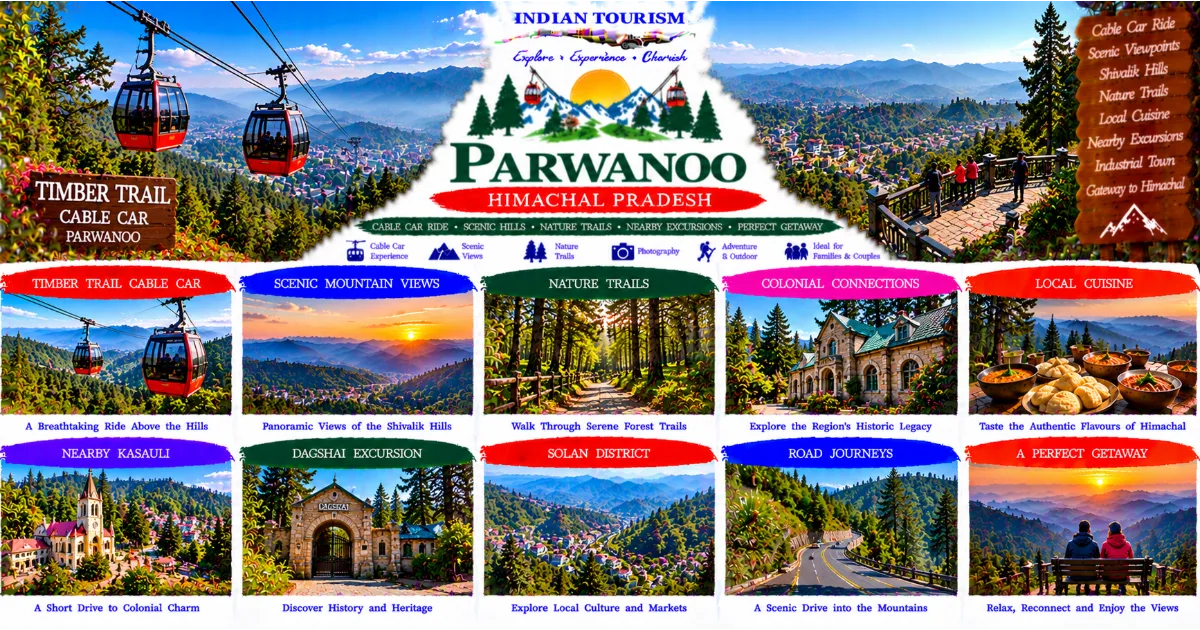
Discover Parwanoo, the Gateway to Himachal Pradesh
Himachal Pradesh welcomes travellers with pine-covered hills, winding mountain roads, historic towns, ancient temples and spectacular Himalayan landscapes. While Shimla, Manali and Dharamshala are among the state's best-known destinations, the journey into the hills reveals several places that deserve attention in their own right. Parwanoo, situated in the Solan district near the Haryana border, is one such destination. Known for its location among the Shivalik hills, its industrial significance, its scenic surroundings and its cable car experience, Parwanoo offers a different perspective on mountain tourism.
For many travellers coming from Chandigarh, Panchkula, Kalka and other parts of northern India, Parwanoo serves as an early gateway into Himachal Pradesh. Its location makes it a convenient stop during a longer mountain journey, but it can also be explored as a short getaway. Visitors can enjoy elevated views, experience a ropeway ride where services are operating, explore nearby forested landscapes and discover the character of a town that combines commercial activity with natural surroundings.
Parwanoo differs from a traditional hill station such as Shimla or Kasauli. It has an important industrial and commercial role, and its built-up areas reflect that function. However, the surrounding hills provide opportunities to enjoy mountain scenery without travelling deep into the Himalayas. Its location also makes it practical for travellers who want to explore several destinations in the Solan district while keeping their road journeys manageable.
One of Parwanoo's most recognisable attractions is the Timber Trail cable car experience, which carries visitors between points on the hillside and provides panoramic views of the surrounding terrain when operating. The experience has become closely associated with the destination. The town can also be included in a broader itinerary featuring Dagshai, Barog, Kasauli and Solan, allowing visitors to explore the region's history, railway heritage, local food and natural landscapes.
Parwanoo is best approached as a destination where the journey, the views and the surrounding region matter as much as individual attractions. Travellers who plan around the weather, confirm activity availability and allow sufficient time for nearby excursions can enjoy a rewarding introduction to Himachal Pradesh.
Where Is Parwanoo Located?
Parwanoo is located in the Solan district of Himachal Pradesh, close to the border with Haryana. It lies in the Shivalik foothills, where the terrain begins to rise from the northern plains towards the higher mountain regions. Its geographical position makes it an accessible destination for travellers arriving by road from Chandigarh and nearby urban centres.
The town is surrounded by hills and valleys, with roads connecting it to Kalka, Pinjore, Solan and other settlements in the region. This makes Parwanoo useful as a starting point for exploring the lower Himalayan foothills. Visitors can use it as a brief stop on the way to higher destinations or stay longer to experience its cable car attraction and nearby landscapes.
Parwanoo is also an industrial town, and this is an important part of its identity. Its economy includes manufacturing and commercial activity, so the visitor experience is different from that of a destination built primarily around tourism. Travellers should expect a mixture of urban development, industrial areas and natural scenery rather than an uninterrupted mountain resort environment.
The most enjoyable visits often focus on the surrounding hills, selected attractions and excursions into nearby towns. Before booking accommodation, travellers should check its exact location and consider whether they prefer convenient access to transport, a quieter hillside setting or proximity to the cable car attraction.
The Story of Parwanoo
From Foothill Settlement to Industrial Town
Parwanoo's development reflects the changing economic landscape of Himachal Pradesh. Its position near the plains and along important transport routes made it suitable for industrial and commercial activity. Over time, the town became known as an industrial centre, attracting businesses and workers while developing connections with neighbouring urban areas.
The growth of industry has shaped Parwanoo's character. Unlike older hill towns whose identities are strongly associated with colonial architecture, religious landmarks or tourism, Parwanoo has a practical economic role. Its roads, commercial facilities and industrial areas are part of everyday life for residents and workers.
For visitors, this provides an opportunity to see a different side of Himachal Pradesh. The state is not defined only by mountain resorts and agricultural villages. It also contains towns that contribute to manufacturing, employment, transport and regional trade. Parwanoo illustrates how economic development and tourism can exist within the same landscape.
Parwanoo and the Shivalik Hills
The Shivalik range forms the outermost belt of the Himalayas. Its lower elevations, forested slopes and undulating terrain create a transition between the plains and the higher mountain ranges. Parwanoo's location in this landscape contributes to its appeal as a foothill destination.
The surrounding terrain changes with the seasons. During the monsoon, the hills can become intensely green, while clearer periods may reveal wider views across the valleys. Summer can bring warmer temperatures than in higher hill stations, but the elevated landscape still provides an introduction to the mountain environment.
Visitors should remember that the Shivalik foothills are not the same as the higher Himalayan regions. Snowfall should not be expected as a normal feature of Parwanoo, and temperatures may remain comparatively warm during the summer. The destination is better suited to scenic outings, short breaks and regional excursions than to travellers seeking a high-altitude snow holiday.
Top Attractions and Experiences in Parwanoo
1. Timber Trail Cable Car
The Timber Trail cable car is the attraction most closely associated with Parwanoo. The ropeway provides an elevated journey over the surrounding hillside landscape and is known for its panoramic views. For many visitors, the ride is the main reason to include Parwanoo in a travel itinerary.
The experience offers a different perspective from travelling along a mountain road. As the cable car moves above the terrain, visitors may see forested slopes, valleys and the built-up areas of the foothills. The changing viewpoint can make the ride appealing to families, couples and photographers.
The cable car experience depends on operating conditions. Services may be affected by maintenance, weather, safety requirements or other operational decisions. Travellers should confirm current operating status, ticket arrangements, opening hours and any restrictions before making a special journey for the ride. It is not advisable to assume that the service will operate every day simply because it is a well-known attraction.
Visitors should follow staff instructions, respect safety rules and avoid leaning out or engaging in unsafe behaviour while travelling. People who are uncomfortable with heights may prefer to enjoy the surrounding landscape from ground-level viewpoints instead.
2. Timber Trail Resort Area
The Timber Trail area is associated with Parwanoo's visitor facilities and hillside scenery. Depending on current operations and access arrangements, visitors may be able to enjoy views, refreshments or other available facilities around the attraction.
The resort and ropeway area should not be confused with a public mountain trail that can be entered freely at every point. Access may depend on operating arrangements, bookings and site-specific rules. Before visiting, travellers should verify which facilities are available and whether any admission or reservation is required.
For visitors who want to make the most of a short trip, it can be helpful to plan the cable car experience and any associated meal or relaxation time together. However, avoid making the entire day's itinerary dependent on one activity unless its availability has been confirmed.
3. Shivalik Mountain Views
Parwanoo's setting among the Shivalik hills creates opportunities for enjoying the landscape from suitable viewpoints and roads. The scenery is particularly appealing to visitors who are beginning a journey from the plains into the mountains. Forested ridges, winding roads and changing elevations provide a visual introduction to the region.
Clear weather can offer wider views, while mist and clouds can create a more atmospheric landscape. The monsoon brings lush greenery but can also reduce visibility. Visitors should not assume that a viewpoint will always provide a clear panorama.
When stopping for photographs, use designated parking areas and safe public spaces. Roads in the foothills may be narrow or busy, and stopping on a bend can create a serious hazard. A scenic view is best enjoyed from a location where visitors can stand safely without obstructing traffic.
4. Local Markets and Everyday Town Life
Parwanoo's markets and commercial areas offer a glimpse of daily life in an industrial foothill town. Travellers can explore shops, find everyday supplies and purchase snacks before continuing towards other destinations. The atmosphere differs from that of a tourist-only market because many businesses serve local residents and workers.
Visitors should treat this as an opportunity to experience the town rather than expecting a large handicraft bazaar or an extensive range of tourist souvenirs. The selection of shops and dining options varies by area.
If you are visiting on a short stop, allow time for a meal or refreshments before continuing your journey. Travellers should also be mindful of local traffic and parking conditions, particularly during busy periods.
5. Scenic Road Journeys Around Parwanoo
The roads connecting Parwanoo with Kalka, Pinjore, Kasauli and Solan form part of the wider travel experience. The transition from the plains into the foothills is especially noticeable as the road begins to climb and the landscape changes.
Travellers who enjoy road trips can use Parwanoo as a starting point for exploring nearby destinations. However, mountain roads require careful planning. Distances alone do not provide a reliable indication of journey time, as bends, traffic, roadwork and weather can affect progress.
Drivers should avoid rushing, maintain safe speeds and take breaks when needed. During heavy rainfall, follow local advisories and avoid unnecessary travel through vulnerable stretches.
6. A Relaxed Foothill Getaway
Parwanoo can also be enjoyed as a short break without a demanding sightseeing schedule. Visitors may spend time at their accommodation, enjoy a cable car ride if available, have a relaxed meal and take a short excursion into the surrounding region.
This approach is particularly suitable for travellers who want a convenient destination close to the plains. It can also work well for families who prefer to avoid long road journeys into higher mountain areas.
A relaxed itinerary gives visitors flexibility if the weather changes or an attraction is unavailable. Rather than treating Parwanoo only as a transit point, travellers can use it as a comfortable introduction to the natural and cultural landscape of Himachal Pradesh.
Best Time to Visit Parwanoo
Spring: March to April
Spring is a pleasant period for exploring Parwanoo and the surrounding foothills. The weather generally becomes comfortable for short excursions, and the hills begin to show fresh seasonal growth. Visitors can combine the cable car attraction, if operating, with nearby sightseeing and relaxed meals.
Mornings and evenings can be cooler than the middle of the day, so carrying a light jacket is useful. Spring can also be a good time for travellers who want to explore the region before the busiest summer holiday period.
Summer: May to June
Summer is a popular travel season because many visitors from the plains seek relief from high temperatures. Parwanoo is accessible and can serve as a short stop on the way to higher destinations. However, it is a lower-elevation foothill town, so temperatures may be warmer than in Shimla or other higher hill stations.
The season is suitable for family trips and weekend breaks, but popular attractions and accommodation can become busier during holidays. Book ahead if you have particular room requirements or intend to visit a specific attraction.
If your primary reason for visiting is the cable car, confirm operating status before travelling. Summer demand does not guarantee that the service will be available on every date.
Monsoon: July to September
The monsoon can make the surrounding hills especially green. Forested slopes, cloud formations and rain-washed roads create a distinctive atmosphere that appeals to some photographers and nature lovers.
However, this season requires additional caution. Heavy rainfall can lead to slippery surfaces, reduced visibility, road closures and landslides in parts of Himachal Pradesh. Ropeway operations may also be affected by weather and safety conditions.
Travellers should check current forecasts and local advisories, avoid exposed areas during storms and remain flexible with their plans. If heavy rain is expected, it may be better to postpone a hillside excursion rather than risk unsafe travel.
Autumn: October to November
Autumn is often a good season for exploring Parwanoo and the wider Solan region. Rainfall usually decreases after the monsoon, and clearer conditions may improve the chances of enjoying mountain views. The weather can be suitable for road trips and short outdoor excursions.
This is a useful season for combining Parwanoo with Dagshai, Barog or Kasauli. Visitors should still check current road conditions and attraction schedules before departure.
Winter: December to February
Winter brings cooler mornings and evenings. Parwanoo may be more comfortable than higher mountain destinations for travellers who want to avoid severe cold, although temperatures still vary with the weather.
Snowfall should not be expected as a normal feature of the town. Visitors seeking snow should research higher destinations separately and check the latest conditions before travelling. For Parwanoo, winter is better suited to short breaks, scenic drives and regional exploration.
How to Reach Parwanoo
By Road
Road travel is one of the most convenient ways to reach Parwanoo. The town is connected to the Chandigarh region and lies close to Kalka and the Haryana border. Visitors travelling from Chandigarh, Panchkula or nearby cities can generally approach by road, with the journey time depending on traffic and the exact starting point.
Those coming from Delhi or other distant cities may travel towards Chandigarh or Panchkula before continuing to Parwanoo. The final route should be checked before departure, particularly during weekends and holiday periods.
Drivers should be prepared for changing road conditions as the route enters the foothills. Even where the initial journey takes place on broad roads, the surrounding region includes bends and rising gradients. Drive cautiously, avoid unnecessary stops on the carriageway and follow local traffic rules.
By Train
Kalka is a practical railway connection for travellers visiting Parwanoo. It is served by rail links connecting the region with other parts of northern India. From Kalka, visitors can continue by taxi or other road transport to Parwanoo.
Travellers interested in the historic Kalka to Shimla railway may also consider adding a separate train experience to their itinerary. However, the railway journey should be planned around the current timetable and available tickets. It is not a substitute for confirming the road connection to the precise accommodation or attraction you intend to visit.
Allow enough time for transfers, especially if you have booked accommodation or a cable car experience at a particular time.
By Air
Chandigarh Airport is a practical airport option for many travellers visiting Parwanoo. From the airport, visitors can continue by road. The duration depends on traffic, weather and the exact destination within the town.
If arriving by air, arranging a taxi in advance may be helpful, especially for late arrivals or travellers carrying substantial luggage. Visitors should confirm the fare, pickup point and approximate journey time before travelling.
Suggested Itineraries for Parwanoo
One-Day Parwanoo Visit
A one-day trip is suitable for visitors travelling from Chandigarh or another nearby city. Start with an early departure to allow time for traffic and any delays. Once in Parwanoo, focus on the Timber Trail cable car if it is operating and accessible on the day of your visit.
Spend time enjoying the views and any available facilities before having lunch. In the afternoon, explore suitable local areas or take a short scenic drive, depending on the weather and your transport arrangements. Return before late evening if you prefer to avoid unfamiliar roads after dark.
Keep the schedule flexible. If the cable car is closed, you can still enjoy the town's foothill setting or use the day to explore another accessible destination in the region.
Two-Day Parwanoo and Kasauli Trip
A two-day itinerary allows travellers to experience both Parwanoo and Kasauli. Spend the first day in Parwanoo, concentrating on the cable car experience if available, mountain views and a relaxed meal. Stay in accommodation that provides convenient access to your next destination.
On the second day, travel to Kasauli and explore its wooded surroundings, historic atmosphere and walking areas that are open to visitors. Check the route and road conditions before setting out, as travel times vary.
This combination works well for couples and small families who want a mix of scenic experiences and a traditional hill-town atmosphere.
Three-Day Parwanoo, Dagshai and Barog Journey
A three-day trip can combine Parwanoo with the historical character of Dagshai and the railway heritage of Barog. Use the first day for Parwanoo and its surrounding foothills. Spend the second day exploring Dagshai's accessible historic areas, subject to site permissions. On the third day, visit Barog and learn about its connection with the Kalka to Shimla railway.
This itinerary gives travellers three distinct experiences: a foothill town with a ropeway attraction, a historic cantonment and a mountain railway destination. It is especially suitable for visitors interested in history, landscape and regional travel.
Four-Day Solan District Exploration
Travellers with four days can build a broader itinerary that includes Parwanoo, Kasauli, Dagshai, Barog and Solan. The first day can be devoted to Parwanoo, the second to Kasauli, the third to Dagshai and Barog, and the fourth to Solan and the journey home.
This plan should be adjusted according to the starting point, accommodation and road conditions. If the trip includes several attractions with limited opening hours, confirm those details before departure.
Exploring Nearby Destinations
Kasauli
Kasauli is a popular hill destination known for its wooded landscape, colonial-era atmosphere and walking routes. It offers a different experience from Parwanoo, with a stronger emphasis on the traditional hill-town setting.
Visitors can enjoy the local atmosphere, explore accessible public areas and spend time among the trees. Road travel and parking conditions can vary during weekends and holiday periods, so planning ahead is useful.
Dagshai
Dagshai is known for its historic cantonment and older buildings associated with the colonial period. It is a suitable addition for travellers who want to understand more about the history of the Solan district.
Access to particular historic sites can vary, so visitors should confirm opening arrangements before travelling. Dagshai is best explored respectfully, with attention to private properties and restricted areas.
Barog
Barog is associated with the historic Kalka to Shimla railway and its famous tunnel. It offers a quieter mountain setting with forested surroundings and opportunities for scenic exploration.
Travellers interested in railway history may want to plan a suitable train journey as part of the visit. Current services, ticket availability and operating conditions should be checked in advance.
Solan
Solan is a larger town with markets, restaurants and cultural attractions. The Shoolini Mata Temple is among its well-known landmarks, and the town is often described as the Mushroom City of India because of its association with mushroom cultivation.
Solan is a practical place to find a wider range of services while exploring the surrounding region. A visit can complement Parwanoo's industrial and foothill character with local food, religious heritage and everyday town life.
Pinjore
Pinjore, located in the neighbouring Haryana region, is known for the historic Pinjore Gardens. Visitors with additional time may consider combining the gardens with Parwanoo, particularly when travelling from Chandigarh or Panchkula.
Because Pinjore is outside Himachal Pradesh, it should be treated as a separate regional excursion rather than part of the state's tourism circuit. Check opening hours, access arrangements and current travel conditions before planning a visit.
Local Food to Try in Parwanoo
Parwanoo's location gives visitors access to both Himachali food traditions and the broader cuisine of northern India. Dining options range from simple meals and snacks to restaurants serving familiar regional dishes. The availability of specific traditional foods can vary by establishment and season.
Himachali Dham
Dham is a traditional celebratory meal associated with Himachal Pradesh. It is commonly served at weddings, festivals and community gatherings. Its dishes vary by region but often include rice, lentils and carefully prepared curries.
Visitors may not find a complete traditional dham available every day in Parwanoo. If you want to try it, ask local hosts or restaurants whether a regional preparation is offered.
Siddu
Siddu is a traditional Himachali preparation made from fermented wheat dough and commonly served with ghee or accompaniments that vary by region. It has a distinctive texture and is worth trying when available.
Because Parwanoo is also a commercial town, menus may focus on widely available dishes rather than traditional mountain cuisine. Visitors seeking siddu may have more options when exploring the wider Solan region.
Chana Madra
Chana madra is a traditional dish often prepared with chickpeas in a yoghurt-based gravy and seasoned with regional spices. It reflects the culinary traditions of Himachal Pradesh and can be a satisfying choice for visitors interested in local flavours.
Recipes differ from one cook to another, so the taste may vary. The dish is commonly served with rice or bread.
Babru
Babru is a traditional Himachali snack made with dough filled with a spiced black gram mixture and then fried. It is a good choice for travellers who want to sample a local speciality.
Availability depends on the restaurant or food outlet. Ask locally for recommendations rather than assuming that every establishment will offer it.
Everyday Meals and Refreshments
Parwanoo's commercial areas may offer a variety of familiar meals, snacks and refreshments. Visitors can find simple dishes that are convenient during a road trip, including rice, dal, roti, vegetables and hot beverages.
Choose establishments that maintain good hygiene and communicate any dietary restrictions clearly. During long journeys, it is useful to carry drinking water and avoid relying entirely on a single food outlet.
Accommodation in Parwanoo
Hotels and Commercial Accommodation
Parwanoo has accommodation options suited to travellers who want convenient access to the town and its transport connections. Some visitors choose to stay overnight before continuing towards Kasauli, Solan or Shimla, while others use the town as a base for short regional excursions.
When booking, consider the property's location in relation to the attractions you plan to visit. A centrally located property may provide easier access to shops and transport, while accommodation in a quieter area may offer a more peaceful setting.
Confirm facilities such as parking, meals, hot water, room heating in winter and the availability of taxis. If the cable car is the main reason for your trip, check the distance to the attraction and the arrangements required for access.
Resort-Style Stays
Resort-style accommodation may suit travellers seeking a more relaxed experience, particularly if the property offers hillside views, dining facilities or organised leisure options. However, services vary by property, and visitors should verify what is currently available rather than relying on general descriptions.
A property with a scenic location can enhance a short holiday, but it may be less convenient for visitors who want to explore multiple towns in one day. Consider the balance between comfort, transport and sightseeing before making a booking.
Staying in Kasauli or Solan
Some travellers may prefer to stay in Kasauli or Solan and visit Parwanoo as a day trip. Kasauli offers a more traditional hill-station atmosphere, while Solan provides a wider range of commercial services and transport options.
The best base depends on the itinerary. If Parwanoo is only one stop among several, choose accommodation that reduces unnecessary driving and allows enough time to enjoy each destination.
Parwanoo for Different Types of Travellers
Couples
Parwanoo can be a pleasant short getaway for couples who enjoy scenic views and a relaxed itinerary. A cable car ride, when operating, can provide a memorable shared experience. The surrounding region also offers opportunities for quiet meals and excursions to nearby hill towns.
Couples seeking a peaceful atmosphere may prefer accommodation away from busy roads and commercial areas. Checking the location and available facilities before booking can help ensure the stay matches their expectations.
Families
Families can enjoy the cable car attraction, scenic drives and short excursions into the surrounding region. Parents should confirm age, height or other safety requirements for any activity before travelling and follow staff instructions.
A flexible schedule is particularly helpful when travelling with children. Plan breaks, meals and return transport in advance, and avoid making the day dependent on a single attraction unless its availability is confirmed.
Solo Travellers
Solo travellers may find Parwanoo convenient because of its road and rail connections. It can be used as a short stop or a base for exploring nearby destinations. Visitors travelling alone should arrange transport carefully and avoid isolated roadside areas after dark.
If relying on public transport or taxis, confirm the return journey before beginning an excursion. Keep essential items accessible and allow extra time for changes in weather or traffic.
Senior Travellers
Parwanoo may suit senior travellers who want a foothill destination without committing to a long journey into higher mountain regions. The suitability of particular attractions depends on mobility, weather and access arrangements.
Anyone considering the cable car should check the current boarding process and accessibility information. Choose accommodation with convenient access and plan regular breaks, especially during warm weather.
Photography Enthusiasts
The cable car, surrounding hills and changing weather provide opportunities for landscape photography. Visitors can capture the transition from the plains to the foothills and the contrast between commercial development and the natural environment.
Photographers should prioritise safe locations and avoid stopping vehicles in hazardous places. During the monsoon, protect camera equipment from rain and avoid exposed areas during storms.
Photography Guide to Parwanoo
Parwanoo offers several kinds of photographic subjects. The ropeway can provide a distinctive view of the hills, while roadside landscapes reveal the transition between the plains and the Shivalik foothills. Town scenes can also illustrate the relationship between industry, transport and the surrounding environment.
Early morning and late afternoon often provide softer light, although the actual conditions depend on weather and season. Clear days may offer wider views, while mist and cloud can create atmospheric compositions. A smartphone camera is sufficient for casual travel photography, and a versatile camera lens can help capture both wide landscapes and architectural details.
If the cable car is operating, follow all photography and safety instructions. Do not use equipment in a way that obstructs other passengers or creates a hazard. At roadside viewpoints, remain in safe public areas and avoid standing near exposed edges.
Responsible Tourism in Parwanoo
Responsible tourism matters in Parwanoo because its natural surroundings exist alongside residential, commercial and industrial areas. Visitors should dispose of rubbish properly, avoid leaving plastic waste in the hills and carry reusable items where practical.
Respect local residents and businesses. Keep noise reasonable, avoid blocking access roads and ask permission before photographing people or private property. Visitors should also recognise that industrial facilities are workplaces, not tourist attractions, and should never enter restricted areas.
The surrounding landscape can be vulnerable to heavy rainfall and erosion. During the monsoon, visitors should follow local advisories and avoid unsafe slopes or roads. If an attraction is closed for weather or maintenance, respect the decision rather than attempting to bypass restrictions.
Responsible travel also means supporting local businesses where possible and treating the destination as a living town rather than simply a scenic backdrop. Small choices, such as using designated parking and keeping public spaces clean, help protect the environment and improve the experience for everyone.
Practical Travel Tips for Parwanoo
Before travelling, confirm the operating status of the Timber Trail cable car if you plan to use it. Check ticketing arrangements, opening hours, any reservation requirements and weather-related restrictions. Avoid assuming that an attraction will be available without checking current information.
Pack comfortable shoes and clothing suitable for the season. A light jacket is useful during cooler mornings and evenings, while a waterproof layer is helpful during the monsoon. In summer, carry drinking water and protect yourself from the sun.
Plan your transport in advance if you intend to visit several destinations in one day. Road distances can be misleading in the hills, and traffic or rain may increase journey times. If travelling by taxi, clarify the fare and whether the driver will wait at each stop.
Visitors with mobility requirements should check accessibility information for their accommodation and planned activities. Those travelling with children should confirm any safety requirements for the cable car or other attractions.
Keep some flexibility in your itinerary. Parwanoo is most enjoyable when visitors can adjust their plans according to the weather, operating conditions and their own pace.
Is Parwanoo Worth Visiting?
Parwanoo is worth considering for travellers who want an accessible introduction to the foothills of Himachal Pradesh. Its location near the plains makes it practical for short breaks, while the Timber Trail cable car experience, when available, provides a distinctive way to view the surrounding hills.
The town's industrial identity means it differs from traditional hill stations. Travellers should not expect every part of Parwanoo to resemble a mountain resort. Instead, its appeal lies in the combination of a working town, a convenient gateway location and access to nearby scenic and historical destinations.
Parwanoo is especially useful when included in a broader itinerary. Combining it with Kasauli, Dagshai, Barog or Solan allows visitors to experience different aspects of the region, from ropeway views and wooded hills to colonial-era history and railway heritage.
For a successful visit, confirm attraction availability, plan transport carefully and allow enough time to enjoy the surrounding landscape. With realistic expectations, Parwanoo can be a rewarding stop on a Himachal Pradesh journey.
Conclusion: Experience the Foothills of Himachal Pradesh
Parwanoo offers a distinctive blend of mountain scenery, commercial activity and access to the wider Solan region. Its location near the plains makes it an accessible gateway to Himachal Pradesh, while the Timber Trail cable car gives visitors a memorable attraction when services are operating.
The destination is most rewarding when explored at a relaxed pace and combined with nearby places that offer different experiences. Kasauli provides a traditional hill-town atmosphere, Dagshai introduces visitors to cantonment history, Barog highlights the heritage railway and Solan offers local markets and cultural landmarks.
Travellers who check current operating conditions, prepare for changing weather and respect the local environment can enjoy a comfortable visit. Parwanoo may not be the most famous hill station in Himachal Pradesh, but it has its own character and can serve as an enjoyable beginning to a journey into the hills.
#IndianTourism #Parwanoo #HimachalPradesh #ParwanooTourism #TimberTrail #ExploreHimachal #SolanDistrict #HimachalTravel #MountainViews #CableCarExperience #WeekendGetaway #NatureTravel #TravelIndia #ExploreIndia #ResponsibleTourism
