
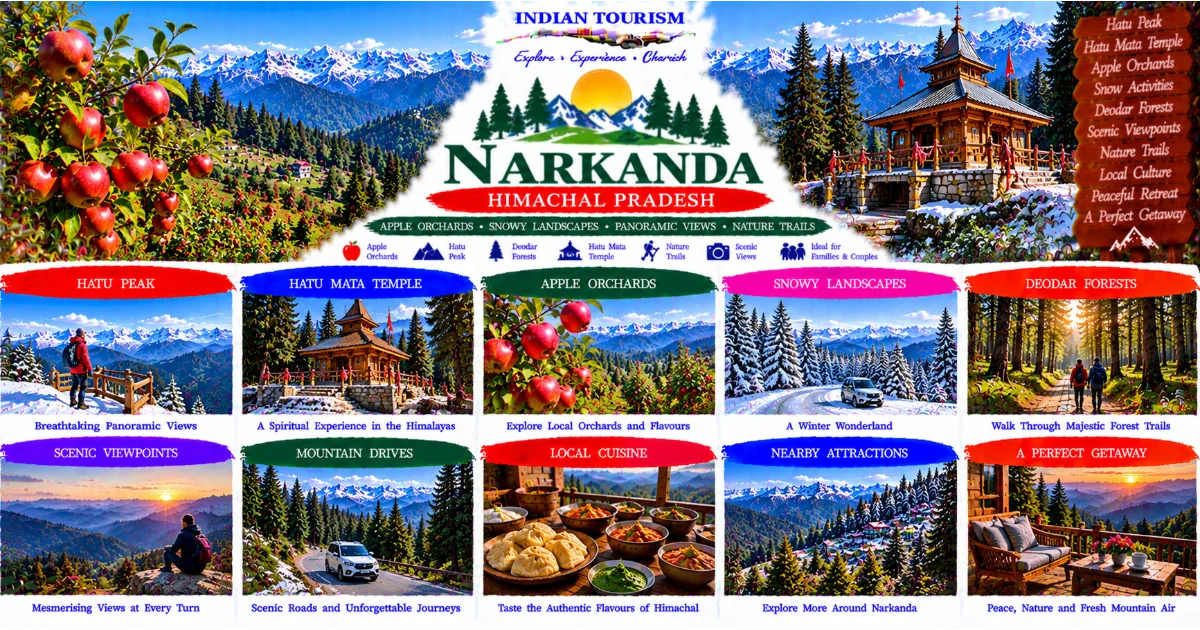
Experience the Natural Beauty of Narkanda
Himachal Pradesh is a land of dramatic mountain landscapes, traditional villages, forested valleys and destinations that offer a refreshing escape from the noise of urban life. While Shimla is famous for its colonial heritage and lively streets, Kufri attracts visitors with its mountain scenery, and Chail is known for its royal history and peaceful forests, Narkanda offers a distinctive combination of apple-growing traditions, Himalayan views, winter experiences and quiet countryside charm. Located in the Shimla district of Himachal Pradesh, Narkanda is an attractive destination for travellers who want to experience the mountains beyond the more crowded tourist centres.
Situated at a considerable elevation in the Himalayan region, Narkanda is surrounded by forests, orchards, mountain slopes and small settlements that reflect the agricultural and cultural life of the area. Its position along an important mountain route has made it a familiar stop for travellers heading towards the higher reaches of Himachal Pradesh. Yet Narkanda is much more than a place to pause during a road journey. It is a destination where visitors can spend time exploring forests, enjoying wide mountain views, learning about apple cultivation and experiencing the changing atmosphere of the Himalayas across different seasons.
One of Narkanda's most appealing features is its connection with apple orchards. The surrounding region is part of Himachal Pradesh's important horticultural landscape, where apple cultivation supports many rural households. During suitable seasons, orchards add colour and character to the hillsides, while local markets and roadside settlements reflect the importance of agriculture in everyday life. Visitors interested in rural tourism can gain a deeper appreciation of the relationship between mountain communities, climate, farming and regional livelihoods.
Narkanda also attracts travellers interested in winter scenery and outdoor activities. Snowfall can transform the landscape, covering forests and slopes in white and creating opportunities for seasonal recreation when conditions permit. During warmer months, the same destination offers green hillsides, fresh air, scenic drives and a comfortable setting for relaxed exploration. The experience changes throughout the year, which makes choosing the right season an important part of planning a visit.
This guide explores Narkanda's main attractions, including Hatu Peak and Hatu Mata Temple, the surrounding forests, apple-growing areas, winter experiences, local food, accommodation options and nearby destinations. It also provides practical information to help families, couples, photographers and independent travellers plan a memorable holiday in this beautiful part of Himachal Pradesh.
Understanding Narkanda and Its Himalayan Setting
Narkanda lies in the upper reaches of the Shimla region and is known for its elevated mountain environment. The landscape includes forested ridges, open slopes, agricultural settlements and views towards the greater Himalayan ranges when visibility is favourable. Its position along the road connecting Shimla with destinations farther into the mountains gives it both geographical importance and tourism appeal.
The surrounding environment is shaped by elevation, seasonal weather and the activities of local communities. Forests cover many slopes, while cultivated land and orchards appear where the terrain and climate support agriculture. Small villages and roadside settlements provide glimpses of rural life in the hills, where farming, horticulture, local commerce and tourism can all contribute to the regional economy.
Unlike a large urban hill station, Narkanda has a relatively compact central area. Visitors can find accommodation, eateries and essential services, while many of the most memorable experiences involve travelling into the surrounding countryside. This arrangement makes the destination suitable for travellers who enjoy using one base for short excursions rather than moving between hotels every day.
The mountain setting also influences the pace of travel. Roads are winding, distances can take longer to cover than they appear on a map, and weather conditions may affect visibility and driving times. A flexible itinerary is therefore more practical than a schedule built around precise arrival times at several distant locations.
Narkanda's appeal lies in this combination of accessibility and mountain character. It is developed enough to support a comfortable holiday, yet its forests, orchards and nearby villages preserve an atmosphere that differs from heavily commercialised tourist centres.
Hatu Peak: The Signature Attraction of Narkanda
Hatu Peak is one of the most prominent attractions associated with Narkanda. Rising above the surrounding landscape, it is known for its panoramic views, forested approach and elevated setting. Visitors often consider it an essential part of a trip because it brings together several of the experiences that make Narkanda special: mountain scenery, woodland, a sense of elevation and opportunities for photography.
The journey towards Hatu Peak passes through areas of forest and winding mountain road. Depending on the season, the surroundings may be lush and green, coloured by autumnal tones or covered in snow. The road itself provides a changing perspective on the landscape, with occasional openings through the trees revealing distant slopes and valleys.
Hatu Peak is particularly appealing to travellers who enjoy viewpoints. On clear days, the surrounding mountain ranges may appear across the horizon, creating a dramatic backdrop for photographs. Atmospheric conditions, however, are unpredictable. Clouds, mist, rain or snowfall can limit visibility, so visitors should not assume that every trip will provide uninterrupted panoramic views.
The peak can be visited by road when the route is open and conditions are suitable. Some travellers prefer to explore part of the approach on foot, but the suitability of walking depends on fitness, weather, road conditions and available daylight. Visitors should ask locally about the current route and avoid attempting an unfamiliar walk in poor visibility.
Because of the elevation, temperatures at Hatu Peak can be considerably lower than in the central part of Narkanda. Even during warmer months, a jacket is useful, while winter visitors need appropriate insulated clothing and footwear. Conditions can change quickly, so it is sensible to carry water, check the forecast and begin the journey early enough to return comfortably.
Hatu Peak is not simply a place to take a photograph. It offers an opportunity to experience the scale and character of the Himalayan landscape. Travellers who take time to observe the forests, ridgelines and changing light often find that the journey is as memorable as reaching the summit area.
Hatu Mata Temple: Faith and Mountain Tradition
Hatu Mata Temple is an important religious attraction near Hatu Peak. Its setting among the mountains gives it a distinctive atmosphere, combining local devotional traditions with the surrounding natural landscape. For many visitors, the temple is a meaningful destination in its own right rather than merely a stop on a sightseeing route.
The temple reflects the close relationship between faith, community life and geography in the Himalayan region. Religious sites often occupy elevated or visually prominent locations, and journeys to them can become occasions for prayer, family visits and participation in local traditions. Visitors can appreciate this cultural context even if they come primarily to enjoy the scenery.
The approach to the temple is part of the experience. Forested slopes and mountain views create a sense of gradual separation from the busy road network and built-up areas below. The atmosphere may be especially peaceful outside peak visiting periods, although festivals and holidays can attract larger numbers of devotees and tourists.
Visitors should approach the temple respectfully. Appropriate clothing, considerate behaviour and attention to local customs help preserve the character of the site. Photography should follow any restrictions, and visitors should avoid disturbing people who are praying or participating in religious activities.
Weather conditions deserve particular attention when visiting the temple. Snow and ice can make access more difficult during winter, while rain and mist may reduce visibility during other seasons. Before setting out, travellers should confirm whether the route is open and suitable for their vehicle. If conditions are unsafe, postponing the visit is the sensible choice.
Hatu Mata Temple adds a cultural dimension to Narkanda's tourism appeal. It allows visitors to experience a place where mountain scenery and regional traditions come together, providing a more meaningful understanding of the destination.
Apple Orchards: Discover the Agricultural Heart of Narkanda
Apple cultivation is one of the defining features of the wider Narkanda region. Himachal Pradesh is among India's important apple-producing states, and the surrounding hills form part of a landscape where horticulture has shaped livelihoods, settlement patterns and seasonal activity for generations.
The orchards provide a different perspective on mountain tourism. Instead of focusing exclusively on viewpoints and temples, visitors can learn how agriculture operates in a highland environment. The location of orchards, the timing of flowering and harvesting, and the challenges of transporting fruit through mountain roads all demonstrate how local livelihoods are connected to climate and geography.
Spring can bring flowering to apple trees in suitable areas, creating a delicate display of blossoms. As the season progresses, fruit develops, and the landscape changes again. During the harvest period, orchards and nearby markets may become especially active as growers prepare their produce for transport and sale. Exact timing varies according to elevation, weather and the particular orchard, so travellers should ask locally about current conditions rather than relying on fixed dates.
Visitors should remember that orchards are working agricultural properties. Not every orchard is open to tourists, and entering private land without permission is inappropriate. Travellers interested in an orchard visit should ask the owner or a local guide whether access is permitted. Picking fruit, touching branches or walking between trees without permission can damage crops and interfere with the work of growers.
An orchard experience can be especially valuable for families with children. It provides a practical introduction to farming and helps explain where familiar foods come from. It can also be rewarding for photographers who want to capture a different side of Himachal Pradesh beyond mountain panoramas.
Apple cultivation contributes to the identity of Narkanda because it connects tourism with the everyday lives of local people. Understanding this connection helps visitors see the destination as a living rural landscape rather than simply a scenic holiday location.
Narkanda's Forests and Mountain Trails
Forests are central to the natural character of Narkanda. The surrounding slopes include woodland areas that contribute to the region's scenic appeal and create opportunities for nature observation, photography and gentle outdoor exploration. Depending on the route and elevation, visitors may encounter stands of coniferous trees, open clearings and changing views across the hills.
Walking through a forested area can provide a welcome contrast to travelling by car. The quieter environment allows visitors to notice birdsong, changes in vegetation and the way sunlight filters through the trees. Short walks along suitable roads or recognised paths may be enough to appreciate the surroundings without undertaking a demanding hike.
Travellers should not assume that every visible track is an established tourist trail. Some routes may be used by local residents, forestry workers or farmers, and others may be difficult to follow. Visitors should ask for local guidance before exploring unfamiliar terrain, especially when mobile connectivity is uncertain.
Footwear is important because forest paths may contain loose stones, mud, roots or slippery surfaces. During winter, snow and ice can make apparently simple routes hazardous. Visitors should avoid walking alone in unfamiliar areas, keep track of daylight and carry enough water for the intended journey.
Nature tourism also requires care for the environment. Litter should be carried back for proper disposal, wildlife should not be disturbed, and visitors should avoid loud music or other behaviour that disrupts the forest. Fires should never be started in unauthorised areas, particularly where dry vegetation creates a risk of rapid spread.
For travellers who appreciate slow experiences, Narkanda's forests can be as rewarding as its best-known viewpoints. A quiet walk, a short photography stop or time spent observing the changing mountain atmosphere may become one of the most memorable parts of the holiday.
Winter in Narkanda: Snow, Cold Weather and Seasonal Recreation
Narkanda is often associated with winter tourism because its elevation and mountain climate can bring snowfall during suitable weather systems. When snow covers the forests and slopes, the destination takes on a different appearance. Trees become outlined in white, mountain roads gain a dramatic atmosphere and visitors experience a colder, quieter version of the landscape.
Winter travel can be especially appealing to people who want to see snow without travelling to extremely remote mountain areas. Narkanda's road access and accommodation options make it a possible choice for a seasonal holiday, although travel conditions can become challenging during heavy snowfall or freezing temperatures.
Snowfall is not guaranteed on particular dates. The amount of snow depends on the weather, elevation and timing of winter systems. Travellers hoping to experience snow should check recent local conditions before leaving and maintain a flexible schedule. It is better to plan a winter holiday around the broader experience of the mountains rather than relying entirely on a specific snowfall event.
Seasonal outdoor recreation may be available when conditions permit. Visitors should use established facilities and follow instructions from qualified local operators. Activities involving snow require suitable equipment, appropriate clothing and attention to safety. Travellers should not attempt to drive onto snowy or icy roads without the appropriate vehicle capability and experience.
Winter clothing is essential. Warm layers, insulated jackets, gloves, hats, thick socks and footwear with reliable grip can make a substantial difference to comfort. Accommodation should be checked for heating arrangements, hot water and access during poor weather.
Road safety is particularly important. Snow and ice can make mountain roads slippery, and visibility may change quickly. Drivers should confirm current road conditions, avoid unnecessary journeys during active snowfall and follow local traffic guidance. If authorities advise against travel, delaying the trip is safer than attempting to continue.
For visitors who prepare properly, winter can reveal a memorable side of Narkanda. The quiet forests and snow-covered slopes offer a different experience from the green orchards and clear mountain roads of warmer seasons.
Summer in Narkanda: Green Hills and Pleasant Mountain Weather
Summer is an attractive season for travellers who want to escape the heat of the northern plains. Narkanda offers a mountain environment where cooler temperatures, forested slopes and open views can provide relief from hot urban conditions. The season is suitable for sightseeing, scenic drives, photography and relaxed outdoor activities.
The landscape changes as winter conditions retreat. Forests become greener, roads may be more comfortable to travel and the surrounding countryside offers opportunities to observe agricultural activity. Visitors can combine Hatu Peak, Hatu Mata Temple and nearby villages without having to plan every outing around cold-weather equipment.
Summer is also a practical season for families and first-time visitors who prefer more predictable outdoor conditions. However, weather in the mountains remains variable. Rain, mist and cool evenings are possible, so carrying a light jacket and checking the forecast is still advisable.
The most popular travel periods may coincide with school holidays, long weekends and the broader summer tourist season. Accommodation can become more expensive or harder to find during these periods. Advance booking is useful, particularly for travellers with specific room requirements or larger families.
Visitors should avoid assuming that mountain weather is always mild. Sun exposure can be strong at higher elevations, and dehydration can occur during outdoor activity. Drinking sufficient water, using sun protection and taking breaks are sensible precautions.
Summer is a good time to appreciate Narkanda's balance between natural scenery and rural life. Travellers can explore the forests, learn about apple cultivation and enjoy the mountain environment without the additional challenges that heavy snowfall may bring.
Autumn in Narkanda: Clear Views and a Quieter Atmosphere
Autumn can be one of the most rewarding periods to explore Narkanda. As the monsoon season recedes, clearer conditions may improve views across the surrounding mountain ranges. The air becomes cooler, and the landscape can develop subtle changes in colour as the season progresses.
For photographers, autumn offers opportunities to capture ridgelines, forest slopes and the contrast between cultivated land and natural vegetation. Early mornings may provide crisp light, while late afternoons can produce softer tones across the hills. Cloud and mist remain possible, so conditions should be treated as variable rather than guaranteed.
Autumn is also suitable for travellers who prefer a quieter holiday. Depending on the calendar and local demand, visitor numbers may be lower than during the busiest summer periods. This can make it easier to enjoy scenic drives and spend longer at selected attractions.
The season requires some preparation because temperatures can drop significantly after sunset. Layered clothing is useful, and visitors planning to travel towards higher points should be prepared for colder conditions than those experienced in the central town.
Autumn can be an excellent choice for travellers who want a balance of comfortable sightseeing, mountain photography and opportunities to learn about the region's horticultural landscape. Checking local orchard conditions can help visitors understand whether particular areas are in a flowering, growing or harvesting phase.
Monsoon Travel: Green Landscapes and Important Precautions
The monsoon season can transform the Narkanda region into a landscape of vivid greenery. Forests appear refreshed, vegetation grows along the hillsides and clouds may drift across the mountain ridges. Travellers who appreciate dramatic weather and quiet scenery may find this season visually appealing.
However, monsoon travel requires more caution than visits during periods of settled weather. Heavy rain can reduce visibility, create slippery surfaces, cause road damage and increase the risk of landslides. Travel times may become unpredictable, and some routes can be temporarily affected by weather-related disruptions.
Visitors should check local forecasts and road information before setting out for Hatu Peak or other elevated locations. It is sensible to avoid driving during intense rainfall where visibility is poor or local authorities advise against travel. A flexible itinerary makes it easier to postpone outdoor activities until conditions improve.
Forest walks and roadside viewpoints should be approached carefully. Muddy ground can become unstable, and streams may rise quickly after heavy rain. Visitors should keep away from swollen watercourses and avoid standing beneath unstable slopes or damaged trees.
Monsoon travel is most suitable for people who can adapt their plans according to conditions. Travellers with tight schedules, elderly companions or young children may prefer a more predictable season. If visiting during the monsoon, keeping extra time for road journeys and choosing accommodation with convenient access can reduce stress.
The beauty of the green mountains can be remarkable, but safe travel must take priority over reaching every planned attraction.
Local Culture and Rural Life Around Narkanda
Narkanda's cultural character is closely connected with the wider Shimla hill region. Local life reflects a combination of agricultural traditions, village relationships, religious practices and the practical demands of living in a mountainous environment. Visitors who look beyond the main tourist attractions can gain a deeper understanding of how people live and work in the hills.
Horticulture plays an important role in many surrounding communities. Apple growing, seasonal agricultural work and the movement of produce connect villages to markets across Himachal Pradesh and beyond. The rhythm of rural life changes with the seasons, from orchard maintenance and flowering periods to harvest activity and preparations for winter.
Religious traditions also contribute to the identity of the region. Temples and local celebrations provide spaces for worship, community gathering and the continuation of customs. Visitors should approach these traditions with respect and avoid assuming that every ceremony is intended as a tourist performance.
Architecture and settlement patterns offer additional insights. Homes and village buildings reflect local needs, available materials, climate and terrain. Roads connect communities that may be separated by steep slopes or forested areas, and everyday journeys can require more time and effort than in the plains.
Responsible cultural tourism begins with curiosity and respect. Asking before taking photographs, supporting local businesses and following community rules can create more positive interactions. Visitors should avoid treating private homes, farms or religious activities as public attractions without permission.
By taking time to observe rural life, travellers can appreciate that Narkanda is not merely a place to admire from a viewpoint. It is part of a wider landscape shaped by generations of farming, faith, adaptation and community life.
Food to Try During a Visit to Narkanda
Food is an important part of the travel experience, and Narkanda offers opportunities to enjoy familiar North Indian meals alongside regional Himachali preparations. The exact selection varies by restaurant, season and accommodation, but travellers can often find simple meals that suit the cool mountain climate.
Himachali cuisine includes a range of preparations based on lentils, beans, rice, yoghurt and local spices. Madra is a well-known regional dish prepared in several styles across the state. Rajma-based dishes, seasonal vegetables and traditional breads may also appear on local menus.
Dham is a traditional festive meal associated with Himachal Pradesh. Its dishes vary by region and occasion, and it is often connected with celebrations and community gatherings. Visitors interested in the cuisine can ask whether a restaurant offers a regional menu or whether a particular dish is available during their stay.
Siddu is another recognised Himachali food, particularly associated with parts of the state where it is traditionally prepared. Its availability in Narkanda depends on the restaurant, so travellers may need to ask rather than expect it on every menu.
Simple meals are often appealing after a day spent outdoors. Hot tea, coffee, soups and freshly prepared dishes can provide comfort during cold mornings and evenings. Visitors staying in smaller properties should confirm meal arrangements in advance, especially if they have specific dietary requirements.
Travellers with food allergies should communicate their needs clearly. Those who prefer vegetarian, vegan or other specialised diets should also check ingredients and preparation methods before ordering. Exploring local food becomes more rewarding when visitors take time to learn about the ingredients and traditions behind each dish.
Where to Stay in Narkanda
Narkanda offers accommodation options for different budgets and travel styles. Visitors may find hotels, guesthouses, smaller lodgings and properties designed to take advantage of the mountain surroundings. The best choice depends on the season, group size, transport arrangements and the level of comfort required.
Hotels in and Around the Main Town
Staying near the main town can be convenient for travellers who want access to restaurants, shops and road connections. This option may suit families, first-time visitors and people planning short excursions to the main attractions.
Before booking, confirm parking arrangements, heating, hot water, meal availability and the distance from the property to the road. In winter, a room that is comfortable during the day may become cold at night if heating is limited.
Scenic Mountain Stays
Some travellers prefer accommodation that offers forest or mountain views. These properties can provide a peaceful setting for couples, photographers and visitors who want to spend more time relaxing at their accommodation.
A scenic location may be farther from restaurants and other services, so transport should be considered carefully. Travellers should also ask about road access during snowfall or heavy rain and whether staff can provide guidance if conditions change.
Budget Guesthouses
Budget-conscious visitors can look for guesthouses and smaller hotels that provide essential facilities at a manageable price. Comparing several options can help travellers identify suitable rooms without sacrificing important requirements.
The lowest room rate is not always the best value. Guests should consider heating, cleanliness, food costs, transport needs and cancellation terms when comparing accommodation.
Choosing Accommodation for Winter
Winter travellers should pay particular attention to heating, hot water, road access and backup arrangements during poor weather. It is worth asking the property how it manages snow-related access issues and whether guests may need to arrange transport differently.
Booking ahead is advisable during holidays and periods when snowfall attracts additional visitors. Travellers should verify the final price and the facilities included rather than relying solely on photographs or brief descriptions.
Narkanda for Couples and Honeymoon Travellers
Narkanda can be a memorable destination for couples who enjoy mountain scenery, quiet surroundings and a relaxed holiday. Its forests, orchards and viewpoints create a natural setting for time together without the need for an elaborate entertainment schedule.
Couples can spend the morning exploring Hatu Peak when weather and road conditions permit, visit Hatu Mata Temple respectfully, and enjoy a relaxed meal before returning to their accommodation. Another day can be reserved for scenic drives, a walk in a suitable area or a closer look at the surrounding countryside.
Photography can add to the experience. Forest paths, distant mountain ranges and orchard landscapes provide opportunities for memorable pictures. Couples should choose safe stopping places and avoid entering private property for photographs without permission.
Accommodation is an important part of a honeymoon plan. A comfortable room, reliable heating in colder months, good food and convenient transport can make the stay more enjoyable. Travellers should consider the location of the property carefully, particularly if they want a peaceful setting away from busy roads.
Narkanda is best suited to couples who appreciate nature, conversation and slower travel. It can also be combined with Shimla, Chail or other destinations in Himachal Pradesh, provided enough time is allowed for mountain journeys.
Narkanda for Families with Children
Families can enjoy Narkanda because the destination offers a mixture of nature, religious heritage, rural scenery and seasonal experiences. Children may find the mountain roads, forests and apple-growing landscape interesting, while Hatu Peak provides an opportunity to learn about the geography of the region.
Parents should plan activities according to children's ages and energy levels. Short walks, comfortable sightseeing stops and regular meal breaks are generally more practical than long excursions without rest. During colder weather, children need warm clothing and footwear that suits the conditions.
Winter trips require particular care. Snow can be enjoyable to see, but icy ground and slippery roads create hazards. Children should remain away from road edges, steep slopes and watercourses, and adults should supervise outdoor play closely.
Families should choose accommodation with suitable rooms, convenient meals and reliable heating where needed. If travelling with elderly relatives, ask about stairs, walking distances and access to parking.
The best family itinerary leaves room for unexpected discoveries. A visit to an orchard where access is permitted, a short forest walk or a quiet meal overlooking the hills may be more enjoyable than rushing between numerous attractions.
Photography in Narkanda: Capturing the Changing Mountains
Narkanda is a rewarding destination for landscape photography because the scenery varies with the weather, elevation and season. Forested ridges, mountain roads, orchards, temple surroundings and distant Himalayan views provide a range of subjects for both experienced photographers and casual travellers.
Early morning can offer attractive light and a peaceful atmosphere. When conditions are clear, distant mountain ranges may become visible, while mist can create layers across the slopes. Late afternoon may provide softer light and changing colours across the landscape.
The best photography opportunities are not limited to Hatu Peak. Orchard areas, forest roads and village surroundings can provide more intimate views of the region. Travellers interested in rural photography should always seek permission before entering private property or photographing people closely.
Weather can change quickly at higher elevations. Photographers should protect cameras and phones from rain and snow and avoid spending too long in exposed areas during cold conditions. A tripod should be placed only where it does not obstruct other visitors or create a safety hazard.
Winter photography can be especially appealing when snowfall occurs, but visitors should prepare for cold temperatures and slippery ground. A beautiful composition is never worth taking an unnecessary risk near a road edge or steep slope.
For the most rewarding results, allow time to observe the landscape rather than taking photographs at every stop. Patience often reveals changes in light, cloud movement and mountain atmosphere that make Narkanda distinctive.
Adventure and Outdoor Activities Around Narkanda
Narkanda is known for its natural setting and winter appeal, and the surrounding region can offer opportunities for outdoor recreation when conditions are suitable. Activities may include scenic walks, nature observation, photography and seasonal snow-related experiences through local operators.
The availability of particular activities changes according to weather, snow conditions, local arrangements and safety requirements. Travellers should confirm current availability before planning their trip around a specific experience. Information from previous seasons may not reflect present conditions.
Visitors interested in walking should choose routes that match their fitness and experience. Suitable footwear, sufficient water, weather-appropriate clothing and awareness of daylight are essential. Longer walks should be planned with local guidance, particularly in unfamiliar forest areas.
If snow activities are available, travellers should use appropriate equipment and follow instructions from qualified operators. They should ask about safety procedures, supervision and the conditions under which an activity may be cancelled. Children should participate only in activities appropriate for their age and ability.
Driving is also part of the mountain experience, but scenic roads require attention and patience. Drivers should stop only at safe, permitted locations and avoid using mobile phones while driving.
For many visitors, outdoor enjoyment in Narkanda does not require a demanding adventure. A quiet walk, a scenic drive or time spent observing the forests can provide a meaningful connection with the mountain environment.
Responsible Tourism and Environmental Protection
Narkanda's natural environment is one of its greatest assets. Forests, orchards, mountain slopes and rural settlements contribute to the destination's identity, but they can be affected by careless tourism and unmanaged waste. Responsible travel helps protect the landscape and supports the communities that depend on it.
Visitors should carry their rubbish back when disposal facilities are unavailable and avoid leaving plastic packaging, bottles or food waste along roads and trails. Waste should never be thrown into forests or streams. Reusable bottles and bags can help reduce unnecessary packaging during a trip.
Forest fires are a serious risk in many mountain regions, particularly when vegetation becomes dry. Visitors should never light fires in unauthorised locations or discard burning materials. Smoking restrictions and local fire-safety instructions should always be followed.
Watercourses and forest habitats should be treated with care. Feeding wildlife, disturbing animals or removing plants can damage the natural environment. Visitors should keep a respectful distance from wildlife and avoid loud music that disrupts other people and animals.
Tourism can also support local livelihoods when travellers use local guides, buy appropriate products from village businesses and choose locally owned services where suitable. Purchasing apples or other regional products from legitimate sellers can help visitors connect their spending with the local economy.
Respect for residents is equally important. Orchards and farms are working properties, not automatically public attractions. Visitors should seek permission before entering them, avoid damaging crops and follow local guidance around religious sites and community spaces.
A responsible visit leaves the destination as clean and undisturbed as possible. This approach helps preserve Narkanda's appeal for future travellers and supports a healthier relationship between tourism and rural life.
How to Reach Narkanda
Narkanda is accessible by road from Shimla and other towns in Himachal Pradesh. The final journey involves mountain roads, so visitors should allow sufficient time and consider weather conditions when selecting transport.
By Road
Road travel is the most common way to reach Narkanda. Travellers can use private vehicles, taxis or available bus services from suitable transport hubs. Shimla is an important starting point for many visitors, while the exact route depends on the origin of the journey and current road conditions.
Mountain driving requires caution. Roads include bends, changes in elevation and sections where visibility may be limited. Drivers should avoid overtaking where the road ahead cannot be seen clearly and should use designated stopping areas for photographs.
During winter, snow and ice may affect travel. Heavy rain can also cause delays or temporary disruptions. Checking current road conditions before departure is essential, especially when travelling towards Hatu Peak or other elevated areas.
By Train
Travellers can use railway services to reach a suitable town in the wider region and then continue to Narkanda by road. The most convenient rail connection depends on the starting point, available schedules and onward transport.
Visitors should check current timetables and allow enough time for transfers. A train journey may form part of a scenic holiday, but the final mountain drive still needs to be planned carefully.
By Air
Travellers arriving by air generally need a road transfer from an airport serving the wider region. Flight availability, airport distance, road conditions and total journey time should all be considered when choosing an itinerary.
Mountain weather can affect travel plans, and flight schedules may change. Visitors with onward connections should allow reasonable flexibility rather than relying on an unusually tight transfer.
Suggested Two-Day Itinerary for Narkanda
A two-day visit provides a practical introduction to Narkanda's main attractions while allowing time to enjoy the surrounding landscape.
On the first day, arrive and settle into your accommodation before exploring the central area. Depending on the time of arrival, take a short walk, enjoy a meal and learn about the local setting. If time and conditions permit, visit a nearby scenic location or explore the surrounding roads during daylight.
On the second day, start early for Hatu Peak and Hatu Mata Temple if the route is open and weather conditions are suitable. Allow enough time for the journey and for respectful exploration of the temple surroundings. After returning, enjoy lunch and spend the afternoon exploring an accessible forest area or learning about apple cultivation in the surrounding region where access is permitted.
This itinerary should remain flexible. During winter, the Hatu Peak journey may need to be delayed or cancelled because of snow or ice. During the monsoon, rain and poor visibility may affect outdoor plans. Visitors should prioritise current conditions rather than following a fixed schedule regardless of safety.
Travellers with three days can add more time for photography, a local food experience or a relaxed excursion to another destination in the region. A longer stay is especially useful for people who prefer slow travel and want to enjoy the mountains without spending every day on the road.
Nearby Destinations to Combine with Narkanda
Narkanda can form part of a wider journey through Himachal Pradesh, particularly for travellers exploring the Shimla region and the mountain routes farther east.
Shimla is an obvious companion destination for visitors interested in colonial architecture, markets, cultural attractions and a more urban hill-station experience. Spending time in both places allows travellers to compare a busy tourist centre with the quieter atmosphere of Narkanda.
Kufri may be suitable for travellers seeking additional mountain scenery and seasonal recreational activities. Chail offers a different experience based on royal heritage and forest surroundings, while Mashobra appeals to visitors who enjoy a quieter landscape near Shimla. Naldehra provides another option for travellers interested in open scenery and relaxed outdoor experiences.
The best combination depends on the total length of the holiday and the starting point. Mountain journeys can take longer than expected, so travellers should avoid scheduling too many distant attractions in one day. It is often more rewarding to select a few destinations and explore them thoroughly.
Visitors travelling farther into the upper reaches of Himachal Pradesh should check the route, road conditions and accommodation arrangements carefully. Weather and local travel advisories should guide the final itinerary.
Is Narkanda Worth Visiting?
Narkanda is worth visiting for travellers who want a destination that combines mountain scenery, rural traditions, apple cultivation and seasonal outdoor experiences. Its landscape differs from the busier hill stations, offering visitors opportunities to spend time among forests, explore an elevated temple and learn about the agricultural life of the surrounding region.
Hatu Peak provides the destination's most recognisable mountain experience, while Hatu Mata Temple adds a spiritual and cultural dimension. Apple orchards introduce visitors to the region's horticultural importance, and the surrounding forests provide a peaceful setting for walking and photography.
The destination is particularly suitable for couples, families, nature enthusiasts and travellers who appreciate quieter mountain holidays. Winter visitors may enjoy snow when conditions permit, while summer and autumn offer opportunities for sightseeing and scenic drives. Monsoon travel can be beautiful but requires additional caution because of rain-related road risks.
Narkanda may be less suitable for travellers seeking extensive nightlife, large shopping districts or a tightly packed entertainment programme. Its appeal lies in nature, seasonal changes and the opportunity to explore at a slower pace.
Conclusion: Discover the Mountain Charm of Narkanda
Narkanda offers a rewarding way to experience the natural and cultural diversity of Himachal Pradesh. Its elevated mountain setting, forests, apple-growing countryside and distinctive attractions make it more than a brief stop on the road beyond Shimla. It is a destination where travellers can enjoy wide views, explore regional traditions and appreciate the relationship between mountain communities and their environment.
From the forested approach to Hatu Peak to the spiritual atmosphere of Hatu Mata Temple, from the seasonal beauty of apple orchards to the quiet experience of walking among the trees, Narkanda offers something for different kinds of visitors. Its character changes with the seasons, creating different reasons to return throughout the year.
Careful planning makes the trip more enjoyable. Visitors should choose travel dates according to their interests, check road and weather conditions, select accommodation suited to the season and respect the working landscapes of local communities. Responsible tourism helps protect the forests and orchards that contribute so much to the region's identity.
For anyone exploring Himachal Pradesh destination by destination, Narkanda deserves a place on the itinerary. It is an invitation to experience the Himalayas through their scenery, agricultural traditions and quieter moments, creating memories that extend beyond the usual tourist attractions.
#IndianTourism #Narkanda #NarkandaTourism #HimachalPradesh #HimachalTourism #HatuPeak #HatuMataTemple #AppleOrchards #HimalayanTravel #MountainGetaway #NatureTravel #WinterTravel #SnowDestinations #RuralTourism #TravelIndia #IncredibleIndia
