
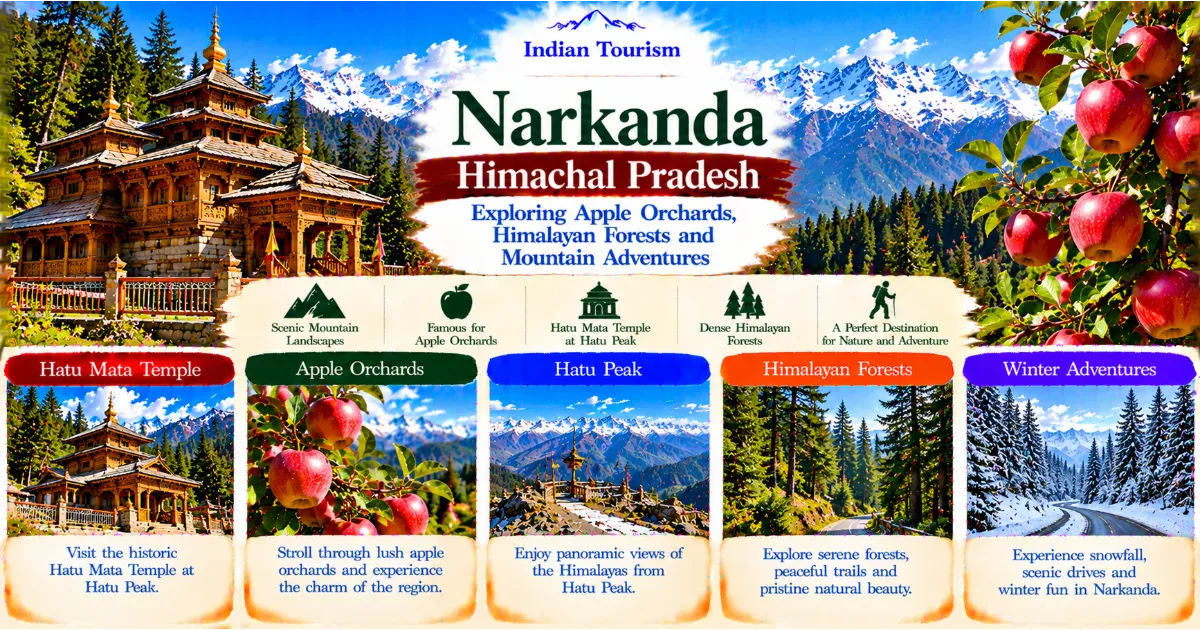
Discovering the Quiet Mountain Charm of Narkanda
Himachal Pradesh is a state where every mountain region offers a different combination of natural beauty, local traditions and outdoor experiences. While Shimla attracts visitors with its colonial heritage and bustling markets, and Manali draws travellers seeking mountain adventures, smaller destinations across the state offer a quieter way to experience the Himalayas. Narkanda, situated in the Shimla district, is one such destination. Known for its apple orchards, forested mountain slopes, winter snowfall and panoramic views, Narkanda provides an appealing alternative for travellers who want to explore the mountains beyond the busiest tourist centres.
Located along the Hindustan-Tibet Road corridor, Narkanda has long served as an important stopping point for journeys towards the higher regions of Himachal Pradesh. Its elevated position provides views of surrounding mountain ranges, while nearby forests and agricultural areas create a landscape that changes with the seasons. In spring and summer, the region becomes greener, and apple orchards begin their annual cycle. Autumn brings harvest activity and changing colours, while winter can cover the surrounding slopes with snow.
Narkanda is particularly attractive to travellers who enjoy scenic road journeys, nature photography, peaceful village experiences and seasonal outdoor activities. It can be visited as a short getaway from Shimla or included in a longer itinerary through the apple-growing areas of the state. The nearby Hatu Peak, with its panoramic views and historic temple, is one of the region's best-known attractions.
The destination also offers an opportunity to understand the relationship between agriculture and mountain life. Apple cultivation is important to the local economy, and orchards are a defining feature of the surrounding landscape. Traditional settlements, agricultural work and changing weather patterns all contribute to the character of the region.
Unlike destinations that depend on a single attraction, Narkanda offers several complementary experiences. Visitors can explore forested slopes, travel towards Hatu Peak, learn about local agricultural traditions, enjoy winter scenery or simply spend time appreciating the mountain environment.
A visit to Narkanda rewards travellers who prefer a relaxed pace, thoughtful exploration and an appreciation of the changing Himalayan landscape.
Where Is Narkanda Located?
Narkanda is a mountain town in the Shimla district of Himachal Pradesh. It lies along the road corridor connecting Shimla with destinations farther towards the eastern parts of the state, including the Kinnaur region.
The town is situated at a high elevation, giving it a cooler climate than many lower-altitude settlements. Its location also provides access to forests, mountain viewpoints and the apple-growing areas around the surrounding villages.
Narkanda's position along an important mountain road has made it a practical stop for travellers moving between Shimla and other parts of Himachal Pradesh. Visitors may stay overnight before continuing their journey, while others choose it as a destination for a longer mountain holiday.
The surrounding terrain includes wooded slopes, cultivated land and distant Himalayan peaks. The appearance of the landscape changes substantially according to the season, making Narkanda attractive at different times of the year.
Road access is generally the main way to reach the town. However, mountain travel requires flexibility because snowfall, rain, road maintenance and other conditions can affect journey times.
Narkanda's location makes it particularly suitable for travellers who want to combine a mountain stay with visits to Shimla, nearby villages and the wider apple-growing region.
Hatu Peak: The Crown of Narkanda
Hatu Peak is one of the most prominent attractions near Narkanda. Rising above the surrounding forests, it provides expansive views of mountain ridges, valleys and the changing Himalayan landscape.
The journey towards Hatu Peak passes through forested terrain, creating an experience that differs from the open mountain scenery visible from the main road. Depending on the season, visitors may encounter pine, cedar and other forest vegetation along the route.
The summit area is known for the Hatu Mata Temple, a religious site associated with local traditions. The temple's location adds cultural interest to the natural scenery and makes the peak significant to both visitors and devotees.
The combination of forest travel, mountain views and religious heritage makes Hatu Peak a rewarding excursion from Narkanda. Visitors should allow sufficient time for the journey and check local advice about road conditions before setting out.
The route can become difficult during winter, particularly when snow or ice affects access. Travellers should not assume that a vehicle can reach the summit in every season.
Visitors interested in walking should assess the conditions and choose activities appropriate to their experience. Warm clothing, suitable footwear and drinking water are important, even when the weather appears pleasant at the start of the journey.
At the summit, travellers can take time to appreciate the surrounding ridges and valleys. Clear conditions may provide extensive views, while clouds can create a different atmosphere across the mountains.
Hatu Peak demonstrates how Narkanda combines natural beauty with regional religious traditions. It is more than a viewpoint because the surrounding forests, temple and mountain routes together form an important part of the local landscape.
Hatu Mata Temple and Its Cultural Significance
Hatu Mata Temple is an important cultural attraction near Narkanda. Situated in the mountain environment of Hatu Peak, it reflects the role of religious traditions in the lives of communities across Himachal Pradesh.
Temples in the Himalayan region are often closely connected with local geography. Their locations may be associated with mountain summits, forested slopes or settlements that have historical and spiritual significance.
Hatu Mata Temple is a place of worship, and visitors should approach it respectfully. Religious sites are not simply scenic stops. They are places where devotees maintain traditions and carry out spiritual practices.
The temple's setting also creates a distinctive architectural and visual experience. The building stands within the surrounding mountain landscape, providing a contrast between human craftsmanship and the scale of the natural environment.
Visitors should follow any instructions concerning footwear, photography, restricted areas and appropriate behaviour. During religious gatherings, it is especially important to avoid obstructing worshippers or disrupting ceremonies.
The temple may be visited as part of a wider excursion to Hatu Peak. Travellers should plan the journey according to weather and road conditions rather than assuming that access will remain unchanged throughout the year.
Learning about the temple through local explanations can deepen the experience. Traditions associated with regional religious sites often contain stories and meanings that are not immediately apparent to visitors.
Hatu Mata Temple contributes to Narkanda's identity by connecting its mountain scenery with the cultural and spiritual heritage of the region.
Apple Orchards: Understanding Narkanda's Agricultural Identity
Apple cultivation is one of the defining features of the Narkanda region. The surrounding hills include orchards that contribute to the local economy and shape the appearance of the landscape during different seasons.
The development of apple cultivation across parts of Himachal Pradesh has influenced agricultural practices, household incomes and local markets. In suitable areas, the climate and elevation support fruit production, making orchards an important part of the regional economy.
The orchard landscape changes throughout the year. Spring brings flowering in many orchards, summer supports fruit development, and autumn is associated with harvesting in many growing areas. The precise timing varies according to elevation, weather and the variety of fruit cultivated.
Apple production requires careful attention to pruning, irrigation, pest management and harvesting. Farmers must also respond to changing weather conditions, which can influence crop quality and yield.
For visitors, the orchards provide opportunities to understand the agricultural character of the region. However, orchards are productive private spaces rather than public parks.
Travellers should never enter an orchard or pick fruit without permission. Damaging branches, disturbing crops or interfering with farm work can affect a family's livelihood.
Visitors interested in local produce can purchase apples and other seasonal products from legitimate local sellers when available. This provides a simple way to support the regional economy.
The orchards are more than attractive features of the scenery. They represent years of agricultural knowledge and work, connecting the landscape with the people who depend on it.
The Forests Around Narkanda
The forests around Narkanda provide an important contrast to the cultivated areas and open mountain viewpoints. Forested slopes contribute to the region's ecological character and offer opportunities for nature observation.
Depending on elevation and local conditions, the surrounding forests include coniferous trees and other vegetation adapted to the mountain climate. These forests provide habitat for birds and other wildlife while contributing to soil stability and water regulation.
Forest paths can be appealing for visitors who enjoy quiet walks, but access conditions vary. Some routes may be steep, uneven or affected by weather, and not every visible track is suitable for casual visitors.
Travellers should follow established paths where available and avoid damaging vegetation. Creating shortcuts across slopes can increase erosion and disturb the forest environment.
The forests also require careful protection from fire. Visitors should not leave burning materials, discard cigarette ends or light fires in unauthorised areas.
Wildlife observation should be conducted quietly and responsibly. Animals should never be fed, chased or disturbed for photographs.
A walk through the forest can be a valuable part of a Narkanda visit because it allows travellers to experience the environment at a slower pace. The changing sounds, vegetation and light provide a different perspective from the broad views available at mountain viewpoints.
Winter in Narkanda: Snow, Forests and Mountain Atmosphere
Winter is one of the most distinctive seasons in Narkanda. Snowfall can transform the surrounding forests and mountain slopes, creating a landscape that attracts travellers interested in winter scenery.
The town's elevation and mountain climate mean that temperatures can fall substantially during winter. Snow and ice may affect roads, walking routes and access to nearby attractions.
Visitors should check current weather and road conditions before travelling. Snowfall can make journeys slower and may require the use of suitable vehicles and equipment.
Winter clothing is essential. Travellers should carry insulated layers, gloves, suitable footwear and protection from wind and moisture.
Narkanda is sometimes associated with winter sports and skiing activities. However, the availability of facilities and suitable conditions varies according to snowfall, weather and local arrangements. Visitors should confirm current information rather than assuming that every winter activity will be available.
Walking on snow-covered ground requires caution because ice may be hidden beneath fresh snow. Travellers should avoid steep or exposed routes unless properly equipped and guided.
Winter can provide memorable photographic opportunities, particularly when trees and mountain ridges are covered in snow. Yet the season also requires greater preparation and flexibility.
For visitors who appreciate cold-weather landscapes, Narkanda offers a practical way to experience the winter character of Himachal Pradesh without necessarily travelling to more remote mountain destinations.
Summer in Narkanda: Green Slopes and Comfortable Exploration
Summer provides a different experience of Narkanda. Snow may remain visible on distant peaks, while the lower slopes and surrounding settlements become greener.
The season is suitable for general sightseeing, short walks and excursions towards Hatu Peak, provided local weather and access conditions are favourable.
Visitors can explore the surrounding villages, learn about apple cultivation and enjoy the mountain views without the severe cold associated with winter.
Summer is also a useful time for travellers who want to include Narkanda in a broader journey through Shimla district and the Kinnaur region. The town's location along the mountain road makes it convenient for an overnight stop.
Even in summer, evenings and early mornings can be cool. Travellers should carry warm clothing and check forecasts before setting out for exposed viewpoints.
Rain can affect road conditions and reduce visibility, so outdoor activities should remain flexible.
The season may also be busy during school holidays and popular travel periods. Booking accommodation in advance can help reduce uncertainty.
For many visitors, summer offers a comfortable balance between accessibility, outdoor exploration and the opportunity to experience the agricultural landscape.
Autumn: The Beauty of Harvest Season
Autumn is an attractive time to visit Narkanda because it coincides with important agricultural activity in the wider apple-growing region.
Orchards may be filled with ripening fruit or harvesting activity, depending on the location and timing. The surrounding vegetation and mountain light can also create distinctive photographic opportunities.
Visitors interested in agriculture may learn about harvesting practices and the work involved in preparing fruit for local markets. Any such visit should be arranged respectfully and with permission from the orchard owner.
The weather can be clear and pleasant during parts of autumn, although temperatures gradually fall as winter approaches.
Travellers should carry warm layers and confirm road conditions before planning longer excursions.
Autumn also offers a chance to observe the seasonal rhythm of mountain communities. Agricultural work, local markets and preparation for colder months all contribute to the character of the region.
The appeal of autumn lies in its combination of landscape and everyday life. It allows visitors to see Narkanda not only as a mountain destination but also as an agricultural region shaped by seasonal work.
Spring: Blossoms and the Return of Colour
Spring brings a gradual transition from winter towards warmer weather. In the apple-growing areas around Narkanda, flowering orchards can create a particularly attractive landscape.
The timing of blossom varies according to elevation, weather and local conditions, so travellers should not expect every orchard to be in bloom on a specific date.
The season is suitable for visitors who prefer quieter travel and enjoy observing changes in the natural environment. Forests and cultivated areas begin to show renewed growth, while the surrounding mountains may still carry snow.
Weather can remain unpredictable, and cold conditions may persist at higher elevations. Travellers should check road access and carry suitable clothing.
Spring is also a useful period for photography because flowering trees, mountain scenery and changing light create a varied visual setting.
Visitors should remember that flowering orchards are part of the agricultural cycle. They should avoid entering private land without permission or touching branches to create photographs.
For travellers interested in the relationship between farming and the Himalayan environment, spring provides an opportunity to observe how the agricultural year begins again.
How to Reach Narkanda
Narkanda is connected by road with Shimla and other parts of Himachal Pradesh. The route passes through mountain terrain, so journey times depend on traffic, road conditions and weather.
From Shimla
Shimla is a common starting point for travellers heading to Narkanda. The road journey passes through mountain settlements and forested areas before reaching the town.
Travellers should allow sufficient time for the drive and consider stopping at suitable locations along the way.
From Chandigarh
Visitors arriving from Chandigarh can travel towards Shimla before continuing to Narkanda. The total journey involves a substantial amount of road travel, so a break in Shimla may be useful for some travellers.
From Delhi
Travellers from Delhi generally need to reach the Shimla region before continuing towards Narkanda. Depending on the transport chosen, the journey may involve a combination of rail, bus, taxi or private vehicle travel.
By Private Vehicle
A private vehicle provides flexibility for exploring nearby villages and viewpoints. Drivers should be comfortable with mountain roads and should check the vehicle's condition before departure.
By Taxi
Taxis can be arranged from Shimla and other larger settlements. Confirm the fare, route and waiting arrangements before starting the journey.
By Public Transport
Bus services may connect Narkanda with Shimla and other destinations, but schedules can vary. Travellers should confirm current services before relying on a particular departure time.
Mountain travel requires flexibility. Rain, snow, road maintenance and other disruptions may affect the journey, so visitors should avoid making important onward arrangements too close to the expected arrival time.
Places to Explore Near Narkanda
Narkanda can be combined with several destinations in the Shimla district and the wider mountain region. The best choices depend on the time available and the condition of local roads.
Hatu Peak
Hatu Peak is the best-known excursion from Narkanda. Its forested route, mountain views and temple make it suitable for visitors interested in both nature and culture.
Tani Jubbar Lake
Tani Jubbar Lake is a small scenic lake in the wider Narkanda region. Its surroundings can provide a peaceful stop for travellers who enjoy quiet landscapes.
Visitors should check access conditions and avoid leaving waste around the lake.
Kotgarh
Kotgarh is associated with the apple-growing history of the region. It provides an opportunity to learn about agricultural landscapes and the development of fruit cultivation in parts of Himachal Pradesh.
Thanedar
Thanedar is another destination associated with apple orchards and mountain scenery. It can be included in a wider exploration of the agricultural belt, depending on road conditions and available time.
Shimla
Shimla offers colonial-era architecture, markets, cultural attractions and a wider range of accommodation. It can serve as a starting point or an additional stop before or after Narkanda.
Kufri
Kufri is known for mountain scenery and seasonal tourist activities. Travellers combining Kufri and Narkanda should allow enough time for the road journey and avoid trying to cover too many locations in one day.
Each destination offers a different perspective on the region. A balanced itinerary should leave room for local exploration rather than treating every stop as a brief photograph opportunity.
Local Food and Culinary Experiences
Food in Narkanda reflects the wider culinary traditions of Himachal Pradesh, with regional dishes and familiar North Indian meals available depending on the establishment.
Visitors may find dishes such as siddu in parts of the state, along with lentils, rice, vegetable preparations and other simple meals suited to mountain life. The precise menu varies by location and season.
Apple-based products may also be available in the surrounding agricultural region, depending on the season and local businesses.
Travellers should not assume that every restaurant offers an extensive menu, particularly during quieter periods or severe winter weather. Confirm meal arrangements with accommodation providers if food availability is important to your plans.
Homestays can provide opportunities to experience home-style cooking where available. Visitors should communicate dietary requirements in advance and respect the time required to prepare meals.
Trying regional food can help travellers understand how local diets reflect climate, agriculture and cultural traditions.
Purchasing food from legitimate local businesses can also support the community and contribute to the local tourism economy.
Accommodation and Facilities
Narkanda offers accommodation options that may include hotels, guesthouses and smaller locally operated stays. Facilities and prices vary by property and season.
Visitors should choose accommodation according to their budget, transport arrangements and comfort requirements. Confirm heating, hot water, meal availability, parking and cancellation policies before booking.
Winter visitors should pay particular attention to heating and road access. Snowfall can affect travel, and conditions may change after a reservation has been made.
Travellers planning to visit Hatu Peak or other nearby destinations should consider the location of their accommodation and the time required to reach their intended attractions.
Mobile connectivity and internet access may vary in the surrounding mountain areas. Download offline maps and keep essential contact details accessible.
Visitors should also consider access to medical services, fuel and basic supplies. Planning these details in advance can make a mountain holiday more comfortable.
Using legitimate local accommodation providers can support the regional economy and provide opportunities to learn about the area from residents.
A Suggested Three-Day Itinerary for Narkanda
Day One: Arrival and Local Exploration
Arrive in Narkanda after checking road and weather conditions. Settle into your accommodation and allow time to rest after the journey.
Explore suitable public areas around the town and enjoy the surrounding mountain scenery. If time permits, ask locally about nearby viewpoints that can be reached safely.
Confirm arrangements for the following day's excursion and check whether weather conditions are likely to affect access.
Day Two: Hatu Peak and Forest Scenery
Begin the day with an excursion towards Hatu Peak if road conditions permit. Visit Hatu Mata Temple respectfully and take time to appreciate the surrounding landscape.
If the route is not suitable for vehicles, ask local sources about safe alternatives. Do not attempt to reach the summit in unsafe conditions.
Return to Narkanda with enough time for rest and an unhurried evening.
Day Three: Orchards and Nearby Settlements
Explore the agricultural landscape around Narkanda. Depending on the season, you may observe orchard flowering, fruit development or harvesting activity.
If time permits, visit a nearby destination such as Kotgarh or Thanedar after confirming road conditions.
Return according to your planned transport arrangements, allowing extra time for mountain travel.
This itinerary is a flexible suggestion rather than a fixed schedule. The final plan should reflect the season, road conditions and the time available.
Responsible Tourism in Narkanda
Responsible tourism helps preserve Narkanda's natural environment and supports the communities that depend on agriculture and local businesses.
Visitors should carry waste away from forests, viewpoints and village roads. Plastic bottles, food packaging and other rubbish should never be left in natural areas.
Water should be used carefully, and visitors should avoid polluting streams or other water sources.
Orchards and agricultural fields should be treated as working land. Ask permission before entering private property, picking fruit or photographing farm activities at close range.
Religious sites should be approached respectfully. Follow instructions regarding footwear, photography and access to sacred areas.
Forest visitors should avoid lighting fires in unauthorised places and should never discard burning materials. Dry vegetation can create a serious fire risk.
Wildlife should not be fed or disturbed. Stay on appropriate routes and avoid making unnecessary noise in sensitive natural areas.
Supporting local accommodation, transport operators and businesses can help tourism contribute to the regional economy.
Responsible travel also requires flexibility. If snowfall, rain or road conditions make an activity unsafe, postpone it or choose a suitable alternative.
Common Travel Mistakes to Avoid
One common mistake is underestimating the time required for mountain journeys. Even relatively short distances can take longer than expected because of winding roads and changing conditions.
Another mistake is assuming that Hatu Peak will always be accessible by vehicle. Winter snow and other weather conditions may affect the route.
Visitors should avoid planning every activity around photographs. Narkanda's appeal also lies in its forests, agricultural landscape and everyday village life.
Entering private orchards without permission can damage crops and create problems for local residents. Visitors should respect agricultural boundaries.
Travellers should not assume that all accommodation facilities remain available throughout the year. Confirm bookings and essential services before departure.
Finally, avoid relying entirely on mobile connectivity. Download maps, keep important details available offline and inform someone of your itinerary when travelling into less familiar areas.
Is Narkanda Worth Visiting?
Narkanda is a rewarding destination for travellers who want to experience the quieter side of Himachal Pradesh. Its mountain scenery, apple orchards, forests and access to Hatu Peak create a combination of natural and cultural attractions.
The town is particularly suitable for visitors who enjoy scenic road trips, seasonal landscapes, photography and relaxed exploration. It can serve as a short getaway from Shimla or a stop on a longer journey towards Kinnaur.
Winter visitors may appreciate the possibility of snow-covered scenery, while warmer months offer opportunities to explore the surrounding agricultural areas and mountain routes.
Narkanda is less suitable for travellers seeking extensive nightlife or a large range of commercial entertainment. Its appeal lies in the landscape, seasonal changes and the opportunity to slow down.
With realistic planning, suitable clothing and attention to current road conditions, Narkanda can provide a memorable introduction to the mountain environment of the Shimla district.
Conclusion: Experience the Seasonal Beauty of Narkanda
Narkanda offers a distinctive combination of mountain scenery, agricultural heritage and outdoor experiences. Its forested slopes, apple orchards and elevated viewpoints reveal a side of Himachal Pradesh that differs from the state's busier tourist centres.
Hatu Peak and Hatu Mata Temple provide a connection with the region's religious traditions, while the surrounding orchards reveal the importance of agriculture to local livelihoods. Nearby destinations such as Kotgarh and Thanedar add further opportunities to explore the mountain landscape.
A successful visit depends on thoughtful preparation. Travellers should check weather and road conditions, arrange suitable accommodation and allow enough time for mountain journeys. During winter, additional care is necessary because snow and ice may affect access.
Responsible behaviour is equally important. Respect private agricultural land, follow local rules at religious sites, avoid littering and support legitimate local businesses.
Whether you are planning a short mountain escape, a photography trip or a wider journey through Himachal Pradesh, Narkanda offers an appealing blend of nature, culture and seasonal beauty. It is a destination where the forests, orchards and mountains invite travellers to slow down and appreciate the many dimensions of Himalayan life.
#IndianTourism #HimachalPradesh #Narkanda #HatuPeak #HatuMataTemple #AppleOrchards #ShimlaDistrict #HimalayanTravel #MountainGetaway #NatureTravel #ExploreIndia #ResponsibleTourism
