
Discovering the Quiet Beauty of Nako
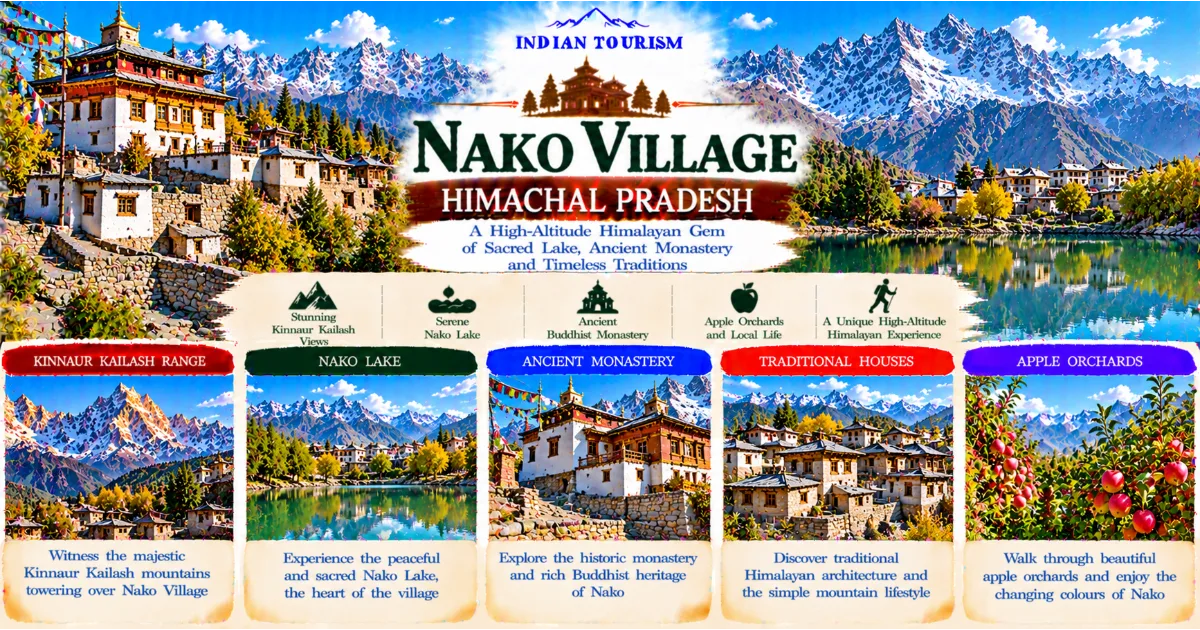
Nako is a remarkable high-altitude village in the Kinnaur district of Himachal Pradesh, offering travellers a glimpse of a Himalayan landscape shaped by mountains, ancient trade routes, Buddhist traditions and centuries of adaptation to a demanding environment. Situated near the Indo-Tibetan border region, Nako is known for its traditional houses, peaceful sacred lake, ancient monastery and dramatic surroundings. Its appearance differs considerably from the greener valleys and forested hill stations commonly associated with Himachal Pradesh. Here, the landscape becomes drier, the mountains appear more rugged, and settlements reflect the architectural and cultural influences of the trans-Himalayan region.
The village sits at an elevation of approximately 3,600 metres above sea level. Its high-altitude location influences almost every aspect of the visitor experience, from the thin air and cool nights to the limited growing season and distinctive architecture. Traditional homes are closely grouped along narrow lanes, while cultivated plots and orchards occupy suitable patches of land. The surrounding mountains create a quiet setting in which daily life follows the rhythms of weather, agriculture and community traditions.
Nako is particularly famous for Nako Lake, a small high-altitude lake that forms a central feature of the village. The water, surrounding trees and mountain backdrop create a peaceful environment that contrasts with the dry, rocky terrain beyond the settlement. The village is also associated with an old Buddhist monastery and a collection of sacred spaces that reflect the long history of Buddhism in the western Himalayas.
The region's cultural identity has been shaped by historical connections with Tibet and neighbouring Himalayan communities. Architecture, religious art, local customs and food traditions demonstrate these influences while retaining their own regional character. Travellers who explore Nako slowly can appreciate how the village's cultural life developed in response to both geography and historical exchange.
Nako is a destination for people who value quiet exploration, cultural heritage and unusual landscapes. It does not offer the extensive entertainment facilities or large commercial markets found in major tourist centres. Instead, its appeal lies in walking through traditional lanes, visiting sacred sites, observing mountain life and appreciating the atmosphere of a remote Himalayan settlement.
Because Nako is located at a high elevation, visitors must also plan carefully. Acclimatisation, suitable clothing, road conditions and access to basic services should be considered before arrival. With thoughtful preparation, Nako can become one of the most memorable stops on a journey through the trans-Himalayan landscapes of Himachal Pradesh.
Where Is Nako Located?
Nako is located in the Hangrang area of Kinnaur district in Himachal Pradesh, along the broader road corridor connecting the Kinnaur region with Spiti Valley. It lies in the high Himalayan landscape near the border region between India and Tibet.
The village is positioned above the Sutlej River valley, in a landscape that becomes increasingly dry and rugged as travellers move towards the trans-Himalayan region. Steep slopes, rocky mountains and sparse vegetation create a striking contrast with the forested valleys found elsewhere in the state.
Nako's location historically placed it within a wider network of mountain routes connecting communities across the western Himalayas. Trade, religious travel and local movement contributed to the exchange of ideas and artistic traditions between different settlements. Although modern transport has changed how people travel, the village continues to reflect its distinctive geographical and cultural position.
The settlement is often included in journeys through Kinnaur and Spiti. Travellers may reach Nako while travelling along the route towards Tabo, Kaza and other destinations in the Spiti region. However, the distances between these places can be substantial, and road conditions may change with weather and seasonal maintenance.
Nako is not a destination to approach without considering altitude. At approximately 3,600 metres, the village is high enough for some visitors to experience symptoms associated with reduced oxygen availability. Travellers arriving from lower elevations should avoid strenuous activity immediately after reaching the village.
The surrounding landscape also influences the availability of services. Accommodation, food and transport options are more limited than in larger towns, and mobile connectivity can vary. Planning accommodation and checking road conditions before departure help make the visit safer and more comfortable.
Nako's location is part of its identity. It is both a cultural settlement and a gateway into one of Himachal Pradesh's most distinctive high-altitude landscapes.
Nako Lake: The Sacred Heart of the Village
Nako Lake is the best-known natural attraction in the village and an important part of its cultural landscape. The small high-altitude lake is surrounded by trees, traditional buildings and mountain scenery, creating a peaceful setting within an otherwise dry and rugged region.
The lake's appearance changes with the seasons. During warmer months, the surrounding vegetation provides colour and contrast, while colder weather transforms the landscape. Depending on winter conditions, the water may freeze, creating a different atmosphere from the one experienced during summer.
Nako Lake is valued not only for its scenery but also for its religious associations. Sacred spaces and local beliefs contribute to the way residents understand the lake and its surroundings. Visitors should therefore approach the area with respect and follow local customs.
Walking around the lake can be a rewarding activity, particularly for travellers who want to experience the village at a relaxed pace. The surrounding paths provide opportunities to observe the relationship between the settlement, its natural environment and the mountains beyond.
However, visitors should be careful around the water. Shorelines can be slippery, and frozen surfaces during winter should never be treated as safe without reliable local guidance. Do not enter the water or walk onto ice simply because other parts of the lake appear frozen.
The lake also requires protection from pollution. Visitors should avoid throwing rubbish into the water, disturbing the surrounding vegetation or leaving food waste along the paths. Keeping the area clean helps preserve both its ecological and cultural value.
For photographers, Nako Lake offers opportunities for reflections, village scenes and changing mountain light. Early mornings may provide particularly peaceful conditions, although the weather and visibility vary.
The lake is most rewarding when experienced as more than a photographic stop. Its place within the village helps explain how natural features, religious beliefs and everyday community life intersect in Nako.
The Ancient Nako Monastery and Buddhist Heritage
Nako is closely associated with an old Buddhist monastery that reflects the long history of religious life in the western Himalayas. The monastery and nearby sacred structures provide insight into the development of Buddhist traditions in a region connected historically with Tibet and other Himalayan communities.
Buddhism has played an important role in shaping the cultural landscape of parts of Kinnaur and Spiti. Monasteries have served as places of worship, learning, artistic expression and community gathering. They also helped preserve religious texts, ritual practices and artistic traditions across generations.
The monastery at Nako is valued for its historical and cultural importance. Traditional religious buildings in the region may contain murals, sculptures, prayer spaces and architectural features that reflect different periods of artistic development. The condition and accessibility of individual interiors can vary, so visitors should follow current local guidance.
A visit should be approached with respect. Monasteries are active religious spaces, not simply heritage buildings. Visitors should speak quietly, follow instructions about footwear and photography, and avoid interrupting prayers or other activities.
Some historic structures may be fragile and require careful conservation. Do not touch old murals, painted surfaces or sculptures unless explicitly permitted. Even apparently minor contact can contribute to deterioration over time.
The monastery also provides an opportunity to understand the wider connections between Nako and the trans-Himalayan world. Religious art, architectural styles and community traditions reflect centuries of cultural exchange across mountain routes.
Travellers interested in history should allow enough time to observe the surroundings and learn about the site rather than rushing through it. If a knowledgeable local guide is available, their explanations can provide context that may not be obvious from the buildings alone.
Nako's Buddhist heritage is one of its defining attractions. It reveals how religious traditions helped shape the identity of a remote settlement and remain part of its cultural life today.
Nako's Traditional Houses and Architecture
The architecture of Nako reflects the practical requirements of life at high altitude. Cold winters, strong sunlight, limited construction materials and the availability of suitable building sites have influenced how homes and other structures are designed.
Traditional houses are often closely grouped, forming narrow lanes that provide shelter from the surrounding environment. Building materials and techniques vary, but stone, earth and timber have played important roles in the regional architectural tradition.
Thick walls can help moderate indoor temperatures, while small openings and compact building forms may reduce exposure to cold winds. Roofs and upper structures reflect local conditions and the materials available to builders.
The arrangement of homes also reveals how the village uses limited space. Buildings are positioned in relation to paths, cultivated plots, storage areas and shared spaces. This pattern differs from the spread-out development common in some modern settlements.
Religious structures add another dimension to the architectural landscape. Monasteries, shrines and other sacred buildings reflect local artistic traditions and the cultural connections between Kinnaur and neighbouring Himalayan regions.
Modern construction has introduced new materials and designs, but older buildings remain important records of local knowledge. Their continued presence demonstrates how communities adapted to a demanding climate before modern transport and building technologies became widely available.
Visitors should respect private homes and avoid entering courtyards without permission. Traditional buildings may be occupied, privately owned or structurally fragile, even when they appear old or unused.
Photography can reveal fascinating details, including wooden doors, rooflines, wall textures and the way homes are grouped against the mountains. However, visitors should ask before photographing residents or private spaces.
Nako's architecture is more than a visual attraction. It represents a practical response to geography and a record of the community's cultural history.
The Cultural Connections Between Kinnaur and Tibet
Nako's position near the trans-Himalayan region has contributed to long-standing cultural connections between Kinnaur and Tibetan communities. These relationships developed through trade, religious travel, migration and the movement of ideas across mountain routes.
The cultural influences are visible in religious practices, artistic traditions, architecture and aspects of local life. Buddhist imagery, sacred spaces and regional building styles reflect connections that extend beyond modern administrative boundaries.
Historical trade routes were important to the movement of goods and people. Mountain communities exchanged products, knowledge and cultural practices, creating networks that linked settlements across difficult terrain. These routes were shaped by geography and season, as high passes and weather conditions affected when and how people could travel.
Modern borders and changes in transport have altered these patterns, but cultural connections remain part of the region's identity. The language, architecture and religious traditions found in Nako reflect a history of interaction between neighbouring communities.
Visitors should understand these connections without assuming that Nako is identical to every Tibetan or Himalayan settlement. Local traditions have their own histories and regional characteristics, and cultural practices can vary from one village to another.
The best way to appreciate the heritage is to observe respectfully, learn from reliable local sources and ask questions when residents are willing to share their knowledge.
Nako offers a valuable perspective on the Himalayas as a region of cultural exchange. The mountains create physical challenges, but they have also connected communities through shared beliefs, trade and artistic traditions.
Nako's High-Altitude Landscape
The landscape surrounding Nako is characteristic of the drier trans-Himalayan environment. Rocky mountains, sparse vegetation, exposed slopes and broad views create a visual contrast with the greener parts of Himachal Pradesh.
The region lies in a rain-shadow environment influenced by the high mountain ranges. As a result, precipitation patterns differ from those of the southern Himalayan slopes, and the landscape often appears dry even when distant peaks retain snow.
Vegetation is adapted to the cold, dry conditions and the relatively short growing season. Trees and shrubs are concentrated in suitable locations, while much of the surrounding terrain consists of rocky slopes and sparsely vegetated ground.
The high elevation also affects temperature. Strong sunlight can make afternoons feel warm, but shade and evening conditions may become cold quickly. Visitors should carry layered clothing and avoid judging the weather solely by midday temperatures.
The surrounding mountains provide opportunities for landscape photography and observation. The changing light reveals different textures in the rock, while clouds and distant snow can transform the scene within a short period.
Visitors should stay on established paths and avoid approaching unstable slopes or unprotected edges. Loose rock, sudden weather changes and limited rescue access can create serious hazards in remote areas.
The landscape is best appreciated through patient observation rather than strenuous exploration immediately after arrival. A short walk near the village may provide rewarding views without exposing visitors to unnecessary altitude or terrain risks.
Nako's high-altitude environment is central to its character. It shapes the scenery, the architecture, the local economy and the practical considerations that make a visit different from a trip to a lower hill station.
Agriculture and Orchard Life in Nako
Although the surrounding landscape is dry and rocky, agriculture remains important to life in Nako. Cultivated plots and orchards occupy suitable areas where soil, water and exposure allow crops to grow.
The agricultural season is shaped by the high elevation and short growing period. Farmers must work within the limits imposed by cold winters, changing temperatures and water availability. The choice of crops and cultivation methods reflects generations of local experience.
Fruit cultivation is associated with several parts of Kinnaur, although the types of orchards and the scale of production vary between villages. In and around Nako, cultivated areas contribute to the visual character of the settlement and demonstrate how communities make use of limited land.
Agriculture in high-altitude regions often involves careful water management. Irrigation, seasonal planning and the maintenance of channels can be important where rainfall is limited. These practices reflect the relationship between local livelihoods and the natural environment.
Visitors should remember that fields and orchards are working properties. Do not enter cultivated areas or pick fruit without permission. Farmers may be carrying out important seasonal work, and tourism should not interfere with it.
Buying locally produced goods when available can support the village economy. However, the range of products may be limited, and availability changes with the season.
The agricultural landscape provides an important counterpoint to Nako's dramatic mountains. It reveals the effort required to sustain a community in a high-altitude environment and helps explain why local knowledge remains essential to everyday life.
Village Walks and Slow Travel in Nako
Walking through Nako is one of the best ways to appreciate its atmosphere. The village's narrow lanes, traditional homes, cultivated patches and sacred spaces reveal details that can be missed when travelling only by vehicle.
A relaxed walk allows visitors to observe the relationship between buildings and terrain. Homes cluster along the slopes, paths connect different parts of the settlement, and views open towards the surrounding mountains at suitable points.
Walking also creates opportunities to learn about daily life. Residents may be engaged in household tasks, farming, caring for animals or maintaining their homes. These activities are part of the village's ordinary rhythm rather than performances for visitors.
Visitors should remain on public paths and ask before entering private areas. Avoid photographing people without permission, particularly in courtyards or near homes.
The high altitude requires a gentle approach. Even a short walk may feel more demanding than expected for someone arriving from a lowland city. Take breaks, drink water and avoid strenuous activity if you experience headaches, dizziness, nausea or unusual breathlessness.
Walking in the early morning or late afternoon can provide attractive light, but temperatures may be lower at these times. Wear suitable footwear and clothing, and avoid unfamiliar routes after dark.
Slow travel is especially suitable for Nako because the destination's appeal comes from its details and atmosphere. A careful walk through the village can provide a richer experience than attempting to cover too many places in a single day.
Photography in Nako: Capturing the Trans-Himalayan World
Nako offers distinctive photographic opportunities because of its traditional architecture, sacred lake, mountain scenery and high-altitude atmosphere.
The village provides a variety of subjects within a relatively compact area. Photographers can capture reflections at Nako Lake, the arrangement of traditional houses, religious architecture and the contrast between cultivated land and rocky mountains.
Morning and evening light can bring out the textures of the landscape. However, mountain weather changes quickly, and cloud cover may obscure distant peaks. Visitors should remain flexible and use changing conditions creatively rather than expecting a particular view at every moment.
The lake can be photographed from suitable paths around its perimeter. Avoid approaching unstable banks or entering restricted areas to obtain a better angle.
Traditional buildings offer opportunities to document architectural details, but residents' privacy must be respected. Ask permission before photographing people, private courtyards or interiors.
Religious sites may have restrictions on photography, particularly inside monasteries or where historic murals are present. Follow instructions and avoid using flash where it is prohibited.
Cold temperatures can affect batteries and electronic equipment. Carry protective cases and keep spare batteries warm when possible.
The best photographs often emerge from patient observation. Nako's quiet lanes, changing light and distinctive landscape reward travellers who take time to understand the place rather than treating it as a quick stop on a long road trip.
Best Time to Visit Nako
Nako's high elevation makes seasonal planning particularly important. The best time to visit depends on road access, weather, personal tolerance for cold and the activities planned.
Spring: March to April
Spring is a transition period, and temperatures can remain low. Snow and icy conditions may affect some routes, while the village gradually moves towards the warmer part of the year.
Travellers considering an early-season visit should confirm road conditions and accommodation availability before departure.
Summer: May to June
Summer is often a practical period for travelling through Kinnaur and towards the Spiti region. Conditions may be more suitable for village walks and sightseeing, although nights can still be cold.
Visitors should prepare for high-altitude conditions and avoid strenuous activity immediately after arrival.
Monsoon: July to September
Nako lies in a relatively dry trans-Himalayan environment, but the wider region can still be affected by heavy rainfall, landslides and road disruptions. The approach routes may experience difficult conditions even when rainfall at the village itself is limited.
Check current weather and road information before travelling.
Autumn: October to November
Autumn can bring clear periods and striking mountain views, but temperatures fall rapidly. Snow and ice may affect higher routes as winter approaches.
Travellers should avoid assuming that roads will remain open throughout the season.
Winter: December to February
Winter can be extremely cold, with snow and icy conditions affecting access. Accommodation and services may be limited, and some roads may become difficult or temporarily inaccessible.
Winter travel requires careful planning and reliable local guidance. Visitors should confirm heating arrangements and road status before departure.
For many travellers, the summer period is the most practical time to visit, but conditions vary from year to year. Current information should always take priority over general seasonal expectations.
How to Reach Nako
Nako is accessible by road, but the journey involves mountain terrain and can be affected by weather and road conditions.
By Road
Travellers commonly reach Nako through the Kinnaur road network, continuing towards the Spiti region. The journey may involve long stretches of winding mountain roads, steep slopes and areas where services are limited.
Drivers should be comfortable with mountain conditions and should avoid rushing. Check current road status before departure, particularly during the monsoon and winter.
By Bus
Public transport may connect parts of Kinnaur and the Spiti route, but schedules can be limited and may change according to road conditions. Confirm current services, departure times and the location of the final stop before travelling.
If you need onward transport from a bus stop to your accommodation, arrange it in advance where possible.
By Train
Nako does not have a railway station. Travellers arriving by train must continue by road from a suitable railway connection serving their wider itinerary.
By Air
There is no airport in Nako. Visitors arriving by air must arrange onward road travel from an airport that fits the route they intend to take.
Local Transport
Taxis and local vehicles may be available for travel between villages and nearby destinations, but availability can be limited. Confirm fares, journey times and return arrangements before setting out.
Mountain journeys should include time for unexpected delays. Avoid scheduling a tight connection immediately after a long road trip, especially during seasons when landslides, snowfall or road repairs are possible.
Accommodation in Nako
Accommodation in Nako is generally modest compared with larger tourist centres. Visitors may find guesthouses, homestays and small hotels, with facilities varying according to the property and season.
Before booking, confirm heating, hot water, meals, parking and access. Heating arrangements are particularly important because nights can be cold even during the warmer months.
A homestay may provide a valuable opportunity to learn about local food, customs and daily life. Facilities can be simple, so travellers should communicate their needs clearly.
Advance booking is advisable during the main travel season, especially if Nako forms part of a longer journey through Kinnaur and Spiti. Arriving without accommodation can be inconvenient when services are limited.
Visitors should also consider the demands of high altitude. A comfortable room, access to drinking water and an opportunity to rest can make the first day easier.
Respect household rules, keep noise levels reasonable and dispose of waste responsibly. Supporting locally operated accommodation can help tourism contribute to the community.
Because the village is remote, visitors should not assume that every service will be available at all hours. Planning meals, transport and essential supplies in advance helps create a more comfortable stay.
Food and Local Culinary Experiences
Food in Nako reflects the broader culinary traditions of the trans-Himalayan region, where the climate, available crops and historical cultural connections have influenced everyday meals.
Visitors may encounter dishes based on grains, vegetables, pulses and other ingredients suited to local conditions. Food traditions vary between households, and restaurant menus may combine regional preparations with familiar North Indian options.
The availability of fresh produce depends on season and transport. In remote mountain settlements, supplies can be affected by road conditions, so visitors should not expect the same variety available in larger towns.
A meal at a local homestay can provide a more personal introduction to regional food. Ask hosts about traditional dishes and ingredients, while respecting household customs and dietary practices.
Visitors with allergies or dietary restrictions should explain their requirements clearly before ordering. Carrying suitable snacks is useful for long journeys and excursions.
Avoid wasting food and dispose of packaging responsibly. Waste management can be challenging in remote mountain regions, and careless disposal can damage the environment.
Exploring local cuisine offers a way to understand how people adapt to the climate and agricultural conditions of the high Himalayas. It also provides an opportunity to support local businesses and experience the region's hospitality.
A Two-Day Nako Itinerary
A two-day visit allows travellers to experience the village without rushing through its main attractions.
On the first day, arrive in Nako and settle into your accommodation. Allow time to rest and adjust to the elevation before undertaking any extended walk. Later, explore the accessible village lanes and visit Nako Lake, following local guidance around the water.
Spend the evening enjoying the mountain atmosphere from a safe location. Temperatures can drop quickly after sunset, so return to your accommodation before becoming uncomfortably cold.
On the second day, visit the monastery and other accessible sacred spaces. Take time to observe the architecture and learn about the village's Buddhist heritage. If you feel well acclimatised, enjoy a gentle walk through suitable village areas before continuing your journey.
The itinerary should remain flexible. If you experience symptoms of altitude illness, avoid further exertion and seek appropriate medical advice. Do not treat physical discomfort as something to push through for sightseeing.
Visitors with more time can use Nako as part of a wider journey through Kinnaur and Spiti, but should allow realistic travel time between destinations.
A Four-Day Nako and Spiti Journey
A four-day itinerary can provide a broader introduction to the region, although the actual route should be determined by road conditions and the traveller's starting point.
Spend the first day travelling through Kinnaur towards Nako. Avoid rushing the journey, and allow time to reach your accommodation safely.
On the second day, explore Nako Lake, the monastery and the traditional village lanes. Learn about the local culture and take time to appreciate the landscape.
On the third day, continue towards Tabo if the road is open and conditions permit. Tabo is known for its historic Buddhist monastery and forms another important part of the cultural landscape of Spiti. Confirm travel times and accommodation before leaving Nako.
Use the fourth day for further exploration or the return journey, depending on your wider itinerary. Do not attempt to fit several distant destinations into one day simply to complete a checklist.
Travellers who want to continue deeper into Spiti should allow additional time. Mountain roads, weather and elevation can affect both comfort and access.
This itinerary is a framework rather than a fixed schedule. Local conditions should determine the final plan.
Responsible Tourism in Nako
Responsible tourism is important in Nako because its cultural heritage and high-altitude environment can be vulnerable to careless visitor behaviour.
Keep Nako Lake clean and avoid throwing rubbish into the water or along its banks. Follow local instructions about access and respect the area's religious significance.
At the monastery and other sacred places, behave respectfully and follow any rules concerning footwear, photography and access.
Treat traditional homes and agricultural plots as private property. Ask permission before entering courtyards or photographing residents.
Carry rubbish to appropriate disposal points. Avoid leaving plastic bottles, food packaging or other waste along mountain roads and village paths.
Support locally operated accommodation and food businesses where possible. Respect workers and agree on prices before using paid services.
Be aware of altitude and avoid strenuous activities immediately after arrival. Follow medical advice if you experience symptoms of altitude illness.
Check road conditions before travel and follow official instructions during adverse weather or road closures.
Responsible tourism helps protect the village's natural and cultural character while allowing residents to benefit from visitor spending.
Practical Travel Tips for Nako
Allow time to acclimatise after arriving at the village. Avoid strenuous activity during the initial period, especially if travelling directly from a low-altitude location.
Carry warm clothing throughout the year because nights can be cold and weather can change quickly.
Drink water regularly and avoid excessive exertion. Seek medical advice if you develop symptoms that may indicate altitude illness.
Confirm accommodation, meals and heating arrangements before booking.
Check road conditions and transport availability before leaving for Nako, particularly during the monsoon and winter.
Carry essential medication, suitable snacks and some cash in case digital payment services are unavailable.
Download maps and important information in advance because mobile connectivity can be inconsistent.
Wear comfortable footwear for village lanes and uneven paths.
Respect religious customs and ask permission before photographing residents or private spaces.
Keep your itinerary flexible, allowing time for weather-related delays and changes in road access.
Conclusion: Why Nako Deserves a Place on Your Himachal Pradesh Travel List
Nako is one of the most distinctive villages in Himachal Pradesh, combining a sacred lake, historic Buddhist heritage, traditional architecture and the dramatic scenery of the trans-Himalayan region. Its high-altitude setting creates an atmosphere that differs considerably from the greener valleys and forested hill stations found elsewhere in the state.
Nako Lake offers a peaceful centre for village exploration, while the monastery and surrounding sacred spaces reveal the importance of Buddhist traditions in the region. Traditional homes demonstrate how local communities have adapted their architecture to cold weather, limited resources and mountainous terrain.
The village's historical connections with neighbouring Himalayan communities provide additional cultural depth. Religious art, architecture and local customs reflect centuries of exchange across mountain routes, making Nako an important place for understanding the wider cultural geography of the Himalayas.
A successful visit requires careful planning. The elevation can affect physical comfort, accommodation and food services may be limited, and road conditions can change with the weather. Visitors should prepare accordingly and avoid rushing through the experience.
Nako is most rewarding when travellers take time to observe its quiet lanes, appreciate the mountain landscape and learn about local traditions. Its value lies not in the number of attractions that can be visited in a day but in the opportunity to experience a distinctive Himalayan settlement with respect and curiosity.
For travellers exploring Kinnaur and Spiti, Nako offers a meaningful combination of cultural heritage, natural beauty and high-altitude village life. It is a destination where the landscape tells a story of faith, adaptation and the enduring relationship between people and the mountains.
#IndianTourism #NakoVillage #NakoLake #HimachalPradesh #Kinnaur #SpitiValley #BuddhistHeritage #HimalayanVillages #TransHimalayas #HighAltitudeTravel #HimalayanCulture #MountainTravel #ResponsibleTourism #ExploreHimachal #IncredibleIndia
