
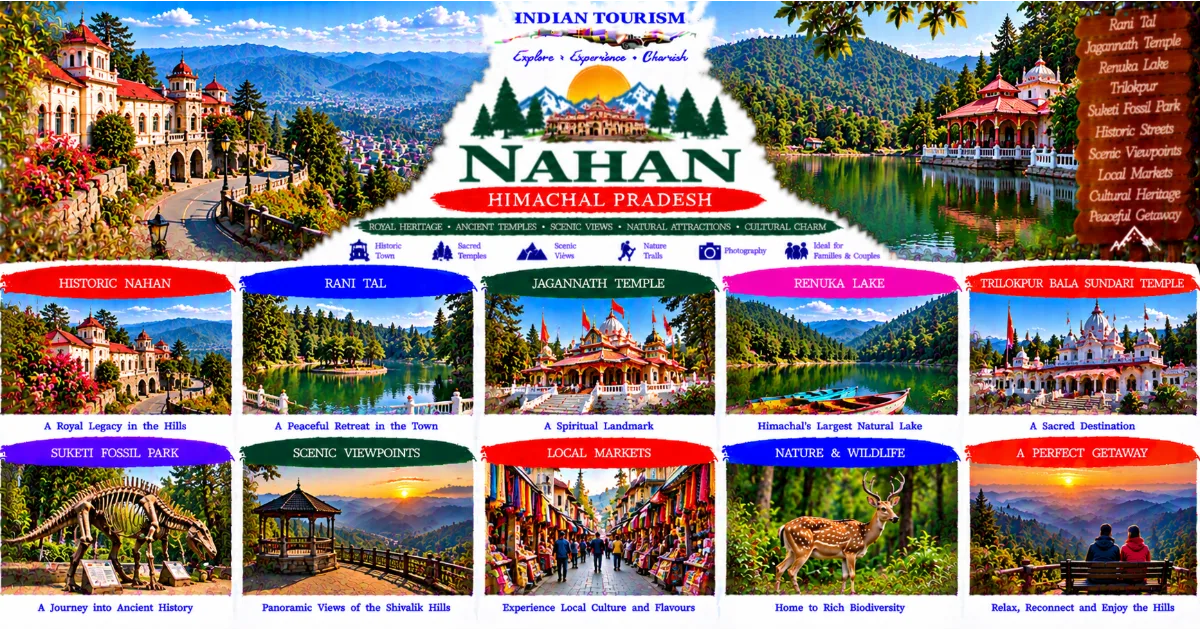
Discover the Historic Charm of Nahan
Himachal Pradesh is celebrated for its mountain scenery, forested valleys, traditional villages and historic hill stations. Beyond the popular destinations, the state contains towns whose appeal comes from their royal heritage, religious traditions, local markets and peaceful surroundings. Nahan, the historic headquarters of the Sirmaur district, is one such destination. Located on a hill in the Shivalik region, Nahan offers visitors a combination of history, culture, temples, lakes and access to the quieter landscapes of southern Himachal Pradesh.
Unlike the heavily commercialised hill stations that attract visitors with extensive shopping streets and crowded tourist centres, Nahan has a more understated character. Its identity is closely connected with the former princely state of Sirmaur, whose rulers shaped the development of the town. The old streets, religious landmarks and traditional neighbourhoods reflect a long history that continues to influence local life.
Nahan is also an appealing destination for travellers who want to explore Himachal Pradesh beyond its best-known mountain resorts. The town offers a different kind of experience, where a morning walk through historic streets can be followed by a visit to a temple, an afternoon exploring local markets and an excursion to a nearby natural attraction. The surrounding hills provide a scenic setting without requiring visitors to travel to high-altitude areas.
One of the advantages of Nahan is its connection with other destinations in the Sirmaur region. Travellers can combine the town with Renuka Lake, a major natural and religious attraction, or plan a longer journey through the lower Himalayan foothills. The region is particularly suitable for visitors interested in heritage, nature, local food and quieter road trips.
Nahan rewards travellers who are willing to slow down and appreciate the details of a historic hill town. Rather than expecting a packed schedule of large tourist attractions, visitors can enjoy the atmosphere of its streets, learn about the history of Sirmaur and discover the cultural traditions that make this part of Himachal Pradesh distinctive.
Where Is Nahan Located?
Nahan is situated in the Sirmaur district of Himachal Pradesh, in the Shivalik foothills of the western Himalayas. It serves as the district headquarters and functions as an important administrative and commercial centre for the surrounding region. Its elevated position gives the town a hill-town character, with roads and neighbourhoods following the contours of the terrain.
The surrounding landscape includes wooded slopes, valleys, agricultural areas and smaller settlements. This geographical setting makes Nahan a convenient starting point for exploring nearby destinations, including Renuka Lake and other attractions within Sirmaur. Travellers arriving from the plains can experience a gradual transition from urban and agricultural landscapes to the greener foothills.
Nahan is not a high-altitude destination like some of Himachal Pradesh's famous mountain resorts. Its climate and landscape are influenced by its lower elevation, which means summers can be warm and winters are generally cooler rather than consistently severe. Visitors should choose clothing and activities according to the season instead of assuming that the weather will resemble that of higher Himalayan destinations.
The town has accommodation, shops, restaurants and transport services that make it useful as a base for regional exploration. However, availability varies by location and season, so visitors should confirm their accommodation and transport arrangements before travelling.
The History of Nahan
The Foundation of the Princely State of Sirmaur
Nahan's history is closely linked with the former princely state of Sirmaur. The state developed over several centuries and became an important political entity in the lower Himalayan region. Its rulers influenced local administration, architecture, religious institutions and relationships with neighbouring kingdoms.
Nahan emerged as an important centre of the state and eventually became its capital. Its position in the hills provided a suitable setting for administration and settlement, while its surrounding territory connected it with routes through the Shivalik region. The town's development reflected the changing political circumstances of the area over time.
The history of Sirmaur is part of the wider story of the Himalayan foothills, where princely states, local chiefs and regional powers interacted through alliances, disputes and administrative changes. Understanding this background helps visitors appreciate why Nahan developed a distinctive identity rather than remaining simply another small hill settlement.
Raja Karam Prakash and the Development of Nahan
Nahan is traditionally associated with Raja Karam Prakash, who is credited with establishing the town as the capital of Sirmaur in the early seventeenth century. His reign is an important part of the town's historical narrative and is remembered in accounts of the development of the princely state.
The establishment of a capital involved more than selecting a location. It required the development of administrative arrangements, residential areas, religious institutions and connections with the surrounding territory. Over time, Nahan grew into a centre of political and cultural life.
Visitors exploring the historic parts of the town can consider how its layout developed around its role as a capital. Streets, temples and older buildings form part of the inherited urban landscape, although individual structures may have changed significantly over the centuries.
Nahan During British Rule
The political circumstances of Sirmaur changed during the colonial period, as did those of many princely states across India. British influence affected regional administration, external relations and the broader economic environment. The princely state retained a degree of internal authority under the arrangements of the time, while operating within the wider political structure of British India.
Nahan's role as a centre of administration continued to shape its development. The town remained important to the surrounding region, and its institutions and built environment reflected both older local traditions and later influences.
Visitors interested in this period can explore the town's historical character through its surviving landmarks, local accounts and the broader history of the Sirmaur region. It is useful to remember that the colonial period brought complex political and social changes rather than a single uniform experience across all Himalayan states.
Nahan After Indian Independence
Following Indian independence in 1947, the former princely states entered a period of political integration and administrative reorganisation. Sirmaur became part of the evolving administrative structure that eventually formed the modern state of Himachal Pradesh. Nahan continued as an important town and became the headquarters of Sirmaur district.
Today, Nahan combines its historical identity with the responsibilities of a contemporary district centre. Government offices, schools, markets, religious institutions and residential neighbourhoods contribute to its everyday life. This mixture of history and modern activity is part of what makes the town interesting to visitors.
A visit to Nahan is therefore not simply an exploration of the past. It is also an opportunity to observe how a historic regional capital continues to function as a living town.
Top Attractions and Experiences in Nahan
1. Rani Tal
Rani Tal is one of Nahan's well-known attractions. The pond and its surroundings offer a quieter setting within the town, providing a place for visitors to pause and enjoy a small natural space amid the built environment. Its name and historical associations connect it with the town's older heritage.
The area can be pleasant for a short walk and photography, depending on current conditions and public access. Visitors may enjoy observing the water, surrounding vegetation and everyday activity in the neighbourhood.
As with any urban water body, visitors should follow local safety instructions and avoid entering the water. The condition of the surroundings can vary with maintenance and season, so it is best to treat the location as a modest local attraction rather than expect a large landscaped recreational complex.
Rani Tal is especially suitable for travellers who enjoy discovering places that are part of a town's everyday identity. It provides a different experience from the larger lakes and mountain viewpoints found elsewhere in Himachal Pradesh.
2. Renuka Ji Temple
Renuka Ji Temple is an important religious attraction associated with the wider Sirmaur region and can be included in a journey from Nahan to Renuka Lake. Dedicated to Goddess Renuka, the temple is linked with the sacred traditions surrounding the lake and the legend of her son, Lord Parashurama.
The temple and lake form part of a religious landscape that attracts pilgrims from different places. Visitors can learn about local traditions, observe devotional practices and understand how religious stories shape the identity of the region.
Renuka Lake lies outside Nahan, so travellers should allow sufficient time for the road journey rather than assume that it is within walking distance of the town. The excursion can be planned as a separate day trip or incorporated into a longer itinerary.
Visitors should respect temple customs, follow any instructions regarding footwear and photography, and avoid interrupting ceremonies. During the annual Renuka Fair, the area can become especially busy, so transport and accommodation should be planned well in advance.
3. Jagannath Temple
Jagannath Temple is among the notable religious landmarks associated with Nahan. The temple is dedicated to Lord Jagannath and forms part of the town's spiritual and cultural heritage. Religious sites such as this provide insight into the devotional traditions that have continued through generations.
Visitors interested in architecture can observe the temple's design and its place within the surrounding neighbourhood. However, the most meaningful aspect of a temple visit often lies in understanding its religious significance and role in community life rather than simply viewing its physical structure.
Opening arrangements and access may vary, particularly during ceremonies or festivals. Visitors should follow local guidance and ask before taking photographs where restrictions may apply.
A temple visit can be combined with a relaxed walk through the town's older streets, allowing travellers to experience both the religious and everyday character of Nahan.
4. Trilokpur and Bala Sundari Temple
Trilokpur is a well-known pilgrimage destination in the Sirmaur region, associated with the Bala Sundari Temple. The temple attracts devotees throughout the year and becomes particularly active during important religious occasions.
The site offers visitors an opportunity to explore the religious traditions of the region and observe the role of pilgrimage in local culture. For devotees, the visit may form the central purpose of a journey, while other travellers may be interested in learning about the temple's history and significance.
Trilokpur is a separate excursion from Nahan, so travellers should check road distances and transport arrangements before planning the visit. During major festivals, crowd levels may increase substantially, and extra time should be allowed for parking, walking and access to the temple.
As with other religious destinations, visitors should dress respectfully and follow the instructions provided by temple authorities.
5. Suketi Fossil Park
Suketi Fossil Park is one of the region's distinctive attractions for visitors interested in geology, palaeontology and natural history. The park is associated with fossil discoveries from the surrounding region and presents information about prehistoric life.
The fossil displays and educational material make the site interesting for families, students and travellers who want to learn about the ancient natural history of the Himalayan foothills. It provides a contrast to the religious and historical attractions found elsewhere in Sirmaur.
Visitors should confirm current opening arrangements and access conditions before making a special trip. If travelling with children, the park can be an opportunity to introduce them to the idea that the landscape around them has changed over geological time and once supported forms of life very different from those seen today.
Suketi Fossil Park is best appreciated as an educational destination rather than an amusement attraction. Allow time to read the displays and understand the significance of the fossils instead of rushing through the visit.
6. Local Markets and Historic Streets
Nahan's markets provide an opportunity to experience the town's contemporary character. Visitors can explore shops selling daily necessities, clothing, household items and local products. The markets are important to residents and workers, so their atmosphere is different from a shopping district designed exclusively for tourists.
A walk through accessible older streets can reveal traditional building styles, narrow lanes and neighbourhoods shaped by the town's historical role. Some structures may have been altered over time, but the broader street pattern still provides a sense of the town's development.
Visitors should avoid blocking entrances, taking photographs of residents without permission or entering private properties. Walking at a relaxed pace is the best way to observe the town while respecting the people who live and work there.
7. Scenic Views Around Nahan
Nahan's elevated setting offers opportunities to enjoy views of the surrounding hills and valleys. Depending on the weather and exact location, visitors may see forested slopes, scattered settlements and the changing colours of the landscape.
Some viewpoints may be informal rather than developed tourist facilities. Travellers should use safe public areas and avoid stopping vehicles on narrow roads or near sharp bends. A location that looks attractive from a distance may not have safe pedestrian access.
Morning and late afternoon can provide pleasant light for photography, although conditions vary with season and weather. Clear skies are not guaranteed, and mist or clouds can change the appearance of the surrounding hills.
Best Time to Visit Nahan
Spring: March to April
Spring is a pleasant time to explore Nahan. The weather generally becomes more comfortable for walking through the town, visiting temples and taking short excursions into the surrounding region. The landscape begins to show fresh seasonal growth, making outdoor exploration appealing.
Mornings and evenings may be cooler than the middle of the day, so a light jacket can be useful. Spring is suitable for families, couples and travellers who want a cultural holiday without the intensity of the summer heat.
Summer: May to June
Summer is a popular travel period for visitors seeking a break from the hotter conditions of the plains. Nahan's elevation may provide some relief, although it can still become warm because the town is not a high-altitude mountain destination.
Plan walks and outdoor activities for the cooler parts of the day. Carry drinking water and sun protection, particularly if travelling with children or older family members.
Summer weekends and school holidays can increase demand for accommodation. Visitors with specific requirements should book ahead and confirm facilities before arrival.
Monsoon: July to September
The monsoon brings greenery to the surrounding hills and can make the region visually appealing. The changing clouds and rain-washed landscape offer opportunities for photography and quiet exploration.
However, heavy rainfall can create slippery paths, reduce visibility and disrupt road travel in parts of Himachal Pradesh. Visitors should check current weather advisories and road conditions before departure. Avoid walking on unstable slopes or attempting to reach viewpoints during severe weather.
The monsoon is best approached with flexibility. If the weather becomes difficult, focus on accessible attractions and postpone longer excursions until conditions improve.
Autumn: October to November
Autumn is often a good season for exploring Nahan and the wider Sirmaur district. The weather may become clearer after the monsoon, making it easier to enjoy scenic views and outdoor sightseeing.
This season is particularly relevant for visitors interested in the Renuka Fair, which is traditionally held around the period of Kartik Purnima. The exact dates vary according to the Hindu calendar and should be confirmed for the year of travel.
During the fair, accommodation and transport demand can rise around Renuka Lake. Travellers should plan ahead if they intend to combine Nahan with the festival.
Winter: December to February
Winter brings cooler mornings and evenings, while daytime conditions may remain suitable for exploring the town. Visitors who prefer a quieter atmosphere may enjoy this period, particularly outside major events.
Pack layers and check the forecast before travelling. Nahan is not a high-altitude snow destination, so snowfall should not be expected as a regular feature of the town.
Winter can be suitable for heritage walks, temple visits and short regional excursions, provided transport and weather conditions are favourable.
How to Reach Nahan
By Road
Road travel is the main way many visitors reach Nahan. The town is connected with the wider Sirmaur region and with routes leading towards Chandigarh and other parts of northern India. The most suitable route depends on the starting point, traffic and current road conditions.
Travellers coming from Chandigarh or nearby cities can plan a road journey through the foothill region. Those travelling from farther away may choose to reach a larger transport hub first and continue by road.
Mountain and foothill roads require patience. Bends, traffic, roadwork and rainfall can increase journey times, so avoid scheduling a tightly timed connection immediately after arrival.
By Train
Nahan does not have a major railway station within the town that provides a direct rail connection for every visitor. Travellers can use suitable railway stations in the surrounding region and continue by road.
Kalka and other rail connections may be practical depending on the route and starting city. The best option should be selected after checking current train services and onward transport arrangements.
If arriving by train, allow enough time for the road journey and consider arranging a taxi in advance, particularly when travelling with family members or luggage.
By Air
Chandigarh Airport is one option for travellers arriving from distant cities. From the airport, the journey continues by road towards Nahan. Travel time depends on traffic, weather and the selected route.
Visitors arriving late in the day may prefer to arrange transport in advance. Confirm the fare, pickup point and approximate journey time before departure.
Suggested Itineraries for Nahan
One-Day Nahan Heritage Visit
A one-day visit is suitable for travellers who want to explore the town's history and local culture. Begin with a walk through accessible historic streets and spend time at one or two religious landmarks, depending on opening hours and access arrangements.
Visit Rani Tal if conditions are suitable, then explore the local markets and have lunch at a convenient restaurant. In the afternoon, choose another accessible attraction or enjoy a relaxed walk through the town.
Avoid attempting to cover distant attractions such as Renuka Lake and Trilokpur in the same day unless transport and timing have been carefully planned. The town itself deserves time for observation and exploration.
Two-Day Nahan and Renuka Lake Trip
A two-day itinerary allows visitors to explore Nahan and Renuka Lake without rushing. Spend the first day exploring Nahan's historic streets, temples and markets. Stay overnight in accommodation that provides convenient access to the next day's route.
On the second day, travel to Renuka Lake and explore its natural surroundings and religious landmarks. If the wildlife sanctuary is part of your plan, confirm current access conditions before departure.
This itinerary offers a balanced combination of town heritage, pilgrimage and nature.
Three-Day Sirmaur Exploration
A three-day trip can include Nahan, Renuka Lake and another selected destination in the Sirmaur region. The first day can focus on Nahan, the second on Renuka Lake, and the third on Trilokpur or Suketi Fossil Park, depending on access and personal interests.
This schedule should be adjusted according to road distances and opening arrangements. Travellers with limited mobility or young children may prefer fewer stops and more time at each destination.
Four-Day Nahan and Solan Region Journey
Visitors with four days can combine Nahan with destinations such as Renuka Lake, Barog, Dagshai and Solan, depending on their route and available transport. The itinerary should be organised geographically to avoid unnecessary backtracking.
Nahan and Renuka Lake can form the first part of the journey, followed by the Solan region's historical and railway attractions. Check distances carefully before confirming accommodation, as the destinations are spread across different parts of the lower Himalayan foothills.
Exploring Nearby Destinations
Renuka Lake
Renuka Lake is one of the most important natural and religious attractions in the Sirmaur district. Its elongated water body, green surroundings and association with Goddess Renuka make it a distinctive destination for nature lovers and pilgrims.
Visitors can combine lakeside exploration with a visit to Renuka Ji Temple and other accessible sacred sites. The annual Renuka Fair is an important event, although its dates vary each year.
Trilokpur
Trilokpur is known for the Bala Sundari Temple and its importance as a pilgrimage destination. It is a useful addition for travellers interested in the religious traditions of the Sirmaur region.
Visitors should confirm travel arrangements and temple access before setting out, particularly during major festivals when the area can become busy.
Suketi Fossil Park
Suketi Fossil Park offers a different kind of experience, focusing on prehistoric life and fossil discoveries. It is especially suitable for students, families and visitors interested in geology and natural history.
Check opening arrangements before travelling and allow time to explore the educational displays.
Barog
Barog is associated with the historic Kalka to Shimla railway and its famous tunnel. Its forested setting and railway heritage make it an appealing stop for visitors exploring the lower Himalayan region.
Barog can be combined with a longer trip through the Solan district, although it should be planned according to road distances and available time.
Dagshai
Dagshai is known for its historic cantonment and older buildings associated with the colonial period. It provides an opportunity to explore a different aspect of Himachal Pradesh's history.
Some sites may have restricted access, so visitors should check permissions before planning a visit.
Local Food to Try in Nahan
Nahan offers a mixture of everyday North Indian food and regional dishes associated with Himachal Pradesh. Restaurants, small eateries and local establishments provide options for visitors, although the availability of traditional specialities varies.
Himachali Dham
Dham is a traditional celebratory meal associated with Himachal Pradesh. It is commonly served during weddings, festivals and community gatherings. Depending on the region, the meal may include rice, lentils and several curries prepared using local ingredients and cooking traditions.
A complete traditional dham may not be available every day in Nahan. Visitors interested in trying it should ask local restaurants or hosts whether it is offered during their stay.
Siddu
Siddu is a traditional Himachali preparation made from fermented wheat dough. It is commonly served with ghee or other accompaniments, depending on the local recipe. Its texture and flavour make it a distinctive regional food.
Visitors may have better opportunities to find it in establishments that specialise in Himachali cuisine. Ask about the filling and preparation before ordering.
Chana Madra
Chana madra is a traditional dish often made with chickpeas in a yoghurt-based gravy and seasoned with regional spices. It is associated with the broader culinary traditions of Himachal Pradesh and is commonly enjoyed with rice or bread.
Recipes differ between households and restaurants, so the flavour and texture can vary.
Babru
Babru is a traditional Himachali snack made from dough filled with a spiced black gram mixture and fried. It can be a satisfying choice for visitors who want to sample a regional speciality.
Availability varies, so ask locally rather than assuming that every restaurant will offer it.
Everyday Meals and Local Refreshments
Visitors can also enjoy simple meals such as dal, rice, roti, vegetables and soups. These dishes are convenient during a day of sightseeing and provide familiar options for travellers with different food preferences.
Choose clean food outlets and communicate dietary requirements clearly. Carry drinking water during road excursions, particularly in warmer months.
Accommodation in Nahan
Hotels and Guesthouses
Nahan has accommodation options for visitors who want to explore the town and the wider Sirmaur region. These may include hotels, guesthouses and other local stays, with facilities varying by property.
When booking, consider the property's location in relation to the historic centre, transport points and your planned excursions. A centrally located stay may provide easier access to markets and restaurants, while accommodation outside the busiest area may offer a quieter environment.
Confirm parking, meal availability, hot water, room heating in winter and access for people with mobility requirements. If you plan to visit Renuka Lake early in the morning, ask about transport arrangements and breakfast timings.
Staying Near Renuka Lake
Some travellers may prefer to stay closer to Renuka Lake rather than return to Nahan after a day of sightseeing. This can be useful for pilgrims and nature enthusiasts who want more time around the lake.
Accommodation availability and facilities may be more limited than in a larger town. Confirm the exact location, dining options and transport before booking, especially during the Renuka Fair.
Choosing the Right Base
Nahan is a practical base for travellers who want access to shops, restaurants and several regional attractions. Staying near Renuka Lake may suit those whose primary purpose is pilgrimage or nature exploration.
The best choice depends on the length of the trip and the activities planned. Avoid changing accommodation unnecessarily if the destinations can be explored comfortably from one base.
Nahan for Different Types of Travellers
History Enthusiasts
Nahan is particularly suitable for visitors interested in princely states, regional administration and the history of the Himalayan foothills. Its connection with Sirmaur provides a context for understanding how smaller political entities shaped the region before modern state administration.
A thoughtful visit should include time to explore the historic townscape and learn about the role of Sirmaur in the wider history of northern India.
Pilgrims
Religious traditions are an important part of the Sirmaur region. Nahan can be used as a base for visiting local temples and undertaking excursions to Renuka Lake or Trilokpur.
Visitors should check festival schedules and temple arrangements in advance. During major religious events, allow additional time for transport and queues.
Families
Families can enjoy a combination of town exploration, temple visits and nature-focused excursions. Rani Tal, Renuka Lake and Suketi Fossil Park can provide different experiences for children, depending on access and current operating arrangements.
Parents should supervise children near water and roads, and plan regular breaks during longer journeys.
Couples
Couples who enjoy quiet towns, heritage and nature may find Nahan appealing. A relaxed itinerary can include walks through historic streets, a visit to a temple and a day trip to Renuka Lake.
The destination is better suited to cultural exploration and peaceful travel than to visitors seeking a large entertainment or nightlife scene.
Nature Enthusiasts
Nahan's surroundings provide access to green hills, valleys and regional natural attractions. Visitors can combine the town with Renuka Lake and the wider sanctuary environment for a more nature-focused journey.
Wildlife sightings cannot be guaranteed, and all observation should take place responsibly. Follow local instructions and avoid disturbing animals or vegetation.
Photography Guide to Nahan
Nahan offers opportunities for architectural, cultural and landscape photography. Historic streets, temples, local markets and the surrounding hills can all provide interesting subjects. The town's varied character allows photographers to document both its heritage and everyday life.
Early morning and late afternoon can offer softer light for outdoor photography, although the weather and season will affect the results. During the monsoon, the landscape may appear especially green, while clearer conditions can provide wider views of the surrounding hills.
Photographers should ask permission before taking pictures of people, especially in private or religious settings. Some temples may restrict photography inside particular areas. Avoid blocking narrow streets or entrances while taking pictures.
For those visiting Suketi Fossil Park or Renuka Lake, follow all site-specific photography rules and remain within permitted areas. The best travel photographs are those that capture the character of a place without disturbing its residents or natural environment.
Responsible Tourism in Nahan
Responsible tourism helps preserve Nahan's historic character and the natural surroundings of the Sirmaur region. Visitors should dispose of rubbish properly, avoid leaving plastic waste along roads or near water bodies, and use designated waste facilities wherever possible.
Respect religious customs when visiting temples. Dress appropriately, keep noise low and follow instructions regarding footwear, photography and access. During festivals, be considerate of pilgrims and avoid obstructing movement through crowded areas.
The town is a living community rather than an open-air museum. Visitors should respect private property, ask permission before photographing residents and avoid blocking entrances or narrow roads.
When exploring natural attractions, stay on permitted paths and avoid disturbing wildlife. Heavy rainfall can make roads and walking routes unsafe, so follow local advisories and adjust the itinerary when necessary.
Supporting local businesses, treating public spaces carefully and showing consideration for residents can help ensure that tourism benefits the region without reducing the quality of life for the people who live there.
Practical Travel Tips for Nahan
Before travelling, check the weather forecast, road conditions and the opening arrangements of the attractions you intend to visit. If your itinerary includes Renuka Lake, Trilokpur or Suketi Fossil Park, confirm the travel time and access conditions before departure.
Carry comfortable walking shoes, drinking water and clothing appropriate to the season. During summer, use sun protection and plan longer walks for cooler hours. During winter, bring an additional layer for mornings and evenings.
If travelling without a private vehicle, arrange transport for excursions in advance. Public transport may not provide the flexibility needed to visit several sites in a single day. Confirm taxi fares and return arrangements before starting a journey.
Visitors travelling during the Renuka Fair should reserve accommodation early and allow extra time for crowds and traffic. Keep personal belongings secure in busy areas and follow crowd-management instructions.
A flexible itinerary is usually the best approach. Nahan and the surrounding region offer a mix of cultural and natural experiences, and taking time to appreciate each place can be more rewarding than attempting to cover too many attractions.
Is Nahan Worth Visiting?
Nahan is worth visiting for travellers who want to discover the historical and cultural character of Himachal Pradesh beyond its famous mountain resorts. Its connection with the former princely state of Sirmaur, its temples, its local markets and its access to regional attractions create a varied travel experience.
The town is especially suitable for visitors interested in heritage, religious traditions and quieter road trips. It can also serve as a practical base for exploring Renuka Lake, Trilokpur and Suketi Fossil Park.
Nahan does not need a long list of large tourist attractions to justify a visit. Its appeal lies in the combination of history, local life and the surrounding landscape. Visitors who enjoy walking through historic streets, learning about regional traditions and exploring nearby destinations at a relaxed pace are likely to find it rewarding.
For the best experience, plan around the season, confirm transport and attraction access, and allow enough time to appreciate the town without rushing.
Conclusion: Experience the Heritage of Sirmaur
Nahan offers a distinctive view of Himachal Pradesh, shaped by the history of the princely state of Sirmaur and the traditions of the surrounding region. Its temples, historic streets, local markets and nearby natural attractions provide a balanced experience for travellers who enjoy culture as much as scenery.
The town can be explored on its own or included in a wider journey through Sirmaur and the Solan region. Renuka Lake adds a natural and spiritual dimension, while Trilokpur and Suketi Fossil Park offer religious and educational experiences. Each destination contributes a different perspective on the lower Himalayan foothills.
Travellers who plan their transport carefully, respect local customs and remain flexible about weather and access conditions can enjoy a meaningful visit. For those seeking to explore the quieter heritage destinations of Himachal Pradesh, Nahan deserves a place on the itinerary.
#IndianTourism #Nahan #HimachalPradesh #Sirmaur #NahanTourism #ExploreHimachal #HimachalTravel #RenukaLake #HeritageTourism #SpiritualTourism #SuketiFossilPark #HimachalCulture #TravelIndia #ExploreIndia #ResponsibleTourism
