
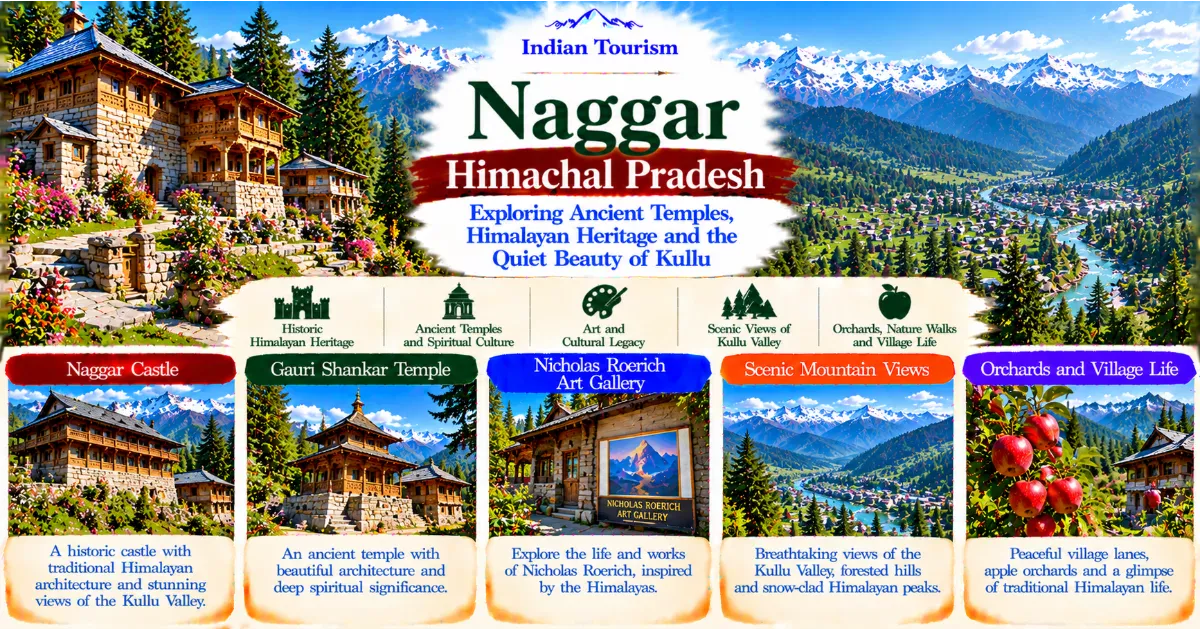
Introduction to Naggar, a Historic Himalayan Village
Himachal Pradesh is home to countless destinations where natural beauty and cultural heritage exist side by side. While popular places such as Manali, Shimla and Dharamshala attract large numbers of visitors, the state also preserves smaller settlements where traditional architecture, ancient temples, mountain landscapes and everyday Himalayan life remain central to the travel experience. Naggar, a historic village in the Kullu district, is one such destination. Located on a hillside overlooking the Kullu Valley, Naggar offers a quieter perspective on the region, combining spectacular scenery with centuries of cultural history.
Naggar is particularly appealing to travellers who want to understand more than the postcard image of the Himalayas. Its narrow village lanes, traditional wooden houses, stone pathways, historic buildings and religious sites reveal how communities adapted their lives to the mountain environment. The surrounding landscape includes forested slopes, terraced fields, orchards and distant mountain peaks. Depending on the season and weather, visitors may encounter blossoming apple trees, lush green hillsides, golden autumn foliage or snow-covered mountains rising above the valley.
Unlike destinations where sightseeing revolves around a single attraction, Naggar rewards slow exploration. A visit can include the historic Naggar Castle, traditional temples, the Nicholas Roerich Art Gallery, village walks, photography, local food and peaceful moments overlooking the valley. The destination is also well suited to travellers interested in Himalayan architecture, regional history, art and cultural traditions.
Naggar can be visited as a short excursion from Manali or explored over several days as a destination in its own right. Staying longer allows visitors to appreciate the changing light over the mountains, observe village life and discover the surrounding countryside at a relaxed pace. For those seeking a meaningful Himalayan experience beyond crowded commercial centres, Naggar deserves a place on the travel map.
Where Is Naggar Located?
Naggar is situated in the Kullu district of Himachal Pradesh, in the western Himalayan region of northern India. The village overlooks the Kullu Valley and lies along the mountain landscape associated with the Beas River basin. Its elevated position provides views across cultivated slopes, wooded hills and settlements scattered throughout the valley.
The village is located near Manali, making it relatively convenient to include in an itinerary focused on the Kullu Valley. However, Naggar has a distinct character. While Manali is widely known for hotels, shopping streets, adventure activities and access to popular mountain excursions, Naggar offers a more heritage-oriented atmosphere. Its historical buildings, traditional temples and artistic associations provide a different way to experience the region.
The surrounding geography has played an important role in shaping the village. Mountain slopes influence settlement patterns, agricultural practices and transport routes. Terraced fields make productive use of uneven terrain, while traditional buildings often reflect the need to respond to cold winters, seasonal rainfall and locally available construction materials.
Naggar's position above the valley also creates impressive viewpoints. On clear days, the landscape reveals layers of mountains, forested ridges and cultivated land. Clouds sometimes gather around the hills, changing the appearance of the scenery within minutes. This combination of elevation, vegetation and open views gives Naggar much of its visual appeal.
Travellers should remember that mountain distances can be misleading. A destination may appear close on a map but take longer to reach because of winding roads, traffic, weather or road conditions. Allowing enough time for travel makes the experience more comfortable, especially during busy holiday periods.
The Historical Importance of Naggar
Naggar is one of the historically significant settlements of the Kullu region. Its heritage is closely connected with the political, cultural and religious development of the valley. For a long period, Naggar served as an important seat of local rulers, and its historical buildings preserve memories of an era when regional authority was closely linked to mountain settlements and strategic locations.
The village's position offered practical advantages. From the hillside, people could observe much of the surrounding valley, while the elevated terrain provided a natural setting for important buildings. Like other historic Himalayan settlements, Naggar developed within a landscape where access to water, agricultural land, forests and trade routes influenced everyday life.
Local history is also reflected in the region's temples and architectural traditions. Religious institutions were important centres of community activity, connecting spiritual beliefs with festivals, social gatherings and local identity. Traditional construction techniques evolved through generations, producing buildings that responded to the climate and available materials.
Naggar's heritage should not be understood only through the history of rulers and historic structures. The continuity of village life is equally significant. Agricultural practices, household traditions, craft skills, local food and religious customs have all contributed to the identity of the settlement. The landscape visitors see today is the result of generations of interaction between people and their mountain environment.
Exploring Naggar with an interest in its history makes a visit more rewarding. Instead of treating the village as a collection of photographic viewpoints, travellers can consider why the settlement developed where it did, how its buildings reflect local resources and how cultural traditions continue to shape the community.
Naggar Castle: A Landmark of Traditional Himalayan Architecture
Naggar Castle is among the village's best-known attractions and an important symbol of its historical identity. The structure reflects a traditional Himalayan architectural style that combines stone and timber in a way suited to the local environment. Its appearance differs from the grand masonry forts associated with many parts of northern India. Instead, it demonstrates how mountain communities developed their own architectural solutions using locally available materials and established building knowledge.
The castle occupies an elevated position overlooking the valley. Its setting provides an opportunity to appreciate the relationship between architecture and landscape. The building does not stand apart from its surroundings. Its timber elements, stone construction and hillside location connect it visually with the mountain environment.
Traditional Himalayan architecture often relies on the careful arrangement of wood and stone. These materials were widely available in the region and could be assembled using techniques developed to withstand challenging weather conditions. Thick structural elements, compact layouts and sheltered openings helped buildings respond to cold temperatures and seasonal changes.
Visitors to Naggar Castle can observe its traditional construction details, wooden balconies, carved elements and interior spaces. The building offers insight into historical craftsmanship, where practical requirements and decorative expression frequently came together. Even small architectural features can reveal the skill involved in working with timber and stone.
The castle also offers beautiful views across the surrounding landscape. Depending on visibility, visitors may see cultivated fields, village settlements, wooded slopes and distant mountain ridges. These views help explain the importance of elevated sites in historical Himalayan settlements.
Visitors should approach the castle as a heritage site rather than simply a viewpoint. Respecting its interior spaces, following local rules and avoiding damage to wooden or stone surfaces help preserve the building for future generations. Photography policies and access arrangements can change, so travellers should check current conditions when planning a visit.
Understanding the Cultural Value of Naggar Castle
The significance of Naggar Castle extends beyond its appearance. It represents a period when architecture, regional authority and the natural environment were closely connected. In a mountainous region, the construction of a major building required an understanding of terrain, material availability, transportation and seasonal conditions.
The castle also provides an opportunity to appreciate the regional character of Kullu's built heritage. Buildings in the Himalayas developed in response to local conditions rather than following a single architectural pattern across the entire region. Differences in elevation, climate, available timber and stone, and community traditions influenced the appearance of settlements.
For visitors interested in heritage tourism, Naggar Castle offers a useful starting point for understanding these relationships. Looking closely at the building encourages a deeper appreciation of craftsmanship and the knowledge required to maintain traditional structures.
The surrounding village further strengthens this experience. Traditional houses and smaller buildings provide context for the castle, showing that local architectural traditions were not limited to prominent historical structures. They formed part of a wider building culture shaped by the practical needs of mountain communities.
Nicholas Roerich Art Gallery: Art in a Himalayan Setting
Naggar has an important connection with the Russian-born painter and cultural figure Nicholas Roerich. The Nicholas Roerich Art Gallery preserves works associated with his artistic life and provides a different cultural dimension to the village.
Roerich was known for paintings that frequently depicted mountains, spiritual subjects and dramatic landscapes. The Himalayas held a particular place in his artistic imagination, and his work reflected a fascination with the relationship between nature, human culture and spiritual experience.
The gallery offers visitors an opportunity to explore this artistic connection while experiencing Naggar's peaceful surroundings. It is especially appealing to people interested in painting, cultural history and the representation of landscapes through art.
Mountain scenery can inspire different responses depending on the observer. For some, the Himalayas represent adventure and physical challenge. For others, they evoke reflection, spirituality or a sense of the vastness of nature. Art provides a way to examine these responses and understand how a landscape can become more than a geographical setting.
The gallery also broadens the meaning of tourism in Naggar. The village is not only a place of temples and traditional architecture. It has also attracted people whose creative work was influenced by the surrounding mountains and their cultural atmosphere.
Visitors should allow enough time to appreciate the gallery rather than treating it as a brief stop between other attractions. Reading the available information, observing the paintings and considering their relationship with the Himalayan landscape can make the visit more meaningful. Access rules and opening arrangements should be confirmed locally before travelling.
The Artistic Identity of Naggar
The presence of the art gallery highlights the importance of creativity in the cultural identity of Naggar. The village's appeal comes partly from its ability to bring together different traditions. Regional architecture, religious practices, mountain scenery and modern artistic interpretation all contribute to its character.
For photographers and visual artists, Naggar provides a variety of subjects. Traditional buildings offer details of woodwork and stone construction, while the surrounding landscape provides changing patterns of light and shadow. Orchards, village paths, mountain ridges and distant clouds create opportunities for landscape photography throughout the year.
Writers and travellers interested in cultural observation may also find inspiration in the slower rhythm of the village. The sounds of daily life, the changing weather, the arrangement of homes along the hillside and the relationship between people and the landscape provide material for thoughtful reflection.
Visitors should remember that Naggar is a living settlement rather than an outdoor museum. Artistic exploration should not come at the expense of residents' privacy. Photographing private homes, people or religious activities should be approached respectfully, and permission should be requested whenever appropriate.
Gauri Shankar Temple: A Window into Regional Religious Traditions
Naggar is home to religious sites that reflect the longstanding importance of Hindu traditions in the Kullu Valley. The Gauri Shankar Temple is among its notable heritage attractions and is admired for its traditional architecture and historical significance.
Dedicated to Lord Shiva and Goddess Parvati, the temple is associated with a religious tradition that holds deep meaning for many communities across the Himalayas. Its architectural features provide insight into regional craftsmanship, while its religious function connects the building with continuing practices of worship and devotion.
Temples in mountain communities often occupy important positions within the social and cultural landscape. They are not merely places to visit during a sightseeing trip. They may serve as centres of prayer, community gatherings, seasonal celebrations and shared identity. Their importance can extend across generations, linking present-day residents with the beliefs and customs of their ancestors.
Visitors interested in temple architecture can observe the proportions of the structure, the arrangement of its entrance and the details of its decorative elements. Such features help illustrate the distinctive traditions that developed in the Kullu region.
As with all religious places, visitors should dress respectfully, observe local customs and follow instructions from temple authorities. Photography may be restricted in certain areas, and quiet behaviour is appropriate during prayer or worship.
Exploring Naggar's Traditional Village Lanes
One of the most rewarding ways to experience Naggar is to explore its village lanes on foot. While the major attractions provide historical and cultural context, the smaller paths reveal how the settlement functions as a living community.
Walking through the village allows visitors to observe traditional homes, small courtyards, terraced gardens, stone walls and wooden balconies. Depending on the season, apple trees and other cultivated plants may add colour to the landscape. The arrangement of houses reflects the practical realities of hillside living, where buildings and pathways must adapt to uneven terrain.
Village walks also create opportunities to notice details that are easily missed when travelling by vehicle. A carved wooden doorway, a carefully maintained garden, a view framed by a narrow lane or the sound of water moving through the settlement can become memorable parts of the journey.
The pace of walking encourages a different relationship with the destination. Rather than rushing between attractions, travellers can pause, observe and appreciate the surroundings. This approach is particularly suitable for visitors who enjoy cultural photography, sketching or quiet travel experiences.
Because the village contains private homes and working spaces, visitors should remain on appropriate paths and avoid entering private courtyards without permission. Respectful interaction helps ensure that tourism remains positive for both residents and guests.
The Natural Landscape Around Naggar
Naggar's natural environment is one of its strongest attractions. The village sits amid the larger landscape of the Kullu Valley, where forested hills, cultivated slopes, mountain streams and distant peaks create a varied Himalayan setting.
The surrounding terrain changes noticeably with elevation. Lower slopes may contain orchards and agricultural plots, while higher ground supports different types of vegetation. Forests contribute to the region's ecological character, providing habitats for birds and other wildlife while helping regulate soil and water conditions.
The visual experience changes throughout the day. Early morning may bring cool air and soft light over the valley. During clear afternoons, the contours of the mountains become more visible. In the evening, the fading sunlight can create changing shades across the slopes and rooftops.
Clouds and mist can transform the landscape rapidly. A clear view may disappear as clouds move across the hills, only to return later in a different form. These changes are part of the appeal of mountain destinations, although they also make weather awareness important.
Visitors should avoid treating forests and hillside paths as places without risk. Slippery surfaces, sudden rain, loose stones and changes in visibility can make walking difficult. Suitable footwear, water, appropriate clothing and attention to local advice are essential for comfortable exploration.
Apple Orchards and the Agricultural Life of Kullu
Agriculture remains an important part of life across many areas of the Kullu Valley, and orchards contribute to the identity of the surrounding countryside. Apple cultivation is especially associated with parts of Himachal Pradesh, where suitable temperatures, seasonal changes and mountain terrain support fruit production.
Around Naggar, the agricultural landscape can add another dimension to a visit. Terraced fields and orchards show how residents use the available land while adapting to the challenges of a mountain environment. The work involved in maintaining orchards includes pruning, seasonal care, irrigation management, harvesting and transporting fruit along roads that may be narrow or winding.
The appearance of orchards changes with the seasons. Spring may bring blossoms, creating a delicate contrast against the surrounding hills. Summer brings greener foliage, while the harvest season introduces activity as fruit is collected and prepared for transport. In autumn, changing colours and cooler weather can make the countryside especially attractive.
Travellers should understand that orchards are productive agricultural spaces rather than public gardens. Visitors should not pick fruit without permission, damage branches or enter private farmland simply to take photographs. Buying local produce directly from sellers, where available, can provide a modest contribution to the regional economy.
Agricultural tourism can also encourage greater appreciation for the effort behind local food. The landscapes that visitors admire are often maintained through the daily work of farming families whose livelihoods depend on seasonal conditions and changing market demands.
Village Walks and Gentle Outdoor Experiences
Naggar is a suitable destination for travellers who prefer gentle outdoor activities over highly commercial adventure experiences. Walking through the village, exploring nearby countryside paths and observing the landscape can provide satisfying ways to spend a day without requiring specialised equipment.
The surrounding hills offer opportunities for short walks, but routes vary in difficulty and condition. Some paths may be steep, uneven or affected by weather. Travellers should seek local advice before attempting unfamiliar routes and should not assume that every visible track is suitable for visitors.
Nature observation is another rewarding activity. The forests, orchards and open slopes provide opportunities to notice seasonal vegetation, birdlife and changing weather patterns. A quiet walk can become an opportunity to learn about the relationship between Himalayan ecosystems and human settlement.
Photography is particularly enjoyable in the early morning and late afternoon, when the light can create depth across the landscape. However, weather conditions may limit visibility, and travellers should avoid walking close to exposed edges or unstable slopes in pursuit of a photograph.
Those who prefer a slower itinerary can combine a short walk with a visit to a temple, a heritage attraction and a local meal. This balanced approach allows time for cultural exploration without making the day feel rushed.
Best Time to Visit Naggar
Naggar can be visited in different seasons, and the best time depends on the kind of experience a traveller wants. Spring, summer, monsoon and autumn each bring changes to the landscape, while winter introduces colder conditions and the possibility of snow in the surrounding mountains.
Spring: Blossoms and Fresh Mountain Colours
Spring is a lovely period for travellers interested in orchards, greenery and comfortable outdoor exploration. As temperatures gradually rise, the countryside begins to change after winter. Blossoming trees, fresh vegetation and clearer intervals between weather systems can create attractive conditions for photography and village walks.
This season is particularly appealing to visitors who want to experience the agricultural character of the region. Orchard blossoms provide seasonal beauty, although flowering dates vary with altitude, temperature and local weather.
Travellers should carry layers because mornings and evenings may remain cool even when daytime temperatures are pleasant.
Summer: Comfortable Days and Cultural Exploration
Summer is often a convenient period for visiting Naggar because conditions can be suitable for sightseeing, walking and exploring nearby destinations. The surrounding landscape is generally greener, and longer daylight hours allow travellers to organise a relaxed itinerary.
Summer can also coincide with busier travel periods in the wider Kullu and Manali region. Booking accommodation ahead of time is sensible during holidays and peak tourism dates.
Visitors should be prepared for changing mountain weather. Even during warmer months, rain and cool evenings are possible, so carrying a light jacket and waterproof layer is advisable.
Monsoon: Lush Scenery and Weather Awareness
The monsoon season can bring rich greenery and dramatic cloud formations to the hills around Naggar. For photographers and nature lovers, the landscape may appear especially vibrant.
However, monsoon travel requires careful planning. Heavy rainfall can cause landslides, falling rocks, road disruptions and slippery paths in parts of Himachal Pradesh. Conditions can change quickly, and travel schedules may need to remain flexible.
Visitors planning a monsoon trip should check road conditions and weather advisories before departure. Avoiding unnecessary travel during severe rainfall and following local safety instructions are more important than maintaining a fixed sightseeing schedule.
Autumn: Clear Views and Golden Landscapes
Autumn is often an excellent season for travellers seeking scenic views and comfortable walking conditions. As the weather changes after the monsoon, the landscape may become clearer, making mountain ridges and valley settlements easier to appreciate.
The agricultural surroundings can also become particularly attractive as seasonal colours change. Cooler temperatures create favourable conditions for cultural sightseeing, photography and exploring the village lanes.
Autumn is a strong option for visitors who want to combine heritage attractions with landscape experiences without relying on winter activities.
Winter: Quiet Atmosphere and Cold Weather
Winter brings a different character to Naggar. Temperatures fall, mornings can be very cold, and snow may occur in the surrounding higher areas. The possibility of snow depends on local weather and elevation, so visitors should not assume that the village will always be snow-covered.
Winter can suit travellers who enjoy quiet surroundings and are prepared for colder conditions. Warm clothing, suitable footwear and accommodation with reliable heating arrangements can make the visit more comfortable.
Road conditions should be checked before travelling, especially when snowfall or freezing temperatures affect higher routes. Visitors should also allow flexibility in their plans because mountain weather can influence transport.
How to Reach Naggar
Naggar is accessible by road from the Kullu Valley and the Manali area. The most convenient route depends on the traveller's starting point, transport preferences and current road conditions.
By Air
The nearest commonly used airport for reaching the Kullu Valley is Bhuntar Airport, which serves the region. Flight schedules and route availability can be limited or affected by weather, so travellers should verify current services before finalising their itinerary.
From the airport, visitors can continue by road towards Naggar using a taxi or other locally available transport. The journey time depends on traffic, weather and the exact route taken.
Travellers arriving by air should avoid planning an overly tight connection between a flight and a road journey, particularly during periods when mountain weather can affect transport.
By Train
Naggar does not have a railway station. Visitors travelling by train generally need to reach a suitable railhead elsewhere and continue towards Himachal Pradesh by road.
The best railhead depends on the route and the visitor's origin. Travellers should compare total journey time rather than choosing a station based only on its distance from Naggar. Road conditions, transport connections and arrival time can make a substantial difference to the overall journey.
By Road
Road travel is the principal way to reach Naggar from nearby towns and destinations. Visitors coming from Manali can organise a road transfer or use locally available transport options, depending on their schedule.
The surrounding mountain roads may include bends, elevation changes and narrow sections. Travellers who are unfamiliar with Himalayan driving may prefer an experienced local driver, particularly during winter or periods of heavy rainfall.
It is advisable to check current road conditions before departure and to allow additional time for unexpected delays. Travelling during daylight can make the surrounding landscape easier to appreciate and may simplify navigation.
How Many Days Should You Spend in Naggar?
Naggar can be included in a short visit to the Kullu Valley, but the ideal duration depends on the traveler's interests.
A one-day excursion can cover the major heritage attractions, including Naggar Castle, the Gauri Shankar Temple and the Nicholas Roerich Art Gallery, subject to opening arrangements and available time. A short walk through the village and a relaxed meal can complete the day.
A two-day stay allows a more comfortable pace. Visitors can explore the principal attractions on the first day and spend the second day walking through the countryside, visiting additional local sites or simply enjoying the mountain setting.
A stay of three days or longer is suitable for travellers interested in photography, art, heritage, nature observation and slow travel. Additional time makes it easier to adjust plans according to weather and explore without rushing.
Naggar can also form part of a broader Kullu Valley itinerary. Combining it with nearby destinations allows visitors to experience different aspects of the region, although the itinerary should account for road conditions and the time required for each journey.
Local Food to Try in Naggar
Food is an important part of experiencing Himachal Pradesh, and a visit to Naggar provides an opportunity to discover regional flavours. Local dishes reflect the agricultural resources, climate and culinary traditions of mountain communities.
Siddu is one of the best-known traditional foods associated with parts of Himachal Pradesh. It is a steamed bread prepared from fermented wheat dough and commonly served with ghee or other accompaniments. Recipes and fillings vary by household and locality.
Madra is another recognised dish in Himachali cuisine. It is generally prepared using legumes cooked in a rich yoghurt-based gravy, with variations in ingredients and seasoning across communities.
Other foods visitors may encounter include rajma preparations, seasonal vegetables, lentil dishes, rice and locally prepared breads. The exact menu depends on the establishment and season, so travellers interested in traditional cuisine should ask what regional dishes are available.
Food preferences and dietary requirements should be communicated clearly when ordering. Visitors who prefer vegetarian food will generally find familiar options, while those with allergies should confirm ingredients before eating.
Trying regional food can also support local businesses. Choosing independently operated eateries and family-run establishments, where suitable, helps keep a portion of tourism spending within the community.
Where to Stay in Naggar
Accommodation in and around Naggar ranges from simple guesthouses and homestays to boutique properties and heritage-inspired stays. The right choice depends on budget, comfort requirements, accessibility and the kind of experience the visitor wants.
Homestays can be particularly appealing to travellers who want a closer connection with local life. They may provide opportunities to learn about regional food, daily routines and village traditions through conversations with hosts. The quality and services offered vary, so it is sensible to review facilities before booking.
Guesthouses and smaller hotels may suit visitors seeking straightforward accommodation near the village's attractions. Travellers who value architectural character may prefer properties that incorporate traditional materials or provide views of the surrounding hills.
Before confirming a stay, visitors should check heating arrangements for colder months, access to hot water, road access, parking, meal availability and mobile network coverage. These details can make a substantial difference to comfort in a mountain destination.
During peak travel periods, accommodation should be booked in advance. Travellers should also consider the location of the property, because a scenic hillside setting may involve steep walking routes or limited access to transport.
Naggar for Couples and Honeymoon Travellers
Naggar can be a rewarding destination for couples who prefer scenic surroundings, cultural exploration and quiet time together. Its historic buildings, village paths, mountain viewpoints and traditional accommodation create opportunities for a relaxed trip.
Rather than filling every day with activities, couples can spend time walking through the village, enjoying a long breakfast, visiting the art gallery and watching the changing light across the valley. These simple experiences can be more memorable than a tightly scheduled itinerary.
Spring and autumn may be especially appealing for couples who enjoy outdoor exploration without the colder conditions of winter. Summer can also be suitable, although popular travel dates may bring more visitors to the surrounding region.
Couples should choose accommodation according to their comfort and privacy requirements and confirm facilities before booking. If the trip includes a special occasion, communicating preferences with the accommodation provider in advance can help with planning.
Naggar can be combined with other Kullu Valley destinations for a longer honeymoon itinerary. However, allowing enough time at each location is preferable to spending most of the trip travelling between places.
Naggar for Families
Families can enjoy Naggar through a balanced itinerary that combines cultural attractions, short walks and time in the surrounding countryside. The village offers an opportunity to introduce children to Himalayan architecture, local history and the relationship between people and the natural environment.
A visit to Naggar Castle can provide a starting point for discussing traditional building materials and historical settlements. The art gallery may appeal to older children interested in painting, while the village lanes offer opportunities to observe local architecture and agricultural life.
Families travelling with younger children should consider the terrain. Some paths may be uneven or steep, and not all attractions will be equally accessible for strollers or people with mobility limitations.
It is useful to keep the daily schedule flexible, carry water and snacks, and plan rest periods. During colder months, warm clothing is essential, while summer visitors should be prepared for both sunshine and sudden changes in weather.
Parents should also help children understand respectful behaviour around temples, private homes and heritage buildings. Such experiences can make travel educational while supporting the preservation of local culture.
Naggar for Solo Travellers
Naggar can appeal to solo travellers seeking a destination where cultural exploration and quiet outdoor experiences can be combined. Its compact heritage attractions, scenic surroundings and accommodation options make it possible to organise a flexible itinerary.
Solo visitors interested in photography, painting or writing may appreciate the opportunity to spend time observing the landscape without following a group schedule. The village also provides opportunities to learn about regional history and architecture at an unhurried pace.
As with any mountain destination, solo travellers should take practical precautions. They should share their itinerary with someone they trust, check local conditions before walking unfamiliar routes and avoid isolated trails during poor visibility or bad weather.
Transport should be arranged with attention to arrival times, particularly if reaching Naggar late in the day. Keeping accommodation details and essential contact information accessible can make the trip easier to manage.
Solo travel is most rewarding when it combines independence with awareness of local conditions. Taking time to understand the surroundings helps visitors make better decisions and enjoy the destination more confidently.
Photography Opportunities in Naggar
Naggar offers a variety of photographic subjects, including historic architecture, wooden balconies, stone walls, temples, orchards and mountain scenery. The destination is particularly suitable for travellers who enjoy documenting the relationship between built environments and natural landscapes.
Naggar Castle provides opportunities to photograph traditional Himalayan construction and the surrounding valley. The village lanes reveal smaller architectural details, while the art gallery offers a different perspective on the cultural identity of the destination. Photography rules should be followed carefully inside heritage and art spaces.
Landscape photography can be rewarding during the early morning and late afternoon, when changing light adds depth to the mountains and hillsides. Cloud movement can create dramatic conditions, although rain and mist may reduce visibility.
Spring offers the possibility of photographing blossoms, while autumn can bring changing colours to the countryside. Winter may produce atmospheric scenes, depending on the weather.
Photographers should avoid entering private property without permission or disturbing residents to obtain an image. Drones should not be flown without checking applicable rules and obtaining any required permissions. Responsible photography protects both the visitor experience and the privacy of the local community.
Responsible Tourism and Protecting Naggar's Heritage
Tourism can support local employment and encourage the preservation of cultural heritage, but it also brings responsibilities. Naggar's value lies partly in its traditional architecture, historic sites, agricultural landscape and continuing village life. Protecting these features requires thoughtful behaviour from visitors.
Travellers should avoid littering and carry waste until an appropriate disposal point is available. Plastic packaging, bottles and food waste can damage the appearance of the landscape and create problems for local waste management systems.
Heritage buildings should be treated carefully. Visitors should not carve names into wooden surfaces, remove objects, damage decorative features or enter restricted areas. Following instructions from site managers helps preserve the structures for future generations.
Water and energy should also be used thoughtfully. Mountain communities may face seasonal pressure on resources, and accommodation facilities operate within local environmental conditions. Simple actions such as avoiding unnecessary water use and switching off unused lights can help reduce waste.
Supporting local businesses is another practical way to contribute to the destination. Purchasing regional products, eating at local establishments and choosing responsible accommodation can help tourism benefits reach residents.
Respect for religious customs is equally important. Visitors should follow temple guidelines, dress appropriately and avoid disrupting ceremonies. Asking before photographing people or private spaces demonstrates consideration for local traditions.
Responsible tourism does not require elaborate actions. It begins with recognising that Naggar is a living community whose cultural and natural heritage deserves respect.
Travel Tips for Planning a Visit
A successful trip to Naggar begins with realistic planning. Travellers should consider the season, road conditions, accommodation requirements and the amount of time they want to spend exploring the village.
Comfortable walking shoes are useful because the settlement includes uneven surfaces, slopes and traditional pathways. Layered clothing helps visitors adjust to temperature changes, while a waterproof jacket is valuable during periods when rain is possible.
Carrying cash can be helpful in smaller establishments, although payment options vary. Mobile network coverage and internet access may also differ by location, so travellers should not rely entirely on uninterrupted connectivity.
Visitors who want to explore heritage attractions should confirm current opening arrangements and any applicable entry requirements. Planning visits around operating hours helps prevent disappointment.
It is also sensible to avoid scheduling too many destinations in a single day. Mountain travel can take longer than expected, and Naggar is best experienced when visitors have time to appreciate its surroundings.
Finally, travellers should remain flexible. Weather, transport conditions and local events can influence the experience, but flexibility often creates opportunities to discover details that would otherwise be missed.
Suggested Two-Day Naggar Itinerary
Day One: History, Architecture and Art
Begin the first day with a relaxed breakfast before exploring Naggar Castle. Spend time observing its traditional construction, historical character and views across the valley. Rather than rushing through the building, pay attention to the details that reveal how local materials and craftsmanship shaped Himalayan architecture.
Continue to the Gauri Shankar Temple, allowing time to appreciate its religious and architectural significance. Visitors should follow local customs and check whether any restrictions apply to photography or access.
Later, visit the Nicholas Roerich Art Gallery if it is open. The gallery adds an artistic dimension to the day's exploration and offers a different way to understand the relationship between the Himalayas and creative expression.
Finish the afternoon with a walk through suitable village lanes. Observe the traditional homes, gardens and surrounding landscape while remaining respectful of residents' privacy. Enjoy a regional meal before returning to the accommodation.
Day Two: Countryside, Photography and Slow Travel
Start the second day with an early walk if weather and local conditions permit. Morning light can create beautiful views across the valley, while the quieter atmosphere provides an opportunity to observe the village before the day's activities become busier.
After breakfast, explore nearby countryside paths with local guidance where necessary. Visitors can observe orchards, cultivated slopes and forested hills while learning more about the agricultural landscape.
Keep the middle of the day flexible for photography, a leisurely meal or a return to any attraction that deserves more time. Travellers who enjoy art or writing may wish to spend part of the afternoon documenting their impressions of the destination.
Before departure, consider purchasing locally made products or regional food items where available. This provides an opportunity to support local businesses while taking home a meaningful reminder of the visit.
The itinerary can be adjusted according to weather, opening hours, transport arrangements and personal interests. Visitors should prioritise safe travel over completing every activity.
Why Naggar Deserves a Place on Your Himachal Pradesh Travel List
Naggar demonstrates that a memorable Himalayan journey does not always require extreme adventure, busy markets or a packed sightseeing schedule. Its appeal comes from the combination of historical buildings, traditional temples, artistic heritage, agricultural landscapes and mountain views.
Naggar Castle introduces visitors to the architectural traditions of the region, while the Gauri Shankar Temple reflects the continuing importance of religious heritage. The Nicholas Roerich Art Gallery adds an international artistic connection, showing how the Himalayan landscape has inspired creative work.
Beyond these attractions, the village offers the simple pleasures of slow travel. Walking through its lanes, observing orchards, enjoying local food and watching clouds move across the mountains can create a more personal connection with the destination.
Naggar is particularly suitable for travellers who want to balance cultural discovery with time outdoors. It can be included in a short Kullu Valley excursion or explored over several days as part of a more relaxed itinerary.
The destination also provides a reminder that responsible tourism is essential to the future of Himalayan communities. Respecting heritage structures, supporting local businesses, conserving resources and protecting the privacy of residents help preserve the qualities that make Naggar special.
For anyone planning a journey through Himachal Pradesh, Naggar offers a rewarding combination of history, art, architecture and natural beauty. It invites visitors to slow down, look beyond the familiar tourist attractions and discover a quieter side of the Himalayas.
Conclusion
Naggar is a destination where the history of the Kullu Valley meets the enduring beauty of the Himalayan landscape. Its traditional architecture, historic castle, religious heritage and artistic associations create a rich cultural experience, while the surrounding orchards, forests and mountain views provide opportunities for peaceful exploration.
The village is suitable for couples, families, solo travellers, photographers, history enthusiasts and anyone who appreciates destinations with a strong sense of place. A carefully planned visit can combine heritage attractions, village walks, regional food and time spent enjoying the landscape without the pressure of a crowded itinerary.
Whether visited as a day trip from the Manali area or chosen as a longer stay, Naggar offers a different perspective on Himachal Pradesh. Its greatest appeal may lie in the way its cultural traditions and natural surroundings complement one another, creating a travel experience that feels both enriching and restorative.
Explore Naggar not just as a place to see, but as a place to understand, appreciate and experience at the pace of the mountains.
#IndianTourism #Naggar #HimachalPradesh #KulluValley #NaggarCastle #HimachalTravel #HimalayanHeritage #MountainVillages #CulturalTourism #HeritageTravel #NicholasRoerich #TravelIndia #ExploreHimachal #ResponsibleTourism #IncredibleIndia
