
Introduction to Mussoorie, the Queen of the Hills
Nestled in the foothills of the Garhwal Himalayas in Uttarakhand, Mussoorie is one of India's most beloved hill stations, celebrated for its mountain views, mist-covered valleys, colonial-era architecture, forested slopes, cascading waterfalls, and lively streets. Popularly known as the Queen of the Hills, Mussoorie has attracted travellers for generations with its combination of natural beauty, pleasant summer weather, historic landmarks, and access to quieter Himalayan settlements. Located above the Doon Valley, the town offers a refreshing change from the heat and bustle of the plains, particularly during the warmer months when visitors arrive to enjoy its cool surroundings and panoramic scenery.
Mussoorie has a character that combines the charm of an old hill station with the energy of a modern tourist destination. Its central streets are lined with shops, cafés, hotels, restaurants, and small businesses that serve visitors throughout the year. Beyond these busy areas, winding roads lead towards quieter neighbourhoods, forest trails, scenic viewpoints, and settlements where the rhythm of daily life feels more relaxed. This contrast makes Mussoorie appealing to a wide range of travellers, from families and honeymoon couples to photographers, history enthusiasts, nature lovers, and people seeking a short escape from urban life.
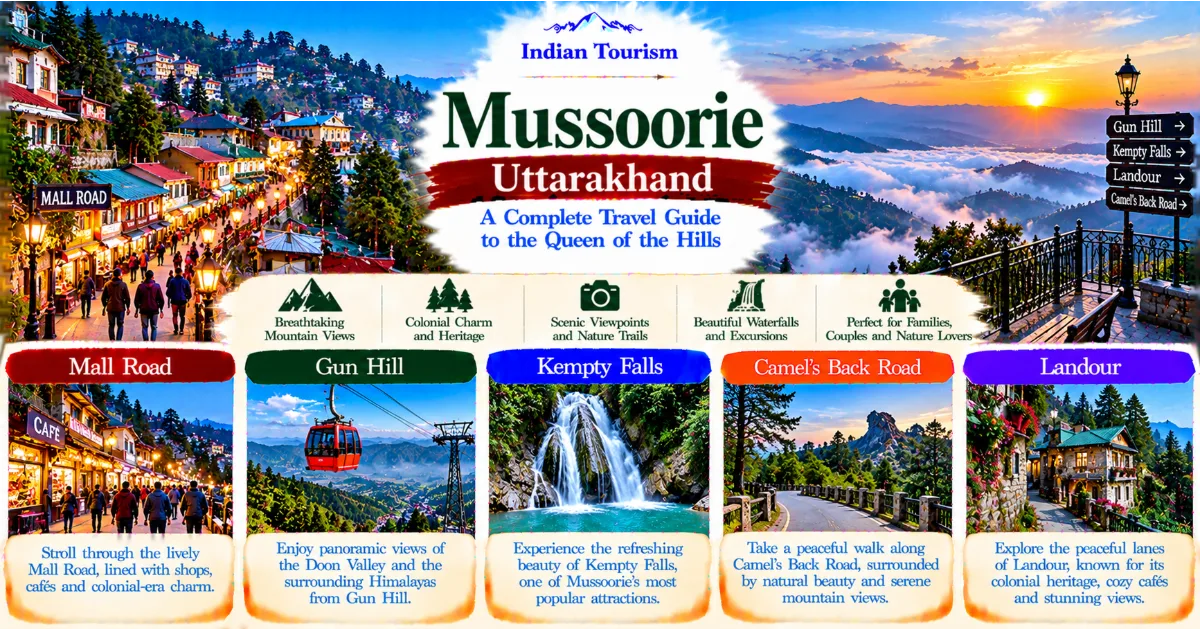
The destination is particularly famous for Mall Road, Gun Hill, Kempty Falls, Camel's Back Road, and the peaceful surroundings of Landour. Each attraction offers a different experience. Mall Road provides a lively atmosphere for shopping and evening walks, Gun Hill offers elevated views of the surrounding hills, and Kempty Falls attracts visitors with its flowing water and dramatic setting. Camel's Back Road is popular for leisurely walks, while Landour offers a quieter atmosphere with forested paths, old houses, and views across the Himalayan foothills.
Mussoorie is also a useful base for exploring the wider region. Visitors can combine their stay with excursions to Dhanaulti, George Everest, the Benog Wildlife Sanctuary area, and other destinations in the Garhwal region, depending on the time available and current access conditions. This makes the town suitable for a weekend break as well as a longer holiday.
However, Mussoorie is not always the quiet mountain retreat that photographs suggest. During summer holidays, long weekends, and festive periods, traffic congestion and crowds can become significant. Accommodation prices may rise, popular viewpoints can become busy, and short journeys may take longer than expected. Planning the timing of a visit carefully can make a considerable difference to the overall experience.
A rewarding trip to Mussoorie involves more than visiting the famous attractions. It means appreciating the town's history, exploring its surrounding forests, discovering its food culture, and allowing time to enjoy the mountain environment without rushing from one location to another.
Where Is Mussoorie Located?
Mussoorie is located in the Dehradun district of Uttarakhand, in northern India. It stands along a series of mountain ridges overlooking the Doon Valley and forms part of the outer Himalayan landscape. Its elevated location gives the town a distinctive setting, with steep slopes, forested hillsides, winding roads, and views extending towards the plains and distant mountain ranges.
The town lies approximately 35 kilometres from Dehradun by road, although actual travel time depends on traffic, weather, road conditions, and the starting point. Dehradun serves as the principal transport gateway for many visitors arriving by train or air. From there, the road climbs through increasingly hilly terrain before reaching Mussoorie.
Mussoorie's elevation varies across the town and its surrounding settlements. This variation contributes to differences in temperature, vegetation, and views from one neighbourhood to another. Areas closer to the main commercial centre tend to be busier, while places such as Landour and the quieter outskirts offer a different atmosphere.
The geography also influences local travel. Roads are often narrow and winding, and traffic can build up during peak tourist periods. Walking may be the most pleasant way to explore certain central stretches, but travellers should remember that the town contains steep gradients and uneven paths. Visitors with mobility concerns should check the walking distances and road access around their accommodation before booking.
Why Mussoorie Deserves a Place on Your Travel List
Mussoorie appeals to travellers because it combines accessible sightseeing with natural scenery and a strong sense of place. Unlike destinations that depend on one major attraction, the town offers a variety of experiences that can be enjoyed at different paces.
For nature lovers, the surrounding hills provide forested landscapes, mountain viewpoints, and opportunities for short walks. On clear days, the Doon Valley can be seen stretching into the distance, while changing cloud formations create a dramatic atmosphere across the ridges. During the monsoon, the hills become greener, although heavy rainfall can make travel more difficult.
History enthusiasts may appreciate Mussoorie's development as a colonial-era hill station. Old buildings, historic churches, traditional hotels, and the architecture of Landour reflect different periods in the town's development. These features provide an opportunity to understand how hill stations became important places for recreation, administration, and education during the colonial period.
Families often choose Mussoorie because it offers a range of accessible attractions, including scenic viewpoints, waterfalls, shopping areas, and short excursions. Couples may prefer the quieter lanes of Landour, peaceful viewpoints, and accommodation with valley or mountain views. Photographers can explore changing light, mist, forest landscapes, and the architectural details found throughout the town.
Mussoorie is also suitable for travellers who enjoy food and cafés. The town has a varied dining scene that includes familiar Indian meals, regional preparations, bakeries, cafés, and restaurants serving different cuisines. Exploring these establishments can become part of the travel experience rather than simply a necessity between sightseeing stops.
Perhaps the greatest attraction of Mussoorie is its versatility. It can be a lively family holiday, a romantic mountain break, a historical exploration, or a quiet nature-focused trip. The experience depends largely on where visitors stay, when they travel, and how they choose to spend their time.
The Best Time to Visit Mussoorie
Mussoorie can be visited throughout the year, but each season creates a different experience. The best time depends on whether you prefer pleasant weather, clear mountain views, green landscapes, fewer crowds, or the possibility of snowfall.
Spring: March to April
Spring is a pleasant period for exploring Mussoorie as temperatures gradually become more comfortable and vegetation begins to flourish. The surrounding hills take on fresh colours, and the town becomes attractive for walking, sightseeing, and photography.
This season is suitable for travellers who want to explore the main attractions without the intensity of the peak summer holiday rush. Visitors can spend time around Mall Road, explore Landour, visit selected viewpoints, and take short excursions into the surrounding countryside.
Weather conditions can still vary, particularly during early spring. Mornings and evenings may be cool, so carrying a light jacket is sensible. Travellers should also prepare for occasional rain and changing visibility.
Spring can be a good choice for couples and photographers because the town may feel more relaxed than during the busiest holiday periods. However, weekends and public holidays can still attract significant numbers of visitors.
Summer: May to June
Summer is one of the most popular seasons for visiting Mussoorie. Travellers from warmer parts of India come to enjoy the relatively cooler mountain environment, making the town especially busy during school holidays.
The weather is often suitable for sightseeing, shopping, leisurely walks, and excursions to nearby attractions. Families may appreciate the variety of activities available, while couples can enjoy scenic accommodation, cafés, and evening walks.
The main disadvantage is congestion. Roads leading into Mussoorie can become crowded, parking may be difficult, and popular attractions can feel busy. Accommodation prices may also rise during peak periods.
Visitors travelling in summer should reserve accommodation in advance and plan their arrival carefully. Beginning sightseeing early in the morning can help avoid some crowds and provide better opportunities for photography. It is also wise to avoid scheduling several distant attractions on the same day.
Monsoon: July to September
The monsoon season transforms the surrounding hills into a lush green landscape. Clouds drift through the valleys, waterfalls become more dramatic when rainfall is sufficient, and forested slopes appear especially vibrant.
For travellers who enjoy misty scenery and quieter surroundings, the monsoon can have considerable appeal. Photographers may find atmospheric conditions across the hills, while visitors who prefer a slower holiday can spend time in cafés, enjoy local food, and explore the town when the weather permits.
However, monsoon travel requires caution. Heavy rain can lead to landslides, falling rocks, waterlogged roads, and traffic disruptions. Visibility may be poor, and some walking routes or viewpoints may become unsafe.
Travellers should check official weather advisories and road conditions before leaving their accommodation. Avoid standing close to unstable slopes, walking near swollen streams, or approaching waterfalls during dangerous conditions. If authorities restrict access to an attraction, follow the instructions.
The monsoon is best suited to flexible travellers who are comfortable changing their plans when conditions deteriorate.
Autumn: October to November
Autumn can be one of the most rewarding periods for visiting Mussoorie. After the monsoon, clear weather may provide excellent visibility across the Doon Valley and surrounding mountain landscape. The air can feel crisp, and outdoor sightseeing is often more comfortable than during periods of heavy rainfall.
This season is particularly appealing to photographers, couples, and travellers who prefer a quieter atmosphere. Walks through Landour, visits to viewpoints, and excursions towards Dhanaulti can be enjoyable when roads and weather conditions are favourable.
Temperatures gradually become cooler, especially during the evenings. Visitors should carry warm layers, even if daytime conditions remain comfortable.
Autumn is also a useful period for travellers interested in exploring the town's historic architecture and surrounding nature. It is wise to confirm local opening hours and transport arrangements for attractions outside the central area.
Winter: December to February
Winter brings colder weather to Mussoorie and creates the possibility of snowfall during suitable weather conditions. When snow occurs, the town and surrounding hills can take on a striking appearance, attracting visitors hoping to experience a winter hill station.
However, snowfall is not guaranteed every year or on any particular date. Travellers should avoid booking a trip solely on the assumption that snow will be present. Weather forecasts and recent local reports can help establish realistic expectations.
Winter is suitable for visitors who enjoy cold weather, scenic walks, cafés, and mountain views. Warm clothing is essential, particularly in the early morning and evening. Road conditions should be checked carefully when snow, frost, or freezing temperatures are reported.
During holiday periods, Mussoorie can remain busy even in winter. Advance reservations are advisable for Christmas, New Year, and other popular travel dates.
Top Attractions to Visit in Mussoorie
Mall Road
Mall Road is the social and commercial heart of Mussoorie. It is one of the most familiar places associated with the town and provides a lively atmosphere filled with shops, cafés, restaurants, hotels, and stalls selling local products and souvenirs.
A walk along Mall Road offers a simple way to experience the town's everyday tourist culture. Visitors can browse woollen clothing, decorative items, handicrafts, snacks, and small gifts while enjoying views of the surrounding hills from selected stretches.
The atmosphere changes throughout the day. Mornings can be relatively peaceful, while evenings often become busier as visitors arrive for shopping, food, and leisurely walks. During peak season, the crowds can be considerable, so travellers who prefer quieter surroundings may enjoy exploring earlier in the day.
Mall Road is also a useful place to sample local snacks and spend time between sightseeing activities. Rather than treating it as a destination that must be completed quickly, visitors can enjoy the shops, architecture, and changing mountain atmosphere at their own pace.
Because traffic and pedestrian movement can be busy, pay attention to road crossings and local instructions. Keep personal belongings secure and agree on a meeting point when travelling in a group.
Gun Hill
Gun Hill is one of Mussoorie's best-known viewpoints. Its elevated position provides views across the town, the Doon Valley, and surrounding mountain ridges when the weather is clear.
Visitors have traditionally reached the viewpoint using a ropeway from the central area, although operating conditions, schedules, and availability should be confirmed before planning a visit around it. Access arrangements may change because of maintenance, weather, or other operational requirements.
The viewpoint is especially attractive to photographers who want to capture the town's position along the mountain ridge. Clear weather offers the best chance of seeing distant landscapes, but clouds and mist can create an equally atmospheric setting.
Gun Hill is a popular attraction, so it can become crowded during weekends and holiday periods. Arriving earlier in the day may provide a more relaxed experience, although visibility depends on weather rather than timing alone.
Visitors should follow safety instructions around the viewpoint and avoid climbing onto barriers or unstable edges for photographs.
Kempty Falls
Kempty Falls is among the most famous attractions associated with Mussoorie. The waterfall lies outside the main town and is known for its cascading water and surrounding rocky landscape.
The sound of flowing water and the surrounding hills make Kempty Falls an appealing stop for families and visitors who enjoy natural attractions. During warmer months, the area can become particularly popular, and facilities serving tourists may be available around the approach.
The experience changes according to the season. Water flow may vary, and heavy rainfall can make the surroundings dangerous. Visitors should pay attention to warnings, avoid entering restricted areas, and never underestimate the power of moving water.
Kempty Falls can be crowded during peak tourist periods, so travellers who prefer a quieter experience may wish to visit earlier in the day when conditions and access permit. The road journey from central Mussoorie can also take longer than expected because of traffic.
Visitors should not assume that every area near the waterfall is suitable for swimming. Follow local safety instructions, remain within designated areas, and avoid approaching slippery rocks or fast-moving water.
Camel's Back Road
Camel's Back Road is a scenic stretch known for its walking opportunities and views across the surrounding landscape. The name comes from a rock formation in the area that resembles the shape of a camel's back.
The route is popular with people who want to experience Mussoorie at a slower pace. Rather than moving between commercial attractions, visitors can enjoy a walk, observe the changing scenery, and appreciate the town's relationship with the surrounding hills.
The experience is especially pleasant when the weather is comfortable and visibility is good. Early mornings and quieter periods may provide a more peaceful atmosphere than busy evenings.
Travellers should wear comfortable footwear and remember that the route includes gradients and sections where care is needed around traffic. It is best to avoid walking in poor visibility or during heavy rainfall.
Camel's Back Road can also be a good choice for couples and photographers. The natural setting provides opportunities for scenic pictures without requiring a demanding trek.
Landour
Landour is a historic hill settlement adjoining Mussoorie, known for its quieter atmosphere, forested surroundings, old houses, narrow roads, and distinctive colonial-era character. It offers a contrast to the busy commercial centre and is often one of the most memorable parts of a visit.
Walking through Landour allows visitors to appreciate the architecture, hillside setting, and slower pace of life. The area has long been associated with writers, educators, and people seeking a peaceful mountain environment.
Landour's cafés and bakeries have become popular with travellers, but the settlement remains a residential area. Visitors should keep noise levels low, respect private property, and avoid blocking narrow roads while taking photographs.
The walk can involve steep sections, so comfortable shoes are important. Travellers with mobility concerns should consider the terrain before choosing a route.
Landour is best enjoyed without rushing. A quiet walk, a stop at a café, and time spent appreciating the views can create a more meaningful experience than trying to visit every location in a short period.
Lal Tibba
Lal Tibba is a well-known viewpoint in the Landour area, appreciated for its elevated position and mountain scenery. On clear days, visitors may be able to see distant Himalayan peaks, although visibility depends on weather and atmospheric conditions.
The viewpoint attracts photographers and travellers who want a broad panorama of the surrounding landscape. A telescope or other viewing facility may be available at particular locations, depending on current arrangements.
The area can become busy during popular travel periods. Visitors who prefer a quieter experience may choose to explore nearby streets and viewpoints while respecting residential spaces and private property.
Because mountain visibility is unpredictable, it is useful to remain flexible. A cloudy day may limit distant views, but the forested surroundings and distinctive atmosphere of Landour can still make the visit worthwhile.
Company Garden
Company Garden is a landscaped recreational attraction associated with Mussoorie. It offers maintained gardens and leisure spaces that appeal particularly to families and visitors looking for a relaxed outing.
The garden can provide a change of pace from walking along steep roads and visiting distant viewpoints. Families may appreciate the opportunity to spend time in a managed outdoor environment, while photographers can explore flowers and landscaped sections when they are in season.
The experience depends on the time of year, maintenance, and visitor numbers. During peak periods, the attraction may become busy, so visitors should plan accordingly.
Before travelling, confirm current entry arrangements and opening hours. Travellers should also remember that landscaped gardens are managed spaces and should be treated with care. Avoid damaging plants, littering, or disturbing other visitors.
George Everest Estate
George Everest Estate is a scenic location outside the main commercial centre, associated with Sir George Everest, the British surveyor whose name became linked with Mount Everest. The estate and surrounding landscape offer historical interest alongside views of the hills and valleys.
The area attracts visitors who enjoy photography, short walks, and exploring places that combine history with natural scenery. Depending on the route and access conditions, reaching viewpoints may involve walking on uneven ground.
Visitors should check current access arrangements before setting out. Weather can affect the walking experience, and some sections may be exposed or slippery after rain.
The estate provides an opportunity to understand a small part of the region's colonial history while appreciating the landscape that made Mussoorie attractive as a hill station. Travellers should respect the site, avoid littering, and follow any restrictions on entry.
Nearby Places to Explore from Mussoorie
Dhanaulti
Dhanaulti is a mountain destination located beyond Mussoorie and is known for its forested surroundings, relatively quiet atmosphere, and views across the Garhwal region. It can be a useful excursion for travellers who want to explore beyond the main hill station.
The landscape includes forests, mountain roads, and open viewpoints. Depending on the season, visitors may experience green surroundings, misty weather, autumn colours, or occasional winter snow.
Dhanaulti is often associated with outdoor recreation and forest attractions. Travellers should confirm current opening hours, activity availability, and road conditions before planning a visit.
The drive itself can be enjoyable when the weather is favourable, but mountain roads require careful driving and realistic time allowances. Avoid attempting too many distant stops in a single day.
Benog Wildlife Sanctuary Area
The Benog Wildlife Sanctuary area offers opportunities to experience the natural environment around Mussoorie. It is of interest to nature enthusiasts, birdwatchers, and travellers who want to explore beyond the town's busiest tourist areas.
The surrounding forest habitat supports a variety of plant and animal life, although wildlife sightings cannot be guaranteed. Visitors should move quietly, remain on authorised routes, and avoid disturbing animals.
Before planning a walk, check the current entry requirements, trail conditions, and any restrictions imposed by the relevant authorities. Weather can affect access, particularly during the monsoon.
The area is best approached as a natural environment rather than an entertainment attraction. Patience, respect for wildlife, and responsible waste management are essential.
Dehradun
Dehradun is the capital of Uttarakhand and serves as an important gateway for visitors travelling to Mussoorie. It offers a different atmosphere from the hill station, with educational institutions, markets, cultural attractions, restaurants, and urban services.
Travellers can combine Dehradun with Mussoorie when they have additional time. Depending on their interests, they may explore local markets, gardens, museums, or other attractions before continuing towards the hills.
Dehradun is also useful for practical arrangements such as transport connections, shopping for supplies, and accessing a wider range of services. Visitors should account for traffic when travelling between the city and Mussoorie, particularly during peak tourist periods.
Kanatal
Kanatal is a quieter mountain destination in the broader region, appreciated for its forested landscape, open views, and opportunities for outdoor recreation. It may appeal to travellers seeking an alternative to the busier atmosphere of Mussoorie.
The journey involves mountain roads, and travel time depends on traffic, weather, and the chosen route. Visitors should confirm accommodation and activity arrangements in advance.
Kanatal can be considered for a longer itinerary rather than squeezed into a rushed day trip. Travellers who enjoy nature may find that spending a night in the area allows more time to appreciate the surroundings.
How to Reach Mussoorie
By Air
Jolly Grant Airport near Dehradun is the principal airport commonly used by travellers visiting Mussoorie. From the airport, visitors can continue by road towards Dehradun and then climb into the hills.
The total journey time depends on traffic, weather, and the precise destination within Mussoorie. Travellers arriving during busy periods should allow extra time for the road journey.
A prearranged taxi can be convenient, especially for families or visitors carrying substantial luggage. Public transport options may also be available for parts of the journey, but the most practical arrangement depends on arrival time and current services.
By Train
Dehradun railway station is the main rail gateway for many visitors travelling to Mussoorie. Train services connect Dehradun with several cities, although schedules and journey durations vary.
From the station, travellers can continue to Mussoorie by taxi or suitable local transport. Shared transport may be available depending on the time and season.
It is advisable to coordinate train arrivals with onward travel, especially when arriving late in the evening. During peak holiday periods, road congestion can increase the time needed to reach the hill station.
By Road
Mussoorie is connected by road to Dehradun and other parts of Uttarakhand. Visitors can travel by private vehicle, taxi, or bus services that operate on relevant routes.
The road climbs through the hills and includes winding sections. Drivers should be comfortable with mountain driving and should check weather and traffic conditions before starting the journey.
Parking can be difficult near popular attractions and accommodation in the central area. Visitors travelling by car should confirm whether their hotel provides parking and whether local restrictions affect access.
During heavy rain or periods of landslide risk, check official advisories before travelling. Avoid driving through flooded sections or ignoring road closures.
Getting Around Mussoorie
The best way to explore Mussoorie depends on the location of the attractions and your accommodation. Some central areas can be explored on foot, while more distant places generally require a taxi or other local transport.
Walking is enjoyable along suitable stretches of Mall Road, Camel's Back Road, and Landour, but the town's steep terrain can make longer walks tiring. Visitors should wear comfortable footwear and allow enough time for uphill sections.
Taxis can be useful for visiting attractions outside the central area, including Kempty Falls and George Everest Estate. Fares and availability may vary according to season and local arrangements, so confirm costs before beginning a journey.
Traffic congestion is one of Mussoorie's main practical challenges during peak periods. Travellers should avoid scheduling too many distant attractions in one day and should leave a time buffer for returning to their accommodation.
Visitors with mobility concerns should check road access, steps, slopes, and walking distances in advance. A property described as centrally located may still involve steep streets or uneven approaches.
Where to Stay in Mussoorie
Mussoorie offers a broad range of accommodation, including budget hotels, guesthouses, family properties, boutique stays, and resorts with valley or mountain views. The best choice depends on your budget, preferred atmosphere, transport arrangements, and the attractions you plan to visit.
Staying near Mall Road can be convenient for visitors who want easy access to shops, restaurants, and evening walks. However, this area may be crowded and noisy during peak periods. Traffic restrictions and limited parking can also affect convenience.
Landour offers a quieter atmosphere and may appeal to couples, writers, and travellers who prefer a slower pace. Some properties are located along steep roads or away from the main commercial centre, so transport and walking access should be checked before booking.
Accommodation on the outskirts may offer open views and a more peaceful setting. The trade-off is that reaching central attractions can require additional travel. Visitors should compare the total cost of transport with the nightly accommodation rate.
Before booking, confirm whether the property offers heating, hot water, meals, parking, and reliable access during the intended season. During winter, ask whether rooms are equipped for cold conditions. During the monsoon, check cancellation policies and road access.
Advance booking is recommended for summer holidays, long weekends, Christmas, and New Year. Travellers should read recent reviews carefully and verify the exact location rather than relying only on promotional photographs.
What to Eat in Mussoorie
Mussoorie's food culture reflects its position as a popular hill station that welcomes visitors from across India and beyond. The town offers a mix of traditional Garhwali food, familiar Indian dishes, cafés, bakeries, and restaurants serving different cuisines.
Visitors can look for regional preparations associated with Uttarakhand, including chainsoo, phaanu, kafuli, and dishes made with mandua, or finger millet. These foods reflect the region's agricultural traditions and adaptation to mountain life. Availability varies by restaurant, so asking local hosts for recommendations can be helpful.
The town's bakeries and cafés are also popular places to take a break between sightseeing activities. Travellers may enjoy freshly prepared snacks, tea, coffee, and desserts while watching the weather change across the hills.
Mall Road and the surrounding commercial areas offer many dining options, but prices and crowd levels vary. During busy periods, smaller establishments away from the most congested stretches may provide a more relaxed experience.
Travellers with food allergies or dietary restrictions should communicate their needs clearly when ordering. It is also sensible to carry drinking water and avoid leaving food packaging behind in public spaces or natural areas.
Mussoorie for Couples and Honeymoon Travellers
Mussoorie is a popular destination for couples because it combines scenic accommodation, mountain views, cafés, leisurely walks, and access to quieter areas. The town can provide a romantic atmosphere in different seasons, from misty monsoon mornings to crisp autumn evenings and the possibility of winter snowfall.
Couples may enjoy exploring Landour, walking along Camel's Back Road, visiting selected viewpoints, and spending time in cafés. Those who prefer a more active holiday can include excursions to George Everest Estate or Dhanaulti, depending on the available time and weather.
The most enjoyable itinerary is not necessarily the busiest one. Allowing time for an unhurried breakfast, a scenic walk, or an evening overlooking the valley can make a trip more memorable than trying to visit every attraction.
When choosing accommodation, couples should consider privacy, heating, views, and transport access. A remote property may offer a peaceful setting but require additional travel for meals and sightseeing.
Peak summer periods can be crowded, so couples who prefer a quieter experience may consider spring or autumn, subject to weather conditions. Whatever the season, flexibility helps when mountain weather changes unexpectedly.
Mussoorie for Families
Mussoorie offers several attractions suitable for family holidays, including Mall Road, Gun Hill, Company Garden, Kempty Falls, and selected nearby viewpoints. The variety of activities makes it possible to create an itinerary that combines sightseeing, short walks, shopping, and relaxation.
Families travelling with younger children should consider road journeys, walking distances, and the steep terrain. A centrally located hotel may reduce some travel, but it can still involve slopes and steps.
Parents should be cautious around waterfalls, road edges, and crowded viewpoints. Children should remain within designated areas and follow safety instructions. During the monsoon, avoid attractions affected by heavy rain or unstable ground.
A relaxed schedule is usually preferable to attempting too many places in a single day. Allowing time for meals, breaks, and changing weather can make the holiday more enjoyable for everyone.
Families should also confirm accommodation facilities, meal availability, and access to medical services. Carry necessary personal medicines and keep emergency contact information accessible.
A Suggested Itinerary for Mussoorie
Two-Day Mussoorie Trip
On the first day, arrive in Mussoorie, check into your accommodation, and explore Mall Road. Spend time browsing the shops, enjoying local snacks, and taking a leisurely walk if the weather permits. If time and conditions allow, include a visit to Gun Hill, confirming the current access arrangements before departure.
On the second day, visit Kempty Falls or George Everest Estate, depending on your interests and the weather. Return to the central area with enough time for the onward journey or another evening walk.
This itinerary provides an introduction to the town, but travel time should be considered separately. Visitors arriving from distant cities may benefit from an additional day.
Three-Day Mussoorie Trip
On the first day, arrive and explore Mall Road at a comfortable pace. On the second day, visit Gun Hill, Camel's Back Road, and selected attractions in the central area. If weather and time permit, explore Landour in the afternoon or evening.
On the third day, choose between Kempty Falls, George Everest Estate, or another nearby destination. Travellers interested in quieter landscapes may consider an excursion towards Dhanaulti, but should allow sufficient time for the road journey.
The itinerary can be adjusted according to the season. During the monsoon, prioritise accessible attractions and remain flexible about outdoor activities.
Four to Five-Day Mussoorie and Surroundings Trip
A longer visit allows travellers to explore Mussoorie at a slower pace and include nearby destinations such as Dhanaulti, Dehradun, or Kanatal. It can also provide more time for Landour, forest walks, and photography.
Avoid treating every attraction as a mandatory stop. Mountain roads, traffic, and weather can make travel unpredictable. Choosing fewer places and enjoying them properly is often more rewarding than rushing through a long list.
Estimated Budget for a Mussoorie Trip
The cost of a Mussoorie holiday depends on the departure city, season, accommodation category, transport method, dining preferences, and activities. A budget-conscious traveller using public transport and simple accommodation will have different expenses from someone hiring a private vehicle and staying in a premium resort.
Plan for transport, accommodation, meals, local transfers, attraction entry charges where applicable, shopping, and emergency expenses. During peak summer and holiday periods, hotel rates and taxi costs may rise.
Obtain current quotations before booking because prices and operating arrangements can change. Confirm whether accommodation rates include meals, parking, heating, or other services.
Travellers arriving by private vehicle should account for parking arrangements and possible local restrictions. Those relying on taxis should agree on fares and the planned route before beginning longer excursions.
Keeping some financial flexibility is sensible, particularly during the monsoon and winter, when weather-related delays may affect travel plans.
Essential Travel Tips for Mussoorie
Start Sightseeing Early
Popular attractions can become crowded during peak tourist periods. Beginning sightseeing early may help you enjoy a quieter atmosphere and reduce the likelihood of spending much of the day in traffic.
Plan nearby attractions together and avoid crossing the town repeatedly. A realistic schedule usually provides a better experience than a long itinerary with little allowance for delays.
Prepare for Changing Weather
Even in summer, mornings and evenings can be cool. Carry a light jacket throughout the year, with warmer clothing during winter. A rain jacket or umbrella can be useful when showers are expected.
Check the forecast before visiting distant attractions, and change your plans if heavy rain, poor visibility, or road conditions make travel unsafe.
Choose Accommodation Carefully
Consider not only the price and views but also the property's exact location, road access, parking, and distance from restaurants. Steep roads and narrow lanes can make some properties less convenient than their descriptions suggest.
Confirm facilities and cancellation arrangements before paying. During busy periods, booking early can reduce the risk of limited availability.
Be Careful Around Waterfalls and Slopes
Waterfalls and mountain viewpoints can become dangerous during heavy rainfall. Slippery rocks, strong currents, unstable ground, and unguarded edges create risks even when conditions appear manageable.
Follow official instructions and remain within designated areas. Never enter fast-moving water or cross barriers to take photographs.
Travel Responsibly
Use waste bins where available, carry rubbish until proper disposal is possible, and avoid single-use plastics where practical. Respect wildlife and do not damage vegetation.
Be considerate of residents, particularly in quieter neighbourhoods such as Landour. Ask permission before photographing people or private properties and avoid creating unnecessary noise in residential areas.
Responsible Tourism and the Future of Mussoorie
Mussoorie's popularity creates economic opportunities for local residents, including hotel owners, shopkeepers, drivers, guides, restaurant operators, and other service providers. Tourism supports livelihoods and helps maintain the town's position as one of Uttarakhand's best-known destinations.
At the same time, heavy visitor numbers can place pressure on roads, water resources, waste management, and the surrounding environment. Traffic congestion, litter, and unplanned development can affect both residents and visitors.
Responsible travel begins with simple decisions. Choosing local businesses, using water carefully, avoiding unnecessary waste, and respecting local rules can help reduce the impact of a visit. Travellers should also avoid leaving litter at viewpoints, forests, and waterfalls.
The natural environment should be treated as more than a backdrop for photographs. Forests, streams, slopes, and wildlife habitats contribute to the character of the region and deserve protection.
Visitors can also support a more balanced form of tourism by exploring beyond the busiest attractions when conditions permit, spending time in local establishments, and learning about the history and culture of the area.
The future of Mussoorie depends partly on maintaining a balance between welcoming visitors and protecting the landscape that makes the town special. Responsible tourism helps preserve that balance.
Is Mussoorie Worth Visiting?
Mussoorie remains one of Uttarakhand's most appealing hill stations because it combines natural scenery, historic character, accessible attractions, and a lively tourist atmosphere. Its mountain views, forested surroundings, waterfalls, and neighbourhoods offer something for a wide range of travellers.
The destination can be particularly rewarding when visitors plan around the season and their personal interests. Summer is popular for pleasant weather, autumn can provide clear views, spring offers a fresh landscape, the monsoon creates lush scenery but requires caution, and winter brings cold weather with the possibility of snowfall.
Mussoorie is not always peaceful, especially during peak holidays. Traffic and crowds can affect the experience, so choosing travel dates carefully and allowing enough time between attractions can make a significant difference.
A visit becomes more meaningful when it includes more than the main commercial streets. Exploring Landour, walking along suitable scenic routes, learning about the town's history, and sampling regional food can provide a richer understanding of the destination.
For families, couples, photographers, history enthusiasts, and travellers seeking a convenient mountain escape, Mussoorie remains a worthwhile choice. With thoughtful planning and respect for the environment, the Queen of the Hills can offer a memorable introduction to the beauty and culture of Uttarakhand.
Hashtags: #IndianTourism #Mussoorie #MussoorieTravel #UttarakhandTourism #QueenOfTheHills #ExploreUttarakhand #Landour #KemptyFalls #GunHill #CamelBackRoad #HimalayanTravel #IndiaTravel #MountainGetaway #NatureTravel #ResponsibleTourism
