
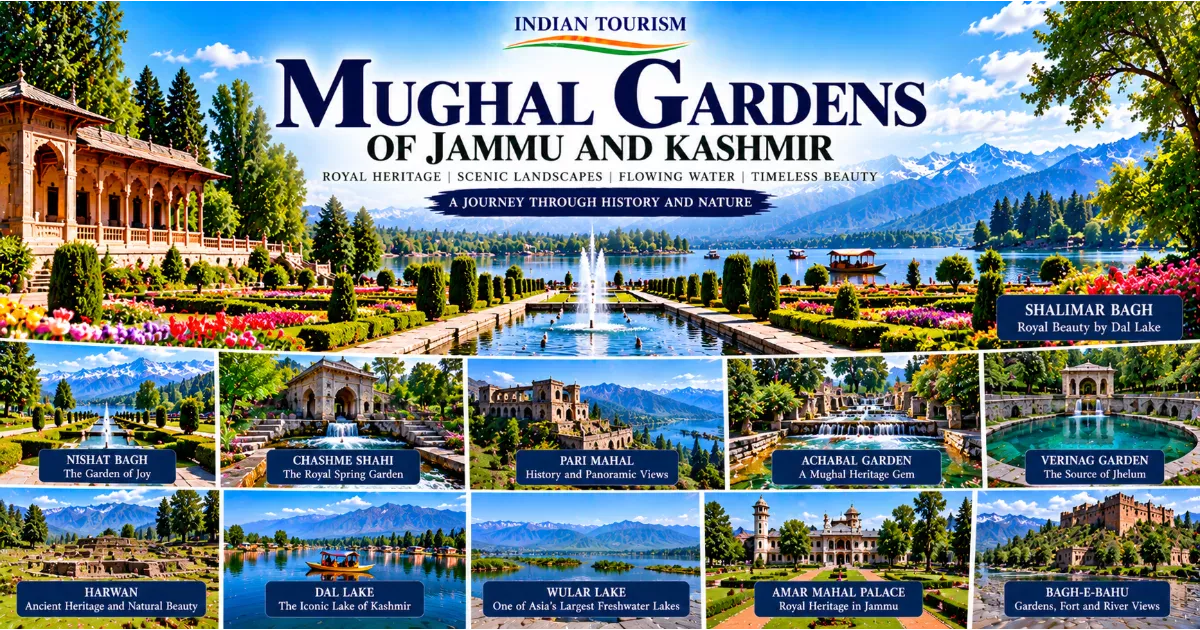
Where Royal History Meets Natural Beauty
Jammu and Kashmir is famous for its snow-covered mountains, sparkling lakes, green valleys and traditional wooden architecture, but its gardens tell another fascinating story. These gardens reflect centuries of artistic imagination, royal ambition and a deep appreciation of nature. Among the region's most remarkable attractions are the historic Mughal gardens of Srinagar, where carefully designed terraces, flowing water channels, fountains, flowering plants and magnificent views create landscapes that feel both peaceful and grand.
The Mughal rulers who visited Kashmir were captivated by its natural beauty. The cool climate, mountain scenery, freshwater streams and fertile soil offered an ideal setting for the development of elaborate gardens. Rather than treating the landscape as something separate from architecture, Mughal garden designers combined the two. Water became a central feature, trees provided shade, terraces created changing viewpoints and pavilions offered places to rest while enjoying the scenery.
Many of these gardens were designed during the Mughal period, particularly under emperors and nobles who established Kashmir as a retreat from the heat and pressures of the plains. Their legacy remains visible in Srinagar today, where historic gardens continue to attract visitors interested in history, architecture, photography and nature.
However, Jammu and Kashmir's garden heritage is not limited to the Mughal period. The region also contains royal gardens, palace grounds, historic parks and landscaped spaces that reflect different periods of political and cultural history. The gardens around Jammu's palaces and historic landmarks offer another perspective on the relationship between royal architecture and the natural environment.
This article explores the major Mughal gardens of Kashmir, including Shalimar Bagh, Nishat Bagh and Chashme Shahi, along with Pari Mahal, Achabal Garden, Verinag Garden, Harwan and other notable places. It also examines their historical background, architectural features, seasonal beauty and importance in contemporary tourism.
For travellers, these gardens provide an opportunity to slow down and experience Kashmir through its design traditions. For history enthusiasts, they reveal how rulers used landscape architecture to express power, refinement and their relationship with nature. For photographers, they offer changing compositions of water, flowers, stone, trees and mountains.
A journey through the gardens of Jammu and Kashmir is ultimately a journey through the region's cultural memory, where natural beauty and human creativity have been brought together over centuries.
1. The Mughal Connection: Why Kashmir Became a Royal Garden Landscape
The relationship between Kashmir and Mughal garden culture developed through the Mughal Empire's political and cultural engagement with the region. Kashmir's climate and scenery made it an appealing destination for rulers who wanted to escape the intense summer heat of the northern plains. Its lakes, springs, forests and mountain views offered a setting in which gardens could be developed as places of relaxation, ceremony and royal residence.
The Mughal approach to garden design drew on traditions that had developed across Persianate and Central Asian cultures. Gardens were often arranged around geometric layouts, flowing water, terraces and carefully positioned trees. They could symbolise order, abundance and paradise while also serving practical purposes, such as providing shade and comfortable spaces for outdoor gatherings.
In Kashmir, these ideas were adapted to the local landscape. Rather than creating gardens entirely separate from their surroundings, designers frequently used sloping terrain and natural water sources to establish terraces and channels. The result was a distinctive relationship between formal garden design and the Himalayan environment.
Water was particularly important. Streams and channels could run through the garden, passing fountains and reflecting pools before continuing to lower terraces. The sound of flowing water helped create a peaceful atmosphere, while its movement connected different sections of the garden visually and physically.
Trees also played an essential role. Tall trees provided shade, marked pathways and created a sense of enclosure without completely blocking views of the surrounding mountains. Flowering plants introduced colour at different times of the year, while stone steps, retaining walls and pavilions gave the gardens architectural structure.
The gardens were also expressions of authority. A ruler who could commission a complex garden demonstrated access to skilled craftsmen, engineers, horticultural knowledge and substantial resources. The garden became a place where power was presented through beauty rather than through fortifications alone.
At the same time, the gardens were intended to be enjoyed. They offered spaces for conversation, reflection, recreation and the appreciation of nature. Their continued popularity demonstrates the lasting appeal of this combination of architecture and landscape.
Today, the Mughal gardens of Kashmir are valued as historical monuments and living landscapes. Their preservation requires attention to historic structures, water systems, plants and the surrounding environment. Visitors can help protect them by following access rules, avoiding damage to historic features and respecting the gardens as shared heritage.
2. Shalimar Bagh: The Garden of Love and Royal Elegance
Shalimar Bagh is one of the most celebrated Mughal gardens in Srinagar. Situated beside Dal Lake, it is known for its terraced layout, historic pavilions, water channels and mature trees. Its name is closely associated with the romantic and royal history of Kashmir, making it one of the region's best-known heritage attractions.
The garden is traditionally associated with Mughal Emperor Jahangir, who had it developed in the early seventeenth century for his wife Nur Jahan. It was built on the site of an earlier garden tradition, and its later development reflected the Mughal preference for organised terraces and water-centred design.
Shalimar Bagh demonstrates how a garden can be arranged to create a sequence of experiences. Visitors move through different levels, each offering its own views and relationship with the surrounding landscape. The arrangement encourages people to look ahead along pathways, observe the water and appreciate the changing proportions of the garden.
Water channels form a central feature. Their alignment helps organise the space, while fountains and pools introduce movement and sound. The combination of water and stone creates a visual rhythm that continues through the terraces.
One of the garden's most notable features is its historic pavilion architecture. These structures provided shaded spaces and helped connect the garden's formal design with the needs of royal visitors. Their placement also created viewpoints from which the garden could be appreciated as a whole.
The mature trees of Shalimar Bagh contribute significantly to its atmosphere. Their shade makes the garden attractive during warmer weather, while their changing appearance through the seasons gives the landscape a different character throughout the year.
Spring brings fresh growth and flowering plants, while summer offers leafy shade and flowing water. Autumn introduces warmer colours as leaves change, creating a striking contrast with the garden's stone structures. Winter can provide a quieter experience, although access and conditions should be checked before visiting.
Shalimar Bagh is not simply a collection of plants and pathways. It represents a historical idea about the relationship between nature, power and leisure. The garden was designed to be experienced through movement, sight and sound, and those qualities remain central to its appeal.
Visitors should allow enough time to explore at a relaxed pace. Rather than rushing through the entrance and taking a few photographs, notice how the terraces align, how water moves through the landscape and how the surrounding mountains influence the overall design.
3. Nishat Bagh: The Garden of Joy Beside Dal Lake
Nishat Bagh is another major Mughal garden in Srinagar, located on the eastern side of Dal Lake. Its name is commonly translated as the Garden of Joy, and its setting combines terraced landscaping with expansive views across the lake towards the surrounding mountains.
The garden is traditionally associated with Asif Khan, the brother of Nur Jahan, and dates to the seventeenth century. Its location along a sloping area gives it a distinctive character. As visitors move through the terraces, the garden gradually opens towards Dal Lake, creating a sequence of views that makes the landscape feel connected to the wider valley.
The design uses the natural slope to organise its levels. Water flows through the garden, linking different terraces and creating a central visual axis. Stone steps and retaining structures help manage the change in elevation, while trees and planting soften the architecture.
Nishat Bagh is especially attractive to visitors who enjoy landscape photography. From selected viewpoints, the garden's geometry can be seen against the broad surface of Dal Lake. The lake, mountains, trees and terraced pathways create layers within a single composition.
The garden's appearance changes throughout the year. Spring brings fresh growth and flowers, summer offers greenery and shade, and autumn adds seasonal colour. Light also plays an important role, with morning and late-afternoon conditions often producing a softer atmosphere for photographs.
The experience of Nishat Bagh is closely connected with its location. Unlike a garden entirely enclosed by buildings, it appears to extend towards the lake and mountains. The surrounding landscape becomes part of the garden's visual design, demonstrating how Mughal planners adapted formal ideas to Kashmir's geography.
Visitors can spend time walking through the terraces, observing the water channels and enjoying the views. Comfortable footwear is useful because the garden includes steps and changes in elevation. Those travelling with older visitors or young children should consider the physical effort involved in exploring every level.
Nishat Bagh also illustrates the importance of maintenance. Historic water systems, stonework and mature trees require ongoing care to preserve both the garden's appearance and its historical character.
For travellers exploring Srinagar, Nishat Bagh offers a rewarding combination of architecture, horticulture and scenery. It is best appreciated as a designed landscape rather than simply as a viewpoint over Dal Lake.
4. Chashme Shahi: The Royal Spring Garden
Chashme Shahi is one of the smaller historic gardens in Srinagar, but it holds an important place in Kashmir's Mughal garden heritage. Its name is associated with a royal spring, and the garden is known for its water features, terraced design and setting near the Zabarwan mountain range.
The garden was developed during the Mughal period in the seventeenth century and is traditionally associated with Ali Mardan Khan, a noble serving the Mughal court. Its spring provided a natural source of water that became central to the garden's identity and design.
Water is the defining feature of Chashme Shahi. Rather than relying only on broad pools or extensive channels, the garden emphasises the movement of water through a more compact space. Its fountains and watercourses connect the terraces and contribute to the sense of calm that visitors often associate with historic gardens.
The garden's scale makes it different from Shalimar Bagh and Nishat Bagh. It can be explored in a shorter visit, although travellers who enjoy architectural details may want to spend more time observing the stonework, water channels and planting.
Its elevated location also provides attractive views across parts of Srinagar and the surrounding landscape. The combination of mountain scenery and formal garden design gives Chashme Shahi a distinctive character.
Visitors should avoid assuming that the spring water is safe to drink simply because it appears clear or has a historic reputation. Water quality can change, and drinking water should only be consumed when authorities or reliable local information confirm its safety.
The garden is especially suitable for travellers who want to explore several historic sites in the same area. It can be included in an itinerary alongside other Mughal gardens and nearby heritage attractions, subject to access arrangements and available time.
Chashme Shahi demonstrates that the success of a garden does not depend entirely on its size. A carefully positioned spring, a well-designed sequence of terraces and the surrounding landscape can create a memorable space with a strong identity.
5. Pari Mahal: The Palace of Fairies Above Srinagar
Pari Mahal is a historic terraced structure located on the Zabarwan range overlooking Srinagar. Although it is not a Mughal garden in exactly the same sense as Shalimar Bagh or Nishat Bagh, its combination of architecture, terraces and landscaped surroundings makes it an important part of the region's garden heritage.
The site is traditionally associated with Dara Shikoh, the eldest son of Mughal Emperor Shah Jahan. It is believed to have served as a place for learning and scholarly activity, with historical accounts connecting it to intellectual and spiritual pursuits.
The name Pari Mahal is often translated as the Palace of Fairies. Its elevated position gives it an impressive view over Srinagar and Dal Lake, making the site particularly attractive to visitors interested in architecture and photography.
The structure is arranged across several levels, with stone terraces and remains of historic buildings. Its design reflects the use of stepped terrain to create an organised architectural setting on a hillside.
Unlike the gardens beside Dal Lake, Pari Mahal's atmosphere is shaped strongly by its elevated location. The city and lake appear below, while the surrounding hills provide a sense of separation from the busier urban environment.
The site is particularly appealing around sunrise and sunset, when changing light can transform the appearance of the city and lake. Visitors should check opening hours and access conditions before planning a visit at a specific time.
The historic structures require care. Climbing on walls, damaging stonework or entering restricted areas can endanger both visitors and the monument. Following site rules helps preserve the place for future generations.
Pari Mahal adds a different dimension to the story of Kashmir's gardens. It demonstrates how terraces and architecture could be used not only for recreation but also for study, contemplation and the creation of elevated viewpoints.
6. Achabal Garden: A Mughal Garden in South Kashmir
Achabal Garden, located in the Anantnag district, is one of the notable historic gardens of south Kashmir. Its setting combines water, greenery, terraces and historic structures, offering visitors an opportunity to explore garden heritage beyond Srinagar.
The garden is associated with the Mughal period and is traditionally linked with Nur Jahan. Its location near a natural water source helped make it suitable for the development of a landscaped retreat.
Water is central to Achabal's design. Channels and fountains connect different parts of the garden, while the surrounding trees create shade and a sense of enclosure. The movement of water adds sound and visual interest, making the garden appealing during warmer months.
The garden's relationship with its natural surroundings distinguishes it from a purely formal urban park. Its water source, vegetation and terrain all contribute to the overall experience. Historic landscaping here reflects the broader Mughal interest in creating ordered spaces that still responded to local geography.
Achabal can be considered as part of a wider exploration of south Kashmir, although travellers should plan the journey according to available transport, weather and other destinations they intend to visit.
The experience changes by season. Spring can bring fresh growth and flowering plants, summer offers a greener setting and autumn introduces a different palette of colours. Visitors should not expect every flower to be in bloom throughout the year, because planting cycles and local conditions vary.
Historic gardens require regular conservation, including the care of trees, stone structures and water channels. Visitors can support preservation by remaining on designated paths and avoiding damage to plants or historic features.
Achabal Garden is particularly rewarding for travellers who want to move beyond the most familiar tourist sites and discover the broader historical landscape of Kashmir.
7. Verinag Garden: The Source of the Jhelum River
Verinag Garden is one of the most significant historic garden sites in Jammu and Kashmir because of its association with the source of the Jhelum River. Located in the Anantnag district, the site combines a natural spring, a stone-lined water feature, formal garden elements and surrounding greenery.
The Jhelum is one of the major rivers of the Kashmir Valley, and its traditional source is identified with the spring at Verinag. The water emerging here begins a journey through the valley, connecting settlements, agricultural landscapes and the city of Srinagar before continuing beyond the region.
The spring is surrounded by historic architecture and landscaped grounds associated with the Mughal period. The design reflects an interest in transforming a natural water source into an organised and visually striking setting.
One of the site's distinctive features is the octagonal stone structure around the spring. Its shape and masonry give the water source a formal architectural presence while allowing visitors to appreciate the spring as the central element of the landscape.
Verinag's significance extends beyond garden design. It offers an opportunity to understand the geography of the Kashmir Valley and the role of water in shaping settlement and agriculture. Seeing the source of a major river helps visitors connect the landscape of the mountains with the waterways they encounter elsewhere in the region.
The surrounding garden provides a peaceful setting for a relaxed visit. Trees and landscaped areas frame the water, while historic structures provide details for those interested in architecture.
Visitors should respect restrictions around the spring and avoid throwing anything into the water. The source is an important natural and historical feature, and keeping it clean is essential for its preservation.
Verinag can be combined with other destinations in south Kashmir, depending on the time available and current road conditions. Travellers should allow sufficient time for the journey instead of attempting to cover too many places in one day.
For anyone interested in Kashmir's rivers, Verinag offers a particularly meaningful experience. It connects the beauty of a historic garden with the larger story of the Jhelum River and the landscape through which it flows.
8. Harwan: A Historic Landscape Near Srinagar
Harwan, located near Srinagar, is known for its archaeological significance and its relationship with Kashmir's historic cultural landscape. It offers a different perspective from the famous Mughal gardens because its importance includes evidence of earlier settlement and religious activity.
The area is associated with archaeological remains connected with Buddhist history in Kashmir. Findings from the site have helped researchers understand aspects of the region's religious and cultural past, including artistic traditions and historical connections beyond the valley.
Harwan is also appreciated for its green surroundings and proximity to the mountain landscape. Its atmosphere differs from the formal terraced gardens of Shalimar Bagh and Nishat Bagh, making it an interesting addition for visitors who want to understand the broader heritage of Srinagar.
The site's archaeological character means that visitors should approach it with respect. Historic remains can be fragile, and even apparently minor damage may affect the information they preserve about the past.
Travellers interested in archaeology should look for reliable interpretation or local guidance that explains the significance of the site. Understanding the historical context can make the visit much more rewarding than simply walking through the area.
Harwan demonstrates that Kashmir's heritage landscape includes many layers. Mughal gardens are among its most visible attractions, but the region's history extends through earlier periods of religious, artistic and cultural development.
A visit can be combined with other destinations in the Srinagar area, provided the itinerary allows enough time for transport and exploration.
9. The Royal Gardens and Palaces of Jammu
The Jammu region has its own heritage of royal architecture, palace grounds and landscaped spaces. Although the famous Mughal gardens of Kashmir dominate discussions of historic garden tourism, Jammu offers a different combination of architecture, history and natural surroundings.
Amar Mahal Palace is one of the notable landmarks in Jammu city. Its distinctive architecture and elevated setting make it an important part of the city's heritage landscape. The palace is now associated with museum and cultural activities, allowing visitors to explore aspects of the region's royal history and artistic traditions.
Mubarak Mandi, the historic palace complex in Jammu, reflects the architectural development of the Dogra rulers. Its buildings combine different influences and provide insight into the political and cultural history of the region. The complex is not simply a garden destination, but it helps place Jammu's landscaped spaces within the wider context of royal life.
Bahu Fort and the surrounding Bagh-e-Bahu area provide another example of the relationship between history, public recreation and landscape. The fort occupies a prominent position overlooking the Tawi River, while the nearby garden provides a landscaped setting for visitors.
The Jammu region's climate differs from that of the Kashmir Valley. Summers can be considerably hotter, which influences the most comfortable time for outdoor sightseeing. Early mornings and cooler months may be more suitable for exploring gardens and palace grounds.
Visitors should check which parts of historic complexes are open to the public, as conservation work and access restrictions may affect individual sites.
Exploring Jammu's royal heritage provides a useful contrast with the Mughal gardens around Srinagar. It shows that the wider region contains several architectural traditions, each reflecting different periods, rulers and local conditions.
10. Garden Architecture: Terraces, Water Channels and Stonework
The gardens of Jammu and Kashmir are important not only because of their beauty but also because of the principles that guide their design. Historic gardens combine architecture, engineering, horticulture and landscape planning to create spaces that can be appreciated from multiple viewpoints.
Terraces are among the most recognisable features. By dividing a sloping site into levels, designers could organise movement through the garden while creating changes in perspective. Each terrace might offer a new view of the water, surrounding planting or distant mountains.
Water channels form another essential element. They connect different sections of a garden and help establish a central line through the landscape. Fountains and pools add movement and reflection, while the sound of flowing water creates a peaceful atmosphere.
Stonework provides the structure needed to manage changes in elevation. Retaining walls, steps, platforms and pavilions define the garden's form and support its long-term use. The materials and construction techniques also reveal aspects of the craftsmanship available during the period in which a garden was developed.
Planting is carefully related to these architectural features. Trees create shade, frame views and establish a sense of scale. Shrubs and flowering plants introduce colour, while lawns and open spaces provide visual contrast with stone structures.
The relationship between the garden and its setting is equally important. At Nishat Bagh, the terraces connect visually with Dal Lake. At Pari Mahal, the elevated position makes the wider cityscape part of the experience. At Verinag, the spring itself is the central focus around which the garden is organised.
These design principles explain why historic gardens remain attractive even when individual plants or fountains change. Their underlying structure creates a coherent experience that combines movement, sight, sound and a sense of place.
11. The Best Seasons to Visit Kashmir's Gardens
The gardens of Jammu and Kashmir change significantly throughout the year, so choosing the right season can influence the experience.
Spring: Fresh Growth and Flowering Plants
Spring is often a rewarding period for garden visits. Temperatures begin to rise, plants produce fresh growth and selected flowering displays add colour to the landscape. The exact timing of blooms varies by location, plant species and weather.
Visitors should avoid assuming that every garden will reach peak bloom on the same date. Checking recent local information can help set realistic expectations.
Summer: Greenery and Shade
Summer provides an opportunity to enjoy the gardens' trees, water channels and mountain views. Shalimar Bagh, Nishat Bagh and Chashme Shahi can be attractive during warmer days, particularly when visitors arrive early.
The gardens can become busy during popular travel periods, so allowing extra time is sensible. Comfortable footwear, drinking water and sun protection are useful for longer visits.
Autumn: Changing Colours
Autumn brings changes in leaf colour and a different atmosphere to many garden landscapes. The combination of mature trees, stone structures and cooler light can create excellent photographic opportunities.
This season is also suitable for travellers who prefer milder temperatures, although the weather can become cooler in the evenings.
Winter: A Quieter Landscape
Winter offers a different view of Kashmir's gardens. Some plants lose their leaves, fountains may operate differently depending on conditions and the overall landscape can appear more subdued.
Visitors should check opening hours, weather and any restrictions before travelling. Cold conditions can affect both comfort and access.
The best season ultimately depends on what a traveller wants to experience. Spring is often preferred for flowers, summer for greenery and autumn for changing colours, while winter can appeal to those interested in quieter landscapes.
12. Photography Tips for Mughal Gardens
The gardens of Jammu and Kashmir provide excellent opportunities for photography because they combine geometric design with natural scenery.
A wide-angle photograph can show how terraces, pathways and water channels relate to one another. At Nishat Bagh, a carefully positioned viewpoint may include the garden's formal structure and Dal Lake beyond it. At Shalimar Bagh, long pathways and water features can create a strong sense of depth.
Closer photographs can highlight fountains, stone details, flowers and the textures of historic architecture. These details help tell the story of the garden rather than presenting it only as a scenic backdrop.
Morning and late afternoon often provide softer light, although the best conditions depend on weather and the direction of the sun. Overcast skies can reduce harsh shadows and make it easier to photograph stonework and greenery.
Visitors should respect photography rules and avoid damaging plants or stepping into restricted areas to achieve a particular angle. Historic gardens are shared spaces, so tripods or other equipment should not obstruct pathways or inconvenience other visitors.
Portrait photography should also be approached respectfully. Ask permission before photographing residents or other visitors closely, particularly in culturally significant settings.
A good photograph does not require expensive equipment. Taking time to observe the alignment of a pathway, the movement of water or the contrast between a tree and a mountain can produce more meaningful results than simply taking many pictures quickly.
13. Food and Local Experiences Around the Gardens
A visit to the gardens can be combined with opportunities to explore Kashmir's food, crafts and local culture. Srinagar's traditional markets, handicraft shops and restaurants provide additional experiences that help visitors understand the region beyond its historic monuments.
Kashmiri cuisine includes dishes such as rogan josh, yakhni, haak and preparations associated with the traditional wazwan feast. The availability of dishes varies between restaurants, and visitors should confirm ingredients and preparation methods when they have dietary requirements.
Kahwa, a traditional Kashmiri tea preparation, is also popular with many visitors. It is often served with spices and may include nuts, depending on the recipe.
Local crafts include wood carving, papier-mache work, carpets, textiles and other handmade products. Travellers interested in purchasing souvenirs should take time to understand the product, ask about materials and compare prices rather than making rushed decisions.
A garden visit can also be an opportunity to learn from local guides. Their knowledge may include details about the history of a site, changes in its landscape and stories that are not obvious from the architecture alone.
Visitors should be considerate when photographing markets, workshops and residential areas. Ask before taking close photographs of people or their workspaces.
Combining gardens with local food and crafts creates a fuller travel experience. It connects the region's royal history with the living culture of the communities that continue to shape its identity.
14. Conservation Challenges Facing Historic Gardens
Historic gardens are living heritage sites. Their preservation requires more than maintaining walls and pathways because trees grow, plants change, water systems require repairs and visitor numbers can place pressure on the landscape.
Water management is particularly important. Historic channels and fountains may require careful maintenance to function as intended. Changes in water availability, blockages or damage can affect both the garden's appearance and the condition of historic structures.
Trees and planting also need long-term care. Mature trees may require specialised attention, while replacement planting should consider the historical character and ecological suitability of the site.
Tourism can create pressure through litter, trampling, crowding and inappropriate behaviour. Visitors who step over barriers or climb on historic structures can cause damage that is difficult to reverse.
Urban development and environmental changes can affect the setting of gardens as well. Historic landscapes are often most meaningful when their relationship with the surrounding environment remains visible, making planning and conservation beyond the garden boundaries important.
Responsible management involves conservation specialists, horticultural experts, local authorities and communities. Visitors can contribute by following rules, reporting visible damage through appropriate channels and supporting responsible tourism businesses.
The gardens of Jammu and Kashmir have survived political changes, shifting uses and environmental pressures over centuries. Their future depends on continued care and public understanding of their cultural and historical value.
15. A Suggested Itinerary for Exploring Kashmir's Gardens
Travellers who want to explore the historic gardens around Srinagar can organise their visits by location to reduce unnecessary travel.
Day One: The Major Mughal Gardens
Begin with Shalimar Bagh and Nishat Bagh, allowing enough time to explore their terraces, water channels and views of Dal Lake. These gardens are among the most important examples of Mughal landscape design in Kashmir.
If time permits, add a lakeside stop or a visit to another nearby attraction. Avoid scheduling too many distant sites into the same day.
Day Two: Chashme Shahi and Pari Mahal
Explore Chashme Shahi and Pari Mahal, subject to current access arrangements. These sites provide a different perspective on garden design, water sources and elevated views across Srinagar.
The route can be adjusted according to opening hours, traffic and the amount of walking visitors wish to do.
Day Three: South Kashmir's Historic Gardens
Consider a journey towards Achabal and Verinag. These destinations offer a chance to explore garden heritage beyond the city and learn about the importance of springs and water systems.
Check road conditions and travel times before departure. The itinerary should remain flexible enough to account for weather and local circumstances.
Day Four: Cultural and Archaeological Landscapes
If time allows, explore Harwan or selected heritage sites in Jammu, depending on the wider travel plan. These destinations add context to the story of Kashmir's historical landscapes and cultural development.
Travellers with only a short stay should focus on the gardens most relevant to their interests rather than trying to cover the entire region. A carefully planned visit to two or three sites can be more rewarding than a rushed itinerary.
16. Practical Travel Advice for Garden Visitors
Before visiting a historic garden, confirm opening hours, ticketing arrangements and any restrictions that may apply. Access rules can change because of maintenance, conservation work or local conditions.
Wear comfortable footwear because many gardens include steps, sloping pathways and uneven historic surfaces. Visitors with limited mobility should check the accessibility of individual sites before planning their route.
Carry drinking water and dress according to the season. Even in a cool mountain region, sunny days can become uncomfortable when walking for long periods. In winter and during early spring, warm clothing may be necessary.
Allow enough time for transport between destinations. Srinagar traffic and road conditions can affect journey times, and trips to gardens outside the city may require a larger part of the day than expected.
If hiring a taxi or guide, agree on the itinerary and relevant costs beforehand. Ask whether the driver will wait at each location and whether any additional charges apply.
Respect local customs, religious spaces and conservation signs. Do not litter, damage plants or attempt to remove pieces of historic stonework as souvenirs.
Travellers should also check current official travel guidance and weather information, particularly when visiting areas outside Srinagar. Conditions can vary, and recent local advice is more reliable than assuming that every route or site will always be accessible.
Conclusion: Experience the Timeless Beauty of Jammu and Kashmir's Gardens
The gardens of Jammu and Kashmir offer a remarkable way to experience the region's history, architecture and natural beauty. Shalimar Bagh reveals the elegance of Mughal royal design, while Nishat Bagh combines terraced landscaping with expansive views of Dal Lake. Chashme Shahi demonstrates the importance of water and natural springs, and Pari Mahal offers a distinctive combination of architecture and elevated scenery.
Beyond Srinagar, Achabal Garden and Verinag Garden reveal the wider reach of Kashmir's historic garden traditions. Harwan adds archaeological context, while Jammu's palaces, forts and landscaped spaces introduce another dimension to the region's royal heritage.
These places are more than attractive backgrounds for photographs. They preserve evidence of historical craftsmanship, engineering, horticulture and cultural exchange. Their pathways, terraces, fountains and trees show how people have shaped landscapes to create spaces for relaxation, ceremony and reflection.
The best way to explore them is with patience and curiosity. Observe how the gardens use water, how terraces respond to the slope of the land and how views of lakes and mountains become part of the design. Learn about the people and periods connected with each site, and take time to appreciate the natural setting as well as the architecture.
Responsible tourism is essential to preserving this heritage. Respect site rules, protect historic structures, avoid littering and support the careful maintenance of these living landscapes.
For anyone planning a journey through Kashmir, its gardens offer a different kind of discovery. They invite visitors to move beyond the familiar images of mountains and lakes and explore the creativity, history and cultural memory that have made the region distinctive.
Walk through the royal gardens of Jammu and Kashmir, where flowing water, historic stonework and Himalayan scenery come together to tell a story of beauty that has endured for centuries.
#IndianTourism #JammuAndKashmir #MughalGardens #ShalimarBagh #NishatBagh #ChashmeShahi #PariMahal #AchabalGarden #VerinagGarden #Harwan #SrinagarTourism #JammuTourism #KashmirHeritage #MughalArchitecture #GardenHeritage #ExploreKashmir #TravelIndia #IndianHistory #CulturalTourism #ResponsibleTourism

