
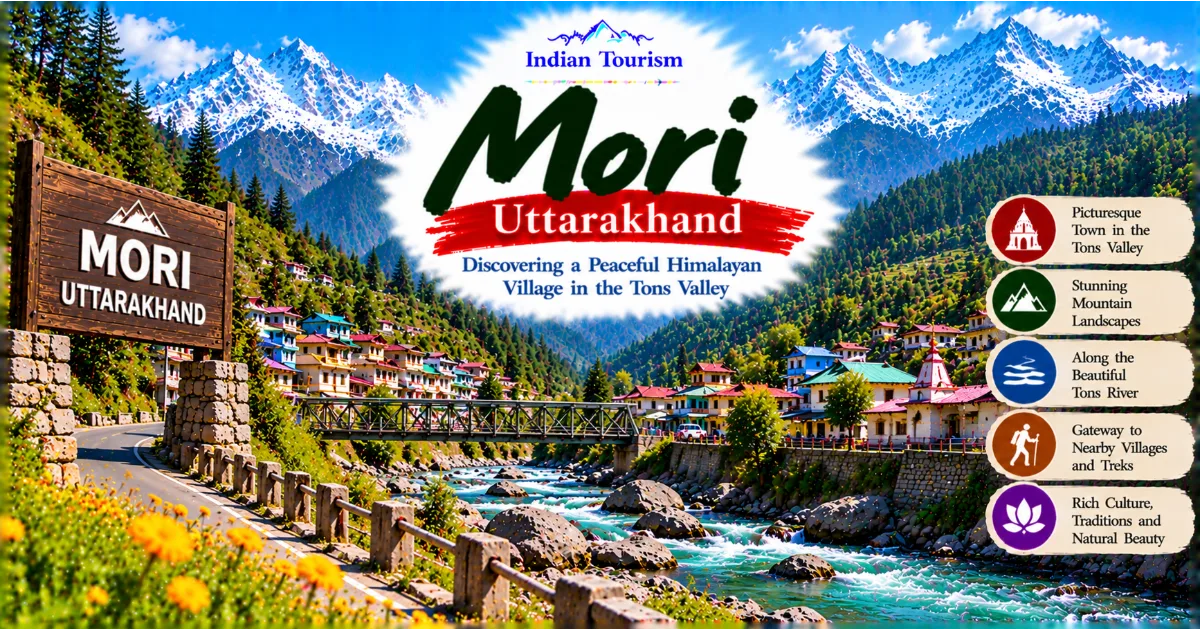
Exploring the Quiet Beauty of Mori
Uttarakhand is home to mountain destinations that attract travellers with their snow-covered peaks, sacred temples, alpine meadows, and winding Himalayan roads. Yet some of the state's most memorable experiences can be found in smaller settlements where the rhythm of life remains closely connected to rivers, forests, agriculture, and local traditions. Mori, located in Uttarkashi district, is one such destination. Situated along the Tons River in the western Garhwal Himalayas, Mori offers an introduction to a beautiful and culturally distinctive part of Uttarakhand.
The Tons River is one of the important rivers of the western Himalayan region. Its powerful waters flow through mountain valleys and contribute to the larger Yamuna river system. Around Mori, the river forms a defining part of the landscape, creating a setting of rocky banks, forested slopes, bridges, and settlements that follow the available terrain. The combination of flowing water and steep mountain scenery gives the area a character different from the more crowded hill stations of northern India.
Mori is also associated with the wider Jaunsar-Bawar and upper Tons region, an area known for distinctive local customs, traditional architecture, and cultural practices that have developed in relative geographical isolation. The cultural landscape here cannot be understood through scenery alone. It is also shaped by the communities who have lived in these mountains for generations, maintaining agricultural traditions, social customs, local festivals, and relationships with the surrounding environment.
For travellers, Mori can provide a starting point for exploring the Tons valley and nearby mountain settlements. It may appeal to those interested in scenic road journeys, photography, riverside landscapes, village life, and a slower style of travel. Rather than offering the highly commercialized atmosphere of a major tourist centre, the area invites visitors to appreciate the natural setting and understand the lives of the people who call the valley home.
The experience of visiting Mori depends considerably on the season, weather, and purpose of the journey. During periods of clear weather, the surrounding hills and river landscapes can be especially attractive. During the monsoon, the river may become more powerful and road conditions can deteriorate. Travellers should therefore plan carefully, obtain current local information, and avoid treating the mountain environment as predictable.
Mori is not simply a scenic stop beside a river. It is part of a wider Himalayan landscape where geography, culture, and everyday livelihoods remain closely connected. Exploring it thoughtfully can help visitors discover another dimension of Uttarakhand beyond its most famous destinations.
Where Is Mori Located?
Mori is located in Uttarkashi district in the western part of Uttarakhand. It lies along the Tons River, within a mountainous region that connects settlements across the upper Tons valley and neighbouring areas.
The town's location makes it relevant to travellers exploring the western Garhwal Himalayas. The surrounding road network links mountain communities with regional markets, administrative centres, and routes leading toward other destinations in Uttarakhand. These connections are especially important in a landscape where steep slopes and deep valleys limit the availability of direct routes.
Mori is surrounded by a landscape shaped by elevation, rivers, forests, and cultivated land. Settlements are often located on relatively accessible sections of the valley, while roads follow the contours of the terrain. The result is a region where a journey of modest distance can still require considerable travel time.
The area is also connected with the broader cultural geography of the western Himalayas. Communities in the Tons valley maintain local traditions that differ in important ways from those found in other parts of Uttarakhand. Visitors interested in regional culture may find that the journey provides opportunities to learn about the diversity of mountain life.
Mori should be considered part of a wider itinerary rather than automatically treated as a destination with every service required for a long stay. Accommodation, food, transport, and other facilities vary, and visitors should confirm availability before arriving.
When planning a visit, travellers should identify their starting point, select a suitable route, and check current road conditions. Mountain travel can be affected by landslides, roadwork, heavy rainfall, and temporary restrictions. Allowing extra time makes the journey safer and more comfortable.
The Tons River: The Natural Heart of Mori
The Tons River is one of the most significant natural features of the Mori region. Its waters travel through steep Himalayan terrain, carving a valley that supports settlements, vegetation, and a variety of human activities.
The river is associated with the upper Yamuna river system and plays an important role in the geography of western Uttarakhand. Its course through mountainous terrain creates a dramatic landscape of rocky riverbanks, steep slopes, forested hills, and narrow valleys. The river also influences the location of roads and bridges, as transportation routes must adapt to the terrain.
The appearance of the Tons changes with the seasons. During periods of lower flow, parts of the river may appear relatively calm from suitable viewpoints. During the monsoon, heavy rainfall can increase water levels and strengthen currents. The river can become dangerous even when the water appears accessible from the bank.
Visitors should never underestimate the power of a Himalayan river. Fast-moving water, slippery rocks, sudden changes in depth, and unstable riverbanks can create serious risks. Swimming or entering the water should not be attempted without reliable local guidance and safe conditions. During heavy rain, remaining well away from the water's edge is particularly important.
The river also has environmental significance. Its water supports the surrounding ecosystem, while the valley provides habitats for vegetation and wildlife adapted to mountain conditions. Human settlements depend on the broader river landscape for a range of needs, making the protection of water quality and riverbanks important.
Littering near the Tons can affect both the natural environment and the communities that depend on it. Plastic waste and discarded food packaging can be carried downstream, creating pollution far beyond the original dumping point. Travellers should carry their rubbish until it can be disposed of properly.
For photographers, the Tons offers opportunities to capture the relationship between water and mountain terrain. Wide views can show the river cutting through the valley, while closer compositions can highlight rocks, flowing water, bridges, and the vegetation along the banks.
The best way to experience the river is through observation from safe, accessible places. Its beauty comes with natural power, and respecting that power is an essential part of responsible travel.
The Mountain Landscape Around Mori
The landscape surrounding Mori reflects the variety of environments found across the western Garhwal Himalayas. Mountain slopes rise above the valley, while forests, agricultural plots, rocky surfaces, and scattered settlements create a changing pattern across the terrain.
The hills are not uniform. Differences in elevation, slope direction, rainfall, and soil conditions influence the vegetation and the way land is used. Some slopes are covered by forests, while others contain cultivated terraces or open areas around villages.
The Tons valley provides a natural corridor through this mountainous landscape. Roads follow the terrain, sometimes passing close to the river and sometimes climbing above it. The changing elevation creates different viewpoints and reveals how communities adapt their settlements to the available land.
Travellers may notice how houses and buildings are positioned in relation to roads, slopes, and cultivated areas. In many Himalayan settlements, space is limited, and construction must account for the steepness of the land and the risk of erosion or slope instability.
Weather can transform the scenery within a short period. Clear skies reveal the contours of distant hills, while clouds and mist soften the landscape. Rain can deepen the colour of the vegetation but also make roads slippery and reduce visibility.
The mountain environment requires care from visitors. Travellers should avoid walking along unstable slopes, approaching exposed edges, or entering areas where rockfall is possible. After heavy rain, apparently solid ground can become unstable.
For people who appreciate landscapes without the crowds of major tourist destinations, Mori can provide a rewarding experience. Its surroundings encourage visitors to slow down, observe the natural environment, and recognize the close connection between mountain geography and daily life.
The Cultural Heritage of the Tons Valley
The Tons valley is part of a culturally distinctive region of the western Himalayas. Its communities have developed traditions influenced by mountain geography, local history, agricultural practices, religious beliefs, and long-standing relationships between neighbouring settlements.
The cultural character of the region includes traditional forms of architecture, local languages and dialects, festivals, music, food, and community customs. These traditions vary from one settlement to another, and they should not be treated as identical across the entire valley.
The wider Jaunsar-Bawar region is particularly noted for distinctive social and cultural practices. Its history reflects the influence of geography, local institutions, and interactions among communities over generations. Mori's position within the wider Tons region makes it a useful place from which to begin learning about this cultural landscape.
Visitors should approach local customs with respect. Traditions that may appear unfamiliar to outsiders are part of the social and historical life of the community. It is appropriate to ask questions politely when the opportunity arises, but residents should not be expected to explain every aspect of their culture.
Traditional architecture can provide clues about the relationship between people and their environment. Building materials, roof designs, the arrangement of homes, and the use of available space often reflect local conditions. However, architectural styles vary, and not every building in the region represents an older traditional form.
Religious beliefs and local festivals also contribute to the cultural identity of mountain communities. Events may involve gatherings, music, processions, or other practices that bring people together. The timing and nature of such events vary, so visitors interested in attending should obtain reliable local information.
Cultural tourism should benefit the communities whose traditions attract visitors. Travellers can support local businesses, seek permission before photographing people or private spaces, and avoid treating religious or cultural events merely as entertainment.
The cultural value of Mori lies in its connection with a living regional heritage. By taking time to understand the context of the place, visitors can gain a richer experience than they would from scenery alone.
Traditional Architecture and Mountain Settlements
Traditional architecture in the western Himalayas reflects the practical challenges of building in mountainous environments. Construction must respond to steep terrain, seasonal weather, the availability of materials, and the need to make effective use of limited space.
Across parts of Uttarakhand, older buildings have used combinations of stone, timber, and other locally available materials. In some areas, traditional construction techniques developed to provide insulation, structural stability, and protection from cold weather. The specific styles and materials vary according to the region and the period in which a building was constructed.
The wider Tons valley includes settlements whose built environment reflects local traditions. Visitors interested in architecture should observe buildings respectfully and recognize that many are private homes or working properties.
A house may have significance beyond its appearance. It can reflect family history, inherited skills, and a way of life adapted to the mountain environment. Maintaining traditional buildings can require considerable effort, especially when materials and construction practices become more difficult to source.
Modern development has also changed many mountain settlements. New roads, transport requirements, building materials, and changing household needs influence how homes and public spaces are designed. Traditional and modern structures may therefore exist side by side.
Responsible visitors should not enter courtyards or buildings without permission. Photography should not interfere with residents' privacy, and religious or culturally significant structures should be approached according to local instructions.
For architecture enthusiasts, the region offers an opportunity to consider how buildings respond to climate, terrain, and social needs. Rather than judging a settlement only by whether it appears old or picturesque, travellers can appreciate the practical knowledge reflected in its built environment.
Village Life and Agriculture Around Mori
Agriculture remains an important part of life in many Himalayan settlements. The availability of cultivable land, seasonal weather, water access, and transport connections all influence the way farming is organized.
In mountain regions, fields may be arranged as terraces on slopes or placed on relatively level areas where the terrain permits cultivation. These agricultural landscapes show how communities make use of limited land while working within the constraints of elevation and soil conditions.
Farming requires careful attention to seasonal patterns. The timing of planting, irrigation, maintenance, and harvesting depends on the crops being grown and the conditions in the particular locality. Weather changes can affect both the quality and quantity of agricultural production.
The exact crops grown around Mori vary according to elevation, land conditions, and local farming practices. Travellers should seek local information rather than assume that every crop associated with Uttarakhand is cultivated in the same way throughout the region.
Agriculture also shapes the daily rhythm of village life. Work may involve preparing fields, caring for crops, maintaining paths, managing livestock, and transporting produce. These activities require time and physical effort, particularly where the land is steep and mechanization is limited.
Visitors can learn about local agriculture by observing cultivated areas from public paths or by speaking with residents who are willing to share their experiences. They should not enter fields without permission or disturb farming activities for photographs.
Buying locally produced goods where available can provide a practical way to support rural livelihoods. However, visitors should ask about the origin of products instead of assuming that every item sold in a local market has been produced nearby.
Agriculture helps explain the close relationship between people and the natural environment in the Tons valley. It also shows why roads, markets, and small towns are important to communities whose livelihoods depend partly on access to wider markets.
Forests and Biodiversity in the Mori Region
The forests surrounding the Tons valley form part of the broader Himalayan ecological landscape. Forests help protect soil, regulate water movement, provide habitat for wildlife, and contribute to the environmental stability of mountain slopes.
Vegetation changes with elevation, exposure, rainfall, and soil conditions. Lower and middle elevations may support different forest types from higher mountain areas. The exact species found in a particular location depend on local ecological conditions.
Forested slopes can provide habitat for birds, insects, mammals, and many other organisms. However, wildlife is not always easy to observe. Animals may remain hidden, avoid areas with heavy human activity, or move according to seasonal food availability.
Visitors should not approach or feed wild animals. Feeding can alter animal behaviour and create risks for both wildlife and people. Travellers should also avoid collecting plants, disturbing nests, or leaving food waste that could attract animals to roads and settlements.
Forests are connected with the livelihoods of mountain communities in several ways. They influence water availability, protect slopes, and contribute to the wider environmental conditions on which agriculture and settlements depend. Sustainable management is therefore important for both ecological health and human well-being.
Responsible trekking and nature observation can reduce disturbance. Stay on established paths where available, avoid loud behaviour, and take all waste away from the forest. Do not light fires in unsafe or unauthorized locations.
The forests around Mori should not be described as guaranteed wildlife-viewing destinations. Visitors interested in specific species should consult knowledgeable local guides and relevant forest authorities, while respecting any restrictions on access.
Appreciating biodiversity means understanding that the forest is a living ecosystem rather than simply a backdrop for photographs. Protecting it helps preserve the environmental qualities that make the Tons valley distinctive.
Photography in the Tons Valley
Mori and its surroundings offer varied photographic subjects, from river landscapes and mountain roads to village settlements and agricultural terraces. The region's visual appeal comes from the way these features interact within a narrow Himalayan valley.
Landscape photographers can use elevated viewpoints, where safely accessible, to show the relationship between the river and the surrounding hills. Photographs taken from suitable public locations can capture the winding course of the valley and the settlement patterns that follow it.
The Tons River provides opportunities for images of flowing water, rocky banks, and bridges. However, photographers should never approach unstable edges or enter the water to obtain a particular angle. A safe viewpoint is always preferable to a risky composition.
Village scenes can reveal how buildings and roads fit into the terrain. Ask permission before photographing private property or residents, and be especially careful when children are present. Some people may prefer not to be photographed, and their wishes should be respected.
Changing weather can create different photographic conditions. Clear periods may provide stronger visibility, while mist and clouds can give the landscape a softer appearance. During rain, visibility may decline, and wet roads or rocks can become dangerous.
Photographers should avoid stopping in the middle of narrow mountain roads. Use appropriate parking areas and never obstruct emergency access or local traffic.
The best photographs often come from observing rather than rushing. A traveller who takes time to understand the valley may notice details that are easy to miss, including the arrangement of fields, the sound of the river, and the relationship between houses and the landscape.
Best Time to Visit Mori
The best time to visit Mori depends on the type of experience desired and the conditions prevailing in the Tons valley. Weather, road access, and the planned route should guide the final decision.
Spring
Spring can bring fresh vegetation and comfortable conditions for exploring accessible parts of the region. The countryside changes as seasonal growth develops, and travellers may enjoy the combination of forested hills and river scenery.
Temperatures can vary between daytime and night-time, so layered clothing is useful. Check the forecast before beginning longer road journeys.
Summer
Summer can be suitable for regional travel when roads are open and weather conditions are stable. Visitors may use Mori as part of a journey through the western Garhwal Himalayas.
As the monsoon approaches, rainfall can increase. Travellers should monitor weather forecasts and avoid assuming that road conditions will remain unchanged throughout the day.
Monsoon
The monsoon requires particular caution. Heavy rainfall can cause landslides, rockfalls, road closures, and sudden rises in river levels. The Tons River can become extremely dangerous during periods of high flow.
Travellers should avoid unnecessary journeys during severe weather and follow official advisories. Do not cross flooded roads or streams, and never attempt to drive through moving water.
Autumn
Autumn can provide attractive conditions for mountain travel when the weather is clear and roads are accessible. Visibility may improve during stable periods, making it a useful season for landscape photography.
Weather can still change rapidly in the mountains. Check local conditions and allow sufficient time for the return journey.
Winter
Winter brings cooler conditions, and higher surrounding areas may experience cold weather or snow depending on elevation. Travel plans should account for shorter daylight hours and the possibility of difficult road conditions.
Accommodation and transport availability should be confirmed before departure. Visitors planning to travel into more remote areas should obtain current information from reliable local sources.
No season guarantees ideal conditions. The safest approach is to select travel dates based on current forecasts, route access, and the needs of the planned itinerary.
How to Reach Mori
Mori is primarily reached by road through the regional transport network of Uttarakhand. The most suitable route depends on the traveller's starting point and current road conditions.
By Road
Travellers can reach Mori through the mountain roads connecting settlements in Uttarkashi district and the surrounding region. Road travel is the most practical way to access the town.
Mountain roads may contain sharp bends, narrow stretches, steep gradients, and sections affected by landslides or maintenance work. Travel times can vary significantly depending on traffic and weather.
Drivers should maintain a safe speed, avoid risky overtaking, and use designated stopping points. It is advisable to check road conditions before departure, particularly during the monsoon and winter.
By Train
Mori does not have its own railway station. Visitors arriving by train must continue by road from a suitable railway station serving the wider region.
The best connection depends on the starting city and the available onward transport. Travellers should allow enough time for the mountain journey and avoid making plans that depend on an exact arrival time.
By Air
Visitors arriving by air can use an airport serving the wider Dehradun region and continue by road toward Mori. The onward journey requires additional time, and the actual duration depends on the route and prevailing conditions.
Allow time for luggage collection, transport arrangements, rest stops, and possible delays on mountain roads.
Local Transport
Taxis and other local transport options may be available, depending on the season and route. Visitors should confirm availability and costs before travel.
If the journey includes smaller villages or remote locations, ask about road conditions and access restrictions. Do not assume that all places are accessible by ordinary vehicles or that transport will be available late in the day.
Suggested One-Day Itinerary
A one-day visit to Mori is most suitable for travellers already staying within a reasonable distance of the town. Those travelling from distant locations may find that the road journey leaves little time for exploration.
Begin the day by checking the weather and confirming that the intended route is open. Once in Mori, spend time understanding the town's relationship with the Tons River and the surrounding mountain landscape.
Explore accessible public areas and observe the local settlement respectfully. If you visit a market or food establishment, remember that these places primarily serve local residents and should not be treated as tourist attractions alone.
Set aside time for a meal or refreshments at a suitable establishment. Ask about local dishes where appropriate, and support local businesses when practical.
If you wish to photograph the river, choose a safe viewpoint away from unstable banks and fast-moving water. Do not attempt to enter the river or climb exposed rocks for photographs.
Before returning, check the weather and allow enough time for the mountain journey. Avoid adding unnecessary stops if doing so would mean driving in poor visibility or after dark.
A short visit can still provide a meaningful introduction to the Tons valley if it allows time to appreciate the landscape and observe local life without rushing.
Suggested Two-Day Itinerary
A two-day itinerary offers more flexibility and can be useful for travellers exploring the wider region.
On the first day, travel to Mori or another suitable base in the Tons valley. Confirm accommodation and take time to rest after the journey. If you arrive early enough, explore accessible parts of the town and observe the river landscape from safe locations.
Use local advice to understand which nearby destinations are practical to visit. Ask about road conditions, weather, and the availability of transport before making plans for the following day.
On the second day, explore the surrounding countryside or choose an accessible destination in the wider region. The exact route should depend on current conditions, travel time, and the interests of the group.
Travellers interested in culture can focus on local settlements and regional architecture, provided that access is permitted. Those interested in nature may prefer to spend time observing the river, forested slopes, and agricultural landscapes.
Keep the schedule flexible. Heavy rain, landslides, and road restrictions can change the feasibility of a planned journey. If conditions become unsafe, remain in a secure location and postpone optional travel.
Before departure, ensure that all rubbish is properly disposed of and that local property and customs have been respected.
Responsible Tourism in Mori
Responsible tourism is particularly important in mountain valleys, where roads, riverbanks, forests, and settlements can be sensitive to environmental pressure.
Visitors should carry their waste until it can be disposed of through an appropriate facility. Plastic bottles, food wrappers, and other rubbish should never be left beside the river or along mountain roads.
The Tons River must be treated with care. Avoid polluting the water, entering dangerous currents, or approaching unstable riverbanks. After heavy rainfall, remain away from areas where water levels may rise suddenly.
Respect the privacy of residents. Ask permission before taking photographs of people or entering private property. Follow local guidance at religious or culturally significant locations.
Support legitimate local businesses where possible. Buying meals, using local transport, and purchasing necessary supplies can help contribute to the regional economy.
Visitors should also recognize the limits of local infrastructure. Smaller settlements may not offer the same range of services as major tourist centres. Planning ahead can reduce inconvenience and avoid placing unnecessary pressure on residents.
Follow official road and weather advisories, especially during the monsoon. Do not attempt to cross landslide debris, flooded roads, or other hazardous sections simply to maintain an itinerary.
Responsible tourism means recognizing that the region is a living environment. The people who live here depend on its roads, rivers, forests, and agricultural land throughout the year. Travellers should leave the place as clean and undisturbed as possible.
Who Should Visit Mori?
Mori may appeal to travellers who prefer quieter mountain destinations and want to explore the western Garhwal Himalayas beyond the state's most heavily visited centres.
Nature lovers can appreciate the river valley, forested slopes, and mountain scenery. The area is suitable for travellers who enjoy observing landscapes and understanding the relationship between geography and settlement.
Cultural travellers may find the wider Tons region interesting because of its distinctive traditions and local history. Visitors should approach cultural exploration respectfully and seek reliable local guidance when necessary.
Photographers can explore the changing forms of the river, mountain roads, agricultural areas, and settlements. Safety and respect for privacy should remain priorities.
Road-trip enthusiasts may consider Mori as part of a wider journey through Uttarkashi district. However, mountain driving requires patience, careful preparation, and flexibility.
Families can visit if the journey, accommodation, and planned activities are suitable for their needs. Riverbanks and mountain roads require particular attention when travelling with children.
Mori may be less suitable for visitors expecting large resorts, extensive nightlife, or a highly developed tourist infrastructure. Its appeal lies in the landscape, regional culture, and opportunity to explore a quieter part of Uttarakhand.
Final Thoughts: Discovering the Natural and Cultural Beauty of Mori
Mori is a distinctive destination within Uttarakhand's western Himalayan landscape. Located beside the Tons River in Uttarkashi district, it brings together river scenery, forested mountains, agricultural surroundings, and the cultural traditions of the wider upper Tons region.
The river gives the landscape much of its character, but the wider story of Mori is equally important. Mountain roads connect communities, agricultural practices reflect the challenges of the terrain, and local traditions demonstrate how people have adapted to their environment over generations.
For travellers, Mori offers an opportunity to experience a quieter side of Uttarakhand. Instead of focusing exclusively on famous viewpoints or large tourist centres, visitors can spend time understanding the landscape and the people who live within it.
A successful trip requires realistic planning. Confirm road conditions, arrange suitable accommodation, and check the weather before travelling. Exercise particular caution during the monsoon, when landslides and high river levels can create serious hazards.
Visitors should also remember that the Tons valley is a living region, not merely a scenic backdrop. Respecting local customs, protecting the river, avoiding waste, and supporting local businesses are practical ways to make tourism more responsible.
Mori's greatest appeal lies in the combination of nature and everyday life. Its river, mountains, roads, forests, and settlements together tell a story of the western Garhwal Himalayas. For those willing to travel thoughtfully and appreciate the details of a mountain region, Mori can become a meaningful part of an exploration of Uttarakhand.
#IndianTourism #UttarakhandTourism #Mori #TonsValley #TonsRiver #Uttarkashi #GarhwalHimalayas #ExploreUttarakhand #HimalayanTravel #MountainVillages #UttarakhandCulture #NatureTravel #ResponsibleTourism #TravelIndia
