
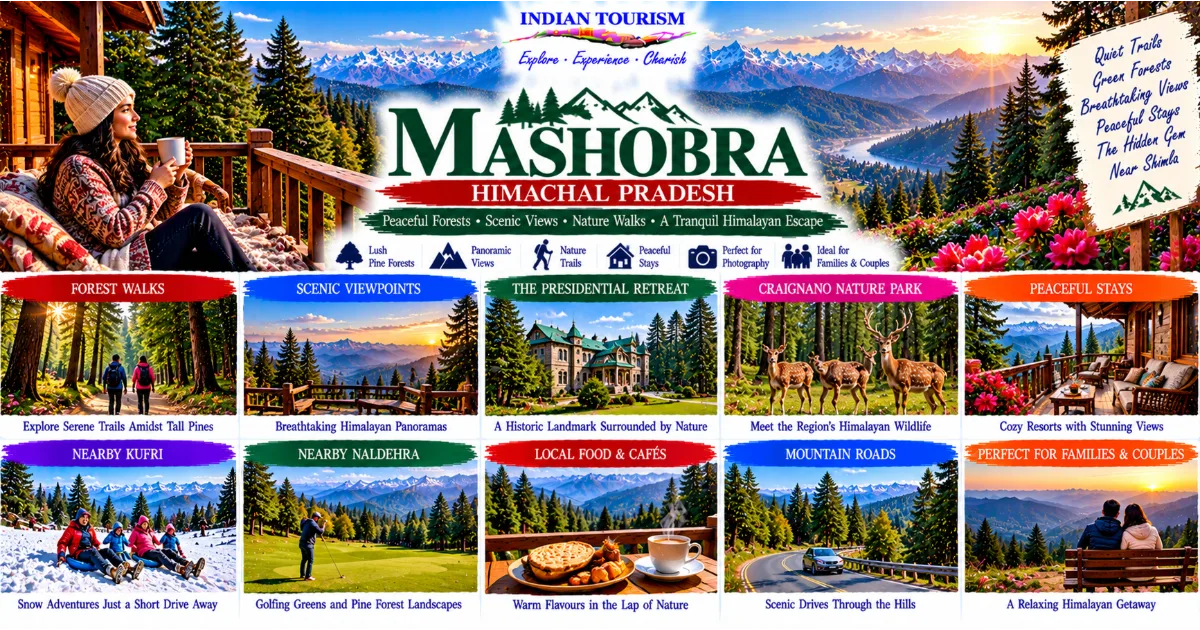
Discovering Mashobra, a Peaceful Himalayan Retreat
Mashobra is a scenic hill destination in the Shimla district of Himachal Pradesh, known for its forested hills, fresh mountain air, quiet surroundings and beautiful views of the Himalayas. Located within reach of Shimla, it offers travellers an opportunity to experience the natural side of the region without travelling deep into remote mountain valleys. While Shimla attracts visitors with its historic buildings, busy shopping streets and established tourism facilities, Mashobra appeals to those who prefer a slower pace, wooded landscapes and peaceful accommodation.
The destination is particularly attractive to couples, families, nature enthusiasts and travellers seeking a relaxing mountain holiday. Its surroundings include deodar and other forest trees, small settlements, winding roads and open viewpoints. Depending on the season and location, visitors may enjoy fresh spring greenery, pleasant summer walks, autumn colours or the possibility of cold weather and occasional snowfall during winter.
Mashobra is not a conventional sightseeing town where every attraction is concentrated along a single road. Much of its charm lies in the surrounding landscape and the opportunity to spend time outdoors. Visitors can enjoy suitable walks, explore nearby destinations, stay in mountain accommodation and discover the countryside around Shimla. The experience often depends more on the chosen property, walking route and weather than on a long list of ticketed attractions.
The destination also provides access to other parts of the Shimla region. Naldehra, Kufri and central Shimla can be considered for excursions, although road conditions and travel times should be checked before planning a day out. Travellers who have several days available can combine Mashobra with a broader exploration of the surrounding hills.
Mashobra's appeal comes with a responsibility to protect its environment. Forests, water resources and mountain roads are sensitive to heavy tourism, construction and careless waste disposal. Visitors can help preserve the area by choosing responsible accommodation, respecting private property, staying on suitable paths and supporting local businesses.
This guide explores Mashobra's natural surroundings, walking opportunities, nearby attractions, seasonal experiences, accommodation, food and practical travel advice. It is designed for travellers who want to experience a quieter side of Himachal Pradesh while planning a comfortable and responsible mountain holiday.
Understanding Mashobra's Location and Landscape
Mashobra is situated in the Shimla district, among the hills of Himachal Pradesh. Its location makes it convenient for travellers who want to remain close to the capital while enjoying a less urban environment. The surrounding landscape includes forested slopes, small settlements, mountain roads and properties positioned to take advantage of the natural scenery.
The area's elevation gives it a climate that can feel considerably cooler than the plains during many parts of the year. Temperatures vary according to season, sunlight, wind and the precise location of accommodation. A property exposed to open mountain air may feel different from one sheltered among trees.
Forests are an important feature of Mashobra's identity. Deodar and other trees contribute to the area's appearance, provide habitat for birds and wildlife, and help maintain the character of the mountain environment. The forested landscape also creates opportunities for nature observation and photography.
Unlike a densely developed hill station, Mashobra includes quieter stretches where houses, guest accommodation and roads are separated by trees and open spaces. This can provide a sense of privacy, although the level of quiet depends on the location, the number of visitors and the surrounding activities.
The terrain is hilly, and roads may include steep sections, sharp bends and narrow stretches. A short distance between two places can take longer to cover than expected. Visitors should consider this when selecting accommodation and planning daily activities.
Mashobra's countryside also includes local communities whose livelihoods are connected with agriculture, services, tourism and other activities. Travellers should remember that many roads and paths pass through places where people live and work. Respecting private property and keeping noise under control helps maintain a positive relationship between tourism and local life.
Understanding the landscape is the first step towards enjoying Mashobra. The destination rewards travellers who allow time for quiet observation rather than attempting to cover every nearby attraction in a single day.
Reserve Forests and the Natural Beauty of Mashobra
The forested surroundings are among Mashobra's greatest attractions. Trees, shaded roads and the changing light across the hills create a peaceful environment that contrasts with the busier parts of Shimla.
Forest landscapes are especially attractive to visitors who enjoy nature photography, birdwatching and quiet walks. The sounds of birds, the movement of leaves and the changing appearance of the forest can make even a short outdoor excursion memorable.
The quality of the experience depends on weather and season. Spring brings fresh growth, while summer provides greener surroundings and generally comfortable conditions for outdoor exploration. Autumn can create a different atmosphere as temperatures cool, and winter may bring frost, cold winds or snowfall when conditions permit.
Visitors should distinguish between public access routes and restricted forest areas. Not every woodland path is open for unrestricted walking, and some routes may require local guidance or permission. Travellers should follow signs, respect barriers and avoid entering unfamiliar areas simply because a path appears inviting.
Forest environments support wildlife and help protect the mountain landscape. Visitors should not feed wild animals, disturb nests or remove plants. Keeping noise low and staying on suitable paths improves the experience for both people and wildlife.
Litter is a particular concern in forested destinations. Packaging, bottles and food waste can remain in the environment long after a visitor has left. Carrying reusable items and disposing of waste properly are simple ways to reduce the impact of a trip.
Mashobra's forests should not be treated merely as a backdrop for photographs. They are living ecosystems that contribute to the region's ecological health and local identity. A thoughtful visit involves observing the landscape carefully while avoiding unnecessary disturbance.
Walking and Nature Trails Around Mashobra
Walking is one of the most rewarding ways to experience Mashobra. Unlike destinations where visitors move mainly between commercial attractions, Mashobra offers opportunities to slow down, notice the surroundings and appreciate the relationship between forests, settlements and mountain terrain.
Suitable walks may follow local roads, established paths or routes recommended by accommodation hosts and local guides. The difficulty varies according to slope, distance, surface condition and weather. Travellers should ask about these factors before setting out rather than assuming that every walk is easy.
A short morning walk can provide a pleasant introduction to the area. Early hours may be quieter, and the light filtering through trees can create attractive conditions for photography. However, mist, cold temperatures or wet surfaces may make some routes difficult, especially during winter or the monsoon.
Visitors should carry drinking water, a charged phone and clothing appropriate to the weather. For longer walks, it is sensible to tell someone about the planned route and expected return time. Travellers unfamiliar with the terrain may benefit from local guidance.
Footwear is important. Shoes with a good grip are useful on uneven paths, loose gravel and damp surfaces. Visitors should avoid walking on steep or slippery slopes simply to reach a viewpoint.
Respect for local residents is equally important. Some paths pass close to houses, farms or private properties. Walkers should avoid entering private land without permission and should ask before photographing residents or their homes.
Walking in Mashobra is most enjoyable when the route is chosen according to personal ability and available time. A modest, comfortable walk can provide a better experience than attempting a long route without suitable preparation.
Birdwatching and Nature Observation
Mashobra's forested environment offers opportunities for observing birds and other aspects of mountain wildlife. Visitors who enjoy nature can spend time listening for bird calls, watching movement among branches and noticing changes in the landscape.
The species visible during a visit depend on habitat, season, weather and the amount of human activity in a particular location. Travellers should not expect to see a specific bird simply because it has been reported in the wider region.
Early morning can be a useful time for quiet observation, although visibility and activity vary. Visitors should move slowly, avoid loud conversations and use binoculars where appropriate. A guide with local knowledge may help identify species and explain their ecological importance.
Photography should never take priority over wildlife welfare. Approaching nests, disturbing birds or using loud sounds to attract animals can cause harm. Visitors should maintain a respectful distance and avoid handling wildlife.
The surrounding forests also provide opportunities to observe plants, insects and seasonal changes. Nature observation encourages visitors to notice details that can easily be missed when travelling between major attractions.
Travellers should avoid removing feathers, plants or other natural objects from the environment. Even small disturbances can accumulate when many visitors behave in the same way.
Mashobra's value for nature enthusiasts lies in the opportunity to experience a living forest environment rather than a guaranteed wildlife spectacle. Patience, quiet movement and respect for the habitat make the experience more meaningful.
The Presidential Retreat at Mashobra
One of the most recognisable places associated with Mashobra is the Presidential Retreat, also known as The Retreat. The property is connected with the President of India's official activities and provides a notable example of the area's historic and institutional significance.
The building and its grounds are associated with a forested setting, reflecting the wider character of Mashobra. Its presence also highlights how the area's climate and landscape have made it significant beyond ordinary tourism.
The property is not a conventional public attraction with unrestricted access. Visitors should not assume that they can enter the grounds or tour the building. Access arrangements may depend on official rules, security requirements and special permissions.
Travellers interested in the site's history should rely on current official information and respect any restrictions. Attempting to enter restricted areas or photograph security-sensitive locations is inappropriate.
The surrounding region can still be explored through permitted public roads and suitable attractions. Visitors should follow signs and instructions and avoid treating restricted institutional property as a sightseeing route.
The Presidential Retreat contributes to Mashobra's wider identity, but a trip should not depend on gaining access to it. The forests, quiet surroundings and nearby destinations provide plenty of reasons to visit the area.
Understanding the distinction between public attractions and restricted premises helps visitors plan realistically and respect the security and institutional responsibilities associated with the site.
Craignano Nature Park and Nearby Outdoor Experiences
Craignano is a well-known area in the wider Mashobra region, associated with natural surroundings and outdoor recreation. Its landscape provides an opportunity to experience the forested character of the hills beyond the busiest parts of Shimla.
Visitors may be interested in the area's scenery, walking opportunities and open spaces, subject to current access arrangements. Facilities, permitted activities and maintenance conditions can change, so travellers should check locally before planning a specific outing.
The experience is different from visiting a formal garden or a commercial amusement attraction. The main appeal lies in the natural environment and the opportunity to spend time outdoors.
Families should check whether paths and facilities are suitable for children and older visitors. Uneven ground, slopes and weather can influence how comfortable a visit will be.
Visitors should follow any rules concerning entry, picnics, waste disposal and activities. Natural spaces can be damaged by litter, uncontrolled fires and excessive disturbance, particularly during dry periods.
Craignano can be considered as part of a broader itinerary around Mashobra and Shimla, but travellers should confirm road access and allow enough time for the journey.
For visitors who value nature, a quiet outdoor excursion can provide a refreshing alternative to crowded commercial attractions. The key is to approach the landscape respectfully and plan according to actual conditions rather than relying on outdated descriptions.
Nearby Naldehra: Forests and Open Mountain Landscapes
Naldehra is a scenic destination that can be considered alongside Mashobra on a trip through the Shimla district. Known for its golf course, deodar trees and rolling terrain, it offers a combination of recreational heritage and forest scenery.
The Naldehra golf course is one of the area's recognised features. Access to the playing facilities depends on current arrangements, but visitors may appreciate the landscape and tree-lined surroundings even if they do not play golf.
Naldehra's terrain differs from the busy streets of central Shimla. Open spaces and forested slopes create opportunities for photography and suitable walks. Visitors should confirm which paths and facilities are open to the public.
Spring and summer can be pleasant for exploring the area, while autumn often brings cooler conditions. Winter can be cold, and snow or icy surfaces may affect access. Rain can make paths slippery, so appropriate footwear is important.
Travellers should avoid entering restricted areas or assuming that all parts of the golf course are open for casual walking. Following local rules helps protect the facilities and ensures a better experience for everyone.
Naldehra can be combined with Mashobra as part of a relaxed day excursion, provided enough time is allowed for road travel and sightseeing. Visitors should avoid trying to cover too many destinations in a single day.
The area is particularly suitable for travellers who appreciate forest scenery and open landscapes. Its quieter atmosphere provides a useful contrast to Shimla's central commercial district.
Kufri: A Popular Excursion From Mashobra
Kufri is another destination that can be included in a wider journey around Mashobra and Shimla. It is known for mountain scenery, seasonal snow experiences and a range of tourism activities.
During winter, Kufri may receive snowfall that creates opportunities for winter photography and authorised recreational activities. The amount of snow varies from year to year, so visitors should check current conditions rather than assume that snow will be present.
During warmer months, the area offers green landscapes, forest surroundings and mountain views. Visitors can explore suitable viewpoints and activities according to the season and local operating arrangements.
Kufri can become crowded during popular holidays. Road congestion and queues at commercial attractions may affect travel time, making it important to plan realistically.
Travellers should confirm activity prices and safety arrangements before purchasing a package. Additional charges may apply for equipment, transport or photography, so asking for the complete cost in advance is sensible.
If combining Kufri with Mashobra, consider whether the intended activities can reasonably fit into the same day. A relaxed visit to one or two places may be more enjoyable than rushing between multiple stops.
The combination of Mashobra's forested surroundings and Kufri's more activity-focused tourism environment can provide a varied experience of the Shimla region.
Shimla: History, Shopping and Urban Attractions Nearby
Mashobra's proximity to Shimla makes it convenient for travellers who want to combine quiet accommodation with access to the capital's established attractions.
Shimla's Ridge provides broad views across the surrounding hills and acts as a central gathering space. Nearby Mall Road offers shops, cafés, restaurants and opportunities for a leisurely walk.
Christ Church is one of the city's most recognisable historic buildings, while the Gaiety Heritage Cultural Complex reflects Shimla's cultural history. The Viceregal Lodge, associated with the Indian Institute of Advanced Study, provides further insight into the city's colonial past, subject to current visiting arrangements.
Jakhoo Temple is an important religious destination located above the city. Visitors should consider the climb, weather and available transport before planning a visit.
A trip into Shimla can provide a useful contrast to the quieter environment of Mashobra. Visitors can spend part of the day exploring the city's heritage and markets, then return to a more peaceful setting in the evening.
Traffic and parking can be challenging during peak periods. Travellers should allow extra time for travel and consider walking between central attractions where appropriate.
Mashobra and Shimla work well together because they offer different experiences. One provides forested surroundings and quiet stays, while the other offers a more developed urban tourism environment.
Seasonal Experiences in Mashobra
Mashobra changes noticeably throughout the year, and the best time to visit depends on the type of experience a traveller wants.
Spring brings fresh growth and a renewed appearance to the surrounding landscape. Temperatures can remain cool, particularly in the mornings and evenings, but suitable walks and outdoor sightseeing can be enjoyable.
Summer is a popular period for mountain holidays. Mashobra's forested setting may provide a comfortable alternative to hotter lowland areas, although visitor numbers and accommodation prices can increase during school holidays.
The monsoon season brings greener vegetation but can also create practical difficulties. Heavy rain may lead to slippery paths, landslides and road disruptions in the wider region. Travellers should monitor official advisories and avoid unnecessary journeys during unsafe conditions.
Autumn often provides cooler weather and attractive mountain views. It can suit visitors who prefer outdoor exploration without depending on snow or other seasonal activities.
Winter brings cold temperatures, and snowfall is possible in suitable conditions. However, snow is not guaranteed in Mashobra on any specific date. Visitors should carry warm clothing, confirm road conditions and check heating arrangements at their accommodation.
The timing of a visit should be based on realistic expectations. Travellers who want forest walks may enjoy several seasons, while those hoping for snow should check current forecasts and local reports shortly before departure.
Best Time to Visit Mashobra
For many visitors, spring and summer are comfortable periods for exploring Mashobra's forested surroundings. The weather may be suitable for walking, photography and relaxing outdoors, although temperatures vary with elevation and local conditions.
Summer is especially popular among travellers seeking a break from the heat of the plains. Booking accommodation ahead of time is useful during weekends and school holidays, when demand can rise.
Autumn may appeal to visitors who prefer cooler weather and quieter surroundings. Clear conditions can provide attractive views, but evenings may become cold.
The monsoon season requires greater flexibility. Rain can improve the appearance of the landscape while also affecting road access and outdoor activities. Travellers should check the weather and avoid forest walks or mountain drives when local conditions are unsafe.
Winter is suitable for those who enjoy cold-weather holidays. However, snowfall is uncertain, and visitors should not book a trip solely on the assumption that the landscape will be snow-covered. Warm clothing and reliable transport arrangements are essential.
There is no universally perfect month for Mashobra. The best time depends on personal interests, accommodation availability and the kind of landscape experience desired. Checking current weather, road conditions and property information will make planning more reliable.
How to Reach Mashobra
Mashobra is commonly reached by road from Shimla and other destinations in northern India. The most suitable route depends on the starting point, available transport and current road conditions.
By Road
Road travel is the main way to reach Mashobra. Visitors may use private vehicles, taxis or bus services that connect nearby towns, although the most convenient option depends on the exact accommodation location.
The roads in the region can be winding and steep. Travel time may increase during peak tourist periods, roadwork, rain or winter conditions. Drivers should proceed carefully and avoid rushing along unfamiliar mountain roads.
By Rail
Travellers arriving by train often use rail services to reach the wider Shimla region and continue by road. The Kalka-Shimla railway is a recognised scenic route, although schedules and availability should be confirmed before booking.
After reaching Shimla, visitors can arrange road transport to Mashobra. The final journey depends on the location of the accommodation and current traffic conditions.
By Air
Jubbarhatti Airport serves the Shimla area, but flight availability may be limited and subject to change. Some travellers use larger airports in northern India and continue by road.
Before choosing an air route, confirm current flight operations and consider the time needed for the onward mountain journey.
Getting Around Mashobra
Transport planning is important because attractions and accommodation are spread across a hilly area. Visitors staying in one property may find that restaurants, shops and nearby viewpoints are not within easy walking distance.
Taxis and private vehicles can provide flexibility, especially for travellers visiting several locations in one day. However, road access and parking may be limited at some properties and attractions.
Walking is suitable for selected routes, but the terrain should not be underestimated. Steep gradients, uneven surfaces and changing weather can make even short journeys more demanding than expected.
Visitors should ask accommodation hosts about reliable local transport and the condition of nearby paths. Local advice can help identify appropriate routes and avoid unnecessary travel.
Those travelling with older family members, young children or people with mobility limitations should confirm distances and access arrangements before booking a property. A scenic location may be less convenient if reaching it involves long walks on steep roads.
It is also wise to avoid planning several distant excursions in a single day. Allowing enough time for travel and rest makes the holiday more comfortable and reduces the pressure to rush.
Where to Stay in Mashobra
Mashobra offers a range of accommodation styles, including hotels, guesthouses, homestays, cottages and properties set among trees. The right choice depends on budget, desired comfort, access to transport and whether the visitor prefers a lively or quiet setting.
Some properties emphasise mountain views and open balconies, while others focus on forest surroundings and privacy. Travellers should check recent descriptions and confirm the actual room view rather than relying only on promotional photographs.
Heating is an important consideration during winter. Ask whether the room has suitable heating, whether hot water is available and whether access roads are maintained when weather conditions deteriorate.
Visitors should also confirm meal arrangements, parking availability and the distance to the nearest shops or restaurants. Some properties may be located away from the main road, making private transport or advance arrangements necessary.
Homestays can provide a more personal experience and opportunities to learn about local food and community life. Guests should communicate dietary needs, arrival times and expectations clearly.
Booking in advance is sensible during weekends and popular holiday periods. Travellers should review cancellation policies and check whether additional charges apply for meals, heating or other services.
A good accommodation choice can be central to the Mashobra experience. For many visitors, the opportunity to relax in peaceful surroundings is more important than staying close to a large number of commercial attractions.
Food and Dining Around Mashobra
Mashobra's food options vary according to the location and type of accommodation. Visitors may find hotel restaurants, cafés, small eateries and properties that provide meals for their guests.
The wider Shimla region offers a mixture of Indian dishes, familiar North Indian meals and Himachali food traditions. Travellers may encounter siddu, lentil-based dishes and other regional preparations, although availability differs between restaurants.
Homestays can offer an opportunity to experience home-style food, but meals should be arranged in advance. Guests should communicate dietary requirements and allergies clearly.
Visitors planning long walks or excursions should carry water and suitable snacks. Food outlets may be limited in quieter areas, and opening times can vary by season.
When eating at a restaurant, check the menu and prices before ordering. Visitors should also choose establishments that maintain reasonable hygiene standards.
Food packaging should be disposed of properly, particularly when travelling through forested areas. Leaving waste behind can attract animals and damage the environment.
Dining in Mashobra can be part of a relaxing holiday rather than an activity that requires extensive planning. A simple meal enjoyed after a forest walk may fit the destination's quiet atmosphere particularly well.
Shopping and Local Products
Mashobra is not primarily a shopping destination, but visitors may find small shops selling everyday items, snacks, souvenirs and selected regional products. A wider range of goods is generally available in Shimla and other larger markets.
Travellers interested in Himachali crafts may look for woollen shawls, caps, woven products and other items associated with the region. Product quality and origin vary, so buyers should ask questions before making expensive purchases.
Apple-growing areas in the wider region may offer seasonal fruit or packaged products, depending on the time of year and local availability. Visitors should confirm freshness and packaging when purchasing food items.
Responsible shopping means supporting legitimate local businesses and paying fairly for genuine products. Avoid purchasing items whose materials or origins are unclear, especially if they involve wildlife or protected natural resources.
A receipt is useful for expensive purchases, and travellers should check how goods can be transported safely during the rest of the journey.
Mashobra's main attraction is its natural setting rather than its retail options. Visitors who want extensive shopping can plan a separate visit to Shimla while using Mashobra as a quieter base.
A Suggested Two-Day Mashobra Itinerary
A two-day visit allows travellers to experience Mashobra at a relaxed pace while exploring selected nearby attractions.
On the first day, arrive and settle into the accommodation. Spend the afternoon enjoying the surrounding forest scenery, taking a suitable walk or relaxing at the property. Ask local hosts about permitted routes and current conditions rather than entering unfamiliar woodland independently.
In the evening, enjoy a meal and allow time to rest. The main purpose of staying in Mashobra may be to enjoy a quieter atmosphere, so there is no need to fill every hour with sightseeing.
On the second day, choose a nearby excursion according to interest and weather. Naldehra may appeal to visitors who enjoy forest scenery, while Kufri offers seasonal activities and mountain views. Travellers interested in history and shopping can spend part of the day in Shimla.
If the itinerary includes multiple destinations, allow sufficient time for road travel and avoid attempting to cover all three areas in detail. Traffic and weather can affect the schedule.
Visitors with more time can extend the stay and explore additional parts of the Shimla district. Those with only one night should prioritise the accommodation experience and one suitable excursion rather than rushing between distant places.
The itinerary should remain flexible, particularly during the monsoon and winter. A comfortable pace and careful attention to local advice will generally provide a more rewarding experience than an overly ambitious schedule.
Responsible Tourism in Mashobra
Mashobra's forests, mountain roads and quieter settlements are central to its appeal. Tourism can support local employment and accommodation businesses, but it can also increase pressure on water, waste systems and the natural environment.
Visitors should use appropriate waste facilities and carry rubbish until proper disposal is available. Plastic bottles, food packaging and other waste should never be left on forest paths or roadside areas.
Water conservation is important in mountain communities. Guests should use water sensibly and support accommodation providers that take resource management seriously.
Visitors should avoid damaging plants, disturbing wildlife or entering restricted forest areas. Walking on established paths reduces erosion and helps protect vegetation.
Noise should be kept under control, particularly at night and near residential properties. Travellers should remember that local people live and work in the same environment they have come to enjoy.
Supporting local businesses can help tourism contribute more directly to the community. Visitors may choose locally operated accommodation, guides and restaurants where suitable, while asking fair questions about the services offered.
Mountain weather can create safety risks, especially during heavy rain, snow or poor visibility. Travellers should follow official advisories and change plans when conditions deteriorate.
Responsible tourism is not limited to large environmental decisions. Small actions, such as avoiding litter, respecting private property and reducing unnecessary driving, help preserve Mashobra's character.
Is Mashobra Suitable for Families and Couples?
Mashobra can suit a wide range of travellers, but the experience depends on the chosen accommodation and planned activities.
Families may appreciate the forested surroundings, quieter atmosphere and access to nearby attractions. However, parents should confirm the suitability of walking routes, room facilities and transport arrangements, particularly when travelling with young children or older relatives.
Couples may enjoy the destination's peaceful setting and opportunities for scenic walks, relaxed meals and time away from crowded commercial areas. Accommodation varies considerably, so visitors should compare privacy, comfort and access before booking.
Nature enthusiasts can enjoy birdwatching and suitable forest walks, while photographers may appreciate changing light and mountain scenery. Travellers seeking nightlife, extensive shopping or numerous ticketed attractions may prefer to stay closer to central Shimla.
People with mobility limitations should pay particular attention to slopes, stairs and road access. Some properties may require walking uphill or navigating uneven paths.
The destination is most suitable for visitors who value a slower pace and natural surroundings. It is less about completing a checklist of attractions and more about choosing a comfortable base from which to enjoy the hills.
Conclusion: Why Mashobra Deserves a Place on Your Himachal Pradesh Journey
Mashobra offers a quieter and more nature-focused experience within the Shimla district. Its forested surroundings, peaceful accommodation options and access to nearby destinations make it an appealing choice for travellers who want to enjoy the Himalayan environment without staying in the busiest parts of the capital.
The area provides opportunities for suitable walks, birdwatching, photography and relaxed outdoor exploration. Nearby places such as Naldehra, Kufri and central Shimla can add variety to a visit, allowing travellers to combine natural scenery with recreational activities and historic attractions.
Mashobra's appeal changes with the seasons. Spring and summer can be pleasant for forest walks, autumn may offer cooler weather and attractive views, while winter brings cold conditions and the possibility of snowfall. Visitors should check current weather and road information rather than rely on fixed expectations.
Planning the accommodation carefully is particularly important. Travellers should confirm road access, heating, meals, transport and walking distances before booking. A property that suits the purpose of the trip can make the experience far more enjoyable.
Responsible behaviour helps protect the forests and communities that give Mashobra its character. Avoiding litter, respecting private property, conserving water and following local guidance are simple ways to contribute positively.
For travellers exploring Himachal Pradesh, Mashobra offers a reminder that mountain tourism does not always require a busy itinerary or a long list of attractions. Sometimes the most memorable experience comes from a quiet walk among trees, a clear view across the hills and the chance to slow down in a peaceful setting.
#IndianTourism #HimachalPradesh #Mashobra #MashobraTourism #ShimlaDistrict #HimachalTravel #ForestTourism #NatureWalks #MountainRetreat #Naldehra #Kufri #Shimla #HimalayanLandscapes #ResponsibleTourism #NaturePhotography #FamilyTravel #CoupleTravel #ExploreIndia
