
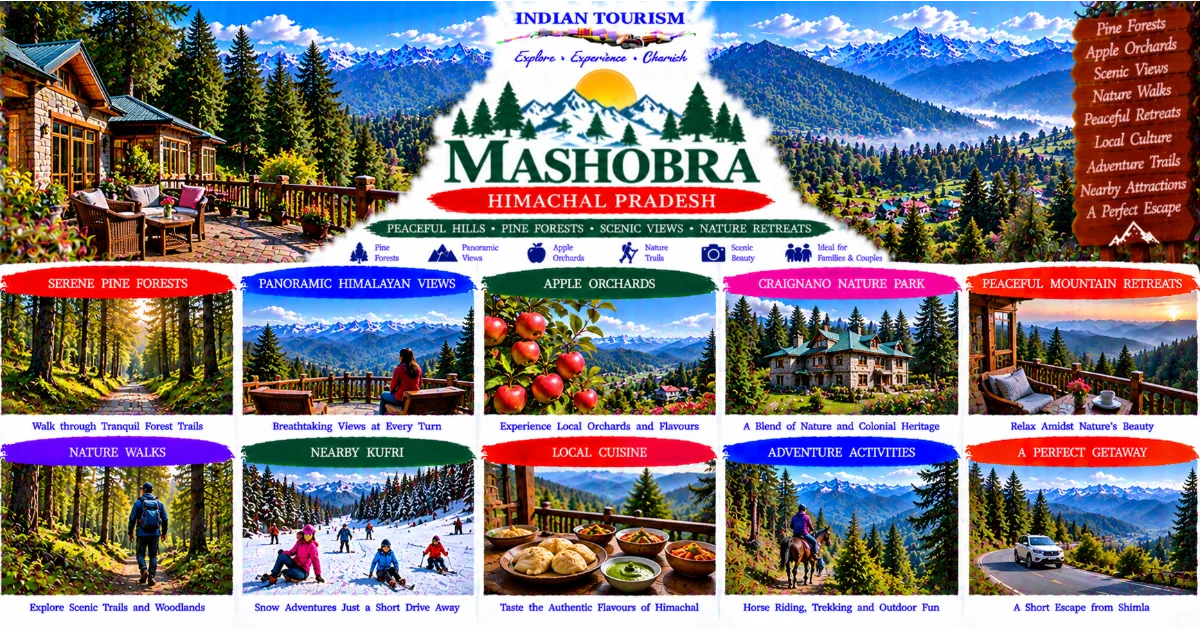
Welcome to the Quiet Hills of Mashobra
Mashobra is one of the most appealing destinations for travellers who want to experience the quieter side of Himachal Pradesh. Located in the Shimla district, this mountain settlement is surrounded by forested slopes, winding roads, traditional villages and landscapes that change beautifully with the seasons. While nearby Shimla attracts visitors with its historic buildings, shopping streets and lively public spaces, Mashobra offers a more relaxed atmosphere where the pleasures of travel often come from walking through woodland, enjoying mountain views, discovering local food and spending time away from crowded tourist centres.
The destination is particularly attractive to couples, families, nature lovers and travellers seeking a peaceful mountain retreat. Its location makes it convenient to combine with a visit to Shimla, yet its surroundings create a distinct experience. Visitors can stay in a forest-facing property, explore the countryside, discover nearby heritage sites or simply enjoy the cool mountain air. The appeal is not based on a single famous monument. Instead, Mashobra's charm comes from the combination of nature, rural life, seasonal scenery and the opportunity to travel at a slower pace.
Mashobra lies within a landscape shaped by Himalayan forests and mountain agriculture. Trees cover many of the surrounding slopes, while settlements and cultivated areas occupy suitable sections of the terrain. Apple orchards and other agricultural activities contribute to the local character, especially during the growing and harvesting seasons. The region's roads pass through forests and small communities, creating opportunities to observe the relationship between the natural environment and everyday life in the hills.
The experience changes according to the season. Spring brings fresh growth and a sense of renewal, summer attracts visitors looking for cooler weather, autumn can offer clear mountain views, and winter introduces colder conditions with the possibility of snow in the surrounding area. Each season has its own appeal, although weather and road conditions should always influence travel plans.
Mashobra is also a useful reminder that a memorable holiday does not always require a packed itinerary. Travellers can spend several days in the area enjoying short walks, local meals, scenic drives and quiet mornings. For those who prefer more sightseeing, nearby destinations such as Shimla, Naldehra and Kufri can be included in a broader journey through the region.
This guide explores Mashobra's landscape, history, attractions, nature experiences, local culture, cuisine, seasonal travel and practical planning. Whether you are planning a romantic escape, a family holiday or a nature-focused break, Mashobra offers a different perspective on the Himalayan character of Himachal Pradesh.
Where Is Mashobra and Why Should You Visit?
Mashobra is situated in the Shimla district of Himachal Pradesh, in the lower Himalayan region. Its proximity to Shimla makes it relatively convenient for visitors arriving from northern Indian cities, while its forested surroundings provide an atmosphere distinct from the busy centre of the state capital.
The journey to Mashobra follows mountain roads that wind through settlements, wooded slopes and scenic sections of the countryside. The route itself can be part of the experience, especially for travellers who enjoy observing changes in vegetation and the way houses and villages are positioned across the hills. Travel times depend on the starting point, traffic, weather and road conditions.
The main reason to visit Mashobra is its quieter setting. Travellers who feel overwhelmed by crowded shopping streets and busy tourist attractions may appreciate the chance to spend time in a landscape where nature plays a larger role in the daily experience. A morning walk, a meal overlooking the hills or an afternoon spent exploring a nearby village can become the highlight of the holiday.
Mashobra also suits visitors who prefer to stay in one place rather than changing accommodation every night. A comfortable base allows travellers to explore nearby destinations on selected days while keeping other days free for rest and relaxation. This approach is especially suitable for couples, families with children and visitors who want a break from demanding schedules.
The destination is not entirely isolated, and its accessibility means that visitor numbers can rise during peak holiday periods. However, travellers can often create a more peaceful experience by choosing accommodation carefully, travelling outside major holidays and exploring permitted routes away from the busiest roadside areas.
Mashobra is best understood as a destination for experiencing the mountain environment rather than simply collecting sightseeing stops. Its value lies in the combination of forest scenery, local life, fresh air and proximity to the wider Shimla region.
The Natural Landscape of Mashobra
The natural environment is central to Mashobra's identity. Forested slopes, mountain ridges, small settlements and agricultural land create a landscape that feels different from the more developed parts of Shimla. The area is known for its wooded surroundings, including deodar and other Himalayan trees, which contribute to the distinctive appearance of the region.
The forests are valuable for more than their visual appeal. They help support local biodiversity, influence the movement of water through the landscape and provide habitat for birds and other wildlife. They also contribute to the atmosphere that attracts visitors seeking a peaceful mountain retreat. Walking through a forested area can provide a sense of distance from urban noise, although the level of quiet depends on the route, season and number of visitors.
Mashobra's terrain includes slopes, narrow roads, paths and open sections where the surrounding hills become visible. The combination creates a variety of experiences within a relatively small area. Some locations feel enclosed by trees, while others offer broader views across the valley and neighbouring ridges.
Seasonal changes are especially noticeable in the natural landscape. Spring brings new growth, while summer provides a green environment that attracts visitors escaping warmer cities. Autumn may offer clearer views and cooler air. Winter brings cold temperatures, and snow may occur depending on local conditions.
Visitors should treat the forests with care. Littering, damaging plants, disturbing birds and leaving food waste can harm the environment. Travellers should remain on permitted paths, avoid entering restricted areas and follow local guidance. If exploring an unfamiliar route, it is wise to ask about its condition and difficulty before setting out.
Mashobra's natural environment is best appreciated slowly. Instead of rushing between viewpoints, visitors can spend time observing the forest, listening to birds and noticing the details that make the Himalayan landscape distinctive.
The History and Development of Mashobra
Mashobra's history is connected to the wider development of the Shimla region as a mountain retreat during the colonial period. As Shimla grew in administrative importance during British rule, surrounding settlements also became associated with recreation, residences and travel through the hills. The broader region attracted people seeking cooler temperatures and relief from the heat of the plains.
The development of roads and other infrastructure gradually made places around Shimla more accessible. Forested areas and small settlements became part of the wider network of mountain destinations used by officials, travellers and residents. Over time, tourism and the demand for holiday accommodation contributed to the development of Mashobra as a place for quiet stays and countryside experiences.
Unlike central Shimla, where colonial-era architecture and public landmarks are prominent parts of the visitor experience, Mashobra's identity is more closely associated with its landscape and residential character. The area has developed through a mixture of local settlement, agriculture, forest use and tourism.
Its modern character reflects the changing relationship between mountain communities and visitors. Tourism can create employment and support local businesses, but development must be managed carefully in a landscape where roads, water supplies and slopes can be vulnerable to pressure. The demand for second homes and tourist accommodation can also affect land use and the character of rural settlements.
Visitors who are interested in the region's history can learn a great deal by observing its relationship with Shimla. The two destinations offer contrasting experiences. Shimla reveals the administrative and architectural history of a major hill station, while Mashobra provides a closer connection to the forested countryside that surrounds it.
Understanding this context makes a visit more meaningful. Mashobra is not simply a quiet backdrop for a holiday. It is a living mountain settlement whose future depends on balancing tourism, local needs and environmental protection.
Forest Walks and Nature Experiences
Forest walks are among the most rewarding activities in Mashobra. The area's wooded surroundings offer opportunities to experience the Himalayan environment at a relaxed pace, without necessarily undertaking a demanding trek. Visitors can enjoy the fresh air, observe the changing light through the trees and appreciate the sounds of the forest.
The difficulty of a walk depends on the route. Some paths may be suitable for a gentle stroll, while others involve uneven surfaces, steep sections or longer distances. Travellers should ask locally about permitted routes and current conditions rather than assuming that every visible path is open to visitors.
Comfortable footwear is important because mountain paths can become slippery after rain and may be affected by fallen leaves or loose soil. Visitors should carry drinking water, dress for changing temperatures and return before daylight fades. Those exploring unfamiliar areas may benefit from a local guide who understands the terrain.
Nature walks also provide opportunities for birdwatching. The Himalayan foothills support a variety of bird species, although sightings depend on season, habitat and the observer's patience. Visitors who want to watch birds should move quietly, avoid disturbing nests and use binoculars where possible rather than approaching wildlife.
Forest exploration should be low-impact. Visitors should not leave litter, make unnecessary noise, damage vegetation or feed wild animals. Fires should never be started in unauthorised areas, and travellers should follow any restrictions issued by local authorities.
A walk through Mashobra's forests can be a simple but memorable experience. The value lies in the chance to slow down, observe the environment and appreciate the quieter side of the mountains.
Apple Orchards and Mountain Agriculture
Agriculture is an important part of life across many areas of Himachal Pradesh, and the countryside around Mashobra includes cultivated land and orchards in suitable locations. Apple cultivation is particularly associated with parts of the wider Shimla region, where elevation and climate can support fruit production.
Orchards contribute to the seasonal character of the landscape. During periods of growth and flowering, cultivated areas can look different from the surrounding forests. As fruit develops and harvest approaches, agricultural activity becomes more visible. The exact timing depends on the variety, elevation and weather conditions.
For visitors, orchards offer an opportunity to understand how mountain communities make use of the land. Agriculture requires careful attention to seasonal conditions, water availability, pests, transport and market demand. The work continues throughout the year, even when there is little visible activity for tourists.
Visitors should remember that orchards are working properties, not automatically public attractions. Entering private land without permission can damage crops and interfere with agricultural work. Anyone interested in seeing an orchard closely should ask the owner or accommodation provider whether a visit can be arranged respectfully.
Buying locally produced goods where available can support farmers and small businesses. However, travellers should avoid assuming that every product sold as local has been grown nearby. Asking polite questions about origin and production can help visitors make informed choices.
Agriculture adds depth to Mashobra's tourism experience. It connects the scenery to the livelihoods of local people and reminds visitors that the mountain landscape is also a productive working environment.
Presidential Retreat: A Significant Landmark Near Mashobra
One of the notable landmarks associated with the Mashobra area is the presidential retreat at The Retreat, located at Chharabra near Shimla. The estate is known for its historical and institutional significance and has served as a summer retreat for the President of India.
The property occupies a forested setting in the wider Shimla region and is associated with the country's constitutional and administrative life. Its presence highlights the way certain mountain locations have been selected for their climate, scenery and relative distance from major urban centres.
The retreat is not an ordinary tourist attraction with unrestricted access. Entry arrangements are subject to official rules and may depend on the schedule and security requirements. Travellers should not assume that they can enter the property simply because they are visiting Mashobra or the surrounding area.
For visitors interested in history, the landmark provides a useful connection between the modern Indian state and the region's earlier role as a mountain retreat. It also illustrates how the surrounding landscape continues to be valued for purposes beyond tourism.
The best approach is to learn about the property's background while respecting access restrictions. Visitors can appreciate the wider forested surroundings without attempting to enter restricted areas or disturb security arrangements.
Including this historical context adds an extra dimension to a trip through the Mashobra region. It demonstrates how the same mountain environment has served different purposes across time, from local settlement and agriculture to colonial retreats and contemporary national institutions.
Craignano Nature Park and Its Heritage Setting
Craignano is a well-known destination in the Mashobra area, associated with forest surroundings and a historic property dating from the colonial period. Its setting makes it appealing to visitors interested in woodland scenery, heritage and a quieter excursion away from the busiest parts of Shimla.
The name is often linked with an Italian-style villa developed during the nineteenth century. The property and its surrounding landscape reflect the interest in European architectural styles and mountain retreats that influenced parts of the Shimla region during the colonial era.
Visitors should check current access arrangements before planning a visit, as facilities, operating conditions and permissions can change. The presence of a historic property does not necessarily mean every part of the site is open to the public at all times.
The surrounding area can provide opportunities to appreciate the forest environment and take photographs, provided visitors remain in permitted locations. It is important to respect any restrictions on movement and to avoid disturbing nearby residents or private property.
Craignano can be considered as part of a broader Mashobra itinerary rather than as the sole reason for visiting the area. Travellers can combine it with a nature walk, a meal at a local establishment or a relaxed exploration of the surrounding countryside.
The attraction's appeal lies in the combination of history and nature. It provides a reminder that the development of hill stations involved not only grand public buildings but also private retreats and landscaped properties designed to take advantage of the mountain environment.
Mashobra for Couples: A Peaceful Romantic Retreat
Mashobra is well suited to couples who want a holiday defined by quiet surroundings, scenic views and time together. Unlike a destination where the itinerary revolves around crowded attractions, Mashobra allows visitors to create a slower experience through forest walks, meals, scenic drives and time spent enjoying their accommodation.
The setting can be especially appealing for anniversaries, honeymoon trips and short breaks from city life. Couples may choose a property surrounded by trees, a room with mountain views or a stay that offers easy access to walking routes. The best choice depends on budget, privacy, road access and the kind of experience they prefer.
A romantic holiday does not require an elaborate schedule. A morning walk through a permitted forest path, a relaxed breakfast, an afternoon drive through the countryside and an evening meal can be more memorable than a packed day of sightseeing. The opportunity to disconnect from daily routines is often one of the main reasons couples choose quieter mountain destinations.
Seasonal conditions influence the experience. Spring and summer may provide comfortable outdoor conditions, while autumn can offer clear views and cooler evenings. Winter can create a cosy atmosphere, but visitors should confirm heating arrangements and road access before booking.
Couples should also consider whether they want to remain in Mashobra throughout the trip or combine it with Shimla. Staying in Mashobra provides a quieter base, while visiting Shimla for a day adds shopping, heritage and dining options.
The most rewarding romantic experience comes from choosing a setting that suits both travellers and allowing enough time to enjoy it without rushing.
Mashobra for Families: Nature, Comfort and Relaxed Exploration
Families can enjoy Mashobra as a quieter alternative to the busier tourist areas of Shimla. Its forested setting and proximity to nearby attractions make it possible to combine outdoor experiences with comfortable accommodation and manageable day trips.
For families with children, short walks and scenic drives may be more suitable than demanding treks. Parents should choose routes according to the children's age and ability, and should check whether paths are safe under current weather conditions. Forest areas may contain steep slopes, uneven ground and exposed edges, so children need supervision.
Families travelling with older adults should pay attention to the location of accommodation. Some properties may involve steep approaches or stairs, and road access can be difficult during poor weather. Confirming these details before booking can prevent discomfort.
Mashobra can also be an opportunity for children to learn about forests, agriculture and mountain life. Observing local orchards, identifying common trees and discussing how communities adapt to seasonal weather can make the trip educational without turning it into a formal lesson.
A family itinerary should balance outdoor activities with rest. A day that includes a short walk, a meal and one nearby attraction may be more enjoyable than attempting to visit multiple destinations across the region.
The quiet atmosphere can make Mashobra particularly suitable for families who want to spend time together rather than move constantly between attractions. By choosing suitable accommodation and planning realistically, visitors can create a comfortable mountain holiday.
Mashobra for Nature Lovers and Photographers
Nature lovers are drawn to Mashobra because of its forested landscape, changing seasons and access to the wider Himalayan foothills. The area provides opportunities to observe vegetation, listen to birds and experience the details of the mountain environment at a relaxed pace.
Photographers may find interest in the interplay between trees, mist, sunlight and mountain ridges. Early mornings can be particularly atmospheric, although visibility depends on weather. After rain, the forest may appear fresh and the air may feel clearer, while mist can create soft layers across the hills.
Different seasons offer different subjects. Spring brings new growth, summer provides lush greenery, autumn may deliver clearer views, and winter introduces colder conditions with the possibility of snow in some locations. Travellers should remain flexible because seasonal conditions vary from year to year.
Responsible photography is essential. Visitors should not enter private orchards or restricted forest areas to obtain a better image. People should be asked for permission before being photographed closely, and wildlife should never be disturbed for a picture.
Those interested in birdwatching can carry binoculars and a field guide, but should avoid loud calls or playback recordings intended to attract birds. Quiet observation is more respectful and often more rewarding.
Mashobra is especially appealing to photographers who enjoy natural details rather than relying entirely on famous landmarks. The changing patterns of light through the trees, a quiet country road or a view across the hills can tell a more personal story of the destination.
Nearby Destinations: Exploring Beyond Mashobra
Mashobra's location makes it convenient to explore other parts of the Shimla region. Travellers can use it as a base for selected day trips while returning to a quieter setting in the evening. The most suitable combination depends on available time and road conditions.
Shimla is the obvious companion destination. Its Ridge, Mall Road, Christ Church, Gaiety Theatre and historic railway heritage offer a contrast to Mashobra's forested surroundings. Visitors can spend a day exploring the city's architecture, markets and cafés before returning to the quieter countryside.
Kufri is another popular excursion option. It is known for mountain scenery, forest surroundings and seasonal winter activities. Visitors hoping to see snow should check current weather conditions because snowfall is not guaranteed on any specific date.
Naldehra offers a different experience through its forested setting and association with golf heritage. Its open landscape and mountain atmosphere make it suitable for travellers who enjoy scenic drives and relaxed sightseeing.
Chail may appeal to visitors interested in forest scenery and historical associations with the former princely state of Patiala. However, it is farther away than some nearby options, so travellers should consider whether the journey fits comfortably into the available time.
Rather than attempting to visit all these places in one day, choose one destination that complements the main purpose of the holiday. This approach leaves time for meals, rest and spontaneous discoveries along the way.
What to Eat in Mashobra
The food experience in Mashobra reflects the wider cuisine of Himachal Pradesh as well as the preferences of visitors staying in hotels, guesthouses and homestays. Travellers can find familiar Indian dishes, simple mountain meals, hot beverages and, depending on the establishment, regional specialities.
Himachali cuisine includes dishes such as siddu, babru and the traditional festive meal known as dham. Siddu is a steamed bread preparation commonly associated with parts of the state and may be served with ghee or chutney. Babru is a stuffed bread, while dham refers to a meal prepared for festivals and special occasions, with the menu varying by region.
The region's food traditions are connected to local agriculture and seasonal ingredients. Grains, lentils, vegetables and dairy products feature in many household meals, although specific dishes differ between communities. In mountain areas, food preparation has historically been influenced by climate, storage needs and the availability of ingredients.
Visitors who want to experience regional food should ask their accommodation provider or a local restaurant about dishes that are prepared nearby. Smaller establishments may offer a more personal experience, but menus and availability can change.
During colder weather, warm meals and hot drinks can be particularly welcome after a walk or scenic drive. Travellers should choose places that maintain reasonable hygiene standards and confirm ingredients when they have allergies or dietary requirements.
Eating locally can help support small businesses and provide a connection to the region's culture. A relaxed meal is also an opportunity to slow down and appreciate the mountain setting rather than rushing to the next attraction.
Shopping and Local Products
Shopping in Mashobra is generally more understated than in central Shimla. Visitors may find small shops, locally available food products, souvenirs and practical items for mountain weather, while the wider Shimla region offers a larger selection of retail options.
The most meaningful purchases are often those that support local livelihoods. Depending on availability, travellers may find regional food products, handmade items or crafts associated with Himachal Pradesh. Buyers should ask about the origin of goods when authenticity is important.
Apple products and other agricultural goods may be available in the wider region, especially during relevant seasons. However, travellers should not assume that every product marketed as local was grown nearby. Asking polite questions can help clarify the source.
Visitors should avoid purchasing products made from protected wildlife or materials that raise conservation concerns. Supporting responsible local businesses is preferable to buying souvenirs without considering their origin.
Those who want a broader shopping experience can combine Mashobra with a visit to Mall Road in Shimla, where shops sell woollen clothing, handicrafts, souvenirs and other products. This allows travellers to enjoy the quieter countryside while still having access to a larger commercial area.
Shopping should complement the holiday rather than dominate it. Mashobra's main appeal remains its natural setting, and visitors may find that a quiet walk or a scenic morning is more memorable than a large collection of souvenirs.
Best Time to Visit Mashobra
The best time to visit Mashobra depends on whether you prefer mild weather, green forests, clear mountain views or a winter atmosphere. The area experiences seasonal changes typical of the lower Himalayan region, but conditions vary with elevation and weather patterns.
Spring, generally from March through April, can bring fresh vegetation and pleasant conditions for short walks. Temperatures may still be cool, especially in the mornings and evenings, so layered clothing is useful.
May and June are popular because visitors from the plains seek cooler weather. Forest walks, scenic drives and excursions to nearby attractions can be enjoyable, although the wider Shimla region may become busy during school holidays.
The monsoon period, usually from July into September, brings rain that can make the landscape greener. However, heavy rainfall may cause landslides, road disruptions and slippery walking surfaces. Travellers should monitor official weather information and avoid unnecessary journeys during severe conditions.
Autumn can offer clear days and cooler air, making it attractive for sightseeing and photography. The experience depends on the weather, but the season may provide a quieter alternative to the busiest summer period.
Winter brings cold temperatures and the possibility of snow in the surrounding area. Snowfall is variable, and visitors should not assume that Mashobra will be covered in snow during a particular week. Warm clothing, suitable footwear and confirmation of road access are important.
There is no single season that is ideal for every traveller. Choose dates according to the experience you want and remain flexible enough to adjust outdoor plans when conditions change.
How to Reach Mashobra
Mashobra is most commonly reached by road from Shimla. Visitors travelling from other parts of India can first reach Shimla and then continue by taxi, private vehicle or other locally available transport. The route follows mountain roads, so journey times depend on traffic, road conditions, weather and the exact destination within Mashobra.
Travellers using the Kalka-Shimla Railway can arrive in Shimla and arrange onward transport. The railway offers a scenic approach to the region, but the train schedule and transfer time should be considered when planning the journey.
Road access can become slower during weekends, school holidays and peak summer periods. Heavy rain or winter weather may create additional challenges. Visitors should check current conditions and avoid planning tight connections that leave no room for delays.
If staying at a hotel or homestay, ask the property about the most practical route, pickup options and parking arrangements. Some accommodation is located along narrow roads or on slopes where access may be less convenient than expected.
Travellers who are unfamiliar with mountain driving may prefer a local driver, particularly during rain, fog or winter conditions. Road safety should take priority over saving a small amount of time or money.
A well-planned journey allows visitors to enjoy the scenery without unnecessary stress. Allowing extra time and confirming arrangements in advance can make the arrival in Mashobra much smoother.
Accommodation: Choosing the Right Stay
Accommodation is an important part of the Mashobra experience because many visitors come specifically to enjoy a peaceful mountain setting. Options in the wider area range from hotels and resorts to guesthouses, homestays and smaller properties surrounded by forested slopes.
Travellers seeking privacy and quiet may prefer a property outside the busiest road areas. Families may prioritise room size, reliable heating in winter, meal options and convenient transport. Visitors who plan frequent excursions might prefer accommodation with straightforward road access.
Before booking, check the property's location carefully. A description that mentions mountain views or a forest setting does not necessarily mean that restaurants, shops or transport are within easy walking distance. Ask about the approach road, parking, stairs and the availability of assistance with luggage if these details matter.
Seasonal conditions should also influence the choice. Winter visitors should confirm heating arrangements and road access, while monsoon travellers should consider drainage, transport reliability and the potential for weather-related delays.
A homestay may provide opportunities to learn about local food and everyday life, while a hotel may offer more predictable facilities. The best option depends on personal preference and budget.
During peak holiday periods, advance booking is advisable. Read the terms carefully and confirm cancellation arrangements, especially if the trip depends on weather conditions.
A comfortable stay can transform Mashobra from a brief stop into a restorative holiday. Choosing accommodation that matches the desired pace and practical needs is more important than selecting a property solely for its photographs.
A Suggested Two-Day Mashobra Itinerary
A two-day visit offers enough time to enjoy the area's quiet atmosphere while exploring selected attractions in the wider region. The schedule should remain flexible, especially during the monsoon and winter.
On the first day, arrive in Mashobra and settle into the accommodation. Spend the afternoon enjoying a short permitted walk or a relaxed drive through the surrounding countryside. If access arrangements allow, consider visiting a nearby heritage or nature attraction such as Craignano. Finish the day with a local meal and time to enjoy the mountain surroundings.
On the second day, choose one nearby destination according to your interests. Visitors who want history, shopping and architecture can travel to Shimla. Those interested in mountain scenery and seasonal activities may choose Kufri, while Naldehra can suit travellers who prefer open landscapes and forest surroundings. The choice should reflect the available time and the condition of the roads.
If you prefer a slower holiday, remain in Mashobra for the second day and spend more time exploring the immediate surroundings. A longer walk, a relaxed breakfast and a quiet afternoon can be just as rewarding as a day filled with excursions.
Allow sufficient time for transport and avoid scheduling too many distant attractions. Mountain roads can be slow, and unexpected weather may change the plan.
The best itinerary is one that gives Mashobra room to be enjoyed as a destination in its own right rather than merely a place to sleep between sightseeing trips.
Responsible Tourism in Mashobra
Mashobra's appeal depends heavily on its forests, rural setting and relatively peaceful atmosphere. Responsible tourism is therefore important for protecting the environment and supporting the communities that live in the area.
Visitors should avoid littering, use water carefully and dispose of waste properly. Plastic packaging and food waste can accumulate in forested areas, particularly during busy holiday periods. Carrying reusable items and taking rubbish back from remote paths can reduce the impact of a visit.
Forest walks should remain on permitted routes. Travellers should not damage plants, disturb birds or leave food for wildlife. Fires should never be started outside authorised locations, and visitors should follow any local restrictions intended to protect forests.
Respect for local residents is equally important. Orchards and farms are working properties, and access should never be assumed. Ask permission before entering private land or photographing people. Keeping noise levels low near homes and choosing locally owned businesses where practical can help make tourism more beneficial.
Accommodation choices also matter. Travellers can ask about waste management, water use and other environmental practices when selecting a property. Small decisions, repeated by many visitors, can influence how tourism develops in a sensitive mountain region.
Mashobra should be treated as a living community rather than an untouched landscape created for visitors. Responsible behaviour helps maintain its natural beauty while allowing residents to continue their everyday lives.
Practical Tips for a Comfortable Visit
A successful Mashobra holiday begins with realistic expectations about mountain travel. Roads are winding, walking surfaces can be uneven and weather conditions can change quickly. Travellers should allow extra time for transfers and avoid planning an itinerary that depends on every journey running exactly on schedule.
Pack clothing in layers so that you can adjust to changing temperatures. Even during warmer months, mornings and evenings can be cool. Comfortable walking shoes are useful for forest paths, while waterproof clothing can help during rainy periods. Winter visitors should bring adequate protection against cold weather.
Check current forecasts before setting out on excursions. During the monsoon, heavy rainfall may affect roads and slopes. In winter, snow or ice can change driving conditions. Follow official advisories and local guidance rather than relying on old travel information.
Visitors planning nature walks should confirm that the route is permitted and suitable for their ability. Carry water, keep a charged phone and return before dark. In unfamiliar areas, a local guide can provide valuable information about the terrain and local customs.
If travelling with children or older adults, consider accommodation access and the amount of walking required. A property located on a steep road may be less convenient than it appears in photographs. Confirming these details before arrival can prevent unnecessary difficulties.
Finally, keep the itinerary flexible. The most rewarding moments may come from an unplanned stop, a conversation with a local resident or an unexpectedly beautiful view. Mashobra is best enjoyed when visitors leave enough time for such experiences.
Conclusion: Experience the Peaceful Side of the Himalayas
Mashobra offers a refreshing alternative to the busy tourist centres of Himachal Pradesh. Its forested slopes, mountain roads, agricultural surroundings and quiet atmosphere create a setting where visitors can slow down and reconnect with nature. The destination is especially suitable for couples, families and travellers who prefer peaceful surroundings, scenic walks and flexible days rather than a tightly packed sightseeing schedule.
The area's forests provide opportunities for nature walks and birdwatching, while orchards reveal the agricultural traditions of the wider Shimla region. Nearby landmarks such as Craignano and the presidential retreat at Chharabra add historical interest, although access to individual properties must be confirmed and restricted areas respected.
Mashobra's location also makes it possible to combine a quiet stay with visits to Shimla, Kufri and Naldehra. This flexibility allows travellers to balance heritage sightseeing and seasonal activities with time spent enjoying the countryside.
The best visit depends on choosing the right season, selecting suitable accommodation and planning realistically for mountain weather and road conditions. Snow is never guaranteed, monsoon rain can disrupt travel, and popular periods can increase traffic. Responsible preparation makes the experience more comfortable and helps protect the natural environment.
Above all, Mashobra's appeal lies in its atmosphere. A forest walk, a simple local meal, a morning with mountain views or an unhurried afternoon can become the most memorable part of the journey. Travellers who respect the landscape and the people who live there help preserve the qualities that make this destination special.
As part of our Indian Tourism series, this guide introduces Mashobra as a quieter destination in the Shimla region. It offers another way to experience Himachal Pradesh, showing that the beauty of the Himalayas can be found not only in famous viewpoints and adventure centres but also in peaceful forests, small settlements and the everyday rhythm of mountain life.
#Mashobra #MashobraTourism #HimachalPradesh #IndianTourism #ExploreMashobra #ShimlaTourism #HimalayanForests #NatureTravel #MountainRetreat #AppleOrchards #Craignano #HimachalTourism #RomanticGetaway #FamilyTravel #ResponsibleTourism #IncredibleIndia
