
A Quieter Side of Kashmir
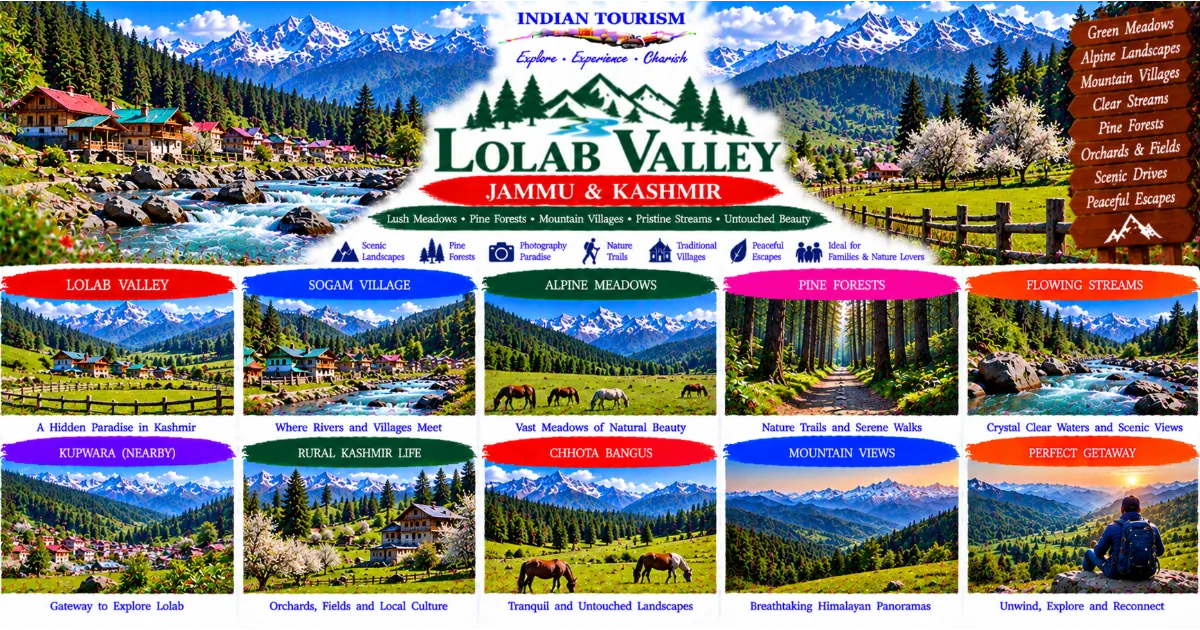
Kashmir is known throughout the world for its beautiful lakes, snow-covered mountains, green meadows and traditional villages. Destinations such as Srinagar, Gulmarg, Pahalgam and Sonamarg attract visitors with their dramatic landscapes and familiar tourist experiences. Yet beyond these well-known places lies another side of Kashmir, where nature unfolds at a gentler pace and the experience of travelling is closely connected with local life. Lolab Valley, situated in the Kupwara district of Jammu and Kashmir, is one such destination. Surrounded by forested hills, fertile fields, flowing streams and peaceful settlements, this valley offers an opportunity to experience the region away from some of its busiest tourist centres.
Lolab Valley is often described as a hidden paradise because its landscape combines several features that travellers associate with Kashmir while retaining a relatively understated profile. Its beauty does not depend on one famous lake, a single viewpoint or a highly developed tourist attraction. Instead, the valley reveals itself through a collection of experiences. Visitors can watch sunlight move across mountain slopes, walk along village roads bordered by orchards, admire the changing colours of agricultural fields, explore forested surroundings and enjoy views of distant peaks. The villages and countryside form an important part of the scenery, making Lolab a destination where the journey itself becomes a memorable experience.
For travellers who appreciate slow travel, photography, rural landscapes and peaceful natural surroundings, Lolab Valley deserves a place on the Kashmir itinerary. It can appeal to couples looking for a quiet holiday, families interested in nature, photographers searching for authentic landscapes and experienced travellers who want to explore destinations beyond the conventional tourist circuit. However, a visit requires thoughtful planning. The region's weather, road conditions, accommodation availability and local circumstances can affect travel, so visitors should make arrangements carefully and confirm current conditions before setting out.
Where Is Lolab Valley Located?
Lolab Valley lies in the Kupwara district of Jammu and Kashmir in northern India. It forms part of the Kashmir Valley's wider mountainous landscape and is associated with settlements and countryside around the Kupwara region. The valley is characterised by cultivated land, streams, orchards, meadows and forested mountain slopes. Its setting gives visitors a mixture of agricultural scenery and Himalayan foothill landscapes rather than the concentrated resort atmosphere found in some other parts of Kashmir.
The valley's location makes it an interesting addition to a broader journey through northern Kashmir. Travellers commonly use Srinagar as the main arrival point for trips around the Kashmir Valley, then continue by road towards their chosen destinations. A journey to Lolab requires advance planning because the distance and actual travel time depend on the starting point, selected route, road conditions and local circumstances. Travellers should not rely exclusively on estimates from old itineraries, especially when visiting less frequently travelled areas.
The Kupwara region has a distinctive relationship with its surrounding mountains and rural settlements. Its landscapes are shaped by seasonal agriculture, watercourses and forests, and many communities maintain everyday routines closely connected with the land. Visitors who arrive with patience and respect can appreciate the area beyond its scenic value. Lolab is not simply a place to stop for photographs. It is a living region where people work, travel, study and maintain their homes and traditions.
What Makes Lolab Valley Special?
A Landscape of Fields, Forests and Mountains
One of Lolab Valley's most appealing qualities is the way different landscapes appear together. Agricultural fields occupy sections of the valley floor, while trees and forested slopes rise beyond the settlements. Small streams and water channels contribute to the scenery, and distant mountain ridges provide a dramatic background. The result is a landscape that changes noticeably as visitors move between villages and open countryside.
Unlike a destination whose appeal depends entirely on a single attraction, Lolab offers variety throughout the journey. A quiet road may pass through cultivated land before opening towards a wider mountain view. A cluster of houses may appear beside orchards, while a bend in the road may reveal a stream or a forested hillside. These ordinary transitions are part of the valley's character, and travellers who allow time for unhurried exploration are more likely to appreciate them.
The scenery also changes according to the weather. On clear days, mountain outlines appear sharply against the sky. After rainfall, the landscape can seem especially fresh, although wet roads and slippery paths may make movement more difficult. Low clouds and mist create a softer atmosphere, sometimes partially hiding the hills. Rather than expecting perfect sunshine throughout a visit, travellers should be prepared for changing mountain conditions.
Rural Kashmir and Everyday Life
Lolab Valley offers an opportunity to observe rural Kashmir in a setting where farming, orchards and village life contribute significantly to the visual experience. Houses, fields, local roads and small markets form part of the landscape. Depending on the season, visitors may see agricultural activity, fruit trees, people travelling between settlements and the daily routines that sustain the local community.
This rural character is an important reason to visit respectfully. Travellers should remember that villages are people's homes rather than open-air attractions. Photography should be undertaken thoughtfully, especially when individuals, children, private properties or religious spaces are involved. Asking permission before taking close-up photographs is a simple way to show courtesy. Visitors should also avoid entering fields or orchards without permission and should never treat private land as an unrestricted sightseeing area.
For those interested in cultural travel, these everyday details can be as meaningful as mountain views. A conversation with a local host, a meal prepared with regional ingredients or a visit to a small market may provide a stronger sense of place than a hurried tour of multiple viewpoints. The best experiences often come from allowing the destination to set the pace.
Best Time to Visit Lolab Valley
Spring: March to May
Spring gradually brings new life to the valley after winter. Trees begin to develop fresh foliage, agricultural land changes colour and the countryside takes on a brighter appearance. Temperatures become more comfortable as the season progresses, although mornings and evenings can remain cold. Weather conditions can vary considerably, so visitors should carry layers and check the forecast before travelling.
Spring is suitable for travellers who enjoy fresh landscapes and relatively mild daytime weather. It can be an appealing season for photography because the contrast between emerging greenery and the surrounding mountains gives the countryside a lively appearance. However, the exact timing of seasonal changes varies from year to year. Visitors should avoid assuming that every orchard or hillside will be in bloom on a particular date.
Summer: June to August
Summer is often an attractive period for exploring Kashmir's green landscapes. Lolab Valley's fields, trees and surrounding slopes can look particularly vibrant, and longer daylight hours provide more time for sightseeing. The season can suit families, photographers and travellers who prefer spending time outdoors without the severe cold associated with winter.
Summer is also a period when travel demand across Kashmir may increase. Visitors should arrange accommodation and transport in advance, particularly if their itinerary includes several destinations. Rain can still occur, and mountain weather may change quickly. Outdoor activities should be adjusted to local conditions rather than following a rigid schedule.
Autumn: September to November
Autumn offers a different visual character. Agricultural landscapes change as the growing season progresses, and some trees take on warmer colours. The air can feel crisp, while clear days may provide excellent mountain visibility. For photographers, this period can offer opportunities to capture contrasts between cultivated land, trees and distant hills.
As autumn advances, temperatures fall, especially at night. Visitors planning to stay in the area should confirm whether their accommodation provides adequate heating and hot water. Travellers should also check local forecasts and road conditions as the season moves towards winter.
Winter: December to February
Winter can bring cold conditions and snow to parts of the surrounding region, depending on elevation and weather patterns. The landscape may look dramatically different, but winter travel requires more preparation. Road access, accommodation services and outdoor movement can be affected by snow, ice or poor weather. Conditions in the valley should not be assumed to match those of a nearby resort or mountain station.
Winter is best suited to travellers who are comfortable with cold-weather travel and have confirmed local arrangements. Warm clothing, suitable footwear, flexible plans and reliable local guidance are essential. Anyone unfamiliar with the region should avoid making assumptions about road accessibility based on photographs or reports from previous years.
For many visitors, late spring through early autumn is the most practical period to plan a first trip, but the best dates depend on the type of experience desired. Green countryside, autumn colours and winter scenery each have their own appeal. Current weather and local travel advice should always take priority over a general seasonal recommendation.
Places and Experiences to Explore in and Around Lolab Valley
The Countryside Around Sogam
Sogam is associated with the wider Lolab Valley area and can serve as a useful reference point when planning local exploration. The surrounding countryside offers a combination of settlements, cultivated fields and mountain views. Travellers can use the area as a starting point for learning about local routes and identifying places that are suitable to visit under current conditions.
Rather than treating Sogam as a single attraction that can be completed in a few minutes, visitors should consider the surrounding landscape as part of the experience. A drive through the countryside, a short walk where permitted and a stop to appreciate the views can provide a more meaningful visit. Local advice is valuable when deciding which roads are appropriate for visitors and which areas require additional caution.
Village Roads and Agricultural Landscapes
Some of Lolab Valley's most memorable sights may appear along ordinary village roads. These routes reveal how settlements connect with fields, orchards and the surrounding countryside. The scenery changes gradually, creating opportunities for photography and quiet observation.
Travellers should select stopping points carefully. Narrow roads may be used by residents, agricultural vehicles and other traffic, so vehicles should never be parked in a way that blocks access. Walking should be limited to suitable public roads or paths, and visitors should avoid entering farmland without permission. These precautions help preserve the peaceful character that makes rural exploration rewarding.
Streams and Watercourses
Water is an important part of the valley's landscape. Streams and channels may appear beside fields or through sections of the countryside, adding movement and sound to the scenery. Their appearance changes with rainfall, snowmelt and the season. A small watercourse that looks gentle in dry weather can become stronger after heavy rain.
Visitors should enjoy streams from safe locations and avoid climbing onto unstable banks or crossing unfamiliar water. Children should be supervised closely around water, and travellers should not assume that shallow-looking sections are safe. Photography is best done from firm ground, particularly after rain or during periods of changing water levels.
Forested Surroundings
The wooded slopes around Lolab contribute to the valley's atmosphere and provide a sense of enclosure between the open agricultural areas and the mountains. Forests are important ecological environments, supporting wildlife, regulating water systems and protecting the soil. Their value extends well beyond their appearance in photographs.
Visitors should not wander into unfamiliar forest areas without suitable guidance. Mobile coverage may be inconsistent in some locations, paths may be unclear and weather conditions can change quickly. Travellers should remain on appropriate routes, avoid disturbing wildlife and carry back all waste. If a forest walk is planned, local advice about access and safety should be obtained first.
Local Markets and Community Spaces
Small markets and community spaces can provide a glimpse of daily life in the Kupwara region. Depending on the location and time of day, visitors may find local produce, household goods, food items and other necessities. These places are useful for understanding how communities function and for purchasing practical supplies during a journey.
Markets should be approached as working spaces rather than staged tourist attractions. Visitors can support local businesses by purchasing goods and using local services where appropriate. Photography should be discreet, and conversations should remain respectful. Travellers who are interested in local food can ask about regional dishes, ingredients and customary preparation, while remaining mindful of dietary requirements.
Things to Do in Lolab Valley
Enjoy Slow Scenic Drives
A scenic drive is one of the easiest ways to appreciate the valley's varied landscape. The journey allows travellers to observe how fields, trees, houses and mountain slopes fit together. Instead of attempting to cover a long list of locations in a single day, it is better to plan a manageable route with time for safe stops.
Road conditions and local instructions should determine where visitors travel. Drivers should avoid unfamiliar shortcuts, particularly on narrow or poorly surfaced roads. During rain, fog or snowfall, extra caution may be necessary. A local driver who knows the area can be especially helpful for visitors who are unfamiliar with northern Kashmir.
Photograph the Changing Landscape
Lolab Valley offers photography opportunities across a range of subjects. Wide-angle photographs can capture the relationship between the valley floor and the surrounding hills, while closer compositions can focus on trees, field boundaries, streams and village architecture. Different times of day create different effects, with early morning and late afternoon often producing softer light.
Good photography requires patience rather than constant movement. Travellers should take time to observe how the landscape changes with clouds and sunlight. They should also avoid stepping into fields or blocking roads to obtain a particular composition. Drone use should not be assumed to be permitted. Visitors must confirm applicable regulations and local restrictions before bringing or operating a drone.
Experience Village Life Respectfully
A visit to a rural destination becomes more meaningful when travellers pay attention to the people who live there. Observing agricultural activity from public areas, purchasing local products and learning about regional food can provide insights into the community. If an opportunity arises to speak with residents, visitors should approach politely and accept that some people may prefer not to engage.
Staying in locally operated accommodation, where available and appropriate, can also help travellers understand the region's everyday rhythms. Guests should follow household rules, respect privacy and ask about local customs rather than assuming that every household follows the same practices.
Enjoy a Quiet Picnic Where Permitted
The valley's open scenery may inspire visitors to enjoy a simple outdoor meal. However, a picnic should take place only in a suitable public area or a location where permission has been granted. Agricultural land, private orchards and restricted spaces should not be used without consent.
Travellers should bring reusable containers where practical and carry all rubbish away. Food scraps should not be left behind because they can attract animals and disturb local environments. Open fires should be avoided unless specifically permitted in an appropriate designated area. A quiet picnic is most enjoyable when it leaves the surroundings exactly as they were found.
Explore Seasonal Landscapes
One of the best ways to experience Lolab is to focus on what the season offers. Spring brings emerging greenery, summer highlights the agricultural landscape, autumn creates a more muted and golden atmosphere, and winter may transform the surroundings with cold weather or snow. Returning in a different season can make the same route feel entirely new.
Visitors should remember that seasonal scenery is not guaranteed on fixed dates. Agricultural schedules, rainfall, temperatures and other natural factors influence what the valley looks like. Travellers should plan around realistic expectations and enjoy the landscape as it appears during their visit.
Local Food to Try
Food is an important part of travelling through Kashmir, and a visit to the Kupwara region can be an opportunity to explore the broader culinary traditions of the area. Kashmiri cooking includes rice-based meals, aromatic preparations, breads, vegetables and dishes prepared with locally familiar ingredients. The food available in Lolab will depend on the particular settlement, household or establishment, so travellers should ask locally about what is fresh and available.
Kahwa, a traditional Kashmiri beverage often prepared with green tea and aromatic ingredients, is associated with hospitality across the region. It may be available in local settings, although preparation varies. Visitors who enjoy learning about food traditions can ask about the ingredients and customary occasions on which particular dishes are served.
Kashmiri cuisine includes both vegetarian and meat-based dishes. Travellers with dietary restrictions should communicate their needs clearly rather than assuming that a dish has been prepared in a particular way. People who require specific food options may wish to carry suitable snacks, especially when travelling between settlements where restaurant choices may be limited.
Food hygiene should remain a priority. Choose places that appear clean, drink water from a reliable source and take sensible precautions when trying unfamiliar dishes. Visitors should not expect the range of restaurants found in major tourist centres, so a flexible approach is useful.
Where to Stay in Lolab Valley
Accommodation options in and around Lolab Valley may be more limited than those in major tourist destinations such as Srinagar or Gulmarg. Travellers should verify current availability before committing to an itinerary. Depending on local conditions, suitable arrangements may involve staying in the wider Kupwara area or choosing a different established base and visiting the valley as part of a planned excursion.
When selecting accommodation, visitors should confirm the exact location, road access, heating, hot water, meals, electricity arrangements and transport options. These details are especially important during colder months, when comfort and accessibility can vary. Photographs alone are not enough to establish whether a property is suitable for a particular trip.
Travellers who prefer a quieter stay should ask whether the accommodation is close to the intended sightseeing area and whether local transport can be arranged. Those travelling with young children, older family members or people with mobility requirements should verify walking distances, stairs and other practical considerations before booking.
A homestay can be a rewarding option where legitimate, suitable and available. It may offer a closer understanding of local hospitality and everyday routines. Guests should respect household expectations, follow agreed meal arrangements and clarify costs in advance. The availability of any particular accommodation should be checked directly rather than assumed from older travel accounts.
How to Reach Lolab Valley
By Air
Srinagar is the main airport commonly used by travellers visiting the Kashmir Valley. From the airport, visitors can arrange road transport towards the Kupwara region and Lolab Valley. Flight schedules, weather disruptions and onward transport availability can affect the journey, so travellers should leave enough flexibility between arrival and any planned local activities.
Before travelling, confirm that the selected driver or transport provider knows the destination and the intended route. If arriving late in the day, consider whether it is more practical to spend the first night in a larger town before continuing.
By Road
Road travel is the principal way to explore the valley and its surrounding region. The exact route depends on the starting point and local road conditions. Visitors travelling from Srinagar should check current directions, journey estimates and any advisories before departure.
Do not rely entirely on navigation applications in less familiar areas. Local instructions may be more useful where roads are narrow, conditions have changed or a suggested route is unsuitable. Travellers should carry sufficient water, keep essential supplies accessible and ensure that their vehicle is in suitable condition for the journey.
By Rail
There is no railway station in Lolab Valley itself. Travellers using rail services must plan an onward road journey from a suitable railway connection. The most practical combination of rail and road transport will depend on the route, timetable and final destination.
Rail travellers should check the current service network and transfer arrangements before booking. They should also consider the time required for the road portion of the journey rather than assuming that reaching a railway station means the destination is close by.
Suggested Lolab Valley Itinerary
One-Day Visit
A one-day visit is suitable for travellers who are already based within a practical driving distance and want an introduction to the valley. Begin with an early departure so that the journey does not consume the entire day. Spend the morning enjoying the countryside around accessible settlements, stopping only at suitable places where parking and pedestrian access are safe.
Use the middle of the day for a relaxed meal and a closer look at local life. In the afternoon, select one or two additional countryside stops rather than trying to cover every possible location. Leave enough time for the return journey and adjust the schedule if weather or road conditions change. A one-day visit should prioritise the quality of the experience rather than the number of stops.
Two-Day Visit
A two-day plan allows visitors to explore more slowly. On the first day, focus on the journey into the region, the main accessible countryside and a few scenic stops. Keep the schedule flexible and use local advice to determine which areas are appropriate to visit.
On the second day, concentrate on a different aspect of the valley. This could include photography, a short walk on a suitable route, a visit to a local market or time spent observing the rural landscape. If accommodation is available within a convenient location, staying overnight may provide a calmer experience than returning immediately to a distant base. Confirm all lodging and transport arrangements in advance.
Three-Day Northern Kashmir Trip
Travellers with three days can consider combining Lolab Valley with other suitable destinations in the broader northern Kashmir region, provided current conditions and transport arrangements make the plan practical. One day can be dedicated to Lolab, another to exploring accessible parts of the Kupwara area, and the final day can be reserved for the return journey or another confirmed destination.
The itinerary should not assume that every nearby area is automatically accessible or suitable for tourism. Some locations may have restrictions, difficult roads or other considerations that require local guidance. Travellers should confirm the current status of each intended stop and avoid rushing between destinations simply to complete a checklist.
Travel Budget and Planning
The cost of visiting Lolab Valley depends on the starting point, group size, transport, accommodation, food choices and length of stay. A traveller using a private vehicle for a day trip will have a different budget from a family staying overnight or a couple combining the valley with a longer Kashmir itinerary.
Transport may represent a substantial portion of the cost if visitors hire a private vehicle for the entire journey. Sharing transport with companions can help distribute expenses, while a locally arranged driver may offer greater familiarity with the roads. Prices should be confirmed directly before travel, and visitors should clarify whether the quoted amount includes waiting time, fuel, parking or additional stops.
Accommodation costs vary by property type, facilities and season. Since availability can be limited, visitors should compare the total arrangement rather than choosing only by the lowest quoted price. Food expenses will depend on whether meals are included and what options are available locally. Travellers should carry some cash for places that do not accept digital payments, while keeping money secure.
A practical budget should also include contingency funds. Weather changes, transport adjustments or an additional overnight stay can increase costs. A flexible budget makes it easier to respond to unexpected circumstances without compromising safety or comfort.
Essential Travel Tips for Lolab Valley
Check Current Local Conditions
Before departure, confirm the latest travel advisories, road accessibility, weather forecast and any local restrictions. Conditions can change, and information from a previous season may no longer be reliable. If a route or location is uncertain, ask a reputable local contact or transport provider before proceeding.
Dress in Layers
Mountain weather can change throughout the day. Even during warmer months, mornings and evenings may feel cool. Carry comfortable clothing that can be layered, a weather-resistant outer garment and footwear suitable for uneven or wet surfaces. During winter, proper cold-weather clothing is essential.
Carry Essential Supplies
Keep drinking water, snacks, a charged phone, power bank, basic medicines and identification available. Mobile connectivity can vary by location, so travellers should not rely on continuous access to online maps or communication. Share the planned route and expected return time with someone who is not travelling with the group.
Respect Local Customs
Dress and behave respectfully in villages and religious or community spaces. Ask permission before photographing people or private property. Follow local guidance, avoid loud behaviour and do not enter restricted or sensitive areas. A considerate approach helps maintain good relationships between visitors and residents.
Protect the Environment
Take all rubbish away, avoid damaging plants, do not disturb wildlife and stay on appropriate paths. Streams, forests and fields are part of a wider ecosystem that can be harmed by careless tourism. Visitors should avoid leaving plastic, food packaging or other waste behind.
Plan for Limited Facilities
Do not assume that every part of the valley will have fuel stations, restaurants, public toilets, shops or medical facilities nearby. Arrange transport and essential supplies in advance. Travellers with particular health or mobility needs should plan carefully and confirm that the itinerary and accommodation are suitable.
Be Flexible
The strongest travel plans include room for change. Rain, fog, road conditions and local requirements may affect sightseeing. If a particular route is unsuitable, choose a safer alternative rather than attempting to force the original schedule. The valley's appeal lies in its scenery and atmosphere, so there is no need to hurry.
Is Lolab Valley Suitable for Families and Couples?
Lolab Valley can be a rewarding destination for families who enjoy nature and rural landscapes. Children may appreciate the open countryside, streams and mountain scenery, while adults can enjoy a slower pace of travel. Families should choose accessible locations, supervise children closely near roads and water, and avoid remote walks without suitable guidance. Accommodation and transport arrangements should be confirmed before arrival.
For couples, the valley's quieter atmosphere can provide an appealing setting for a peaceful break. Scenic drives, photography, local food and time spent enjoying the countryside can form the basis of a memorable trip. Couples should plan around available facilities and avoid assuming that every location will offer established tourist infrastructure or organised activities.
The destination is particularly suitable for visitors who value quiet exploration more than nightlife, shopping complexes or a long list of commercial attractions. Travellers who prefer highly structured sightseeing and extensive facilities may find it more practical to use a larger tourist centre as their main base and visit Lolab when conditions permit.
Responsible Tourism and the Future of Lolab Valley
Destinations with relatively understated tourism profiles have an opportunity to develop visitor experiences without losing the characteristics that make them special. In Lolab Valley, the countryside, forests, watercourses and village environments form a valuable natural and cultural landscape. Tourism can contribute to local livelihoods when visitors use local services responsibly and respect community priorities.
However, poorly managed tourism can create pressure through waste, traffic, disturbance of private land and excessive use of sensitive areas. Travellers can help prevent these problems by choosing responsible transport providers, supporting legitimate local businesses, avoiding litter and following guidance about access. Spending locally, where appropriate, can help ensure that tourism benefits extend beyond the journey itself.
Visitors should also recognise that a destination does not need to be crowded or heavily commercialised to be valuable. The absence of large-scale attractions may be part of Lolab's appeal. Rather than expecting every location to be developed for mass tourism, travellers can appreciate the landscape as it exists and support careful, community-conscious travel.
Conclusion: Why Lolab Valley Deserves a Place on Your Kashmir Itinerary
Lolab Valley offers a distinctive way to experience Kashmir through its rural landscapes, mountain views, forests, streams and everyday village life. Its appeal is not limited to a single landmark. Instead, it emerges from the combination of cultivated countryside, natural scenery and a quieter rhythm of travel. Visitors who appreciate photography, nature, local culture and unhurried exploration may find the valley especially rewarding.
A successful trip depends on realistic planning. Travellers should confirm transport, accommodation, road conditions and local guidance before departure. They should also approach the region with respect for the people who live there and the environment that supports their communities. By keeping plans flexible and avoiding unnecessary pressure on sensitive places, visitors can enjoy the valley while helping preserve its character.
For anyone planning a deeper exploration of Jammu and Kashmir, Lolab Valley offers an opportunity to look beyond familiar tourist routes and appreciate another part of the region's natural beauty. It is a destination best experienced patiently, with open eyes, thoughtful preparation and a willingness to enjoy the journey as much as the destination.
#LolabValley #KashmirTourism #IndianTourism #ExploreKashmir #Kupwara #KashmirValley #HiddenParadise #NatureTravel #MountainEscapes #RuralTourism #ResponsibleTravel #TravelIndia
