
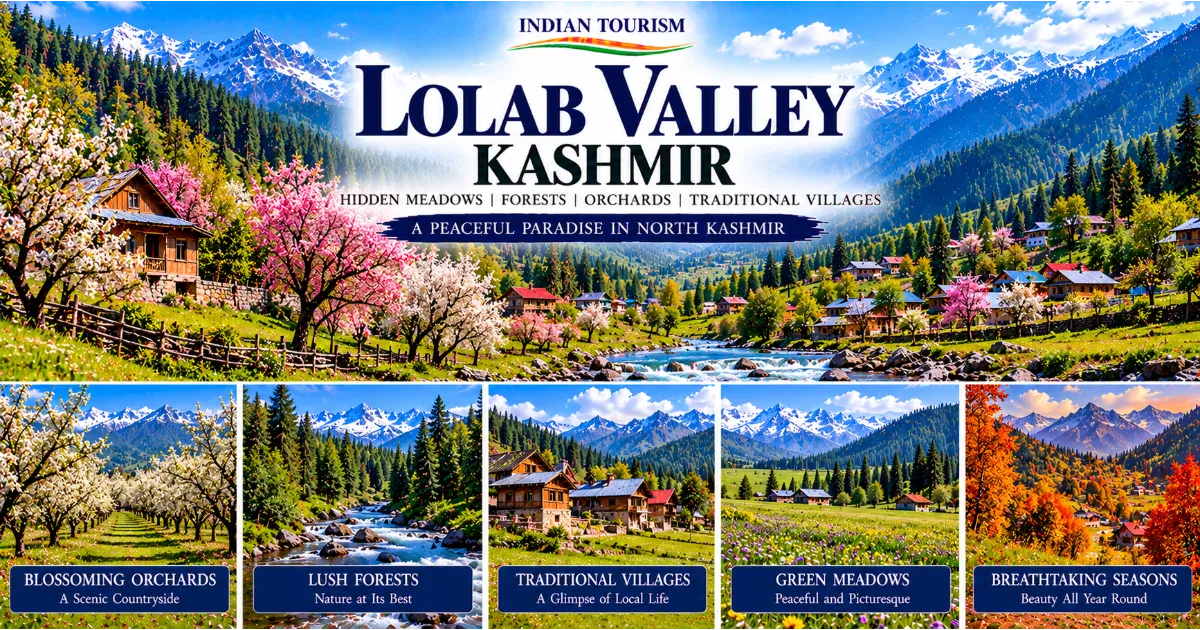
Discovering the Quiet Beauty of Lolab Valley
Kashmir is famous for its lakes, snow-covered mountains, colourful gardens and popular hill stations. Yet some of the region's most rewarding travel experiences can be found away from the busiest tourist destinations. Lolab Valley, located in the Kupwara district of northern Kashmir, is one such place. Known for its green countryside, forested hills, orchards, streams and traditional villages, it offers a different perspective on the natural beauty of the Kashmir Valley.
Lolab Valley is often associated with peaceful surroundings and a landscape shaped by both nature and rural life. Instead of large commercial attractions dominating the scenery, visitors encounter agricultural fields, fruit trees, wooded slopes and settlements connected by local roads. The result is a destination where the journey can be as meaningful as the places visited.
For travellers accustomed to the busy waterfronts of Srinagar or the established tourist centres of Gulmarg and Pahalgam, Lolab can offer a more relaxed experience. It is a place to observe seasonal changes, appreciate the relationship between villages and their surroundings, and discover how local communities live within a mountain environment.
The valley is particularly attractive to nature lovers, photographers, families seeking quieter excursions and travellers interested in exploring lesser-known destinations. However, its appeal should not be confused with complete isolation or an absence of everyday activity. Lolab is a living landscape where agriculture, forestry, local transport and community life remain important.
This guide explores Lolab Valley's geography, scenery, seasonal attractions, village landscapes, cultural experiences, photography opportunities and practical travel considerations. It also explains how visitors can plan a comfortable journey while respecting the environment and the people who call this region home.
1. Where Is Lolab Valley Located?
Lolab Valley lies in the Kupwara district of northern Kashmir, within the broader Himalayan landscape of Jammu and Kashmir. Its geography is characterised by cultivated areas, wooded hills, mountain slopes and settlements spread across the valley.
The district headquarters, Kupwara town, serves as an important reference point for visitors travelling into the surrounding region. Lolab's villages and scenic areas are connected through local roads, although travel times depend on the precise destination, traffic and road conditions.
The valley's landscape reflects the influence of its mountain setting. Surrounding elevations shape the movement of water, the distribution of vegetation and the location of agricultural land. Lower areas provide space for settlements and cultivation, while higher slopes support forests and other mountain habitats.
Lolab is often discussed as a quieter alternative to the most familiar Kashmir destinations. Its appeal comes from the combination of natural scenery and traditional settlement patterns rather than a single famous monument or attraction.
Travellers should plan their visit according to the specific places they wish to explore. The valley includes multiple villages and stretches of countryside, so a destination described broadly as Lolab may involve several different local routes.
Before travelling, visitors should check current road conditions, local guidance and any access restrictions that may apply. Conditions in northern Kashmir can change, and information from an older travel account may not reflect the situation on the day of a visit.
Understanding the valley's location also helps travellers appreciate its regional context. Lolab is not simply an isolated scenic spot. It forms part of a wider cultural and geographical landscape in which villages, forests, agricultural areas and nearby towns are connected through everyday travel and local livelihoods.
2. The Natural Landscape of Lolab Valley
The landscape is one of the main reasons travellers are drawn to Lolab Valley. Its character emerges from a combination of green fields, fruit orchards, forested slopes, mountain views and rural settlements.
Unlike destinations defined primarily by a lake or a single mountain viewpoint, Lolab offers a broader countryside experience. The scenery changes as travellers move through the valley, with cultivated land giving way to clusters of trees, wooded hills and more open views towards the surrounding elevations.
The appearance of the landscape depends strongly on the season. Spring brings renewed growth, and orchards can add delicate blossoms to the countryside. During summer, fields and slopes often appear greener, while the warmer months are generally suitable for exploring rural roads and enjoying outdoor scenery.
Autumn brings a different atmosphere. Fruit harvesting and changes in vegetation can give the valley a distinctive seasonal character. The combination of orchards, fields and wooded hills makes this an interesting time for visitors who want to understand how the landscape changes with the agricultural calendar.
Winter can bring cold weather and snowfall in the surrounding mountains. The valley may look very different from its summer appearance, but travel conditions can become more difficult. Visitors should not assume that every road or rural attraction remains easily accessible during winter.
Water also contributes to the valley's appearance. Streams and drainage channels connect the slopes with lower areas, supporting the surrounding environment and agricultural activity. Their condition and flow vary according to rainfall, snowmelt and seasonal weather.
For visitors, the best way to appreciate Lolab's landscape is to avoid rushing. Allow time for short stops at permitted viewpoints, observe the changing scenery and notice how villages fit into the natural environment.
3. Forests and Mountain Slopes
The wooded hills around Lolab Valley provide an important part of its natural identity. Forests create a visual contrast with cultivated fields and open countryside, while also supporting ecological processes that are essential to the wider landscape.
Trees and other vegetation help protect soil, influence local water movement and provide habitats for wildlife. Forest ecosystems also contribute to the character of the valley by creating shaded areas, defining the edges of settlements and covering the surrounding slopes.
For travellers, forested landscapes offer opportunities for photography and nature observation. The changing light between trees, the patterns formed by branches and the contrast between woodland and open fields can make the area particularly attractive to people who enjoy landscape photography.
However, visitors should distinguish between enjoying forest scenery and entering forest areas without suitable guidance. Not every track is a designated walking route, and some areas may be restricted or unsuitable for casual visitors.
Those interested in walking should ask local guides about established routes, expected duration and current conditions. Suitable footwear is important because trails and unpaved paths can become slippery after rain. Weather can also change quickly in mountain environments.
Visitors should avoid lighting fires in woodland, leaving food waste behind or disturbing animals. Even small amounts of rubbish can affect the appearance and ecological health of a natural area.
The forests of Lolab are valuable not only because they attract tourists but because they support the wider environment and local livelihoods. Responsible exploration helps preserve these landscapes for future generations.
4. Traditional Villages and Rural Life
One of the most distinctive aspects of Lolab Valley is the presence of traditional villages within a scenic agricultural landscape. These settlements are an important part of the region's identity and provide a perspective that cannot be gained from viewpoints alone.
Village life is connected to the seasons. Farming activities, orchard maintenance, household work and local trade all follow patterns influenced by weather and agricultural needs. During certain periods, visitors may observe people working in fields or tending fruit trees, while other times of the year bring different activities.
The built environment also contributes to the valley's character. Homes, courtyards, agricultural structures and small local roads reflect practical responses to climate, available materials and everyday needs. The appearance of individual buildings varies, and visitors should avoid assuming that every village follows an identical architectural pattern.
Exploring villages requires respect for residents' privacy. A road passing through a settlement is not an invitation to enter private property or photograph people without permission. Visitors should ask before taking close-up photographs and should avoid blocking narrow roads or entrances.
Travellers can support local communities by using legitimate local services where available. Accommodation, transport, guides and locally made products may provide economic benefits, although the range of services differs between villages.
A meaningful visit does not require turning everyday life into a tourist performance. Simply observing the landscape, learning about local history from a willing guide and treating residents courteously can make the experience more rewarding.
For families and cultural travellers, Lolab's villages provide an opportunity to understand the relationship between the region's natural environment and its social life. They reveal that the valley is not merely a beautiful setting but a place where communities maintain their homes, livelihoods and traditions.
5. Orchards and the Agricultural Landscape
Agriculture is an important feature of Kashmir's rural landscape, and orchards contribute to the appearance and economic life of areas around Lolab Valley. Fruit trees, cultivated fields and seasonal agricultural work create a changing environment that visitors can appreciate throughout the year.
Apple cultivation is strongly associated with Kashmir's wider agricultural economy. Orchards require regular care, including pruning, maintenance, protection from pests and management of soil and water. The work changes according to the growing season, with different tasks taking place from the period of flowering through fruit development and harvesting.
The visual appeal of orchards varies with the season. Spring may bring blossoms, summer produces dense foliage and developing fruit, while autumn is associated with harvesting activity in many apple-growing areas. Exact timing depends on the variety of fruit, elevation and local conditions.
Visitors should remember that orchards are working agricultural spaces. Trees and fruit represent the labour and income of farmers, so entering an orchard without permission or picking produce without agreement is inappropriate.
When permitted, purchasing fruit directly from local sellers can provide a useful way to support the regional economy. Travellers should ask about the origin and availability of products rather than assuming that every roadside seller represents a particular farm.
Agricultural landscapes also demonstrate how communities adapt to the region's climate and terrain. The distribution of orchards, fields and homes reflects practical choices about land use, water access and seasonal conditions.
For photographers, orchards offer opportunities to capture details as well as wide views. Blossoms, leaves, fruit and patterns between rows of trees can communicate the agricultural character of Lolab more effectively than scenery alone.
Understanding agriculture adds depth to a visit. It allows travellers to appreciate the work behind the landscape and recognise the importance of protecting productive land from waste, careless vehicle movement and unmanaged tourism.
6. The Changing Beauty of Lolab Valley Through the Seasons
Lolab Valley offers different experiences throughout the year. Rather than identifying one universally perfect season, visitors should consider the type of scenery they want to see and the travel conditions they are comfortable managing.
Spring: Fresh Growth and Blossoming Orchards
Spring brings renewed growth to the countryside. Trees begin to develop fresh leaves, flowers appear in gardens and orchards, and the surrounding landscape gradually changes after winter.
This season can be particularly appealing to photographers who enjoy blossoms and softer colours. However, mountain weather can remain unpredictable, and visitors should carry suitable clothing even when daytime temperatures feel comfortable.
Spring is also a period when agricultural activity resumes or intensifies in many areas. Travellers may see people preparing fields and tending orchards, depending on the timing of their visit.
Summer: Green Countryside and Outdoor Exploration
Summer is generally suitable for enjoying the valley's greenery and exploring rural roads. The surrounding hills and cultivated areas can appear especially vibrant, making this season attractive for sightseeing and photography.
Visitors should still plan for changes in weather. Rain can affect road surfaces and walking paths, while conditions in higher areas may differ from those in the lower valley.
Because summer is popular for travel in Kashmir, accommodation and transport arrangements should be confirmed in advance if visitors plan to stay overnight.
Autumn: Harvest Landscapes and Seasonal Colours
Autumn offers a different perspective on Lolab. Orchards may be associated with harvesting activity, while vegetation changes colour as temperatures decline.
Travellers interested in rural life may find this period particularly rewarding because the agricultural landscape becomes more visibly connected with seasonal work. Visitors should remain considerate around farms and avoid disrupting harvesting activities.
Cooler conditions also make layered clothing useful, especially for early mornings and evenings.
Winter: Cold Weather and Mountain Scenery
Winter can bring a quieter atmosphere and changing views across the surrounding mountains. Snowfall may affect higher areas and roads, although conditions vary from year to year.
Travel during winter requires additional preparation. Visitors should check road access, weather forecasts and local advice before setting out. They should also confirm whether accommodation and transport services are available for their intended dates.
For most travellers seeking easy outdoor exploration, the warmer months are generally more straightforward. Winter may appeal to those who are comfortable with cold weather and flexible travel arrangements.
7. Photography in Lolab Valley
Lolab Valley provides opportunities for a wide range of photography, from broad landscapes to detailed images of orchards, village streets and forest edges.
Landscape photographers can focus on the relationship between the surrounding hills and the cultivated land below. A wide view may communicate the valley's scale, while a closer composition can reveal patterns formed by trees, fields and homes.
Seasonal photography is especially rewarding because the scenery changes considerably through the year. Spring blossoms, summer greenery and autumn harvesting can produce very different images of the same landscape.
Light plays an important role. Early mornings may provide a quiet atmosphere, while later afternoon light can bring warmth to the hills and fields. Travellers should not, however, enter private property or restricted areas simply to obtain a preferred viewpoint.
Village photography requires particular sensitivity. People should be asked for permission before close-up portraits are taken, and photographers should respect requests not to be photographed. Schools, religious spaces and private homes deserve additional care.
Wildlife photography should be conducted from a safe and respectful distance. Visitors should never feed animals, disturb habitats or attempt to approach wildlife for a closer picture.
Photographers should also avoid using drones unless all relevant permissions and regulations have been checked. Restrictions may apply because of security, aviation rules or local management requirements.
A useful approach is to document more than scenery. Photographs of traditional buildings, agricultural activity, seasonal vegetation and local craftsmanship can provide a richer account of Lolab Valley's identity.
8. Walking and Gentle Outdoor Activities
Lolab Valley can appeal to travellers who enjoy walking and spending time outdoors. The countryside provides opportunities for gentle exploration, although suitable routes depend on local access, weather and terrain.
Short walks along permitted rural paths can help visitors experience the landscape at a slower pace. They may notice details that are easily missed from a vehicle, such as the sounds of streams, the arrangement of orchard trees and the changing vegetation between fields and woodland.
Visitors should choose walking routes according to their ability and available time. A path that looks simple from a distance may become steep, uneven or difficult after rainfall. Suitable footwear and weather-appropriate clothing are important.
Those who want to explore forested areas or unfamiliar trails should seek local guidance. Guides can help visitors understand route conditions, avoid restricted areas and estimate how much time a walk may require.
Families travelling with children should prioritise routes that are appropriate for the youngest member of the group. It is sensible to carry drinking water, basic supplies and a charged mobile phone, while recognising that network coverage may vary in some locations.
Visitors should avoid walking alone into unfamiliar remote areas without informing someone of their plans. Weather changes and limited transport options can make an apparently short outing more complicated than expected.
Lolab's appeal does not depend on strenuous adventure. A relaxed walk, a permitted viewpoint and time spent observing the countryside can be enough to create a memorable experience.
9. Local Culture and the Everyday Character of the Valley
The cultural identity of Lolab Valley is connected to the wider traditions of Kashmir, while individual villages maintain their own experiences, memories and community practices.
Language, food, clothing, music, household customs and seasonal activities all contribute to the region's cultural character. Visitors can learn about these subjects through respectful conversations with residents, local guides and legitimate community-based tourism services.
Food is often an accessible introduction to local culture. Traditional meals reflect regional ingredients, household preferences and established cooking practices. Visitors staying in local accommodation may have opportunities to experience home-style dishes, depending on the services offered.
Craftsmanship is another part of Kashmir's wider cultural identity. Although Lolab should not be treated as a single centre for every regional craft, visitors may encounter locally made goods or find sellers connected to broader Kashmiri craft traditions. Purchases should be made from reputable sellers, and travellers should ask about products rather than assuming that all items are locally produced.
Religious and community customs deserve respect. Visitors should follow instructions when entering religious spaces, dress appropriately where required and avoid disrupting gatherings or ceremonies.
Cultural tourism is most valuable when it benefits residents and allows communities to represent their own traditions. Visitors should not expect people to perform cultural activities on demand or treat private routines as entertainment.
Learning a few polite local expressions, listening carefully and asking thoughtful questions can help make interactions more positive.
Lolab Valley offers an opportunity to appreciate the human dimension of Kashmir's landscape. Its identity comes not only from hills and orchards but also from the communities whose lives give the valley continuity and character.
10. Food Experiences During a Visit
Food can be an important part of exploring Lolab Valley. Visitors may encounter traditional Kashmiri meals through local eateries, accommodation providers and nearby towns, depending on the services available during their trip.
Kashmiri cuisine includes a range of rice dishes, breads, vegetables, meat preparations and beverages. The food served in a particular household or restaurant may differ according to family traditions, availability of ingredients and the occasion.
Travellers interested in regional cuisine should ask local hosts or trusted guides about appropriate places to eat. In smaller destinations, choices may be more limited than in Srinagar, so it is useful to confirm meal arrangements before travelling.
Wazwan, the elaborate traditional Kashmiri feast, is an important part of the region's culinary culture. However, it should not be assumed that every village or restaurant offers a full wazwan experience. Visitors should ask about the menu and arrangements in advance.
Kahwa, a traditional Kashmiri beverage, is also associated with the wider region. It may be available in some establishments, although the exact preparation can vary.
Food preferences and dietary requirements should be communicated clearly. Travellers with allergies or specific dietary needs should confirm ingredients rather than relying on assumptions.
Visitors can support local businesses by paying fairly and treating food workers courteously. They should also avoid wasting food and follow basic hygiene practices.
A food experience in Lolab should be approached with curiosity rather than expectations of a standardised tourist menu. The opportunity to discover how regional dishes are prepared and served can add another dimension to the journey.
11. How to Reach Lolab Valley
Planning the journey is an important part of visiting Lolab Valley. Travellers generally use Srinagar as a major arrival point for the wider Kashmir region, then arrange road transport towards Kupwara and the relevant parts of Lolab.
The precise route and journey time depend on the starting point, traffic, road conditions and the village or location being visited. Travellers should not rely on a single estimated duration for the entire valley because individual destinations may require additional local travel.
Private taxis and arranged vehicles can provide flexibility for visitors who want to stop for photography or explore multiple locations. Local transport may also be available on certain routes, but schedules and coverage should be confirmed before departure.
Visitors who are unfamiliar with the region may benefit from arranging a driver or guide who knows the local roads. This can help with route planning and provide useful context about the surrounding landscape.
Road conditions should be checked shortly before travel. Rain, snowfall, maintenance work or local restrictions may affect access, and travellers should allow extra time for unexpected delays.
It is sensible to begin road journeys early enough to avoid rushing. Drivers should take breaks when needed and avoid unfamiliar mountain roads when tired or when visibility is poor.
Visitors should also confirm current security guidance and any access requirements that apply to the destination. Conditions can change, and advice from an old travel itinerary may no longer be accurate.
A flexible transport plan is particularly valuable for a rural destination. It allows travellers to adjust their schedule if weather, traffic or local circumstances affect the journey.
12. Where to Stay and How Long to Spend
The best accommodation arrangement depends on whether visitors want a day excursion or a longer stay exploring northern Kashmir.
Some travellers may choose to stay in Srinagar or another established town and make a planned excursion towards Lolab. This approach can provide access to a wider range of accommodation and dining options, although it may involve more time on the road.
Other visitors may prefer to arrange accommodation closer to the valley where legitimate homestays or guesthouses are available. Staying locally can allow more time for walking, photography and learning about rural life, but services may be more limited than in major tourist centres.
Accommodation should be confirmed before departure, particularly during busy travel periods. Visitors should ask about heating, meals, transport, water availability and the distance to their intended destinations.
For a short visit, a carefully planned day may be sufficient to appreciate some of the valley's accessible scenery. However, a longer stay can provide more time to explore different villages and enjoy the changing light and atmosphere.
Travellers should avoid trying to cover every possible location in one day. The distances between destinations, road conditions and opportunities to stop can make a rushed schedule frustrating.
Families should consider the availability of suitable facilities and the comfort of children or older travellers. Visitors with specific accessibility requirements should ask accommodation providers about paths, steps and transport arrangements before booking.
A good itinerary balances exploration with rest. Lolab is particularly suited to travellers who appreciate a slower pace rather than a schedule filled with constant movement.
13. A Suggested Two-Day Lolab Valley Itinerary
A two-day itinerary can provide a useful framework for exploring Lolab Valley, although the final plan should be adjusted according to local advice, road conditions and the places that are accessible during the visit.
Day One: Scenic Drive and Rural Landscapes
Begin the journey from your chosen base after confirming the route and current travel conditions. Allow time for the drive towards the Kupwara area and the accessible parts of Lolab Valley.
During the day, focus on the countryside rather than attempting to visit too many locations. Stop at suitable public viewpoints, observe the agricultural landscape and take short walks where access is permitted.
If conditions allow, spend time near the valley's villages and orchards. Visitors should ask permission before entering private land and should avoid disturbing agricultural activity.
A local guide may help identify suitable places to visit and explain the landscape's relationship with village life. If staying overnight nearby, confirm the accommodation and meal arrangements before the evening.
Day Two: Nature, Photography and Local Experiences
Begin the second day with a relaxed exploration of the surrounding scenery. Depending on the season, the morning may be suitable for photographing orchards, forest edges or mountain views.
Choose a walking route only after checking the conditions. A gentle walk on a permitted path can provide an opportunity to appreciate details that are difficult to notice from a vehicle.
If local services are available, consider speaking with a knowledgeable guide or visiting a legitimate local business to learn about the area's culture and livelihoods.
Allow enough time for the return journey. Do not extend an excursion into an unfamiliar area simply to fit an additional destination into the itinerary.
This two-day plan is a general framework rather than a guarantee of access to particular locations. Visitors should use current local information to determine which places are suitable during their travel dates.
14. Safety and Practical Travel Advice
Lolab Valley is a rural mountain destination, so visitors should prepare for conditions that may differ from those in a major city.
Weather is an important consideration. Rain can make unpaved paths slippery, while cold temperatures can affect comfort even outside winter. Travellers should carry suitable layers and check forecasts before outdoor activities.
Road safety deserves particular attention. Mountain routes may contain bends, narrow sections and changing surfaces. Drivers should follow local instructions, avoid unnecessary risks and allow enough time for the journey.
Visitors should carry identification and any documents required for their travel arrangements. They should also verify whether specific destinations have access restrictions or other requirements.
Mobile connectivity and services may vary across the valley. Travellers should not assume that they will have uninterrupted network access everywhere. Sharing the itinerary with a trusted person and keeping essential contact details available can be useful.
Outdoor activities should remain within the visitor's experience level. Unfamiliar forest routes, remote walks and river crossings should not be attempted without appropriate knowledge and guidance.
Respect local advice regarding weather, road access and security. If a route is closed or a destination is considered unsuitable on a particular day, choose an alternative rather than attempting to bypass restrictions.
Travellers should also keep basic supplies available, including drinking water and any necessary personal medication. Families with children or older travellers may need additional planning.
Good preparation does not reduce the spontaneity of a trip. It allows visitors to enjoy the scenery with greater confidence and fewer avoidable problems.
15. Responsible Tourism and Protecting Lolab Valley
Lolab Valley's appeal depends on the quality of its natural environment and the continued vitality of its communities. Responsible tourism can support local livelihoods while reducing pressure on forests, agricultural land and village infrastructure.
Waste management is one of the simplest ways visitors can help. Plastic bottles, food packaging and disposable items should never be left in meadows, streams or woodland. In areas with limited collection facilities, visitors should carry their waste back to an appropriate disposal point.
Water resources should also be treated carefully. Visitors should avoid contaminating streams and should follow local guidance concerning drinking water and sanitation.
Respect for agricultural land is essential. Orchards and fields provide livelihoods, and careless walking or vehicle movement can damage crops and soil. Travellers should remain on authorised paths and ask before entering private property.
Wildlife should be observed without disturbance. Feeding animals or approaching them too closely can create problems for both people and wildlife.
Tourism can bring economic opportunities to rural communities, particularly when visitors use local accommodation, guides and businesses. However, local residents should retain control over how their homes, customs and daily lives are presented to visitors.
Photographers should be especially mindful of privacy. A beautiful village scene may include people who do not wish to be photographed, and their preferences should be respected.
Visitors can also support conservation by learning about local environmental concerns and following the guidance of responsible tourism operators.
Protecting Lolab Valley is a shared responsibility. The goal is not simply to preserve a view for future tourists but to maintain a healthy landscape where residents can continue their livelihoods and traditions.
16. Who Should Visit Lolab Valley?
Lolab Valley can appeal to several types of travellers, particularly those who enjoy nature and cultural experiences.
Nature lovers may appreciate the combination of forests, open countryside, orchards and mountain views. The destination offers opportunities to observe seasonal changes and explore landscapes beyond the most familiar tourist locations.
Photographers can find subjects ranging from wide scenic views to smaller details of rural life. The changing seasons provide different colours and textures, while the relationship between villages and surrounding hills creates varied compositions.
Families may enjoy a carefully planned visit focused on scenery and short walks. The suitability of specific routes depends on conditions, so activities should be chosen according to the ages and abilities of the group.
Cultural travellers may be interested in the valley's settlements, agricultural traditions and local food experiences. Respectful conversations with residents and the use of knowledgeable local guides can make these experiences more meaningful.
Lolab may also suit repeat visitors to Kashmir who want to explore beyond Srinagar, Gulmarg and Pahalgam. Its quieter countryside can provide a contrast to destinations with larger concentrations of tourism services.
However, travellers who require extensive nightlife, large shopping centres or a wide range of resort facilities may find the valley less suitable as a primary base. It is better approached as a nature-focused destination where planning and flexibility are important.
The most rewarding visitors are often those willing to slow down, observe their surroundings and appreciate the ordinary details of a rural landscape.
Conclusion: Discovering Kashmir Beyond the Familiar Tourist Circuit
Lolab Valley offers a valuable opportunity to explore a quieter side of Kashmir. Its green countryside, orchards, forests, mountain slopes and traditional villages create a landscape that changes with the seasons and reflects the relationship between nature and rural life.
The valley's appeal does not depend on a single monument or attraction. Instead, it emerges from the experience of travelling through the countryside, observing agricultural activity, enjoying the surrounding scenery and learning about the communities that maintain the landscape.
Spring and summer can provide opportunities to appreciate fresh growth and green fields, while autumn brings its own seasonal character. Winter may offer a different atmosphere, but travel requires greater attention to weather, access and local guidance.
A successful visit begins with realistic planning. Travellers should confirm transport, accommodation and current road conditions, choose activities appropriate to their abilities and allow enough time to explore without rushing.
Equally important is respect for the valley's residents and environment. Visitors should avoid littering, seek permission before photographing people or entering private land, and support local businesses where appropriate.
Lolab Valley reminds travellers that the beauty of Jammu and Kashmir extends beyond its best-known lakes and hill stations. Some of its most meaningful experiences can be found in ordinary rural landscapes, where orchards, forests, villages and mountains form part of everyday life.
By exploring thoughtfully, visitors can discover the distinctive character of Lolab Valley while helping preserve its natural and cultural heritage for future generations.
#IndianTourism #JammuAndKashmir #LolabValley #KashmirTourism #ExploreKashmir #NorthKashmir #Kupwara #OffbeatKashmir #HiddenGemsOfKashmir #KashmirValley #NatureTourism #MountainTravel #VillageTourism #RuralTourism #KashmirOrchards #HimalayanLandscapes #KashmirPhotography #ResponsibleTourism #SustainableTravel #ExploreIndia

