
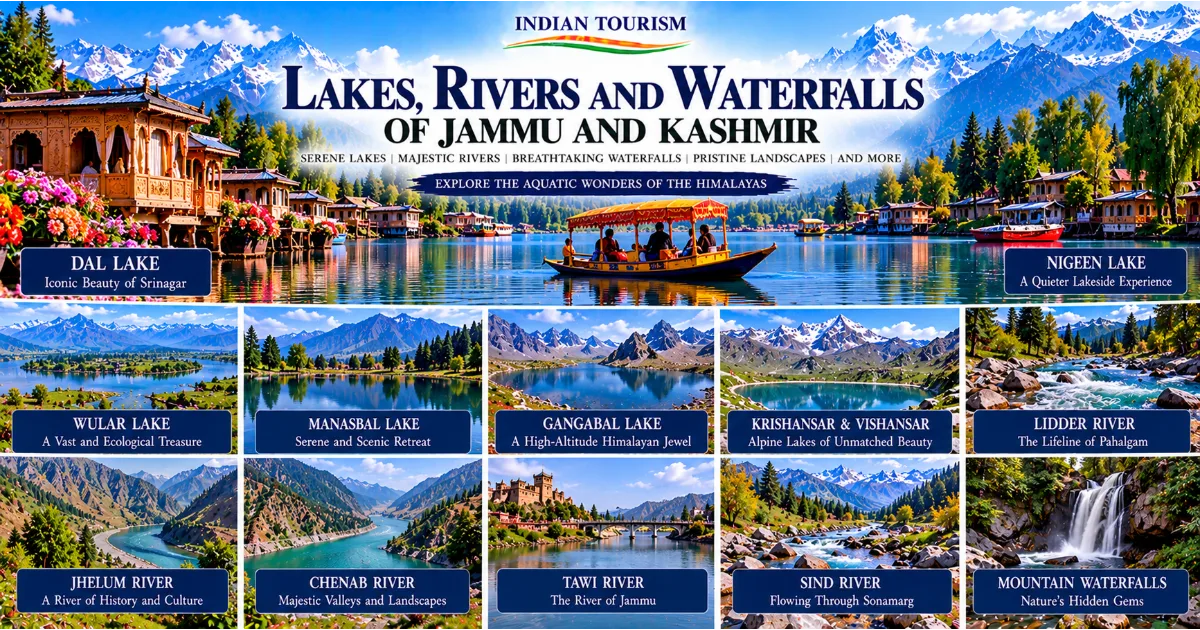
Where Mountains Meet Water
Jammu and Kashmir is a destination where water shapes the landscape, supports local communities and creates some of the most memorable experiences for travellers. Surrounded by the Himalayas and blessed with valleys, forests and mountain streams, the region contains an extraordinary variety of lakes, rivers, springs and waterfalls. Some are famous for their scenic beauty and boating opportunities, while others are valued for fishing, agriculture, religious traditions and the ecosystems they sustain.
Dal Lake in Srinagar is among the best-known water bodies in India, recognised for its houseboats, traditional shikaras, floating gardens and views of the surrounding mountains. Nigeen Lake offers a quieter atmosphere, while Wular Lake is notable for its size and ecological importance. The Lidder River flows through the picturesque Pahalgam region, and the Chenab River passes through dramatic mountain valleys in the Jammu region. These waterways reveal different aspects of the region's geography and cultural heritage.
Water is also essential to everyday life in Jammu and Kashmir. Rivers and streams provide irrigation, support fisheries and contribute to drinking-water supplies. Lakes and wetlands offer habitats for birds, fish and other wildlife. Mountain streams carry water from higher elevations towards settlements and agricultural land, connecting remote landscapes with the communities downstream.
The character of these water bodies changes with the seasons. Spring brings snowmelt and renewed flows in many mountain streams. Summer creates opportunities for sightseeing and outdoor recreation, while autumn transforms the surrounding vegetation. Winter can bring freezing temperatures, snow and changing access conditions, particularly in higher areas.
For visitors, exploring the lakes and rivers of Jammu and Kashmir can be much more than taking photographs. It can include learning about local livelihoods, understanding wetland conservation, walking along riverbanks, enjoying permitted boating activities and discovering the relationship between water and the region's history.
However, these landscapes are also vulnerable to pollution, unmanaged tourism, erosion and changing environmental conditions. Responsible travel is therefore essential. By respecting local rules, avoiding litter and choosing safe activities, visitors can help protect the waterways that make Jammu and Kashmir such a remarkable destination.
1. Dal Lake: The Iconic Waterway of Srinagar
Dal Lake is one of the most recognisable attractions in Jammu and Kashmir. Situated in Srinagar, it is closely associated with the city's identity and offers a combination of mountain scenery, traditional boats, houseboats, gardens and distinctive lakeside settlements.
The lake's appearance changes throughout the day. In the early morning, the water may reflect the surrounding hills and the first light over the city. Shikaras move across the surface, carrying residents, visitors and goods. Later in the day, the lake becomes busier as sightseeing boats and other activities increase. During the evening, changing light creates a different atmosphere across the water.
A shikara ride is one of the traditional ways to experience Dal Lake. These wooden boats allow visitors to explore parts of the lake at a relaxed pace, observe houseboats and see the relationship between the water and nearby settlements. The duration and route of a ride depend on the arrangement with the boat operator and current conditions.
Dal Lake is also known for its houseboats, which have become an important part of Srinagar's tourism identity. Staying on a houseboat can offer a distinctive accommodation experience, with views of the lake and surrounding mountains. Facilities differ between properties, so travellers should check room arrangements, heating, bathroom facilities and other services before booking.
The lake has long supported local livelihoods. Residents work in tourism, transport, fishing, horticulture and other activities connected to the water. Floating gardens and agricultural practices are part of the wider relationship between people and the lake, although conditions and practices vary over time.
Dal Lake faces environmental challenges, including pollution, waste management issues, pressure from development and changes in water quality. Visitors can help by avoiding litter, using responsible operators and respecting the communities living around the lake.
Dal Lake is more than a scenic attraction. It is a living part of Srinagar, combining tourism, ecology, culture and everyday life in one of the region's most memorable landscapes.
2. Nigeen Lake: A Quieter Lakeside Experience
Nigeen Lake, located near Dal Lake in Srinagar, is often appreciated for its comparatively peaceful atmosphere. Although connected with the wider water system of the area, it has its own character and provides an alternative for travellers who prefer a quieter setting.
The lake is surrounded by trees, settlements and mountain views. Its waters reflect changing weather and light, creating attractive scenery throughout the day. Visitors may encounter houseboats, traditional boats and local activity, but the atmosphere can feel less crowded than some of the busier parts of Dal Lake.
A boat ride on Nigeen Lake offers an opportunity to appreciate the landscape without rushing. The experience may include views of lakeside homes, gardens and surrounding hills. Travellers should agree on the route, duration and price before departure and follow any instructions provided by the operator.
Accommodation near or on Nigeen Lake can suit visitors who want to stay close to the water while exploring Srinagar. The available facilities vary, and the quieter setting should not be taken as a guarantee of complete isolation or silence. It remains a living environment where residents carry out daily activities.
The lake's environmental health is important to both people and wildlife. Water quality, waste disposal and the management of surrounding development influence the condition of the lake. Tourism operators and visitors have a role in reducing unnecessary pollution and supporting responsible practices.
Travellers should avoid throwing food waste or other rubbish into the water. They should also be respectful when photographing homes, residents and boats, particularly where private spaces are involved.
Nigeen Lake is a valuable destination for visitors who want to experience Srinagar's aquatic landscape at a more relaxed pace. Its appeal lies in the combination of natural scenery, local life and opportunities for quiet observation.
3. Wular Lake: A Vast and Ecologically Important Lake
Wular Lake, situated in the Kashmir Valley, is one of the region's major freshwater lakes and an important part of its natural heritage. Its scale, surrounding landscape and ecological functions distinguish it from the more urbanised lakes of Srinagar.
The lake plays a significant role in the wider water system of the valley. It receives water from surrounding rivers and streams and contributes to the movement and storage of water within the landscape. Its condition is therefore important not only for wildlife but also for communities and ecosystems connected to the surrounding catchment.
Wular Lake supports aquatic habitats and provides feeding and resting areas for birds. Its wetland characteristics make it especially valuable for biodiversity. Fish and other aquatic organisms depend on suitable water conditions, while birds use different sections of the lake according to food availability, water levels and seasonal patterns.
The lake also supports livelihoods. Fishing and other activities connected to the water have long formed part of local life. The surrounding communities have their own relationship with the lake, shaped by changing seasons, weather and economic conditions.
For visitors, Wular Lake offers a different experience from Dal Lake. Its broad waters and surrounding landscape create a sense of openness, while its ecological importance provides opportunities for learning about wetlands and freshwater systems.
Visitors should confirm local access arrangements before planning a trip. Not every part of the lake is suitable for boating or public access, and weather conditions can influence the safety of activities. Local guidance is especially valuable when exploring unfamiliar sections of the shoreline.
Wular Lake faces environmental pressures that can include pollution, sedimentation, changes in water flow and disturbance of surrounding habitats. Protecting the lake requires coordinated action involving conservation authorities, local communities and those whose activities affect its catchment.
The lake demonstrates that large freshwater ecosystems are important infrastructure for nature and society. Preserving Wular Lake helps protect biodiversity, support livelihoods and maintain the ecological health of the Kashmir Valley.
4. Manasbal Lake: A Scenic Retreat in the Kashmir Valley
Manasbal Lake, located in the Ganderbal district, is known for its scenic setting and clear waters. Surrounded by hills and rural landscapes, it offers a distinctive alternative to the busier lakes closer to central Srinagar.
The lake is appreciated for its natural beauty and the atmosphere of its surroundings. Depending on the season, visitors may see aquatic vegetation, birds and local fishing activity. The landscape provides opportunities for photography, quiet observation and learning about the relationship between lakes and nearby settlements.
Manasbal is also associated with historic and cultural sites in the surrounding area. The wider landscape reflects the long history of settlement and garden culture in Kashmir. Visitors interested in heritage can explore the lake as part of a broader itinerary, provided that current access conditions permit.
Boating opportunities and other visitor facilities may vary. Travellers should confirm which activities are available, whether local permissions are required and what safety arrangements are in place. Water conditions should never be assumed to be safe simply because the surface appears calm.
The lake's ecological health depends on water quality, suitable habitat and responsible management of surrounding land. Pollution and unmanaged development can affect aquatic plants, fish and birds. Visitors should avoid leaving rubbish behind and should use designated access points where available.
A visit to Manasbal can be particularly rewarding for travellers who appreciate landscapes that combine natural beauty with a quieter rural setting. It provides an opportunity to slow down and observe how water, vegetation and community life interact.
Manasbal Lake reminds visitors that the Kashmir Valley's natural heritage extends well beyond its most famous tourist landmarks. Smaller and less crowded destinations can offer equally valuable experiences when approached with curiosity and respect.
5. Gangabal Lake: A High-Altitude Himalayan Treasure
Gangabal Lake is a high-altitude lake situated in the Harmukh mountain region of Kashmir. Its remote location, mountain surroundings and association with trekking make it a destination for visitors interested in Himalayan landscapes and outdoor adventure.
The lake lies in a setting shaped by steep slopes, rocky terrain and seasonal snow. The surrounding environment differs from the lakes near Srinagar, with colder conditions and a shorter period when access may be practical. Its appearance changes according to weather, sunlight and the amount of snow remaining in the surrounding mountains.
Gangabal is also significant in local religious traditions and is associated with Hindu pilgrimage practices. For devotees, the lake may hold a meaning that goes beyond its scenic setting. Visitors should respect these traditions and follow local guidance when travelling in the area.
Reaching the lake can involve a demanding trek, depending on the route selected and the starting point. It is not an ordinary roadside attraction. Travellers should assess their fitness, understand the terrain and seek experienced local guidance where appropriate.
Weather can change rapidly in high mountain environments. Cold temperatures, rain, snow and reduced visibility may create hazards even during periods that seem suitable for hiking. Visitors should carry appropriate clothing, food, water and navigation equipment and should avoid attempting difficult routes without preparation.
The lake and its surrounding landscape are ecologically sensitive. Alpine vegetation can recover slowly from trampling, and waste left behind can damage the environment. Camping and other activities should take place only where permitted.
Gangabal Lake offers a memorable experience for well-prepared travellers who appreciate remote mountain scenery. Its value lies not only in the destination itself but also in understanding the delicate environment that supports it.
6. Krishansar and Vishansar Lakes: Alpine Beauty in the Mountains
Krishansar and Vishansar are high-altitude lakes associated with the mountain landscapes of the Kashmir region. Their clear waters, open alpine terrain and surrounding peaks make them attractive to trekkers and nature enthusiasts.
The lakes are often discussed in connection with mountain trekking routes, where the journey passes through meadows, streams and changing terrain. The experience can be as important as the final destination because it reveals how the landscape changes with elevation.
Alpine lakes are shaped by snowmelt, rainfall, geology and the surrounding drainage system. Their water levels and appearance vary throughout the year. Vegetation near the shore may be fragile, and the growing season can be short because of cold temperatures and snow cover.
The area around these lakes may support grazing animals and wildlife adapted to high mountain conditions. Visitors should avoid disturbing livestock or approaching wildlife, and they should follow local advice about safe movement through the landscape.
Access generally requires more preparation than a visit to a lake near a city. Trekking routes, weather, permits and local conditions should be checked before departure. A guided trek may be appropriate for visitors unfamiliar with the terrain.
The environment is particularly vulnerable to careless camping, littering and excessive foot traffic. Visitors should carry out their waste, use established campsites where available and avoid washing with detergents in natural water sources.
Krishansar and Vishansar Lakes offer a powerful reminder of the beauty and fragility of high-altitude ecosystems. Travellers who visit responsibly can enjoy the scenery while helping protect it for future generations.
7. The Lidder River: The Lifeline of the Pahalgam Valley
The Lidder River is one of the most recognisable natural features of the Pahalgam area. Flowing through a landscape of forests, meadows and mountain slopes, it contributes to the scenic character of the valley and supports ecological and human activity.
The river is fed by mountain water systems, including snowmelt and streams from higher elevations. Its flow and appearance change according to season, rainfall and temperature. During periods of strong snowmelt or heavy rain, water levels and currents can change significantly.
Along parts of the valley, the river creates attractive settings for walks, photography and quiet observation. Visitors can enjoy views from suitable riverbanks and established public areas, provided they respect local restrictions.
The Lidder also supports the wider environment. River water contributes to local water systems, while the river corridor may provide habitat for aquatic organisms and birds. Vegetation along the banks helps stabilise soil and influences the local ecosystem.
Outdoor activities near the river should be approached with caution. Fast-flowing water can be dangerous, even when the river looks shallow. Travellers should avoid entering unfamiliar sections, climbing onto unstable rocks or allowing children to approach the water unsupervised.
The river is also important to tourism in Pahalgam, where visitors come for the landscape and outdoor recreation. Responsible tourism operators should prioritise safety and follow local regulations for any water-based activities.
Litter and wastewater can damage river environments. Visitors should never throw rubbish into the water or leave food waste along the banks. Keeping the river clean benefits wildlife, local residents and everyone who comes to enjoy the valley.
The Lidder River captures the close connection between water and mountain tourism. Its beauty is inseparable from the ecological processes that sustain it, making careful protection essential.
8. The Jhelum River: A River at the Heart of Kashmir's History
The Jhelum River is one of the most important rivers associated with the Kashmir Valley. It flows through Srinagar and has shaped the region's settlement patterns, transport history, agriculture and cultural identity for centuries.
In Srinagar, the river passes through historic neighbourhoods and alongside buildings that reflect different periods of the city's development. Bridges connect areas on either side, while riverfront streets and nearby markets reveal the continuing relationship between water and urban life.
The Jhelum has historically supported transport and trade. Before modern road networks became dominant, waterways played a role in moving goods and connecting communities. The river's course influenced the growth of settlements and the placement of important structures.
For visitors, exploring the Jhelum can provide a different perspective on Srinagar. A walk near the river or a visit to suitable viewpoints allows travellers to appreciate the city beyond its lakes and gardens. The experience can be especially interesting when combined with a guided walk through the historic areas.
The river is also part of a larger drainage system, and its flow is influenced by upstream rainfall, snowmelt and other conditions. Flood management and water quality are important concerns for communities along its banks.
Urban rivers face environmental pressures from wastewater, solid waste, development and changes to natural riverbanks. Responsible management is essential to protect water quality and reduce risks to people and ecosystems.
Visitors should respect riverside access rules and avoid littering or entering unsafe sections. Those interested in photography should remain aware of traffic, uneven surfaces and local restrictions.
The Jhelum is more than a natural feature passing through the city. It is a historical and ecological thread connecting communities, architecture and landscapes throughout the Kashmir Valley.
9. The Chenab River: Dramatic Valleys of the Jammu Region
The Chenab River is one of the major rivers associated with the Jammu region. Its route through mountainous terrain creates dramatic landscapes, deep valleys and striking views that distinguish this part of Jammu and Kashmir from the lakes and meadows of the Kashmir Valley.
The river and its tributaries are shaped by the geography of the western Himalayas. Steep slopes, rocky terrain and changing elevations influence the movement of water and the formation of river valleys. The surrounding landscape provides opportunities for scenic travel and for learning about mountain environments.
The Chenab is important to local communities through its role in regional water systems and the broader landscape. River valleys influence settlement patterns, transport routes and agricultural activity. However, the rugged terrain can make travel more challenging than it appears on a map.
Some sections of the Chenab are associated with major infrastructure and hydroelectric development. Visitors should recognise that these are working landscapes, not unrestricted recreation areas. Certain facilities and river sections may have access restrictions for safety or security reasons.
The river can be dangerous because of strong currents, steep banks and sudden changes in water conditions. Travellers should never enter the water without an authorised activity and appropriate safety arrangements. Viewing points should be selected carefully, particularly along mountain roads.
Responsible tourism also requires attention to environmental effects. Construction, erosion, waste and other pressures can influence river ecosystems. The balance between infrastructure, energy production, community needs and environmental protection is an important issue in mountain regions.
The Chenab offers some of the most impressive river scenery in the Jammu region. Exploring it responsibly allows visitors to appreciate the scale of the landscape while recognising the need for careful river management.
10. Tawi River: The River That Shapes Jammu City
The Tawi River is closely associated with Jammu city and forms an important part of its geographical setting. Flowing through the region, it has influenced settlement, local water systems and the city's visual character.
Jammu's historic landmarks and modern urban areas developed in relation to the surrounding terrain, and the river remains a notable feature of the cityscape. Views from suitable elevated locations can reveal the relationship between the waterway, bridges, neighbourhoods and nearby hills.
The Tawi also contributes to the wider environment and supports water-related ecological processes. River conditions change with seasonal rainfall and upstream flow, making water management important for communities along its course.
For tourists, the river can be included in a broader visit to Jammu's cultural and historic attractions. The area around the river may provide scenic viewpoints and opportunities for photography, although access and conditions differ between locations.
Visitors should not assume that every riverbank is suitable for walking or recreation. Urban infrastructure, construction activity and changing water levels can make some areas unsafe. Local advice should guide decisions about where to stop and take photographs.
Waste management is important for the river's health. Plastic rubbish and untreated wastewater can affect water quality and the surrounding environment. Travellers should use designated disposal facilities and avoid leaving waste near the water.
The Tawi reminds visitors that rivers are central to cities as well as remote mountain landscapes. Its connection with Jammu's history and geography makes it a valuable part of the region's tourism story.
11. Sind River and the Landscapes of Sonamarg
The Sind River, also known as the Sindh River, flows through the Ganderbal district and is an important waterway associated with Sonamarg and the surrounding mountain landscape.
The river passes through a region of forests, meadows and steep mountain slopes. Its changing appearance reflects the flow of water from higher elevations and the seasonal conditions that influence the surrounding environment.
Sonamarg is widely known for its mountain scenery, and the river contributes to the area's appeal. Visitors may enjoy views of the water from accessible locations, explore permitted walking routes or use the river as part of a broader landscape-focused itinerary.
The river's flow can be powerful, particularly during periods of snowmelt or heavy rainfall. Travellers should maintain a safe distance from fast-moving water and avoid climbing onto unstable rocks or approaching steep banks.
The surrounding area supports tourism, local transport and other economic activities. As visitor numbers increase, careful management of waste, roads and river access becomes increasingly important.
River corridors can support wildlife and vegetation, while the movement of water influences soil and habitat conditions. Litter and careless recreational activities can damage these systems, even when the effects seem small at an individual level.
Visitors should follow current local instructions about access, road conditions and outdoor activities. Some areas may be affected by weather or other temporary restrictions.
The Sind River is a reminder that the mountain landscapes of Jammu and Kashmir are shaped by moving water. Its beauty comes from the same natural processes that require travellers to exercise caution and respect.
12. Mountain Streams and Natural Springs
Beyond the major lakes and rivers, Jammu and Kashmir contains countless streams and springs that contribute to the region's natural beauty. These smaller water sources are especially important in mountain settlements, where streams carry water from higher elevations and springs may provide local supplies.
The sound of running water is a familiar feature of many Himalayan landscapes. Streams move through forests and meadows, cross rocky slopes and join larger rivers. Their flow depends on rainfall, snowmelt, groundwater and seasonal temperature changes.
Natural springs have long been important to communities in areas where surface water is limited or difficult to access. Their location can influence settlement patterns, agricultural practices and daily routines. In some places, springs also carry cultural or religious significance.
Visitors may encounter streams during village walks, forest excursions and mountain treks. However, clear-looking water is not necessarily safe to drink. Water may contain microorganisms or pollutants that cannot be identified by sight. Travellers should use appropriate treatment methods or reliable drinking-water supplies.
Small streams are also sensitive to disturbance. Foot traffic can damage streamside vegetation, while detergents, rubbish and food waste can contaminate the water. Visitors should avoid washing equipment or clothing directly in natural water sources.
During heavy rain or rapid snowmelt, streams can rise quickly and become dangerous to cross. Travellers should follow local guidance and never attempt a crossing when conditions are uncertain.
These smaller water sources may receive less attention than famous lakes, but they are essential to the ecological and human systems of Jammu and Kashmir. Protecting them helps sustain forests, wildlife, villages and the rivers that connect the region.
13. Waterfalls and Cascades in the Mountain Landscape
Waterfalls and smaller cascades can be found in parts of Jammu and Kashmir where streams descend over rocky terrain. Their appearance depends on rainfall, snowmelt, elevation and the shape of the surrounding landscape. Some are prominent local attractions, while others are encountered along forest paths and mountain routes.
Waterfalls are particularly attractive to photographers because moving water creates a different visual experience from a still lake. Light, mist, vegetation and rock formations can produce striking scenes, especially when the water flow is strong.
However, not every cascade has a formal tourist facility or safe access route. Some may be located near steep slopes, unstable rocks or fast-flowing streams. Visitors should not attempt to reach a waterfall simply because it appears close on a map or in a photograph.
Before visiting a specific site, travellers should confirm its location, accessibility and current safety conditions through reliable local information. They should use established paths and avoid climbing wet rocks, which can be extremely slippery.
Waterfalls can also be vulnerable to litter and damage from unmanaged visitor activity. Rubbish left beside a stream may move downstream, affecting other habitats and communities. Visitors should carry their waste away and avoid disturbing vegetation around the water.
In some areas, waterfalls are best appreciated as part of a guided nature walk rather than as a standalone destination. A guide can explain the surrounding geology, plant life and seasonal changes while helping visitors avoid unsafe routes.
The waterfalls of Jammu and Kashmir add variety to its water-based tourism experiences. Their appeal lies in the combination of movement, sound and natural setting, but responsible access is essential to preserve both safety and the landscape.
14. Water, Gardens and Historic Landscapes
Water has played an important role in the design of Kashmir's historic gardens. The region's Mughal gardens are known for their carefully arranged terraces, channels, fountains and views of the surrounding landscape. Water creates movement and sound while helping organise the visual relationship between architecture, vegetation and mountains.
Shalimar Bagh and Nishat Bagh in Srinagar are prominent examples of historic garden design. Their terraces and water features reflect traditions of landscape planning that connected royal gardens with views of the valley and Dal Lake.
The use of water in these gardens is not merely decorative. Channels and fountains influence the experience of moving through the space, while the arrangement of trees and terraces creates changing perspectives. Visitors can observe how designers used elevation and flowing water to shape the atmosphere.
The gardens also demonstrate the relationship between cultural heritage and natural geography. Their location, water supply and visual orientation reflect the importance of the surrounding landscape.
Travellers should respect garden rules, remain on permitted paths and avoid damaging plants or historic structures. Some water features may operate differently according to maintenance schedules or seasonal conditions.
Water conservation is increasingly important in the management of historic landscapes. Maintaining fountains, channels and planted areas requires attention to supply, leakage and the broader environmental conditions of the region.
A visit to Kashmir's gardens can complement a tour of its lakes and rivers. Together, these destinations reveal how water has influenced not only the natural environment but also art, architecture and the cultural identity of Jammu and Kashmir.
15. Fishing Traditions and Life Along the Water
Rivers and lakes support livelihoods as well as tourism. Fishing has long been part of life around several water bodies in Jammu and Kashmir, providing food and income for communities whose activities are closely connected to local aquatic environments.
Fishing practices vary according to the water body, species available, local regulations and the equipment used. Some communities rely on fishing as an occupation, while others may participate in it as a supplementary activity.
For visitors, learning about fishing traditions can provide insight into the relationship between people and water. A local guide or knowledgeable resident may explain the importance of seasonal conditions, fish habitats and changes in the availability of aquatic resources.
Recreational fishing should only be undertaken where it is permitted and under the applicable rules. Travellers should confirm whether licences, restrictions, catch limits or particular methods apply before arranging an activity.
Fish populations can be affected by pollution, changes in water flow, habitat degradation and excessive harvesting. Protecting aquatic ecosystems therefore requires responsible fishing practices and effective management.
Visitors should never assume that a lake or river is open for fishing simply because it is accessible. Restricted areas may exist for conservation, public safety or other management purposes.
Supporting locally managed experiences can help visitors learn about fishing without disrupting working livelihoods. Travellers should pay agreed fees, follow guidance and avoid leaving hooks, lines or other equipment in the environment.
Fishing traditions remind visitors that lakes and rivers are part of the region's economy and cultural life. Their continued importance depends on keeping water systems healthy and ensuring that natural resources are managed responsibly.
16. Best Time to Explore Lakes, Rivers and Waterfalls
The best time to visit the water destinations of Jammu and Kashmir depends on the location and the type of experience a traveller wants. Lakes near Srinagar are accessible through much of the year, although weather and operating conditions can affect boating and other activities. High-altitude lakes and remote river valleys may have much shorter practical visiting seasons.
Spring brings changing vegetation and increasing water flow in many mountain areas. Summer is often suitable for general sightseeing and for exploring accessible lakes and rivers, although high-altitude routes may still be affected by snow or unstable weather. Autumn can provide attractive colours and quieter conditions at some destinations.
Winter creates a different experience. Temperatures can fall considerably, snow may affect transport and some activities may become unavailable. Travellers should not assume that a water-based attraction will operate normally during cold weather.
Periods of heavy rain or rapid snowmelt require particular caution near rivers, streams and waterfalls. Water levels can rise quickly, currents can strengthen and riverbanks may become unstable. Outdoor plans should be adjusted according to current weather information.
Birdwatchers may prefer to visit wetlands during periods when migratory birds are present, but the exact timing and species vary from year to year. Local reports and knowledgeable guides can help visitors choose a suitable period.
Before travelling, check current forecasts, road conditions, access arrangements and the operating status of local services. For remote mountain destinations, allow extra time and have alternative plans.
The ideal season is the one that matches the traveller's interests while respecting local conditions. Flexibility is especially valuable in a region where water and weather are closely connected.
17. Responsible Tourism and Water Conservation
The lakes and rivers of Jammu and Kashmir are valuable natural resources, but they face pressures from pollution, waste, development and changing environmental conditions. Responsible tourism can help reduce avoidable damage, although wider conservation efforts are also needed.
The simplest rule is to leave no rubbish behind. Plastic bottles, food packaging and other waste can remain in the environment for long periods and may enter waterways. Visitors should use designated disposal facilities and carry waste away when bins are unavailable.
Wastewater is another concern. Soap, detergents and other products should not be released into lakes or streams. Travellers staying on houseboats or near water should choose responsible providers that explain how wastewater and solid waste are managed.
Boating should take place through authorised operators and according to local rules. Visitors should follow safety instructions, avoid overloading boats and never demand that a driver enter restricted or unsafe areas.
Respect for wildlife is equally important. Birds and other animals may use lake edges, reeds and riverbanks for feeding, resting or breeding. Travellers should maintain distance and avoid creating noise or disturbance in sensitive habitats.
Local communities have an important role in water conservation. Their livelihoods may depend on fishing, agriculture, tourism and access to clean water. Visitors should recognise these needs and support businesses that operate responsibly.
Water conservation also involves understanding the larger landscape. Lakes and rivers depend on rainfall, snowmelt, vegetation, groundwater and land management across the catchment. Protecting the water body alone may not be sufficient if surrounding ecosystems are damaged.
By travelling carefully, supporting responsible operators and learning about conservation challenges, visitors can help preserve the aquatic landscapes that make Jammu and Kashmir distinctive.
18. Suggested Itinerary for Water-Based Tourism
A three-day introduction to the lakes and rivers of Kashmir can begin in Srinagar. On the first day, travellers can explore Dal Lake through an authorised shikara ride, visit selected lakeside viewpoints and learn about houseboat culture. Time should be allowed to appreciate the landscape without rushing between attractions.
The second day could focus on Nigeen Lake or Manasbal Lake, depending on access, travel time and personal interests. Visitors who prefer a quieter experience may enjoy observing the landscape and learning about local livelihoods. Those interested in wetlands and birds should check current access conditions and seek knowledgeable guidance.
The third day could explore the Jhelum River and historic Srinagar, combining riverside views with cultural landmarks and traditional neighbourhoods. This approach shows how water has influenced the city's development, transport history and everyday life.
A longer trip could include Pahalgam and the Lidder River, or a journey towards Sonamarg and the Sind River when conditions permit. These destinations involve additional travel and should be planned according to current road conditions, weather and available services.
Travellers interested in high-altitude lakes such as Gangabal, Krishansar or Vishansar should plan separate trekking arrangements. These destinations require appropriate fitness, equipment and local guidance, and they should not be added casually to a short city itinerary.
The Chenab and Tawi rivers can be explored as part of a separate journey through the Jammu region. Their landscapes, travel requirements and points of interest differ from those of the Kashmir Valley.
Before departure, confirm accommodation, transport, permitted activities and any required permissions. A good itinerary should prioritise safety, realistic travel times and opportunities to understand each destination.
Conclusion: Protecting the Waters That Define Jammu and Kashmir
The lakes, rivers, streams and waterfalls of Jammu and Kashmir form an essential part of the region's natural and cultural identity. Dal Lake and Nigeen Lake reveal the relationship between water and urban life in Srinagar, while Wular and Manasbal demonstrate the ecological importance of freshwater environments. High-altitude lakes offer dramatic mountain scenery, and rivers such as the Lidder, Jhelum, Chenab, Tawi and Sind connect landscapes and communities across the region.
These waterways support more than tourism. They provide habitat for wildlife, contribute to agriculture, sustain livelihoods and influence the development of settlements. Their condition affects both the natural environment and the people who depend on it.
For travellers, exploring these destinations offers opportunities to enjoy scenery, learn about local traditions and understand the importance of water conservation. A quiet shikara ride, a walk beside a river or a carefully planned mountain trek can create lasting memories when undertaken with respect for local conditions.
Responsible travel means keeping waterways clean, following safety rules, using authorised operators and avoiding disturbance to wildlife. It also means recognising that lakes and rivers are living systems, not simply backgrounds for photographs.
The long-term future of these aquatic landscapes depends on effective management, environmental awareness and cooperation among communities, authorities and visitors. Protecting them helps preserve the beauty and ecological health of Jammu and Kashmir for generations to come.
The true wonder of the region's water heritage lies in the way it connects mountains, forests, cities, villages and people. To explore these waters responsibly is to appreciate not only their beauty, but also their essential place in the life of the Himalayas.

