
Where Water Shapes the Himalayan Landscape
Jammu and Kashmir is a region where water plays an extraordinary role in shaping the landscape, supporting communities and creating some of India's most memorable travel experiences. Alpine lakes surrounded by snow-covered peaks, rivers flowing through mountain valleys, peaceful lakeside settlements and waterfalls cascading over rocky cliffs form an essential part of its natural beauty. These water landscapes attract photographers, nature lovers, families, adventure travellers and visitors seeking quiet places away from busy cities.
The lakes and rivers of Jammu and Kashmir are more than scenic attractions. They support agriculture, provide water for communities, sustain aquatic ecosystems and influence the traditional lifestyles of people living near them. Fishing, tourism, boating and other local activities are closely connected with these natural resources. Understanding their environmental importance makes a visit more meaningful because the beauty of the water is inseparable from the health of the surrounding landscape.
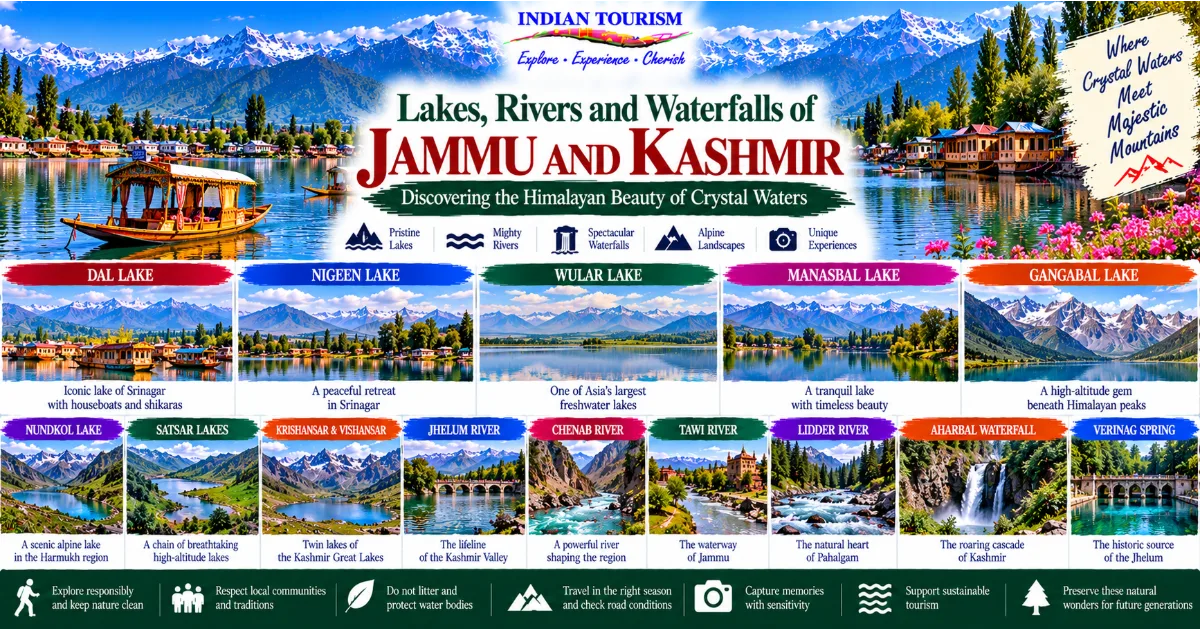
The Kashmir Valley is particularly famous for its lakes. Dal Lake and Nigeen Lake are closely associated with Srinagar's cultural identity, while Wular Lake is one of the region's most important freshwater wetlands. Manasbal Lake offers a quieter setting, and the high-altitude lakes around the Himalayan ranges provide spectacular scenery for travellers prepared for demanding journeys.
The rivers of Jammu and Kashmir create another dimension of the region's natural character. The Jhelum flows through the Kashmir Valley and Srinagar, while the Chenab passes through dramatic mountain terrain in the Jammu region. The Lidder River is closely associated with Pahalgam, and the Tawi River forms an important geographical feature of Jammu city.
Waterfalls and mountain streams add further variety to the landscape. Aharbal Waterfall is one of Kashmir's best-known waterfall destinations, while streams and cascades appear in several forested and mountainous areas.
This guide explores the major lakes, rivers and waterfalls of Jammu and Kashmir, explains the best seasons to visit them and provides practical advice for enjoying these natural attractions responsibly.
Dal Lake: The Famous Water Landscape of Srinagar
Dal Lake is one of the most recognisable natural attractions in Jammu and Kashmir. Located in Srinagar and surrounded by mountains, gardens and settlements, it is closely connected with the region's tourism identity. Its combination of open water, traditional houseboats, shikaras and changing reflections creates a landscape that appeals to visitors throughout the year.
The experience of Dal Lake changes according to the time of day. Early morning can bring calm water and soft light, allowing the surrounding hills and buildings to appear in the lake's reflections. As the day progresses, the lake becomes more active, with boats carrying visitors and residents moving between different parts of the water.
Shikara rides are among the best-known experiences associated with Dal Lake. These traditional boats allow visitors to explore the lake at a relaxed pace, observe the surrounding settlements and appreciate the relationship between water and everyday life. Travellers should agree on the fare and duration before beginning a ride and follow the boat operator's safety guidance.
Houseboats are another distinctive feature of the lake. Many visitors choose to stay in them to experience a traditional form of Kashmir hospitality. Their wooden interiors, balconies and lakeside settings create a different atmosphere from conventional hotels. Travellers should compare facilities carefully and choose accommodation that follows appropriate waste-management practices.
Dal Lake also supports local livelihoods through tourism, fishing, vegetable cultivation and other activities. Floating gardens and water-based markets demonstrate how people have adapted their work to the lake environment. These features make Dal Lake a living landscape rather than simply a place for sightseeing.
The lake faces environmental challenges, including pollution, waste management concerns, excessive nutrient growth and pressure from development. Visitors can contribute to its protection by avoiding litter, using responsible boat services and respecting the communities that depend on it.
Dal Lake is suitable for families, couples, photographers and first-time visitors to Kashmir. Its central location also makes it easy to combine a lake visit with the Mughal gardens, Shankaracharya Hill and other attractions around Srinagar.
Nigeen Lake: A Quieter Side of Srinagar
Nigeen Lake offers a more peaceful atmosphere than some of the busier areas associated with Dal Lake. Surrounded by trees, settlements and mountain views, it is a rewarding destination for travellers who prefer quieter water landscapes and a slower pace.
The lake is known for its clear-looking waters, houseboats and scenic surroundings. Although the actual condition of the water can vary, the setting often feels less crowded than the main tourist areas of Dal Lake. Visitors can enjoy the scenery from the shoreline or arrange a boat ride through legitimate local operators.
Morning is a particularly pleasant time to experience Nigeen Lake. Soft light can illuminate the trees and houseboats, while the water may reflect the surrounding landscape when conditions are calm. Late afternoon can also be attractive, especially when the changing light creates warmer colours across the water.
Nigeen is suitable for travellers who want to spend time observing the landscape rather than moving quickly between attractions. A relaxed boat ride, a quiet lakeside walk where public access is available, or an overnight stay can provide opportunities to appreciate the area's atmosphere.
The lake also supports livelihoods connected with tourism and traditional water-based activities. Visitors should remember that the surrounding buildings are not all public attractions. Some are private homes or accommodation establishments, so permission should be obtained before photographing people or entering private property.
As with Dal Lake, environmental protection is important. Wastewater, litter and unmanaged development can affect the health of the lake and the quality of life for surrounding communities. Choosing responsible accommodation and avoiding single-use plastic where possible can help reduce the impact of tourism.
Nigeen Lake is a good choice for couples, photographers and visitors who want a quieter experience within Srinagar. It can be included in a broader itinerary without requiring a long journey outside the city.
Wular Lake: One of the Great Freshwater Wetlands of Kashmir
Wular Lake is one of the most important freshwater lake and wetland systems in Jammu and Kashmir. Located in the Kashmir Valley, it is known for its broad expanse of water, surrounding settlements and ecological significance.
Unlike the more enclosed setting of Dal Lake, Wular offers wide horizons and a sense of openness. The landscape changes with the weather, water levels and season. On clear days, distant hills may form a striking background, while cloudy conditions can create a softer and more atmospheric appearance.
Wular Lake is important for biodiversity and provides habitat for various forms of aquatic life and birds. Its wetland environment supports ecological processes that are essential to the surrounding region. The lake also plays a role in water regulation and supports livelihoods, including fishing and other activities connected with the wetland.
Visitors interested in nature can explore the area through suitable local viewpoints and authorised activities. Birdwatching may be rewarding at certain times of the year, although wildlife sightings depend on seasonal conditions and the specific location. Travellers should observe birds from a respectful distance and avoid disturbing sensitive habitats.
Wular is not simply a sightseeing destination. Communities around the lake depend on its resources, and environmental changes can affect their work and well-being. Responsible tourism should therefore recognise both the ecological value of the wetland and its importance to local people.
Visitors should avoid littering, entering restricted areas or disturbing vegetation and wildlife. Boat trips should only be undertaken through legitimate operators who follow safety requirements.
The lake can be particularly attractive to travellers who enjoy landscape photography, birdwatching and quieter destinations. Because facilities may be more limited than in Srinagar, visitors should plan transport and other arrangements in advance.
Manasbal Lake: A Peaceful Escape Near Srinagar
Manasbal Lake, located in the Ganderbal district, is known for its scenic surroundings and relatively peaceful atmosphere. It offers visitors another perspective on Kashmir's lake landscapes, with open water, surrounding hills and local settlements creating a setting suited to relaxed sightseeing.
The lake is often appreciated for its natural beauty and opportunities for boating. Depending on weather and local arrangements, visitors may enjoy views across the water towards the surrounding landscape. Its setting makes it attractive for photography and for travellers seeking a quieter alternative to the more crowded parts of Srinagar.
Manasbal Lake is also associated with historical and cultural interest. The surrounding area includes heritage features and settlements that reflect the long relationship between communities and the water landscape. Visitors interested in local history can explore the area beyond the shoreline, provided access is permitted.
The lake supports ecological life and local livelihoods, so visitors should avoid treating it as an empty recreational space. Fishing, nearby agriculture and tourism can all be connected with the surrounding environment.
A visit can be combined with other destinations in the Ganderbal area, depending on road conditions and the time available. Travellers should confirm boating arrangements and access to particular sites before departure.
The best experience often comes from allowing enough time to observe the lake rather than rushing through a short stop. Morning and late afternoon can provide attractive light, although weather and water conditions influence the appearance of the landscape.
Manasbal Lake is suitable for families, couples and nature lovers who want to enjoy a peaceful water destination without travelling deep into the mountains.
Gangabal Lake: An Alpine Lake Beneath the Himalayan Peaks
Gangabal Lake is a high-altitude lake in the Harmukh mountain region of Kashmir. Its dramatic setting, surrounded by rugged mountain terrain, makes it one of the most memorable alpine landscapes in the region.
Unlike the lakes around Srinagar, Gangabal requires a more demanding journey. Access is generally associated with trekking routes and seasonal mountain conditions, so it is not suitable for every visitor. Travellers should research the route carefully and seek experienced local guidance where necessary.
The lake is admired for its mountain scenery, clear-looking water and sense of isolation. The surrounding peaks create a dramatic background, while the changing light can transform the appearance of the landscape throughout the day. For trekkers and landscape photographers, the combination of water and high mountain terrain offers extraordinary opportunities.
The journey itself is part of the experience. Routes towards alpine lakes can involve steep climbs, uneven ground, variable weather and limited facilities. Travellers should be physically prepared, carry appropriate clothing and equipment, and avoid setting out without understanding the demands of the route.
Gangabal also has religious significance for some Hindu devotees, which adds a cultural dimension to its natural appeal. Visitors should treat the area respectfully and follow local customs and any restrictions that apply.
The alpine environment is fragile. Waste collection can be difficult in remote mountain areas, so trekkers should carry their rubbish back and avoid damaging vegetation or disturbing wildlife. Fires should not be lit except where explicitly permitted and safe.
Gangabal is best suited to experienced walkers and travellers who have enough time to plan a responsible mountain journey. Its beauty rewards preparation, patience and respect for the environment.
Nundkol Lake: A Scenic Companion to Gangabal
Nundkol Lake lies in the same high mountain region as Gangabal and is often included in trekking itineraries that explore the Harmukh landscape. Its alpine setting and surrounding mountain slopes make it a rewarding destination for travellers seeking remote natural scenery.
The lake is very different from the easily accessible water bodies around Srinagar. Reaching it requires planning for a mountain journey, and visitors should not assume that ordinary road transport can take them directly to the shoreline.
The surrounding landscape can include rocky slopes, grassland and mountain views, with the appearance changing according to the season. During suitable summer conditions, the area can be attractive for trekking and photography. Outside the main accessible period, snow and weather may make travel difficult or unsafe.
Trekkers should prepare for changing temperatures, possible rain and limited services. A suitable route plan, reliable local information, appropriate footwear and sufficient supplies are important. Those unfamiliar with high-altitude trekking should consider a qualified guide and should avoid travelling alone in remote terrain.
Nundkol's ecological setting requires careful treatment. Visitors should not leave food waste, damage plants or disturb animals. Camps should only be established where permitted, and any local rules concerning overnight stays must be followed.
For people who enjoy challenging outdoor journeys, Nundkol provides an opportunity to experience Kashmir beyond the main tourist circuit. Its value lies not only in the lake itself but also in the wider mountain environment and the sense of quiet that comes from travelling responsibly in remote terrain.
Satsar Lakes: A Chain of Alpine Water Bodies
The Satsar Lakes are a group of high-altitude lakes associated with the Kashmir Great Lakes trekking region. Their name refers to a series of lakes set among mountain landscapes, with the number and visibility of distinct water bodies varying according to conditions.
The area is known for its combination of alpine meadows, rugged terrain, streams and mountain views. The lakes can appear very different depending on sunlight, cloud cover and the amount of water present during the season.
Satsar is primarily a destination for trekkers rather than casual sightseeing visitors. Reaching the lakes requires preparation, physical fitness and an understanding of the route. Weather can change rapidly at high elevations, and paths may become difficult under rain, snow or poor visibility.
Trekkers should travel with appropriate equipment and sufficient supplies. Reliable local guidance is valuable, particularly for people unfamiliar with the terrain. Travellers should confirm whether permits, authorised operators or other requirements apply to their planned route.
The area is environmentally sensitive, and waste management is especially important. Visitors should carry out all rubbish, avoid damaging grassland and follow instructions about camping. Water should not be assumed safe to drink without suitable treatment.
Satsar Lakes appeal to people who want a demanding outdoor experience in a spectacular setting. The reward comes from the journey through mountain terrain as much as from the lakes themselves.
For travellers who prefer easy access, the lakes around Srinagar are more appropriate. For experienced trekkers, Satsar offers a deeper encounter with the high-altitude landscapes of Kashmir.
Krishansar and Vishansar Lakes: The Beauty of the Kashmir Great Lakes Region
Krishansar and Vishansar are two celebrated alpine lakes associated with the Kashmir Great Lakes trekking region. Surrounded by mountain slopes and open highland scenery, they are often regarded as highlights of multi-day trekking journeys.
Vishansar Lake is known for its striking mountain setting and the changing colours of its water. Krishansar offers another distinctive alpine landscape, with meadows and slopes contributing to the scenery. The appearance of both lakes changes with light, weather and seasonal conditions.
These lakes are not ordinary roadside attractions. Access generally requires trekking through high-altitude terrain, and the journey can be physically demanding. Travellers should assess their fitness, understand the route and prepare for changing weather before making arrangements.
The trekking season depends on snow conditions and local access arrangements. Routes that are accessible during a favourable summer period may be unsafe at other times. Visitors should obtain current information from reliable local sources and use experienced guides or authorised operators where appropriate.
The landscapes around the lakes are fragile. Alpine plants grow in environments where recovery from damage can be slow, and litter can remain for long periods. Trekkers should stay on established routes, avoid disturbing wildlife and carry waste out of the area.
Photography is particularly rewarding when the light changes across the mountains or when reflections appear on calm water. However, safety should always take priority over finding a better viewpoint.
Krishansar and Vishansar are best suited to travellers who enjoy trekking and are prepared for the physical and environmental responsibilities of high-altitude travel.
The Jhelum River: The Lifeline of the Kashmir Valley
The Jhelum River is one of the most important geographical features of the Kashmir Valley. It flows through the valley and passes through Srinagar, connecting settlements, agricultural areas and historic urban neighbourhoods.
In Srinagar, the river forms part of the city's historical identity. Bridges, waterfront buildings and traditional neighbourhoods reveal how urban life developed around the waterway. The river has supported transport, trade and everyday activities for generations.
The Jhelum also plays an important role in the region's water system. Its flow is connected with tributaries, wetlands and the wider landscape of the Kashmir Valley. Water levels can change with rainfall, snowmelt and other environmental conditions.
For travellers, the river offers opportunities to observe the relationship between water and settlement. Views from suitable public locations can reveal traditional architecture, bridges and daily activity along the banks. Photography should be undertaken from safe places, and visitors should avoid entering restricted areas or standing on unstable river edges.
The river has also faced environmental pressures, including pollution, encroachment and changes associated with urban development. Maintaining its health is important for communities and ecosystems throughout the valley.
Visitors can contribute by avoiding litter, supporting responsible local tourism and respecting the river as an essential natural resource rather than simply a scenic feature.
The Jhelum provides a different experience from the alpine lakes. It is closely connected with the everyday life of the region, making it an excellent subject for travellers interested in history, culture and the relationship between people and water.
The Chenab River: A Powerful Mountain River in Jammu
The Chenab River is one of the major rivers associated with the Jammu region. It flows through dramatic mountain terrain, creating valleys and landscapes that differ from the broad lake environments of Srinagar.
The river's course through the Chenab Valley region has influenced settlement patterns, agriculture, transport and the development of towns. In places, steep slopes and rugged terrain create striking views of the river as it moves through the mountains.
The Chenab is also important to regional water resources and hydropower development. Its flow can be powerful, particularly during periods of heavy rain or snowmelt. Visitors should therefore treat the river with caution and avoid approaching the water from unsafe banks.
Road journeys through parts of the Chenab Valley can provide scenic views, but stopping locations should be selected carefully. Mountain roads may be narrow, and river edges can be unstable. Travellers should use designated viewpoints or safe public areas rather than attempting to reach the water directly.
The river also supports communities whose lives are connected with the surrounding landscape. Local settlements, bridges and cultivated areas reveal the relationship between people and the river system.
Visitors interested in the Chenab should combine scenic appreciation with an understanding of its environmental and economic importance. It is not simply a beautiful river but a powerful natural system that requires careful management.
The Chenab Valley offers rewarding opportunities for landscape photography and regional exploration, provided travellers plan their routes responsibly and follow current local guidance.
The Tawi River: The Waterway That Shapes Jammu
The Tawi River is closely associated with Jammu city and forms an important part of its geographical identity. The river flows through the Jammu region and provides a natural reference point for understanding the city's historic development.
Several important landmarks, including Bahu Fort, occupy elevated positions overlooking the river. This relationship between the waterway and the surrounding built environment illustrates how geography influenced the location of settlements and defensive structures.
The Tawi's appearance changes with weather and seasonal flow. At different times, the river may present broad stretches of exposed riverbed or stronger currents. Visitors should not assume that a particular section is safe for swimming or wading simply because the water appears shallow.
The riverfront can provide opportunities to observe the city from a different perspective. Travellers interested in photography may capture views of the river, surrounding hills and urban landmarks from appropriate public locations.
The Tawi also has environmental importance for Jammu and its surrounding communities. Water quality, waste management and responsible development affect the river's long-term health. Visitors should avoid dumping rubbish and should use designated public areas.
A visit to the Tawi can be combined with an exploration of Bahu Fort and other heritage attractions in Jammu. This makes it a useful addition to a city itinerary for travellers interested in the connection between natural geography and historical development.
The river provides a reminder that Jammu's identity is shaped not only by temples, forts and markets but also by the natural features that have influenced the city over time.
The Lidder River: The Natural Heart of Pahalgam
The Lidder River is one of the best-known natural attractions in the Pahalgam area. Flowing through a valley surrounded by forests and mountains, it creates a scenic setting that attracts families, nature lovers and outdoor enthusiasts.
The river's clear-looking water, rocky banks and surrounding vegetation provide opportunities for photography and relaxed sightseeing. The landscape changes with the season, and the sound of flowing water adds to the experience of visiting the valley.
The Lidder is also associated with outdoor recreation in the Pahalgam area. Activities may be available through authorised operators, but visitors should confirm current arrangements and safety requirements before participating. River conditions can change, and strong currents make swimming or entering the water dangerous in many locations.
The river supports the surrounding environment and contributes to local livelihoods. Tourism businesses, accommodation providers and other services benefit from visitors who come to enjoy the valley. Responsible travel can help ensure that tourism remains compatible with environmental protection.
Visitors should avoid leaving waste along the riverbanks, damaging vegetation or disturbing wildlife. Picnicking should take place only in appropriate areas, and all rubbish should be disposed of properly.
The Lidder River can be enjoyed during a visit to Pahalgam, where travellers can combine river views with forest walks and exploration of the surrounding landscape. It is especially rewarding for visitors who appreciate natural scenery without needing to undertake a demanding trek.
Aharbal Waterfall: The Roaring Cascade of Kashmir
Aharbal Waterfall is one of the most impressive waterfall attractions in the Kashmir Valley. Located in the Kulgam district, it is formed by the Veshu River as it descends through a rocky gorge, creating a powerful cascade surrounded by rugged terrain.
The waterfall is often admired for the force of the water and the dramatic shape of the surrounding landscape. Unlike the calm surfaces of lakes, Aharbal presents a more dynamic natural scene, with moving water, spray and the sound of the cascade contributing to the experience.
The waterfall can be especially attractive when the river carries a strong flow, although high water levels can also increase danger. Visitors should remain behind barriers where provided and avoid climbing onto wet rocks or approaching unstable edges.
The journey to Aharbal passes through rural landscapes and provides an opportunity to explore another part of the Kashmir Valley. The destination can be included in a day trip, depending on starting point, road conditions and the time available.
Visitors should check weather conditions before travelling. Rain can affect road safety and increase the force of the water. The area may become slippery, so comfortable footwear with good grip is advisable.
The surrounding landscape should be protected from litter and careless behaviour. Visitors should use appropriate waste facilities and avoid damaging plants or disturbing local wildlife.
Aharbal is a rewarding destination for travellers who enjoy waterfalls, photography and natural landscapes. Its appeal lies in the contrast between the surrounding greenery and the powerful movement of the river.
Verinag Spring: The Source Landscape of the Jhelum
Verinag, located in the Anantnag district, is known for its historic spring and landscaped surroundings. The site is associated with the source of the Jhelum River and has long held significance within the geography and cultural history of Kashmir.
The spring is surrounded by a historic garden setting that reflects the region's tradition of combining water features with planned landscapes. Stonework, pathways and the arrangement of the garden create an atmosphere that differs from the open mountain scenery of alpine lakes.
Visitors can appreciate the relationship between the spring and the river system that flows through the Kashmir Valley. The setting demonstrates how water sources can become both practical resources and culturally important places.
Verinag is suitable for travellers interested in nature, gardens and heritage. It can be included in a broader journey through the southern Kashmir region, depending on road conditions and the time available.
The site should be visited respectfully, with attention to its historical features and water environment. Visitors should avoid littering, damaging stonework or entering restricted sections.
The spring and its surroundings can be attractive for photography, particularly when the light reveals the water and garden details. However, visitors should follow any rules governing photography and access.
Verinag provides an opportunity to explore the relationship between natural water sources, historic landscaping and the development of Kashmir's river system.
Best Time to Visit the Lakes, Rivers and Waterfalls
The best season depends on the destination and the type of experience travellers want. Spring brings fresh growth and changing colours to many parts of the Kashmir Valley. The lakes around Srinagar become attractive for sightseeing, while gardens and surrounding landscapes begin to show renewed vegetation.
Summer is an important season for exploring mountain lakes, rivers and waterfalls. Many high-altitude trekking routes are more accessible during suitable summer conditions, although weather and local restrictions still need to be checked. Alpine lakes may require considerable preparation even during the main trekking period.
Autumn can provide attractive colours around lakes, gardens and river valleys. The weather may be suitable for photography and sightseeing, although temperatures gradually fall and daylight becomes shorter.
Winter creates a different atmosphere around the lower lakes and rivers, but cold weather can affect boating, transport and outdoor activities. High-altitude routes may be closed or unsafe because of snow and ice.
Waterfalls can look particularly powerful when water flow increases, but the same conditions can make their surroundings more dangerous. Visitors should never approach a cascade simply to obtain a closer photograph.
Before travelling, check current weather forecasts, road conditions, boating arrangements and access restrictions. The safest and most rewarding season is the one that matches the destination's conditions and the visitor's level of preparation.
Practical Travel Tips for Exploring Water Destinations
Planning ahead makes it easier to enjoy the lakes, rivers and waterfalls of Jammu and Kashmir. Travellers should consider the distance between destinations, the availability of transport and the amount of time needed for each visit.
For the lakes around Srinagar, local transport and organised sightseeing arrangements may be sufficient. Remote alpine lakes require more preparation, including suitable equipment, physical fitness and reliable local guidance. Visitors should not attempt a high-altitude trek simply because a lake appears close on a map.
Carry drinking water, suitable clothing and essential medication. Conditions near rivers and waterfalls can be cooler or wetter than expected, and mountain weather can change quickly.
Use authorised boat operators and follow safety instructions. Life jackets should be used where required, and travellers should avoid overcrowding boats or standing in unsafe positions to take photographs.
Swimming should never be assumed safe. Rivers can contain strong currents, cold water and submerged obstacles, while lake conditions can vary considerably. Follow local restrictions and avoid entering water where safety is uncertain.
Travellers should also check mobile connectivity and transport arrangements for remote destinations. Do not rely entirely on online navigation in areas where signal coverage may be limited.
Finally, leave each destination as clean as you found it. Carry rubbish to suitable disposal points and avoid damaging the natural environment.
Responsible Tourism and the Protection of Water Resources
The lakes, rivers and waterfalls of Jammu and Kashmir support ecosystems and communities that depend on healthy water systems. Tourism can provide income and create awareness of natural heritage, but unmanaged visitor activity can contribute to pollution and environmental pressure.
Lakes may be affected by wastewater, litter, excessive nutrient growth and development around their shores. Rivers can be damaged by dumping, construction pressure and careless recreation. Alpine lakes and waterfalls are often located in fragile environments where waste removal and conservation are especially challenging.
Visitors can help by choosing responsible operators, avoiding single-use plastic where practical and never leaving waste along shorelines or trekking routes. Accommodation providers should be selected with attention to sanitation and environmental practices.
Wildlife should be observed from a distance. Feeding birds or other animals can alter their behaviour, while entering sensitive habitats may damage vegetation or disturb nesting areas.
Local communities should be treated as partners in conservation. Purchasing local products, using legitimate services and following guidance from residents can help ensure that tourism benefits the people who maintain these landscapes.
Water safety is another part of responsible tourism. Do not enter restricted areas, ignore warning signs or approach dangerous currents for photographs. Official instructions should always be followed.
Protecting water resources is essential to the long-term future of tourism in Jammu and Kashmir. By travelling responsibly, visitors can help preserve the natural beauty that attracts people to the region.
Conclusion: Discovering the Living Waters of Jammu and Kashmir
The lakes, rivers and waterfalls of Jammu and Kashmir reveal the extraordinary variety of its Himalayan landscapes. Dal Lake and Nigeen Lake provide memorable experiences around Srinagar, while Wular Lake and Manasbal Lake demonstrate the ecological and scenic importance of the region's freshwater environments.
The alpine lakes of Gangabal, Nundkol, Satsar, Krishansar and Vishansar offer a more demanding experience for travellers prepared for high-altitude trekking. The Jhelum, Chenab, Tawi and Lidder rivers connect the natural landscape with the history, settlements and livelihoods of the region. Aharbal Waterfall adds the drama of powerful flowing water, while Verinag Spring provides a connection between a historic water source and the wider river system.
Each destination has its own character and demands different levels of preparation. The lakes around Srinagar can be explored during a city visit, while remote mountain lakes require careful planning and suitable experience. Rivers and waterfalls can be enjoyed from safe viewpoints, but visitors should never underestimate the risks associated with moving water and changing weather.
These water landscapes are not simply tourist attractions. They support wildlife, agriculture, communities and local economies. Their future depends on responsible management and the everyday choices of residents, businesses and visitors.
A journey through Jammu and Kashmir becomes more meaningful when travellers take time to understand these connections. By respecting local communities, protecting the environment and planning activities according to current conditions, visitors can enjoy the region's natural beauty while helping preserve it for future generations.
#IndianTourism #JammuAndKashmir #KashmirLakes #DalLake #NigeenLake #WularLake #ManasbalLake #GangabalLake #SatsarLakes #VishansarLake #JhelumRiver #ChenabRiver #TawiRiver #LidderRiver #AharbalWaterfall #Verinag #HimalayanTravel #NatureTourism #ResponsibleTourism #ExploreIndia
