
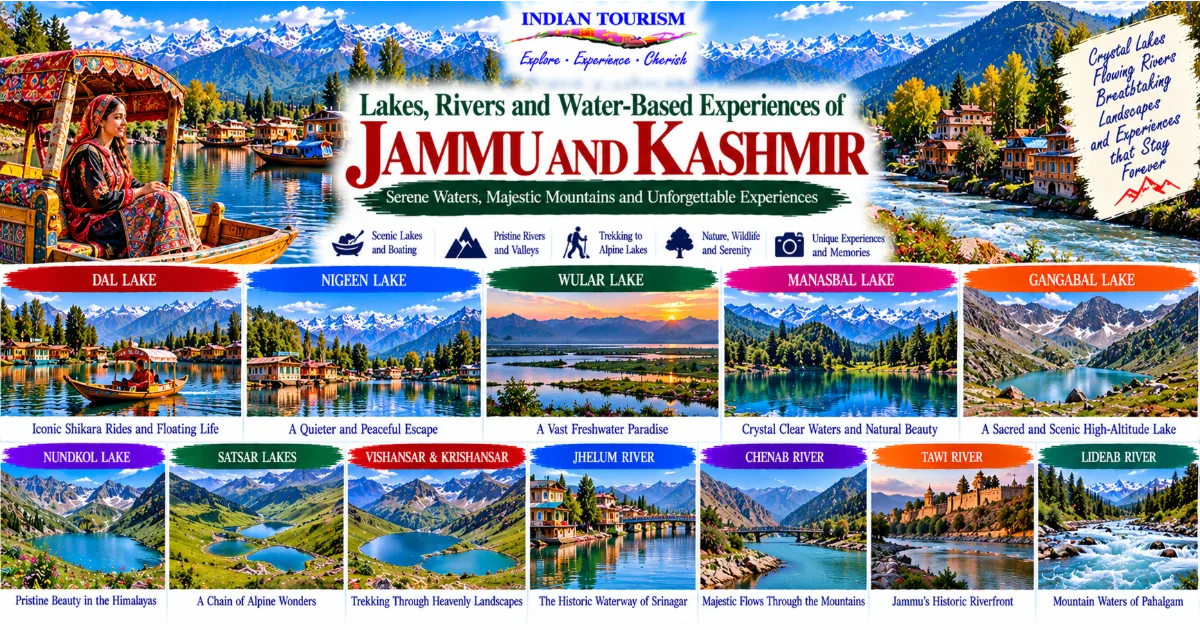
Where Himalayan Landscapes Meet Water
Jammu and Kashmir is home to some of the most memorable water landscapes in the Indian Himalayas. Mountain lakes reflect snow-covered peaks, rivers flow through valleys and historic towns, and traditional boats move gently across the waters of Srinagar. These waterways are more than scenic attractions. They support livelihoods, agriculture, transportation, tourism and cultural traditions that have developed over generations.
For travellers, the region offers a variety of water-based experiences. A shikara ride on Dal Lake provides an opportunity to appreciate Srinagar from the water, while Nigeen Lake offers a quieter atmosphere in a different part of the city. Wular Lake reveals the scale and ecological importance of a major freshwater lake, and Manasbal Lake attracts visitors interested in natural scenery and peaceful surroundings. Higher in the mountains, lakes such as Gangabal, Nundkol, Satsar and Vishansar are associated with trekking and alpine landscapes.
The rivers of Jammu and Kashmir offer another perspective on the region. The Jhelum River passes through Srinagar and connects several important parts of the Kashmir Valley. The Chenab flows through dramatic mountain terrain in the Jammu region, while the Tawi is closely associated with Jammu city. The Lidder River near Pahalgam is known for its clear mountain waters and scenic surroundings.
Water tourism varies considerably between destinations. Some lakes can be explored through relatively accessible boating experiences, while others require long hikes and careful preparation. Riverbanks may be suitable for leisurely walks and photography, but strong currents, changing water levels and cold temperatures can make swimming or entering the water dangerous.
This guide explores the lakes, rivers and water-based experiences of Jammu and Kashmir, explaining what makes each destination distinctive, how to plan a visit and how to protect the natural environments that make these landscapes so special.
Dal Lake: The Iconic Waterfront of Srinagar
Dal Lake is one of the most recognisable attractions in Jammu and Kashmir. Located in Srinagar, it is closely connected with the city's identity and is known for its houseboats, shikaras, floating gardens, mountain views and waterfront neighbourhoods. For many visitors, experiencing Dal Lake is an essential part of a journey through the Kashmir Valley.
The lake provides a different perspective on Srinagar from the one visitors experience while travelling through its streets. From the water, travellers can observe houseboats, gardens, lakeside settlements and the surrounding mountains. The reflections of the landscape change with the light and weather, creating different visual experiences throughout the day.
Shikaras are traditional wooden boats used for transporting passengers and goods. Today, many are associated with sightseeing and leisure trips, although boats also serve practical purposes within the lake community. A shikara ride can take visitors past houseboats, floating gardens and sections of the lake where daily activity continues alongside tourism.
The experience varies according to the route, duration, weather and season. Morning rides may offer soft light and quieter conditions, while late afternoon can provide warm colours across the water. During busier periods, visitors may encounter more boats and commercial activity, so choosing a route and duration that suit personal preferences is useful.
Dal Lake is also associated with floating markets and agricultural activity. Some local producers cultivate vegetables and other plants in areas connected with the lake's floating gardens. These practices illustrate the relationship between water, land use and livelihoods in Srinagar.
Houseboats provide another well-known experience. Many offer accommodation, meals and views across the water, allowing visitors to spend more time within the lake environment. Facilities differ between properties, so travellers should check heating, bathrooms, access arrangements and transport connections before booking.
Dal Lake faces environmental challenges involving waste management, wastewater, encroachment and pressure from human activity. Responsible visitors should avoid littering, use services that follow appropriate environmental practices and respect the privacy of people who live and work around the lake.
A visit to Dal Lake becomes more meaningful when travellers look beyond the famous photographs. The lake is a living environment that supports communities and contributes to Srinagar's cultural and economic life.
Nigeen Lake: A Quieter Experience on the Water
Nigeen Lake, located near Dal Lake in Srinagar, is often appreciated for its relatively peaceful atmosphere. It is surrounded by trees, settlements and mountain views, providing a setting that can feel less crowded than some of the more heavily visited parts of Dal Lake.
The lake is connected to the wider water system of Srinagar, and its surroundings include residential areas and houseboats. Visitors can experience the landscape through boating, lakeside views and accommodation options where available.
A shikara ride on Nigeen Lake may appeal to travellers seeking a slower experience. The scenery changes with the movement of the boat, revealing different perspectives of the shoreline, trees and distant mountains. The quieter setting can also be attractive to photographers, although conditions depend on the time of day and level of visitor activity.
Nigeen is a useful option for travellers who want to spend time near the water without making every activity part of a crowded sightseeing schedule. Staying in a suitable lakeside property can provide opportunities to enjoy the surroundings at different times of day.
Visitors should remember that the lake is also part of a residential environment. Boats pass through areas where people live, work and carry out daily activities. Quiet behaviour, respect for private spaces and careful photography help maintain a positive relationship between tourism and the local community.
As with Dal Lake, environmental protection is important. Waste should be disposed of properly, and visitors should avoid activities that pollute the water or damage shoreline vegetation.
The best way to appreciate Nigeen Lake is to slow down. A gentle boat ride, a quiet period beside the water or a carefully chosen overnight stay can provide a memorable experience without requiring an elaborate itinerary.
Wular Lake: A Vast Freshwater Landscape
Wular Lake, located in the Kashmir Valley, is one of the major freshwater lakes of the region and an important ecological landscape. Its broad waters, surrounding wetlands and nearby settlements make it significant for both biodiversity and local livelihoods.
The lake's appearance changes with season, rainfall, water levels and weather. On some days, its broad surface can create the impression of an inland sea, while on others the surrounding landscape becomes more prominent. This variation makes Wular an interesting destination for travellers who enjoy observing natural environments rather than focusing only on built attractions.
Wular Lake supports a range of ecological processes. Wetlands and lake habitats can provide feeding and resting areas for birds, while aquatic ecosystems contribute to the wider environmental health of the valley. The lake also plays a role in water storage and the hydrological system of the surrounding region.
Fishing and other water-related livelihoods are important to communities around Wular. The lake is not simply a tourist destination, and its resources support people whose daily lives are closely connected with its changing conditions.
Visitors interested in nature may appreciate birdwatching, landscape photography and guided exploration of suitable areas around the lake. The experience depends on access, weather and local conditions. Travellers should seek reliable local guidance rather than entering unfamiliar wetlands independently.
Water levels, shoreline conditions and currents can vary, so visitors should remain cautious near the water. Swimming should not be assumed to be safe, and any boating activity should use authorised operators and appropriate safety equipment.
Wular Lake also faces environmental pressures, including changes in water quality, habitat degradation and human activity. Responsible tourism should avoid disturbing wildlife, leaving rubbish or damaging wetland vegetation.
For travellers interested in the ecological side of Jammu and Kashmir, Wular offers a chance to understand how large freshwater systems support wildlife, communities and the wider landscape.
Manasbal Lake: Scenic Waters and Natural Beauty
Manasbal Lake, situated in the Ganderbal district, is known for its clear waters, surrounding hills and peaceful atmosphere. It is a popular destination for visitors seeking a lake experience beyond Srinagar's most famous waterfronts.
The lake's natural setting makes it attractive for photography, quiet observation and suitable boating activities. Its appearance changes with the light, and the surrounding hills create a strong visual contrast with the water. During favourable weather, the landscape can be especially appealing for travellers who enjoy calm outdoor environments.
Manasbal is also associated with aquatic vegetation and ecological interest. The lake supports natural processes that are important to the wider environment, although the health of the ecosystem depends on water quality, responsible use and protection of surrounding habitats.
The area has historical associations as well. The wider landscape has attracted settlement and human activity over time, reflecting the importance of water and accessible routes in the Kashmir Valley. Visitors interested in both nature and history may find the combination particularly rewarding.
Boating opportunities depend on current local arrangements and weather. Travellers should confirm availability before making a special journey and should use operators who follow safety requirements. Conditions can change quickly, so the absence of strong waves does not guarantee that entering the water is safe.
Visitors should avoid leaving plastic or food waste near the lake and should not disturb birds or aquatic vegetation. A peaceful environment is part of what makes the destination attractive, and protecting it benefits both residents and future travellers.
Manasbal Lake is a suitable addition to an itinerary focused on natural landscapes, particularly for visitors who want to explore the lakes beyond the central tourist areas of Srinagar.
Gangabal and Nundkol Lakes: High-Altitude Himalayan Beauty
Gangabal and Nundkol are high-altitude lakes in the Kashmir Himalayas, associated with the mountain landscapes around Mount Harmukh. Their setting is very different from the accessible lakes of Srinagar, with alpine terrain, open mountain views and a greater emphasis on trekking.
Gangabal is also an important pilgrimage destination for some Hindu devotees. Its religious associations add a cultural dimension to the natural landscape, demonstrating how mountain lakes can hold significance beyond their ecological and scenic value.
Reaching these lakes generally involves a trek rather than a short drive to a waterfront. The journey may include steep paths, uneven ground, changes in elevation and exposure to rapidly changing mountain weather. Visitors should plan according to their fitness and experience, and should consider using knowledgeable local guides or authorised trekking support.
The scenery can be striking. The lakes reflect surrounding peaks when conditions are calm, while meadows and mountain slopes create a distinctive alpine environment. Wildlife and vegetation may also be observed, but visitors should maintain distance and avoid disturbing the natural habitat.
High-altitude travel requires careful preparation. Warm clothing, rain protection, suitable footwear, sufficient water and food are important. Travellers should check the route, weather forecast, access requirements and any local restrictions before setting out.
Altitude can affect people differently, and visitors should not assume that regular fitness automatically makes a demanding trek safe. Allow time to adjust to elevation where necessary, and follow appropriate health guidance.
Camping, where permitted, should be conducted responsibly. Waste must be carried out, fires should not be started without explicit authorisation, and sensitive vegetation should be protected.
Gangabal and Nundkol offer a rewarding experience for prepared travellers who appreciate wilderness and mountain landscapes. Their beauty depends on maintaining the ecological integrity of the environment, making responsible trekking essential.
Satsar Lakes: A Chain of Alpine Waters
Satsar, often described as a group of alpine lakes, forms part of the high-mountain landscape associated with trekking routes in the Kashmir Himalayas. The lakes lie within a rugged environment of meadows, slopes and mountain terrain, offering a different experience from the urban waterfronts of Srinagar.
The name is associated with a group of lakes, although the number of visible water bodies can vary according to seasonal conditions. Snowmelt, rainfall and other environmental factors influence the size and appearance of individual lakes.
Satsar is commonly associated with longer trekking journeys, including routes linked with the Kashmir Great Lakes region. These journeys involve walking through changing terrain and require suitable preparation, navigation and an understanding of mountain safety.
The landscape is especially attractive to trekkers interested in alpine scenery. Meadows, mountain ridges and reflective water surfaces create opportunities for photography and quiet observation. However, the weather can change quickly, and mist or rain may reduce visibility.
Visitors should use established routes and follow guidance from experienced local professionals. Carrying adequate clothing, food, water and emergency supplies is important, especially where facilities are limited.
High-altitude lakes are vulnerable to trampling, waste and disturbance. Visitors should avoid washing with soaps or detergents in natural water bodies, leaving food waste and damaging vegetation around the shore.
Satsar is not a destination that should be approached as an easy roadside excursion. It is better suited to travellers who are prepared for trekking and who understand the responsibilities of visiting a fragile mountain environment.
For those who are properly equipped and plan carefully, Satsar provides a memorable experience of the quieter, wilder side of Jammu and Kashmir.
Vishansar and Krishansar Lakes: Trekking Through Alpine Landscapes
Vishansar and Krishansar are well-known alpine lakes in the Kashmir Himalayas and are often included in trekking journeys through the region's high-altitude landscapes. Their clear waters, mountain backdrops and surrounding meadows make them popular among trekkers and nature enthusiasts.
The two lakes are associated with a landscape of high mountain passes, changing weather and seasonal snow. Their appearance varies through the year, and access depends on conditions along the trekking routes.
Vishansar is known for its scenic setting and its association with trekking itineraries through the Kashmir Great Lakes region. Krishansar provides another alpine environment in which the relationship between water, mountain slopes and open meadows is particularly visible.
The journey requires preparation. Travellers should understand the route length, elevation gain, expected weather and availability of support before setting out. A trek that looks manageable on a map may become more difficult because of uneven ground, altitude or changing conditions.
Guides and support teams can help with route planning, local knowledge and safety. Visitors should choose services carefully and confirm what is included, particularly when travelling with a group.
The lakes should be treated as fragile natural environments. Avoid littering, disturbing wildlife, damaging plants or leaving behind camping equipment. Camp only where permitted and follow instructions concerning fires and waste disposal.
Photography is a major attraction, but safety should take priority over obtaining a particular viewpoint. Wet rocks and steep lake edges can be dangerous, and visitors should maintain a safe distance from unstable ground.
Vishansar and Krishansar reward travellers who enjoy trekking and who are prepared to respect the demands of the high mountains. They are best experienced with enough time to appreciate the landscape rather than rushing through a route.
Dal and Nigeen Compared With the High-Altitude Lakes
Jammu and Kashmir's lakes offer very different experiences, and choosing the right destination depends on a traveller's interests, available time and physical ability.
Dal Lake and Nigeen Lake are accessible from Srinagar and can be explored through shikara rides, lakeside stays and short visits. They are suitable for travellers who want to enjoy water scenery without undertaking a demanding mountain trek.
Wular and Manasbal provide opportunities to experience broader freshwater landscapes and explore the ecological importance of lakes in the Kashmir Valley. Depending on local arrangements, visitors may enjoy suitable boating, birdwatching and landscape photography.
Gangabal, Nundkol, Satsar, Vishansar and Krishansar offer a more remote mountain experience. Reaching these lakes usually involves trekking, and visitors must prepare for altitude, weather and limited facilities.
The differences are important when planning an itinerary. A family travelling with young children may prefer accessible waterfronts, while experienced trekkers may be interested in high-altitude routes. Travellers with mobility limitations should confirm access details rather than assuming that every lakeside area has suitable paths or facilities.
Season also matters. Urban lakes may be visited across much of the year, although weather affects comfort and boating. High-altitude destinations are more seasonally accessible and can remain affected by snow or unsafe conditions.
A well-planned journey does not need to include every lake. Selecting a few destinations that match personal interests often creates a more enjoyable experience than trying to cover too many locations in limited time.
Jhelum River: The Waterway That Runs Through Srinagar
The Jhelum River is one of the most important rivers in the Kashmir Valley. It passes through Srinagar and has long influenced the development of settlements, transport, trade and agriculture.
In Srinagar, the river forms part of the city's historic landscape. Bridges connect neighbourhoods, while buildings and commercial areas have developed along its banks. Observing the river provides a useful way to understand the city's relationship with water and the role waterways have played in everyday life.
The Jhelum has also influenced traditional forms of movement and commerce. Although modern transport has changed how people travel, the river remains a defining feature of Srinagar's geography and cultural identity.
Visitors can appreciate the river through walks along suitable public areas, views from bridges and exploration of nearby historic neighbourhoods. The experience is different from a shikara ride on Dal Lake because the river passes through a more urban environment, with buildings, streets and bridges framing the water.
The river's appearance changes according to season and water levels. Rainfall and upstream conditions can affect flow, so visitors should take official warnings seriously and avoid unsafe riverbanks during periods of high water.
Swimming should not be assumed to be safe. Currents, depth, submerged obstacles and water quality can create serious risks, even where the surface appears calm.
The Jhelum is important for the people who live along it, and visitors should avoid throwing rubbish into the water or disturbing riverbank areas. A respectful visit can include observing the landscape, learning about local history and appreciating the role the river continues to play in Srinagar.
Chenab River: Dramatic Mountain Scenery in Jammu
The Chenab River flows through parts of the Jammu region and is associated with some of the area's most dramatic mountain landscapes. Its waters pass through valleys and steep terrain, creating views that can be especially striking where roads and settlements follow the river corridor.
The river is important for agriculture, water resources and hydroelectric development. Its flow and surrounding geography have influenced the location of settlements and infrastructure, demonstrating how rivers shape both natural and human landscapes.
For travellers, the Chenab offers opportunities to appreciate river scenery from suitable viewpoints and roadside locations. The experience depends on the route and local access, as the river passes through areas with different levels of development and visitor facilities.
The river should be approached with caution. Strong currents, steep banks and changing water levels can make entering the water dangerous. Visitors should remain within safe public areas and follow local warnings, especially during heavy rain or periods of increased flow.
Some river stretches are associated with engineering projects and infrastructure, but visitors should not assume that these locations are open for unrestricted tourism. Restricted areas and safety barriers must be respected.
The surrounding landscape may provide opportunities for photography, particularly where the river contrasts with forested slopes and rugged mountains. However, travellers should avoid stopping vehicles in unsafe locations or standing on unstable edges.
The Chenab demonstrates the power of Himalayan river systems and their importance to the region's economy and geography. A responsible visit combines appreciation of the scenery with an understanding of the risks associated with fast-moving mountain water.
Tawi River: Jammu's Historic Riverfront
The Tawi River is closely associated with Jammu city and forms an important part of its physical and cultural landscape. The river flows past elevated areas and historic landmarks, including the surroundings of Bahu Fort, creating a strong connection between the city's geography and its history.
The river has influenced settlement patterns and contributed to the development of the city. Its banks and crossings have been important to movement and access, while the surrounding landscape provides views of Jammu from different perspectives.
Visitors can appreciate the Tawi through suitable public viewpoints and by combining river scenery with nearby heritage attractions. Bahu Fort is particularly useful for understanding the relationship between the city and the river because of its elevated setting.
The appearance of the Tawi varies with the season and water conditions. Periods of rain can change water levels and flow, so visitors should avoid riverbanks that are unstable or subject to warnings.
Swimming and informal water activities should not be assumed to be safe. The river may contain strong currents, changing depths and other hazards. Visitors should follow local advice and avoid entering the water where it is not explicitly permitted.
The Tawi is also part of the broader environmental system that supports settlements in the Jammu region. Keeping its surroundings clean and avoiding the disposal of rubbish into the water are important responsibilities for residents and visitors alike.
A visit to the Tawi offers a useful way to understand Jammu's landscape beyond its markets and religious landmarks. It connects the city's history with the natural geography that helped shape its development.
Lidder River: Mountain Waters Around Pahalgam
The Lidder River is one of the defining natural features of the Pahalgam area. Flowing through a landscape of mountains, forests and meadows, it is known for its scenic surroundings and the sound of moving water.
The river contributes to the character of Pahalgam, where visitors can enjoy river views while exploring the town and surrounding countryside. Its setting makes it a popular subject for photography and a natural point of interest for people who enjoy outdoor landscapes.
River walks can be a pleasant way to appreciate the scenery, provided visitors remain on suitable paths and observe local safety guidance. The water may appear inviting, but mountain rivers can be extremely cold and fast-moving. Conditions vary with snowmelt, rainfall and the time of year.
Some local tourism activities may be offered around the river or in the wider Pahalgam area. Travellers should confirm which activities are currently permitted and use authorised operators. The availability of activities may change according to weather, water conditions and administrative decisions.
Visitors should avoid standing on slippery rocks, approaching unstable banks or allowing children to play near fast-moving water without close supervision. Even shallow-looking sections can have strong currents or sudden changes in depth.
The river environment is also important for local biodiversity and the wider water system. Litter, food waste and inappropriate recreational activity can affect its condition.
The Lidder is best appreciated through quiet observation, suitable walks and responsible outdoor experiences. Its beauty lies in the combination of moving water, mountain scenery and the surrounding landscape.
Water-Based Activities: What Travellers Can Enjoy
Water-based experiences in Jammu and Kashmir range from gentle boating to nature observation and trekking around alpine lakes. The suitability of an activity depends on the location, season, weather, local permissions and the traveller's ability.
Shikara rides are among the most accessible options for visitors to Srinagar. They offer a way to explore Dal Lake and Nigeen Lake while observing houseboats, floating gardens and lakeside communities. Travellers should agree on the route, duration and price before departure and confirm what is included in the ride.
Boating may be available at other lakes, depending on local arrangements. Visitors should use authorised operators and confirm that appropriate safety equipment is provided. Conditions on a lake can change, and a calm appearance does not remove the need for caution.
Birdwatching is another rewarding activity around suitable wetlands and lake environments. Travellers should use binoculars where possible, maintain distance from wildlife and avoid approaching nesting areas or disturbing birds for photographs.
Fishing traditions are part of life around some waters, but visitors should not assume that recreational fishing is permitted everywhere. Local regulations, licences and community practices may apply, so travellers should obtain current information before attempting to fish.
Trekking around high-altitude lakes offers a different kind of experience. These journeys require physical preparation, suitable equipment and careful attention to weather and altitude. Guided arrangements may be appropriate for visitors unfamiliar with the terrain.
Swimming is not a universally safe or permitted activity in the region's lakes and rivers. Water temperature, currents, depth, water quality and local restrictions must all be considered. Travellers should never enter the water merely because others are doing so.
The best water-based experience is one that matches the destination's conditions and the visitor's abilities. Choosing safe, permitted activities allows travellers to appreciate the region without placing themselves or local communities at unnecessary risk.
Best Time to Explore the Lakes and Rivers
The best time to visit a lake or river depends on the destination and the type of experience a traveller wants. Srinagar's urban lakes can be visited in different seasons, but weather, visibility and boating conditions influence the experience.
Spring brings fresh growth and changing colours to the Kashmir Valley. It can be a pleasant time for lake visits and sightseeing, although temperatures may remain cool and weather can change quickly.
Summer is often a popular period for exploring accessible lakes and mountain destinations. Longer daylight hours can be useful for sightseeing and trekking, but popular locations may be busy. High-altitude routes remain subject to snow, weather and local access conditions.
Autumn offers changing colours across parts of the valley and can be attractive for photography. The weather becomes cooler, particularly in the mornings and evenings, so suitable clothing is important.
Winter creates a different atmosphere around the lakes, with colder conditions and possible snowfall. Boating services and access arrangements may be affected, and high-altitude trekking destinations may become inaccessible or unsafe.
Rivers can change rapidly following rainfall or snowmelt. Visitors should check local weather and official advisories before undertaking activities near the water.
Rather than choosing a season solely because it is popular, travellers should match their plans to the specific lake, the activity they want to undertake and the conditions expected during the visit.
Responsible Tourism: Protecting the Waters of Jammu and Kashmir
The lakes and rivers of Jammu and Kashmir are essential natural resources. They support communities, agriculture, wildlife and tourism, but they can be vulnerable to pollution, habitat disturbance and pressure from visitor activity.
Travellers should avoid throwing rubbish, food packaging or other waste into lakes and rivers. Where waste facilities are limited, carry rubbish until it can be disposed of properly. Plastic pollution can remain in natural environments for long periods and may affect wildlife and water quality.
Visitors should not wash with soaps, detergents or other chemicals in natural water bodies. These substances can affect aquatic environments, particularly in smaller or sensitive lakes. Toiletry use and camping practices should follow local guidance.
Wildlife should be observed from a respectful distance. Feeding birds, chasing animals for photographs or disturbing nesting sites can create harm. Visitors should also avoid damaging aquatic vegetation or walking through sensitive wetland areas.
Boat operators and accommodation providers play an important role in responsible tourism. Travellers can ask about waste management, safety practices and environmental measures when choosing services. Using reputable operators helps encourage better standards.
At high-altitude lakes, visitors should remain on established routes, camp only where permitted and carry out all waste. Fires should not be started unless explicitly allowed, because mountain vegetation and soils can be fragile.
Respect for local communities is equally important. Lakes and rivers may support fishing, transport and household activities, so visitors should avoid obstructing work or entering private areas without permission.
Protecting water environments is not separate from enjoying them. Clean, healthy lakes and rivers are central to the region's beauty and long-term tourism appeal. Responsible travel helps preserve these places for residents, wildlife and future visitors.
Planning a Water-Focused Journey Through Jammu and Kashmir
A water-focused itinerary is easiest to plan when destinations are grouped by location. Travellers staying in Srinagar can explore Dal Lake, Nigeen Lake and nearby waterfront attractions without undertaking long journeys between distant regions.
Manasbal Lake can be considered as part of a broader exploration of the Kashmir Valley, depending on transport and available time. Wular Lake offers another option for travellers interested in freshwater landscapes and ecological experiences.
Visitors who want to explore the Jhelum River can combine river views with the old city of Srinagar and its historic bridges and neighbourhoods. In Jammu, the Tawi River can be appreciated alongside heritage attractions such as Bahu Fort.
Pahalgam provides access to the Lidder River and surrounding mountain scenery. Travellers should confirm current activity arrangements and avoid assuming that every riverbank or stretch of water is suitable for recreation.
High-altitude lakes such as Gangabal, Nundkol, Satsar, Vishansar and Krishansar require a different level of planning. These destinations are better suited to travellers who have adequate time, suitable equipment and the ability to complete demanding mountain routes. Weather and access conditions should be checked carefully.
Accommodation and transport should be arranged according to the intended route. Travellers visiting remote areas should confirm available facilities and emergency support rather than relying on services that may not exist.
A flexible schedule is especially important around water. Weather, water levels and local restrictions can affect activities at short notice. Having alternative sightseeing options helps prevent disappointment and reduces pressure to continue when conditions are unsafe.
Conclusion: Experiencing the Waters of Jammu and Kashmir
The lakes and rivers of Jammu and Kashmir offer a remarkable variety of experiences, from the traditional shikaras of Dal Lake to the quieter waters of Nigeen and Manasbal. Wular Lake reveals the ecological importance of large freshwater systems, while Gangabal, Nundkol, Satsar, Vishansar and Krishansar represent the rugged beauty of high-altitude Himalayan landscapes.
The Jhelum, Chenab, Tawi and Lidder rivers add another dimension to the region's identity. They connect cities, villages, agricultural landscapes and mountain valleys, while supporting livelihoods and contributing to the character of the places through which they flow.
Travellers can enjoy boating, lake photography, birdwatching, waterfront walks and trekking, provided activities are suitable for the location and conditions. Safety must always come first, particularly near fast-moving rivers and in high-altitude environments where weather can change quickly.
The region's waters are valuable natural resources, not simply attractions for visitors. Pollution, waste and careless recreation can damage environments that support both people and wildlife. Respecting local rules, using responsible operators and leaving natural areas clean are essential parts of a rewarding journey.
A thoughtful exploration of Jammu and Kashmir's lakes and rivers reveals the close relationship between water, culture, nature and everyday life. By travelling with curiosity and care, visitors can experience the region's celebrated waters while helping protect their beauty for future generations.
#IndianTourism #JammuAndKashmir #DalLake #NigeenLake #WularLake #ManasbalLake #GangabalLake #NundkolLake #SatsarLakes #VishansarLake #KrishansarLake #JhelumRiver #ChenabRiver #TawiRiver #LidderRiver #KashmirTourism #LakeTourism #HimalayanLakes #ResponsibleTourism #ExploreIndia
