
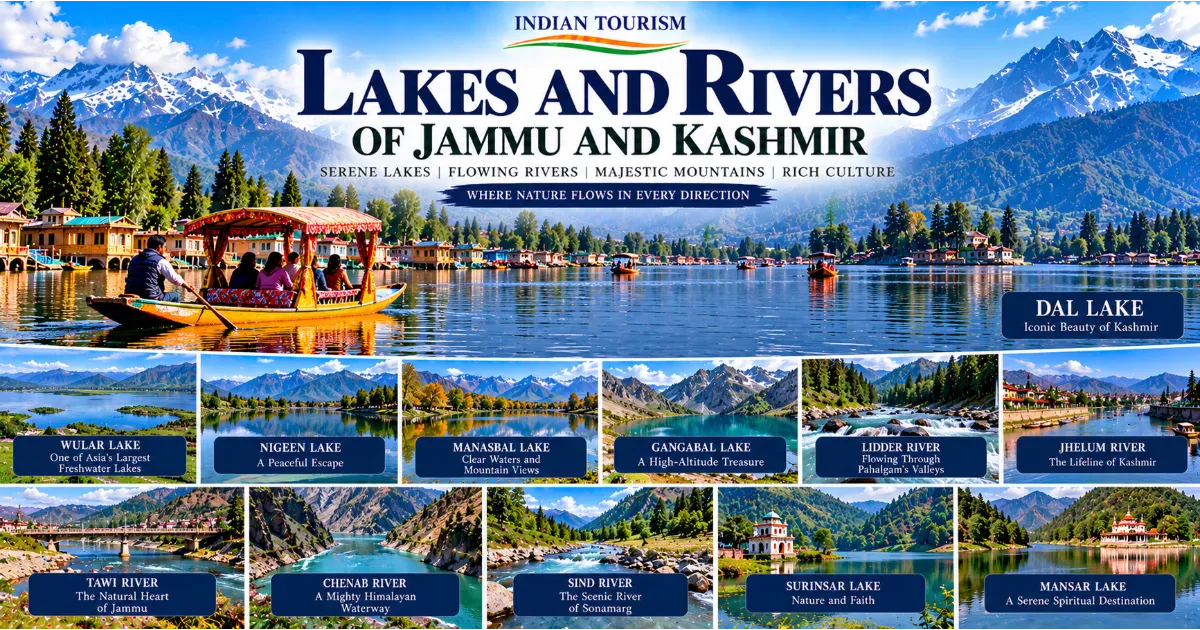
Where Mountains Meet Water
Jammu and Kashmir is a region where water plays an extraordinary role in shaping the landscape, culture and everyday life. From the famous waters of Dal Lake in Srinagar to the vast expanse of Wular Lake, from the mountain streams of Pahalgam to the powerful rivers flowing through the Jammu region, the waterways of this part of India offer some of its most memorable natural experiences. They provide beautiful settings for photography, peaceful places for reflection, habitats for wildlife and essential resources for the communities that live along their banks.
For many travellers, Kashmir first comes to mind through images of shikaras moving across Dal Lake, houseboats reflected in calm water and snow-covered mountains rising beyond the shoreline. These images are iconic, but the region's aquatic landscape is far more diverse. There are freshwater lakes surrounded by settlements, high-altitude lakes reached by mountain trails, rivers flowing through pine forests, springs emerging from the ground and streams cutting through broad green valleys.
The Jammu region adds another dimension to this story. The Tawi River flows through Jammu city, while the Chenab River passes through dramatic mountain landscapes and supports communities, agriculture and important infrastructure. The Lidder River near Pahalgam creates a distinctive setting of flowing water, wooded slopes and mountain scenery. Other rivers and streams connect villages, valleys and forests, demonstrating how closely water is linked with the geography of the region.
These lakes and rivers are not simply tourist attractions. They support drinking water supplies, irrigation, fishing, wetlands, agriculture and local livelihoods. They also have cultural and historical significance, appearing in regional traditions, poetry, stories and the daily experiences of residents.
This guide explores some of the most remarkable lakes and rivers of Jammu and Kashmir, including Dal Lake, Wular Lake, Nigeen Lake, Manasbal Lake, the Lidder River, the Jhelum River, the Tawi River and the Chenab River. It also looks at mountain lakes, natural springs, seasonal travel, responsible tourism and practical ways to explore these landscapes.
Whether you enjoy peaceful boat rides, scenic road journeys, nature photography or learning about the geography of a destination, the waterways of Jammu and Kashmir offer countless reasons to explore the region beyond its familiar tourist landmarks.
1. Dal Lake: The Iconic Jewel of Srinagar
Dal Lake is one of the most recognisable natural landmarks of Jammu and Kashmir. Located in Srinagar, it is closely associated with the region's tourism identity and is famous for its shikaras, houseboats, floating gardens and mountain views. For many visitors, a journey to Kashmir feels incomplete without spending time beside or on the lake.
The experience of Dal Lake changes throughout the day. Early mornings can be particularly peaceful, with soft light spreading across the water and the surrounding mountains appearing in the distance. Shikaras move between different parts of the lake, while local residents carry out activities connected with fishing, trade, transport and everyday life. As the day progresses, the lake becomes busier with visitors exploring its waters and nearby attractions.
One of the lake's most distinctive features is the shikara, a traditional wooden boat used for transport and sightseeing. Visitors can hire a shikara for a guided ride through selected parts of the lake, depending on local arrangements and weather conditions. These journeys may pass houseboats, floating gardens, waterside settlements and areas where vendors sell flowers, handicrafts or refreshments.
Dal Lake is also famous for its houseboats. These floating accommodations vary in size, style and facilities, providing visitors with an opportunity to stay close to the water. Some are traditional in appearance, while others offer modern amenities. When booking, travellers should check the exact location, available facilities, access arrangements and recent guest feedback rather than choosing solely on photographs.
The lake's cultural significance extends beyond tourism. Communities living around it have long depended on the water for different aspects of daily life. Fishing, horticulture, transport and trade are part of the wider relationship between residents and the lake.
Dal Lake faces environmental challenges, including pollution, waste accumulation, pressure from development and changes in water quality. Responsible tourism is therefore essential. Visitors should avoid throwing rubbish into the water, use reputable service providers and follow local instructions about boating and access.
Dal Lake is best experienced slowly. A morning boat ride, a walk along an accessible shoreline and time spent observing the surrounding landscape can reveal more than a rushed visit focused only on photographs.
2. Wular Lake: One of Asia's Major Freshwater Lakes
Wular Lake, located in the Bandipora district of Jammu and Kashmir, is one of the region's most important freshwater lakes. Its broad waters, surrounding wetlands and relationship with the Jhelum River make it significant for both biodiversity and the wider water system of the Kashmir Valley.
Unlike Dal Lake, which is strongly associated with tourism and urban life, Wular Lake has a more expansive landscape. Its size and appearance change with water levels, season and weather. On some days, the lake seems to stretch towards the horizon, while on others, changing light and distant hills create a more enclosed view.
Wular Lake plays an important ecological role. Wetlands around the lake provide habitats for birds, fish and other wildlife. The lake also supports local livelihoods through fishing and other activities connected with the water. For nearby communities, it is an important part of the environment rather than simply a scenic destination.
The lake is closely connected with the Jhelum River system. Water moves through the wider network of rivers, streams and wetlands, helping regulate the region's hydrology. Wetlands can absorb and store water, although their effectiveness depends on their condition, available space and broader environmental factors.
Birdlife can make the surrounding area interesting for nature enthusiasts. Seasonal visitors may include different species of waterbirds, although sightings depend on the time of year and local conditions. Visitors interested in birdwatching should use suitable viewing areas and avoid disturbing wildlife.
Tourism infrastructure around Wular is less concentrated than around some of Srinagar's best-known attractions. Travellers should confirm access, transport and facilities before setting out. It is wise not to assume that restaurants, accommodation or organised boating will be available at every location around the lake.
Environmental conservation is particularly important at Wular. Wetland degradation, pollution, sediment accumulation and pressure on natural habitats can affect the lake's long-term health. Visitors can help by keeping the surroundings clean, respecting local activities and avoiding disturbance to wildlife.
Wular Lake offers a different perspective on Kashmir's water landscape. It reveals the importance of wetlands, the connection between water and local livelihoods, and the beauty of a large freshwater ecosystem beyond the familiar tourist circuit.
3. Nigeen Lake: A Quieter Experience Near Srinagar
Nigeen Lake, situated near Dal Lake in Srinagar, is known for its relatively peaceful atmosphere and scenic surroundings. It is often described as a quieter alternative for visitors who want to enjoy the beauty of Kashmir's lake landscape while experiencing a different pace from some of Dal Lake's busier areas.
The lake is surrounded by trees, houses, gardens and mountain views. Its waters reflect the changing sky, and the scenery can be particularly attractive during the early morning and evening. The combination of calm water and green surroundings makes Nigeen appealing to photographers and travellers who enjoy quiet places.
Houseboats are an important part of the visitor experience here as well. Staying on or near the lake allows travellers to appreciate the changing atmosphere throughout the day. Some visitors prefer Nigeen because they want a relaxed setting, although the experience depends on the precise location, season and level of activity nearby.
Shikara rides may be available through local providers, subject to current conditions and arrangements. Visitors should agree on the route, duration and fare before beginning the ride. It is also sensible to ask whether the proposed route passes through the areas they are most interested in seeing.
Nigeen Lake is connected with the wider aquatic environment of Srinagar. Its ecological health is influenced by water quality, settlement patterns, waste management and the movement of water through connected channels. Maintaining the lake requires attention not only to tourism but also to the needs of local communities.
Visitors should respect residential areas and remember that the lake is part of a living neighbourhood. Keep noise at a reasonable level, ask permission before photographing residents closely and dispose of waste responsibly.
For travellers seeking a peaceful lake experience, Nigeen can be a rewarding addition to a Srinagar itinerary. It offers an opportunity to appreciate the quieter side of the city's relationship with water while remaining close to other attractions.
4. Manasbal Lake: Clear Water and Mountain Scenery
Manasbal Lake, located in the Ganderbal district, is another notable freshwater lake in Kashmir. It is known for its scenic setting, surrounding vegetation and the relationship between the water, nearby settlements and the hills beyond.
Compared with the best-known tourist areas around Dal Lake, Manasbal can offer a different atmosphere. The surrounding landscape is less dominated by the familiar imagery of Srinagar's houseboats and shikaras. Instead, the lake provides a setting where visitors can appreciate open water, natural scenery and the quieter rhythms of the surrounding countryside.
The lake is often associated with its aquatic vegetation and natural environment. Such vegetation plays a role in freshwater ecosystems, providing habitats and contributing to the lake's ecological processes. Its condition can also reveal information about water quality and changes in the surrounding environment.
Manasbal has been valued for its scenic qualities for generations. The combination of water, greenery and nearby hills makes it suitable for relaxed sightseeing and photography. Visitors can enjoy views from appropriate public areas and learn about the surrounding region through local interpretation where available.
The best time to visit depends on weather, water conditions and personal preferences. Warmer months may offer greener surroundings and more comfortable conditions for spending time outdoors, while autumn can provide a different visual atmosphere. Travellers should check local conditions before planning a longer excursion.
As with other lakes, Manasbal should be treated as an ecological resource as well as a tourist destination. Avoid littering, disturbing wildlife or entering restricted areas. If boating is offered, use authorised operators and follow safety instructions.
Manasbal Lake deserves a place on the itinerary of travellers who want to explore beyond Srinagar's most famous attractions. It provides another example of the variety of freshwater landscapes that make Kashmir special.
5. Gangabal Lake: A High-Altitude Treasure
Gangabal Lake is a high-altitude lake in the Kashmir Himalayas, associated with the Harmukh mountain region. It is known for its dramatic mountain setting and its significance in both natural and religious traditions.
Unlike the lakes around Srinagar, Gangabal is not a destination that most visitors can reach by a simple city excursion. Reaching the lake generally involves a trek through mountainous terrain, and the journey requires appropriate preparation, suitable weather and an understanding of the route.
The landscape around Gangabal is defined by high peaks, open alpine terrain and a striking sense of remoteness. The lake's appearance changes with the weather and light, creating a landscape that can be especially rewarding for experienced hikers and nature photographers.
Gangabal is also associated with religious traditions, including pilgrimage practices connected with the sacred landscape of Kashmir. The lake's cultural importance illustrates how natural places can become part of a region's spiritual geography.
Because of its altitude, conditions can be colder and more unpredictable than in the Kashmir Valley. Snow, rain, fog and strong winds may affect the experience. Visitors should not attempt the journey without checking current local guidance, route conditions and any applicable access requirements.
A trek to Gangabal should be planned with attention to fitness, equipment, water, food and the availability of a knowledgeable guide where appropriate. Travellers should also understand that mobile connectivity may be limited and that emergency assistance can take longer to reach remote mountain areas.
The environment around high-altitude lakes can be fragile. Visitors should carry all waste back, avoid disturbing wildlife and remain on suitable routes. Campers should follow local rules and use established sites where permitted.
Gangabal offers a remarkable experience for travellers who are prepared for a demanding mountain journey. Its appeal lies not only in the lake itself but also in the landscape and effort required to reach it.
6. The Lidder River: The Lifeline of Pahalgam
The Lidder River is one of the defining natural features of Pahalgam and the surrounding Anantnag district. Flowing through a mountain landscape of forests, meadows and settlements, the river contributes to the area's scenic beauty and supports a range of ecological and human activities.
The river is especially visible around Pahalgam, where flowing water, bridges and riverside views form a central part of the visitor experience. The sound of the water and the surrounding mountain scenery create a setting that appeals to families, photographers and travellers seeking a nature-based holiday.
The Lidder River is associated with the mountain environment of the wider Kashmir region. Its flow is influenced by seasonal conditions, including snowmelt and rainfall. Water levels can change, sometimes significantly, so visitors should be cautious near the banks and avoid entering the river without reliable local guidance.
The river supports habitats and contributes to the wider water system of the region. It also matters to people living nearby, through its relationship with agriculture, tourism and local water use.
In Pahalgam, visitors may encounter a range of activities associated with the river and its surroundings. These can include riverside walks, photography and seasonal recreation offered through local providers. The availability and safety of activities depend on the weather, water conditions and current local arrangements.
Visitors should never underestimate the power of flowing mountain water. Even when a river appears shallow, currents can be strong and stones may be slippery. Keep children under close supervision and follow all safety instructions. Avoid approaching the water during periods of heavy rain or elevated flow.
The Lidder River is most rewarding when experienced responsibly. A walk along a suitable path, a view from a safe bridge or a quiet moment listening to the water can be just as memorable as any organised activity.
7. The Jhelum River: The Waterway That Connects Kashmir
The Jhelum River is one of the most important rivers in the Kashmir Valley. It flows through a landscape of mountains, villages, agricultural areas and towns, eventually passing through Srinagar, where it forms a defining element of the city's geography.
The river is traditionally associated with Verinag in the Anantnag district, where its source is marked by a historic spring and garden complex. From there, the Jhelum continues through the valley, receiving water from tributaries and contributing to the wider regional drainage system.
In Srinagar, the Jhelum has long been connected with urban life. Its banks have supported settlement, trade and movement, while bridges link different parts of the city. The river's presence helps explain the historical development of Srinagar and its relationship with the surrounding landscape.
The river is also important to agriculture and water management. Its waters form part of a system that supports fields, orchards and settlements. Flood management, pollution control and the protection of riverbanks are therefore significant environmental concerns.
For visitors, the Jhelum offers opportunities to understand Kashmir beyond its lakes. A walk near an accessible riverside area or a view from one of Srinagar's bridges can reveal how closely the river is integrated with the city.
The river's appearance changes with season and water levels. Visitors should be cautious near the banks, avoid entering the water and follow local restrictions. Urban rivers can have strong currents, uneven edges and other hazards that are not always visible.
The Jhelum also carries historical and cultural meaning. It has been part of the region's identity for centuries and has witnessed changes in settlement, trade and everyday life. Its importance extends beyond tourism, making it one of the essential waterways to understand when exploring Jammu and Kashmir.
8. The Tawi River: The Natural Heart of Jammu City
The Tawi River is one of the most important geographical features of Jammu city. Flowing through the Jammu region, it provides a natural setting for the city and forms part of the landscape seen from historic landmarks such as Bahu Fort and Amar Mahal Palace.
The river's relationship with Jammu is both geographical and cultural. It has influenced the city's development, helped shape the surrounding terrain and remains a familiar feature in local life. Views of the Tawi from elevated areas provide a useful perspective on the way the city spreads across the landscape.
The river is part of the broader Chenab basin. Like other rivers in the region, its flow is affected by rainfall, seasonal conditions and water management. The surrounding catchment contributes to the river's character, while changes in land use and urban development can affect the condition of its banks and water quality.
For visitors, the Tawi can be included in a city sightseeing itinerary. A visit to Bahu Fort and Bagh-e-Bahu provides opportunities to observe the river from suitable viewpoints. Travellers interested in history can consider how the river and nearby elevated terrain influenced the location of important landmarks.
Visitors should avoid entering the river or approaching unstable edges. Water levels can vary, and apparently calm areas may still be unsafe. Follow local signs and restrictions, especially after rainfall.
Keeping the river environment clean is also important. Avoid leaving waste along the banks and respect areas designated for conservation or public safety.
The Tawi adds an important natural dimension to Jammu city. It reminds travellers that the region's identity is shaped not only by temples and palaces but also by the rivers that flow through its landscape.
9. The Chenab River: A Powerful Himalayan Waterway
The Chenab River is one of the major rivers of the wider Jammu and Kashmir region and an important part of the Indus river system. Its course passes through dramatic mountain terrain, creating deep valleys and landscapes that demonstrate the scale and power of Himalayan rivers.
The Chenab is formed by the confluence of the Chandra and Bhaga rivers in the western Himalayas, outside the present-day Jammu and Kashmir region, before flowing through parts of the wider Himalayan and northwestern South Asian landscape. In the Jammu region, the river is especially associated with mountain districts and valleys where steep terrain shapes both its appearance and the communities around it.
Unlike the calm waters of many tourist lakes, the Chenab is known for its powerful flow. Its river valley can be dramatic, with steep slopes, bridges and winding roads providing views of the water from elevated positions.
The river is important for water resources, agriculture and hydropower development. Projects along the wider river system reflect the significance of the Chenab for regional energy and infrastructure. At the same time, such development raises important questions about environmental protection, river ecology, local communities and the management of water resources.
Visitors should understand that the Chenab is not a casual swimming or boating destination. Its currents can be extremely strong, and access to the water may be restricted in particular locations. The safest way to appreciate the river is from authorised viewpoints and established public areas.
Road journeys through parts of the Chenab valley can offer spectacular scenery, but mountain travel requires care. Roads may be narrow, weather can change quickly and journey times may be longer than expected. Drivers should avoid stopping in unsafe places to take photographs.
The Chenab is a reminder of the immense natural forces that shape the Himalayas. Its beauty lies in its scale and movement, but responsible travel requires respect for its power and the conditions of the surrounding landscape.
10. The Sind River: The Waterway of Sonamarg
The Sind River, also known as the Sindh River, flows through the Ganderbal district and is closely associated with Sonamarg. Its route through a mountain valley contributes to the region's dramatic scenery, with flowing water framed by forests, rocky slopes and snow-covered peaks during suitable seasons.
Sonamarg is famous for its meadows and mountain landscapes, but the river is an equally important part of the destination's character. It provides a constant presence in the valley, creating opportunities for photography and quiet observation.
The river's flow is influenced by mountain conditions, including snowmelt and rainfall. As with other Himalayan rivers, water levels and currents can vary considerably. Visitors should never assume that a section of river is safe for entering simply because it looks calm.
The Sind River is connected with the wider Jhelum basin and forms part of the hydrological system that supports the region. Its water is important for the natural environment and nearby communities, while the surrounding landscape provides habitats for different forms of wildlife.
Visitors can appreciate the river from suitable roadside viewpoints and established public areas. The combination of water, mountain scenery and open sky can be particularly striking during clear weather. However, road access and local travel arrangements should be checked before visiting, especially during winter or periods of severe weather.
Activities near the river should only be undertaken where permitted and through responsible operators. Follow safety instructions and keep children away from unstable banks and strong currents.
The Sind River is a key part of the Sonamarg experience. It helps explain why the valley feels so alive, connecting the surrounding mountains with the forests, meadows and settlements below.
11. Surinsar Lake: A Scenic Lake Near Jammu
Surinsar Lake is a notable natural attraction in the Jammu region, located outside Jammu city. It is known for its scenic setting, surrounding vegetation and association with local religious traditions. Together with nearby Mansar Lake, it forms part of a landscape that attracts visitors interested in nature, culture and relaxed day trips.
Surinsar Lake offers a different experience from the urban setting of Dal Lake. Its surroundings are more closely associated with wooded hills and a quieter natural environment. Visitors can enjoy views of the water, observe the changing landscape and spend time in suitable areas around the lake.
The lake also has religious and cultural significance in local traditions. Sacred places often combine natural features with stories and beliefs passed down through generations. Visitors interested in the lake's history can learn about these traditions through local interpretation while recognising that accounts may vary.
Surinsar can be considered for a day trip from Jammu, depending on transport and current road conditions. Travellers should confirm access arrangements and the availability of facilities before departure.
The lake environment should be treated with care. Avoid littering, feeding wildlife and disturbing vegetation. If local rules restrict boating or access to particular areas, follow those instructions.
For visitors who have already explored Jammu's temples and palaces, Surinsar provides a natural counterpoint to the city's cultural attractions. It allows travellers to experience another part of the Jammu region's landscape without necessarily planning a long mountain journey.
12. Mansar Lake: Nature, Faith and Local Traditions
Mansar Lake is another important lake in the Jammu region. Surrounded by wooded hills and connected with local religious traditions, it is a popular destination for visitors seeking a combination of natural scenery and cultural experience.
The lake's shoreline and surrounding vegetation create a setting suitable for relaxed sightseeing. Visitors can enjoy the landscape from permitted public areas, observe the water and explore nearby facilities according to current access arrangements.
Mansar Lake is associated with Hindu religious traditions and attracts pilgrims as well as general tourists. The relationship between the lake and nearby sacred sites contributes to its cultural importance. Visitors should respect religious customs and follow local guidance at places of worship.
The lake can be combined with Surinsar as part of a wider excursion from Jammu, although travellers should consider the time required for road travel and the conditions on the day. It is better to enjoy a few places at a relaxed pace than to rush through several stops.
The surrounding environment supports wildlife and vegetation, and visitors should avoid activities that could disturb the ecosystem. Keep waste out of the water and use designated disposal facilities.
Mansar demonstrates the close relationship between nature and religious culture in the Jammu region. Like many lakes across India, it serves several roles at once: a scenic destination, a place of worship, a community resource and a part of the local ecological landscape.
13. Mountain Streams and Waterfalls: The Smaller Waterways of Kashmir
Beyond the major lakes and rivers, Jammu and Kashmir contains countless streams, springs and smaller waterways that contribute to the region's natural beauty. Many flow through forested valleys, meadows and mountain settlements, providing water for ecosystems and creating scenic features along roads and walking routes.
These smaller waterways are often less famous than Dal Lake or the Lidder River, but they can be just as memorable. A clear stream passing through a meadow, water moving over stones in a forest or a small cascade beside a mountain road can provide a quiet moment during a journey.
Streams change with the seasons. Snowmelt and rainfall may increase their flow, while colder periods can alter the appearance of water at higher elevations. The surrounding vegetation also changes throughout the year, affecting the character of the landscape.
Visitors should remember that small streams can still be dangerous. Slippery stones, sudden changes in flow and unstable banks can create hazards. Avoid crossing unfamiliar streams without reliable local guidance and never attempt to cross fast-moving water during heavy rain or snowmelt.
These waterways are also important environmental resources. They provide water for plants and animals, contribute to larger rivers and support local communities. Pollution or careless waste disposal can affect the wider system far beyond the point where rubbish is left.
When visiting a stream or waterfall, stay on suitable paths, avoid damaging vegetation and carry waste back to a proper disposal point. Do not use soaps or detergents in natural watercourses.
The smaller waterways of Jammu and Kashmir offer a reminder that the region's beauty is not limited to its famous landmarks. Sometimes the most rewarding discovery is a quiet stream encountered along the way.
14. The Ecological Importance of Lakes and Wetlands
Lakes and wetlands perform important ecological functions. They provide habitats for fish, birds, insects and aquatic plants, help support biodiversity and contribute to the movement and storage of water across a landscape.
In Jammu and Kashmir, freshwater lakes and wetlands form part of a wider system that includes rivers, streams, springs, agricultural areas and settlements. These environments are connected, meaning that changes in one part of the system can affect other areas.
Wetlands can store water and influence the movement of water through a catchment. Their capacity to reduce flood impacts depends on factors such as their size, condition, available storage and the nature of surrounding development. Protecting wetlands is therefore an important part of environmental management.
Lakes also support livelihoods. Fishing, tourism, agriculture and other activities depend on water resources and healthy ecosystems. The relationship between communities and lakes can be complex because the same water body may be expected to support conservation, economic activity and daily needs.
Environmental pressures include pollution, untreated waste, changes in land use, invasive species, sediment accumulation and the loss of wetland vegetation. The importance of each pressure varies by location, but all can influence the long-term health of aquatic ecosystems.
Visitors can contribute to protection efforts through simple behaviour. Avoid littering, respect wildlife, use authorised services and follow rules governing access. Do not disturb nesting birds or damage plants to create a better photograph.
Tourism businesses also have a role to play by managing waste responsibly and helping visitors understand the importance of local ecosystems.
The lakes and wetlands of Jammu and Kashmir are valuable natural assets. Their protection requires cooperation among residents, authorities, businesses and visitors, ensuring that these landscapes remain healthy for future generations.
15. Best Time to Explore the Lakes and Rivers of Jammu and Kashmir
The best time to explore the region's waterways depends on the destination, the type of activity and the weather. A lake visit near Srinagar has different requirements from a trek to a high-altitude lake or a road journey through a mountain valley.
Spring
Spring brings changing temperatures and renewed vegetation across many parts of the region. Gardens and lower-elevation landscapes can become attractive, while some higher routes may remain cold or affected by snow.
Visitors can consider lake sightseeing around Srinagar and selected destinations in the Jammu region, subject to current conditions. Mountain excursions should be checked individually because access may still be limited.
Summer
Summer is a popular period for exploring many lakes and rivers. Warmer conditions and longer daylight hours can make sightseeing more comfortable, although visitor numbers may be higher.
Dal Lake, Nigeen Lake, Manasbal Lake and the rivers around Pahalgam and Sonamarg can be appealing during suitable weather. High-altitude treks still require careful preparation and confirmation of route conditions.
Autumn
Autumn can provide attractive light and changing colours across the region. The season may be suitable for photography and relaxed sightseeing, although temperatures become cooler and daylight hours shorten.
Visitors planning longer drives should leave sufficient time to return before dark and carry clothing suitable for cooler evenings.
Winter
Winter brings cold conditions to many parts of Jammu and Kashmir. Some lakeside areas remain accessible, but higher-altitude destinations and mountain roads may face snow, ice or restrictions.
Do not plan a winter trek to a remote lake without reliable local guidance and appropriate equipment. Check weather and access information shortly before travel.
The most important rule is to plan according to actual conditions rather than relying on a general seasonal description. Weather can change rapidly in the mountains, and official guidance should take priority over a fixed itinerary.
16. How to Plan a Waterways Tour of Jammu and Kashmir
A waterways-focused trip can be organised around different parts of the region, depending on the time available and the traveller's interests. The most practical approach is to group destinations geographically rather than attempting to visit every lake and river in one journey.
For a Srinagar-focused itinerary, Dal Lake and Nigeen Lake can be combined with a visit to the Jhelum River and selected nearby attractions. Manasbal Lake may be included as a separate excursion, depending on transport and time.
Travellers interested in the wider Kashmir Valley can consider Wular Lake and other destinations after checking road conditions and local access arrangements. Birdwatchers should research seasonal conditions and use appropriate viewing areas.
A trip to Pahalgam can include the Lidder River and the surrounding mountain landscape. Visitors should allow time for the drive, local sightseeing and any activities they choose to undertake. River conditions should be checked before booking water-related recreation.
Those visiting Sonamarg can experience the Sind River as part of the wider mountain scenery. Seasonal access, weather and road conditions should determine the timing of the visit.
In the Jammu region, the Tawi River can be viewed during city sightseeing, while Surinsar and Mansar lakes can be considered for a separate excursion. The Chenab River is better appreciated through carefully planned journeys in areas where authorised viewpoints and safe access are available.
Travellers interested in high-altitude lakes such as Gangabal should treat them as trekking destinations requiring separate preparation. They should not be added casually to an ordinary sightseeing schedule.
Before departure, confirm accommodation, transport, current access rules and weather. Carry essential medication, suitable clothing and a charged phone. In remote areas, do not rely entirely on mobile connectivity.
A well-planned route allows visitors to enjoy the diversity of the region's waterways without spending the entire holiday travelling between distant locations.
17. Responsible Tourism Around Lakes and Rivers
Waterways are sensitive environments, and tourism should be managed in ways that protect both nature and local communities. Visitors can help preserve the lakes and rivers of Jammu and Kashmir by following a few important principles.
First, never throw rubbish into the water. Plastic packaging, bottles and food waste can harm wildlife, affect water quality and make popular destinations less attractive. Carry waste until a suitable disposal facility is available.
Second, respect wildlife and vegetation. Birds and other animals may be feeding, nesting or resting near the water. Avoid loud disturbances, do not feed wild animals and keep a suitable distance.
Third, use authorised boating and recreation services. Confirm safety arrangements and follow the instructions of operators. Do not enter restricted areas or participate in activities that appear unsafe.
Fourth, respect local residents. Lakeside communities depend on these environments for daily life and livelihoods. Ask permission before photographing people closely and avoid blocking access to homes, landing points or working areas.
Fifth, use water responsibly. Freshwater resources are valuable, and pollution or wasteful use can affect communities and ecosystems. Follow local guidance regarding bathing, washing and other activities near natural water sources.
Finally, support responsible local businesses. Choose providers who manage waste appropriately, explain safety requirements and respect environmental rules.
Tourism can help communities benefit from their natural heritage, but it can also place pressure on water resources and ecosystems. Responsible behaviour helps ensure that tourism remains compatible with conservation.
18. Photography Tips for Lakes and Rivers
The lakes and rivers of Jammu and Kashmir offer exceptional opportunities for photography. Water reflects light and surrounding scenery, while changing weather can transform a familiar location within minutes.
Early morning often provides softer light and may offer calmer conditions on some lakes. At Dal Lake, the combination of boats, houseboats and mountain views can create compelling compositions. Visitors should respect local activities and avoid obstructing boat operators while taking photographs.
Wide views work well for large lakes and river valleys, while closer compositions can highlight reflections, flowing water, reeds, boats and details along the shoreline. A simple composition often communicates the atmosphere of a place more effectively than a crowded frame.
Overcast weather can create soft light, while clouds moving across mountain peaks can add depth to photographs. Travellers should remain flexible and avoid assuming that every visit will provide clear skies.
Safety is essential. Never stand on unstable banks or approach dangerous water simply to obtain a better angle. On mountain roads, stop only in safe, permitted areas and avoid obstructing traffic.
Ask permission before taking close-up photographs of local residents, boat operators or workers. Respect any restrictions on photography at religious or sensitive locations.
A phone camera can capture excellent travel photographs when the composition and light are considered carefully. More important than equipment is taking time to observe the landscape and appreciate the conditions.
19. Why Water Matters to the Culture of Jammu and Kashmir
Water has influenced the culture and history of Jammu and Kashmir in many ways. Rivers and lakes have supported settlements, agriculture, trade and transport, while springs and waterways have also become part of religious traditions and local stories.
The Jhelum River is closely associated with the history of Srinagar and the wider Kashmir Valley. Its course connects towns and agricultural landscapes, while its presence has shaped the development of settlements along its banks.
Dal Lake has become a symbol of Kashmir's tourism identity, but it is also a working environment for communities who live and earn their livelihoods around the water. Shikaras and houseboats are part of the visitor experience, while fishing, horticulture and other activities connect the lake with everyday life.
In Jammu, the Tawi River forms part of the landscape surrounding the city. Its relationship with historic landmarks shows how natural features and human settlements have developed together.
Lakes such as Mansar and Surinsar also demonstrate the connection between nature and religious tradition. Their cultural significance comes from the ways communities have understood and used these places over generations.
Food, crafts and local livelihoods are also connected with water. Freshwater resources support agriculture and fishing, while tourism provides income for boat operators, guides, accommodation providers and other businesses.
Understanding these connections makes a visit more meaningful. Rather than seeing a lake or river only as a scenic background, travellers can appreciate its role in the life of the region.
The waterways of Jammu and Kashmir are therefore both natural treasures and cultural landscapes. Protecting them means recognising their importance to the environment, local communities and the history of the region.
Conclusion: Discover the Living Waterways of Jammu and Kashmir
The lakes and rivers of Jammu and Kashmir reveal a remarkable range of landscapes. Dal Lake offers the iconic experience of shikaras and houseboats, while Nigeen Lake provides a quieter atmosphere near Srinagar. Wular Lake demonstrates the ecological importance of wetlands, and Manasbal Lake offers another perspective on Kashmir's freshwater environment.
High-altitude Gangabal Lake reveals the dramatic beauty of the mountains, while the Lidder River brings life to the valley around Pahalgam. The Jhelum connects settlements and landscapes across Kashmir, the Sind River shapes the scenery of Sonamarg, and the Tawi River remains a defining feature of Jammu city. The powerful Chenab River demonstrates the scale of Himalayan waterways, while Surinsar and Mansar lakes add natural and cultural attractions to the Jammu region.
These waterways are more than beautiful places to visit. They support wildlife, agriculture, livelihoods and communities, and they carry cultural meanings that have developed over generations.
A memorable journey begins with careful planning. Check weather and access conditions, choose suitable transport, follow local safety instructions and allow enough time to enjoy each destination. Treat rivers with respect, especially during periods of strong flow, and approach high-altitude lakes with the preparation required for mountain travel.
Most importantly, travel responsibly. Keep the water clean, respect local residents and protect the landscapes that make the region special.
Whether you are watching the sunrise over Dal Lake, standing beside the Lidder River, exploring the wetlands of Wular Lake or admiring the Tawi from the historic heights of Jammu, each experience reveals another part of the region's identity.
Explore the lakes, follow the rivers and discover the living waterways of Jammu and Kashmir, where natural beauty, culture and everyday life flow together.
#IndianTourism #JammuAndKashmir #DalLake #WularLake #NigeenLake #ManasbalLake #GangabalLake #LidderRiver #JhelumRiver #TawiRiver #ChenabRiver #SindRiver #SurinsarLake #MansarLake #SrinagarTourism #PahalgamTourism #SonamargTourism #JammuTourism #NatureTourism #ResponsibleTourism #ExploreIndia #TravelIndia

