
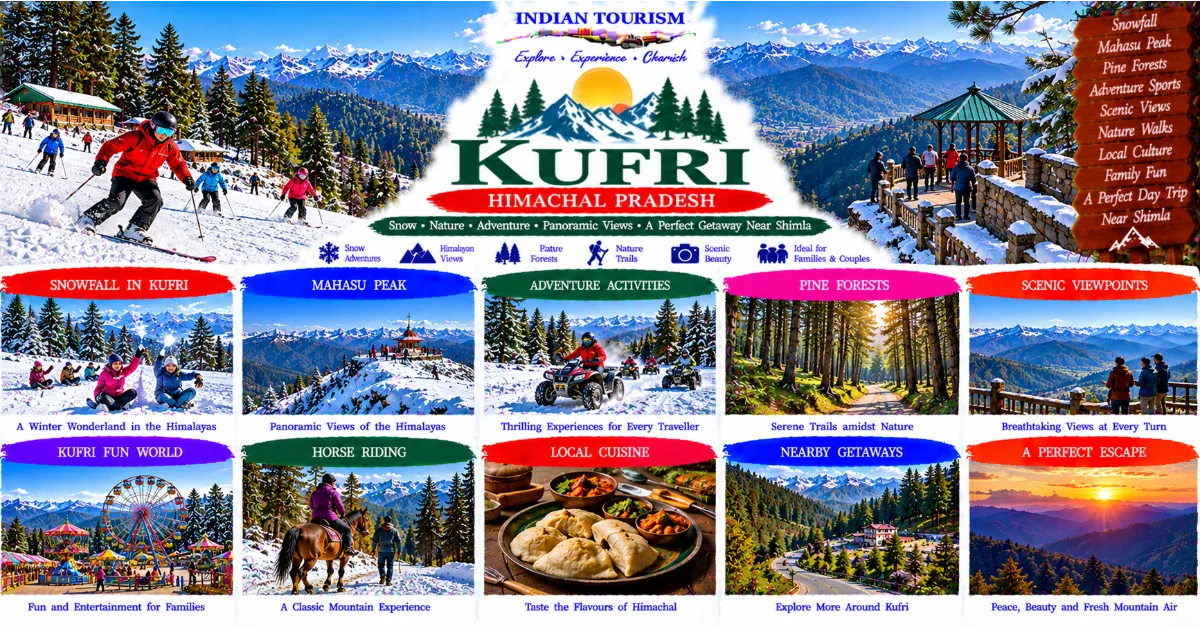
Discovering the Mountain Charm of Kufri
Kufri is one of the most popular mountain destinations in the vicinity of Shimla, offering a combination of Himalayan scenery, forested hills, seasonal snowfall and outdoor recreation. Located in Himachal Pradesh, this small hill destination attracts families, couples, nature lovers and adventure enthusiasts who want to experience the mountains without travelling too far from the state capital. Its appeal changes with the seasons. During warmer months, the surrounding hills provide opportunities for scenic walks and enjoying the fresh mountain air, while winter can bring snow-covered landscapes that attract visitors eager to experience a traditional Himalayan winter holiday.
For many travellers, Kufri is among the first places considered when planning a short excursion from Shimla. Its proximity to the capital makes it convenient for a day trip, but the surrounding region also offers reasons to explore at a slower pace. Forests, mountain viewpoints, open slopes and nearby settlements create a landscape that feels different from the busy streets and commercial areas of central Shimla. Visitors can combine a trip to Kufri with other nearby destinations, although the most enjoyable itinerary depends on weather, road conditions, personal interests and the amount of time available.
Kufri is especially associated with winter tourism. When snowfall occurs, the landscape takes on a different character, and visitors arrive to enjoy the snow, photograph the hills and participate in seasonal recreational activities. However, snowfall is not guaranteed on any particular date, and conditions can vary considerably from one winter to another. Travellers should therefore avoid planning an entire holiday around the assumption that snow will be present. Kufri remains an attractive mountain destination even when the ground is free of snow, thanks to its scenery, forest surroundings and access to the wider Shimla region.
The destination also illustrates an important aspect of tourism in the Himalayas. Popular mountain areas can experience significant visitor pressure during weekends, school holidays and periods of favourable weather. Traffic congestion, waste generation, commercial activity and pressure on local infrastructure can affect both residents and visitors. Responsible travel is therefore particularly important in places such as Kufri, where the natural environment is central to the visitor experience.
This guide explores Kufri's landscape, history, major attractions, seasonal experiences, nearby destinations, food, accommodation and practical travel considerations. Whether you are planning a family holiday, a winter excursion, a romantic mountain break or a photography trip, understanding Kufri beyond its reputation for snow can help you create a more rewarding visit.
Where Is Kufri and What Makes It Special?
Kufri is situated in the Shimla district of Himachal Pradesh, in the lower Himalayan region. Its elevated position and proximity to Shimla make it accessible to visitors travelling from the plains of northern India. The destination is connected to the surrounding mountain road network and is commonly included in itineraries covering Shimla and nearby hill settlements.
What distinguishes Kufri is the combination of accessibility and mountain scenery. Travellers do not need to undertake a long expedition to experience forested slopes, cooler temperatures and views of the surrounding hills. For visitors with limited time, this makes Kufri an appealing introduction to the natural landscape of Himachal Pradesh.
The area's character changes with elevation, vegetation and weather. Forested sections provide a sense of enclosure, while open viewpoints reveal the broader mountain landscape. During periods of clear weather, visitors may enjoy extensive views across the surrounding hills. Clouds, mist and changing light can create equally atmospheric conditions, although visibility is less predictable.
Kufri is also a destination shaped by seasonal tourism. Winter attracts visitors interested in snow and cold-weather activities, while warmer months are suited to sightseeing, nature walks and excursions through the surrounding countryside. This seasonal variation influences accommodation demand, transport conditions, the availability of activities and the overall atmosphere.
The destination's popularity means that the visitor experience can differ significantly depending on the day and time of arrival. A quiet morning may provide an opportunity to appreciate the landscape, while a busy holiday afternoon can involve traffic and crowded activity areas. Travellers who plan flexibly and allow sufficient time for transport are more likely to enjoy their visit.
The Natural Landscape of Kufri
The landscape around Kufri is shaped by the Himalayan foothills, forested slopes and seasonal weather. Its scenery combines mountain ridges, woodland, open areas and distant views that become especially attractive when the air is clear. Unlike high-altitude destinations such as Spiti Valley, Kufri remains relatively accessible and does not generally require the same level of preparation associated with remote Himalayan expeditions.
Forests are an important part of the region's natural character. Coniferous trees and other mountain vegetation contribute to the landscape, providing shade, habitat and a distinctive woodland atmosphere. Walking through these areas can be a pleasant experience for visitors who want to spend time in nature rather than concentrating entirely on commercial attractions.
The surrounding hills also offer opportunities for photography. Wide views, forest paths, changing clouds and seasonal differences create a variety of subjects. In winter, snow may transform the colours and textures of the landscape. During warmer months, the hills can appear greener, and the contrast between trees, open slopes and the sky creates a different visual experience.
Visitors should remember that mountain environments can be fragile. Forest paths may be affected by erosion, and litter can accumulate quickly in busy areas. Travellers should remain on permitted routes, avoid damaging vegetation and take their waste with them when appropriate. Wildlife should be observed from a distance, and visitors should never feed wild animals or attempt to approach them for photographs.
The natural beauty of Kufri is not limited to a particular season. Snow may be a major attraction for some visitors, but forest scenery, mountain air and the changing landscape provide reasons to explore throughout much of the year when conditions permit.
Winter in Kufri: Snow, Cold Weather and Seasonal Excitement
Winter is the season most closely associated with Kufri tourism. When snowfall occurs, the surrounding slopes and trees can become covered in white, creating the kind of Himalayan winter landscape many travellers hope to experience. The possibility of snow attracts families, couples, photographers and visitors from warmer regions who want to enjoy a different climate.
Snow can change the character of a familiar landscape within a short period. Forests appear quieter, mountain views become more dramatic and outdoor activities take on a seasonal appeal. Visitors often enjoy walking through permitted snow-covered areas, photographing the scenery and experiencing the cold mountain atmosphere.
However, winter conditions are variable. Snowfall depends on weather patterns, elevation and the timing of a visit. Some periods may bring substantial snow, while others may be relatively dry. Travellers should check current weather forecasts and local reports before departure instead of relying solely on photographs from previous winters.
Cold weather also requires preparation. Warm layered clothing, gloves, a hat, waterproof outerwear and footwear with good grip can make a major difference. Roads and walking surfaces may become slippery when snow or ice is present. Visitors should avoid running on icy slopes, entering restricted areas or attempting activities that are unsuitable for their experience.
During periods of heavy snowfall, roads may become congested or difficult to use, and transport schedules can change. Travellers should allow extra time, follow local instructions and avoid making tight onward connections. If weather conditions become unsafe, postponing an excursion is a sensible decision.
Winter is an exciting time to visit Kufri, but the best experience comes from balancing enthusiasm with realistic expectations. Snow is a natural event rather than a guaranteed tourist service, and safe travel should always take priority over reaching a particular viewpoint.
Kufri During Spring and Summer
Spring and summer offer a different experience from the winter months. As temperatures rise and the landscape changes, Kufri becomes a destination for scenic excursions, forest walks and relaxation in the hills. Visitors escaping the heat of the plains often appreciate the cooler mountain environment, especially when temperatures in major cities become uncomfortable.
During these months, the absence of snow does not diminish the area's appeal. Forested slopes, open viewpoints and surrounding mountain scenery provide opportunities for photography and leisurely exploration. Families may find the conditions more convenient for walking than during icy winter weather, although the terrain can still be uneven and steep in places.
Summer is also a busy period across the wider Shimla region. School holidays and family travel can increase visitor numbers, particularly on weekends. Roads may become congested, and popular activity areas can feel crowded. Travellers can reduce stress by starting early, booking accommodation in advance if staying overnight and avoiding an overly ambitious schedule.
Spring can provide pleasant conditions for short walks and sightseeing, but mountain weather can still change quickly. Visitors should carry an extra layer of clothing and check the forecast before heading into forested or exposed areas.
The warmer months are especially suitable for travellers who want to combine Kufri with Shimla's heritage attractions, markets and cafés. A day can begin with a trip into the surrounding hills and end with an evening walk through the historic centre of the capital. This combination offers a balance between nature and urban sightseeing.
Autumn and the Changing Mountain Atmosphere
Autumn can be a rewarding period for visiting Kufri, particularly for travellers who prefer a quieter atmosphere and enjoy scenic landscapes. Conditions vary from year to year, but clear days may provide excellent visibility across the surrounding hills. The weather can be comfortable for sightseeing, although temperatures tend to fall as winter approaches.
The seasonal transition changes the appearance of the landscape. Forests, ridges and distant mountain views can create attractive photographic compositions, especially during periods of clear light. Visitors interested in walking and nature observation may appreciate the opportunity to explore without the crowds sometimes associated with peak holiday periods.
Autumn can also be a practical time for travellers who want to include several destinations in a single trip. Kufri can be combined with Shimla, Mashobra or Naldehra, depending on road conditions and the amount of time available. A flexible schedule is still important because fog, rain or unexpected weather can affect visibility and transport.
Travellers should bring suitable clothing for changing temperatures, particularly if they plan to remain outdoors in the early morning or evening. Even when afternoons are comfortable, conditions can become chilly after sunset.
Autumn demonstrates why Kufri should not be considered only a snow destination. Its appeal lies in the surrounding landscape and the opportunity to experience the Himalayan foothills in different seasonal conditions.
Kufri Fun World and Family Entertainment
Kufri is associated with recreational attractions that appeal to families and visitors looking for organised entertainment alongside mountain sightseeing. Kufri Fun World is one of the best-known names connected with the destination's tourism activities. Visitors may encounter rides or recreational facilities depending on the operating arrangements and current conditions.
Families should check opening information, access arrangements, age or height requirements and applicable charges before visiting. Facilities and available activities can change, and not every attraction operates in the same way throughout the year. A quick check before departure helps avoid disappointment and makes it easier to plan the rest of the day.
The value of recreational attractions depends on the interests of the group. Children may enjoy organised activities, while adults may prefer the scenery and forest environment. Travellers should compare the cost and suitability of activities rather than assuming that every available option is necessary to enjoy Kufri.
Safety should remain a priority. Visitors should follow staff instructions, use equipment properly and avoid activities that appear poorly maintained or unsuitable for prevailing weather conditions. In winter, snow and ice can affect access and make certain recreational experiences more difficult.
A family trip can combine a visit to an organised attraction with time spent appreciating the surrounding landscape. Allowing space for meals, rest and unhurried sightseeing often produces a more enjoyable day than attempting to complete every activity on offer.
Mahasu Peak: A Mountain Viewpoint Near Kufri
Mahasu Peak is among the best-known natural attractions associated with the Kufri area. Its elevated setting and surrounding forest scenery make it appealing to visitors interested in mountain viewpoints and outdoor exploration. On days with favourable visibility, the landscape can provide broad views of the surrounding Himalayan region.
Reaching the viewpoint may involve walking or using locally available transport arrangements, depending on the route and current access conditions. Visitors should confirm the practical details before setting out. The condition of paths, weather and the amount of walking required can affect the suitability of the excursion for different travellers.
The journey is part of the experience. Forested slopes, changing vegetation and the gradual opening of mountain views create a sense of moving away from the busier tourist areas. Visitors who enjoy photography may find the route particularly rewarding, although it is important to stay on permitted paths and respect local instructions.
Mahasu Peak can be attractive throughout the year, but the experience changes with the seasons. Winter may bring snow and icy surfaces, while warmer months can provide easier walking conditions. Fog or cloud can reduce visibility, so travellers should not expect panoramic views every day.
Visitors should wear appropriate footwear and avoid taking unnecessary risks to obtain photographs. It is better to enjoy a safe viewpoint than to approach unstable edges or enter restricted terrain. If travelling with children or older adults, consider the route's difficulty and allow enough time for the return journey.
Nature Walks and Forest Exploration
Kufri's forested surroundings provide opportunities for visitors to enjoy nature at a slower pace. While some travellers focus on recreational attractions or seasonal snow, others may prefer walking through permitted woodland areas and appreciating the sounds, textures and changing light of the mountain environment.
A nature walk can be simple and rewarding. Visitors may notice differences in tree species, observe birds, photograph the forest and enjoy views that are easy to miss when travelling by vehicle. Walking also creates opportunities to experience the landscape without the noise and pace of crowded activity zones.
The route should be selected according to ability, weather and available daylight. Not every path is suitable for all visitors, and some may become slippery after rain or snow. Travellers should ask locally about permitted routes, avoid entering private land and use a guide when an unfamiliar route requires local knowledge.
Forest environments should be treated with care. Visitors should not leave food waste, disturb birds or other wildlife, break branches or remove plants. Loud music and careless behaviour can affect both wildlife and other visitors seeking a peaceful experience.
Those planning longer walks should carry drinking water, a charged phone, suitable clothing and basic essentials. Mobile connectivity may vary, and visitors should not rely entirely on a phone for navigation in unfamiliar areas.
Nature exploration can be one of the most memorable parts of a Kufri trip because it allows visitors to slow down and appreciate the mountain environment beyond the most commercialised attractions.
Horse Riding and Animal Welfare Considerations
Horse riding has historically been associated with tourist activities in parts of Kufri and other Himalayan destinations. Visitors may encounter local operators offering rides towards viewpoints or along designated routes. The availability, routes, costs and operating arrangements can vary, so travellers should obtain clear information before making a decision.
Anyone considering a ride should assess the condition of the animals, the suitability of the route and the quality of supervision. Animals should appear healthy, receive adequate rest and water, and be handled without cruelty. Visitors should avoid participating when an animal appears injured, exhausted or distressed.
The rider's own safety is also important. Travellers should ask about the duration and difficulty of the route, whether protective equipment is provided and whether the operator has appropriate experience. Children should not be placed on an animal without suitable supervision and clear guidance.
Walking is a reasonable alternative for visitors who prefer not to participate in animal-based activities. A visit to Kufri does not require a horse ride to be worthwhile. The forest scenery, mountain views and surrounding attractions can be enjoyed in other ways.
Responsible tourism involves making informed choices about the experiences purchased. By prioritising animal welfare and personal safety, visitors can help encourage more responsible practices in destinations where traditional tourist activities remain part of the local economy.
Kufri for Photography and Nature Lovers
Kufri offers a variety of photographic subjects, including mountain ridges, forests, seasonal snow, open slopes and the changing weather of the Himalayan foothills. The destination's relatively easy access makes it attractive to visitors who want scenic photographs without undertaking a demanding expedition.
Early morning can be rewarding because the light may be softer and visitor numbers may be lower. On clear days, distant ridges and mountain contours become more visible. After snowfall, trees and open slopes can provide striking compositions, although cold conditions require protection for both the photographer and electronic equipment.
Clouds and mist can create atmospheric images, but visibility is unpredictable. Photographers should remain flexible and avoid treating a particular viewpoint as guaranteed to provide a clear panorama. Rain and fog may obscure the mountains while still creating opportunities to photograph forest textures and close-up details.
Responsible photography matters. Visitors should avoid blocking paths, entering restricted areas or disturbing wildlife for a better image. People should be asked for permission before being photographed closely, particularly when their image may be published publicly. Commercial photography may require additional permission in certain locations.
Nature lovers can also use the visit to observe birds and plant life, but wildlife should be viewed quietly from a respectful distance. Feeding animals or using playback sounds to attract birds can disrupt natural behaviour.
A good photography trip combines patience with respect for the environment. Sometimes the most memorable image comes from an unexpected change in light rather than from the most famous viewpoint.
Nearby Attractions to Combine with Kufri
One of Kufri's greatest advantages is its location near several other destinations in the Shimla region. Visitors with enough time can combine the area with heritage sightseeing, forest retreats and scenic countryside. However, a realistic itinerary should account for road conditions and the time required to move between places.
Shimla is the natural companion destination for most visitors. The Ridge, Mall Road, Christ Church, Gaiety Theatre and other heritage landmarks provide a cultural and historical contrast to Kufri's mountain scenery. A traveller can spend part of a holiday exploring the city's architecture and shopping streets, then use another day to enjoy the surrounding hills.
Mashobra offers forested surroundings and a quieter atmosphere. It may appeal to visitors who prefer nature-oriented accommodation and less commercialised surroundings. Naldehra is associated with scenic landscapes and golf heritage, while Chail offers a distinctive combination of forest scenery and historical associations.
The best combination depends on the length of the stay. A short trip may include Shimla and Kufri, while a longer holiday can add one or two nearby destinations. Attempting to visit every location in a single day may leave little time to appreciate any of them.
Transport should be planned with local conditions in mind. Mountain roads are winding, and congestion can increase during weekends and holidays. Weather may also affect travel times. Visitors should confirm routes and current access arrangements before leaving rather than relying exclusively on a map's estimated journey duration.
What to Eat in Kufri
Food is an important part of a mountain holiday, and Kufri offers opportunities to enjoy meals and refreshments during a day of sightseeing. Depending on the establishment, visitors may find regional Himachali dishes, familiar Indian meals, snacks, hot drinks and simple food suited to cold weather.
Traditional Himachali cuisine includes dishes such as siddu, babru and preparations served during community feasts known as dham. Availability varies between restaurants and local establishments, so travellers interested in regional food may need to ask about local specialities rather than assuming every dish will be available everywhere.
Siddu is a steamed bread preparation found in parts of Himachal Pradesh, often served with ghee or other accompaniments. Babru is a stuffed bread, while dham refers to a traditional festive meal whose dishes vary by region. These foods offer an introduction to the state's culinary traditions and the role of local ingredients in mountain cooking.
Hot beverages and warm meals can be especially welcome during winter. Visitors should choose establishments that maintain reasonable hygiene standards and should check prices before ordering when menus are not clearly displayed.
Travellers with dietary restrictions or food allergies should communicate their requirements clearly. In smaller establishments, ingredients and preparation methods may differ from those used in larger restaurants. Drinking water should be obtained from a safe source.
Eating locally can support small businesses and make the trip more culturally interesting. Rather than treating meals as an afterthought, visitors can use food stops to rest, warm up and learn about the culinary traditions of Himachal Pradesh.
Shopping and Local Purchases
Shopping in Kufri is generally connected to the visitor experience, with opportunities to browse souvenirs, winter accessories and products sold near popular activity areas. The range and quality of goods vary, so travellers should compare options before making purchases.
Woollen clothing and cold-weather accessories can be useful for visitors who arrive without adequate winter gear. However, buying essential items before travelling may provide a wider choice of sizes and quality. If purchasing clothing locally, visitors should examine materials, stitching and fit.
Souvenirs can help preserve memories of a trip, but responsible purchasing is important. Travellers should avoid products made from protected wildlife or materials that raise conservation concerns. Supporting genuine local crafts and small businesses can provide more meaningful benefits than buying mass-produced items without knowing their origin.
Prices may vary between vendors, particularly in busy tourist areas. Visitors should ask politely about prices and confirm costs before accepting services or purchasing goods. Clear communication can help avoid misunderstandings.
Shopping should remain secondary to the overall experience of the landscape. A thoughtful visit can include a small local purchase while leaving plenty of time to appreciate the forests, viewpoints and surrounding mountain scenery.
Best Time to Visit Kufri
The best time to visit Kufri depends on the experience you want. Winter is the most popular season for travellers hoping to encounter snow, while spring, summer and autumn offer opportunities for sightseeing, forest walks and mountain views.
December through February is generally associated with winter tourism, but snowfall varies from year to year. Visitors should check recent weather conditions before departure. During periods of snow, road conditions can change quickly, and suitable clothing and footwear become essential.
March and April can provide a transition towards milder weather, although cold conditions may continue and higher areas may still experience winter effects. This period can suit travellers who want to enjoy the mountain environment without relying entirely on snow activities.
May and June are popular because visitors from warmer regions seek cooler conditions. The wider Shimla region can be busy during school holidays, and traffic may increase around major attractions. Advance accommodation planning is useful for overnight stays.
July through September brings monsoon conditions to the region. Rain can make the landscape greener, but heavy showers may cause landslides, road disruptions and slippery paths. Travellers should monitor official weather information and avoid unnecessary journeys during severe conditions.
September and October can offer pleasant sightseeing opportunities when the weather is stable. Clear days may provide attractive views, while cooler temperatures signal the approach of winter.
There is no universally perfect month for every visitor. Travellers should choose their dates according to the desired experience, tolerance for crowds and willingness to adapt to changing weather.
How to Reach Kufri
Kufri is commonly reached by road from Shimla. Visitors arriving from other parts of India often travel to Shimla first and then continue to Kufri by taxi, private vehicle or other locally available transport. The journey passes through mountain terrain, so travel time depends on traffic, road conditions, weather and the starting point.
Shimla has road connections with several cities in northern India, and the Kalka-Shimla Railway provides a scenic rail connection between Kalka and Shimla. Travellers arriving by train can arrange onward transport from Shimla, but they should allow sufficient time between connections.
The road to Kufri is relatively straightforward under favourable conditions, but congestion can become significant during peak holiday periods. Weekends, school holidays and snowfall events may attract large numbers of visitors. Starting early can help reduce delays, although actual conditions should always guide the plan.
During winter, icy roads and snowfall may affect transport. Travellers should use suitable vehicles and drivers experienced in mountain conditions. If local authorities or transport operators advise against travel, postponing the journey is safer than attempting to continue.
Visitors should confirm the exact pickup point, fare and expected journey arrangements before departure. If travelling with children, older adults or people with mobility limitations, consider how easily they can enter and exit the vehicle and move around the destination.
Accommodation: Staying in Kufri or Shimla
Travellers can choose between staying in the Kufri area and using Shimla as a base for day trips. Each option has advantages, and the best choice depends on budget, preferred atmosphere and transport arrangements.
Staying in Kufri may suit visitors who want to spend more time in the surrounding landscape or enjoy a quieter setting away from the busiest parts of Shimla. Some properties offer mountain views and access to nearby nature-oriented experiences. However, travellers should check road access, available facilities and the distance to restaurants or other services before booking.
Shimla provides a wider range of accommodation choices, including hotels, guesthouses and other types of stays. A centrally located property can make it easier to explore the Ridge, Mall Road and historic attractions on foot. It can also provide access to a larger selection of restaurants and transport services.
During peak winter periods, summer holidays and major festival dates, accommodation demand may increase. Booking in advance is advisable if travel dates are fixed. Travellers should read the property details carefully and confirm heating, parking, meal arrangements and cancellation conditions where relevant.
Those planning to visit during heavy rain or snow should pay particular attention to road access. A property with beautiful views may be less convenient if the approach road becomes difficult to use in poor weather.
Accommodation should support the holiday rather than complicate it. A well-chosen base allows visitors to spend more time enjoying the destination and less time dealing with avoidable transport or logistical problems.
A Suggested One-Day Kufri Itinerary
A one-day visit to Kufri can be enjoyable if the schedule remains flexible. The exact plan should depend on the weather, road conditions, interests and the time available.
Begin the journey from Shimla in the morning, allowing extra time for traffic. After arriving, spend some time appreciating the landscape and exploring permitted areas around the main visitor zones. If conditions are suitable, choose one principal attraction or viewpoint rather than trying to cover every activity.
Visitors interested in mountain scenery can prioritise the forest environment and a viewpoint such as Mahasu Peak, provided access is suitable on the day. Families may prefer to include an organised recreational attraction if it is operating and appropriate for the group. In winter, the decision should be based on actual snow and safety conditions rather than expectations created by photographs.
Allow time for lunch or a warm drink before beginning the return journey. If traffic is heavy or weather deteriorates, it is sensible to leave earlier rather than risk a late return. Travellers who want to include additional destinations should consider whether there is enough time to enjoy them without rushing.
The most important principle is to avoid overplanning. Kufri's value lies in its mountain setting, and a relaxed visit can be more rewarding than a long list of activities completed under pressure.
A Two-Day Kufri and Shimla Travel Plan
A two-day itinerary allows visitors to explore Kufri while also discovering the historic centre of Shimla. It provides a useful balance between outdoor scenery and cultural sightseeing.
On the first day, focus on Shimla. Explore the Ridge, Christ Church and Mall Road, and visit another heritage attraction if time and opening arrangements permit. Enjoy a meal in the town and spend the evening walking through the central area. This day introduces visitors to Shimla's history and urban character.
On the second day, travel to Kufri after checking the weather and road conditions. Choose the attractions that best match your interests. Visitors seeking nature can prioritise forest scenery and viewpoints, while families may prefer suitable recreational activities. During winter, allow additional time for cold-weather clothing, road congestion and possible changes in access.
If the weather is poor, the order of the days can be reversed. This flexibility is particularly valuable during the monsoon and winter, when conditions may change rapidly.
A two-day trip is a practical option for couples, families and first-time visitors who want to experience both the cultural heritage of Shimla and the natural surroundings of Kufri. Travellers with more time can extend the holiday by adding Mashobra, Naldehra or Chail.
Responsible Tourism in Kufri
Kufri's natural environment is central to its popularity, making responsible tourism essential. Visitor numbers can increase sharply during snowfall and holiday periods, placing pressure on roads, waste facilities, forest areas and local services. Small actions by travellers can help reduce these effects.
Visitors should dispose of waste properly and avoid leaving plastic bottles, food wrappers or other rubbish in forests and viewpoints. Carrying reusable items where practical can reduce unnecessary waste. Travellers should also use water carefully and avoid polluting streams or other natural water sources.
Forest paths should be treated with care. Visitors should remain on permitted routes, avoid breaking branches or removing plants and refrain from disturbing wildlife. Loud music, feeding animals and chasing wildlife for photographs can damage the experience for other visitors and create risks for animals.
Responsible choices also apply to commercial activities. Travellers should check the safety and suitability of recreational services, use operators who provide clear information and avoid activities that appear unsafe or involve animal mistreatment. A low price is not worth accepting unnecessary risk or supporting harmful practices.
Respect for local residents is equally important. Visitors should avoid excessive noise, ask permission before photographing people and follow local instructions regarding access and parking. Supporting local businesses can help distribute tourism benefits more widely.
The best way to enjoy Kufri is to recognise that the mountain environment is not an unlimited resource. Thoughtful travel helps protect the scenery, wildlife and community life that make the destination worth visiting.
Who Should Visit Kufri?
Kufri can appeal to a wide range of travellers, although the best experience depends on expectations and mobility. Families often appreciate its accessibility from Shimla and the possibility of combining sightseeing with organised activities. Couples may enjoy the mountain atmosphere, scenic drives and nearby forested accommodation.
Nature lovers can focus on the woodland environment and surrounding viewpoints, while photographers may appreciate the changing light and seasonal landscape. Visitors who enjoy winter weather may prefer a trip during a period when snow is forecast, while those who dislike cold conditions may find spring, summer or autumn more comfortable.
Adventure enthusiasts should choose activities according to their experience and the conditions on the day. Kufri is not a substitute for a properly planned high-altitude expedition, and visitors should not assume that every outdoor activity is safe in every season.
Travellers seeking solitude should consider visiting outside major holidays and peak snowfall periods. Even then, popular locations may attract other visitors, and complete quiet should not be expected everywhere.
Kufri is best suited to people who appreciate mountain scenery and are willing to adapt their plans to the weather. Visitors who arrive with flexible expectations are more likely to enjoy the destination in different seasonal conditions.
Conclusion: Experience the Natural Charm of Kufri
Kufri remains one of the most accessible ways to experience the mountain environment around Shimla. Its forested slopes, open viewpoints, seasonal snowfall and recreational attractions create a varied travel experience that appeals to families, couples and nature lovers. While winter snow has made the destination particularly famous, the surrounding landscape offers reasons to visit during other seasons as well.
Mahasu Peak, woodland walks and nearby recreational attractions provide different ways to explore the area. Its location also makes it easy to combine a visit with Shimla's historic streets, colonial architecture, cafés and cultural landmarks. Travellers with additional time can consider Mashobra, Naldehra or Chail, provided the itinerary allows enough time for safe and comfortable travel.
The most successful Kufri holiday begins with realistic planning. Snowfall cannot be guaranteed, roads may become congested and mountain weather can change quickly. Checking current conditions, wearing appropriate clothing, allowing extra travel time and choosing suitable activities all contribute to a better experience.
Responsible tourism is equally important. Keeping forests clean, respecting wildlife, treating local residents considerately and making informed choices about recreational services help preserve the area's natural and cultural value.
Kufri is not simply a place to search for snow. It is a mountain destination where visitors can enjoy changing seasons, forest scenery and the wider character of the Himalayas. Approached with curiosity and care, it can become a memorable part of a journey through Himachal Pradesh.
As part of our Indian Tourism series, this guide explores Kufri as one of the important destinations near Shimla. The journey through Himachal Pradesh continues with other valleys, historic settlements, sacred sites and mountain landscapes, each offering a different perspective on the state's remarkable diversity.
#Kufri #KufriTourism #HimachalPradesh #IndianTourism #ExploreKufri #ShimlaTourism #HimalayanTravel #KufriSnowfall #MahasuPeak #HimachalTourism #MountainDestinations #NatureTravel #FamilyTravel #WinterTravel #ResponsibleTourism #IncredibleIndia
