
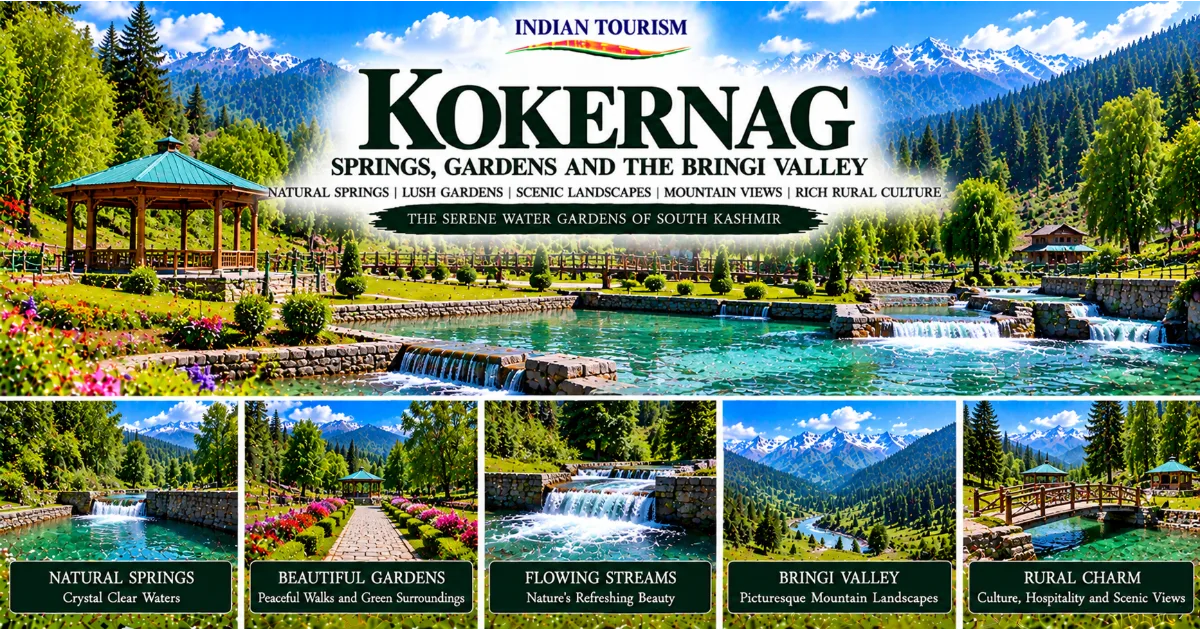
Discovering the Water Gardens of South Kashmir
Jammu and Kashmir is famous for its lakes, mountains, meadows and historic gardens, but some of its most distinctive landscapes are built around natural springs. In south Kashmir, Kokernag is one of the destinations where flowing water, landscaped gardens and the surrounding countryside come together to create a peaceful travel experience. Located in the Anantnag district, Kokernag offers a different perspective on Kashmir from the busy lakeside promenades of Srinagar and the high mountain scenery of Gulmarg.
The destination is particularly associated with its natural springs and garden setting. Water emerges from the ground and flows through channels, creating a cool and refreshing atmosphere. The landscaped surroundings provide space for leisurely walks, photography and quiet observation. Beyond the gardens, the wider countryside includes villages, cultivated fields and mountain scenery that reflect the character of south Kashmir.
Kokernag is also a useful destination for travellers who want to explore the region beyond its most familiar tourist centres. It can form part of a broader journey through Anantnag and the surrounding areas, connecting visitors with other springs, valleys, heritage sites and rural landscapes. Its appeal is not based on a single dramatic mountain peak or a large urban attraction. Instead, it comes from the combination of water, greenery, local life and a relaxed pace.
The experience changes with the seasons. Spring brings renewed growth, summer provides a welcome setting for outdoor visits, autumn offers cooler air and changing colours, while winter can bring cold weather and restrictions that affect access. Travellers should confirm current opening arrangements and local conditions before setting out.
This guide explores Kokernag's location, natural springs, garden landscape, best visiting season, travel arrangements, nearby experiences, accommodation considerations and responsible tourism practices. Whether you are planning a family outing, a photography trip or a longer journey through south Kashmir, Kokernag deserves consideration as a destination where water and landscape shape the visitor experience.
1. Where Is Kokernag Located?
Kokernag is located in the Anantnag district of Jammu and Kashmir, in the southern part of the Kashmir Valley. It lies within a landscape of settlements, cultivated areas, hills and waterways that connect different parts of the region.
The destination is known for its spring complex and garden surroundings. Visitors commonly reach Kokernag by road from Anantnag or Srinagar, depending on their starting point and wider itinerary. The route passes through populated areas and countryside, providing a glimpse of rural life in south Kashmir.
Kokernag's location makes it suitable for a day excursion or as part of a longer regional journey. Travellers exploring the area may also consider other destinations such as Verinag, Daksum and Aharbal, although each requires separate planning according to the route, available time and current road conditions.
The journey should be planned around realistic travel times. Distances on a map may not reflect the time required to move through local traffic, narrow roads or areas affected by weather. If several destinations are included in one day, visitors should allow enough time to enjoy each place rather than rushing through them.
Kokernag is more developed as a visitor destination than some remote mountain meadows, but services and opening arrangements can still vary. Confirm access, transport and any relevant local requirements before travelling.
2. Why Kokernag Is Famous
Kokernag is best known for its natural springs and landscaped gardens. Water is central to its identity, shaping both the physical environment and the experience visitors have while exploring the area.
Natural Springs
The springs are the principal attraction. Water emerges from the ground and gathers into channels and pools before continuing through the surrounding landscape.
The presence of flowing water creates a refreshing atmosphere, particularly during the warmer months. Visitors can observe the movement of water, the surrounding vegetation and the way the spring complex has been incorporated into the visitor setting.
Natural springs are also reminders of the connection between underground water systems, rainfall, geology and the wider environment. Their flow depends on local conditions, and their long-term health requires protection from pollution and careless use.
Visitors should follow all rules concerning access to the water. Do not enter restricted sections, throw rubbish into channels or assume that water is safe to drink simply because it looks clear.
Landscaped Gardens
The garden setting is another important part of Kokernag's appeal. Paths, green spaces and planted areas provide an environment for walking and relaxation.
Unlike a rugged mountain destination, where the experience may depend on hiking or navigating uneven terrain, the garden setting can offer a more structured visit. Families and travellers who prefer gentle outdoor activities may find it particularly appealing.
The condition of the gardens changes with the season. During warmer months, the greenery can be especially attractive, while colder periods may bring a quieter and more subdued appearance.
A Peaceful Atmosphere
Kokernag offers an opportunity to enjoy the natural environment at a slower pace. Visitors can spend time walking, observing the springs and photographing the garden landscape without needing to follow a demanding itinerary.
The atmosphere may be busier during holidays and popular travel periods. Visitors seeking a quieter experience can consider travelling on a weekday, subject to current access arrangements.
A Gateway to South Kashmir
Kokernag can also serve as one stop on a wider journey through the Anantnag district. The surrounding region includes mountain scenery, villages and other natural attractions that reveal different aspects of Kashmir.
A well-planned itinerary can combine water landscapes with forested routes and historic places. However, travellers should avoid assuming that every destination is close enough for a quick visit. Check routes and travel times before deciding how many stops to include.
3. Understanding Kokernag's Natural Springs
The springs are central to Kokernag's identity and offer an opportunity to understand how water emerges from the ground and becomes part of the wider landscape.
How Natural Springs Work
A natural spring occurs when groundwater reaches the surface through an opening in the ground or a permeable section of rock or soil. Groundwater is replenished through processes that may include rainfall and the movement of water through the surrounding landscape.
The exact geology and hydrology of an individual spring determine its flow and characteristics. Kokernag's spring system should therefore be appreciated as part of a local natural environment rather than treated as an ordinary artificial water feature.
The water that emerges from a spring can feed channels, pools and downstream waterways. These connections mean that pollution near the source can affect areas farther along the water system.
Water and the Surrounding Landscape
Water influences vegetation and contributes to the character of the garden environment. The presence of flowing water can support plant growth and create a cooler atmosphere during warm weather.
The visual appeal of Kokernag comes partly from the contrast between water and greenery. Visitors can observe how paths, planted areas and natural channels work together to create a landscape suited to quiet exploration.
Protecting the Springs
Natural springs can be vulnerable to pollution and changes in the surrounding environment. Litter, inappropriate construction, wastewater and careless visitor behaviour can affect water quality.
Visitors should avoid throwing anything into the water, washing utensils with detergent near channels or entering areas where access is restricted. Respecting local rules helps protect both the spring and the people who depend on the wider water system.
4. Best Time to Visit Kokernag
Kokernag can be visited during different seasons, but the experience changes according to weather, vegetation and local opening arrangements.
Spring: Fresh Greenery and New Growth
Spring brings a gradual return of greenery after winter. The garden surroundings begin to look fresher, and the countryside may display a mix of emerging vegetation and the changing colours of the season.
This period can appeal to visitors who enjoy observing seasonal change. However, weather can remain variable, and rain may affect walking conditions.
Check the current opening arrangements before travelling and carry a light jacket in case temperatures fall.
Summer: The Most Convenient Season for Garden Visits
Summer is generally a practical period for exploring Kokernag's garden setting. The vegetation is often green, and daytime weather may be suitable for walking and photography.
The destination can attract families and other visitors during holiday periods. Travelling earlier in the day or choosing a less busy date may make the visit more relaxed.
Warm weather does not mean that every facility will be available or that all areas will be open. Confirm the current arrangements before departure.
Autumn: Cooler Weather and Changing Colours
Autumn offers cooler temperatures and a different atmosphere. Depending on the timing of seasonal change, the garden and surrounding countryside may display more muted colours.
This period can suit visitors who prefer gentle walks and photography without the heat of summer. Shorter daylight hours and cooler mornings should be considered when planning a day trip.
Winter: A Quiet but Colder Experience
Winter brings colder conditions and may affect the appearance of the gardens and surrounding landscape. Some facilities or access arrangements may be seasonal.
Visitors should check current information before travelling and avoid assuming that the same services will operate throughout the year.
Recommended Period for Most Visitors
For a general sightseeing visit focused on greenery and outdoor walking, the warmer months are often the most convenient. The precise best period depends on weather, garden conditions and current access arrangements.
A flexible itinerary is preferable to relying on a fixed calendar recommendation. Check local information before setting out, especially if Kokernag is part of a longer road trip.
5. How to Reach Kokernag
Road travel is the most practical way to reach Kokernag. Visitors can arrange transport from Srinagar, Anantnag or another suitable base in the Kashmir Valley.
By Air
Srinagar's Sheikh ul-Alam International Airport is the principal air gateway for many travellers visiting the Kashmir Valley. From the airport, visitors can arrange onward road transport to Kokernag.
The journey time depends on traffic, the chosen route and current road conditions. Travellers arriving by air should allow enough time to reach their accommodation before planning additional excursions.
A locally arranged driver can be useful for visitors who want to combine Kokernag with other destinations in south Kashmir.
By Rail
Depending on the origin of the trip and current railway services, travellers may use rail connections serving Jammu or the Kashmir Valley. The final journey to Kokernag requires road transport.
Confirm the current train schedule before booking and allow sufficient time for the onward transfer.
By Road from Srinagar
Visitors travelling from Srinagar can arrange a taxi or other suitable vehicle for the journey towards Anantnag and Kokernag.
The road trip passes through parts of the Kashmir Valley where settlements, fields and countryside create changing views. Safe stopping points may provide opportunities for photographs, but travellers should never stop in a way that blocks traffic.
By Road from Anantnag
Anantnag is a useful starting point for exploring Kokernag and other attractions in the district. Visitors already staying in the area may find it easier to arrange a shorter road excursion.
Confirm the return transport before leaving and ask about current road conditions if you intend to continue to another destination.
Is Self-Driving Suitable?
Self-driving may suit travellers who are familiar with local roads and comfortable navigating an unfamiliar region. A local driver can provide convenience and flexibility, particularly for visitors planning several stops.
Regardless of transport choice, allow extra time for delays and avoid driving after dark on unfamiliar roads whenever possible.
6. Best Things to Do in Kokernag
Kokernag is most rewarding when visitors give themselves time to appreciate the springs, garden surroundings and wider countryside.
Explore the Garden Paths
Walking through the landscaped areas is one of the simplest ways to experience Kokernag. Paths provide opportunities to observe the vegetation, water channels and changing views.
Walk at a relaxed pace and follow the routes open to visitors. Avoid entering planted areas where access is restricted or stepping over barriers to obtain a photograph.
Observe the Springs
Spend time watching the water emerge and move through the spring complex. The experience can be especially enjoyable for visitors interested in natural landscapes and the role of water in shaping a place.
Follow all instructions around the water. Do not enter restricted sections or assume that every channel is suitable for touching or drinking.
Enjoy Landscape Photography
Kokernag offers opportunities for photography that combines water, greenery and garden design. Wide photographs can capture the relationship between the spring complex and its surroundings, while closer compositions can focus on flowing water, plants and reflections.
Photographers should avoid blocking paths or disturbing other visitors. Take care with electronic equipment near water and protect cameras and phones from rain or accidental splashes.
Spend Time in the Green Spaces
If permitted seating and resting areas are available, use them to enjoy a quiet break. A simple pause can be more rewarding than rushing from one viewpoint to another.
Keep the area clean and avoid loud music. Respect other visitors who may be seeking a peaceful experience.
Learn About the Surrounding Countryside
The journey to Kokernag offers views of rural settlements, fields and the broader landscape of south Kashmir. Visitors who take time to observe these surroundings gain a better understanding of the region beyond the garden itself.
If stopping in a village or near cultivated land, respect private property and ask permission before photographing residents.
Combine the Visit with Regional Exploration
Kokernag may be combined with other destinations in south Kashmir when travel time and access conditions permit. A visit to another spring, a mountain landscape or a heritage site can add variety to the itinerary.
Choose stops carefully and allow enough time for each place. A manageable route is usually more enjoyable than a long list of destinations squeezed into one day.
7. The Bringi Valley and the Wider Landscape
Kokernag is associated with the broader landscape of south Kashmir, where settlements, waterways, fields and mountains form a connected environment. The Bringi Valley is part of this wider geographical setting and contributes to the region's rural character.
A Landscape of Water and Vegetation
Water is an important feature of the wider area. Springs, streams and other waterways support vegetation and contribute to the landscape's visual character.
The relationship between water and plant life is particularly noticeable in places where gardens and natural channels exist side by side. These environments depend on responsible water use and protection from pollution.
Rural Settlements and Cultivated Land
The surrounding countryside includes villages and agricultural areas that form part of everyday life in south Kashmir. Travellers may see fields, orchards and other signs of local livelihoods along the route.
Visitors should not treat cultivated land as an extension of a public garden. Ask before entering private property and avoid walking through crops.
Mountain Views
The broader region includes hills and mountain slopes that provide a scenic backdrop to the countryside. Depending on the route and weather, travellers may enjoy views of wooded slopes and distant ridges.
Clouds and changing light can alter the appearance of the landscape throughout the day. Visitors who enjoy photography should remain flexible and allow time for observation.
The Importance of Regional Context
Kokernag becomes more meaningful when viewed as part of the wider landscape rather than as an isolated attraction. The spring complex, rural communities and surrounding hills are connected through water, transport and local livelihoods.
Responsible travel recognises these connections and seeks to protect them.
8. Kokernag's Cultural and Rural Connections
The area around Kokernag is part of the cultural landscape of south Kashmir. Its villages, local customs and everyday livelihoods reflect the region's relationship with land and water.
Everyday Rural Life
Visitors travelling through the countryside may observe agricultural work, local shops and village activity. These scenes provide a glimpse of the region's daily rhythms.
Remember that people are carrying out their ordinary lives, not performing for tourists. Be courteous, avoid obstructing roads and ask permission before photographing individuals.
Local Hospitality
Travellers may encounter local businesses or accommodation providers during a visit. Using these services can help distribute tourism benefits to people who live in the region.
Hospitality should be approached with respect. Follow agreed arrangements, pay for services fairly and avoid assuming that a local household is available to visitors without prior permission.
Language and Courtesy
Kashmiri and other regional languages are part of the wider cultural setting. Visitors may encounter different customs as they travel between communities.
A polite greeting, patience and a willingness to listen can make interactions more positive. Travellers should also respect local expectations concerning dress, behaviour and access to private spaces.
Supporting Traditional Livelihoods
Purchasing appropriate local products and using legitimate local services can help support rural livelihoods. Visitors should avoid pressuring residents to provide goods or experiences that are not part of their normal work.
Responsible tourism treats communities as partners in the visitor experience rather than as background scenery.
9. Kokernag for Families, Couples and Solo Travellers
Kokernag can appeal to a wide range of visitors, especially those who enjoy gardens, water and gentle outdoor experiences.
Family Visits
Families may appreciate the landscaped paths and opportunity to introduce children to the importance of springs and water conservation. A relaxed walk can be enjoyable without requiring strenuous activity.
Parents should supervise children near water channels and follow all safety instructions. Do not allow children to enter restricted areas or play in water unless the site explicitly permits it.
Bring drinking water, snacks and suitable clothing. Confirm the availability of toilets and other facilities before departure.
Couples
Couples seeking a peaceful excursion may enjoy the greenery, flowing water and opportunities for photography. The garden setting can provide a relaxed contrast to busier tourist centres.
Plan transport and allow enough time to enjoy the surroundings without rushing. Respect other visitors and keep photography within permitted areas.
Solo Travellers
Solo travellers can explore Kokernag at their own pace. The destination's structured garden setting may feel more straightforward to navigate than a remote mountain trail, but visitors should still follow local directions and remain aware of their surroundings.
Keep your phone charged and confirm transport arrangements before beginning the visit.
Nature Lovers
Visitors interested in water systems, plant life and landscape design may find Kokernag particularly rewarding. Observing the springs and their surroundings offers a different experience from visiting a lake or waterfall.
The best visit is one that allows time for quiet observation rather than focusing only on taking photographs.
10. How Long Should You Spend in Kokernag?
The time required depends on your starting point, interests and plans for the wider region.
A Short Visit
A short visit may be enough for travellers who mainly want to see the springs and walk through the garden setting. Allow time to arrive, explore the permitted paths and take a break.
Do not underestimate the time required for road travel, particularly if coming from Srinagar.
A Half-Day or Longer Visit
A longer visit may suit visitors who enjoy photography, prefer a relaxed pace or want to explore the surrounding area. Time can be spent observing the water, walking through the gardens and appreciating the wider countryside.
Check current opening arrangements and avoid assuming that every area will be accessible.
Combining Kokernag with Other Destinations
Kokernag can form part of a wider south Kashmir itinerary. However, visitors should choose additional destinations according to actual travel times and road conditions.
Avoid planning several distant stops simply because they appear close together on a map. Leave time for meals, breaks and unexpected delays.
11. Where to Stay When Visiting Kokernag
Accommodation choices depend on whether Kokernag is a short excursion or part of a longer stay in south Kashmir.
Staying in Srinagar
Srinagar offers a wide range of accommodation, dining options and transport services. It can be a practical base for travellers who want to visit several destinations across the Kashmir Valley.
The main consideration is the road journey to Kokernag. An early start may be useful if the visit is planned as a day trip.
Staying in Anantnag
Anantnag can be a useful base for exploring the district and nearby attractions. Staying closer to Kokernag may reduce travel time and make it easier to combine several regional stops.
Confirm the location and services of your accommodation before booking. Ask about transport availability, meals, heating and other essential requirements.
Guesthouses and Homestays
Where genuine guesthouses or homestays are available, they can provide an opportunity to support local households and experience regional hospitality.
Facilities may differ from those of larger hotels. Confirm details in advance and respect the host family's routines and customs.
Responsible Accommodation Choices
Choose accommodation that manages waste properly, uses water carefully and treats workers fairly. Local accommodation can help distribute tourism benefits beyond the largest commercial centres.
Visitors should avoid wasting resources and follow the property's rules for waste disposal and water use.
12. Food and Refreshments in Kokernag
Food planning is part of a comfortable visit. Although Kokernag is an established visitor destination, travellers should still confirm which facilities are operating on their intended date.
Carry Drinking Water
Carry enough water for the journey and the time you expect to spend exploring. Do not assume that water from the springs is automatically safe to drink.
If you buy refreshments locally, dispose of containers properly and avoid leaving waste in the garden.
Explore Kashmiri Cuisine
A wider trip through south Kashmir offers opportunities to experience regional dishes. Depending on the establishment, visitors may find rice preparations, breads, vegetables, meat dishes and traditional beverages.
Food traditions vary between households and restaurants. Ask about ingredients when dietary requirements matter.
Support Local Businesses
Where local food providers are available, purchasing from them can support small businesses. Be courteous and follow local rules.
If facilities are closed or limited, having basic supplies prevents unnecessary inconvenience and reduces pressure on local residents.
13. Practical Travel Tips for Kokernag
Preparation helps make a visit more enjoyable and reduces the chance of avoidable problems.
Confirm Opening Arrangements
Check whether the garden and spring areas are open on your intended date. Opening hours, maintenance work and local restrictions may affect access.
Do not rely exclusively on older travel descriptions.
Wear Comfortable Footwear
Choose footwear suitable for walking on paths that may be wet or uneven. Comfortable shoes are particularly useful if you plan to explore the surrounding countryside.
Carry a light jacket during cooler months and rain protection when weather conditions are uncertain.
Carry Essential Supplies
Bring drinking water, snacks, sun protection and any personal medication you need. Keep your phone charged and carry the details of your transport arrangements.
Respect Water Safety Rules
Follow all signs and barriers around the springs. Do not enter restricted channels or use the water for activities that are not permitted.
Keep children close to responsible adults and avoid running near wet surfaces.
Plan Your Return Journey
Allow enough time for the road journey and avoid scheduling too many additional stops. If weather conditions deteriorate, shorten the visit and return safely.
A flexible itinerary is more useful than a rigid schedule that leaves no room for delays.
14. Responsible Tourism: Protecting Kokernag's Springs and Gardens
Kokernag's appeal depends on the health of its springs and the quality of the surrounding environment. Visitors can help protect the destination through simple, consistent actions.
Keep the Water Clean
Do not throw rubbish into springs, channels or pools. Avoid washing utensils with detergent near the water and never dispose of food waste in the channels.
Water systems connect different parts of the landscape, so pollution can have effects beyond the immediate visitor area.
Respect Garden Plants
Stay on permitted paths and avoid damaging planted areas. Do not pick flowers or remove plants as souvenirs.
Gardens require maintenance, and visitors can help preserve them by following site rules.
Reduce Plastic Waste
Use reusable bottles and containers where practical. Carry out wrappers and disposable items rather than leaving them in the garden or countryside.
Never assume that another visitor or worker will collect rubbish after you.
Respect Other Visitors
Keep noise at a reasonable level and avoid blocking paths for extended periods while taking photographs. Allow others to enjoy the garden and springs.
Support Local Conservation
Where responsible local initiatives are available, consider supporting them. Choose operators who encourage clean travel practices and explain the importance of protecting water sources.
Sustainable tourism helps maintain the destination for residents as well as future visitors.
15. Photography Guide: Capturing Kokernag
Kokernag offers a range of photographic subjects, including flowing water, garden paths, vegetation and the wider countryside.
Photographing the Springs
A wide composition can show the relationship between the spring system and its surroundings. Closer photographs can capture the movement of water and reflections.
Use safe positions and avoid placing equipment near restricted water areas.
Capturing Garden Details
Garden paths, planted borders and changing vegetation can provide interesting compositions. Soft light may help reveal textures and colours without harsh shadows.
Do not step into planted areas to obtain a photograph. Respect the garden's maintenance and visitor rules.
Landscape Photography
The wider countryside can be photographed from safe stopping points along the route. Views of fields, villages and hills help communicate Kokernag's place within south Kashmir.
Avoid stopping in unsafe road locations or photographing people without appropriate consideration.
Responsible Photography
Photographers should be mindful of other visitors and local residents. Ask permission when photographing people and respect a refusal.
A successful photograph should not come at the cost of environmental damage or personal safety.
16. Common Mistakes to Avoid
A few common mistakes can make a visit less enjoyable.
Assuming the Spring Water Is Safe to Drink
Clear water is not necessarily safe for drinking. Carry drinking water or use an appropriate treatment method when necessary.
Ignoring Opening Arrangements
Visitors should confirm access before departure. Seasonal conditions and maintenance may affect the availability of facilities.
Rushing Between Destinations
Trying to combine too many places can leave little time to appreciate Kokernag. Plan a realistic itinerary and allow for road delays.
Leaving Waste Behind
Litter can damage the appearance and ecological quality of the garden. Carry all waste to an appropriate disposal point.
Ignoring Local Instructions
Follow signs, barriers and directions from staff or local authorities. Do not enter restricted areas to obtain photographs.
17. Kokernag and the Future of Tourism in South Kashmir
Kokernag has the potential to contribute to a broader tourism experience in south Kashmir. Its springs and gardens provide a distinctive attraction that can complement mountain landscapes, heritage sites and rural experiences elsewhere in the region.
Opportunities for Local Communities
Tourism can support transport providers, food businesses, accommodation owners and other local services. These opportunities are most useful when residents receive fair benefits and participate meaningfully in tourism planning.
Visitors can contribute by using legitimate local services and respecting the community's needs.
Maintaining the Quality of the Gardens
Well-managed paths, sanitation, waste collection and clear visitor information can improve the experience while reducing environmental pressure.
Development should protect the spring system and avoid unnecessary construction that could weaken the destination's natural character.
Protecting Water Resources
Springs are valuable natural resources. Their protection requires attention to waste management, water quality and the surrounding land.
Tourism planning should recognise that the water system is more important than the visitor experience alone. A healthy spring benefits both local communities and the wider environment.
Encouraging Responsible Visitors
Clear information can help visitors understand how to behave around the water, where to walk and how to reduce waste.
Tourism providers and local authorities can encourage responsible conduct through practical guidance and consistent management.
18. A Suggested One-Day Itinerary for Kokernag
A one-day visit can provide a relaxed introduction to Kokernag if access and weather conditions are suitable.
Morning: Travel to Kokernag
Leave your accommodation after checking the road conditions and opening arrangements. Carry water, snacks and suitable clothing.
Enjoy the countryside along the route, stopping only where it is safe and permitted.
Late Morning: Explore the Spring and Garden Area
Follow the permitted paths and take time to observe the spring system and landscaped surroundings. Photograph the water and vegetation without entering restricted areas.
Allow children to explore only under close supervision.
Midday: Take a Break
Rest in an appropriate area and eat the food you have brought or use an available local facility. Keep the garden clean and avoid disturbing other visitors.
Afternoon: Enjoy a Relaxed Walk
Spend additional time exploring the permitted paths and observing the changing light. If you plan to visit another destination, check the travel time and road conditions before leaving.
Late Afternoon: Return
Begin the return journey with enough time to reach your accommodation safely. Carry out all waste and keep additional stops optional.
19. Who Should Visit Kokernag?
Kokernag is especially suitable for travellers who enjoy gardens, natural springs, peaceful walks and landscape photography. It can appeal to families, couples and visitors who want a gentle outdoor experience in south Kashmir.
It may be less suitable for travellers seeking strenuous adventure activities or a remote wilderness experience. The garden setting is more structured than a high mountain trail, and the main attractions are the water and landscaped surroundings.
Visitors with mobility limitations should check the condition and accessibility of paths and facilities in advance. Families should supervise children around water and follow all site rules.
The destination is most rewarding for people who appreciate a relaxed pace and take time to observe the relationship between water, vegetation and the wider landscape.
20. Final Thoughts: Discover the Springs and Gardens of Kokernag
Kokernag offers a refreshing perspective on Jammu and Kashmir. Its natural springs, landscaped gardens and rural surroundings provide an experience that differs from the region's famous lakes, mountain resorts and open meadows.
A visit can be simple and rewarding. Walking through the garden, observing the water, photographing the landscape and enjoying the countryside can provide a memorable day without an elaborate itinerary.
The destination also demonstrates why water conservation and responsible tourism matter. Springs are part of a wider natural system, and their quality depends on the protection of the surrounding environment. Visitors can contribute by keeping the water clean, respecting garden rules and supporting responsible local services.
For travellers exploring south Kashmir, Kokernag can be a useful addition to a wider journey through the region. It complements forest destinations such as Daksum and dramatic natural attractions such as Aharbal by offering a calmer experience centred on springs and gardens.
Visit with preparation, allow time to enjoy the surroundings and leave the area as clean as you found it. By treating Kokernag as both a scenic destination and a valuable natural resource, visitors can help preserve its appeal for future generations.
#IndianTourism #Kokernag #KashmirTourism #JammuAndKashmir #SouthKashmir #Anantnag #ExploreKashmir #KashmirGardens #NaturalSprings #NatureTourism #HiddenGemsOfKashmir #TravelIndia #ResponsibleTourism #IncredibleIndia #KashmirTravelGuide
