
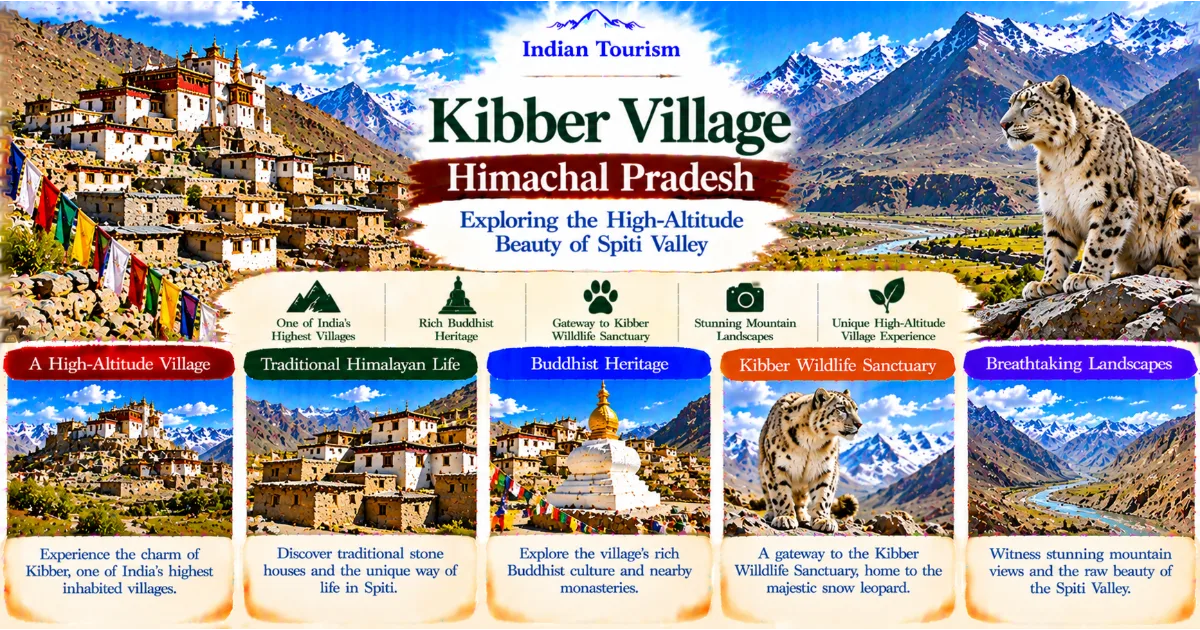
Discovering Kibber, a Village Above the Clouds
Himachal Pradesh is a land of extraordinary geographical diversity, stretching from green valleys and forested hills to some of the most dramatic high-altitude landscapes in the Indian Himalayas. While destinations such as Shimla, Manali and Dharamshala are well known for their tourism infrastructure, the remote villages of Spiti Valley reveal a different side of the state. Here, traditional settlements stand among barren mountains, ancient monasteries preserve centuries-old religious traditions, and communities continue to adapt to a demanding mountain environment. Kibber Village is one of the most fascinating places to experience this distinctive Himalayan world.
Situated in the Spiti region of Himachal Pradesh, Kibber is widely recognised as one of India's prominent high-altitude inhabited villages. Its stone houses, cultivated fields, Buddhist cultural influences and striking mountain surroundings make it an appealing destination for travellers seeking something beyond conventional sightseeing. The village provides an opportunity to understand how people have established homes and livelihoods in an environment where temperatures can fall dramatically, vegetation is limited and the growing season is short.
Kibber is also known for its association with the Kibber Wildlife Sanctuary, a protected landscape that supports wildlife adapted to the cold desert environment. The broader region is particularly important for the conservation of the snow leopard and other mountain species. Wildlife sightings are never guaranteed, but the possibility of learning about Himalayan ecosystems adds another dimension to a visit.
The village is not simply a viewpoint surrounded by mountains. It is a living community with its own traditions, agricultural practices, religious connections and everyday routines. Visitors can observe traditional architecture, learn about local culture and appreciate the relationship between human settlements and the surrounding landscape.
Kibber is also an excellent destination for travellers interested in slow travel, landscape photography, cultural exploration and high-altitude experiences. Its remote location means that the journey requires planning, but the reward is an opportunity to experience the distinctive character of Spiti Valley.
A visit to Kibber can be combined with nearby destinations such as Kaza, Ki Monastery, Chicham Bridge and other traditional villages. Together, these places provide a fuller understanding of the geography, culture and wildlife of this remarkable Himalayan region.
Where Is Kibber Village Located?
Kibber is situated in the Spiti Valley of Himachal Pradesh, in the western Himalayas. The village lies at an elevation of approximately 4,200 metres above sea level, although published figures vary slightly according to the reference point used. This high-altitude setting strongly influences the climate, landscape, vegetation and everyday life of its residents.
Spiti is often described as a cold desert because it receives relatively little precipitation compared with many other Himalayan regions. The high mountain ranges restrict much of the moisture carried by the monsoon, creating a dry environment characterised by rocky slopes, open valleys and sparse vegetation.
Kibber sits within this distinctive landscape. The village's traditional houses and cultivated areas form a striking contrast against the surrounding mountains. During the warmer months, agricultural land may appear green, while the mountains beyond remain largely bare or snow-covered at higher elevations.
The settlement's altitude means that weather conditions can differ significantly from those in lower parts of Himachal Pradesh. Summer days may be pleasant in direct sunlight, but temperatures can fall sharply after sunset. Winter brings severe cold, and snow can affect roads and access to nearby destinations.
Kibber is located within the wider network of settlements surrounding Kaza, the principal town and a common base for exploring Spiti Valley. Travellers often include the village in a regional itinerary that also covers monasteries, traditional settlements and high-altitude viewpoints.
Because Kibber is remote, visitors should prepare carefully. Accommodation and food options may be more limited than in larger tourist centres, and road conditions can change with weather and maintenance work.
Its geographical setting is central to the village's appeal. Kibber offers a direct encounter with the high Himalayas, where the natural environment shapes architecture, agriculture, travel and the rhythm of community life.
The Distinctive Character of Kibber Village
Kibber stands out because it combines a traditional Himalayan settlement with an extraordinary natural setting. The village is surrounded by rugged mountains and open terrain, while its houses and agricultural areas demonstrate how residents have adapted to the challenges of high-altitude living.
Unlike many popular hill stations, Kibber does not depend on shopping streets, large entertainment complexes or extensive commercial development. Its appeal comes from the authenticity of the village environment, the cultural traditions of the region and the opportunity to observe a different way of life.
Traditional stone houses are among the most recognisable features of the settlement. Their appearance reflects the materials and building methods available in the region. The compact arrangement of buildings also demonstrates the practical demands of living in a place where winters are harsh and suitable land is limited.
The agricultural landscape provides another important element of the village's identity. Fields are cultivated during the short growing season, and farming remains connected with local food production and household life. The availability of water is particularly important in a dry environment, making irrigation and seasonal planning essential.
Kibber's location also creates opportunities for nature-based tourism. The surrounding mountains support wildlife adapted to cold and arid conditions, and the broader region attracts travellers interested in high-altitude ecosystems.
The experience of visiting Kibber is often most rewarding when travellers allow time to explore slowly. Walking through the village, observing traditional architecture and appreciating the surrounding scenery can reveal details that are easily missed during a hurried visit.
Kibber is best understood as a place where culture, geography and ecology intersect. Its distinctive character emerges from the relationship between its residents and the challenging but beautiful environment they call home.
Traditional Architecture and the Art of Mountain Living
Architecture in Kibber reflects generations of experience with the demands of the high Himalayas. Buildings must provide shelter from cold winters, strong winds and changing weather while making efficient use of locally available materials.
Traditional houses in the Spiti region commonly use stone, earth and timber where available. Thick walls can provide insulation, while compact building forms help reduce exposure to cold conditions. Roofs and other structural features reflect local construction practices and the need to manage seasonal weather.
The appearance of these buildings differs from the timber houses associated with many forested parts of Himachal Pradesh. In Spiti, the limited availability of trees and the dry climate have influenced construction methods and settlement patterns.
Kibber's houses often stand close together, creating a compact village layout. This arrangement makes efficient use of available land and reflects the importance of maintaining access between homes, storage areas and cultivated fields.
The architecture also reveals the relationship between local knowledge and environmental conditions. Traditional builders developed methods that worked with available materials and responded to the challenges of a short growing season, cold winters and limited resources.
Modern construction has influenced the village, and newer buildings may appear alongside older houses. This mixture reflects changing household needs, improved access to materials and the influence of tourism.
Visitors interested in architecture should explore respectfully. Houses are private homes, and courtyards, interiors and agricultural spaces should not be entered without permission. Photography should also respect residents' privacy.
Kibber's traditional architecture is more than a visual attraction. It represents accumulated knowledge about living in a difficult environment and demonstrates how communities adapt their buildings to the climate, geography and resources available to them.
The Cultural and Buddhist Heritage of Kibber
Buddhist traditions form an important part of the cultural landscape of Spiti Valley. Religious institutions, sacred objects, festivals and community practices have shaped local identity over many generations.
Kibber is part of this wider cultural world. The village's connections with nearby monasteries and Buddhist traditions provide a context for understanding its history and the beliefs that continue to influence community life.
Monasteries across Spiti have historically served as centres of worship, education, artistic expression and the preservation of religious knowledge. Their role extends beyond the physical buildings to include the rituals, teachings and community relationships maintained around them.
Visitors travelling through Kibber may notice prayer flags, sacred structures and other features associated with Himalayan Buddhist culture. These elements should be understood as meaningful expressions of religious practice rather than simply decorative features for photographs.
The wider region has been influenced by Tibetan Buddhist traditions, shaped by centuries of cultural exchange across the Himalayan plateau. Religious art, architecture and ceremonial practices reflect these connections, although traditions and institutions differ from one settlement to another.
Travellers interested in cultural heritage can deepen their understanding by visiting nearby monasteries and learning about local history through reliable information. A respectful approach is essential, particularly when entering religious spaces or observing ceremonies.
Visitors should follow local rules regarding footwear, photography and behaviour. Some areas may be restricted, and ceremonies should not be interrupted for photographs or videos.
The cultural significance of Kibber lies partly in the way traditional beliefs coexist with everyday life. Agriculture, family relationships, religious observances and changing economic opportunities all contribute to the village's contemporary identity.
Exploring this heritage allows visitors to appreciate Spiti as a living cultural region rather than a landscape of historic buildings alone.
Kibber Wildlife Sanctuary: A Landscape of Rare Himalayan Wildlife
One of the most important natural attractions associated with Kibber is the Kibber Wildlife Sanctuary. The sanctuary protects a high-altitude cold desert ecosystem in which wildlife must survive extreme seasonal temperatures, sparse vegetation and limited food resources.
The region's rugged mountains and open terrain support species adapted to these demanding conditions. Its ecological importance extends beyond individual animals to include the interconnected relationships between vegetation, prey species, predators and the physical environment.
The sanctuary is particularly associated with snow leopard conservation. Snow leopards inhabit high mountain regions across parts of Central and South Asia, where their survival depends on suitable habitat, prey availability and the protection of large landscapes.
The broader Spiti region is known for conservation work and wildlife tourism focused on snow leopards. During winter, some travellers join guided wildlife experiences in the hope of observing these elusive animals. Sightings are never guaranteed, and responsible operators should prioritise wildlife welfare over the expectations of visitors.
Other wildlife associated with the wider cold desert environment includes blue sheep, ibex and several bird species. The animals that may be encountered depend on the precise location, season and prevailing conditions.
Visitors should understand that a wildlife sanctuary is not a zoo. Animals move across large areas and may remain hidden for long periods. A visit should focus on appreciating the ecosystem rather than expecting a particular species to appear.
Responsible wildlife observation involves keeping a safe distance, avoiding loud noises and never attempting to feed or chase animals. Visitors should also follow local guidance regarding protected areas and any permits or access restrictions.
The sanctuary adds an important conservation dimension to Kibber's tourism appeal. It demonstrates that the region's value lies not only in scenic beauty and cultural heritage but also in the protection of rare mountain ecosystems.
Snow Leopard Conservation and Responsible Wildlife Tourism
The snow leopard is one of the most iconic animals of the high Himalayas. Its thick coat, powerful body and remarkable ability to move across steep terrain allow it to survive in cold mountain environments.
Snow leopards are difficult to observe because they are elusive, well adapted to rocky landscapes and capable of travelling across large territories. Their presence is influenced by prey availability, habitat quality and human activity.
In the Spiti region, winter wildlife experiences have attracted travellers who hope to see snow leopards in their natural habitat. These trips can support local livelihoods and raise awareness of conservation, provided that they are conducted responsibly.
A responsible wildlife experience should never guarantee a sighting. Operators should explain that wildlife encounters depend on natural conditions and that the welfare of animals takes priority over visitor expectations.
Travellers should avoid approaching animals, surrounding them with vehicles or disturbing them for photographs. They should follow the guidance of experienced local trackers and maintain appropriate distances.
Wildlife tourism can also support conservation by creating economic opportunities linked to protecting habitats. Local knowledge is particularly valuable because residents understand seasonal conditions, animal movements and the practical challenges of living alongside wildlife.
However, conservation requires more than tourism. Habitat protection, scientific research, community participation and efforts to reduce conflict between wildlife and livestock are all important.
Visitors can contribute by choosing responsible operators, following local rules and learning about the challenges faced by communities living near protected landscapes.
Kibber provides an opportunity to appreciate the ecological importance of Spiti while understanding that wild animals should be observed on their own terms. The most successful wildlife experience is not necessarily the one that produces the closest photograph, but the one that respects the landscape and its inhabitants.
The Natural Landscape Around Kibber
The landscape surrounding Kibber is defined by dramatic mountain forms, open valleys and a dry environment that differs from the greener slopes of lower Himachal Pradesh.
The mountains are shaped by geological processes that have created ridges, cliffs and broad expanses of exposed rock. Their colours change with the light, appearing grey, brown, golden or almost purple depending on the weather and time of day.
The cold desert environment supports limited vegetation compared with the wetter Himalayan regions. Plants grow in locations where soil, moisture and temperature allow them to survive, while much of the terrain remains rocky and sparsely covered.
Cultivated fields near settlements introduce seasonal variation into the landscape. During the growing season, green patches contrast with the surrounding barren slopes, demonstrating the importance of water management and suitable agricultural land.
The sky also plays a major role in the visual experience. Clear weather can reveal distant mountain ridges, while changing clouds create dramatic shadows across the valley.
Photographers may find early morning and late afternoon particularly rewarding because the low-angle sunlight can emphasise the textures of the mountains and traditional buildings. However, visitors should never stop in unsafe road locations or venture onto unstable slopes to obtain a photograph.
The landscape can appear empty at first glance, but it contains complex ecological relationships and a long history of human adaptation. Water channels, cultivated areas and settlements reveal how communities have made use of the limited resources available.
Kibber's natural surroundings provide a reminder that the beauty of the Himalayas is not confined to forests and green meadows. The cold desert landscape has its own forms of colour, texture and life, offering a distinctive experience for travellers willing to explore beyond familiar mountain destinations.
Best Time to Visit Kibber Village
The best time to visit Kibber depends on road access, weather conditions and the type of experience you want. Because the village lies at high altitude, seasonal changes can significantly influence travel.
Summer: The Most Convenient Period for General Travel
Summer is generally the most practical season for exploring Kibber and the wider Spiti region. Road access is often more reliable than during winter, and daytime temperatures may be comfortable for walking and sightseeing.
The village's agricultural areas become more active during the growing season, adding colour to the landscape. Visitors can explore traditional architecture, visit nearby cultural sites and enjoy mountain views.
Even in summer, temperatures can fall sharply after sunset. Warm clothing remains essential, and travellers should confirm accommodation and transport arrangements before departure.
Autumn: Clear Skies and Cooler Weather
Early autumn can provide attractive conditions for landscape photography and cultural exploration. The air may be clear, and the mountains can appear especially dramatic under bright sunlight.
Temperatures gradually fall as winter approaches, and the availability of services may change. Travellers should verify current road access and avoid relying on outdated travel information.
Winter: Wildlife Interest and Severe Cold
Winter is associated with snow leopard tracking in parts of Spiti. Visitors interested in wildlife may find the season appealing, but the experience requires careful planning and realistic expectations.
Cold temperatures, snowfall and road disruption can make travel challenging. Wildlife sightings are uncertain, and travellers should use experienced local guides who follow responsible observation practices.
Spring: A Period of Changing Conditions
Spring is a transition period in the high Himalayas. Snow clearance, road access and weather conditions vary from year to year.
Some routes may become accessible earlier than others, while certain roads remain affected by snow or maintenance work. Travellers should obtain current information before setting out.
For first-time visitors interested primarily in village exploration and sightseeing, the warmer travel season is often the most practical choice. Wildlife enthusiasts may consider winter, provided they are prepared for the conditions and have suitable local support.
How to Reach Kibber Village
Reaching Kibber requires a journey through the mountainous terrain of Himachal Pradesh. The route depends on the starting point, the season and current road conditions.
From Kaza
Kaza is the most practical base for many travellers exploring Kibber. The town provides access to accommodation, food and transport services, making it useful for arranging a visit to the village.
The road journey from Kaza is relatively short compared with the longer journey required to reach Spiti itself, but actual travel time depends on road conditions and stops.
Travellers can arrange a local taxi or use a suitable private vehicle. It is sensible to confirm the return journey before departure, particularly if visiting during a quieter period.
From Manali
Travellers approaching from Manali may use the Atal Tunnel route towards Lahaul and continue according to the current road connections available to the wider Spiti region.
The journey can be affected by snow, road maintenance and seasonal restrictions. The route should be checked carefully before travel, especially if it involves higher mountain passes.
From Shimla
Another common approach is through Shimla and the Kinnaur region. Travellers continue through mountain settlements towards Spiti, gradually entering the colder and drier landscape.
This route can provide a scenic introduction to the region, but it involves long driving distances and winding mountain roads. Adequate rest stops and flexible scheduling are important.
Private Vehicles and Local Taxis
Private vehicles offer flexibility for exploring several villages in one trip. Drivers should be comfortable with mountain roads and ensure that the vehicle is appropriate for the route.
Locally arranged taxis can be useful for travellers who prefer not to drive. Before starting, confirm the destinations included, waiting time and return arrangements.
Public Transport
Public transport may connect some larger settlements in the region, but services to smaller villages can be limited and schedules may vary. Travellers should verify current availability rather than assuming that convenient connections will operate every day.
Because Kibber lies in a high-altitude region, it is important to check road access before travelling. Weather, snow and other local conditions can change the practicality of a route even within the same season.
Places to Visit Near Kibber
Kibber can be combined with several other destinations in Spiti Valley. Exploring nearby villages and monasteries provides a broader understanding of the region's cultural and natural diversity.
Ki Monastery
Ki Monastery, also known as Key Monastery, is one of the most recognisable Buddhist landmarks in Spiti. Positioned on a hill above the valley, it is known for its distinctive architecture, religious heritage and dramatic setting.
The monastery has played an important role in the religious life of the region. Visitors can learn about its history, observe its architectural features and appreciate the relationship between the monastery and the surrounding landscape.
Religious buildings remain active places of worship, so visitors should follow local instructions regarding entry, footwear and photography.
Chicham Bridge
Chicham Bridge connects settlements across a deep gorge and has become a popular stop for visitors exploring the region. Its dramatic setting offers a striking view of the surrounding terrain.
Travellers should observe road safety and avoid standing in unsafe places for photographs. The bridge is also an important part of the local transport network, so visitors should not obstruct vehicles or pedestrians.
Kaza
Kaza is the principal town of Spiti and an important centre for accommodation, food and travel arrangements. It is a practical base for exploring nearby villages and gathering information about local conditions.
Visitors can use Kaza to prepare for excursions, purchase essential supplies and organise transport.
Langza
Langza is known for its traditional village setting, mountain scenery and distinctive geological features. It is frequently included in cultural and landscape itineraries through Spiti.
Visitors should respect local rules regarding geological material and avoid collecting fossils or disturbing the environment.
Hikkim
Hikkim is widely known for its post office, which has become a popular attraction among travellers. The village also provides an opportunity to observe life in a remote Himalayan settlement.
Visitors should confirm opening arrangements if they intend to visit a specific facility.
Komic
Komic is a high-altitude village associated with traditional settlement patterns and Buddhist heritage. Its remote location offers a perspective on the challenges of living in the high Himalayas.
Because of the altitude, visitors should allow adequate time for acclimatisation and avoid rushing between destinations.
Dhankar
Dhankar is known for its dramatic position above the confluence of the Spiti and Pin rivers. Its historic monastery and old village provide a distinctive cultural and geographical experience.
Some walking routes in the area involve steep or exposed terrain. Visitors should choose activities appropriate to their ability and follow local guidance.
Together, these destinations create a varied itinerary that includes religious heritage, traditional architecture, high-altitude landscapes and the everyday life of Spiti's communities.
Photography Opportunities in Kibber
Kibber offers many opportunities for photography, particularly for travellers interested in mountain landscapes, traditional architecture and cultural details.
The village's stone houses provide a distinctive foreground against the rugged mountains. Visitors can explore different perspectives from appropriate public paths, capturing the contrast between human settlement and the surrounding environment.
Landscape photography is often most rewarding when the light is soft. Early morning and late afternoon can emphasise mountain textures and create shadows that add depth to the scene.
Wildlife photography requires patience and a responsible approach. Animals in the sanctuary are not guaranteed to appear, and photographers should never attempt to force an encounter by chasing, feeding or disturbing wildlife.
Visitors interested in photographing residents should ask permission before taking close portraits. Religious spaces may have restrictions on photography, and those rules should be respected.
Weather can change rapidly, so photographers should protect their equipment from dust, cold and unexpected precipitation. Batteries may also lose charge more quickly in cold conditions.
The best photographs of Kibber often tell a story about the relationship between people and place. A traditional house, a cultivated field or a quiet village lane can communicate as much about life in Spiti as a dramatic mountain panorama.
Photography should enhance the visit rather than dominate it. Taking time to observe the village without a camera can lead to a deeper appreciation of its cultural and natural character.
Local Food and Culinary Traditions
Food in Spiti reflects the region's climate, agricultural resources and cultural connections with neighbouring Himalayan communities. Traditional diets have developed around ingredients that can be grown, stored or transported in a cold, dry environment.
Barley has historically been an important crop in the region, while peas and other vegetables are cultivated where conditions permit. The short growing season makes seasonal planning and food storage important parts of household life.
Dishes influenced by Tibetan and wider Himalayan traditions are found across parts of the region. Thukpa, a noodle soup, and momos are familiar examples, although the availability of particular dishes varies by establishment.
Visitors should not assume that Kibber will have the same variety of restaurants as a larger tourist town. Food services may be limited, and travellers should confirm meal arrangements with their accommodation provider.
Trying local dishes can offer insight into the relationship between food and environment. Traditional cooking reflects the need to make use of available ingredients while providing nourishment in cold conditions.
Visitors should ask politely about regional food when appropriate, while recognising that local residents are not obliged to provide demonstrations or prepare special meals.
Travellers with dietary restrictions should communicate their needs before arriving and carry suitable alternatives if necessary. Planning ahead is particularly useful when exploring remote villages.
Food is an important part of the cultural experience, but it is best understood alongside the architecture, agriculture and traditions that shape everyday life in Spiti.
Responsible Tourism in Kibber
Responsible tourism is essential in remote Himalayan villages where natural resources are limited and local communities maintain distinctive cultural traditions.
Visitors should treat Kibber as a living settlement rather than a place created solely for sightseeing. Homes, courtyards and agricultural fields are private spaces, and permission should be obtained before entering them.
Waste management is especially important in mountain environments. Carry rubbish until suitable disposal facilities are available, and avoid leaving plastic bottles, packaging or food waste along village paths and roads.
Water is a valuable resource in Spiti. Travellers should use it carefully and avoid polluting streams, water channels or irrigation systems.
Wildlife observation should follow responsible practices. Visitors should maintain appropriate distances, avoid feeding animals and follow the guidance of experienced local guides. Protected landscapes should be treated with care, and visitors should not remove plants, rocks or other natural materials where prohibited.
Religious sites require respectful behaviour. Follow instructions about footwear, photography and access, and avoid interrupting ceremonies.
Supporting legitimate local businesses can help tourism contribute to the regional economy. Visitors may use local accommodation, transport and guiding services where available, while recognising that facilities vary between settlements.
Responsible tourism also involves flexibility. Weather may disrupt plans, roads may become inaccessible and local events may not take place according to visitor expectations.
The goal is to enjoy Kibber while helping protect the landscape, wildlife and cultural heritage that make it special.
Accommodation and Facilities
Accommodation in Kibber may include small guesthouses or homestays, depending on the season and current local arrangements. The range of facilities is generally more limited than in larger tourist centres.
Travellers should confirm availability before departure and ask about meals, heating, sanitation, bedding and transport arrangements. Cold nights are possible even during summer, making suitable accommodation important.
Kaza often provides a practical base for visitors who want access to a wider range of services. Staying in Kaza and making a planned visit to Kibber can reduce uncertainty about food, transport and overnight arrangements.
Visitors should also consider access to medical care, fuel and essential supplies. Remote settlements may not provide everything required for an extended stay.
Mobile connectivity and internet access can be inconsistent. Travellers should download offline maps, keep important contact details accessible and inform someone of their intended route when exploring remote areas.
If suitable accommodation in Kibber cannot be confirmed, there is no need to insist on staying in the village. A day visit from a suitable base may be more practical.
Planning accommodation carefully helps visitors enjoy the village without placing unnecessary demands on limited local facilities.
A Suggested Three-Day Kibber Itinerary
Day One: Arrive in Spiti and Acclimatise
Arrive in Kaza or another suitable base, depending on your route and the current condition of the roads. Keep the first day relaxed, especially if you have travelled from a much lower elevation.
Spend time settling into your accommodation, drinking water regularly and observing how your body responds to the altitude. Avoid strenuous activity if you feel unwell.
Use the day to confirm transport arrangements and gather current information about Kibber and nearby destinations.
Day Two: Explore Kibber and Its Surroundings
Travel to Kibber after checking road conditions and weather. Spend time exploring the village, observing its traditional architecture and appreciating the surrounding mountain scenery.
If you are interested in wildlife, ask about responsible local guiding options and realistic expectations for the season. Wildlife sightings should never be treated as guaranteed.
Allow time to explore slowly and avoid entering private property without permission. Return to your planned base with sufficient daylight and flexibility for delays.
Day Three: Visit Ki Monastery and Chicham Bridge
Begin the day with a visit to Ki Monastery, allowing enough time to appreciate its architecture and cultural importance.
Continue towards Chicham Bridge if road and weather conditions permit. The journey provides opportunities to experience the dramatic landscape of Spiti and understand the importance of road connections between settlements.
Return to your base without rushing. Mountain travel can take longer than expected, and a flexible schedule is safer and more enjoyable.
This itinerary is a general planning framework. Actual routes, opening arrangements and travel times should be confirmed locally.
Kibber for Different Types of Travellers
For Culture and Heritage Enthusiasts
Kibber offers a chance to explore traditional architecture, Buddhist cultural influences and the everyday life of a remote Himalayan settlement. Visitors interested in the relationship between religion and community life may find the village particularly rewarding.
Combining Kibber with nearby monasteries provides a broader understanding of the region's history and traditions.
For Nature Lovers
The surrounding landscape and its connection with the Kibber Wildlife Sanctuary make the destination appealing to nature enthusiasts. Visitors can learn about cold desert ecosystems, mountain wildlife and the challenges of conservation.
Responsible guiding can help travellers understand the region without disturbing wildlife.
For Landscape Photographers
The contrast between traditional houses and rugged mountains creates excellent opportunities for landscape photography. Seasonal changes and shifting light add variety to the scenery.
Photographers should respect residents' privacy and avoid unsafe locations.
For Families
Families may enjoy learning about village life and exploring the cultural landscape, but the altitude and remote setting require careful preparation.
Parents should consider the needs of children, plan rest periods and avoid overly ambitious itineraries.
For Adventure Travellers
Kibber can form part of a broader adventure journey through Spiti. However, visitors planning trekking or high-altitude activities should arrange suitable equipment, acclimatisation and experienced local guidance.
A village visit should not be confused with a fully prepared trekking expedition.
For Slow Travellers
People who enjoy quiet places and unhurried exploration may appreciate Kibber's atmosphere. The village rewards visitors who take time to observe architecture, landscape and daily life rather than rushing through a checklist of attractions.
Slow travel also allows greater flexibility when weather and road conditions change.
Health and Safety Advice for Visitors
Kibber's elevation makes altitude awareness essential. Travellers arriving from lower elevations should allow time to acclimatise and avoid strenuous activity immediately after reaching high-altitude areas.
Symptoms of altitude illness can include headache, nausea, dizziness and unusual fatigue. Severe or worsening symptoms, confusion, difficulty walking normally or breathlessness at rest require urgent medical attention and may require descent to a lower elevation.
People with relevant medical conditions should consult a qualified healthcare professional before planning high-altitude travel. Good physical fitness does not eliminate the risk of altitude illness.
Cold weather can occur throughout the year, especially after sunset. Carry warm layers, a windproof jacket, suitable footwear and protection from rain or snow when required.
Mountain roads may be affected by snowfall, landslides, falling rocks and maintenance work. Check current conditions, follow local instructions and avoid unnecessary night driving.
Carry drinking water, suitable snacks, personal medication and basic emergency supplies. Mobile coverage may be unreliable, so do not depend entirely on online maps or internet access.
Wildlife observation also requires care. Maintain a safe distance from animals and follow local guidance when entering protected landscapes.
A flexible itinerary is one of the most important safety measures. If health, weather or road conditions make a planned activity unsafe, postpone it or choose a suitable alternative.
Budget Planning for a Visit to Kibber
The cost of visiting Kibber depends on the starting point, transport arrangements, group size, accommodation choices and length of stay.
Transport is often a significant expense because journeys through Spiti involve long distances and mountain roads. Private vehicles provide flexibility, while locally arranged taxis and organised tours may offer alternatives.
Accommodation costs depend on the chosen base and season. Small guesthouses and homestays may be available in the wider region, while Kaza can provide additional options.
Food expenses vary according to the facilities available and the type of meals chosen. Travellers should confirm meal arrangements and carry suitable snacks when exploring smaller settlements.
Wildlife-focused experiences may involve additional costs for local guides, transport and the time required for observation. Travellers should compare services carefully and prioritise operators who follow responsible wildlife practices.
A contingency budget is important because weather and road conditions may require changes to accommodation or transport arrangements.
Allowing enough time for acclimatisation can also improve the value of the trip. A rushed itinerary may reduce expenses on paper but can make the journey uncomfortable and limit the opportunity to appreciate the region.
The most practical approach is to plan major expenses in advance while retaining flexibility for unexpected circumstances.
Common Mistakes to Avoid When Visiting Kibber
One common mistake is assuming that a high-altitude village will have the same facilities as a major tourist town. Accommodation, food and transport arrangements should be confirmed before departure.
Another mistake is underestimating the effects of altitude. Travellers should allow time for acclimatisation and avoid continuing to higher elevations if symptoms of altitude illness develop.
Visitors should also avoid assuming that snow leopards or other wildlife will be visible during a particular trip. Animals move across large areas, and sightings depend on natural conditions.
Unrealistic driving schedules can create unnecessary risks. Mountain roads require patience, and changing weather or roadwork can increase journey times.
Photography should not come at the expense of safety or privacy. Avoid stopping in dangerous road locations and ask permission before taking close photographs of residents.
Leaving rubbish behind is another avoidable problem. Waste can damage fragile environments and create difficulties for local communities.
Finally, visitors should not treat traditional homes, religious spaces or protected landscapes as places where ordinary rules no longer apply. Respectful behaviour helps protect Kibber's cultural and natural heritage.
Is Kibber Village Worth Visiting?
Kibber is worth visiting for travellers who want to experience the cultural and natural diversity of Spiti Valley. Its traditional architecture, Buddhist heritage and dramatic mountain surroundings create a distinctive setting that differs from the greener landscapes and busy tourist centres of lower Himachal Pradesh.
The village is particularly appealing to people interested in slow travel, photography, cultural exploration and high-altitude nature. Its association with the Kibber Wildlife Sanctuary also offers an opportunity to learn about conservation and the challenges of protecting rare mountain species.
However, Kibber may not be the best choice for visitors seeking extensive shopping, nightlife or a wide range of commercial attractions. Its appeal is quieter and depends on an appreciation of landscape, history and everyday community life.
Preparation is essential because the altitude, weather and limited facilities can make travel challenging. Visitors should confirm road conditions, arrange suitable accommodation and follow appropriate health precautions.
When combined with Kaza, Ki Monastery, Chicham Bridge and other regional destinations, Kibber can become part of a memorable journey through the Himalayas.
For travellers willing to explore beyond familiar tourist routes, Kibber provides a valuable opportunity to understand the relationship between mountain communities, Buddhist culture and the cold desert environment of Spiti.
Conclusion: Experiencing the High-Altitude Beauty of Kibber
Kibber Village offers a compelling introduction to the distinctive cultural and natural landscape of Spiti Valley. Its traditional stone houses, Buddhist heritage and dramatic mountain setting reveal how communities have adapted to one of the most demanding environments in the Indian Himalayas.
The village's connection with the Kibber Wildlife Sanctuary adds an important ecological dimension to the experience. The wider region supports wildlife adapted to high-altitude conditions, and responsible tourism can help visitors appreciate the importance of conservation.
Yet Kibber's value extends beyond its scenery and wildlife. It is a living settlement where agriculture, architecture, religious traditions and modern changes come together. Visitors who take time to observe these connections can gain a deeper understanding of the region.
A successful visit requires preparation, respect and flexibility. Travellers should account for altitude, changing weather, road conditions and the limitations of local facilities. They should also respect residents' privacy, follow religious customs and avoid disturbing wildlife.
Kibber reminds us that the Himalayas are not simply destinations for dramatic photographs. They are home to communities whose knowledge, traditions and livelihoods have developed through generations of adaptation.
For anyone planning a journey through Himachal Pradesh, Kibber deserves consideration as a destination that combines cultural discovery, natural beauty and an opportunity to experience the quieter side of Himalayan life.
#IndianTourism #HimachalPradesh #KibberVillage #SpitiValley #KibberWildlifeSanctuary #SnowLeopard #HimalayanTravel #BuddhistHeritage #ExploreSpiti #MountainVillages #ResponsibleTourism #ExploreIndia
