
Discovering Kasauli, a Quiet Hill Station in Himachal Pradesh
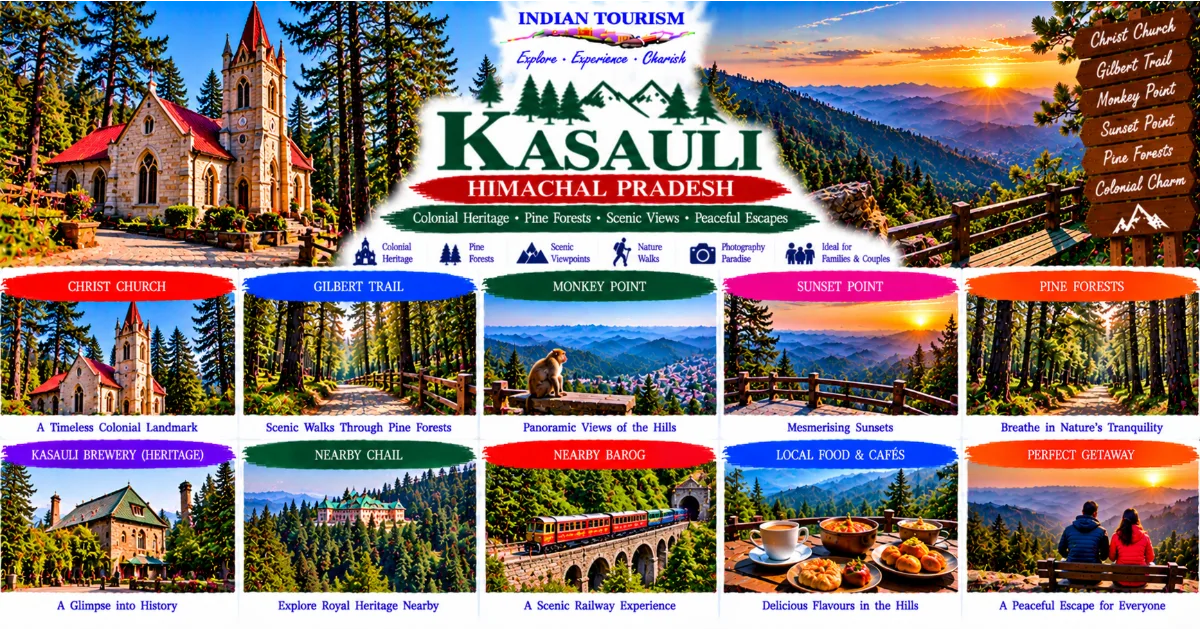
Kasauli is a beautiful hill station in the Solan district of Himachal Pradesh, known for its pine-covered slopes, colonial-era buildings, peaceful walking routes and panoramic views across the surrounding hills. Unlike some of the more crowded tourist destinations in northern India, Kasauli offers a quieter atmosphere that appeals to travellers who enjoy nature, history and relaxed exploration. Its combination of heritage architecture, forest landscapes and charming local streets makes it a rewarding destination for families, couples, photographers and weekend travellers.
Situated in the lower Himalayan region, Kasauli developed as a hill settlement during the British colonial period. Its historic buildings, churches, old roads and cantonment surroundings preserve aspects of that past. At the same time, the town remains connected to the everyday life of Himachal Pradesh through its local markets, residential neighbourhoods, small businesses and surrounding villages.
One of Kasauli's greatest attractions is its atmosphere. The town does not require an exhausting sightseeing schedule to be enjoyed. Visitors can spend the morning walking along a forested road, explore historic landmarks, enjoy views from an accessible viewpoint and finish the day with a relaxed meal. For many travellers, the opportunity to slow down and enjoy the mountain environment is as important as visiting individual attractions.
Kasauli is also a useful destination for travellers exploring the wider Solan region. It can be combined with places such as Solan, Barog and Chail, depending on the length of the trip and road conditions. Its accessibility from parts of northern India makes it particularly popular for short holidays and weekend breaks.
The landscape changes throughout the year. Spring brings fresh vegetation, summer attracts visitors seeking cooler weather, the monsoon creates greener surroundings but can affect road conditions, autumn may provide pleasant walking weather, and winter brings cold temperatures with the possibility of occasional frost or snowfall in suitable conditions. Snow is not guaranteed on any particular date.
This guide explores Kasauli's history, main attractions, nature walks, local food, accommodation, nearby destinations and practical travel arrangements. It also explains how visitors can experience the town responsibly while respecting its heritage, forests and local community.
Understanding Kasauli's Location and Landscape
Kasauli is located in the Solan district of Himachal Pradesh, in the lower Himalayan hills. Its elevation and forested surroundings contribute to a mountain climate that can feel cooler than the plains, particularly during the warmer months.
The landscape includes wooded slopes, winding roads, old buildings, scattered homes and viewpoints overlooking valleys and distant hills. Pine trees are prominent in many areas, while other vegetation varies according to elevation, exposure and seasonal conditions.
Unlike a large city or a highly commercial hill station, Kasauli has a relatively compact central area surrounded by quieter residential and forested sections. However, its attractions are not all located on one street, and some walks involve slopes or longer distances. Visitors should consider the terrain when planning their itinerary.
Kasauli also has an important cantonment identity. Parts of the town are associated with military administration and controlled access, so visitors should respect local restrictions and follow signs. Not every road, building or open area is intended for unrestricted tourist access.
The surrounding region combines tourism with residential life, local businesses and agricultural activity. Visitors should avoid entering private properties or fields without permission and should be considerate when photographing homes and residents.
Weather can change quickly in the hills. Rain may make paths slippery, while fog can reduce visibility along roads and walking routes. Winter mornings and evenings can be particularly cold, so suitable clothing is important even when daytime temperatures feel comfortable.
Understanding Kasauli's geography helps visitors appreciate why it is best explored at a relaxed pace. Its charm comes from the relationship between the historic town, forested slopes and surrounding mountain scenery.
Christ Church: A Landmark of Kasauli's Colonial History
<escape>Christ Church</escape> is one of Kasauli's best-known historic landmarks. Its distinctive architecture and central location make it an important stop for visitors interested in the town's colonial history and religious heritage.
The church reflects the development of Kasauli during the nineteenth century, when British officials and residents established hill settlements to escape the heat of the plains. The building's architectural character provides insight into the religious and social institutions that formed part of colonial hill life.
Visitors can appreciate the exterior architecture and the setting around the church. Those wishing to enter should respect worship schedules, local instructions and any restrictions that may apply. Religious buildings are active places of worship, not simply tourist attractions.
Photography should be undertaken thoughtfully. Visitors should avoid disturbing services or worshippers and follow any instructions about photography inside the building.
Christ Church also provides a starting point for exploring the historic character of central Kasauli. Nearby streets and older buildings offer opportunities to observe the town's architectural details and the way its settlement developed around the surrounding hills.
The church's importance extends beyond its appearance. It forms part of the historical landscape that distinguishes Kasauli from destinations whose tourism identity is based mainly on recreational activities or modern commercial development.
Visitors interested in history can use the visit as an opportunity to reflect on how colonial institutions influenced the development of hill stations. A thoughtful visit considers both the architecture and the broader historical context in which the building was established.
Gilbert Trail: A Walk Through Kasauli's Natural Beauty
Gilbert Trail is one of the attractions associated with Kasauli's outdoor experience. It is known for its forest surroundings, natural scenery and opportunities to appreciate the landscape on foot.
The trail appeals to travellers who want to experience the quieter side of the hill station beyond its main streets. Depending on current access and weather conditions, visitors may enjoy views across wooded slopes and the surrounding hills while walking along suitable sections of the route.
Trail conditions can vary, and visitors should check the accessible sections before setting out. Some paths may be narrow, uneven or exposed, making suitable footwear important. The route should not be treated as an easy stroll for everyone without first considering its surface and gradients.
Comfortable shoes with a good grip are recommended. Travellers should carry drinking water, wear clothing appropriate to the weather and allow enough time to return before dark. During rain or fog, it may be safer to postpone the walk or choose a shorter route.
Gilbert Trail is particularly appealing to photographers and nature enthusiasts. The forest environment offers opportunities to observe vegetation, birds and changes in light. Visitors should remember that wildlife sightings are unpredictable and avoid approaching or feeding animals.
It is important to remain on permitted paths and respect any access restrictions. Visitors should not leave rubbish behind, damage plants or attempt to reach unsafe edges for photographs.
For travellers who enjoy walking, Gilbert Trail can be a memorable part of a Kasauli visit. Its value lies in the opportunity to experience the landscape slowly and appreciate the natural environment rather than rushing towards a single viewpoint.
Monkey Point: Views Across the Surrounding Mountains
Monkey Point is among Kasauli's most recognised viewpoints and is often included in local sightseeing plans. Its elevated setting can provide expansive views across the surrounding hills and valleys when visibility is favourable.
Access to Monkey Point is subject to local rules because the area is associated with the cantonment environment. Visitors should confirm current access arrangements, opening times and any identification or entry requirements before planning a visit. Access may be restricted or changed for administrative and security reasons.
The route may involve walking uphill, so visitors should consider their fitness and the conditions before setting out. Comfortable footwear and enough drinking water are useful, particularly during warmer months.
Clear weather can provide attractive views across the surrounding landscape, while mist and cloud may limit visibility. Visitors should not assume that distant mountain views will be available every day.
The name is also a reminder to behave carefully around wildlife in the wider region. Visitors should not feed monkeys or carry food openly in ways that encourage animals to approach. Feeding wildlife can change animal behaviour and create risks for people and animals.
Photography should be undertaken only from permitted areas. Visitors should avoid climbing barriers, approaching exposed edges or attempting to obtain a better view from unsafe locations.
Monkey Point can be a rewarding attraction for travellers who enjoy mountain scenery, but the visit should be planned around current access rules and weather. If access is restricted, visitors can choose other permitted viewpoints and walking routes around Kasauli.
Sunset Point: Enjoying the Changing Colours of the Hills
Sunset Point is a popular place for visitors who want to appreciate the changing light across the hills around Kasauli. As the sun lowers, the surrounding landscape may take on warmer colours, while the shapes of distant ridges become more noticeable.
The experience depends on weather, season and visibility. Clear conditions may provide broad views, while clouds or mist can obscure the horizon. Even when the sun is not clearly visible, the changing light across the forested slopes can make the setting attractive.
Visitors should arrive with enough time to find a suitable permitted viewing location and return safely. It is important to avoid standing on roadways, climbing barriers or approaching unprotected edges for photographs.
Sunset can bring cooler temperatures, particularly outside summer. Carrying a light jacket or warm layer can make the experience more comfortable.
Visitors should also consider how they will return to their accommodation after dark. Walking along unfamiliar roads without adequate lighting may be unsafe, so transport arrangements should be planned in advance.
The viewpoint is especially appealing to couples, photographers and travellers who enjoy a relaxed evening outdoors. It can also be a good opportunity to pause after a day of sightseeing and appreciate the mountain environment.
Sunset Point illustrates an important part of Kasauli's appeal: many of its most memorable experiences do not require elaborate activities. Simply spending time in a suitable location and watching the landscape change can become a highlight of the visit.
The Heritage Streets and Colonial Architecture of Kasauli
Kasauli's streets preserve much of the atmosphere associated with an old hill station. Historic buildings, sloping roads, mature trees and quiet lanes create an environment that rewards slow exploration.
The town's development during the colonial period influenced its architecture and street layout. Churches, older residences and institutional buildings reflect the history of the settlement, although the area has continued to change as residents and businesses have adapted buildings for modern needs.
Visitors interested in architecture should look beyond the most famous landmarks. Doors, balconies, rooflines, stonework and the relationship between buildings and the surrounding landscape can all reveal details about the town's character.
Walking through the historic areas can be enjoyable, but the terrain is hilly and some streets may be narrow. Travellers should wear comfortable shoes, watch for traffic and avoid obstructing residents or local businesses.
Kasauli also remains a living town. Historic-looking buildings may be private homes, working establishments or restricted properties. Visitors should not enter courtyards or buildings without permission, even when the architecture appears attractive.
Photography should respect privacy. Ask permission before taking close-up photographs of residents and avoid treating private homes as public exhibits.
Exploring the heritage streets provides an opportunity to understand how Kasauli developed as a hill settlement and how its past continues to shape its present identity. The experience is particularly rewarding for visitors who enjoy history without needing a formal museum visit.
Kasauli Brewery and the Region's Industrial History
Kasauli is historically associated with the establishment of a brewery and distillery during the colonial period. The region's cool climate and access to water were among the factors considered suitable for early industrial operations in the hills.
The brewery's history is connected with the broader story of British-era manufacturing and the development of commercial enterprises in northern India. It is an example of how hill settlements were shaped not only by military and administrative institutions but also by businesses and industrial activity.
Visitors interested in this history should distinguish between learning about the site's historical significance and assuming that it operates as a public tourist attraction. Access arrangements, operating rules and visitor permissions can vary, and entry should never be assumed.
Travellers should confirm whether any organised visits are currently available and follow the property's rules. Private industrial facilities may not permit general sightseeing or photography.
The wider history of Kasauli's industrial development can still be explored through historical accounts and an understanding of how the town grew. This adds another dimension to a visit that might otherwise focus only on churches, forests and viewpoints.
Kasauli's historical identity is therefore broader than its colonial architecture. Its development involved institutions, businesses, transport connections and local communities, all of which contributed to the settlement's growth.
For travellers interested in heritage, the brewery's historical association is worth understanding as part of the town's past, even when a direct visit is not possible.
Nature and Wildlife Around Kasauli
The forests around Kasauli contribute to the region's biodiversity and provide habitat for birds, small mammals and other wildlife. Pine-covered slopes and mixed vegetation create an environment that can be appreciated by visitors interested in nature.
Birdwatching is a suitable activity for travellers who enjoy quiet observation. Visitors may hear birds in the early morning or notice them moving through the trees, although the species visible during a visit depend on season and habitat.
Binoculars can be useful for observing wildlife from a distance. Visitors should avoid approaching animals, feeding them or disturbing nests and other sensitive areas.
The forest environment also plays an important ecological role. Trees help protect soil, contribute to local environmental conditions and provide habitat for wildlife. Their preservation matters to residents and visitors alike.
Nature walks should be undertaken on permitted routes. Not every track through the forest is a public trail, and some areas may be restricted or unsuitable during bad weather.
Visitors should carry rubbish until suitable disposal facilities are available. Food waste and plastic packaging can harm wildlife and reduce the quality of the environment.
Those interested in learning about local biodiversity can ask knowledgeable guides about the vegetation and wildlife of the region. Visitors should treat wildlife sightings as a possibility rather than a guarantee.
Kasauli's natural surroundings are best experienced through patience and respect. Quiet observation, careful walking and responsible behaviour allow visitors to appreciate the landscape without disturbing the ecosystems that make it special.
Nature Walks and Outdoor Activities
Kasauli is a good destination for travellers who enjoy walking, photography and gentle outdoor exploration. The forested landscape and winding roads provide opportunities to spend time outdoors without requiring a demanding high-altitude trek.
Visitors should choose routes according to their fitness level and current conditions. Some walks involve slopes, uneven ground or narrow sections, so travellers should ask locally about suitable public paths before setting out.
Comfortable footwear with a good grip is recommended. Rain can make paths slippery, while fog may reduce visibility. Visitors should carry water and wear clothing appropriate to the season.
Short walks through accessible areas can be rewarding for families and travellers who do not want a strenuous activity. Longer routes may suit experienced walkers, provided they understand the terrain and have enough time to return safely.
Photography can be combined with walking. The forest environment, historic buildings and changing views offer different subjects throughout the day.
Visitors should avoid walking on unfamiliar routes after dark and should tell someone about their plans if undertaking a longer walk. Local advice is useful when weather or access conditions change.
Families should supervise children near roads, slopes and exposed areas. Travellers with mobility limitations should check gradients and surfaces before beginning a walk.
Responsible outdoor exploration includes staying on permitted paths, avoiding litter and respecting private property. Visitors should not damage vegetation or disturb wildlife to create a photograph.
Kasauli's outdoor activities are best approached at a comfortable pace. A short walk and time to enjoy the forest may be more rewarding than attempting to cover too much ground in a single day.
Best Time to Visit Kasauli
Kasauli can be visited throughout much of the year, but the best time depends on the weather, the activities planned and personal preferences.
Spring brings fresh vegetation and can be pleasant for sightseeing and walking. Temperatures may be comfortable during the day, although mornings and evenings can remain cool.
Summer is a popular time for travellers seeking relief from the heat of the plains. The forested surroundings and mountain air make Kasauli attractive for weekend breaks and family holidays. Popular weekends and school holidays can bring more visitors, so booking accommodation in advance is advisable.
The monsoon creates greener surroundings but also introduces travel challenges. Heavy rain may make walking routes slippery, reduce visibility and affect mountain roads. Visitors should check current forecasts and road advisories before setting out.
Autumn often provides cooler weather and opportunities for walking and photography. It may appeal to travellers who prefer a quieter atmosphere and do not depend on snow-related activities.
Winter brings colder temperatures, especially in the mornings and evenings. Frost and occasional snowfall may occur under suitable conditions, but snow is not guaranteed on a particular date. Visitors should carry warm clothing and confirm heating arrangements at their accommodation.
The best time also depends on whether visitors plan to explore the town on foot or travel to nearby destinations. Weather and road conditions should guide the final itinerary.
Checking the forecast shortly before departure is more reliable than relying on assumptions about seasonal conditions. Flexible planning helps visitors enjoy Kasauli comfortably throughout the year.
How to Reach Kasauli
Kasauli is generally reached by road from nearby towns and cities in northern India. The most suitable route depends on the starting point, transport preference and current road conditions.
By Road
Road travel is the most common way to reach Kasauli. Visitors can use private vehicles, taxis or available bus connections to reach the wider area and continue by road to their accommodation.
The approach roads pass through hilly terrain and may include sharp bends and steep sections. Journey times can vary according to traffic, weather and road conditions.
Travellers driving themselves should be comfortable with mountain roads and should avoid rushing. Parking arrangements should be confirmed with the accommodation provider, especially in areas where roads and available parking spaces are limited.
By Rail
Kasauli does not have its own major railway station. Travellers can use railway connections serving the wider region and continue by road.
Dharampur and other nearby rail-connected locations may be relevant depending on the route and available services. Visitors should confirm current train schedules and plan the onward transfer before departure.
The heritage Kalka-Shimla railway may be of interest to travellers exploring the wider region, although reaching Kasauli from the railway route requires additional road travel.
By Air
Chandigarh Airport is one option for travellers arriving by air, depending on current flight availability and their starting point. An onward road journey is required to reach Kasauli.
Flight schedules and route availability can change, so visitors should confirm current services before booking. The full door-to-door journey should include the road transfer through the hills.
Getting Around Kasauli
Kasauli is best explored through a combination of walking and road transport. Some central attractions may be reached on foot, while other locations require a taxi or private vehicle.
The terrain is hilly, so visitors should not assume that every short distance will be an easy walk. Streets may include slopes, uneven surfaces and sections with limited pedestrian space.
Taxis can be useful for reaching viewpoints, nearby attractions and accommodation properties outside the central area. Visitors should agree on fares, waiting charges and return arrangements before beginning an excursion.
Access to certain locations may be controlled because of the cantonment environment. Visitors should follow signs and confirm current entry arrangements before planning a visit.
Families and travellers with mobility limitations should consider walking distances, gradients, steps and parking locations before choosing activities.
A flexible itinerary is particularly useful during the monsoon and winter, when rain, fog or cold conditions may affect travel. Grouping nearby attractions together can reduce unnecessary journeys and leave more time to enjoy the town.
Where to Stay in Kasauli
Accommodation in Kasauli includes hotels, resorts, guesthouses, cottages and homestays. The best choice depends on budget, comfort preferences, transport arrangements and the type of holiday planned.
Some properties offer forest views and a quieter atmosphere, while others are closer to the central market and major walking routes. Visitors should confirm the exact location before booking and check whether the advertised views are available from the selected room.
Travellers who want to explore the historic centre on foot may prefer accommodation with convenient access to the main area. Those seeking a secluded retreat may prefer properties outside the busiest streets, provided transport and meal arrangements are suitable.
Winter visitors should ask about heating, hot water and road access during cold weather. Facilities vary between properties, so it is important to confirm what is included in the quoted price.
Meal availability should also be checked. Some properties have restaurants, while others may require guests to arrange meals in advance. Travellers staying in quieter locations should consider how they will reach nearby food outlets.
Homestays can provide a more personal experience and opportunities to learn about local food and everyday life. Guests should communicate arrival times and dietary requirements clearly.
Booking ahead is advisable during weekends and popular holiday periods. Visitors should review cancellation policies, parking arrangements and additional charges before confirming a reservation.
The right accommodation can improve the overall experience by providing a comfortable base for exploring Kasauli's forests, heritage attractions and surrounding countryside.
Food and Local Dining in Kasauli
Kasauli offers a mixture of cafés, hotel restaurants, small eateries and businesses serving visitors and local residents. Travellers can generally find familiar Indian meals, snacks, baked goods and hot beverages, although the range varies by location.
The wider Himachal region has a rich culinary tradition. Siddu, a wheat-based preparation associated with parts of Himachal Pradesh, is one regional dish worth asking about. Dham is a festive meal tradition found in different regional forms, although availability varies and not every restaurant serves it.
Visitors may also find North Indian dishes and simple meals suited to a relaxed mountain holiday. A warm drink or meal can be especially welcome after a walk in cool weather.
Travellers should check menu prices before ordering and communicate dietary restrictions or food allergies clearly. Those planning longer excursions should carry drinking water and suitable snacks if food outlets may be limited along the route.
Visitors interested in regional cuisine can ask their accommodation hosts for recommendations. Smaller establishments may offer home-style preparations, depending on the menu and season.
Food packaging should be disposed of properly. Visitors should never leave rubbish along forest paths, roadsides or scenic viewpoints.
Dining is a pleasant part of the Kasauli experience, but travellers should remember that prices and opening hours can vary. A relaxed meal after exploring the town can provide time to rest and enjoy the mountain atmosphere.
Shopping and Local Products
Kasauli is better known for its heritage streets, forest scenery and peaceful atmosphere than for extensive shopping. Visitors can find shops selling everyday goods, snacks, souvenirs and selected regional products.
Travellers interested in local products may look for woollen clothing, caps, scarves, handicrafts and packaged food items. Product quality and origin vary, so buyers should ask about materials and workmanship before making expensive purchases.
The wider Solan region has agricultural activity, and seasonal products may be available in local markets. Visitors should check freshness and packaging when buying food to carry home.
Responsible shopping means supporting legitimate local businesses and paying fairly for genuine products. Travellers should avoid items made from protected wildlife or materials whose origin is unclear.
For expensive purchases, a receipt is useful. Visitors should also consider how easily products can be transported during the rest of the journey.
Those seeking a larger shopping experience can explore markets in nearby towns. Kasauli's main appeal lies in its combination of heritage, forests and quiet mountain streets rather than extensive retail facilities.
Nearby Barog: Forests and a Railway Heritage Experience
Barog is a nearby destination in the Solan district that can be combined with Kasauli for a wider exploration of the region. It is associated with forested hills and the historic Kalka-Shimla railway, a celebrated engineering and heritage route.
The railway journey passes through mountain scenery, tunnels and bridges that reflect the challenges of building transport infrastructure across the hills. Travellers interested in railway history may find the route a valuable addition to their itinerary, subject to current schedules and ticket availability.
Barog offers a different experience from Kasauli's colonial streets and forest walks. It provides an opportunity to appreciate the relationship between mountain geography and the development of transport connections.
Visitors should confirm train services and plan onward transport carefully. Railway schedules and road conditions can change, and the final itinerary should allow enough time for travel.
The surrounding landscape provides opportunities for photography and relaxed exploration where public access is permitted. Visitors should avoid entering railway infrastructure or restricted areas and follow all safety instructions.
Combining Barog and Kasauli can add variety to a short holiday. One destination emphasises heritage streets and forest scenery, while the other offers a distinctive railway connection and another perspective on the region's development.
Nearby Chail: Royal Heritage and Forest Landscapes
Chail is another destination in Himachal Pradesh that can be combined with Kasauli as part of a longer trip. It is known for Chail Palace, the cricket ground associated with the former royal establishment of Patiala and the surrounding pine and deodar forests.
Chail offers a quieter mountain experience, with historic attractions and forest scenery providing a contrast to Kasauli's colonial streets and walking routes.
Visitors interested in Chail Palace should confirm current access and opening arrangements. The cricket ground may also have access restrictions, so visitors should check local rules before planning a visit.
The surrounding forests provide opportunities for nature walks and photography where access is permitted. Visitors should remain on suitable paths and avoid entering private land.
The journey between Kasauli and Chail should be planned according to road conditions and the time available. Mountain travel can take longer than expected, particularly during rain, fog or busy holiday periods.
Combining the two destinations is best suited to travellers with enough time to appreciate each place. A longer itinerary can provide a more varied understanding of Himachal Pradesh's heritage and natural landscapes.
A Suggested Two-Day Kasauli Itinerary
A two-day visit allows travellers to explore Kasauli's main attractions without rushing.
On the first day, arrive and settle into the accommodation. Begin with the historic centre and Christ Church, subject to access arrangements. Spend time observing the architecture and exploring the nearby streets at a comfortable pace.
Later, visit a permitted viewpoint or take a short walk along a suitable public route. If access is available, consider Gilbert Trail or another locally recommended walking area. Allow enough time to return before dark and adjust the plan according to weather conditions.
Finish the day with a relaxed meal and, if conditions permit, a visit to a suitable sunset viewing location.
On the second day, consider visiting Monkey Point if it is open to visitors and the entry arrangements are suitable. Confirm any access requirements in advance. Alternatively, spend more time exploring the town's forest surroundings and heritage streets.
Travellers with additional time may plan an excursion to Barog or another nearby destination. Those interested in a longer regional holiday can include Chail, depending on transport arrangements and the available schedule.
Families should include rest breaks and avoid an overly demanding itinerary. Visitors with mobility limitations should check walking distances and access arrangements before selecting activities.
The schedule should remain flexible, particularly during the monsoon and winter. Weather and road conditions can affect travel times and walking safety.
A relaxed itinerary allows visitors to appreciate Kasauli's quiet atmosphere rather than treating the destination as a checklist of attractions.
Responsible Tourism in Kasauli
Kasauli's forests, historic buildings and mountain environment are central to its appeal. Responsible tourism helps preserve these features while supporting local businesses and communities.
Visitors should dispose of waste properly and carry rubbish until suitable facilities are available. Plastic bottles, food packaging and other waste should never be left along forest paths, roadsides or viewpoints.
Forest areas should be treated carefully. Travellers should remain on permitted paths, avoid damaging vegetation and refrain from disturbing wildlife. Unauthorised fires should never be started.
Visitors should respect religious buildings, historic properties and cantonment restrictions. Access rules should be followed, and restricted roads or buildings should not be entered without permission.
Supporting local accommodation providers, restaurants and guides can help tourism contribute directly to the local economy. Visitors should pay agreed prices, treat workers respectfully and ask permission before photographing residents.
Noise should be kept under control, particularly near residential properties and accommodation areas. Respecting local residents helps preserve the quiet atmosphere that attracts visitors.
Mountain roads require careful driving, especially during rain, fog and winter conditions. Travellers should follow official advisories and avoid unsafe journeys.
Responsible tourism also means respecting the town's heritage. Historic buildings should not be damaged, marked or treated carelessly for photographs.
Small actions can make a meaningful difference. Avoiding litter, respecting access rules and supporting local businesses help ensure that Kasauli remains a welcoming destination for future travellers.
Is Kasauli Suitable for Families, Couples and History Lovers?
Kasauli can suit several types of travellers, particularly those who enjoy nature, heritage and peaceful surroundings.
Families may appreciate the historic centre, scenic viewpoints and opportunities for short walks. Parents should supervise children near roads, slopes and exposed areas, and check the suitability of walking routes before setting out.
Couples may enjoy the quiet atmosphere, forest views and accommodation options that provide privacy. A relaxed itinerary with walking, photography and time to enjoy the mountain environment can make Kasauli a rewarding getaway.
History enthusiasts can explore the town's colonial-era buildings and learn about the development of hill stations during the nineteenth century. Visitors interested in transport history may also enjoy combining Kasauli with Barog and the wider Kalka-Shimla railway region.
Nature lovers can appreciate the pine forests, changing vegetation and opportunities for birdwatching. Travellers seeking extensive nightlife, large shopping centres or a packed list of commercial attractions may prefer to spend additional time in larger towns.
Visitors with mobility limitations should consider slopes, steps, walking distances and accessibility before choosing activities.
Kasauli's greatest strength is its atmosphere. It is particularly suitable for travellers who value quiet exploration, scenic walks and the opportunity to experience a historic hill station at a comfortable pace.
Conclusion: Why Kasauli Deserves a Place on Your Himachal Pradesh Travel List
Kasauli is a rewarding destination for travellers who want to explore a quieter and historically distinctive side of Himachal Pradesh. Its colonial-era architecture, pine forests, scenic viewpoints and peaceful streets make it a valuable addition to a journey through the lower Himalayas.
Christ Church and the historic streets provide insight into the town's colonial past, while Gilbert Trail and other permitted walking routes offer opportunities to appreciate the natural landscape. Monkey Point and Sunset Point may provide memorable views when access and weather conditions are suitable.
Nearby destinations such as Barog, Chail and the wider Solan region add variety for travellers who have more time. They allow visitors to combine heritage, forest scenery and railway history within a broader Himachal Pradesh itinerary.
The best time to visit depends on personal preferences. Spring and summer can be pleasant for walking and sightseeing, autumn may offer cooler conditions, and winter brings cold weather with the possibility of occasional frost or snowfall. Visitors should check current forecasts, road conditions and attraction access before departure.
Good planning improves the experience. Confirm access requirements for restricted areas, choose accommodation according to the itinerary and allow realistic travel times on mountain roads.
Responsible tourism is equally important. Visitors should protect the forests, respect historic buildings and local residents, avoid littering and support local businesses where appropriate.
For the Indian Tourism series, Kasauli demonstrates that a destination does not need a large number of commercial attractions to offer a memorable experience. Its heritage, natural scenery and peaceful atmosphere create an opportunity to slow down and appreciate another dimension of the Himalayas.
Whether you visit for a weekend escape, a family holiday, a heritage walk or a quiet break among the pine trees, Kasauli offers a meaningful way to experience the cultural and natural diversity of Himachal Pradesh.
#IndianTourism #HimachalPradesh #Kasauli #KasauliTourism #SolanDistrict #GilbertTrail #MonkeyPoint #SunsetPoint #ChristChurchKasauli #ColonialHeritage #PineForests #HimalayanTravel #NatureWalks #MountainViews #Barog #Chail #ResponsibleTourism #FamilyTravel #WeekendGetaway #ExploreIndia
