
A Himalayan Village Where the Mountains Meet the Sky
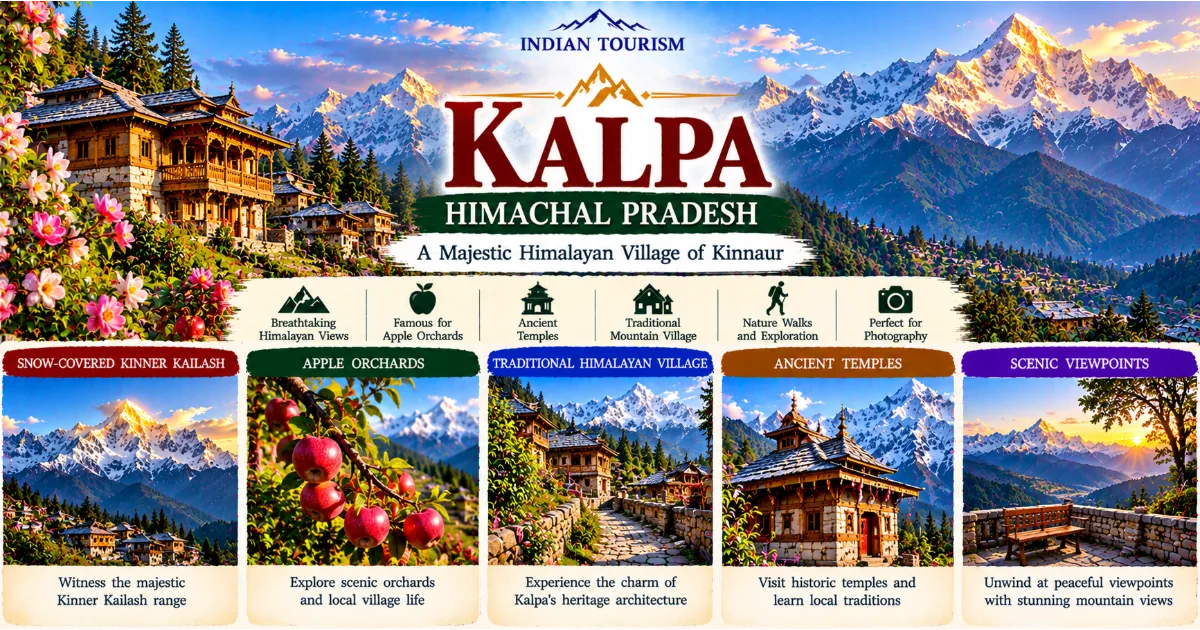
Himachal Pradesh is home to some of India's most remarkable mountain landscapes, from the cedar-covered slopes around Shimla to the dramatic valleys of Lahaul and Spiti. Among these diverse destinations, Kalpa holds a special place for travellers who want to experience the grandeur of the Himalayas alongside the peaceful rhythm of traditional mountain life. Located in the Kinnaur district, Kalpa is known for its spectacular views of the Kinner Kailash mountain range, traditional architecture, apple orchards, ancient temples and a landscape that changes beautifully with the seasons.
Unlike the busy streets of popular hill stations, Kalpa offers a more contemplative travel experience. The village sits amid mountain slopes, with houses and orchards spread across the terrain and towering Himalayan peaks forming an impressive backdrop. On clear mornings, the snow-covered mountains appear particularly striking as the first sunlight reaches their upper slopes. During the afternoon, changing shadows reveal the contours of the surrounding ridges, while evenings bring cooler air and a quieter atmosphere.
Kalpa is not simply a destination for mountain photography. It is also a place to understand the cultural identity of Kinnaur, a region shaped by its high-altitude environment, agricultural traditions, religious beliefs and historic connections with neighbouring Himalayan areas. Visitors can explore traditional settlements, learn about local customs, observe the changing landscape and experience a part of Himachal Pradesh that feels distinct from the state's more commercially developed tourist centres.
For travellers planning a journey through Himachal Pradesh, Kalpa can be an excellent destination for a longer stay or a carefully planned road trip. It rewards those who prefer slow travel, scenic drives, cultural exploration and time spent appreciating the natural world. The best experience comes from allowing the mountains to set the pace rather than trying to fit every attraction into a single day.
Understanding Kalpa and the Kinnaur Region
The Location and Character of Kalpa
Kalpa is situated in Kinnaur district in the eastern part of Himachal Pradesh. The region lies along the Sutlej River corridor and is known for its high mountains, steep valleys, forested slopes, terraced fields and settlements adapted to challenging geographical conditions. The landscape becomes increasingly dramatic as travellers move deeper into the district, with roads following mountain contours and connecting villages scattered across the hillsides.
The village stands at an elevation of approximately 2,960 metres above sea level, although reported elevations can vary slightly depending on the specific point measured. Its high-altitude location contributes to its cool climate, distinctive vegetation and clear mountain views during favourable weather.
Kalpa is often associated with the imposing Kinner Kailash range, which dominates the surrounding skyline. The mountain landscape gives the village a strong visual identity and makes it a popular destination for travellers who want to experience the scale and beauty of the high Himalayas without necessarily undertaking a demanding expedition.
The village also serves as a useful base for exploring other parts of Kinnaur. Travellers can use Kalpa to experience local settlements, learn about the region's agricultural economy and plan excursions towards nearby destinations such as Reckong Peo and Roghi. The surrounding countryside offers opportunities to appreciate both natural scenery and the cultural traditions that have developed in this mountainous environment.
A Region Shaped by Geography
Geography has influenced nearly every aspect of life in Kinnaur. Steep terrain limits the availability of flat land, making agriculture dependent on carefully managed fields, terraces and suitable valley locations. Roads can be difficult to construct and maintain, while weather conditions sometimes interrupt transport and communication.
The mountain environment also creates considerable variation over relatively short distances. Differences in altitude and exposure affect temperatures, vegetation and the length of the growing season. Some areas are known for orchards and cultivated fields, while higher slopes support different vegetation and remain covered in snow during colder periods.
These conditions have encouraged local communities to develop ways of living that respond to the demands of the landscape. Traditional homes, agricultural practices, seasonal routines and community relationships all reflect the need to adapt to mountain conditions.
Visitors who understand this geographical context often gain a deeper appreciation of Kalpa. The orchards, village paths and buildings are not simply scenic elements. They are part of a living settlement that has developed through generations of interaction between people and the Himalayan environment.
The Magnificent Kinner Kailash Mountain Range
A Landmark of Kinnaur
The Kinner Kailash range is one of the most recognisable features of the landscape around Kalpa. Its dramatic mountain formations create a powerful backdrop for the village and contribute to the destination's reputation as one of the most scenic places in Himachal Pradesh.
The range holds religious significance in local traditions and is associated with Lord Shiva in Hindu belief. The mountains are also connected with stories and practices that form part of Kinnaur's broader cultural identity. For many visitors, the experience of seeing the peaks is not limited to their physical beauty. Their cultural and spiritual associations add another dimension to the landscape.
The appearance of the mountains changes throughout the day. Early morning often offers a particularly memorable view, especially when the sky is clear and the rising sun illuminates the snow-covered slopes. Later in the day, clouds and shifting light can create entirely different scenes. During winter, snow may intensify the sense of grandeur, while summer can reveal a greater contrast between the rocky peaks and the greener lower slopes.
Because mountain weather can change quickly, clear views are never guaranteed. Travellers should avoid planning their entire experience around a single photograph or a particular moment of visibility. Spending more than one night in Kalpa increases the opportunity to see the mountains under different conditions.
Religious and Cultural Significance
Mountains have long held spiritual importance in Himalayan societies. In Kinnaur, religious traditions reflect a complex relationship between Hindu beliefs, local deities and regional practices that developed over centuries.
The Kinner Kailash landscape is part of this cultural world. Its importance extends beyond tourism, and visitors should recognise that local religious beliefs are living traditions rather than simply historical stories.
The area also attracts people interested in pilgrimage and mountain journeys. Some routes associated with the broader Kinner Kailash region are physically demanding and require careful preparation. The demanding nature of high-altitude terrain means that visitors should not confuse the ability to enjoy mountain views from Kalpa with the ability to undertake a strenuous trek.
Anyone considering a trek in the region should research the specific route, difficulty, duration, permits where applicable, weather conditions and current local guidance. Proper preparation is essential because mountain conditions can become dangerous even for experienced travellers.
For those who prefer a more relaxed visit, Kalpa itself provides opportunities to appreciate the mountain range without attempting a demanding expedition. Scenic viewpoints, village walks and quiet periods spent observing the landscape can be rewarding in their own right.
Exploring the Village of Kalpa
Traditional Architecture and Village Life
One of the most interesting aspects of Kalpa is its traditional settlement character. The village contains buildings that reflect regional architectural influences, local materials and the practical requirements of mountain living. Timber and stone have historically played important roles in construction across parts of Kinnaur, although building styles vary between settlements and periods.
Traditional Himalayan architecture often reflects the need to manage cold temperatures, snow, rainfall and the availability of construction materials. Roof design, wall construction and the placement of windows can all respond to local environmental conditions. In older settlements, buildings may also reflect religious beliefs and community traditions.
Walking through Kalpa provides an opportunity to observe these features at a human scale. Rather than viewing the village only from a roadside viewpoint, visitors can take time to notice its lanes, houses, orchards and relationship with the surrounding slopes.
However, Kalpa is a living community, not an open-air museum. Many buildings are private homes, and ordinary village life continues alongside tourism. Visitors should remain respectful when photographing houses, entering narrow lanes or observing religious spaces.
A Peaceful Atmosphere Away from Crowded Hill Stations
Kalpa offers a different atmosphere from destinations that are dominated by commercial entertainment and heavy tourist traffic. Although visitor numbers vary by season, the village is generally valued for its scenery, slower pace and connection with the surrounding landscape.
The absence of large entertainment complexes is part of its appeal. Visitors can spend time walking, reading, photographing the mountains, talking with local hosts or simply observing the changing weather. These experiences may seem simple, but they often become the most memorable parts of a mountain holiday.
A peaceful environment does not mean that travellers should expect complete isolation. Kalpa has local services and accommodation, and its roads may become busy during popular travel periods. Visitors should also remember that tourism is only one part of the local economy and that residents have everyday responsibilities.
Travelling respectfully helps preserve the atmosphere that attracts visitors in the first place. Keeping noise levels low, avoiding litter and following local guidance can make a meaningful difference.
Apple Orchards and the Agricultural Landscape
Why Kinnaur Is Known for Apples
Apple cultivation is an important part of the agricultural economy in several parts of Himachal Pradesh, including Kinnaur. The region's elevation, climate and seasonal conditions can support high-quality apple production in suitable locations.
Around Kalpa, orchards contribute to the appearance of the countryside and provide insight into the relationship between farming and mountain life. During the growing season, trees and cultivated plots add colour to the landscape. As the seasons change, the orchards take on different appearances, from fresh foliage and blossoms to developing fruit and harvest activity.
Apple cultivation requires considerable planning and labour. Farmers must manage trees, monitor weather conditions, maintain irrigation where available, protect crops from pests and diseases, and organise harvesting and transport. In mountain regions, moving agricultural produce can be particularly challenging because roads and travel times are affected by the terrain.
For visitors, the orchards provide an opportunity to understand the local economy beyond the tourism sector. A scenic landscape is often also a productive working environment in which families depend on agriculture for income.
The Best Season for Orchard Experiences
The appearance of apple orchards depends on the time of year. Spring can bring blossoms in suitable areas, while summer is associated with foliage and fruit development. Harvest periods vary according to the variety of apple, local conditions and elevation, so travellers should not assume that every orchard will have ripe fruit at the same time.
Autumn can be an especially interesting period for visitors who want to see agricultural activity and seasonal changes. However, harvest operations are working periods for local families, and visitors should not enter orchards or pick fruit without permission.
Buying produce directly from a farmer or local shop, where available, can help visitors engage with the local economy. Travellers should ask about the origin of the produce rather than assuming that every apple sold in the area was grown nearby.
Orchard visits should be arranged respectfully. Private agricultural land is not automatically open to tourists, and damaging branches or disturbing workers can create unnecessary problems for the people who depend on these crops.
Best Places to Explore in and Around Kalpa
Reckong Peo
Reckong Peo is the administrative headquarters of Kinnaur district and an important nearby settlement for travellers exploring the region. It provides access to practical services and offers a different perspective on life in the district compared with the quieter atmosphere of Kalpa.
Visitors can explore local markets, observe everyday activity and purchase essential supplies before continuing their journey. The town also provides a useful opportunity to understand how regional administration, commerce and transport operate in a mountainous district.
For travellers who need to arrange onward transport or obtain local information, Reckong Peo can be particularly useful. Weather and road conditions can change, so checking with local sources before travelling farther into the district is sensible.
The relationship between Reckong Peo and Kalpa also illustrates how settlements in mountainous regions often perform different functions. One may serve as a quieter residential and scenic destination, while another provides administrative and commercial services.
Roghi Village
Roghi is another settlement that travellers may consider exploring from Kalpa. The village is associated with the scenic mountain landscape and traditional rural character of Kinnaur. Its surroundings can offer opportunities to observe village life and appreciate the dramatic terrain of the region.
The journey towards Roghi can itself be memorable, with mountain roads revealing changing views of the valleys and slopes. However, road conditions and access arrangements should be checked before setting out, particularly during periods of rain, snowfall or road maintenance.
Travellers should exercise caution on narrow mountain roads and avoid stopping in places where a vehicle could obstruct traffic or create a hazard. Walking around the village requires similar consideration for residents and private property.
Roghi can be a rewarding addition to a Kalpa itinerary for those who appreciate quieter settlements and landscape photography. The experience is best approached with curiosity and respect rather than expectations of a large number of organised tourist attractions.
Suicide Point and Nearby Viewpoints
The area around Kalpa is known for dramatic roadside viewpoints, including a place commonly referred to as Suicide Point. The name reflects the steep and exposed terrain associated with the viewpoint, but it should not be treated as a reason to take unnecessary risks.
Visitors should use only safe, recognised viewing areas and follow local instructions. Loose ground, steep drops, strong winds and poor visibility can make exposed locations dangerous. It is important not to cross barriers or approach cliff edges for photographs.
Families travelling with children should remain particularly attentive near exposed areas. Visitors should also avoid driving or parking carelessly on narrow roads simply to obtain a better view.
The appeal of the surrounding scenery does not depend on standing at the edge of a cliff. Safe viewpoints can provide memorable mountain photographs while allowing travellers to enjoy the landscape responsibly.
Local Temples and Religious Sites
Kalpa and the wider Kinnaur region contain religious places that reflect local beliefs and architectural traditions. Some temples combine regional building styles with features associated with broader Hindu traditions, while others are connected with local deities and community practices.
A visit to a temple can provide insight into the relationship between religion, architecture and community life. Visitors should remember that these are active places of worship, not merely sightseeing attractions.
Dress modestly, follow posted instructions and ask before taking photographs inside a religious building. Some sites may restrict photography or access to particular areas. Footwear practices, entry arrangements and other customs can vary, so visitors should observe local guidance.
Religious sites are most meaningful when approached with respect and an interest in understanding their role in local life. Even a brief visit can reveal how traditions continue to shape the cultural identity of Kinnaur.
Best Time to Visit Kalpa
Spring: A Season of Renewal
Spring is an appealing time to visit Kalpa for travellers who enjoy changing vegetation, relatively comfortable daytime conditions and the possibility of clear mountain views. As winter recedes, the surrounding landscape begins to change, although higher elevations may still experience cold conditions.
Travellers should carry layers because temperatures can vary significantly between morning, afternoon and evening. Sunlight can feel strong at altitude even when the air remains cool.
Spring can also be a suitable season for village walks and exploring nearby settlements, provided roads and paths are accessible. Before travelling, check the current weather forecast and road information, especially if the journey includes high mountain passes or routes beyond Kalpa.
Summer: A Popular Period for Mountain Travel
Summer is generally attractive for visitors who want to escape intense heat in the plains and experience the cooler mountain environment. The surrounding landscape may appear more vibrant, and longer daylight hours can provide more flexibility for sightseeing.
This period can also attract more tourists, so booking accommodation in advance is advisable during popular travel dates. Travellers should allow sufficient time for road journeys rather than assuming that mountain distances can be covered as quickly as equivalent distances on flat terrain.
Clear weather can provide excellent views of the Kinner Kailash range, but clouds may still obscure the peaks. A flexible itinerary helps visitors make the most of favourable conditions without becoming frustrated by temporary changes in visibility.
Monsoon: Beauty with Important Risks
The monsoon can bring greener scenery, but it also introduces significant travel challenges. Heavy rain may cause landslides, rockfalls, road damage and delays in mountain districts. A road that appears manageable in dry weather may become unsafe after prolonged rainfall.
Travellers planning a monsoon visit should monitor official advisories and obtain local information before starting each major journey. If authorities advise against travel on a particular route, visitors should follow that guidance.
Do not attempt to cross flooded sections, walk beneath unstable slopes or continue towards a viewpoint when visibility and ground conditions are poor. Flexibility is essential during this season, and postponing an excursion may be the safest option.
Autumn: Clear Views and Seasonal Colour
Autumn is often a rewarding period for exploring Kalpa. The weather can be favourable for sightseeing, and the agricultural landscape may show seasonal changes associated with the harvest period.
This season is suitable for travellers who want to combine mountain photography with village exploration and cultural experiences. However, conditions can still vary, and colder mornings and evenings become more noticeable as the season progresses.
Because mountain weather is never completely predictable, visitors should carry warm clothing and confirm local road conditions before setting out for longer excursions.
Winter: A Quiet Himalayan Experience
Winter offers a different experience of Kalpa, with cold temperatures and the possibility of snowfall depending on local conditions. Snow-covered landscapes can be beautiful, but winter travel requires more preparation than a visit during warmer months.
Roads may become slippery or temporarily inaccessible, and temperatures can fall sharply after sunset. Travellers should confirm whether accommodation is operating, whether heating is available and whether their vehicle is suitable for the prevailing conditions.
Winter is best suited to visitors who are comfortable with cold weather and are willing to adapt their plans. It is not advisable to assume that all roads, viewpoints or nearby attractions will remain accessible throughout the season.
How to Reach Kalpa
By Road
Road travel is the main way most visitors reach Kalpa. The journey commonly involves travelling through the Shimla and Rampur region before continuing towards Kinnaur along the mountain road corridor.
The route is known for its changing scenery, with forested slopes, river valleys, rocky mountains and small settlements appearing along the way. The journey can be one of the highlights of the trip, but it also requires patience and careful driving.
Travel times depend on the starting point, traffic, road conditions and weather. Roadwork, landslides and other disruptions can significantly affect progress. Travellers should check current conditions and avoid planning a schedule that leaves no room for delays.
Drivers unfamiliar with mountain roads should consider hiring an experienced local driver. Vehicles should be in good condition, with reliable brakes, tyres and lights. Overtaking on narrow roads, stopping at blind corners and driving too quickly can create serious risks.
By Bus
Travellers may investigate bus services connecting major towns in Himachal Pradesh with Reckong Peo and other settlements in Kinnaur. Availability, frequency and journey times can vary by season and operating conditions.
From a suitable transport point, visitors may need to arrange a local taxi or another connection to reach their accommodation in Kalpa. It is important to check the final service timings before travelling, particularly if arriving late in the day.
Public transport can be a practical option for travellers who do not want to drive, but it may require a more flexible schedule. Allow time for transfers and avoid assuming that a late bus will always connect conveniently with onward transport.
By Train and Air
There is no railway station in Kalpa itself. Travellers arriving by train generally need to continue by road from an appropriate railway connection in the wider region. The best option depends on the origin of the journey and the availability of onward transport.
Air travel also requires a road connection because Kalpa does not have its own commercial airport. Travellers should compare the complete journey rather than considering only the flight duration. The final road section through the mountains may account for a substantial part of the total travel time.
Whichever transport method is chosen, confirm the latest schedules, road conditions and local transport arrangements before departure.
Where to Stay in Kalpa
Choosing the Right Accommodation
Kalpa offers accommodation options that can include guesthouses, hotels and homestays, although the range and availability vary by season. Some properties are valued for their mountain-facing rooms or outdoor spaces, while others offer practical access to village lanes and local services.
When choosing accommodation, consider more than the view. Reliable heating, hot water, cleanliness, meal arrangements, parking and access during bad weather may all affect the comfort of the stay.
Travellers visiting during winter should confirm how rooms are heated and whether the property remains operational in cold conditions. During popular holiday periods, advance booking can reduce the risk of limited availability.
A homestay can provide a closer connection with local culture, but visitors should confirm what is included in the price and respect household routines. Not every property provides restaurant-style dining or transport services.
Why Staying for Several Nights Can Help
Kalpa is best experienced without excessive rushing. A stay of two or three nights can give visitors more flexibility to enjoy mountain views, explore nearby settlements and adapt to changing weather.
An additional morning can make a significant difference if clouds obscure the mountains on the first day. More time also allows travellers to explore local life at a relaxed pace rather than treating the village as a brief stop on a long road journey.
Those planning a wider Kinnaur itinerary may choose to stay in Kalpa and continue to other destinations when conditions permit. The ideal duration depends on available time, personal interests and the current state of the roads.
Local Food and Culinary Experiences
Food is an important part of discovering the culture of Kinnaur. Visitors may encounter familiar North Indian dishes alongside regional preparations influenced by local ingredients, agricultural conditions and household traditions.
Meals in mountain settlements can be simple and seasonal. Depending on the establishment, travellers may find rice, lentils, vegetables, breads and other dishes suited to the local climate. Some homestays may offer traditional food prepared by the household, providing a more personal experience than eating exclusively in commercial restaurants.
Visitors should ask about ingredients and preparation methods if they have dietary requirements. The availability of particular dishes can vary, especially in smaller settlements or outside the main tourist season.
It is sensible to carry drinking water and a few snacks during longer excursions. Travellers should also avoid wasting food and dispose of packaging responsibly. Supporting local eateries and purchasing local produce, where available, can help distribute tourism income beyond larger commercial businesses.
Responsible Tourism in Kalpa
Respecting Local Culture
Kalpa is a living village with its own cultural traditions, religious practices and community relationships. Visitors should approach the destination with respect and avoid assuming that local customs are identical to those found in other parts of Himachal Pradesh.
Ask permission before photographing people or entering private property. Follow instructions at religious sites and avoid making excessive noise in residential areas. When speaking with local residents, show interest without treating their daily lives as a performance for tourists.
Cultural sensitivity is particularly important in mountain communities where religious places and traditional buildings may have significance that is not immediately obvious to outsiders.
Protecting the Mountain Environment
Mountain ecosystems can be vulnerable to litter, poorly managed development and excessive pressure on local resources. Travellers can reduce their impact by carrying reusable water bottles, limiting disposable packaging and taking their rubbish to suitable disposal points.
Avoid picking plants, disturbing wildlife or leaving marked trails unnecessarily. Do not damage orchard trees or remove stones and objects from historical structures. Even small acts of care can help protect the landscape for future visitors and residents.
Water and waste management deserve particular attention in remote settlements. Visitors should use facilities responsibly and avoid polluting streams or other natural water sources.
Travelling Safely at High Altitude
Kalpa's elevation is high enough that some visitors may notice the effects of altitude, especially after arriving quickly from much lower areas. People respond differently, and even healthy travellers should pay attention to how they feel.
Allow time to rest after arrival, stay hydrated and avoid strenuous activity immediately if you are feeling unwell. Anyone experiencing severe or worsening symptoms should seek medical advice promptly and avoid continuing to a higher elevation without appropriate guidance.
Mountain roads and exposed viewpoints also require caution. Follow local advice, check weather conditions and avoid taking unnecessary risks for photographs. Good planning is an essential part of responsible travel.
A Suggested Three-Day Kalpa Itinerary
Day One: Arrival and Village Exploration
Use the first day to reach Kalpa, check into your accommodation and allow time to rest after the mountain journey. Once settled, explore the immediate village surroundings at a comfortable pace.
Spend time observing the traditional buildings, local lanes and surrounding orchards where access is permitted. If weather conditions are favourable, enjoy views of the Kinner Kailash range from a recognised safe viewpoint.
Keep the first day flexible because road travel may take longer than expected. A relaxed arrival makes it easier to enjoy the following days without unnecessary fatigue.
Day Two: Mountain Views and Nearby Settlements
Begin the day early if the weather forecast suggests clear conditions. Morning light can provide particularly attractive views of the mountain range, although visibility varies.
Later, consider exploring Reckong Peo or making a carefully planned excursion towards Roghi, depending on road conditions and the available time. Ask locally about the safest route and whether any restrictions apply.
Return to Kalpa with enough daylight remaining. Spend the evening enjoying a local meal and observing the changing colours of the surrounding mountains if the sky is clear.
Day Three: Cultural Exploration and Departure
Use the final morning for a short walk, a visit to an accessible local religious site or a relaxed breakfast overlooking the landscape. If the weather prevented a clear mountain view earlier, the morning may provide another opportunity.
Before departure, confirm the road situation and allow sufficient time for the onward journey. Avoid scheduling several distant attractions on the same day as a long drive.
Travellers with additional time can extend the itinerary to explore more of Kinnaur, provided the route and current conditions make the journey appropriate.
Conclusion: Why Kalpa Deserves a Place on Your Himachal Pradesh Journey
Kalpa offers a memorable combination of Himalayan scenery, traditional village life, agricultural landscapes and cultural heritage. Its location beneath the Kinner Kailash range gives it a distinctive identity, while its connection with the wider Kinnaur region makes it an excellent starting point for understanding the eastern Himalayas of Himachal Pradesh.
The village appeals to travellers who appreciate peaceful surroundings, dramatic mountain views and experiences that go beyond conventional sightseeing. Exploring its lanes, observing the orchards, learning about regional traditions and visiting nearby settlements can provide a more complete understanding of life in the mountains.
Kalpa also reminds visitors that the Himalayas are living landscapes. The mountains are important not only for their beauty, but also for the communities, agriculture, religious traditions and local economies connected with them. Respectful travel helps protect these relationships and ensures that tourism benefits the region without diminishing its character.
The best way to experience Kalpa is to allow enough time, prepare carefully for mountain conditions and remain flexible when the weather changes. A journey here may include clear sunrise views, quiet walks, conversations with local hosts and moments when clouds hide the peaks entirely. Each experience forms part of the destination's character.
For travellers seeking a deeper understanding of Himachal Pradesh, Kalpa is more than a scenic village. It is an introduction to the landscapes and cultural traditions of Kinnaur, offering a rewarding journey into one of the state's most striking Himalayan regions.
#IndianTourism #HimachalPradesh #Kalpa #Kinnaur #KinnerKailash #ExploreHimachal #HimalayanVillages #MountainTravel #HimachalTravelGuide #AppleOrchards #ResponsibleTourism #TravelIndia
