
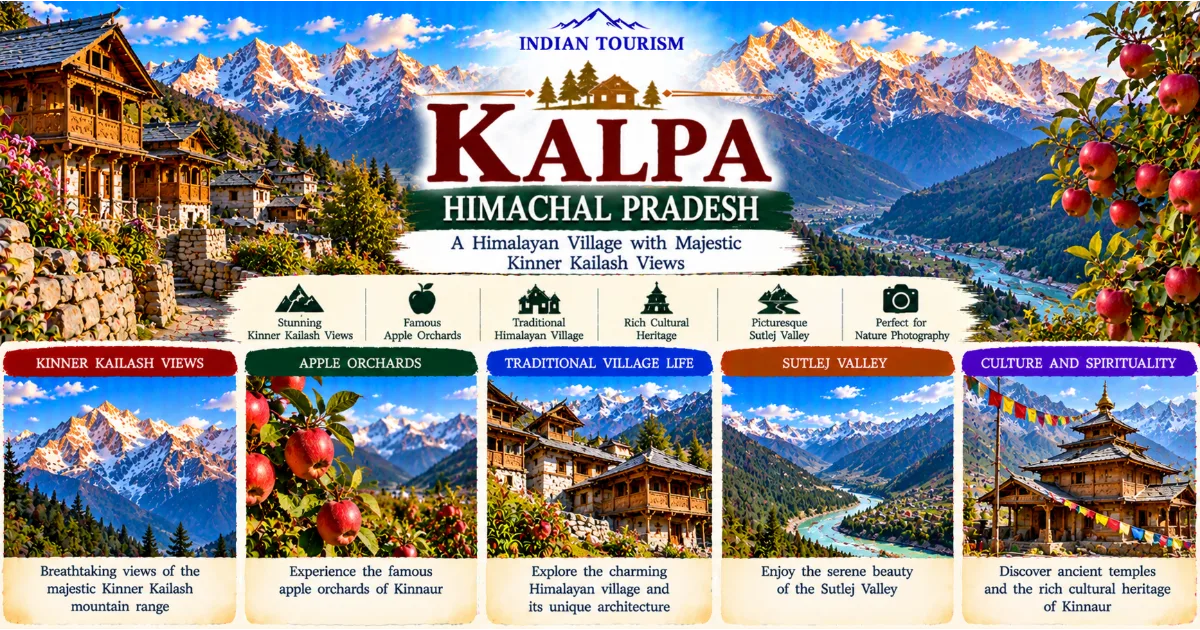
Discovering the Quiet Beauty of Kalpa
High in the mountains of Kinnaur district in Himachal Pradesh lies Kalpa, a beautiful Himalayan village known for its breathtaking mountain views, traditional architecture, apple orchards and rich cultural heritage. Overlooking the Sutlej Valley and facing the magnificent Kinner Kailash mountain range, Kalpa offers a travel experience that combines natural beauty with the distinctive traditions of a remote Himalayan community. It is a destination for travellers who want to experience the mountains beyond the busy streets of popular hill stations.
Kalpa sits above the town of Reckong Peo, which serves as an important administrative and commercial centre for Kinnaur. From Kalpa, visitors can enjoy expansive views of the surrounding mountains, particularly when the sky is clear and the peaks catch the first light of morning. The changing colours of the mountains throughout the day create a remarkable landscape that attracts photographers, nature lovers and people seeking a peaceful retreat.
Yet Kalpa is much more than a scenic viewpoint. It is a living village where agriculture, local traditions, religious practices and modern life exist alongside one another. Apple cultivation plays an important role in the regional economy, while traditional houses, temples and village pathways reflect the area's distinctive cultural character. The village also offers opportunities to learn about the connections between Hindu and Buddhist traditions that have shaped parts of Kinnaur over generations.
For travellers exploring Himachal Pradesh, Kalpa can serve as an excellent base for understanding the wider Kinnaur region. Its location makes it possible to explore nearby settlements, learn about local food and architecture, and appreciate the geographical transition between the greener lower Himalayas and the more rugged landscapes farther into the mountains.
The experience of visiting Kalpa is often defined by simple moments. Watching sunlight spread across the Kinner Kailash range, walking through quiet village lanes, observing apple orchards or enjoying a warm meal while the evening temperature drops can make the journey memorable. Unlike destinations built around large entertainment complexes, Kalpa invites visitors to slow down and appreciate the environment.
Whether you are planning a photography trip, a family holiday, a cultural journey or a longer road trip through Kinnaur, Kalpa deserves a place on your Himachal Pradesh travel list. With careful preparation and respect for the local environment, it offers an opportunity to experience the Himalayas in a thoughtful and rewarding way.
Understanding Kalpa and Its Location
Where Is Kalpa Located?
Kalpa is situated in the Kinnaur district of Himachal Pradesh, above Reckong Peo in the Sutlej Valley. The village lies at an altitude of approximately 2,960 metres above sea level, although exact figures may vary slightly between references and mapped locations. Its elevated position provides views across the valley towards the high mountain range associated with Kinner Kailash.
The journey to Kalpa generally involves travelling along the mountain roads of Kinnaur. The route passes through settlements, forested slopes, cultivated areas and sections where the terrain becomes steep and rugged. The changing landscape makes the journey itself an important part of the travel experience.
Reckong Peo is a useful regional base for visitors because it offers access to transport, markets, accommodation and other essential services. Kalpa is close enough to Reckong Peo to be explored without a long transfer, but its elevated position gives it a distinct atmosphere and outlook.
Because Kalpa is located in a mountainous region, travel times can vary with road conditions, weather and traffic. Visitors should confirm the condition of the route before travelling, particularly during winter or after heavy rainfall. A flexible itinerary is more suitable than a schedule that leaves little room for delays.
The Sutlej Valley
The Sutlej River is one of the major geographical features of Kinnaur. It flows through a deep Himalayan valley, shaping the surrounding terrain and influencing settlement patterns, transport routes and agricultural activity.
From elevated locations around Kalpa, visitors can appreciate the scale of the valley and the mountains rising beyond it. The contrast between the river corridor, cultivated slopes and distant peaks provides a striking view of the region's geography.
The Sutlej Valley is not simply a scenic attraction. It has long been important for movement between settlements and for the development of communities in the western Himalayas. The river and its tributaries also influence the availability of water for agriculture and household use.
Travellers should recognise that the valley is a working landscape. Roads, farms, villages and infrastructure form part of the environment, and the region should not be understood only through its most picturesque viewpoints. Its natural beauty exists alongside the practical realities of mountain life.
The Character of Kinnaur
Kinnaur occupies a distinctive position within Himachal Pradesh. Its geography connects greener mountain slopes with higher, drier landscapes, while its history reflects interactions between neighbouring Himalayan regions.
The district is known for its apple orchards, traditional architecture, mountain villages and religious heritage. Local customs and building styles differ across settlements, reflecting variations in geography, history and community life.
Kalpa represents one aspect of this wider regional identity. It combines mountain scenery with agricultural activity and a village environment that has developed over generations. Visitors who spend time beyond the main viewpoints can gain a better understanding of how people live and work in this part of the Himalayas.
Kinner Kailash: The Mountain Range That Defines Kalpa
A Landmark of Natural Beauty
The Kinner Kailash mountain range is the defining feature of Kalpa's landscape. Its towering peaks rise above the surrounding valleys, creating an impressive backdrop for the village and its orchards. When conditions are clear, the mountains can appear exceptionally close, although their true scale becomes more apparent when viewed across the valley.
The appearance of the range changes with the weather and the position of the sun. Early morning may reveal pale gold and pink tones on the peaks, while midday sunlight brings out sharper contrasts in the snow and rock. In the evening, shadows can spread across the slopes, creating a quieter and more dramatic atmosphere.
For photographers, these changing conditions provide many opportunities to capture the landscape. However, the best view is not guaranteed on every visit. Clouds, haze and seasonal weather can obscure the mountains, so visitors should allow enough time to experience different conditions.
The mountain range also forms an important part of the region's cultural identity. Its presence is reflected in local stories, religious traditions and the way residents describe their home. For many visitors, appreciating the relationship between the landscape and local culture is as important as taking photographs.
Religious Significance of Kinner Kailash
Kinner Kailash is associated with Hindu religious traditions, and the mountain range holds spiritual significance for many devotees. The landscape is connected with beliefs concerning Lord Shiva, making it an important part of the religious geography of Kinnaur.
The mountain's spiritual importance should be understood alongside its natural character. For residents and pilgrims, it is not merely a distant peak but part of a cultural landscape shaped by belief, memory and longstanding traditions.
Visitors should approach religious stories with respect, even if they are travelling primarily for photography or sightseeing. The region's cultural identity is connected with places and landscapes that hold meaning for local communities.
It is also important to distinguish between viewing the mountain range from Kalpa and undertaking any high-altitude pilgrimage or trekking route associated with it. Demanding mountain journeys require separate preparation, appropriate guidance and current information about route conditions. A visit to Kalpa does not require attempting a difficult expedition.
The Best Time to View the Mountains
Early morning is often a rewarding time to observe the Kinner Kailash range. The air may be clearer, and the changing light can bring out the contours of the peaks before clouds develop later in the day.
Late afternoon and evening can also offer attractive views, depending on the weather. The mountains may appear different as the sunlight shifts, while the village gradually becomes quieter.
Visitors who want to photograph the range should allow more than one viewing opportunity. Mountain weather is unpredictable, and a flexible schedule increases the chance of seeing the peaks under favourable conditions.
Even when the range is partly hidden, Kalpa remains worth exploring. The village's architecture, orchards and cultural environment provide plenty of interest beyond the main mountain panorama.
The Apple Orchards of Kalpa
Why Apples Matter to Kinnaur
Kinnaur is widely known for apple cultivation, and orchards form an important part of its agricultural landscape. The combination of altitude, climate and seasonal conditions has helped apple growing become a significant source of income for many households in suitable areas.
Apple cultivation requires considerable knowledge and effort. Farmers must manage trees, monitor pests and diseases, maintain irrigation and organise harvesting within a limited seasonal window. Weather conditions can influence both the quality and quantity of the crop.
In and around Kalpa, orchards contribute to the visual character of the village. During the growing season, rows of trees bring greenery to the landscape, while the surrounding mountains create a dramatic backdrop. When the fruit ripens, the orchards can become particularly attractive.
The importance of apple cultivation extends beyond tourism. It supports livelihoods, influences household routines and connects the region with markets outside Kinnaur. Visitors who understand this agricultural context can appreciate why orchards are more than picturesque scenery.
Seasonal Changes in the Orchards
The appearance of the orchards changes throughout the year. In spring, trees begin to develop leaves and flowers, depending on local temperatures and the timing of the season. This period can be visually appealing, although flowering dates vary with weather and elevation.
During summer, the trees grow and the fruit develops. Farmers focus on maintaining the orchards and managing the crop. The surrounding landscape is often greener, providing a strong contrast with the mountains.
Late summer and autumn are important periods for harvesting, although exact timing depends on the variety, elevation and seasonal conditions. The orchards may be especially interesting to visitors who want to understand the agricultural calendar of Kinnaur.
Winter brings a quieter appearance as trees become dormant and temperatures fall. Snow may occur, and outdoor activity can become more difficult. Travellers should not expect the orchards to look the same in every season.
Responsible Orchard Visits
Visitors may be able to observe orchards from public paths or viewpoints, but agricultural land should always be treated as private working property unless access has been clearly permitted.
Do not pick fruit without permission, damage branches or enter cultivated areas for photographs. Farmers invest time and money in maintaining their trees, and careless visitor behaviour can harm their livelihoods.
If a farmer or orchard operator offers a guided visit or sale of local produce, it can be a useful way to learn about the crop while supporting the local economy. Ask about the season, varieties and growing practices rather than assuming that every orchard follows the same methods.
Respectful orchard visits help ensure that tourism and agriculture can coexist without creating unnecessary difficulties for residents.
Traditional Architecture and Village Life
Wooden Houses and Local Building Traditions
Kalpa is known for traditional buildings that reflect the architectural heritage of Kinnaur. Timber, stone and other locally available materials have historically been used in ways suited to the mountain climate. Some older structures feature carved wooden details and construction methods that demonstrate the skill of local builders.
Architecture in mountain regions is shaped by practical requirements as well as cultural preferences. Buildings must respond to cold weather, snow, rainfall, earthquakes and the availability of suitable construction materials. Traditional designs reflect knowledge developed over generations.
Kalpa also contains modern buildings and facilities that meet changing household and tourism needs. The village is therefore a living settlement where older traditions exist alongside contemporary construction and services.
Visitors interested in architecture should explore the village on foot where appropriate, taking care not to obstruct residents or enter private property. The most meaningful details are often found in the relationship between buildings, pathways, cultivated land and the surrounding mountains.
A Village Shaped by the Seasons
Life in Kalpa is influenced by seasonal changes. Agricultural activity, household routines and travel conditions vary throughout the year, while winter can bring significantly colder temperatures and a different pace of daily life.
During warmer months, outdoor activity becomes easier, and agriculture plays a visible role in the village environment. Residents may be occupied with orchard work, local services and other seasonal responsibilities.
As the weather cools, households prepare for winter and adjust their routines to the changing conditions. Travel can become more difficult, and visitors may find that some services operate differently from the main tourist season.
Understanding these seasonal rhythms helps travellers appreciate the village as a community rather than a destination that exists only for visitors. It also encourages more realistic expectations about accommodation, transport and available activities.
Hospitality and Community Life
Hospitality is an important part of many Himalayan travel experiences, particularly when visitors stay in locally operated guesthouses or homestays. Hosts may share information about local food, the history of the village and the surrounding mountains.
Every household has its own routines and circumstances, so visitors should avoid assuming that residents are always available for conversation or photography. A polite greeting, respectful questions and consideration for privacy can create a positive interaction.
Tourism provides opportunities for some local businesses, including accommodation providers, restaurants, drivers and guides. Supporting these services can help distribute visitor spending within the community.
At the same time, visitors should recognise that local residents have lives and responsibilities beyond tourism. A respectful approach allows travellers to enjoy the destination while preserving the dignity and privacy of the people who live there.
Religious Heritage of Kalpa
Hindu and Buddhist Traditions
Kinnaur has a rich religious landscape shaped by the interaction of Hindu and Buddhist traditions. Different settlements may have their own temples, monasteries, shrines and local practices, reflecting the region's cultural history.
Kalpa's religious heritage forms part of this broader pattern. Visitors may encounter places of worship and traditional structures that connect the community with its beliefs and historical identity.
The relationship between religious traditions in the Himalayas is complex and has developed over a long period. It should not be reduced to a single description, because local practices can differ between communities and generations.
Travellers interested in cultural history can learn by visiting accessible religious sites, reading local interpretation where available and speaking respectfully with people who are willing to share information.
Narayan-Nagini Temple and Local Beliefs
The Narayan-Nagini Temple is associated with the religious traditions of Kalpa and is an important part of the village's cultural heritage. Its architecture and religious role offer visitors an opportunity to learn about local worship and the relationship between sacred places and community identity.
Access arrangements may vary, and visitors should follow any rules concerning entry, footwear, photography and behaviour. Some parts of a religious complex may be restricted to certain participants or activities.
The temple should be approached as a place of worship rather than simply a photographic attraction. Observing local customs and allowing religious activities to continue without interruption are essential aspects of responsible travel.
Visitors who are uncertain about appropriate conduct can ask a local host or caretaker for guidance. A respectful visit can provide insight into the spiritual life of the region without requiring visitors to share the same beliefs.
Sacred Landscapes and Mountain Identity
In many Himalayan communities, mountains are connected with religious stories, local identity and collective memory. The physical landscape is therefore closely linked with the way residents understand their home.
Kinner Kailash is an especially prominent example in Kinnaur. Its presence shapes the visual experience of Kalpa while also carrying spiritual significance for many people.
Visitors can appreciate this relationship by learning about the mountain's role in local traditions and avoiding behaviour that dismisses or trivialises religious beliefs.
Cultural tourism is most rewarding when it encourages curiosity and respect. Understanding why a landscape matters to the people who live beside it can transform a scenic visit into a deeper experience.
Best Places to Explore in and Around Kalpa
Reckong Peo
Reckong Peo is an important town in Kinnaur and a practical base for visitors exploring the region. It offers administrative services, markets, transport connections and access to essential supplies.
The town provides a contrast to Kalpa's quieter village environment. Visitors can observe everyday commercial activity, purchase necessities and make arrangements for onward travel.
Because Kalpa lies above Reckong Peo, the two destinations are often visited together. Travellers can stay in one location and explore the other according to their accommodation preferences and itinerary.
Reckong Peo is also useful for checking local travel information. Conditions in the mountains can change quickly, so speaking with local transport providers and accommodation staff may help visitors make better decisions.
Roghi Village
Roghi is a settlement near Kalpa known for its mountain scenery and traditional village environment. It is sometimes included in local excursions for visitors who want to explore more of the surrounding area.
The road and terrain around Roghi require care, especially where routes are narrow or exposed. Visitors should confirm current conditions and avoid walking or stopping in places where traffic may be obstructed.
A visit can provide another perspective on the settlements of Kinnaur and the relationship between village life and the surrounding mountains.
As with Kalpa, the area is a living community. Visitors should respect homes, cultivated land and local routines while enjoying the landscape.
Suicide Point and Nearby Viewpoints
The area near Kalpa includes viewpoints that have become known among travellers for their dramatic mountain and valley scenery. Some locations are referred to by unsettling names in tourist descriptions, but visitors should focus on safe and respectful observation rather than sensational stories.
Viewpoints may have steep drops, unstable ground or limited barriers. Never approach an edge for a photograph or ignore warning signs. Weather, loose stones and poor visibility can increase the risk.
Travellers should use established viewing areas and follow local instructions. A safe viewpoint can offer excellent scenery without the need to take unnecessary risks.
The surrounding landscape is impressive in its own right, and there is no reason to compromise personal safety for a dramatic image.
Sangla Valley
Sangla Valley is a major attraction in Kinnaur and can be included in a wider itinerary that also covers Kalpa. The valley is known for the Baspa River, traditional settlements, cultivated land and mountain scenery.
Chitkul, a village farther along the Baspa Valley, is another popular destination for travellers exploring the region. The combination of Kalpa and Sangla offers a useful contrast between the Sutlej Valley and the Baspa Valley.
Visitors should consider the distances and road conditions before planning both areas into a single day. A more relaxed itinerary allows time to appreciate each destination without spending the entire trip travelling.
Nako and the Higher Kinnaur Route
Travellers with additional time may consider exploring destinations farther along the mountain route towards the higher parts of Kinnaur and the wider Spiti region. Nako, known for its traditional settlement and lake, offers a different landscape and cultural experience.
However, the journey beyond Kalpa involves longer distances and more demanding mountain roads. It should be planned as part of a separate travel stage rather than treated as a quick extension.
Check road access, weather, accommodation and local restrictions before travelling. The conditions that make these destinations beautiful can also make access difficult, especially during winter and periods of heavy rain or snowfall.
Best Time to Visit Kalpa
Spring: Fresh Colours and Changing Weather
Spring brings a gradual transition from winter towards warmer conditions. Depending on the timing of the season, visitors may see trees developing new leaves, orchard blossoms and snow remaining on the higher peaks.
The contrast between fresh vegetation and the mountain backdrop can make this a rewarding season for photography. Temperatures, however, can remain low, especially at night.
Road access and accommodation should be checked before travelling, as conditions may differ from those experienced during the main summer season.
Spring is suitable for visitors who appreciate quieter travel and are prepared to adapt their plans to changing weather.
Summer: Comfortable Exploration
Summer is generally one of the most practical seasons for visiting Kalpa. Road access is often more favourable, and longer daylight hours provide time to explore the village, orchards and nearby destinations.
The weather can be pleasant during the day, but temperatures may fall sharply after sunset because of the altitude. Warm clothing remains necessary even when daytime conditions feel comfortable.
Summer is also a busy travel period in parts of Kinnaur. Booking accommodation ahead of time can reduce the risk of limited choices during popular dates.
Visitors should continue to monitor road conditions, as rainfall and landslides can affect mountain travel even during the warmer months.
Autumn: Orchard Season and Clear Views
Autumn is an attractive season for travellers interested in apple cultivation and mountain photography. Depending on the local agricultural calendar, orchards may be involved in harvesting, and the landscape can display warm seasonal colours.
The air may be crisp, and clear weather can provide excellent views of Kinner Kailash. Cooler nights and shorter daylight hours, however, require suitable clothing and careful scheduling.
Visitors should respect orchard property and ask before photographing or entering cultivated areas. If local producers offer apples or other products for sale, purchasing directly from them can support the regional economy.
As winter approaches, travellers should confirm that roads and accommodation will remain suitable for their planned dates.
Winter: Snow and a Quieter Atmosphere
Winter brings cold conditions and the possibility of snowfall. The surrounding mountains may appear especially dramatic, and the village can have a quieter atmosphere than during the main travel season.
However, icy roads, low temperatures and weather disruptions can make travel more challenging. Some facilities may operate on reduced schedules, and visitors need to confirm accommodation and heating arrangements before arrival.
Winter travellers should carry appropriate cold-weather clothing and avoid making plans that depend on uninterrupted road access.
For visitors without experience of severe mountain conditions, spring through autumn is generally the more practical period for exploring Kalpa.
How to Reach Kalpa
By Road from Shimla
Shimla is a common starting point for a road journey into Kinnaur. The route continues through mountain settlements and the Sutlej Valley before reaching Reckong Peo and Kalpa.
The journey requires considerable time because of the terrain, bends and changing road conditions. Travellers should plan for breaks and possible delays rather than relying on an optimistic driving estimate.
Road conditions can be affected by rainfall, landslides, maintenance work and snowfall. Check current information before departure and follow instructions issued by local authorities.
If you are not experienced in mountain driving, hiring a qualified local driver can be a sensible choice. Drivers familiar with the region may be better equipped to judge road conditions and respond to unexpected changes.
By Bus and Public Transport
Public transport connects various towns and settlements in Himachal Pradesh, including parts of Kinnaur. Services, schedules and connections can vary, so travellers should verify current information before planning the journey.
Reckong Peo is a useful point for checking onward transport to Kalpa. Depending on the available service, visitors may use local buses, shared vehicles or taxis.
Travellers relying on public transport should allow flexibility in the itinerary. Mountain journeys can take longer than expected, and a delayed connection may affect the rest of the day's plans.
Confirm the return journey before setting out for a remote viewpoint or nearby settlement, especially when daylight is limited.
By Private Vehicle or Taxi
A private vehicle offers flexibility for exploring Kalpa and the surrounding region, while a local taxi can provide the benefits of regional driving experience without requiring visitors to navigate unfamiliar roads.
Before hiring a vehicle, agree on the fare, waiting time, route and any additional stops. Ask about current road conditions and whether the driver recommends changes to the itinerary.
Avoid travelling too quickly on narrow mountain roads, and do not stop where a vehicle would obstruct traffic or create a safety risk.
A flexible schedule and conservative driving decisions are more important than trying to reach every destination on a fixed timetable.
Where to Stay in Kalpa
Homestays and Guesthouses
Kalpa offers accommodation options that may include homestays, guesthouses and small hotels. The available facilities vary, so travellers should confirm room heating, hot water, meals, parking and transport access before booking.
A homestay can provide a closer introduction to local life. Guests may learn about the agricultural calendar, regional cuisine and village traditions through conversations with their hosts.
Facilities may be simpler than those found in larger towns, particularly during colder periods. Visitors should ask clear questions about heating and other essential requirements rather than assuming every property provides identical services.
Booking in advance is advisable during popular travel periods. Travellers should also understand cancellation policies in case weather or road conditions disrupt the journey.
Choosing Accommodation for Mountain Views
Many travellers choose Kalpa because of its views of Kinner Kailash. When selecting accommodation, ask whether the property actually offers mountain views from the room or a shared outdoor area. A village location alone does not guarantee an unobstructed panorama.
Weather conditions also influence visibility, so even a well-positioned room cannot guarantee clear views every morning.
Visitors should balance scenery with practical requirements such as heating, access to food and transport. A comfortable stay can be more important than a particular view, especially during colder seasons.
Staying in Reckong Peo
Reckong Peo can be a practical alternative for travellers who prefer access to markets, transport and other services. Kalpa can then be visited as a nearby excursion, depending on road conditions and available transport.
The choice between the two locations depends on the style of trip. Kalpa is attractive for its quieter atmosphere and mountain setting, while Reckong Peo offers a more active town environment.
Some travellers may choose to spend time in both places, allowing them to experience different aspects of Kinnaur without rushing.
Local Food and Culinary Experiences
Food in Kalpa reflects the wider culinary traditions of Kinnaur and the practical demands of mountain living. Visitors may find simple home-cooked meals, lentils, rice, seasonal vegetables, noodles and warming soups.
The range of dishes varies by establishment and season. Smaller guesthouses may offer a limited menu based on available ingredients, while larger establishments can provide more variety.
Local produce, including apples when in season, forms an important part of the regional food experience. Visitors may also encounter products prepared from fruit or other ingredients grown in the surrounding area.
Meals are particularly enjoyable after a day of exploring the village and nearby viewpoints. Warm food and hot drinks can provide comfort as temperatures fall in the evening.
Travellers with dietary restrictions should ask about ingredients and preparation methods. Carrying suitable snacks can be useful during road journeys, when dining options may be limited.
Choosing local eateries and homestays supports small businesses and gives visitors an opportunity to experience the region's hospitality. Food should be enjoyed respectfully, with attention to local customs and a commitment to avoiding waste.
Responsible Tourism in Kalpa
Protecting the Mountain Environment
Kalpa's natural beauty depends on the health of its forests, orchards, waterways and mountain slopes. Visitors can help protect the environment by carrying rubbish to suitable disposal points and avoiding damage to vegetation.
Do not leave plastic bottles, food wrappers or other waste at viewpoints. Waste that reaches streams and slopes can affect both the landscape and the people who depend on local water resources.
Stay on established paths and avoid entering cultivated land without permission. The environment around the village is part of a working agricultural landscape, not simply open space for recreation.
Visitors should also use water thoughtfully and follow local guidance about waste disposal. Small decisions made by individual travellers can collectively make a significant difference.
Respecting Religious and Cultural Sites
Temples and other religious places should be approached with respect. Follow local instructions concerning footwear, photography, clothing and restricted areas.
Avoid interrupting ceremonies or treating religious structures as props for photographs. If you are uncertain about appropriate behaviour, ask a local caretaker or host.
Traditional buildings may contain delicate materials and historic features. Do not climb on roofs, touch fragile carvings or enter closed structures without permission.
Respectful cultural tourism allows visitors to learn about local traditions while helping preserve them for future generations.
Supporting Local Livelihoods
Tourism can create income through accommodation, transport, food, guiding and the sale of local products. Visitors can help support the community by choosing local businesses when practical.
Purchase agricultural products from legitimate sellers and avoid entering orchards without permission. Treat drivers, guides, hosts and shopkeepers fairly, and honour the arrangements agreed upon.
Supporting local services does not mean every visitor must spend beyond their budget. It means recognising that the people who maintain accommodation, provide transport and share local knowledge contribute directly to the travel experience.
Responsible tourism aims to create a positive relationship between visitors and residents while protecting the environment that makes Kalpa special.
A Suggested Three-Day Kalpa Itinerary
Day One: Arrival and Village Exploration
Arrive in Kalpa and settle into your accommodation. If you are travelling from a lower altitude, allow time to rest and adjust to the mountain environment.
Later, explore accessible village lanes and observe the traditional architecture, orchards and surrounding scenery. If the weather is clear, spend time enjoying views of the Kinner Kailash range.
Avoid planning a demanding excursion immediately after a long road journey. A relaxed first day makes it easier to appreciate the destination.
Day Two: Kinner Kailash Views and Cultural Heritage
Begin the day early if weather conditions appear favourable. Observe the mountain range as the light changes, and take photographs from safe, established viewpoints.
Explore accessible cultural sites in Kalpa, including the Narayan-Nagini Temple where visiting arrangements permit. Follow local rules and respect religious activities.
Depending on road conditions and available time, consider visiting a nearby settlement such as Roghi. Confirm the route before setting out and avoid stopping in unsafe places for photographs.
Return to your accommodation with sufficient time before dark. Mountain roads should not be treated casually, especially when visibility is poor.
Day Three: Reckong Peo and the Wider Region
Spend part of the day exploring Reckong Peo, purchasing essential supplies or learning more about the wider Kinnaur region.
If you have additional time and suitable transport, you may plan a longer excursion towards Sangla Valley or another destination. Such a journey should be scheduled carefully because distances and road conditions can make travel slower than expected.
Before leaving the area, check current weather and road information. Allow extra time for delays and avoid planning essential onward connections too tightly.
Travellers with more days can extend the trip to explore additional parts of Kinnaur at a comfortable pace.
Who Should Visit Kalpa?
Kalpa is particularly suitable for travellers who appreciate mountain scenery, quiet village environments, photography and cultural exploration. It appeals to visitors who prefer nature and local heritage over large commercial attractions.
Couples may enjoy the peaceful atmosphere and panoramic views, while families can use the visit to introduce children to Himalayan geography, agriculture and traditional architecture. Families should consider altitude, cold weather and road conditions when planning activities.
Photographers can find opportunities in the mountains, orchards and village architecture, although weather conditions are unpredictable. Visitors should remain respectful of residents and private property when taking pictures.
Kalpa may be less suitable for travellers who expect extensive nightlife, shopping malls or a large selection of entertainment facilities. Its appeal lies in its landscape, slower pace and cultural character.
For people planning a longer road trip through Himachal Pradesh, Kalpa can be a rewarding stop that provides a deeper understanding of Kinnaur.
Conclusion: Why Kalpa Deserves a Place on Your Himachal Pradesh Travel List
Kalpa is one of Kinnaur's most appealing destinations because it combines the dramatic presence of Kinner Kailash with traditional village life, apple orchards and a rich cultural landscape. Its elevated setting provides memorable views, while its connection with agriculture and local religious traditions gives the destination depth beyond its scenery.
The village offers a chance to experience the Himalayas at a slower pace. Travellers can walk through accessible village lanes, learn about local architecture, observe the seasonal rhythms of orchard cultivation and appreciate the way the surrounding mountains influence community life.
Kalpa also provides a useful base for exploring the wider Kinnaur region. Nearby Reckong Peo, Roghi and the routes towards Sangla Valley can help visitors understand the diversity of settlements and landscapes across this part of Himachal Pradesh.
A successful visit depends on preparation and respect. Check road conditions, carry suitable clothing, allow time for delays and follow local rules at religious sites and viewpoints. Protect the orchards, avoid littering and support local businesses wherever practical.
The true appeal of Kalpa lies in the relationship between its natural environment and its living culture. The mountains may first draw visitors to the village, but the experience becomes more meaningful when travellers take time to understand the people, traditions and livelihoods that make the region distinctive.
For anyone seeking an authentic Himalayan experience in Himachal Pradesh, Kalpa is a destination worth discovering. Its mountain panoramas, quiet surroundings and cultural heritage make it a memorable part of a journey through Kinnaur.
#IndianTourism #Kalpa #HimachalPradesh #Kinnaur #KinnerKailash #SutlejValley #AppleOrchards #HimalayanTravel #ExploreHimachal #MountainVillages #CulturalTourism #NatureTravel #TravelIndia #ResponsibleTourism #IncredibleIndia
