
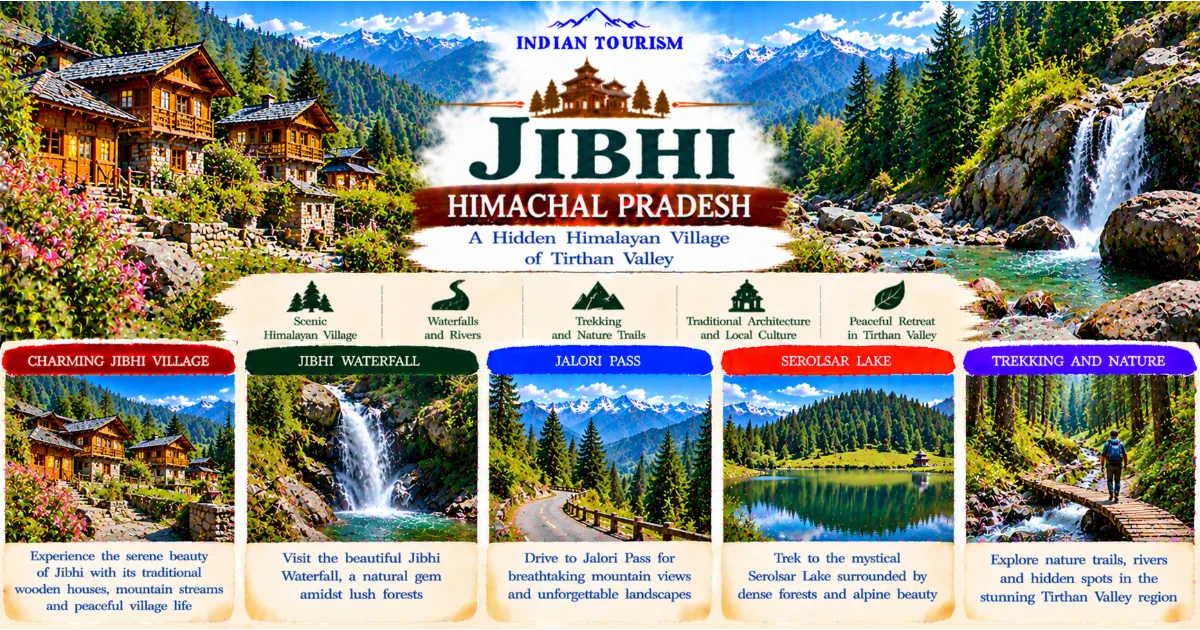
Discovering the Peaceful Beauty of Jibhi
Hidden among forested mountains in the Banjar region of Himachal Pradesh, Jibhi has become one of the most appealing destinations for travellers seeking a quieter Himalayan experience. Known for its traditional wooden houses, flowing mountain streams, cedar forests, small cafés and scenic walking routes, Jibhi offers a refreshing alternative to the crowded streets of more commercial hill stations. Its charm lies in its ability to combine natural beauty, village life and comfortable travel experiences without losing its connection to the surrounding landscape.
Jibhi is situated in the wider Banjar area of Kullu district and is often included in journeys through the Tirthan Valley region. The destination is surrounded by mountains covered with pine, cedar and other vegetation, while streams and small waterways create a soothing atmosphere. Traditional-style buildings sit alongside modern homestays and cafés, giving the village a character shaped by both local life and changing travel preferences.
For many visitors, Jibhi is a place to slow down. A morning may begin with the sound of flowing water and the sight of mist moving through the trees. The day can be spent walking along village paths, visiting a nearby waterfall, exploring forest trails or simply enjoying a warm drink while looking towards the mountains. Unlike destinations where sightseeing revolves around a long list of commercial attractions, Jibhi rewards travellers who are comfortable with a flexible and unhurried itinerary.
The village also serves as a useful base for exploring nearby places such as Jalori Pass, Serolsar Lake, Shoja and the wider Banjar region. These destinations offer different experiences, from high mountain viewpoints to forest walks and traditional settlements. However, the terrain and weather can affect road access, so visitors should plan excursions carefully.
Jibhi is not an untouched wilderness. It is a living mountain community where tourism has created new opportunities as well as pressures on roads, waste management, water resources and local culture. Travellers can help preserve its character by supporting local businesses, respecting private property and avoiding litter.
For those who want to discover a quieter side of Himachal Pradesh, Jibhi offers an appealing combination of mountain scenery, village hospitality and opportunities for thoughtful exploration.
Where Is Jibhi Located?
Jibhi lies in the Banjar region of Kullu district in Himachal Pradesh. It is part of a mountainous landscape shaped by forested slopes, narrow valleys, small streams and scattered settlements. Its location makes it a practical stop for travellers exploring the wider Tirthan Valley and the surrounding mountains.
The area is connected by road to Banjar and other settlements in Kullu district. The journey passes through winding mountain roads, where travel times depend on weather, traffic and road conditions. Visitors arriving from larger towns should allow sufficient time for the final mountain section rather than relying only on straight-line distances.
Jibhi's surroundings include a mix of traditional homes, cultivated land, forested hills and newer accommodation built for visitors. This combination reflects the way tourism has developed in smaller Himalayan settlements. Some travellers come for outdoor activities, while others seek a peaceful place to work remotely, read, take photographs or spend time with family.
The village is also well positioned for trips towards Jalori Pass and other mountain destinations. These excursions can add variety to a stay, but the roads become more challenging at higher elevations and may be affected by snowfall, rainfall or maintenance work.
Visitors should confirm accommodation and transport arrangements before arrival, especially during busy weekends and holiday periods. Smaller mountain destinations may have fewer services than major tourist towns, and availability can vary by season.
Understanding Jibhi's location helps travellers plan a balanced itinerary that includes the village itself rather than treating it only as a place to sleep between longer excursions.
The Natural Landscape of Jibhi
The natural setting is one of Jibhi's strongest attractions. Forested hills rise around the settlement, small streams move through the valley and the changing light gives the landscape a different appearance throughout the day. The combination of trees, water and traditional buildings creates a distinctive mountain atmosphere.
The vegetation varies according to elevation, moisture and exposure. Pine and cedar forests are characteristic of many parts of the surrounding region, while other plants and trees appear in suitable locations. The forested slopes provide shade, support wildlife and contribute to the visual character of the valley.
Water is another important element of the landscape. Small streams and channels pass through the area, adding movement and sound to the village environment. Their flow changes according to seasonal rainfall and snowmelt, and water levels can rise after heavy precipitation.
The natural surroundings make Jibhi attractive for photography, walking and quiet observation. Early mornings may bring mist through the trees, while clear afternoons can reveal more of the surrounding mountain slopes. After rainfall, vegetation may appear particularly fresh, although trails and roads can become slippery.
Visitors should avoid walking along unstable stream banks or entering water without understanding the conditions. Rocks can be slippery, and water levels may change rapidly during heavy rain.
The landscape is also a living environment rather than a decorative backdrop. Forests, streams and cultivated areas support local livelihoods and ecological processes. Staying on established paths, carrying rubbish out and respecting private land helps reduce the impact of tourism.
Jibhi Waterfall: A Popular Natural Attraction
Jibhi Waterfall is one of the village's best-known attractions. It is a convenient stop for visitors who want to experience the local landscape without committing to a long mountain trek.
The waterfall is surrounded by vegetation and a wooded setting that provides a pleasant contrast to the nearby roads and buildings. The sound of falling water creates a peaceful atmosphere, making the area popular with photographers and travellers looking for a short nature walk.
Access conditions may change depending on weather, maintenance and local arrangements. Visitors should follow any signs or instructions and avoid crossing barriers or entering restricted areas. Paths can be slippery, particularly after rain, so suitable footwear is important.
The waterfall can attract more visitors during busy periods. Travellers who prefer a quieter experience may consider visiting earlier in the day, provided access is permitted and conditions are safe.
Photography should be approached carefully. Do not climb wet rocks or move close to unstable edges simply to obtain a different angle. The safest viewpoint is preferable to a risky photograph.
Visitors should also avoid leaving food wrappers, plastic bottles or other rubbish near the water. Natural attractions can quickly lose their appeal when waste accumulates, and litter can affect the surrounding environment.
Jibhi Waterfall is best appreciated as a small natural feature within a larger landscape. A visit can be combined with a walk through accessible parts of the village, allowing travellers to experience both the waterfall and the everyday character of Jibhi.
Traditional Wooden Houses and Village Architecture
Jibhi is widely associated with traditional-style wooden houses that contribute to its distinctive appearance. The surrounding region has a long history of mountain construction, where buildings have been designed according to local materials, climate and terrain.
Traditional Himalayan architecture often combines timber and stone, although methods vary between communities and periods. Stone can provide foundations and durable walls, while timber may be used for structural elements, balconies, roof supports and decorative details. The precise construction depends on the building and the resources available.
In mountain environments, architecture must respond to changing temperatures, rainfall and, in higher locations, snowfall. Houses also need to fit into limited areas of suitable land, which influences the arrangement of buildings and pathways.
Jibhi's built environment includes both older structures and newer properties inspired by traditional forms. Some buildings preserve local architectural details, while others adapt the style to accommodate guest rooms, cafés and tourism facilities.
Visitors should remember that many attractive buildings are private homes or working businesses. Photographing a house from a public path may be acceptable, but entering a courtyard or taking close-up photographs of residents requires permission.
Traditional architecture is valuable because it reflects local knowledge and cultural identity. Supporting responsible restoration and locally operated accommodation can help maintain these connections, provided development respects the surrounding environment.
A walk through Jibhi can therefore become more than a search for scenic photographs. It can offer insight into how mountain communities have adapted building traditions to their surroundings.
The Culture and Everyday Life of Jibhi
Jibhi is a living village where family life, agriculture, local trade and tourism exist alongside one another. Although visitors often arrive for the scenery, observing the everyday rhythm of the settlement can be one of the most rewarding parts of the experience.
Local routines follow seasonal patterns. Agricultural tasks, household work, transport and community activities all respond to the weather and the availability of resources. Tourism has introduced additional employment through homestays, cafés, guiding services and transport, but traditional livelihoods remain part of the wider region.
The village's culture is connected to the broader traditions of Kullu district. Religious practices, local festivals, food customs and community relationships vary between settlements, so visitors should avoid assuming that every village follows identical traditions.
Travellers may have opportunities to learn about local life through conversations with hosts or guides. A respectful question about a building, a festival or a regional dish can provide useful context, provided the person has time to respond.
Photography should be handled sensitively. Ask before photographing residents, children, private homes or religious activities. A person going about daily work should not be treated as an attraction simply because the setting looks picturesque.
Supporting local businesses is one practical way to contribute to the community. Choosing a locally operated homestay, eating at a village café or purchasing legitimate local products can help keep tourism income within the region.
Jibhi's character depends on the balance between welcoming visitors and maintaining a comfortable place for residents to live. Responsible travel respects that balance.
Jalori Pass: A Mountain Gateway Near Jibhi
Jalori Pass is one of the most popular excursions associated with Jibhi. It connects parts of the surrounding mountain region and offers visitors access to high-altitude scenery, forest routes and walking trails.
The road to Jalori Pass climbs through changing landscapes, moving from village surroundings towards more elevated mountain terrain. As the elevation increases, temperatures may fall and weather conditions can change quickly.
The pass is often used as a starting point for walks, including the route towards Serolsar Lake. However, the condition of the road and the availability of services vary by season. Snowfall can make access difficult during winter, and heavy rain may affect road safety at other times.
Visitors should check current road conditions before travelling and confirm whether the pass is accessible to ordinary vehicles. A route that is open during summer may be unsuitable during periods of snow or severe weather.
The mountain environment requires appropriate clothing and footwear. Even when the weather feels comfortable in Jibhi, conditions at the pass may be colder and windier.
Travellers should avoid parking in unsafe locations or blocking the road. The area can be narrow, and vehicles may need room to pass on bends.
Jalori Pass provides an opportunity to experience a different side of the region, but it should be treated as a mountain destination requiring preparation rather than a guaranteed short drive.
Serolsar Lake: A Forest Walk from Jalori Pass
Serolsar Lake is a well-known excursion from the Jalori Pass area. The route passes through forested terrain and offers a walking experience that differs from the roadside attractions around Jibhi.
The lake is surrounded by trees and is associated with local religious traditions. Its quiet setting makes it appealing to visitors who enjoy nature walks and wish to spend time away from busy settlements.
The walk requires suitable footwear and a reasonable level of physical preparation. The route's condition can change with rain, snow and seasonal maintenance, so travellers should seek current information before setting out.
Visitors should allow enough time for the return journey and avoid starting late in the day. Weather may deteriorate, and the forest can become more difficult to navigate when visibility is poor.
The lake and surrounding woodland deserve careful protection. Stay on established paths, avoid disturbing wildlife and carry all rubbish back. Do not leave food waste or attempt to feed animals.
Because the lake has cultural significance, visitors should follow any local instructions regarding access, behaviour and photography. The purpose of the visit should be to appreciate the landscape respectfully rather than disturb it.
A trip to Serolsar Lake can be one of the highlights of a Jibhi itinerary, especially for travellers who enjoy walking through forests and experiencing the quieter side of the Himalayas.
Shoja: A Peaceful Mountain Settlement Nearby
Shoja is a small mountain settlement near Jibhi and Jalori Pass. It is known for its forested surroundings, mountain views and quiet atmosphere. Its location makes it a useful addition to a wider exploration of the Banjar region.
The village offers a different perspective from Jibhi. While Jibhi has developed a recognisable tourism environment with cafés and accommodation, Shoja is often associated with a more secluded mountain setting.
Visitors may enjoy walking through accessible village areas, observing the surrounding forests or using Shoja as a base for nearby excursions. The experience depends on weather, accommodation availability and the condition of local roads.
The settlement is especially attractive to travellers who prefer quieter destinations and do not need an extensive range of commercial activities. However, fewer services may also mean that meals, transport and other arrangements should be confirmed in advance.
Visitors should respect private property and avoid entering forest areas without suitable guidance. The surrounding landscape may appear inviting, but steep terrain and changing weather can make unfamiliar routes challenging.
Shoja can be combined with Jibhi as part of a multi-day trip, allowing travellers to experience different village environments without travelling too far from the same general region.
The Tirthan Valley Connection
Jibhi is frequently included in trips through the wider Tirthan Valley region. The area is known for its river landscapes, mountain villages, forests and access to outdoor experiences.
The Tirthan River is an important geographical feature of the region. Its surrounding valley supports settlements and agricultural activity while providing a scenic setting for visitors. The river and its tributaries form part of a wider mountain ecosystem that requires careful management.
Travellers often combine Jibhi with destinations around Gushaini and other settlements in the Tirthan area. These places can provide opportunities for village walks, nature observation and visits to the wider landscape.
The exact travel time between destinations depends on the starting point and road conditions. Mountain routes may be narrow and winding, so visitors should allow sufficient time and avoid planning too many distant stops in a single day.
The region is also associated with the Great Himalayan National Park landscape, which is important for biodiversity and conservation. Visitors interested in protected areas should check current entry requirements, permitted activities and guide arrangements before planning an excursion.
Jibhi and Tirthan Valley complement one another because they provide different ways to experience the mountains. One visit can focus on the village atmosphere and nearby high-altitude excursions, while another can explore river settlements and conservation landscapes.
Great Himalayan National Park and Nature Conservation
The Great Himalayan National Park is an important protected landscape in Himachal Pradesh, recognised for its ecological significance and biodiversity. It is associated with the wider mountain environment of the Kullu region and can be relevant to travellers exploring areas near Jibhi and Tirthan Valley.
Protected mountain landscapes support a variety of habitats, shaped by differences in elevation, rainfall, vegetation and terrain. Forests and alpine environments can provide habitat for numerous plant and animal species, some of which require careful conservation measures.
A visit to the wider region can help travellers understand the importance of protecting mountain ecosystems. Forests contribute to soil stability and water regulation, while rivers and streams support both wildlife and human communities.
However, access to protected areas is subject to rules and may require permits, authorised guides or other arrangements. Visitors should check current requirements before travelling and should not assume that every trail is open to unrestricted access.
Wildlife observation requires patience and respect. Animals may be difficult to see, and visitors should never feed, chase or attempt to approach them. Noise should be kept low, and all rubbish should be carried out.
The conservation landscape also demonstrates why responsible tourism matters. Excessive traffic, unmanaged waste and disturbance can affect fragile environments, particularly where visitor numbers increase quickly.
Travellers who want to explore the Great Himalayan National Park should plan through appropriate local or official channels. This helps protect the landscape while making the experience safer and more informative.
Best Time to Visit Jibhi
Jibhi can be visited in different seasons, but the best time depends on the activities planned and the visitor's comfort with changing mountain weather.
Spring: March to April
Spring brings a gradual transition from winter. Temperatures begin to rise, and the surrounding vegetation responds to the changing season. The village may be attractive for travellers who prefer a quieter visit.
Mornings and evenings can remain cold, and higher routes may still experience winter conditions. Visitors planning to visit Jalori Pass should confirm road accessibility.
Summer: May to June
Summer is a popular period for exploring Jibhi. The weather can be suitable for village walks, photography and excursions to nearby destinations.
Accommodation may become busier during holidays, so advance booking is sensible. Travellers should still carry warm clothing because temperatures can drop after sunset.
Monsoon: July to September
The monsoon can make the landscape lush and green, but it also creates travel challenges. Heavy rain may cause landslides, slippery trails and road disruptions.
Visitors should check weather forecasts and local road information before setting out. Avoid walking on unstable slopes or travelling through areas where authorities have advised against movement.
Autumn: October to November
Autumn can provide clear periods, cooler temperatures and attractive mountain views. It is a good time for travellers who enjoy photography and walking in comfortable conditions.
Evenings become colder, and higher routes may experience changing weather. Confirm accommodation and road access before making excursions.
Winter: December to February
Winter can bring snow and icy conditions to higher parts of the region. Jibhi may still be accessible, but roads towards Jalori Pass and other elevated areas can become difficult or temporarily closed.
Visitors should confirm conditions before travelling, carry warm clothing and avoid assuming that snow-covered roads are safe for ordinary vehicles.
For many travellers, late spring and early autumn offer a practical balance between scenery and access. Summer is also a good option, provided visitors remain aware of monsoon-related risks as the season progresses.
How to Reach Jibhi
Jibhi is accessible by road, with onward transport depending on the starting point and the rest of the itinerary.
By Road
Travellers can reach Jibhi through the road network connecting Kullu district and the Banjar region. The final section involves mountain roads, where travel times depend on traffic, weather and road conditions.
Drivers should be comfortable with winding roads and steep gradients. Allow extra time for delays, and avoid risky overtaking on narrow sections.
If planning excursions to Jalori Pass or other higher locations, check whether the roads are open and suitable for the intended vehicle.
By Bus
Public transport connects major towns and settlements in the region, but direct services and timings can vary. Travellers should confirm current bus schedules and onward connections before departure.
If a taxi is required for the final section, arrange it in advance where possible. Smaller villages may have fewer transport options outside busy periods.
By Train
Jibhi does not have a railway station. Visitors arriving by train must continue by road from a suitable station serving the wider region. The most practical option depends on the overall route and current services.
By Air
There is no airport in Jibhi. Travellers arriving by air must arrange onward road transport from an airport that suits their itinerary.
Because the final journey passes through mountain terrain, it is sensible to allow a generous time buffer between arrival and any fixed onward connection.
Local Transport
Taxis and local transport services may be available for excursions to nearby villages and viewpoints. Confirm the fare, route and expected return arrangements before setting out.
For higher destinations such as Jalori Pass, ask about current road conditions and whether the driver considers the route suitable for the vehicle and weather.
Accommodation in Jibhi
Jibhi offers a range of accommodation options, including homestays, guesthouses, cottages, hostels and smaller hotels. Facilities vary according to the property and season.
Homestays can provide an opportunity to experience local hospitality and learn about village life. Guests may also receive practical information about nearby walks, road conditions and places to visit.
Cottages and private rooms may suit couples or families looking for additional privacy, while hostels can appeal to solo travellers and backpackers. Visitors should choose accommodation according to their needs rather than relying only on photographs.
Before booking, confirm heating, hot water, meals, parking, internet connectivity and cancellation policies. These details can be especially important during winter or periods of poor weather.
Properties near streams or forested areas may offer attractive views, but visitors should consider road access, walking distances and the availability of transport. A scenic location may be less convenient if a traveller has mobility limitations or needs frequent access to services.
During weekends and holiday periods, accommodation can become busy. Booking ahead is advisable, especially if travelling with family or requiring particular facilities.
Visitors should also respect household rules, local customs and quiet hours. A homestay is someone's home as well as a place to stay, and considerate behaviour helps maintain good relationships between travellers and residents.
Food and Café Culture in Jibhi
Jibhi has developed a café culture that reflects its popularity among backpackers, remote workers and nature-oriented travellers. Visitors may find cafés serving coffee, tea, baked goods, Indian meals and a range of casual dishes.
The availability of food varies between establishments, and opening hours may change according to season and visitor numbers. Travellers arriving late should confirm meal arrangements with their accommodation.
Local Himachali cuisine is also part of the wider regional experience. Dishes and ingredients vary across communities, but traditional meals may include grains, pulses, vegetables and other locally available foods.
Visitors interested in regional food can ask hosts or local restaurant staff which dishes are commonly prepared in the area. Availability should not be assumed, particularly in smaller establishments with limited menus.
Travellers with dietary restrictions should communicate their requirements clearly and confirm ingredients. Carrying suitable snacks can be useful for longer excursions or days when shops are closed.
Cafés can be places to rest, read, work or talk with other travellers. However, visitors should respect business rules and avoid occupying tables for long periods when the establishment is busy.
Choosing locally operated cafés and eateries can help support the community. Food is more than a practical necessity in Jibhi; it is also one of the ways visitors experience the village's changing relationship with tourism.
Things to Do in Jibhi
Jibhi offers activities for travellers who enjoy nature, village life and moderate outdoor exploration.
Visit Jibhi Waterfall
The waterfall is a convenient natural attraction and can be included in a short outing. Wear suitable footwear and follow any access instructions, especially after rain.
Walk Through the Village
Exploring accessible village paths allows visitors to observe traditional houses, streams and everyday life. Respect private property and ask before photographing residents.
Explore Jalori Pass
A trip to Jalori Pass provides access to high mountain scenery and possible walking routes. Check road conditions and weather before travelling.
Trek Towards Serolsar Lake
The walk to Serolsar Lake offers a forest experience for travellers who are comfortable with the distance and terrain. Confirm current trail conditions and allow sufficient time for the return.
Visit Shoja
Shoja provides a quieter mountain setting and can be included in a broader trip through the region. Confirm transport and accommodation if planning an overnight stay.
Enjoy Nature Photography
The village, streams, forested slopes and changing light offer a variety of photographic subjects. Choose safe locations and avoid damaging vegetation for a better view.
Spend Time at a Local Café
A relaxed café visit can be a simple way to enjoy Jibhi's atmosphere. It also offers a chance to rest between walks and excursions.
Learn About Local Architecture
Observe the traditional-style houses and the use of timber and stone in local buildings. Remember that many structures are private homes or active businesses.
The most satisfying visit does not require completing every activity. A flexible schedule allows travellers to respond to the weather and enjoy the destination at a comfortable pace.
Jibhi for Families, Couples and Solo Travellers
Jibhi can appeal to different kinds of visitors, but the itinerary should reflect individual needs and preferences.
For Families
Families may enjoy the village, waterfall and shorter walks. Parents should supervise children near streams, roads and steep paths. Check the distance and difficulty of any planned excursion before setting out.
Families travelling with older adults should confirm accommodation access and the amount of walking required.
For Couples
Couples may appreciate the peaceful atmosphere, forest views and small cafés. A stay in a comfortable homestay or cottage can provide a relaxed base for exploring the village and nearby mountain destinations.
Visitors planning winter travel should confirm heating and road access before booking.
For Solo Travellers
Jibhi can be appealing to solo travellers who enjoy walking, photography and meeting other visitors. However, transport and trail planning remain important.
Share travel plans with someone, avoid unfamiliar routes in poor weather and confirm return transport before beginning longer excursions.
For Remote Workers
Some visitors choose Jibhi for a slower environment in which to work and relax. However, internet connectivity and electricity can vary between properties.
Anyone planning to work remotely should confirm connection quality and backup arrangements before booking.
For Nature Enthusiasts
The surrounding forests, streams and mountain trails offer opportunities for observation and photography. Visitors should stay on suitable paths and avoid disturbing wildlife.
A Suggested Two-Day Jibhi Itinerary
A two-day trip provides a useful introduction to Jibhi and its nearby attractions.
On the first day, arrive in Jibhi and settle into accommodation. Spend the afternoon exploring accessible village paths, visiting the waterfall and observing the traditional-style houses. Enjoy a relaxed meal at a local establishment and confirm the weather and road conditions for the next day.
On the second day, choose an excursion according to the conditions and your fitness level. If the road is open and the weather is suitable, visit Jalori Pass. Travellers who want a longer walk may consider Serolsar Lake, provided they have enough time and suitable footwear.
Alternatively, visit Shoja or spend the day exploring the local landscape at a slower pace. Return with sufficient daylight and avoid rushing on mountain roads.
The itinerary should remain flexible. Heavy rain, snow or road disruptions may require changes, and it is better to adapt the plan than take unnecessary risks.
A Three-Day Itinerary for a More Complete Experience
A three-day visit allows travellers to experience Jibhi without rushing between destinations.
On the first day, arrive, settle in and explore the village. Visit the waterfall if conditions permit, enjoy local food and learn about the settlement's architecture and everyday life.
On the second day, plan an excursion to Jalori Pass and, if appropriate, Serolsar Lake. Check the road and trail conditions before departure and allow enough time for the return.
On the third day, explore Shoja or another suitable settlement in the Banjar region. Alternatively, spend additional time walking around Jibhi, visiting cafés and observing the surrounding landscape.
Visitors interested in the Great Himalayan National Park should check current access rules and arrange an appropriate visit through authorised channels.
A slower itinerary allows travellers to appreciate the region's different environments while leaving room for weather changes and rest.
Responsible Tourism in Jibhi
Tourism has brought new economic opportunities to Jibhi, but it also places pressure on local infrastructure and the natural environment. Visitors can help protect the village by making thoughtful choices.
Carry rubbish back to appropriate disposal points. Avoid leaving plastic bottles, food wrappers or other waste beside streams, trails and roads.
Respect private property and cultivated land. Do not enter homes, courtyards or fields without permission, and avoid blocking access routes.
Use water carefully, particularly during periods when local resources may be under pressure. Do not pollute streams with soaps, detergents or waste.
Support local businesses by choosing legitimate accommodation, transport and food services. Treat workers respectfully and agree on prices before using paid services.
Keep noise at a reasonable level, especially near homes and forested areas. Avoid disturbing wildlife or feeding animals.
Follow local guidance for trekking, camping and access to protected areas. If weather conditions deteriorate, revise the itinerary rather than continuing into unsafe terrain.
Responsible tourism helps maintain the qualities that attract visitors to Jibhi in the first place: its natural environment, village character and welcoming community.
Practical Travel Tips for Jibhi
Carry layered clothing because temperatures can change quickly, especially between the village and higher mountain locations.
Wear suitable footwear for walking on uneven paths. Rain can make trails slippery, while snow and ice may affect access during winter.
Check road conditions before travelling to Jalori Pass or other high-altitude destinations. Do not assume that a route is open simply because it appears on a map.
Book accommodation in advance during weekends and holidays. Confirm heating, hot water, meals, connectivity and parking if these facilities are important to your stay.
Carry essential medication and personal supplies. Smaller destinations may have fewer services than larger towns.
Download maps and important information before travelling through areas with unreliable connectivity.
Inform someone of your plans if you are undertaking a longer walk. Avoid unfamiliar trails in poor weather or after dark.
Respect local customs and ask permission before photographing residents or private properties.
Carry rubbish out and avoid disturbing streams, forests and wildlife.
Conclusion: Why Jibhi Deserves a Place on Your Himachal Pradesh Itinerary
Jibhi is one of the most appealing destinations in Himachal Pradesh for travellers seeking a balance between natural scenery, village culture and outdoor exploration. Its traditional-style houses, flowing streams, forested mountains and relaxed atmosphere create an experience that differs from the busy environment of major hill stations.
The village also provides access to a wider landscape of mountain destinations. Jalori Pass, Serolsar Lake, Shoja and the Tirthan Valley region can add variety to a trip, while the broader conservation landscape offers opportunities for visitors interested in biodiversity and responsible nature travel.
A successful visit depends on careful planning. Mountain roads and trails are affected by weather, accommodation and transport availability can vary, and high-altitude excursions require suitable preparation. Visitors should check current conditions, allow enough time and remain flexible.
Jibhi's cultural identity deserves as much attention as its scenery. Traditional architecture, local livelihoods and community life are part of what makes the destination distinctive. Supporting local businesses and respecting residents helps ensure that tourism benefits the region without undermining its character.
For travellers who want to experience a quieter side of Himachal Pradesh, Jibhi offers an opportunity to slow down, explore the mountains and appreciate the relationship between people and their environment. Its greatest appeal is not a single attraction, but the combination of landscape, local hospitality and the freedom to experience the Himalayas at a more thoughtful pace.
#IndianTourism #Jibhi #HimachalPradesh #TirthanValley #BanjarValley #JaloriPass #SerolsarLake #HimalayanVillages #MountainTravel #NatureTourism #ExploreHimachal #ResponsibleTravel #IncredibleIndia
