
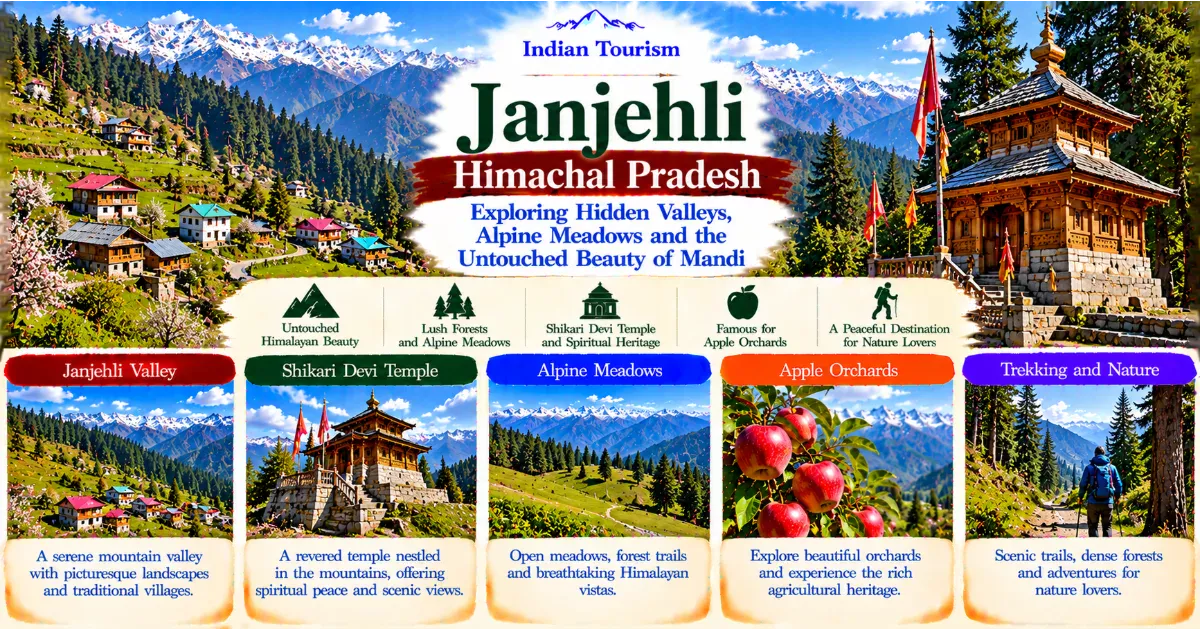
Discovering the Quiet Himalayan World of Janjehli
Himachal Pradesh is known for its dramatic mountains, ancient temples, apple orchards, forest trails and villages where traditional lifestyles remain closely connected with the natural environment. While destinations such as Shimla, Manali and Dharamshala receive considerable attention, the state also contains quieter regions where travellers can experience the Himalayas at a more relaxed pace. Janjehli, a beautiful mountain valley in the Mandi district, is one such destination. Surrounded by forested hills, green meadows, traditional settlements and mountain scenery, Janjehli offers a different perspective on Himalayan travel.
Located in the interior of Mandi district, Janjehli is known for its natural surroundings and its connection with outdoor exploration. The region provides access to the landscape around Shikari Devi, a revered mountain shrine associated with forested slopes and elevated viewpoints. For visitors interested in nature, village life, regional traditions and quieter travel, Janjehli can be an appealing alternative to more heavily visited mountain towns.
The destination's charm comes from the combination of its landscapes and its relatively unhurried atmosphere. Instead of a busy commercial centre filled with large hotels and constant activity, visitors encounter mountain roads, small settlements, agricultural land and forests that change with the seasons. The journey itself becomes part of the experience, with winding roads revealing new views of valleys and ridgelines.
Janjehli is particularly suitable for travellers who appreciate nature-based holidays, photography, scenic drives and cultural exploration. It can also appeal to visitors interested in walking and trekking, provided they choose routes appropriate to their fitness, experience and the prevailing weather conditions.
The region is not simply a collection of scenic viewpoints. Its villages are living communities where agriculture, local customs, religious traditions and family life remain important. Responsible visitors can learn about this relationship between people and place while supporting locally operated accommodation, food businesses and transport services.
A trip to Janjehli rewards travellers who are willing to slow down. The mountains may not offer the entertainment infrastructure of a major resort town, but they provide space for observation, reflection and a deeper appreciation of Himachal Pradesh's natural and cultural diversity.
Where Is Janjehli Located?
Janjehli is a mountain valley in the Mandi district of Himachal Pradesh. It lies within the interior Himalayan landscape of the district, away from some of the state's busiest tourist corridors.
The surrounding terrain consists of forested slopes, ridges, cultivated areas and small settlements connected by winding mountain roads. The landscape changes with elevation, creating variations in vegetation, temperature and agricultural practices.
Janjehli is often associated with travel towards Shikari Devi, a well-known religious destination in the surrounding mountains. The valley can therefore serve as a base for travellers interested in combining nature exploration with cultural and religious experiences.
Its position within Mandi district also makes it possible to include Janjehli in a broader journey through the region. Travellers may combine it with selected destinations around Mandi, subject to road conditions and the time available.
The journey requires realistic planning because mountain roads can take longer to travel than expected. Weather, roadwork, traffic and seasonal conditions may influence the time required to reach the valley.
Visitors should confirm transport options and accommodation before departure, particularly if travelling outside the main holiday season. Facilities may be more limited than those available in larger tourist centres.
Despite these practical considerations, Janjehli offers an opportunity to experience a less commercialised side of Himachal Pradesh. Its mountain setting and village character make it attractive to travellers who prefer landscapes and local experiences over crowded attractions.
The Natural Beauty of Janjehli Valley
The landscape around Janjehli is one of its greatest attractions. Forested hills rise around the valley, while agricultural areas and settlements occupy suitable sections of the terrain. The combination creates a landscape that feels closely connected to the rhythms of mountain life.
During warmer months, vegetation becomes greener, and the valley may appear especially inviting after periods of rain. The surrounding slopes provide changing views as clouds move across the mountains, sometimes revealing distant ridges and sometimes covering them in mist.
The natural environment is not uniform. Differences in elevation, sunlight, soil and moisture influence the vegetation found across the region. Forested sections create a different atmosphere from open meadows and cultivated fields.
For photographers, these changes provide opportunities to capture a variety of landscapes within a relatively small geographical area. Early morning light can reveal the contours of the hills, while afternoon clouds may create dramatic patterns across the ridgelines.
Visitors who enjoy nature observation can spend time noticing the details that are easy to miss during a hurried journey. Forest edges, wild plants, birds, traditional houses and agricultural terraces all contribute to the identity of the valley.
The best way to experience Janjehli is not necessarily to cover the greatest possible distance. Walking through accessible areas, pausing at safe viewpoints and observing the landscape can be more rewarding than rushing between locations.
Visitors should remember that the natural environment supports local livelihoods and ecological systems. Avoid littering, damaging vegetation or disturbing wildlife, and always follow local advice when exploring unfamiliar terrain.
Shikari Devi Temple: A Sacred Destination in the Mountains
Shikari Devi Temple is one of the most significant attractions associated with the Janjehli region. Situated in the mountains of Mandi district, the temple is known for its religious importance and its dramatic natural setting.
The shrine is associated with the worship of a form of the Divine Mother and holds a special place in regional religious traditions. Devotees visit the temple for prayer, pilgrimage and participation in religious observances.
Its mountain location gives the journey a distinctive character. The surrounding landscape includes forested slopes and elevated terrain, creating an experience that combines spiritual interest with the atmosphere of the Himalayas.
The route towards the temple requires careful planning. Access conditions can vary according to season and weather, and travellers should obtain current information before setting out. Snow, rain, road conditions and other local factors may affect accessibility.
Visitors should not assume that the journey is suitable for every vehicle or that access will remain unchanged throughout the year. If conditions are uncertain, ask local authorities or reliable local operators for guidance.
At the temple, follow all instructions concerning footwear, photography, restricted areas and appropriate behaviour. Religious sites are living institutions, and the presence of tourists should never interfere with worship.
The temple is especially meaningful when understood as part of the wider cultural landscape. Its significance is connected not only with the building itself but also with the traditions, stories and community practices associated with it.
For visitors exploring Janjehli, Shikari Devi Temple provides an opportunity to understand how religious devotion and mountain geography intersect in Himachal Pradesh.
Understanding the Temple's Mountain Setting
Mountain shrines often occupy locations that require visitors to travel through forests, climb slopes or cross exposed terrain. This physical journey can become part of the pilgrimage experience.
Shikari Devi Temple illustrates this relationship between religious practice and the natural environment. Its setting gives the destination a character different from temples located within busy towns.
The surrounding landscape also influences the practical arrangements required for a visit. Weather conditions, visibility and road access can determine whether a journey is comfortable or difficult.
Visitors should check conditions before travelling and avoid continuing when the route becomes unsafe. Appropriate footwear, warm clothing, drinking water and sufficient time are important for outdoor excursions.
The mountain environment deserves respect regardless of the religious purpose of the visit. Travellers should avoid leaving rubbish, damaging vegetation or creating unnecessary noise.
Photography should never take priority over safety or religious observance. If a location is crowded or conditions are poor, it is better to pause or choose another viewpoint.
The temple's setting can encourage visitors to appreciate the wider landscape as well as the religious destination. The forests, ridgelines and changing weather form an integral part of the experience.
Forests and Biodiversity Around Janjehli
The forests surrounding Janjehli contribute to the region's ecological value. They provide habitat for birds and other wildlife, help maintain soil stability and form part of the natural systems that support mountain communities.
Vegetation varies with elevation and local environmental conditions. Forested slopes may include coniferous trees and other plants adapted to the climate of the western Himalayas.
The diversity of habitats creates opportunities for nature observation. Visitors may notice birds, insects, wildflowers and changes in vegetation as they move through different parts of the valley.
Wildlife sightings cannot be guaranteed, and travellers should not approach animals or attempt to attract them with food. Feeding wildlife can change natural behaviour and create risks for both animals and people.
Nature walks should follow suitable paths wherever possible. Cutting across steep slopes can contribute to erosion and damage vegetation.
Visitors should also be careful with fire. Dry plant material can increase the risk of forest fires, so campfires and other open flames should never be used in unauthorised locations.
The forest environment is particularly vulnerable to waste. Plastic packaging, bottles and other rubbish can remain in natural areas for long periods and affect wildlife.
A responsible visit includes carrying waste away, respecting local guidance and avoiding activities that damage the habitat. These simple practices help protect the qualities that make Janjehli attractive.
Meadows and Open Mountain Landscapes
Open meadows are among the most appealing features of many Himalayan regions. Around Janjehli and the surrounding mountains, open areas can provide a contrast to dense forests and offer broader views of the landscape.
Their appearance varies with the season. During warmer months, vegetation may become lush, while colder periods can change the colour and texture of the terrain.
Meadows may also be used for grazing or other local activities. Visitors should therefore treat them as working landscapes rather than assuming they are public recreational spaces.
Before entering an open area, check whether access is permitted and whether livestock or other activities are present. Avoid disturbing animals and do not damage grassland vegetation.
Photographers may find that the most attractive views occur when the light is soft and the atmosphere is clear. However, weather can change quickly in the mountains, so visitors should avoid exposed locations during storms or poor visibility.
A walk through an accessible meadow can be a peaceful way to experience the valley. It allows travellers to observe the relationship between forest, grassland, settlement and mountain terrain.
These open spaces also remind visitors that the Himalayan landscape is shaped by both natural processes and human use. Responsible tourism should preserve this balance rather than treating every scenic area as a place for unrestricted activity.
Traditional Villages and Mountain Life
Janjehli's appeal extends beyond its scenery. The surrounding villages provide insight into the everyday lives of communities that have adapted to the challenges and opportunities of mountain environments.
Traditional houses, cultivated land and small local businesses form part of the valley's character. The arrangement of settlements often reflects access to water, sunlight, transport routes and agricultural land.
Agriculture remains important across many parts of rural Himachal Pradesh. Household fields, seasonal crops and livestock contribute to local livelihoods, although practices vary according to elevation and individual circumstances.
The working calendar of a mountain village is influenced by weather and seasonal conditions. Planting, tending crops, harvesting and preparing for winter all require planning.
Visitors can learn about these patterns by observing public areas and speaking respectfully with residents who are willing to share their experiences.
It is important to remember that village life is not a performance arranged for tourists. Residents have their own responsibilities, and visitors should avoid entering private homes, courtyards or agricultural areas without permission.
Photography should be handled thoughtfully. Ask before taking close portraits and avoid photographing children without appropriate permission.
Purchasing food, using local accommodation and arranging transport through legitimate local businesses can help distribute tourism income within the community.
By approaching the valley with respect, visitors can gain a richer understanding of the relationship between local culture and the surrounding mountains.
Local Architecture and Building Traditions
Traditional mountain architecture reflects the environmental conditions and resources available to local communities. Across Himachal Pradesh, houses and religious buildings have developed in response to cold winters, seasonal rain, steep terrain and the availability of timber and stone.
In and around Janjehli, the built environment forms part of the wider landscape. Homes and other structures are often positioned in relation to slopes, paths and cultivated areas.
Traditional construction methods vary across the state, and visitors should avoid assuming that every village follows an identical architectural style. Local history, economic conditions and access to materials all influence building design.
Observing older structures can help travellers understand how communities have responded to their surroundings. Roof design, wall materials, the placement of windows and the use of timber can reveal practical choices shaped by climate.
Modern construction is also part of contemporary village life. New buildings, roads and changing household needs demonstrate that mountain communities continue to adapt rather than remaining frozen in the past.
Visitors interested in architecture should observe respectfully and avoid touching fragile structures or entering private properties without permission.
The most meaningful architectural experience comes from recognising that buildings are part of living communities. Their value lies not only in their appearance but also in the knowledge and work of the people who maintain them.
Best Time to Visit Janjehli
Janjehli can offer different experiences throughout the year, but the most suitable travel period depends on the weather, road conditions and activities planned.
Spring: A Fresh Mountain Landscape
Spring brings a gradual transition from colder conditions towards warmer weather. Vegetation begins to renew itself, and the surrounding landscape may appear increasingly green.
This period can suit visitors interested in village exploration, photography and cultural sightseeing. However, temperatures may remain low, particularly in the early morning and evening.
Travellers should check road conditions before departure and carry layers of warm clothing.
Summer: A Practical Season for Exploration
Summer is often a convenient period for visiting mountain destinations in Himachal Pradesh. Daytime conditions may be suitable for sightseeing, short walks and excursions towards accessible viewpoints.
The season can be especially appealing to travellers seeking a break from the heat of the plains.
However, rainfall and changing weather can affect mountain roads. Visitors should check forecasts and avoid assuming that all outdoor routes will remain accessible.
Monsoon: Green Scenery and Greater Caution
The monsoon can bring lush vegetation and dramatic cloud formations to the valley. At the same time, heavy rain may create difficult road conditions and increase the risk of landslides.
Travellers should exercise additional caution during periods of persistent rain. Check current local information and be prepared to change plans.
Outdoor excursions should be postponed when conditions are unsafe.
Autumn: Clearer Views and Comfortable Days
Autumn can provide appealing conditions for sightseeing and photography, depending on the weather. Clear days may reveal extensive views across the surrounding mountains.
Temperatures begin to fall as winter approaches, so warm clothing becomes increasingly important.
Visitors should confirm accommodation and transport arrangements, particularly if travelling during a local festival or holiday period.
Winter: Cold Conditions and Possible Snow
Winter brings colder temperatures and may bring snow to higher parts of the surrounding region. The conditions can create a distinctive mountain atmosphere, but they can also make travel more difficult.
Check road access before departure and carry suitable clothing. Visitors should avoid exposed routes when snow, ice or poor visibility creates a safety risk.
For many travellers, the warmer months offer a practical balance between access and comfortable exploration. The final choice should depend on current conditions rather than the calendar alone.
How to Reach Janjehli
Janjehli is primarily reached by road from other destinations in Himachal Pradesh. Because the journey involves mountain terrain, travellers should allow sufficient time and remain flexible.
From Mandi
Mandi is an important starting point for journeys into the wider region. Travellers can arrange onward transport towards Janjehli, subject to available services and road conditions.
Confirm the current route and transport schedule before departure, particularly if arriving late in the day.
From Shimla
Visitors travelling from Shimla should plan for a substantial mountain journey. The best route may depend on current road conditions and transport arrangements.
A private vehicle can provide flexibility, while public transport may require connections through larger settlements.
From Chandigarh
Travellers arriving from Chandigarh can first reach a suitable transport hub in Himachal Pradesh and then continue towards Janjehli.
The journey can involve several stages, so it is important to allow time for connections and possible delays.
From Delhi
Visitors travelling from Delhi generally need to reach the Shimla or Mandi region before arranging onward travel. Depending on the chosen transport, the journey may involve buses, rail connections, taxis or a private vehicle.
By Private Vehicle
A private vehicle allows visitors to stop at suitable viewpoints and travel according to their own schedule. Drivers should be experienced with mountain roads and should check the vehicle's condition before departure.
By Taxi
A taxi can be a practical option for travellers who do not wish to drive. Confirm the fare, route, waiting arrangements and return journey before starting.
By Public Transport
Public transport services and onward connections may vary by season and day. Confirm current schedules with reliable local sources rather than relying entirely on older travel information.
Before travelling, check road conditions, weather forecasts and accommodation availability. Mountain travel often requires more flexibility than journeys through the plains.
Accommodation and Facilities
Accommodation around Janjehli may include guesthouses, smaller hotels and locally operated stays. Facilities vary according to the property and season.
Visitors should choose accommodation according to their budget, transport arrangements and comfort requirements. Confirm heating, hot water, meal availability, parking and cancellation conditions before booking.
Those visiting during busy holiday periods should arrange accommodation in advance when possible.
Travellers planning to explore nearby mountain routes should consider the location of their accommodation and the time needed to return before dark.
Mobile connectivity and internet access can vary in mountainous areas. Download maps for offline use and keep important contact details accessible.
It is sensible to carry essential medicines and personal supplies, particularly when travelling with children or older family members. Visitors with specific medical needs should plan access to appropriate services before departure.
Local accommodation providers can often offer practical information about transport and nearby attractions. Their advice may be particularly useful when weather conditions affect access.
Choosing legitimate local accommodation helps support the regional economy and can provide opportunities to learn about the area from residents.
Local Food and Culinary Experiences
Food is an important part of discovering rural Himachal Pradesh. The dishes available around Janjehli reflect broader regional traditions, household cooking practices and the ingredients accessible to local communities.
Visitors may find simple meals based on grains, lentils, vegetables and dairy products, alongside familiar North Indian preparations. Menus vary between establishments, and the range of choices may be smaller than in larger towns.
Traditional Himachali dishes can differ from one region to another. Visitors interested in regional cuisine can ask local hosts which preparations are associated with the surrounding area.
Food availability may change according to the season and the number of visitors. Travellers arriving late should confirm meal arrangements in advance.
Those with dietary restrictions should communicate their requirements clearly and carry suitable alternatives when necessary.
Eating at legitimate local establishments can support small businesses and introduce travellers to the culinary character of the region.
Food is also connected with agricultural life. The ingredients available to households, the changing seasons and the practical requirements of mountain living all influence local cooking.
A meal enjoyed after a day of exploring the valley can become one of the most memorable parts of the journey.
Photography Opportunities in Janjehli
Janjehli offers opportunities for photography centred on mountain scenery, forested slopes, village life and religious heritage.
The surrounding landscape changes throughout the day. Early morning may reveal layers of ridges and soft light, while changing clouds can create dramatic contrasts across the valley.
Traditional buildings and public village spaces can provide additional subjects, particularly for visitors interested in documenting the relationship between settlement and environment.
Photography at religious sites should follow the rules established by temple authorities. Some areas or ceremonies may have restrictions, and visitors should never interrupt worship to obtain a photograph.
Ask permission before taking close photographs of residents or private property. A respectful approach creates a better experience for both visitors and the community.
Weather protection is important for cameras and phones. Moisture, dust and sudden temperature changes can affect equipment.
Photographers should also consider safety. Avoid standing in roadways, approaching unstable edges or entering restricted areas to capture a particular view.
The most meaningful images often show the destination as a connected whole. Mountain scenery, religious heritage and everyday village activity together communicate more about Janjehli than isolated landscape photographs alone.
A Suggested Three-Day Itinerary for Janjehli
Day One: Arrival and Valley Exploration
Arrive in Janjehli after checking road conditions and transport arrangements. Settle into your accommodation and allow time to rest after the journey.
Explore suitable public areas of the valley and observe the surrounding landscape. If time permits, speak with your host about nearby attractions and the current condition of local routes.
Keep the first day relaxed, particularly if the journey has been long.
Day Two: Shikari Devi and Mountain Scenery
Plan an excursion towards Shikari Devi Temple if current conditions permit. Confirm access arrangements and the suitability of the route before departure.
Visit the temple respectfully and allow time to appreciate the surrounding mountain environment.
If the route is affected by weather or other conditions, choose a safer alternative rather than attempting to continue.
Return to your accommodation with sufficient time before dark.
Day Three: Village Life and Departure
Spend the morning exploring accessible village areas or enjoying nearby scenery.
If residents are available and willing to speak, learn about local agricultural practices and regional traditions. Ask permission before photographing people or private property.
Depart according to your transport arrangements, leaving additional time for mountain-road delays.
This itinerary is a flexible suggestion. The final plan should reflect the season, road conditions, fitness levels and available time.
Responsible Tourism in Janjehli
Responsible tourism helps preserve the natural environment and supports the communities that make Janjehli distinctive.
Visitors should carry their waste away from forests, streams, roads and viewpoints. Plastic packaging and other rubbish should never be left behind.
Water should be used carefully, and visitors should avoid polluting local water sources.
Religious sites should be treated with respect. Follow instructions regarding footwear, photography and access to sacred spaces.
Ask permission before entering private property, photographing residents or visiting agricultural land. Village life should not be disrupted for the sake of tourism.
Support legitimate local businesses where possible, including accommodation providers, transport operators and food establishments.
Avoid disturbing wildlife or damaging vegetation. Stay on appropriate paths and do not create informal trails across fragile slopes.
Visitors should also be mindful of fire risk. Never leave burning materials or light fires in unauthorised locations.
Responsible travel includes making safe decisions. If rain, snow or road conditions create a hazard, postpone an excursion or choose a safer activity.
Common Travel Mistakes to Avoid
One common mistake is underestimating the time required for mountain travel. Roads may be narrow and winding, and weather or roadwork can create delays.
Another mistake is planning an excursion towards Shikari Devi without checking current access conditions. The mountain environment can change quickly, and routes may not be suitable in every season.
Visitors should avoid assuming that every attraction has extensive facilities. Smaller settlements may have limited accommodation, food options and transport services.
Entering private land without permission can create problems for residents and should be avoided.
Travellers should not treat religious sites merely as places for photographs. Understanding their cultural significance and respecting worshippers makes the visit more meaningful.
Finally, avoid building an itinerary so tightly that any delay creates difficulties. Flexible planning is essential when travelling through the Himalayas.
Is Janjehli Worth Visiting?
Janjehli is worth considering for travellers who want to experience the quieter landscapes of Himachal Pradesh. Its forested hills, traditional settlements and association with Shikari Devi Temple create a combination of natural and cultural interest.
The valley is particularly appealing to visitors who enjoy scenic drives, nature observation, photography and relaxed exploration. It may also suit travellers who want to learn more about the relationship between mountain communities and their environment.
Janjehli is not necessarily the best choice for those seeking nightlife, extensive shopping or a large number of commercial attractions. Its appeal lies in its natural surroundings and the opportunity to travel at a slower pace.
The destination can also be incorporated into a broader journey through Mandi district, provided the itinerary allows enough time for road travel.
Visitors should confirm transport, accommodation and weather conditions before departure. Responsible behaviour and respect for local customs will help ensure a more rewarding experience.
Conclusion: Experience the Natural and Cultural Character of Janjehli
Janjehli offers a different way to experience Himachal Pradesh. Its mountain valley, forested slopes, village settlements and association with Shikari Devi Temple create a destination where natural beauty and cultural traditions come together.
The region rewards travellers who appreciate quiet landscapes and meaningful exploration. Rather than rushing between attractions, visitors can take time to observe the mountains, learn about local life and understand the significance of religious heritage.
A successful visit requires practical preparation. Check road and weather conditions, arrange suitable accommodation and allow flexibility for mountain travel. Outdoor excursions should always be adjusted according to the conditions on the ground.
Responsible tourism is equally important. Respect religious customs, ask permission before photographing residents, avoid littering and support legitimate local businesses.
For travellers exploring the many destinations of Himachal Pradesh, Janjehli provides an opportunity to discover a quieter part of the state's mountain heritage. Its combination of scenery, spirituality and village life makes it a worthwhile addition to an itinerary focused on the deeper character of the Himalayas.
#IndianTourism #HimachalPradesh #Janjehli #MandiDistrict #ShikariDeviTemple #HimalayanTravel #MountainVillages #NatureTravel #CulturalTourism #ExploreIndia #ResponsibleTourism #HiddenHimachal
