
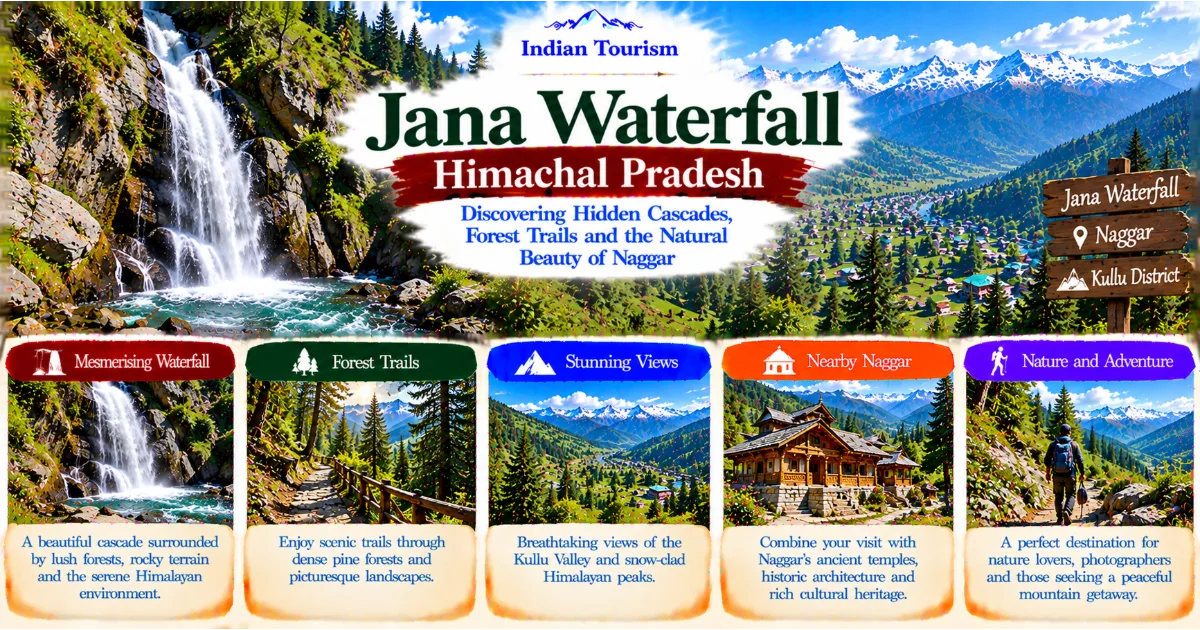
Jana Waterfall, Himachal Pradesh: Discovering Introduction to Jana Waterfall
Himachal Pradesh is famous for its snow-covered mountains, traditional villages, green valleys and spectacular rivers. Yet some of its most memorable travel experiences can be found away from crowded tourist centres, along forest roads and quiet village paths where nature remains the main attraction. Jana Waterfall, located in the Kullu region near Naggar, is one such destination. Surrounded by trees, mountain slopes and rural landscapes, the waterfall offers visitors an opportunity to experience a quieter side of the Himalayas.
Unlike destinations built around large resorts or busy commercial streets, Jana Waterfall is associated with the simple pleasures of mountain travel. The journey through the countryside, the changing views of the valley, the sound of flowing water and the presence of forest vegetation create an atmosphere that encourages visitors to slow down. It is particularly appealing to travellers who enjoy nature photography, gentle outdoor exploration and discovering places beyond the most familiar tourist routes.
The waterfall is also connected with the surrounding village landscape. Traditional homes, cultivated fields, orchards and forested hills help create a setting in which rural life and natural scenery exist close together. Depending on the season, the surrounding vegetation may appear fresh and bright, richly green or coloured by the changing weather of the mountains.
Jana Waterfall can be included in a wider itinerary covering Naggar and other destinations in the Kullu Valley. Visitors may combine the excursion with cultural sightseeing, local food and village exploration. However, the destination is best enjoyed when enough time is allowed for the journey and the natural surroundings rather than treating it as a hurried stop between several attractions.
The experience varies considerably throughout the year. Water flow, trail conditions, visibility and the appearance of the surrounding landscape depend on rainfall, temperature and seasonal changes. Travellers should check local conditions before departure and approach the waterfall with appropriate care.
For anyone seeking a peaceful nature excursion in Himachal Pradesh, Jana Waterfall offers a rewarding combination of flowing water, forest scenery, rural landscapes and the quiet atmosphere of the Kullu region.
Where Is Jana Waterfall Located?
Jana Waterfall is situated in the Kullu district of Himachal Pradesh, in the countryside associated with Naggar and the wider Kullu Valley. The surrounding landscape consists of mountain slopes, wooded areas, cultivated land and small settlements connected by winding roads.
Its location makes it a useful addition to a trip focused on Naggar. Travellers exploring the historical village can devote part of another day to the waterfall, creating an itinerary that combines cultural heritage with nature. The excursion also provides a different perspective on the region because the experience shifts from traditional buildings and village lanes to flowing water and forest surroundings.
The Kullu Valley is shaped by the Himalayan terrain, and this geography influences how visitors travel between destinations. Roads may follow the contours of the hills, while smaller routes connect settlements, farms and natural attractions. Although distances can appear short on a map, travel times may be affected by bends, road conditions, traffic and weather.
Visitors should confirm the current route and access arrangements before setting out. The condition of the road or walking path may vary according to the season, and local guidance is useful when travelling to a natural attraction.
Jana Waterfall should be understood as part of a wider rural landscape rather than an isolated feature with no connection to its surroundings. The village environment, vegetation and agricultural activity contribute to the overall experience and make the journey itself an important part of the visit.
What Makes Jana Waterfall Special?
The appeal of Jana Waterfall comes from its natural setting and the relaxed experience it offers. Visitors are drawn by the sound of water moving through the landscape, the surrounding vegetation and the opportunity to spend time outdoors in a relatively peaceful environment.
Waterfalls create a distinctive sensory experience. The sound of flowing water can be heard before the cascade becomes fully visible, while the movement of water over rock creates constantly changing patterns. Depending on the light and water flow, the waterfall may appear different from one moment to the next.
The surrounding trees and mountain slopes provide a natural frame for photography. The contrast between moving water, dark rock, green vegetation and the wider landscape can produce attractive images without requiring elaborate equipment.
The waterfall also encourages a slower style of tourism. Visitors can spend time observing the environment, listening to the water and appreciating details that might be missed during a tightly scheduled sightseeing trip.
However, the attraction's character depends on natural conditions. Water levels can change with rainfall and the season, while vegetation and visibility vary throughout the year. Travellers should avoid assuming that the waterfall will look identical in every month.
Its greatest appeal lies in the opportunity to experience a natural part of the Kullu Valley while remaining attentive to the environment and the people who live nearby.
The Journey Through the Kullu Countryside
Reaching Jana Waterfall can be part of the enjoyment of the excursion. The surrounding countryside introduces visitors to the rural landscapes of Himachal Pradesh, where mountain roads pass cultivated slopes, orchards, wooded areas and traditional settlements.
The journey reveals a side of the region that differs from busy tourist streets. Fields and gardens show how land is used in a mountainous environment, while houses and small local businesses reflect the everyday activities of the surrounding communities.
As the route moves through the hills, the scenery changes with elevation and exposure. Some stretches may provide open views across the valley, while others pass through areas where trees and slopes narrow the view. Weather can alter the landscape quickly, especially when clouds move across the mountains.
Visitors travelling by car should take care on winding roads and allow sufficient time for the journey. Drivers should avoid stopping at unsafe locations simply to take photographs. If a viewpoint or stopping area is available, it is preferable to use that space rather than obstruct traffic.
The countryside also provides opportunities to appreciate the agricultural character of the Kullu region. Orchards and cultivated land are working landscapes, and visitors should avoid entering private fields without permission.
The journey is most enjoyable when travellers remain flexible, observe the scenery and recognise that mountain roads require patience.
The Natural Environment Around the Waterfall
Jana Waterfall is part of a mountain environment where water, vegetation, rock and soil interact to shape the landscape. The surrounding slopes contribute to the movement of rainwater and seasonal runoff, while trees and other vegetation provide habitat for local wildlife.
Mountain ecosystems can be sensitive to changes in rainfall, temperature and land use. Water flow may increase after heavy rain, while drier periods can alter the appearance of a cascade. The surrounding vegetation also responds to seasonal changes, producing different colours and textures throughout the year.
Forested slopes play several important roles. Trees provide shelter for wildlife, contribute to soil stability and help regulate water movement through the landscape. Vegetation can reduce erosion in suitable conditions, although steep slopes remain vulnerable to heavy rainfall and other natural processes.
Visitors can appreciate these ecological relationships through observation. Looking at the vegetation along the path, the movement of water and the condition of the surrounding soil can provide a greater understanding of how the environment functions.
It is important to avoid damaging plants, disturbing wildlife or leaving waste near the water. Food wrappers, plastic bottles and other rubbish can affect the appearance of the landscape and create problems for local waste management.
A responsible visit should leave the natural surroundings as undisturbed as possible.
Best Time to Visit Jana Waterfall
Jana Waterfall can be visited during different seasons, but the experience depends on weather, water flow and access conditions. Each season offers different advantages, and the best time to travel depends on whether visitors prioritise greenery, comfortable weather, photography or quieter surroundings.
Spring: Fresh Greenery and Pleasant Exploration
Spring brings gradual changes to the Kullu Valley as temperatures rise and vegetation begins to develop after winter. The countryside can become increasingly green, while orchards and gardens may display seasonal blossoms.
This period is suitable for visitors who enjoy photography, gentle walks and exploring the surrounding villages. Temperatures can be comfortable during the day, although mornings and evenings may remain cold.
Travellers should carry layered clothing and check current road and trail conditions. Weather in the mountains can change, so a light waterproof layer is useful even when the forecast appears favourable.
Spring is also a good time to combine the waterfall with a visit to Naggar's cultural attractions, provided the itinerary allows enough time for each stop.
Summer: A Comfortable Season for Nature Trips
Summer can provide convenient conditions for exploring the countryside around Jana Waterfall. Longer daylight hours allow visitors to travel without rushing, and the surrounding landscape may display lush vegetation.
This season can also be busy in the wider Kullu and Manali region, particularly during school holidays. Visitors should plan transport and accommodation in advance if travelling during popular dates.
Warm weather does not eliminate the risks associated with mountain environments. Rain can occur, paths may become slippery, and conditions around flowing water can be unpredictable.
Visitors should avoid climbing wet rocks or entering the cascade. The water may appear shallow or calm in one place while hiding slippery surfaces or stronger currents nearby.
Monsoon: Lush Scenery and Increased Caution
The monsoon can transform the surrounding landscape, bringing fresh vegetation, misty hills and increased water flow. For some visitors, the rich colours and dramatic atmosphere make this a particularly attractive period for photography.
However, heavy rainfall also increases the risks associated with mountain travel. Roads may be affected by landslides, paths can become slippery, and water levels may rise quickly. Rocks around a waterfall can become dangerous when wet.
Visitors should check weather advisories and local access information before travelling. If heavy rain or unsafe conditions are reported, postponing the visit is the responsible choice.
A beautiful waterfall is not worth taking unnecessary risks. Travellers should observe the cascade from a safe location and avoid entering the water during or after heavy rainfall.
Autumn: Clear Views and Changing Colours
Autumn can be an excellent season for exploring the Kullu countryside. Following the monsoon, periods of clearer weather may provide better views of the surrounding hills, while cooler temperatures can make outdoor activities more comfortable.
The landscape may show a combination of green vegetation, changing foliage and agricultural activity. Photographers can enjoy the contrast between the waterfall and the surrounding terrain.
Visitors should still carry warm clothing for the morning and evening. Although daytime conditions may be pleasant, mountain temperatures can drop after sunset.
Autumn is suitable for travellers who want to combine natural attractions with cultural sightseeing in Naggar and other parts of the valley.
Winter: Quiet Surroundings and Cold Conditions
Winter creates a different atmosphere around the Kullu Valley. Temperatures fall, mornings can be very cold and snow may affect higher areas depending on elevation and weather.
The waterfall's appearance can change considerably during this period. Visitors should not assume that the cascade will be frozen or surrounded by snow, because conditions vary from year to year.
Road access and walking conditions should be checked before departure. Ice, wet surfaces and cold weather can make the surroundings more difficult to navigate.
Warm layers, suitable footwear and a flexible itinerary are essential for winter travel. Visitors should avoid approaching the water too closely when rocks or paths are slippery.
How to Reach Jana Waterfall
Jana Waterfall can be included in a trip to the Naggar and Kullu region. The most suitable route depends on the starting point, current road conditions and the available local transport.
By Air
Bhuntar Airport serves the Kullu region, although flight availability and schedules can be limited and may change with weather conditions. Travellers should confirm current services before booking.
From the airport, visitors can arrange road transport towards the Naggar area and continue to the waterfall according to current access information. The journey time depends on traffic, the chosen route and the condition of the roads.
Travellers arriving by air should leave sufficient time for the onward journey rather than planning an overly tight connection. Mountain weather can affect both flight operations and road travel.
By Train
Jana Waterfall does not have a railway station. Visitors travelling by train must reach a suitable railhead elsewhere and continue towards the Kullu Valley by road.
The best rail connection depends on the traveller's origin and the overall journey plan. It is important to consider the time required for the road portion, not only the train journey.
By Road
Road travel is the main way to reach the surrounding area. Visitors can travel towards Naggar from nearby towns and arrange local transport for the final approach.
The route includes mountain roads, so travel times may be longer than expected. Drivers should proceed carefully, especially during rain, and avoid stopping at unsafe locations.
Before departure, confirm the current access point and whether any walking is required. Road and path conditions can change, and local advice is particularly valuable during the monsoon and winter.
How Much Time Should You Spend at Jana Waterfall?
The time required depends on the journey, the condition of the access route and the visitor's interests. Some travellers may include the waterfall as a short excursion during a stay in Naggar, while others may prefer to spend longer exploring the surrounding countryside.
A half-day outing may be suitable when the route is accessible and the visitor wants to focus mainly on the waterfall. However, sufficient time should be reserved for travel, walking and returning safely.
A full-day itinerary provides greater flexibility. Visitors can combine the waterfall with a meal featuring regional cuisine, a countryside drive or a cultural attraction in the Naggar area. The itinerary should not be so crowded that there is little time to enjoy the natural surroundings.
Travellers interested in photography may want additional time to observe changes in light and water flow. Nature enthusiasts may also appreciate a slower pace that allows them to notice vegetation, birds and other features of the environment.
The appropriate duration should always be based on current conditions. If rain, road disruption or other hazards affect the route, visitors should shorten or postpone the excursion rather than attempting to complete the original plan.
Local Food and the Culinary Traditions of Himachal Pradesh
A trip to Jana Waterfall can be combined with an introduction to the food traditions of the Kullu region. Himachali cuisine reflects the area's agricultural resources, cool climate and household practices developed over generations.
Siddu is one of the best-known traditional dishes in Himachal Pradesh. It is prepared from wheat dough that is allowed to ferment before being steamed. It may be served with ghee or other accompaniments, and variations in filling and preparation exist across different areas.
Madra is another recognised regional dish, commonly prepared using legumes in a yoghurt-based gravy. Recipes differ between communities, and the ingredients may reflect local preferences.
Travellers may also encounter rajma, lentil preparations, rice, seasonal vegetables and traditional breads. The dishes available depend on the establishment and the time of year.
The rural character of the area means that visitors should not expect the same number of restaurants or facilities found in larger tourist centres. It is useful to confirm meal arrangements before travelling, particularly for families and visitors with dietary restrictions.
Eating regional food can make the journey more culturally rewarding. Choosing local establishments where available also helps support small businesses and keeps a portion of tourism spending within the surrounding community.
Where to Stay Near Jana Waterfall
Visitors generally include Jana Waterfall in a wider stay around Naggar or the Kullu Valley. Accommodation options in the surrounding region range from simple guesthouses and homestays to hotels and boutique properties.
Staying in Naggar can be convenient for travellers who want to combine the waterfall with cultural attractions such as Naggar Castle, traditional temples and the Nicholas Roerich Art Gallery. A base in a larger nearby centre may provide more choice in transport, dining and other services.
Homestays can offer an opportunity to experience local hospitality and learn about regional food and everyday life. The facilities available vary, so visitors should check room arrangements, meals, heating and access before booking.
Travellers should also consider the location of their accommodation. A property with impressive views may involve steep paths or limited access for vehicles. This can be important for families, older visitors and people with mobility requirements.
During busy holiday periods, booking in advance is advisable. Visitors should confirm their travel plans with the accommodation provider and check whether road conditions could affect arrival.
Jana Waterfall for Couples and Honeymoon Travellers
Jana Waterfall can be a pleasant addition to a couple's itinerary in the Kullu Valley. The natural setting provides an opportunity to spend time outdoors, enjoy the surrounding countryside and take a break from busy tourist centres.
Couples can combine a visit to the waterfall with a stay in Naggar, where cultural attractions and mountain viewpoints provide a different kind of experience. This combination creates a balanced itinerary that includes both nature and heritage.
Spring, summer and autumn can all be suitable, depending on weather and personal preferences. Couples should check current access conditions and avoid visiting when heavy rainfall makes the route unsafe.
The best experience is often a relaxed one. Rather than attempting to cover several destinations in a single day, couples can allow time for a leisurely meal, scenic stops and unhurried exploration.
Visitors should choose activities according to their comfort and physical ability. A waterfall excursion is enjoyable only when the journey and surrounding conditions remain safe.
Jana Waterfall for Families
Families can enjoy Jana Waterfall as a nature excursion, provided the route and conditions are appropriate for everyone travelling. The surrounding landscape can create opportunities for children to learn about water, vegetation, mountain geography and the importance of environmental protection.
Parents should check whether the access route is suitable for younger children and older family members. Uneven paths, slippery rocks and changes in weather may make the visit more demanding than expected.
Children should remain under close supervision near the water. They should not climb on wet rocks, approach unstable edges or enter the cascade. Even shallow-looking water can present risks when the current or surface conditions are unpredictable.
Families should carry drinking water, snacks, suitable clothing and basic supplies. It is also sensible to plan rest periods and avoid combining the excursion with too many other activities.
If conditions are unsuitable, families can choose an alternative scenic drive or cultural attraction in the Naggar area. A flexible itinerary helps ensure that everyone enjoys the trip safely.
Jana Waterfall for Solo Travellers
Solo travellers who enjoy nature and photography may find Jana Waterfall rewarding. The destination offers a chance to observe the landscape at an individual pace and combine a short excursion with other cultural experiences in the Kullu Valley.
Preparation is particularly important when travelling alone. Visitors should confirm transport arrangements, check the weather and share their itinerary with someone they trust. It is best to complete the excursion during daylight and avoid unfamiliar paths in poor visibility.
Solo travellers should carry a charged phone, drinking water and suitable clothing. Mobile coverage may vary, so the trip should not depend entirely on constant connectivity.
Visitors should also be considerate of the local community. Asking permission before photographing people or private property and avoiding intrusive behaviour are important aspects of responsible travel.
A carefully planned visit can provide a peaceful experience without requiring difficult adventure activities. The key is to balance independence with an awareness of mountain conditions.
Photography Opportunities at Jana Waterfall
Jana Waterfall offers a variety of photographic subjects, including flowing water, surrounding rocks, forest vegetation and the wider mountain landscape. The best results often come from observing the scene patiently rather than trying to capture everything immediately.
Early morning and late afternoon may provide softer light, although the ideal time depends on weather and the direction of the waterfall. Overcast conditions can sometimes help reduce harsh contrast, while clear weather may bring brighter colours to the surrounding landscape.
A camera or phone can be sufficient for most visitors. Those using longer exposure settings should take care around wet surfaces and avoid moving too close to the water for a photograph.
Photographers should not climb on slippery rocks or cross barriers to obtain a better angle. Safety should always take priority over the image.
It is also important to avoid leaving rubbish or damaging vegetation while setting up equipment. Responsible photography respects the natural environment and the experience of other visitors.
Responsible Tourism and Environmental Protection
Natural attractions remain enjoyable only when visitors help protect them. Jana Waterfall and the surrounding countryside form part of a mountain environment that can be affected by litter, unmanaged visitor activity and damage to vegetation.
Travellers should carry their waste back to an appropriate disposal point. Plastic bottles, food packaging and other rubbish should never be left beside the waterfall or along the access route.
Visitors should avoid using soaps, detergents or other substances in the water. These can affect the surrounding environment and reduce the quality of the natural setting.
Plants should not be uprooted, branches should not be broken and wildlife should not be disturbed for photographs. Staying on suitable paths can reduce trampling and help protect the surrounding soil.
Supporting local businesses is another way to contribute positively to the area. Choosing local food, transport and accommodation where appropriate can help tourism benefits reach residents.
Responsible tourism also includes respect for private property. The surrounding countryside contains working farms and residential areas, so visitors should ask permission before entering fields or photographing private spaces.
Small actions, repeated by many visitors, can make a significant difference to the long-term condition of a natural attraction.
Practical Travel Tips for Visiting Jana Waterfall
Planning ahead helps make the excursion more comfortable. Travellers should check weather forecasts, road conditions and local access information before leaving their accommodation.
Footwear with good grip is useful because the ground near a waterfall may be wet or uneven. A waterproof jacket can help during changing weather, while layered clothing is useful when temperatures vary between sunny and shaded areas.
Carry sufficient drinking water and keep a small bag available for rubbish. Visitors should avoid carrying unnecessary items that make walking difficult.
If travelling by taxi or private vehicle, confirm the return arrangements before beginning the excursion. Do not assume that transport will always be available immediately, especially during quieter periods.
Visitors should also allow enough time to return before dark. Mountain roads can be challenging at night, and poor visibility may make the journey more difficult.
During the monsoon, pay particular attention to weather warnings and local advice. If heavy rain or unsafe water conditions are reported, postpone the trip.
Finally, keep the itinerary flexible. The natural environment cannot be controlled, and a successful visit depends on adapting to the conditions rather than following a fixed schedule regardless of risk.
Suggested One-Day Itinerary
Morning: Travel Through the Countryside
Begin the day after checking the weather and confirming the route. Travel towards the Jana Waterfall area, allowing enough time for the mountain roads and any walking required.
Enjoy the countryside along the way, but stop for photographs only in safe and appropriate locations. Observe the orchards, cultivated slopes and wooded hills that characterise the Kullu Valley.
Late Morning: Explore Jana Waterfall
Spend time at the waterfall from a safe viewing area. Observe the movement of the water, the surrounding vegetation and the changing light. Avoid climbing on wet rocks or entering the cascade.
Visitors who enjoy photography can take their time without disturbing other people or damaging the environment.
Afternoon: Enjoy Regional Food and Explore Naggar
After the waterfall visit, consider enjoying a meal featuring Himachali cuisine at a suitable local establishment. Depending on opening hours and available time, continue to Naggar for a walk through the village or a visit to one of its cultural attractions.
This combination provides a balanced day of nature, food and heritage without requiring excessive travel between distant destinations.
Evening: Return at a Comfortable Pace
Begin the return journey with enough daylight remaining. Allow additional time for road conditions and avoid rushing to meet a tightly scheduled connection.
The itinerary should be adjusted according to the season, weather and current access information. If conditions become unsafe, returning early is the better decision.
Why Jana Waterfall Deserves a Place on Your Himachal Pradesh Travel List
Jana Waterfall offers a different kind of Himalayan experience. Its attraction lies not in large commercial facilities or an extensive list of built attractions, but in the opportunity to spend time in a natural setting surrounded by the rural landscape of the Kullu Valley.
The waterfall can be combined with the cultural heritage of Naggar, making it suitable for travellers who want to explore both the natural and historical sides of Himachal Pradesh. A visit may include scenic road travel, photography, local food and time spent observing the landscape.
The destination also encourages a slower approach to travel. Visitors can focus on the sounds of flowing water, the changing vegetation and the atmosphere of the surrounding hills rather than rushing between attractions.
However, natural beauty comes with responsibility. Weather, slippery surfaces and changing water levels require care, while the surrounding environment benefits from visitors who avoid littering and follow local guidance.
For travellers planning a journey through Himachal Pradesh, Jana Waterfall is a worthwhile option for a relaxed excursion from the Naggar area. It offers a chance to appreciate the quiet beauty of the Kullu countryside while supporting a more thoughtful style of tourism.
Conclusion
Jana Waterfall is a scenic natural attraction in the Kullu region that brings together flowing water, forest surroundings and the rural landscapes of Himachal Pradesh. Its location near Naggar makes it possible to combine a nature excursion with visits to historic buildings, traditional temples and other cultural attractions.
The best time to visit depends on weather conditions and personal interests. Spring and autumn may offer pleasant conditions for exploring the countryside, while summer provides longer daylight hours. Monsoon and winter visits require additional caution because rain, cold, slippery surfaces and road conditions can affect access.
Travellers should plan carefully, wear suitable footwear, follow local advice and avoid approaching the water when conditions are unsafe. Protecting the natural surroundings and respecting private property are equally important.
Ultimately, Jana Waterfall is best enjoyed as part of a thoughtful journey through the Kullu Valley. It offers a reminder that some of the most rewarding travel experiences come from spending time in nature, appreciating the local landscape and leaving a destination as undisturbed as possible.
#IndianTourism #JanaWaterfall #HimachalPradesh #KulluValley #Naggar #WaterfallTravel #NatureTourism #HimalayanLandscapes #ExploreHimachal #TravelIndia #ResponsibleTourism #MountainGetaway #NaturePhotography #HimachalTravel #IncredibleIndia
