
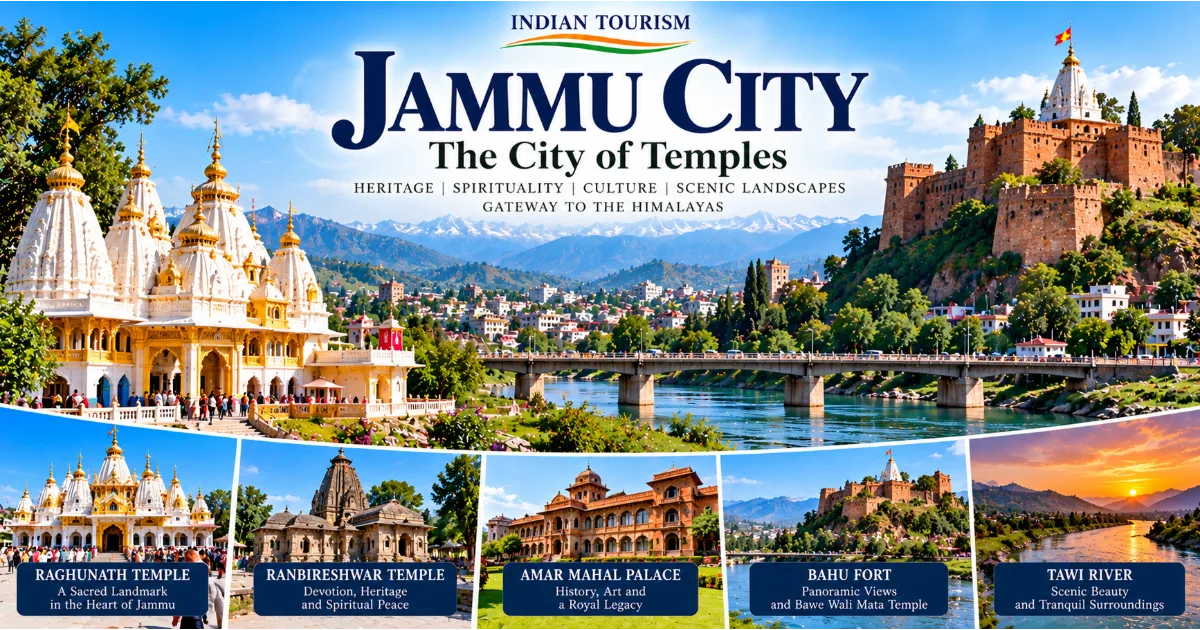
Welcome to Jammu, the City of Temples
Jammu is one of the most culturally significant destinations in northern India, a city where ancient temples, royal history, traditional markets, riverside landscapes and the foothills of the Himalayas come together. Often called the City of Temples, Jammu is known for its spiritual atmosphere and historic shrines, but there is much more to discover beyond its religious identity. Its palaces, forts, museums, local cuisine, lively bazaars and surrounding countryside reveal a rich story of the region's past and present.
Located on the banks of the Tawi River, Jammu serves as an important gateway to the wider Jammu region and the Kashmir Valley. For many travellers, the city is the starting point of a pilgrimage to the revered Vaishno Devi shrine at Katra. Others visit to explore its historic landmarks, experience Dogra culture, enjoy regional food or begin a journey through the mountains and valleys of Jammu and Kashmir.
Jammu has a distinctive character that sets it apart from many other destinations in the region. The city combines the energy of a busy urban centre with the traditions of an old royal settlement. Its streets are filled with shops selling traditional clothing, dry fruits, sweets, handicrafts and everyday goods. Its temples attract pilgrims throughout the year, while its historical buildings offer glimpses into the political and cultural development of the region.
The surrounding landscape adds another dimension to the experience. The Tawi River flows through the city, while the Shivalik hills form part of the wider scenery. During the cooler months, the weather is often more comfortable for sightseeing, while the summer season brings hotter conditions that encourage travellers to plan outdoor activities carefully.
For visitors planning a trip to Jammu and Kashmir, Jammu city deserves more than a brief stop on the way to another destination. It offers an opportunity to understand the region's history, meet its people, taste its cuisine and discover the cultural foundations of a place that has played an important role in northern India's heritage.
The Historical Story of Jammu
Jammu's history stretches back many centuries, and the city has developed through a combination of regional kingdoms, religious traditions, trade and strategic geography. Its position near important routes connecting the plains of northern India with the Himalayan region made it a significant settlement over time.
The city is traditionally associated with Raja Jambulochan, a ruler whose story is linked to the origin of the name Jammu. According to local tradition, the king encountered a remarkable scene involving a tiger and a goat drinking water near the Tawi River without attacking one another. He interpreted this as a sign that the area possessed unusual harmony and decided to establish a settlement there. This story remains an important part of Jammu's local identity, although it belongs to the realm of tradition rather than a fully documented historical account.
Over the centuries, Jammu became associated with regional ruling families and eventually developed as an important centre of the Dogra kingdom. The Dogras played a major role in shaping the political history, architecture and cultural identity of the region. Their influence can still be seen in historic buildings, traditional customs, religious institutions and local artistic practices.
The nineteenth century was particularly important in the history of Jammu and Kashmir. Maharaja Gulab Singh, a Dogra ruler, became a central figure in the formation of the princely state of Jammu and Kashmir under the political arrangements of the period. His successors continued to influence the region's administration, architecture and public life.
The city's historic buildings tell part of this story, but history is also preserved through oral traditions, family customs, religious festivals and the everyday practices of its residents. Walking through older neighbourhoods can provide a sense of how the city has changed while retaining elements of its traditional character.
Jammu's modern history is also shaped by the political changes that affected the former princely state, the Partition of India in 1947 and the developments that followed. These events transformed communities, administrative arrangements and movement across the region. Understanding this broader context helps visitors appreciate that Jammu is not only a destination of temples and scenic views but also a place with a complex and significant historical experience.
Raghunath Temple: One of Jammu's Most Important Landmarks
Raghunath Temple is among the best-known religious landmarks in Jammu city. Situated in the heart of the city, the temple complex is dedicated primarily to Lord Rama and forms an important part of the region's Hindu religious heritage. Its location near busy commercial areas makes it easy to combine a visit with a walk through the city's traditional markets.
The temple complex is associated with Maharaja Gulab Singh and his son Maharaja Ranbir Singh, who contributed to its development during the nineteenth century. Its architecture, shrines and religious traditions reflect the importance that the Dogra rulers placed on patronage of Hindu religious institutions.
Inside the complex, visitors encounter a collection of shrines and devotional spaces. The atmosphere can vary considerably depending on the time of day, the religious calendar and the number of pilgrims present. Early visits may offer a calmer experience, while festival periods can bring large crowds and a heightened sense of celebration.
For devotees, the temple is a place of worship and spiritual reflection. For visitors interested in architecture and cultural history, it offers an opportunity to understand the relationship between religion, royal patronage and urban life in Jammu.
Visitors should dress respectfully, follow the temple's rules and ask before photographing people or restricted areas. Security arrangements and access requirements may change, so it is sensible to check current guidance before visiting.
A visit to Raghunath Temple can also be paired with an exploration of the surrounding market streets. These areas offer a lively introduction to local commerce, with shops selling religious items, traditional clothing, sweets, household goods and regional products.
Ranbireshwar Temple: A Place of Devotion and Heritage
Ranbireshwar Temple is another significant religious destination in Jammu. Dedicated to Lord Shiva, it is known for its large Shiva lingam and the many smaller lingams displayed within the temple complex. The temple is associated with Maharaja Ranbir Singh and is an important place of worship for local devotees.
The temple's spiritual importance becomes especially visible during major Hindu festivals, particularly Maha Shivaratri. During such occasions, worshippers gather to offer prayers and participate in devotional activities. Visitors who prefer a quieter atmosphere may find ordinary weekdays more suitable, although timings and crowd levels can vary.
The temple provides insight into the region's devotional traditions and the continued importance of religious institutions in everyday life. It is not simply a monument to be photographed. For many people, it remains an active and meaningful spiritual centre.
Visitors should allow enough time to experience the temple respectfully rather than rushing through the complex. Observing local customs, following instructions from temple staff and keeping noise to a minimum help preserve the atmosphere for worshippers.
Ranbireshwar Temple can be included in a broader city itinerary alongside Raghunath Temple, Bahu Fort and other historic sites. The combination gives travellers a better understanding of Jammu's religious and architectural heritage.
Bahu Fort and the Famous Bawe Wali Mata Temple
Bahu Fort is one of Jammu's most recognisable historical landmarks. Standing on elevated ground near the Tawi River, the fort has long been associated with the city's defensive history and royal traditions. Its position offers a different perspective on Jammu's geography, including views of the river and parts of the surrounding urban landscape.
The fort is traditionally linked to the early history of Jammu, although the structure visible today reflects later periods of development and restoration. Its thick walls and elevated setting illustrate the importance of defence and strategic positioning in earlier centuries, when regional rulers needed to protect settlements and maintain control over important routes.
Within the fort complex is the revered Bawe Wali Mata Temple, dedicated to the goddess Kali. The shrine attracts devotees from Jammu and surrounding areas, making the fort both a historical site and a living religious destination.
The combination of fort architecture and active worship makes Bahu Fort especially interesting. Visitors can explore the setting, learn about its historical associations and observe how religious traditions remain connected to the city's older landmarks.
The nearby Bagh-e-Bahu area is known for its landscaped gardens and recreational spaces. Depending on current access and operating arrangements, visitors may be able to combine a fort visit with time in the gardens. This can make the area suitable for families and travellers looking for a relaxed outing.
The best experience often comes from allowing time to appreciate the setting rather than treating the fort as a quick stop. Views of the Tawi River, the surrounding hills and the growing city provide a reminder of how Jammu's natural geography influenced its historical development.
Because the fort and temple are active public destinations, crowd levels can increase during religious festivals and weekends. Travellers should check current opening information and local restrictions before planning their visit.
Amar Mahal Palace Museum: A Glimpse into Royal Jammu
Amar Mahal Palace is one of the most distinctive heritage landmarks in Jammu. Built in a European-inspired architectural style, the palace stands out from the region's traditional forts and temple complexes. Its design reflects the cultural influences that entered the royal environment during the later nineteenth and early twentieth centuries.
The palace is associated with the Dogra royal family and has been converted into a museum that preserves elements of Jammu's artistic and historical heritage. Its setting, architectural details and collections provide visitors with an opportunity to understand the lifestyle and cultural interests of the former ruling elite.
One of the notable features associated with the museum is its collection of paintings, including works connected with the famous Pahari miniature painting tradition. These paintings are important examples of the artistic heritage of the wider Himalayan region, where artists developed distinctive approaches to religious themes, courtly life, nature and storytelling.
The museum also helps place Jammu within a wider cultural network. The city's history was never isolated from neighbouring regions. Artistic styles, religious practices, trade and political relationships connected Jammu with different parts of northern India and the Himalayan world.
A visit to Amar Mahal is particularly worthwhile for travellers interested in architecture, history and art. It offers a change of pace from the city's religious sites and commercial streets, allowing visitors to spend time with the region's cultural collections.
Before visiting, travellers should verify the museum's current opening hours, ticketing arrangements and photography rules. Museum access can change, and some collections or spaces may not always be available to the public.
Dogra Art Museum: Understanding Regional Creativity
The Dogra Art Museum is an important cultural institution for anyone who wants to learn about the artistic traditions of Jammu and the wider region. Its collections help preserve paintings, manuscripts, objects and other material connected with local history and creativity.
The Dogra cultural world has been shaped by multiple influences, including Hindu religious traditions, royal patronage, regional storytelling and interactions with neighbouring artistic centres. The museum offers a way to explore these influences through objects rather than relying only on written descriptions.
Pahari painting is especially significant in the broader artistic history of the Himalayan foothills. These paintings often feature themes from Hindu epics, devotional literature, romantic poetry and courtly life. Their colours, compositions and fine details reflect a sophisticated tradition that developed across several regional schools.
For travellers who usually focus on scenic viewpoints and famous temples, visiting an art museum can provide a deeper understanding of the people and ideas behind the landscape. It reveals how communities represented their beliefs, rulers, stories and surroundings through artistic expression.
The museum can also be a valuable stop for students, photographers who are interested in cultural history, and families seeking an educational experience. Visitors should respect display rules and avoid touching objects or using photography where it is restricted.
Opening hours and collection access should be checked in advance, especially if the visit is part of a tightly scheduled itinerary.
The Tawi River: Jammu's Natural Lifeline
The Tawi River is closely connected with the identity and geography of Jammu. Flowing through the city, it provides a natural landmark around which many views and neighbourhoods have developed. The river is part of the wider Chenab river system and has historical, cultural and environmental significance.
From selected viewpoints around Jammu, visitors can appreciate the river's course through the urban landscape. Its appearance changes with the seasons, rainfall and upstream conditions. During dry periods, some sections may appear relatively shallow, while monsoon conditions can bring increased flow and rapidly changing water levels.
The river has long influenced settlement patterns and the relationship between the city and its surrounding landscape. Like many rivers in growing urban areas, it also faces pressures from development, waste management and changing environmental conditions. Responsible tourism means enjoying the river without leaving litter, entering unsafe areas or disturbing its banks.
Visitors should be particularly careful during and after heavy rainfall. Water levels can rise quickly, and apparently accessible riverbanks may become dangerous. Swimming or entering the water should never be assumed to be safe simply because a section looks calm.
The river's setting is best appreciated from safe, designated public areas. A short visit can provide a useful contrast with the busy markets and religious centres that define much of the city experience.
For photographers, the Tawi offers opportunities to capture the relationship between water, hills, bridges and urban development. Early morning and late afternoon can provide softer light, although weather conditions and local access determine the best viewpoints.
Mubarak Mandi Palace: Exploring Jammu's Royal Past
Mubarak Mandi Palace is one of the most important historical complexes in Jammu. Once associated with the Dogra rulers, the palace served as a royal residence and administrative centre. Its buildings reflect a mixture of architectural influences, including regional forms and styles that developed through contact with other parts of India and beyond.
The complex grew over time rather than being built as a single unified structure. As a result, it contains different architectural elements that reflect changing tastes, functions and periods of construction. Courtyards, façades, balconies and decorative details reveal how royal spaces were adapted for administration, residence and ceremony.
Mubarak Mandi also offers an opportunity to consider the changing role of historic buildings in modern cities. Royal complexes that once represented political power can become vulnerable to weather, structural deterioration and the pressures of urban growth. Conservation work requires technical expertise, funding and long-term planning.
Visitors interested in architecture should appreciate the site as a historical environment rather than expecting every part of the complex to function as a fully restored museum. Access to individual buildings or sections may vary because of conservation work and safety restrictions.
It is advisable to verify which areas are open before visiting. Where access is permitted, travellers should follow official directions and avoid entering damaged or restricted structures.
The palace is particularly rewarding for people who enjoy discovering the layers of history that are not always visible in a city's main tourist attractions. Alongside temples and forts, it helps tell the story of Jammu as a royal and administrative centre.
Bagh-e-Bahu: Gardens, Leisure and Views
Bagh-e-Bahu is a popular landscaped area associated with Bahu Fort. It provides a more relaxed side of Jammu's visitor experience, offering gardens and open spaces where families and travellers can spend time away from the busiest streets.
The appeal of a garden visit depends on the season, maintenance and current facilities. During pleasant weather, landscaped paths and green spaces can provide a welcome break between historical attractions. The area may also be busy during weekends, holidays and festival periods.
Bagh-e-Bahu is best included as part of a broader visit to the Bahu Fort area rather than treated as an isolated destination. Travellers can explore the fort and temple, enjoy the surrounding views and then spend time in the gardens if they are open.
Families should check current access arrangements, entry charges where applicable and any restrictions affecting particular facilities. Visitors should also remember that landscaped public spaces depend on responsible use. Keeping the area clean and respecting other visitors helps maintain the environment for everyone.
The gardens offer a reminder that tourism in Jammu is not limited to religious and historical sightseeing. The city also has spaces for recreation, family outings and quiet observation.
Shopping in Jammu: Discover the City's Markets
Shopping is one of the easiest ways to experience Jammu's everyday culture. The city has a network of traditional markets, commercial streets and modern shopping areas where visitors can find local products, clothing, sweets, household goods and religious items.
Raghunath Bazaar is among the best-known shopping areas in the city. Its location near important religious landmarks makes it a natural stop for pilgrims and tourists. Shops sell a range of goods, including traditional garments, dry fruits, packaged foods, handicrafts and items used for worship.
Other commercial areas, including busy markets around the old city and central business districts, offer a broader view of local shopping habits. The experience can be lively, particularly during festival periods when streets become crowded and demand for traditional goods increases.
Jammu is also known for regional food products and sweets. Visitors may find local preparations that reflect the culinary traditions of the Dogra community and the broader Jammu region. When buying food, choose clean establishments, check packaging and consider how long products can be safely carried during travel.
Travellers looking for souvenirs should compare prices and ask questions about the origin of products. Some items marketed as traditional handicrafts may be mass-produced, so anyone seeking locally made work should ask the seller for details.
Bargaining may be possible in some small shops and markets, but it is not appropriate everywhere. A polite approach is more effective than aggressive negotiation. Visitors should also keep cash and valuables secure in crowded streets and be mindful of traffic while walking through busy shopping districts.
Shopping in Jammu is not merely about purchasing souvenirs. It is a way to observe local routines, discover regional tastes and experience the city's commercial life.
Dogra Culture: Traditions, Language and Community
Jammu's cultural identity is strongly associated with the Dogra community, whose history, language, food, festivals and artistic traditions have shaped the region. At the same time, Jammu is home to diverse communities with different languages, religious practices and cultural experiences. This diversity is part of what makes the city important to the wider identity of Jammu and Kashmir.
Dogri is one of the major languages associated with the Jammu region and is recognised in India's Eighth Schedule of languages. Hindi is widely used, and Urdu, Punjabi and other languages are also heard in different settings. Visitors who learn a few polite local expressions often find that small efforts to communicate can make interactions warmer and more memorable.
Traditional music, folk performances and regional storytelling preserve memories of community life, celebrations and historical events. Cultural practices may differ between urban neighbourhoods and rural areas, and between communities with different religious or family traditions.
Clothing, crafts and domestic customs also contribute to the region's cultural identity. Traditional dress may be more visible during weddings, festivals and formal celebrations than in everyday urban life. Travellers should avoid assuming that one custom represents everyone in Jammu.
Respectful cultural tourism means listening, asking questions politely and recognising that traditions continue to evolve. Local residents are not simply part of a tourist experience. They are the people who maintain the city's cultural life, and their privacy and preferences should be respected.
Festivals and Celebrations in Jammu
Festivals bring Jammu's religious and cultural traditions into public view. Different communities celebrate a variety of occasions throughout the year, and the character of the city changes according to the festival calendar.
Navratri is especially important for many devotees visiting the wider Jammu region. During this period, pilgrims travel to important shrines, including the Vaishno Devi temple near Katra. Jammu city may experience increased movement, crowded markets and heavier demand for accommodation and transport.
Maha Shivaratri is another significant occasion for devotees of Lord Shiva. Temples such as Ranbireshwar attract worshippers, and religious activities may continue throughout the day according to local customs.
Diwali, Holi and other major festivals are also celebrated by many residents. The ways these festivals are observed vary across households and communities, with religious ceremonies, family gatherings, food preparation and local events contributing to the atmosphere.
Baisakhi and other seasonal celebrations have cultural and agricultural associations across parts of northern India, including the Jammu region. The wider calendar also includes festivals and observances important to communities with different religious traditions.
Travellers planning to visit during a major festival should book accommodation and transport early. Crowds can make movement slower, and some areas may have security arrangements or temporary restrictions. Visitors should follow official instructions and avoid obstructing religious processions or ceremonies.
A festival visit can be deeply rewarding, but it is important to observe respectfully rather than treating sacred practices as entertainment. Ask before photographing people, follow dress expectations and remember that the primary purpose of many events is religious devotion.
Jammu's Food: A Taste of Dogra Cuisine
Food is an essential part of the Jammu experience. The city's cuisine reflects regional agricultural traditions, household cooking, festive practices and influences from neighbouring areas. Visitors can explore familiar North Indian dishes alongside preparations associated more specifically with Jammu and the Dogra community.
Rajma with rice is one of the region's best-loved meals. The beans are cooked with spices until they develop a rich gravy, and the dish is often served with steamed rice. Variations exist from household to household, making it a simple but memorable introduction to regional food.
Khatta meat is another dish associated with Dogra cuisine. It is traditionally prepared with a sour flavour profile, although recipes and ingredients vary. Travellers who eat meat may encounter it at selected local restaurants or traditional dining establishments.
Kaladi, a regional cheese associated with Jammu, is often prepared by frying or cooking it until the outside develops a golden texture. It may be served with bread or used in snacks. Its flavour and texture make it an interesting option for visitors who want to explore local food beyond standard restaurant menus.
Kachalu preparations, traditional breads and seasonal vegetable dishes can also appear in regional meals. The availability of particular foods depends on the restaurant, season and household tradition. Some dishes are more common at home or during special occasions than on every restaurant menu.
Jammu is also known for sweets and snacks that visitors can discover in local markets. The best approach is to ask shopkeepers which items are prepared locally and which are popular with residents. This often leads to a more useful experience than simply choosing the most prominently displayed product.
Food preferences and dietary requirements differ, so visitors should ask about ingredients, cooking methods and spice levels. Those with allergies should communicate them clearly. During hot weather, choose fresh food from clean establishments and drink safe water.
For many travellers, the meals enjoyed between sightseeing stops become some of the most memorable parts of a journey. Sharing regional food is an opportunity to understand local hospitality and the importance of family and community traditions.
Jammu's Natural Surroundings and Short Excursions
Although Jammu city is an urban destination, the wider region contains hills, forests, rivers and countryside that can be explored through day trips or longer journeys. The Shivalik foothills form part of the landscape, while roads leading away from the city connect travellers with smaller towns, religious destinations and mountain areas.
The natural surroundings vary considerably. Some areas have dry hills and open terrain, while higher elevations and more distant destinations offer greener landscapes and cooler conditions. Seasonal rainfall, road conditions and local geography influence how these places look throughout the year.
Travellers who want to explore beyond the city should choose excursions according to the available time and the condition of roads. A short trip near Jammu is very different from a journey to a high-altitude destination. Mountain routes can involve longer travel times than distances on a map suggest, and weather can change conditions rapidly.
Local guides and authorised transport providers can be useful for visitors unfamiliar with the region. It is wise to confirm the return journey, especially when travelling to rural areas where transport options may be limited later in the day.
Nature-based tourism should be conducted responsibly. Visitors should carry waste back with them, avoid disturbing wildlife and respect the land and livelihoods of local communities. During periods of heavy rain, travellers should pay attention to official advisories about landslides, flooding or road closures.
Jammu city can therefore serve as both a destination in its own right and a starting point for discovering the varied landscapes of the wider Jammu region.
Best Time to Visit Jammu City
The best time to visit Jammu depends on the traveller's interests, tolerance for heat and plans for exploring the surrounding region. Weather can differ significantly between the city and higher-altitude destinations elsewhere in Jammu and Kashmir.
The cooler months, particularly from October to March, are often comfortable for sightseeing. Temperatures vary through this period, and winter mornings and evenings can be chilly. This season is suitable for visiting temples, exploring heritage buildings and walking through markets without the intense heat that can occur during summer.
Spring brings changing temperatures and can be pleasant for outdoor visits. The landscape around the city develops with seasonal growth, although conditions depend on rainfall and local elevation. Travellers should check forecasts close to their departure date rather than assuming that every spring day will be mild.
Summer can be hot in Jammu city, particularly during May and June. Visitors planning to travel at this time should schedule outdoor sightseeing during the cooler parts of the day, carry water, wear breathable clothing and take breaks in shaded areas. The conditions in Jammu city can be very different from those experienced in the Kashmir Valley, so packing should reflect the full itinerary.
The monsoon season brings rainfall that can affect roads, river levels and travel schedules. Heavy rain may create local disruptions, and travellers should pay attention to weather advisories before undertaking longer journeys.
Festival periods can be especially busy, regardless of the season. Visitors travelling for religious occasions should allow additional time for transport and accommodation arrangements.
Overall, the cooler months are a strong choice for a first visit focused on city sightseeing, but Jammu remains accessible throughout much of the year when travel is planned around local conditions.
How to Reach Jammu
Jammu is connected to other parts of India by air, rail and road, making it an important entry point for travellers exploring the region.
By Air
Jammu Airport, also known as Jammu Civil Enclave, serves the city with air connections that may vary according to airline schedules and operational conditions. Travellers should check current flight availability from their departure city before finalising accommodation and onward transport.
After arriving at the airport, visitors can generally arrange a taxi or other authorised transport to reach central Jammu. Journey times depend on traffic, the destination and current road conditions.
Anyone continuing towards Katra, Srinagar or other destinations should consider the time needed for transfers. Flight arrival times do not always align conveniently with onward transport, so a buffer can make the journey less stressful.
By Train
Jammu Tawi railway station is a major railhead serving Jammu and is used by travellers arriving from several parts of India. Rail travel can be convenient for visitors who prefer an overland journey or want to connect from major cities.
Train schedules, reservation availability and journey times depend on the service and date. Travellers should book through authorised channels and confirm the station details shown on their ticket.
From Jammu Tawi station, taxis and other local transport options can be used to reach hotels, temples and commercial areas. Traffic can affect transfer times, especially during busy periods.
By Road
Jammu is connected by road to several major towns and cities in northern India. Buses, taxis and private vehicles are commonly used, although journey times vary with distance, traffic, weather and road conditions.
The journey from Jammu to Katra is particularly important for pilgrims visiting the Vaishno Devi shrine. Travellers continuing to Srinagar or other mountain destinations should check current road conditions and allow sufficient time for the drive.
During heavy rainfall, winter weather or periods of heightened security, transport arrangements may change. Official travel advisories and information from transport operators should take priority over old schedules or assumptions.
Getting Around Jammu City
Local transport is available through taxis, auto-rickshaws and other road-based services. The most suitable option depends on the distance between attractions, the number of people travelling and the amount of time available.
For a short visit, hiring a taxi for a planned sightseeing circuit can make it easier to reach sites spread across the city. Travellers should agree on the fare or confirm the pricing method before beginning the journey. Where app-based transport is available and practical, it may offer an additional option.
Auto-rickshaws can be useful for shorter trips, particularly around busy commercial areas. However, some streets may be congested, and walking can sometimes be more convenient for exploring compact market districts.
Jammu's roads can become busy during peak traffic periods and major religious festivals. Visitors should allow extra time between attractions rather than assuming that every journey will be quick.
Pedestrians should take care when crossing roads and walking through market areas. Footpaths may be crowded or uneven in some locations, and traffic conditions can require extra attention.
If visiting several temples, travellers should plan the route around opening times, security checks and expected crowds. A little preparation can reduce unnecessary travel and leave more time for experiencing the sites themselves.
Where to Stay in Jammu
Jammu offers accommodation across different budgets, from simple guesthouses and budget hotels to more comfortable hotels suited to families and business travellers. The best location depends on whether the main purpose of the visit is sightseeing, a pilgrimage connection or onward travel.
Staying near central commercial areas can be convenient for visitors who want access to markets, restaurants and several major attractions. Travellers arriving by train may prefer accommodation with straightforward access to Jammu Tawi station. Those beginning an early journey to Katra or another destination may prioritise easy road access.
Families should consider room size, lift access, cleanliness, parking and the availability of food that suits their needs. Older travellers may benefit from accommodation with fewer stairs and convenient transport arrangements.
Before booking, check recent guest feedback, cancellation policies, check-in times and the precise location. A property described as being in Jammu may still be some distance from the places a visitor intends to explore.
Festival seasons and major pilgrimage periods can increase demand. Booking early is sensible when travel dates are fixed, especially for larger groups or travellers who need particular facilities.
A good hotel can improve the overall experience, but the most expensive option is not necessarily the best choice. The priority should be cleanliness, safety, reliable service and convenient access to the planned itinerary.
A Suggested One-Day Jammu City Itinerary
Travellers with one full day in Jammu can experience several of the city's main attractions by planning a realistic route and avoiding unnecessary backtracking.
Begin the morning with a visit to Raghunath Temple. An early start can help avoid some of the heavier crowds, although the experience will depend on the day and religious calendar. Spend time exploring the surrounding area and observing the city's morning activity.
Continue to Ranbireshwar Temple if it fits the schedule and access arrangements. These two religious sites offer an introduction to important aspects of Jammu's devotional heritage.
Later in the morning, explore Mubarak Mandi Palace from the areas open to visitors. Allow enough time to appreciate the architecture and learn about its royal history. If the Dogra Art Museum or Amar Mahal Palace Museum is open and accessible, choose one according to your interests and the time available.
After lunch, travel to Bahu Fort and the Bawe Wali Mata Temple. The elevated setting provides a different view of Jammu, and the surrounding area can be rewarding for visitors interested in history and landscape. If conditions and opening arrangements permit, spend additional time at Bagh-e-Bahu.
Finish the day with a visit to a local market. Raghunath Bazaar or another central shopping area can be a good place to browse regional products and try local snacks. Keep enough time for your return journey, especially if travelling to the railway station or airport.
This itinerary is a guide rather than a fixed schedule. Temple visits can take longer during busy periods, and museum opening times may limit the order of activities. It is better to experience fewer places comfortably than to rush through every attraction.
A Two-Day Jammu City Itinerary
Two days allow visitors to explore the city at a more relaxed pace and include more cultural experiences.
On the first day, focus on central Jammu. Visit Raghunath Temple and Ranbireshwar Temple, explore nearby markets and learn about the city's religious traditions. After lunch, spend time at Mubarak Mandi Palace or the Dogra Art Museum, depending on current access and personal interests. The evening can be reserved for local food and shopping.
On the second day, begin with Bahu Fort and the Bawe Wali Mata Temple. Enjoy the views from the surrounding area and visit Bagh-e-Bahu if it is open. Later, explore Amar Mahal Palace Museum or another cultural site that fits your schedule. Leave time for a relaxed meal and a final walk through a market before returning to your hotel.
Visitors who prefer nature can use part of the second day for a short excursion outside the city, provided travel times and current conditions make it practical. However, combining too many distant destinations in a single day can make the experience tiring.
A two-day stay is particularly useful for travellers who want to understand Jammu rather than treat it only as a transit point. It provides room for unexpected discoveries, conversations with local residents and a deeper appreciation of the city's heritage.
Responsible and Respectful Tourism in Jammu
Responsible tourism begins with recognising that Jammu is a living city, not simply a collection of attractions. Its temples, historic buildings, markets and riverbanks are part of the everyday environment for residents as well as visitors.
At religious sites, follow local instructions, dress appropriately and respect rules regarding footwear, photography and personal belongings. Some temples have security procedures or restrictions on what visitors may carry inside. Check these requirements before arriving to avoid delays.
When exploring historic buildings, remain within permitted areas and avoid touching fragile architectural features. Restoration and conservation depend on visitors respecting barriers and safety instructions. Damaged or restricted sections should never be entered simply to obtain a better photograph.
Environmental responsibility is equally important. Carry reusable water bottles where practical, dispose of rubbish properly and avoid leaving waste near the Tawi River or in gardens. Visitors travelling outside the city should take particular care not to disturb wildlife or damage natural areas.
Shopping from local businesses can support the regional economy. Asking about the origin of crafts and choosing locally made products when possible can help visitors make more informed purchases.
Travellers should also be considerate when photographing people. Religious ceremonies, families and market activities may be meaningful private moments, so permission should be requested before taking close-up photographs.
Finally, stay informed about weather, transport and local advisories. Conditions can change, especially during heavy rainfall or major public events. Reliable planning helps protect both visitors and the communities they encounter.
Practical Travel Tips for Jammu
A few simple preparations can make a visit to Jammu more comfortable. Carry clothing suited to the season, including layers during cooler months. In summer, lightweight garments, sun protection and sufficient drinking water are important.
Keep identification and essential travel documents secure. Use authorised transport providers and confirm fares before travelling. If arriving late at night, plan the transfer to your accommodation in advance.
For temple visits, check whether mobile phones, bags, cameras or other items are restricted. Security arrangements differ between locations and can change over time. Following instructions from staff helps ensure a smoother visit.
Visitors with mobility needs should contact hotels and attractions in advance to ask about steps, ramps, lifts and accessible facilities. Historic structures may not offer the same accessibility as modern buildings.
Carry any essential medication and keep emergency contact information accessible. If travelling with children or older family members, plan regular breaks and avoid scheduling too many attractions in a short period.
It is also useful to keep some flexibility in the itinerary. Crowds, traffic and unexpected changes to opening hours can affect plans. A flexible schedule allows visitors to enjoy Jammu without feeling pressured to complete every activity.
Why Jammu City Deserves a Place on Your Travel List
Jammu is a destination of contrasts. Its historic temples stand alongside busy markets, royal palaces tell stories of earlier political eras, and the Tawi River provides a natural feature within an expanding urban landscape. The city is simultaneously a place of pilgrimage, a centre of regional culture and a practical gateway to the mountains.
For history enthusiasts, Jammu offers forts, palaces, museums and the legacy of Dogra rule. For religious travellers, its temples provide important places of devotion. For food lovers, its regional dishes and sweets create opportunities to explore local culinary traditions. For families, the city offers a mix of cultural attractions, shopping areas and places for a relaxed outing.
Perhaps the greatest reason to spend time in Jammu is that it helps travellers understand the region beyond its most famous landscapes. Kashmir's lakes, valleys and snow-covered mountains are internationally recognised, but the cultural history of Jammu is an equally important part of the wider story of Jammu and Kashmir.
A thoughtful visit allows travellers to see the city not just as a starting point for another journey, but as a destination with its own identity, heritage and everyday life.
Conclusion: Discover the Heritage and Heart of Jammu
Jammu city brings together centuries of history, spiritual traditions, regional cuisine, architecture and the natural presence of the Tawi River. From the sacred atmosphere of Raghunath Temple and Ranbireshwar Temple to the elevated views of Bahu Fort, the royal legacy of Mubarak Mandi Palace and the artistic collections associated with the region, the city offers many reasons to explore beyond a brief stopover.
Its markets introduce visitors to local products and daily life, while Dogra cultural traditions reveal the importance of language, food, art and community. The surrounding region provides opportunities for further journeys, but the city itself deserves time and attention.
Whether you are travelling for pilgrimage, history, family holidays, food or cultural discovery, Jammu can be a rewarding part of your journey through northern India. Plan around the season, check current travel conditions, respect local customs and allow enough time to enjoy the places you visit.
Jammu is more than the City of Temples. It is a place where heritage remains part of everyday life, where old stories continue to shape local identity and where visitors can discover another important dimension of India's remarkable cultural diversity.
Jammu City Tourism: Explore the temples, discover the heritage, experience the culture and begin your journey into the heart of Jammu.
#IndianTourism #JammuTourism #JammuCity #JammuAndKashmir #CityOfTemples #DograCulture #RaghunathTemple #BahuFort #MubarakMandi #AmarMahalPalace #RanbireshwarTemple #IndianHeritage #TravelIndia #ExploreIndia #CulturalTourism

