
A Land Where Mountains Meet History and Culture
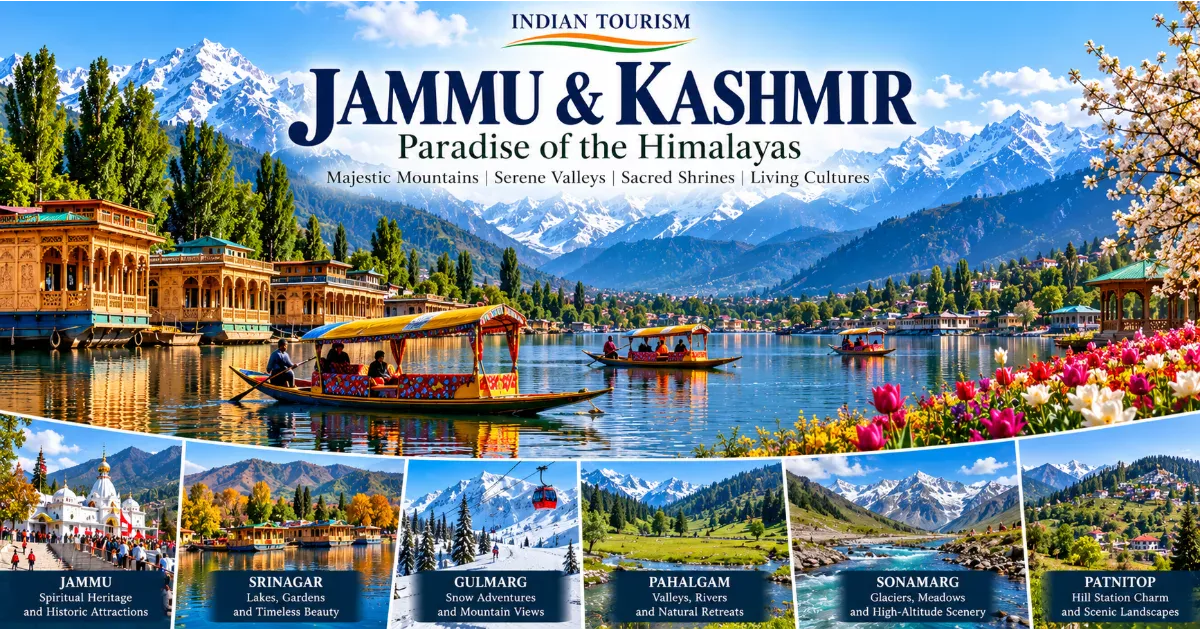
Jammu and Kashmir is one of the most remarkable travel regions in northern India, celebrated for its majestic mountains, peaceful lakes, green valleys, historic temples, traditional architecture, colourful gardens, and rich cultural heritage. Located in the northwestern Himalayan region, this part of India offers an extraordinary range of experiences for travellers who want to discover natural beauty, explore history, experience local traditions, or simply spend time surrounded by spectacular landscapes. From the calm waters of Dal Lake in Srinagar to the snow-covered slopes of Gulmarg, from the river valleys of Pahalgam to the religious landmarks of Jammu, every destination offers a different perspective on the region.
The beauty of Jammu and Kashmir changes throughout the year. Spring brings flowering gardens and blossoming orchards, summer opens opportunities for mountain excursions and outdoor activities, autumn colours the landscape with golden leaves, and winter transforms many higher areas into snowy destinations. These seasonal changes influence not only the scenery but also the activities available, the routes travellers can use, and the kind of holiday they can enjoy.
However, Jammu and Kashmir is much more than a collection of scenic places. Its identity is shaped by centuries of history, regional languages, traditional crafts, religious practices, local food, music, architecture, agriculture, and the lives of communities that have adapted to the Himalayan environment. Visitors who explore these aspects alongside the famous attractions can develop a deeper understanding of the region and its people.
This first post in the Indian Tourism series introduces Jammu and Kashmir as a complete tourism destination. It explores the region's major attractions, natural landscapes, cultural experiences, seasonal travel opportunities, honeymoon possibilities, family holidays, adventure activities, and practical planning considerations. The following posts will examine individual destinations one by one, beginning with Srinagar and continuing through the major tourism centres and lesser-known places of Jammu and Kashmir.
Understanding Jammu and Kashmir
Geography and Natural Diversity
Jammu and Kashmir is a Union Territory of India with a varied geographical landscape that includes mountains, valleys, rivers, lakes, forests, meadows, agricultural land, and historic settlements. The Jammu division and the Kashmir Valley have distinct geographical characteristics, climates, cultural traditions, and tourism experiences. Understanding this diversity is important when planning a trip because the distance between destinations, weather conditions, road access, and available activities can vary significantly.
The Kashmir Valley is widely known for its lakes, orchards, gardens, mountain scenery, and traditional settlements. Srinagar, its principal city, lies along the Jhelum River and is associated with Dal Lake, historic neighbourhoods, gardens, and houseboat accommodation. Beyond Srinagar, destinations such as Gulmarg, Pahalgam, Sonamarg, Yusmarg, and Doodhpathri provide access to meadows, forests, rivers, and mountain views.
The Jammu division offers a different collection of experiences. Jammu city is an important centre for religious tourism and historic attractions, while places such as Patnitop, Bhaderwah, and Kishtwar offer forested hills, valleys, mountain scenery, and opportunities for nature-based travel. The region also serves as an important gateway for pilgrims travelling to major religious destinations.
The mountains influence almost every aspect of tourism in Jammu and Kashmir. They create spectacular viewpoints and support winter sports, but they can also make transport challenging. Snowfall, rainfall, landslides, road maintenance, and seasonal closures can affect travel plans. Visitors should therefore build flexibility into their itineraries and check current local conditions before travelling.
Why Jammu and Kashmir Is a Unique Travel Destination
Few travel regions combine so many different experiences within one broader destination. A visitor can explore historic gardens in Srinagar, take a shikara ride on a lake, visit traditional markets, travel towards green mountain valleys, experience snow in Gulmarg during suitable conditions, and discover the historic and religious attractions of Jammu on a longer journey.
The region appeals to different types of travellers. Couples may be drawn to lakeside stays, mountain views, and peaceful accommodation. Families may enjoy gardens, scenic drives, cultural attractions, and carefully selected outdoor activities. Adventure enthusiasts may explore skiing, trekking, and guided mountain excursions where permitted. History lovers can discover religious landmarks, historic buildings, traditional neighbourhoods, and regional crafts.
Jammu and Kashmir also offers different accommodation choices, from budget guesthouses and homestays to hotels, traditional houseboats, and premium mountain properties. The best option depends on the season, location, facilities, budget, and purpose of the visit. A well-planned journey can combine sightseeing with relaxation rather than attempting to visit every attraction in a limited number of days.
Srinagar: Lakes, Gardens and Cultural Heritage
Dal Lake and the Houseboat Experience
Srinagar is one of the most important tourism centres in Jammu and Kashmir and a natural starting point for exploring the Kashmir Valley. Dal Lake is among its most recognisable attractions, known for its reflective water, traditional houseboats, colourful shikaras, floating gardens, and views of the surrounding mountains. The atmosphere can change throughout the day, with early morning often providing calm water and beautiful reflections.
A shikara ride allows visitors to observe the lake from a traditional wooden boat. Depending on the route, travellers may see houseboats, lakeside settlements, floating markets, gardens, and people carrying out everyday activities. The experience provides insight into the relationship between local livelihoods and the lake, making it more meaningful than simply viewing the scenery from the shore.
Staying in a houseboat is another distinctive experience. Accommodation varies in quality, location, facilities, and price, so travellers should compare options carefully. Heating arrangements are particularly important during colder months, while transport access and available meals may influence the overall experience. Visitors should also consider environmental responsibility because the lake is a sensitive ecosystem that requires protection from waste and pollution.
Mughal Gardens and Historic Srinagar
Srinagar's historic gardens are important attractions for travellers interested in architecture, history, and landscape design. Shalimar Bagh, Nishat Bagh, and Chashme Shahi are associated with Mughal-era garden traditions. Their terraces, water channels, pathways, trees, and views of the surrounding landscape reflect a style of design that combines nature with carefully arranged architectural features.
The gardens have different seasonal characters. Spring is popular for flowering plants and fresh greenery, while summer offers shaded paths and pleasant opportunities for walking. Autumn can bring attractive changes in foliage, and winter creates a quieter atmosphere when conditions allow visits. Travellers interested in photography and history can spend several hours exploring these spaces.
Srinagar also contains historic mosques, traditional neighbourhoods, markets, and craft centres. Visitors should respect local customs at religious sites, observe photography restrictions, and remember that many historic areas remain active residential neighbourhoods. Exploring these places thoughtfully can help travellers understand the city's cultural identity beyond its famous lakes.
Gulmarg: Meadows, Mountains and Snow Adventures
A Destination for Every Season
Gulmarg is among the best-known mountain destinations in Jammu and Kashmir. It is famous for its broad meadows, coniferous forests, mountain views, and winter sports. During warmer months, the landscape becomes greener and offers opportunities for walking, photography, and scenic excursions. In winter, snowfall can transform the area into a destination for skiing and other snow-related activities.
The Gulmarg Gondola is one of the region's major attractions, providing access to higher mountain areas when weather and operating conditions permit. Visitors should check ticket availability, operating schedules, and safety instructions before travelling. Access to higher sections can be affected by wind, snowfall, and other conditions, so travellers should maintain alternative plans.
Gulmarg can be suitable for couples seeking a mountain retreat, families hoping to experience snow, and adventure enthusiasts interested in winter sports. Beginners should use qualified instructors and appropriate equipment rather than attempting activities beyond their ability. Mountain weather can change quickly, making preparation and local guidance essential.
The Best Time to Visit Gulmarg
Winter is the main season for snow experiences, although snowfall and snow quality vary from year to year. Travellers hoping to enjoy snow should monitor current weather reports and local activity updates. Road conditions may become difficult during severe weather, and delays can affect travel schedules.
Spring and summer offer a different experience, with meadows, forest walks, and mountain views. These months may suit visitors who prefer green landscapes and outdoor exploration rather than snow sports. Autumn brings cooler conditions and changing colours to parts of the landscape.
Visitors should bring suitable clothing, sturdy footwear, and sun protection. Temperatures in mountain areas can be much lower than in Srinagar, and conditions may change during the day. Activities should be selected according to fitness, experience, weather, and local safety guidance.
Pahalgam: River Valleys and Natural Beauty
Pahalgam is known for its river scenery, mountain surroundings, forests, and open landscapes. The Lidder River is one of its defining features, creating a scenic setting for walking, photography, and quiet outdoor experiences. Compared with a busy city itinerary, Pahalgam offers opportunities to slow down and enjoy the natural environment.
The surrounding area includes meadows, forested slopes, mountain routes, and settlements that provide different experiences depending on season and access. Some excursion areas may have local transport arrangements, fees, or restrictions, so visitors should confirm current details before setting out. Pahalgam is also connected with religious travel, and pilgrimage periods can influence traffic and accommodation demand.
The destination can appeal to couples, families, photographers, and nature lovers. Travellers who want to enjoy the area at a comfortable pace may consider staying overnight rather than attempting a rushed day trip. The ideal duration depends on the planned excursions, available time, and whether Pahalgam is part of a wider journey through the Kashmir Valley.
Visitors should exercise caution near rivers and unfamiliar mountain terrain. Water levels and currents can change, and cold mountain water can be dangerous even when it appears calm. Following local instructions, using authorised operators where activities are permitted, and avoiding unsafe riverbanks are important parts of responsible travel.
Sonamarg: High Mountains and Dramatic Landscapes
Sonamarg is known for its spectacular mountain scenery, river valleys, and access to high-altitude environments. Its name is commonly translated as the Meadow of Gold, and the area can be especially attractive when green landscapes contrast with snow-covered peaks. Photographers and nature enthusiasts often visit for the dramatic views and opportunities to experience a different side of the Himalayas.
Travel conditions in Sonamarg vary considerably by season. Snow, ice, road conditions, and weather may affect access to certain areas. Excursions towards glaciers or higher mountain locations should be arranged through authorised services where permitted, and visitors should not assume that routes are safe simply because they appear popular in photographs.
Sonamarg is often visited from Srinagar, but road travel can take longer than expected. A day trip may be suitable when conditions permit, while an overnight stay may provide more time for photography and relaxed exploration. The best choice depends on road access, accommodation availability, weather, and the overall itinerary.
Jammu: Historic Attractions and Religious Heritage
Discovering Jammu City
Jammu city offers a different tourism experience from the lakes and mountain meadows of the Kashmir Valley. It is known for temples, historic landmarks, markets, and regional food traditions. Its location makes it an important centre for visitors exploring the Jammu division and for many pilgrims travelling to nearby religious destinations.
Raghunath Temple is one of the city's best-known religious landmarks, while Bahu Fort provides an opportunity to explore an important part of its historic landscape. Local markets introduce visitors to regional products, food, and everyday urban life. Travellers interested in history can combine these attractions with visits to other cultural sites according to available time.
Religious sites may have specific rules regarding clothing, photography, security, and personal belongings. Visitors should follow instructions and allow additional time during major festivals or periods of heavy pilgrimage traffic.
Vaishno Devi and Pilgrimage Tourism
The Vaishno Devi pilgrimage near Katra is one of the most significant religious journeys associated with Jammu and Kashmir. Devotees travel through a designated route in the Trikuta Hills to reach the shrine. The pilgrimage attracts visitors from across India and supports a network of accommodation, transport, food businesses, and other services in the surrounding area.
The journey involves walking and changes in elevation, so visitors should consider their physical condition and prepare accordingly. Official registration procedures, authorised transport options, and current operating arrangements should be checked before departure. Weather, crowd levels, and local instructions can influence the experience.
Pilgrimage tourism is an important part of the region's identity and economy. Visitors should respect the religious character of the route, use authorised services, and allow sufficient time for security procedures and movement through crowded areas.
Patnitop and the Mountain Destinations of Jammu
Patnitop is a hill destination known for its forested surroundings, open viewpoints, and cooler conditions during warmer months. It can be suitable for family holidays, short breaks, scenic drives, and travellers seeking a mountain setting without undertaking a demanding trek.
The wider Jammu division includes destinations such as Bhaderwah and Kishtwar, where visitors can discover valleys, forests, rivers, and mountain scenery. These places may be less familiar than Srinagar or Gulmarg, but they offer opportunities to explore quieter landscapes and local communities. Facilities and access vary, so advance planning is especially useful.
Travellers should avoid assuming that every mountain destination has the same infrastructure. Transport, accommodation, food availability, and mobile connectivity may differ considerably between towns and remote areas. Checking these details before departure can make the journey safer and more comfortable.
Culture, Cuisine and Traditional Crafts
Discovering Regional Food
Food is an important part of understanding Jammu and Kashmir. Kashmiri cuisine includes rice dishes, meat preparations, vegetables, breads, teas, and seasonal ingredients. Wazwan is a well-known culinary tradition associated with elaborate meals and special occasions. Its preparation reflects hospitality, culinary skill, and the importance of shared meals in social life.
Visitors may encounter dishes such as rogan josh, yakhni, dum aloo, and different regional preparations of vegetables and rice. Kashmiri breads and traditional teas provide further opportunities to experience local food culture. Recipes and ingredients vary between households and restaurants, so travellers should ask about preparation when they have dietary restrictions.
Jammu has its own culinary traditions shaped by local ingredients and community practices. Exploring local restaurants and markets can help visitors understand the differences between the food cultures of the Jammu division and the Kashmir Valley.
Handicrafts and Local Livelihoods
Traditional crafts form an important part of the region's cultural economy. Kashmiri shawls, carpets, embroidery, papier-mache products, woodwork, and other handmade items reflect skills passed through generations. Some products require specialised techniques and considerable time to complete.
Visitors can learn about these traditions by visiting reputable workshops or craft centres where demonstrations are permitted. Asking about materials, methods, and production time can make shopping more informative. Comparing workmanship and supporting authentic local artisans helps preserve traditional skills and contributes to local livelihoods.
Travellers should ask permission before photographing artisans or private workshops. Respectful engagement allows visitors to learn about the craft without disrupting the people who practise it.
Best Time to Visit Jammu and Kashmir
Spring and Summer
Spring is popular for gardens, blossoms, and fresh greenery, particularly in Srinagar and the surrounding valley. Orchards begin to flower, and the landscape gradually changes after winter. However, higher destinations may remain cold, and mountain access can still be affected by snow.
Summer is suitable for exploring many popular destinations when local conditions permit. Visitors can combine sightseeing in Srinagar with excursions to Pahalgam, Gulmarg, and Sonamarg. It is also a busy period, so advance accommodation planning can be useful. Travellers should prepare for temperature differences between the valley floor and higher mountain areas.
Autumn and Winter
Autumn offers changing foliage, cooler temperatures, and opportunities to observe the region's agricultural landscapes. It can be an attractive season for photography and cultural sightseeing. Travellers should bring warmer clothing as temperatures fall, particularly for evening excursions and higher elevations.
Winter is associated with snow experiences in suitable areas, especially around Gulmarg. Srinagar can experience freezing conditions, and mountain roads may be affected by snowfall or ice. Visitors should check current forecasts, road information, and activity schedules before departure. Snowfall cannot be guaranteed, and flexibility is essential when planning winter travel.
Honeymoon, Family and Adventure Tourism
Romantic Holidays
Jammu and Kashmir can offer memorable experiences for couples who enjoy mountain scenery, lakeside accommodation, and peaceful surroundings. Srinagar's houseboats and gardens provide opportunities for relaxed sightseeing, while Pahalgam offers river landscapes and mountain views. Gulmarg may appeal to couples interested in snow experiences or scenic mountain excursions.
A successful honeymoon itinerary should reflect the couple's interests, budget, and travel duration. Some may prefer a relaxed stay in Srinagar followed by time in Pahalgam, while others may wish to include Gulmarg during a suitable season. Weather, road access, accommodation facilities, and local conditions should guide final arrangements.
Family Holidays
Families can explore gardens, lakes, historic sites, local markets, and selected mountain destinations. The most suitable itinerary depends on children's ages, mobility needs, dietary preferences, and tolerance for long journeys. Families travelling with older relatives may benefit from slower schedules and accommodation with suitable facilities.
Not every activity is appropriate for every traveller. Snow sports, high-altitude excursions, and long walks require different levels of fitness and preparation. Choosing activities according to ability and current conditions makes the journey more enjoyable.
Adventure and Nature Experiences
Jammu and Kashmir offers opportunities for skiing, trekking, guided walks, photography, camping in authorised areas, and other outdoor activities where permitted. Each activity requires suitable equipment, appropriate preparation, and attention to local regulations.
Visitors should use qualified guides and authorised operators for activities that involve mountain terrain or winter conditions. Weather can change rapidly, and routes that are manageable in one season may become unsafe in another. Responsible adventure tourism places safety ahead of completing a planned itinerary.
Practical Travel Planning and Responsible Tourism
Transport, Accommodation and Budget
Srinagar is a major entry point for the Kashmir Valley, while Jammu is an important gateway for travel in the Jammu division. Visitors may use flights, trains, buses, taxis, and private vehicles depending on their route. Mountain travel can take longer than expected, so itineraries should allow additional time for road conditions, traffic, and weather-related delays.
Accommodation ranges from guesthouses and homestays to hotels, houseboats, and premium mountain properties. Travellers should compare location, facilities, heating arrangements where relevant, cancellation terms, and the services included in the quoted price. A realistic budget should include transport, accommodation, meals, sightseeing, activity charges, and a reserve for unexpected expenses.
Current opening hours, permits where applicable, road conditions, and travel advisories should be checked before departure. General travel information is useful for planning, but it cannot replace current local guidance.
Protecting Nature and Respecting Communities
The lakes, forests, meadows, and mountain landscapes of Jammu and Kashmir are vulnerable to pollution, waste, and excessive visitor pressure. Visitors should dispose of rubbish responsibly, avoid disturbing wildlife, respect designated routes, and conserve water wherever possible. Responsible accommodation choices can also support better environmental practices.
Respect for local communities is equally important. Visitors should ask permission before photographing people, observe customs at religious sites, and avoid entering private property without consent. Supporting local guides, artisans, restaurants, and accommodation providers can help tourism income reach the communities that contribute to the region's cultural identity.
Travellers should also review current official advisories and follow local instructions. Conditions can change, and responsible planning includes being prepared to adjust or postpone an excursion when safety requires it.
Conclusion: Begin Your Journey Through Jammu and Kashmir
Jammu and Kashmir offers a remarkable combination of natural beauty, cultural traditions, historic landmarks, religious destinations, regional cuisine, and outdoor experiences. Srinagar introduces visitors to lakes, gardens, houseboats, and historic neighbourhoods. Gulmarg offers mountain scenery and seasonal snow activities, Pahalgam provides river valleys and peaceful landscapes, Sonamarg reveals dramatic high-altitude views, and Jammu combines historic attractions with important pilgrimage routes.
The region deserves to be explored thoughtfully rather than through a hurried checklist of famous places. Understanding seasonal changes, choosing suitable destinations, allowing enough travel time, respecting local communities, and protecting the natural environment all contribute to a more rewarding journey.
This is the first post in our Jammu and Kashmir tourism sequence. In the next post, we will explore Srinagar in detail, covering Dal Lake, houseboats, Mughal gardens, historic neighbourhoods, local cuisine, accommodation, the best time to visit, and practical itinerary planning. We will continue through the destinations of Jammu and Kashmir one by one before moving to the next state or union territory.
Every destination has a story, and Jammu and Kashmir offers countless opportunities to discover those stories through its mountains, valleys, culture, and people.
#IndianTourism #JammuAndKashmir #JammuKashmirTourism #KashmirTourism #ExploreIndia #DiscoverIndia #Srinagar #Gulmarg #Pahalgam #Sonamarg #JammuTourism #HimalayanTravel #IndiaTravelGuide #CulturalTourism #NatureTourism #ResponsibleTourism

