
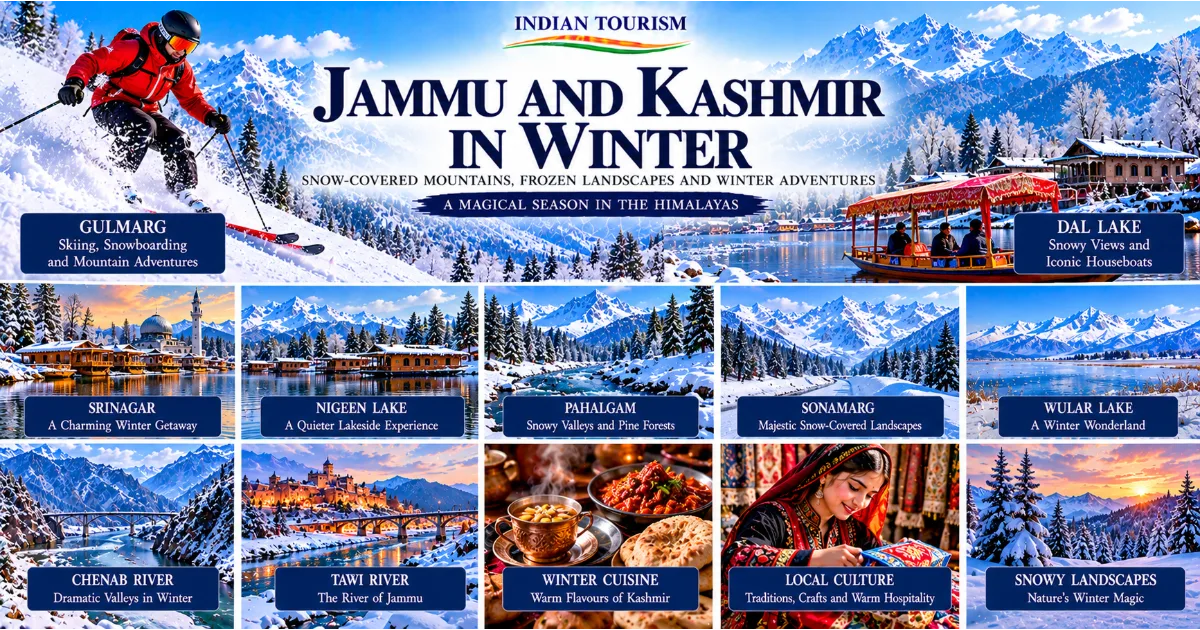
Discovering the Magic of Winter in Jammu and Kashmir
Winter transforms Jammu and Kashmir into a landscape of snow-covered mountains, frosty forests, quiet valleys and spectacular Himalayan scenery. As temperatures fall, familiar destinations take on a different character. Srinagar's gardens and lakes experience colder days, the mountains around Gulmarg become a major attraction for winter sports, and the valleys near Pahalgam and Sonamarg reveal dramatic seasonal changes. For travellers seeking snow, photography, outdoor adventure and peaceful mountain views, winter can be one of the most memorable times to explore the region.
The winter experience varies considerably across Jammu and Kashmir. Higher mountain destinations may receive substantial snowfall, while lower areas can experience cold weather without continuous snow cover. Jammu city generally has a different winter climate from Srinagar and the higher Himalayan valleys. Even within the Kashmir Valley, local conditions can differ according to elevation, exposure and weather patterns.
Winter tourism is therefore about more than finding snow. It includes experiencing traditional Kashmiri hospitality, enjoying warm regional food, exploring historic places in quieter conditions, visiting authorised winter recreation areas and understanding how local communities adapt to cold weather. The season also reveals the importance of traditional clothing, heating practices, food preparation and the organisation of daily life during colder months.
Gulmarg is widely recognised for skiing and snowboarding, while Srinagar offers a combination of heritage, markets, lakeside scenery and winter culture. Pahalgam can provide beautiful snow-covered views when conditions allow, and the Jammu region offers its own winter experiences, from religious destinations to mountain landscapes.
However, winter travel requires careful preparation. Heavy snowfall, icy roads, poor visibility, avalanches and sudden weather changes can affect access and safety. Some destinations may become temporarily inaccessible, and activities may be suspended when conditions are unsuitable. Visitors should check current official travel advisories, weather forecasts and local road information before setting out.
This guide explores winter destinations across Jammu and Kashmir, the activities travellers can enjoy, the region's seasonal culture and the practical steps needed to make a winter journey safe, comfortable and rewarding.
1. Gulmarg: The Winter Wonderland of Kashmir
Gulmarg is one of the best-known winter destinations in Jammu and Kashmir. Located in the Baramulla district, it is famous for its mountain scenery, snow-covered slopes and opportunities for winter sports. During suitable conditions, the landscape becomes a striking combination of white meadows, evergreen forests and distant Himalayan peaks.
The town's name is commonly translated as the meadow of flowers, reflecting its summer landscape. In winter, the appearance changes dramatically as snow covers the meadows and surrounding hills. The seasonal transformation attracts visitors interested in skiing, snowboarding, snow photography and mountain experiences.
Gulmarg's winter sports facilities are a major attraction. Skiing and snowboarding opportunities depend on snow conditions, weather, operating schedules and the level of the participant. Beginners should take lessons from qualified instructors and use appropriate equipment rather than attempting difficult slopes without experience.
The Gulmarg Gondola is another well-known attraction, providing access to higher mountain areas when operations are running. It is important to check current operating status, ticket arrangements, weather restrictions and any safety instructions before planning a visit. High-altitude conditions can be significantly colder and more demanding than those in the town.
Visitors who are not interested in skiing can still enjoy Gulmarg's winter atmosphere. Depending on access and conditions, they may take guided walks in suitable areas, enjoy mountain views, photograph snow-covered trees or relax in local accommodation. Travellers should avoid wandering onto unfamiliar slopes or into restricted areas.
Winter clothing is essential. Warm layers, waterproof outerwear, gloves, insulated footwear and protection for the head and face can make a considerable difference. Sunglasses or suitable eye protection are useful because sunlight reflecting off snow can be intense.
Gulmarg is also a working community, not simply a recreational destination. Local guides, instructors, transport providers, accommodation businesses and other workers contribute to the visitor experience. Booking through legitimate providers and agreeing on prices in advance can help avoid misunderstandings.
Gulmarg's appeal lies in its combination of dramatic scenery and outdoor activity. With suitable preparation and respect for local conditions, it offers one of the most distinctive winter experiences in the Indian Himalayas.
2. Skiing and Snowboarding: Adventure on Himalayan Slopes
Winter sports are among the main reasons travellers visit Gulmarg. The region's mountain terrain and seasonal snowfall can create opportunities for skiing and snowboarding, attracting beginners, experienced participants and people interested in watching winter sports.
Skiing involves moving over snow using skis, while snowboarding uses a single board attached to the rider's feet. Both activities require balance, awareness of the terrain and an understanding of safety procedures. Beginners should start with instruction on suitable slopes and progress gradually according to their ability.
The quality of the snow and the suitability of a slope vary with weather, temperature, recent snowfall and grooming conditions. A route that is suitable on one day may become unsafe after a storm or a change in visibility. Visitors should follow the advice of qualified instructors and resort personnel.
Equipment should fit correctly and be appropriate for the activity. Helmets and other recommended protective equipment are important, while bindings and boots should be adjusted by competent staff. Travellers should not assume that rented equipment is suitable without checking its condition and fit.
More advanced terrain may require specialist knowledge, equipment and professional guidance. Off-piste skiing and backcountry travel can involve avalanche hazards, hidden obstacles and difficult rescue conditions. Visitors should not enter uncontrolled terrain simply because it looks attractive in photographs.
Winter sports can also be physically demanding. Cold temperatures, altitude and exertion may affect comfort and stamina. People should be honest about their experience level, take breaks and stop if conditions become unsafe.
Non-participants can still enjoy the atmosphere of a winter sports destination by observing from permitted areas, learning about the sport or taking photographs without entering active skiing routes.
The most rewarding winter adventure is one that balances excitement with preparation. Responsible participation protects the traveller, other visitors and the local people who support winter tourism.
3. Srinagar in Winter: A Different View of the City
Srinagar is often associated with spring blossoms, summer boating and the colourful gardens surrounding Dal Lake. Winter presents a quieter and more subdued version of the city, with colder mornings, changing light and the possibility of snowfall.
The city's historic neighbourhoods remain interesting throughout the season. Traditional buildings, mosques, temples, bridges and market streets reveal the long relationship between architecture, climate and everyday life. Walking through suitable areas with a knowledgeable local guide can help visitors understand how Srinagar has adapted to its environment over generations.
Dal Lake remains an important part of the city's identity during winter. The appearance of the lake depends on temperature and weather, and visitors should never assume that the water is frozen enough to walk on. Even when sections appear icy, the surface may be unstable and dangerous. Boating arrangements also vary with conditions and should be confirmed locally.
Winter offers opportunities to explore local markets, buy traditional handicrafts and enjoy regional food. Travellers may find shawls, embroidered textiles, carved wooden objects and other crafts associated with Kashmir's artistic traditions. Buyers should ask about materials and production methods, especially when purchasing expensive items marketed as handmade.
The weather makes appropriate clothing essential. Warm layers, gloves, insulated shoes and protection from rain or snow can help visitors remain comfortable during outdoor exploration. Some older buildings and accommodation properties may have different heating arrangements, so travellers should confirm facilities before booking.
Snowfall can change traffic conditions and affect access to certain attractions. Visitors should allow extra time for transport and avoid scheduling every activity tightly. A flexible plan is particularly important during periods of heavy weather.
Srinagar in winter is not only a sightseeing destination. It is a living city where residents continue their work, education, worship and family routines despite the cold. Visitors who take time to understand this everyday life gain a more meaningful appreciation of the region.
4. Dal Lake and Houseboats During the Cold Season
Dal Lake is one of Srinagar's most recognisable attractions, and winter gives its surroundings a distinctive atmosphere. Snow-covered mountains, cold morning air and quieter periods on the water can create beautiful views, although the exact experience depends on the weather.
Houseboats remain an important part of Kashmir's tourism identity. A winter stay can offer a memorable setting, but comfort depends on the property's heating, insulation, hot-water facilities and other arrangements. Travellers should confirm these details before booking rather than assuming every houseboat is equipped for severe cold.
The availability of shikara rides may change according to temperature, weather and local operating conditions. Visitors should use authorised operators and follow safety instructions. They should never attempt to walk on frozen sections of the lake or treat ice as a safe recreational surface without official confirmation and controlled arrangements.
Winter also brings practical considerations for accommodation. Some properties may have different service schedules or limited facilities during very cold periods. Travellers should ask about meal arrangements, transport access and cancellation policies, especially when snowfall is forecast.
The lake's environmental health remains important throughout the year. Wastewater, solid waste and unmanaged development can affect water quality and the surrounding ecosystem. Visitors should choose responsible accommodation providers where possible and avoid disposing of rubbish in the water.
Photographers may appreciate the changing light over the lake, particularly during clear mornings and evenings. However, they should respect residents' privacy and avoid taking photographs inside private boats or homes without permission.
Dal Lake in winter offers a different experience from the busy summer season. It encourages slower travel, careful observation and an appreciation of the lake as a living environment rather than merely a scenic attraction.
5. Pahalgam: Snowy Valleys and Winter Mountain Scenery
Pahalgam is a popular destination in the Anantnag district, known for its mountain setting, forests, river landscapes and access to outdoor recreation. During winter, the surrounding scenery can become particularly striking when snow covers the slopes and nearby meadows.
The Lidder River flows through the wider Pahalgam landscape and contributes to the area's natural beauty. Its water levels and flow change with weather and seasonal conditions. Visitors should remain at a safe distance from riverbanks, especially during periods of strong currents or icy conditions.
The town can serve as a base for exploring accessible winter viewpoints and enjoying the atmosphere of a mountain destination. However, not every summer excursion remains suitable in winter. Routes may be closed, transport may be restricted and walking conditions can become difficult.
Visitors should confirm which locations are accessible before making plans. Local authorities, accommodation providers and experienced guides can provide information about road conditions and available activities. Travellers should not assume that a destination shown in a summer travel guide will be open during winter.
Snow activities may be available in suitable locations, but they should be undertaken only with appropriate equipment and qualified supervision. Unfamiliar slopes, frozen streams and steep riverbanks can create serious hazards.
Pahalgam also provides opportunities to enjoy Kashmiri food and hospitality. A warm meal after a cold day outdoors can be a memorable part of the journey. Travellers should confirm restaurant and accommodation arrangements during periods of severe weather.
Winter can offer a quieter perspective on Pahalgam, but flexibility is essential. The landscape may be beautiful one day and difficult to access the next. Visitors who prepare well can enjoy the scenery while respecting the mountain environment.
6. Sonamarg in Winter: A Landscape Shaped by Snow
Sonamarg is known for its dramatic mountain scenery, glaciers in the wider region and open valleys surrounded by high peaks. Its winter appearance can be spectacular, but access is often more sensitive to snow and road conditions than at destinations closer to major towns.
The landscape around Sonamarg is shaped by elevation, mountain weather and seasonal snowfall. Snow can cover meadows and roads, while low temperatures create challenging conditions for outdoor movement. The area may be subject to access restrictions or seasonal road closures.
Travellers should check current official information before planning a winter visit. A destination being open during summer does not guarantee that it can be reached safely in winter. Road conditions can change rapidly, and heavy snowfall may interrupt travel.
Visitors should not attempt to reach remote snow-covered areas without suitable transport, local guidance and appropriate equipment. Walking into unfamiliar terrain can be dangerous because snow may conceal streams, uneven ground and unstable slopes.
Where access is permitted, travellers can enjoy mountain views, photograph the landscape from safe locations and learn about the area's seasonal ecology. It is important to respect barriers and follow local instructions, especially in areas affected by avalanche risk.
Sonamarg's appeal comes from its raw mountain environment rather than extensive urban facilities. Travellers should plan accommodation, meals and transport carefully and allow enough time for changes in the weather.
For visitors interested in winter landscapes, Sonamarg can be a memorable destination when conditions permit. However, the decision to visit should be based on current safety information rather than a fixed itinerary.
7. Winter in Jammu: A Different Side of the Region
Winter in Jammu differs from the conditions found in the higher Kashmir Valley. Jammu city generally experiences a milder winter climate than destinations such as Gulmarg, although temperatures can still fall and cold spells may occur.
This difference creates an opportunity to explore the region's diversity during one journey. Visitors can experience the cultural and historic attractions of Jammu while learning how the climate changes across the wider territory.
Jammu's temples, historic buildings, markets and museums can provide rewarding winter sightseeing. Raghunath Temple, Ranbireshwar Temple and Bahu Fort are among the city's well-known landmarks. Visitors should confirm current opening arrangements and local access rules before travelling.
The surrounding hills and countryside may offer scenic drives and outdoor walks where conditions are suitable. However, travellers should check road conditions and avoid assuming that every mountain route remains accessible during poor weather.
Winter can be a convenient time for some city-based cultural visits because the experience does not depend on snowfall or high-altitude recreation. Travellers can learn about Dogra heritage, regional food and the history of Jammu while remaining flexible about outdoor activities.
The city's markets offer opportunities to purchase local products and everyday goods. Visitors should negotiate prices respectfully and ask about the origin of handicrafts before buying.
Jammu demonstrates that winter tourism in the region does not need to revolve entirely around snow. Its cultural attractions and different climate provide an alternative for travellers who want to explore the region without undertaking demanding mountain activities.
8. Snowfall in the Kashmir Valley: Understanding the Seasonal Landscape
Snowfall is one of the main reasons many travellers choose to visit Jammu and Kashmir in winter. Snow can transform forests, rooftops, fields and mountain slopes, creating landscapes that differ dramatically from those seen during warmer months.
However, snowfall is not uniform across the region. Higher elevations generally experience different conditions from lower parts of the valley, and the timing and amount of snow vary from year to year. A traveller visiting Srinagar may experience a different landscape from someone staying in Gulmarg or another mountain destination.
Weather forecasts can help visitors understand the likelihood of snowfall, but forecasts cannot guarantee that a particular place will be covered in snow at a specific time. Travellers should avoid making expensive plans based on an assumption that snowfall will occur during their exact travel dates.
Fresh snow can make landscapes beautiful, but it can also create practical difficulties. Roads may become slippery, visibility can decrease and walking paths may be hidden. Snow may conceal drains, rocks, uneven ground and other obstacles.
Visitors should wear suitable footwear with good traction and avoid walking on steep or unfamiliar surfaces. When driving conditions deteriorate, it is safer to follow official instructions and postpone nonessential journeys than to continue simply to maintain a schedule.
Snow also affects local communities. Residents must manage transport, heating, supplies and other daily needs while adapting to changing conditions. Travellers should be patient when services are delayed and recognise that local workers may be dealing with difficult circumstances.
The most rewarding snowfall experience combines appreciation of the landscape with realistic expectations. Snow is beautiful, but it is also a natural condition that requires preparation and respect.
9. Traditional Winter Clothing and Kashmiri Lifestyle
Winter clothing in Kashmir reflects generations of adaptation to cold weather. Traditional garments, woollen textiles and practical layering methods remain important parts of local life, although clothing choices vary between individuals, occupations and households.
The pheran is a well-known loose-fitting garment associated with Kashmiri clothing. It provides space for warm layers underneath and is worn in different styles by people across the region. Its use illustrates how clothing can combine cultural identity with practical responses to the climate.
Woollen shawls, socks, caps and other warm garments are also part of winter life. Kashmir is particularly known for textile traditions, including pashmina and other shawls, as well as embroidery and weaving. These crafts connect winter comfort with the region's wider artistic heritage.
Visitors can explore local markets and craft workshops to learn about textile production. When buying a shawl or other handmade product, it is sensible to ask about fibre content, origin and production methods. Prices vary considerably according to material, craftsmanship and design, so unusually low prices should be treated cautiously when a product is advertised as a premium handmade item.
Winter clothing should be chosen according to the planned activity. A leisurely city visit requires different equipment from skiing or trekking. Waterproof outer layers, insulated footwear, gloves and appropriate head protection are useful in cold and snowy conditions.
Travellers should also respect local preferences around dress, particularly when visiting religious places or private homes. Modest and practical clothing is usually a sensible choice.
Traditional winter clothing offers an opportunity to understand how culture and climate influence one another. It also reminds visitors that local garments are living traditions, not simply souvenirs displayed for tourists.
10. Kangri and Traditional Methods of Keeping Warm
The kangri is a traditional portable heating device associated with Kashmiri winter life. It generally consists of an earthen container holding hot embers, surrounded by a woven basket. Traditionally, it has been used beneath a pheran to provide warmth during cold weather.
The kangri reflects practical knowledge developed in a climate where winters can be severe. Its use is connected with clothing, household routines and local traditions that have continued across generations.
For visitors, the kangri can provide insight into how people adapted to winter before modern heating systems became widely available. It is also a reminder that traditional technologies often emerge from specific environmental and social conditions.
However, a kangri contains hot embers and must be handled with care. It can cause burns and may create fire or carbon monoxide hazards if used improperly, especially in enclosed spaces. Travellers should never experiment with one without understanding its risks and should follow the advice of knowledgeable local people.
Modern heating arrangements vary between homes and accommodation properties. Visitors should confirm the facilities available and follow safety instructions. Rooms should be ventilated appropriately when required by the heating system, and any concerns about fumes or unsafe equipment should be addressed immediately.
Traditional heating practices should be understood respectfully rather than romanticised. They reflect both ingenuity and the challenges of living through long periods of cold weather.
Learning about the kangri and other winter customs helps travellers understand the practical side of Kashmiri culture. The experience becomes more meaningful when visitors recognise the knowledge behind the tradition and the importance of using heating methods safely.
11. Winter Cuisine: Warm Meals for Cold Days
Food is an important part of winter life in Jammu and Kashmir. Cold weather influences household routines, meal choices and the appeal of warm dishes prepared with seasonal ingredients and traditional methods.
In the Kashmir Valley, visitors may encounter haakh, rice-based meals, meat preparations and other dishes that form part of local culinary traditions. Some households prepare foods associated with winter gatherings, while others rely on familiar everyday meals adapted to family preferences.
Kashmiri wazwan is a well-known culinary tradition associated with formal occasions and celebrations. It includes a variety of carefully prepared dishes and reflects the importance of hospitality and food in regional culture. The exact menu and serving arrangements depend on the occasion and the people preparing it.
The Jammu region has its own food traditions, including dishes prepared with rice, pulses, vegetables, dairy products and regional spices. Local food varies across districts and communities, so visitors should not assume that the cuisine is identical throughout the territory.
Warm drinks can also be part of the winter experience. Kahwa, a traditional Kashmiri tea preparation often associated with spices and nuts, is widely recognised. Its ingredients and preparation vary, and travellers may encounter different versions in homes, cafés and restaurants.
Visitors should communicate dietary restrictions and allergies clearly. They should also respect household customs and ask about ingredients when necessary.
Eating at locally owned restaurants or through legitimate homestay arrangements can support local businesses. Travellers should choose establishments that maintain appropriate food hygiene and should not assume that every traditional preparation is suitable for every dietary requirement.
Winter cuisine offers a practical and enjoyable way to experience local culture. It connects ingredients, climate, family traditions and hospitality in a way that often remains memorable long after the journey ends.
12. Winter Markets and Handicraft Shopping
Winter is a good opportunity to explore the markets of Srinagar and Jammu, particularly for visitors interested in traditional crafts, clothing and regional products. Markets provide a view of everyday economic life while offering opportunities to purchase items associated with local craftsmanship.
Kashmir is known for pashmina textiles, embroidered shawls, carpets, papier-mâché objects and carved wooden products. These crafts involve different materials and production techniques, and the quality of individual items can vary significantly.
Travellers should ask questions about the origin of a product and the materials used. When purchasing items marketed as pashmina, for example, buyers should seek clear information about fibre content and reliable product documentation. Labels and verbal claims alone may not always establish authenticity.
Winter clothing can be a practical purchase, particularly woollen garments, scarves and warm accessories. However, visitors should consider whether an item is suitable for everyday use and whether its price reflects the quality and workmanship.
Shopping should be conducted respectfully. Sellers depend on their work for income, and visitors should avoid aggressive bargaining or treating handmade products as though the labour involved has no value. Agreeing on a price clearly before a purchase helps prevent misunderstandings.
Some smaller shops may have different opening hours during severe weather. Travellers should allow flexibility and avoid leaving essential purchases until the last moment.
Local markets also provide an opportunity to support artisans and small businesses. Buying directly from a reputable maker or established retailer can help preserve traditional skills and create economic opportunities.
A winter market visit is not only about collecting souvenirs. It is a way to understand how local craftsmanship, commerce and daily life continue through the colder months.
13. Winter Photography: Capturing the Himalayan Landscape
Jammu and Kashmir offers many opportunities for winter photography. Snow-covered mountains, frosty trees, traditional houses, historic streets and changing light can create striking images. However, successful winter photography requires preparation, patience and attention to safety.
Early morning and late afternoon can provide attractive light, but cold temperatures may affect equipment and batteries. Travellers should keep cameras protected from moisture and allow equipment to adjust gradually when moving between very cold outdoor conditions and warm indoor spaces.
Snow can confuse automatic camera exposure because bright surfaces reflect substantial light. Photographers may need to review exposure settings and check images rather than assuming that the camera will render snow accurately in every situation.
Composition is equally important. A photograph can include the relationship between mountains and settlements, the texture of snow-covered branches or the contrast between traditional architecture and the winter landscape. Visitors should look beyond familiar postcard views and observe details that communicate a stronger sense of place.
Safety must remain the priority. Photographers should not stand on unstable riverbanks, walk onto frozen lakes, cross barriers or enter restricted slopes for a better angle. A photograph is never worth taking an unnecessary risk.
Respect for privacy is essential. Ask permission before photographing people at close range, especially in homes, markets and religious places. Some locations may have restrictions on photography, and these should be followed.
Travellers should also avoid disturbing wildlife for a photograph. Chasing animals, approaching nests or using calls to attract birds can cause harm.
The best winter photographs often come from patience and observation. By combining technical preparation with responsible behaviour, visitors can document the beauty of Jammu and Kashmir without compromising their safety or the dignity of local communities.
14. Winter Festivals and Cultural Experiences
Winter in Jammu and Kashmir includes religious observances, family gatherings and seasonal traditions that provide insight into local culture. The exact events and dates vary according to religious calendars and community practices.
Festivals such as Christmas, New Year celebrations and other observances may influence tourism activity in particular places, while local religious occasions and family traditions continue according to their own calendars. Travellers should check dates and local arrangements before planning a visit around a specific event.
Winter gatherings often involve food, warm clothing and time spent with family or community members. The atmosphere differs between households and locations, and visitors should avoid assuming that every community celebrates in the same way.
Cultural programmes, when officially organised and open to visitors, can offer opportunities to learn about music, crafts and regional traditions. Travellers should choose reputable events and respect any instructions about photography, dress or participation.
Religious places may be especially busy during important observances. Visitors should be patient, dress appropriately and avoid disrupting worship. Some events are private or intended primarily for community members, and attendance should never be assumed without an invitation.
Winter tourism can support cultural businesses through local dining, accommodation, transport and shopping. However, traditions should not be treated merely as performances for visitors. Local people should be able to decide how and when their cultural practices are shared.
For travellers, cultural understanding can be as rewarding as snow activities. Learning about winter food, clothing, architecture and celebrations provides a more complete picture of how communities live through the season.
A winter journey becomes richer when it includes both the natural landscape and the people whose knowledge and traditions shape life in the Himalayas.
15. Wildlife and Nature in Winter
Winter changes the behaviour of wildlife and the appearance of natural habitats across Jammu and Kashmir. Some animals move to lower elevations, some alter their activity patterns and others continue using forests and meadows where food remains available.
The Kashmir hangul is associated with protected habitats such as Dachigam National Park, while wetlands in the valley can support migratory birds during suitable periods. The species present at a particular site depend on season, habitat conditions and other factors.
Winter wildlife observation should be undertaken carefully. Animals may be under additional pressure from cold weather and limited food availability, so unnecessary disturbance can be particularly harmful. Visitors should not approach animals, attempt to feed them or leave food waste where wildlife may be attracted to people.
Birdwatching can be rewarding in suitable wetlands and other permitted areas. Binoculars allow observation from a distance, and a knowledgeable guide can help identify species and explain their behaviour. Visitors should avoid disturbing birds that are feeding or resting.
Snow-covered forests and meadows can also be beautiful photographic subjects even when wildlife is not visible. Tracks may sometimes provide clues about animal movement, but travellers should not follow them into sensitive areas without authorised guidance.
Access to protected areas may change during winter. Roads can be difficult, trails may be closed and certain locations may impose restrictions to protect wildlife or visitors. Current guidance should be checked before departure.
Winter nature tourism should prioritise conservation over sightings. A quiet walk, an explanation of local habitats or a view across a snow-covered forest can be valuable experiences without requiring direct contact with animals.
Protecting wildlife during winter helps maintain the ecological balance of the region and ensures that its natural heritage remains available for future generations.
16. Winter Safety: Preparing for Cold and Snow
Winter travel in Jammu and Kashmir can be rewarding, but it requires careful preparation. Snow, ice, low temperatures and changing weather can affect roads, trails, transport and outdoor activities.
Clothing should be suitable for the expected conditions. Layering allows travellers to adjust warmth as activity levels change. Waterproof outerwear, insulated gloves, warm socks, suitable footwear and protection for the head and face can help reduce exposure to cold.
Footwear is particularly important on icy surfaces. Shoes with suitable grip reduce the risk of slipping, but they cannot eliminate it. Visitors should walk carefully, use handrails where available and avoid rushing across snow-covered paths.
Road safety deserves special attention. Snowfall and ice can make mountain roads hazardous, while poor visibility may reduce the ability to judge distance and road conditions. Travellers should use appropriate transport, follow local instructions and avoid pressuring drivers to continue when conditions are unsafe.
Outdoor sports require suitable equipment and supervision. Beginners should receive instruction, and participants should remain within areas appropriate to their ability. Avalanche conditions can change quickly, and remote mountain terrain should never be entered without the necessary knowledge, equipment and professional guidance.
Cold weather can also increase the risk of dehydration and exhaustion. Travellers should drink water regularly, eat adequately and take breaks. People with relevant health concerns should seek professional advice before participating in strenuous activities at altitude.
Keep essential medicines, identification, emergency contacts and travel documents accessible. Check accommodation heating arrangements and confirm how transport will be managed if weather disrupts the itinerary.
Above all, remain flexible. Postponing an excursion or changing destinations may be the safest and most sensible decision. A successful winter trip depends on making sound choices, not on completing every planned activity.
17. Sustainable Winter Tourism and Local Communities
Winter tourism can create important economic opportunities for Jammu and Kashmir. Accommodation providers, transport operators, guides, instructors, restaurants, artisans and other businesses depend on visitors, particularly in destinations known for snow and mountain recreation.
The benefits of tourism are strongest when local communities receive a fair share of the income. Travellers can support this by using legitimate local businesses, paying agreed prices and purchasing authentic products from reputable sellers.
Environmental management is essential during the winter season. Waste may be harder to collect when snow covers the ground, and rubbish left behind can become visible again as conditions change. Visitors should carry waste away and follow local disposal rules.
Water and energy use also matter. Heating accommodation during cold weather can require substantial resources. Travellers should use facilities responsibly and select providers that explain their environmental practices where such information is available.
Respect for local life should guide tourism decisions. Roads, markets and public spaces are used by residents who need to travel, work and access services. Visitors should avoid obstructing traffic, damaging property or assuming that every local space is intended for recreation.
Sustainable winter tourism also means recognising the risks associated with changing weather and climate conditions. Mountain destinations depend on snow, water and ecological systems that can vary over time. Businesses and authorities may need to adapt activities and infrastructure to changing conditions.
Tourism should not come at the expense of wildlife or fragile landscapes. Visitors should follow protected-area rules, avoid unnecessary off-road activity and respect closures designed to reduce risk or environmental damage.
When managed responsibly, winter tourism can provide livelihoods while encouraging appreciation of the region's natural and cultural heritage. Its long-term success depends on balancing visitor experiences with the needs of local people and the protection of the Himalayan environment.
18. Suggested Five-Day Winter Itinerary
A five-day winter itinerary can combine Srinagar's cultural attractions with a carefully planned visit to Gulmarg or another accessible mountain destination. The exact route should depend on current weather, road conditions, accommodation availability and the operating status of attractions.
On the first day, arrive in Srinagar and settle into accommodation with suitable heating. Depending on arrival time and conditions, explore a local market or visit an accessible heritage site. Keep the schedule light so that travel delays do not create unnecessary pressure.
On the second day, explore Srinagar's historic areas and lake surroundings. A shikara ride may be possible if local operators are running and conditions are safe. Visitors should not assume that all lake activities will be available during severe cold.
On the third day, travel towards Gulmarg if the road is open and conditions permit. Enjoy the mountain scenery and consider a winter sports activity appropriate to your experience. Skiing lessons, equipment rental and gondola access should be arranged according to current operating information.
The fourth day can be used for additional activities in Gulmarg or a return to Srinagar, depending on the weather. Visitors may prefer photography, a guided walk in a suitable area or time to explore local food and crafts. Avoid planning strenuous activities if conditions are deteriorating.
The fifth day can focus on a final cultural visit, shopping or departure arrangements. Keep sufficient time for travel to the airport or onward transport, especially when snow or traffic may cause delays.
Pahalgam or Sonamarg may be considered instead of Gulmarg if access and conditions make them suitable, but travellers should not try to visit every destination in a short winter trip. Distances, road conditions and weather can make such a schedule unrealistic.
Before departure, check official advisories, transport status, accommodation arrangements and activity availability. Keep alternative plans ready and prioritise safety over completing a fixed itinerary.
Conclusion: Experience the Beauty of Winter Responsibly
Winter reveals a distinctive side of Jammu and Kashmir. Snow-covered mountains, quiet lakes, historic streets, warm local food and opportunities for winter sports create experiences that differ from those of spring and summer. Gulmarg attracts visitors seeking skiing and snowboarding, Srinagar offers cultural exploration and lakeside scenery, and Pahalgam and Sonamarg provide dramatic mountain landscapes when conditions allow.
The season also reveals the resilience and knowledge of local communities. Traditional clothing, winter food, heating practices and changing work routines show how people adapt to cold weather. Exploring these traditions alongside the landscape creates a richer understanding of the region.
However, winter beauty comes with practical challenges. Snow and ice can affect transport, high-altitude areas can become hazardous and access restrictions may change quickly. Travellers should prepare carefully, follow official guidance and remain flexible when conditions are unsuitable.
Responsible tourism means respecting both people and the environment. Visitors should support local businesses, keep natural areas clean, follow safety rules and avoid disturbing wildlife. These actions help ensure that winter tourism remains valuable for communities while protecting the landscapes that attract visitors.
Jammu and Kashmir offers many ways to experience winter, from a peaceful morning beside a lake to a guided skiing lesson in the mountains. The most memorable journeys are those that combine appreciation of nature with sensible preparation and respect for local life.
The winter season is not simply a time when the region turns white. It is a period in which the relationship between people, culture, weather and landscape becomes especially visible. Travelling with care allows visitors to discover that relationship and experience the Himalayan winter in a meaningful way.

