
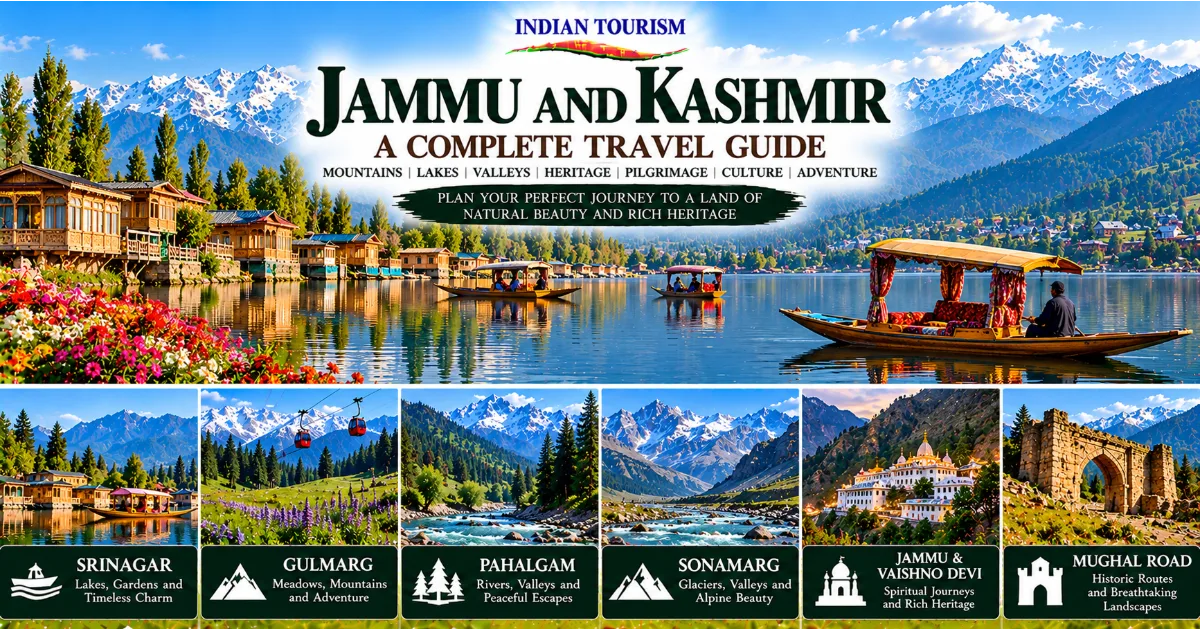
Discover the Mountains, Lakes, Valleys and Heritage of Jammu and Kashmir
Jammu and Kashmir is one of India's most captivating travel destinations, bringing together spectacular mountain landscapes, peaceful lakes, historic religious sites, traditional architecture, vibrant markets and distinctive regional cultures. From the houseboats of Srinagar and the meadows of Gulmarg to the riverside scenery of Pahalgam and the pilgrimage centres of the Jammu region, the territory offers a wide variety of experiences for travellers with different interests, budgets and travel schedules.
For first-time visitors, however, planning a trip to Jammu and Kashmir can require more thought than choosing a destination and booking accommodation. The region covers diverse geographical areas, travel times can be longer than expected, weather conditions change with altitude, and some destinations are accessible only during particular seasons. A successful holiday depends on understanding these differences and building an itinerary that allows enough time to enjoy each place.
Jammu and Kashmir is also much more than a collection of scenic viewpoints. Its history includes ancient settlements, religious traditions, historic trade routes, Mughal gardens, traditional Kashmiri wooden architecture and communities whose livelihoods are connected to agriculture, handicrafts, tourism and pastoral life. Exploring these dimensions can make a journey more meaningful than simply visiting the most photographed attractions.
This guide introduces first-time visitors to the region's major destinations, the best seasons to travel, transport options, accommodation choices, regional food, cultural experiences, budgeting considerations and responsible tourism practices. It is designed to help travellers make informed decisions while remaining flexible enough to accommodate changing weather, local conditions and personal interests.
Understanding Jammu and Kashmir Before You Travel
Jammu and Kashmir is a Union Territory in northern India, characterised by mountain ranges, valleys, rivers, forests, lakes and settlements at different elevations. Its geography creates several distinct travel experiences within one region. A holiday centred on Srinagar and the Kashmir Valley can feel very different from a trip focused on the Jammu region and its religious or historical destinations.
The Kashmir Valley is particularly well known for its lakes, gardens, orchards, meadows and mountain scenery. Srinagar serves as a major starting point for many visitors, offering access to Dal Lake, historic neighbourhoods, Mughal gardens and the routes leading towards Gulmarg, Pahalgam and Sonamarg.
The Jammu region offers a different combination of experiences, including religious pilgrimage, historic forts, temples, mountain towns and landscapes associated with the Shivalik and Pir Panjal ranges. Jammu city is an important gateway for visitors travelling to destinations such as Katra, which serves pilgrims visiting the Vaishno Devi shrine.
The wider territory also contains remote mountain environments and destinations requiring more specialised planning. These places may appeal to experienced travellers, photographers and people interested in high-altitude landscapes, but they should not automatically be added to a short first-time itinerary.
One of the most important planning principles is to avoid treating Jammu and Kashmir as a single compact sightseeing circuit. Distances on a map may appear manageable, yet winding roads, elevation changes, weather and traffic can make journeys time-consuming. It is usually better to explore a smaller number of destinations properly than to rush between many places.
First-time visitors should also check current travel advisories, road conditions and local arrangements before departure. Conditions can change, and reliable, up-to-date information is essential when planning mountain travel.
Srinagar: The Best Starting Point for Many Visitors
Srinagar is often the most convenient base for a first journey into the Kashmir Valley. The city combines natural scenery with cultural heritage, traditional markets, gardens and historic neighbourhoods. It can support both a relaxed holiday and a more active itinerary involving day trips to surrounding destinations.
Dal Lake is one of Srinagar's best-known attractions. Its waters, mountain backdrop, floating gardens, houseboats and traditional wooden boats have become closely associated with the city's identity. A shikara ride offers a way to experience the lake at a slower pace, passing waterside homes, floating markets and sections of the shoreline.
Houseboat accommodation is another distinctive Srinagar experience. These boats provide a different setting from conventional hotels and can appeal to travellers seeking a memorable stay beside the water. Standards, facilities and locations vary, so visitors should review the accommodation carefully rather than assuming that every houseboat offers the same experience.
Srinagar's Mughal gardens provide a historical and horticultural dimension to the city. Shalimar Bagh, Nishat Bagh and Chashme Shahi are associated with the region's garden heritage and offer views across landscaped terraces, water channels and surrounding mountains. Their appearance changes with the season, making the timing of a visit an important consideration.
The old city offers another perspective. Historic mosques, shrines, traditional houses, timber balconies, markets and narrow streets reveal the architectural and cultural character of Srinagar. Visitors interested in history should allow time to explore these areas respectfully, remembering that they are living neighbourhoods rather than open-air museums.
Srinagar can comfortably occupy several days of a first-time itinerary. Rushing through the city in a few hours may allow photographs of its most famous attractions, but it leaves little time to appreciate its cultural depth.
Dal Lake and the Experience of Houseboats
Dal Lake is more than a scenic attraction. It is part of a living environment where people reside, work, travel and maintain relationships with the water. Its houseboats, shikaras, floating gardens and waterside settlements create a distinctive landscape that has shaped Srinagar's tourism identity.
A shikara ride is one of the simplest ways to experience the lake. Visitors can observe the changing views of the surrounding mountains, watch everyday activity along the water and enjoy a perspective that differs from the streets of the city. The length and route of the ride can be arranged according to the visitor's interests and available time.
Houseboat stays offer a more immersive experience. Some feature traditional woodwork and decorative interiors, while others focus on modern amenities. Before booking, travellers should confirm the location, room facilities, heating arrangements for colder seasons, meals and transport connections.
The lake environment also requires care. Water quality, waste management, encroachment and changing environmental conditions are important issues affecting the long-term health of Dal Lake. Visitors can contribute positively by avoiding litter, using responsible service providers and respecting local guidance.
Photography is popular, especially during early morning and evening light. However, travellers should remain considerate when photographing residents and their homes. The lake is a workplace and residential environment as well as a tourist destination.
A visit to Dal Lake is most rewarding when it includes time to observe rather than simply move from one activity to another. Its appeal lies in the relationship between water, mountains, architecture and everyday life.
Gulmarg: Meadows, Mountains and Winter Experiences
Gulmarg is one of the most popular destinations in the Kashmir Valley, known for its open meadows, mountain scenery and winter sports. Its name is commonly associated with a meadow of flowers, and the landscape can appear particularly attractive during warmer months when vegetation covers the surrounding slopes.
In summer, Gulmarg appeals to travellers who enjoy green landscapes, mountain views and outdoor exploration. Walking, photography and sightseeing are popular activities, although visitors should use established paths and follow local guidance when exploring the area.
Winter changes the experience dramatically. Snow transforms the meadows and surrounding slopes, creating opportunities for skiing and other snow-related activities when conditions permit. Gulmarg is a well-known winter sports destination, but snow activities require appropriate equipment, instruction and attention to weather and safety advice.
The Gulmarg Gondola is another major attraction. The cable car provides access to higher elevations and offers expansive mountain views. Operations can be affected by weather, maintenance and demand, so visitors should check current operating information before making plans.
First-time visitors should also understand that high-altitude conditions can be physically demanding. Temperature, wind and weather can change rapidly, and visitors should carry suitable clothing even when the weather in Srinagar feels mild.
Gulmarg is often visited as a day trip from Srinagar, but an overnight stay may be worthwhile for travellers who want more time in the landscape. The right choice depends on budget, season and interest in outdoor activities.
Pahalgam: Rivers, Valleys and Relaxed Mountain Scenery
Pahalgam is a popular destination for travellers seeking riverside scenery, mountain views and a quieter atmosphere than a busy city. Located in the Lidder Valley, it offers a combination of forests, meadows, streams and access to surrounding mountain landscapes.
The Lidder River is one of the area's defining features. Its flowing water and rocky banks create attractive settings for walks and photography. Visitors should remain cautious near fast-moving water, particularly during periods of heavy rainfall or snowmelt.
Pahalgam also serves as a base for exploring nearby valleys and scenic locations. The availability of specific excursions depends on road conditions, seasonal access and local transport arrangements. Travellers should confirm current rules and avoid assuming that every nearby attraction can be reached independently in a private vehicle.
The destination is popular with families and couples because it offers opportunities for relaxed sightseeing alongside outdoor experiences. Visitors can enjoy the natural environment without necessarily following a demanding trekking itinerary.
Pahalgam can also become busy during peak travel periods. Booking accommodation in advance, allowing extra time for road journeys and checking local transport arrangements can help reduce stress.
For first-time visitors, Pahalgam works particularly well as part of a multi-day Kashmir Valley itinerary. Spending at least one night in the area can make the experience less rushed and provide more time to appreciate the surrounding landscape.
Sonamarg: Glaciers, Valleys and High Mountain Views
Sonamarg is known for its dramatic mountain scenery, alpine landscapes and access to high-altitude environments. The destination lies along an important route towards the wider Himalayan region and is often included in itineraries focused on mountain views and outdoor exploration.
The surrounding landscape includes steep mountains, river valleys and areas where snow may remain for extended periods depending on elevation and season. These features create opportunities for photography and sightseeing, but they also require careful attention to weather and road conditions.
Sonamarg's accessibility varies according to the season. Snowfall, road maintenance and local restrictions can affect travel, particularly during winter. Visitors should confirm the current status of the route before setting out.
Outdoor activities in the area should be approached with appropriate caution. Walking on snow, approaching glaciers or entering remote mountain terrain without suitable equipment and guidance can be dangerous. Travellers should use authorised services where required and follow local instructions.
Many visitors experience Sonamarg as a day trip from Srinagar. This can work when road conditions and the available time allow, but the journey may be tiring. An overnight stay can be considered when accommodation is available and the wider itinerary permits.
Sonamarg demonstrates why mountain travel requires flexibility. The scenery may be spectacular, but the most rewarding visit is one planned around actual conditions rather than a fixed expectation that every attraction will be accessible.
Jammu City: Temples, History and Regional Culture
Jammu city provides a different introduction to the Union Territory from Srinagar. Located in the southern part of the region, it serves as an important urban centre and gateway for religious, cultural and historical travel.
The city is particularly associated with temples and pilgrimage traditions. Raghunath Temple is among its well-known religious landmarks, while other temples and historic sites contribute to the city's cultural identity. Visitors should check opening arrangements and follow local customs when entering religious spaces.
Jammu also offers markets, regional food and opportunities to understand the everyday life of an important urban centre. Its climate and landscape differ from those of the higher Kashmir Valley, so travellers may notice changes in temperature and vegetation as they move between regions.
The city can be a useful starting point for exploring the surrounding Jammu region, including historic sites and mountain destinations. However, visitors should plan journeys according to actual road distances rather than assuming that every nearby place can be covered in a single day.
For travellers combining Jammu and Kashmir's different regions, Jammu city can provide a useful contrast to Srinagar. Together, the two urban centres illustrate the diversity of the territory's geography, architecture, religious traditions and travel experiences.
Katra and the Vaishno Devi Pilgrimage
Katra is widely known as the base town for pilgrims visiting the Vaishno Devi shrine in the Trikuta hills. It receives visitors throughout the year, with travel patterns influenced by religious calendars, holidays, weather and pilgrimage demand.
The pilgrimage involves travelling from Katra towards the shrine along an established route. Depending on current arrangements, visitors may have options involving walking and other authorised transport services for parts of the journey. The exact facilities and rules should be checked before departure.
First-time pilgrims should plan according to their physical comfort, available time and weather conditions. Suitable footwear, water, appropriate clothing and awareness of the route are important. People with specific accessibility requirements should investigate current assistance and transport options in advance.
Katra itself provides accommodation, food and services for pilgrims. During busy periods, demand can increase significantly, making advance planning particularly useful.
The pilgrimage experience is religiously significant for many visitors, and the route should be approached with respect for local practices and fellow travellers. Visitors should follow official instructions, avoid littering and use authorised facilities.
Katra can be included in a broader Jammu region itinerary, but it should not automatically be combined with a short Kashmir Valley holiday without considering the travel time involved. The two experiences can complement each other, yet they are best planned with realistic expectations.
Historic and Cultural Attractions Beyond the Famous Destinations
Jammu and Kashmir offers much more than its most widely advertised tourist centres. Travellers interested in history and culture can discover ancient archaeological sites, traditional architecture, forts, shrines and historic travel corridors that reveal the region's deeper past.
Burzahom, near Srinagar, is important for its prehistoric archaeological remains, including evidence of early settlement and pit dwellings. It offers a perspective on human life in the Kashmir Valley long before the development of the historical kingdoms and monuments that attract many visitors today.
Naranag is known for its ancient temple ruins and the archaeological heritage of the Kashmir Valley. The remains provide evidence of historic religious architecture and demonstrate the importance of preserving sites that may not have the scale or facilities of major tourist attractions.
The Mughal Road and its surrounding landscape offer another historical perspective. Places such as Peer Ki Gali and Chingus Fort and Sarai help visitors explore the relationship between mountain routes, historic travel and the movement of people through the Pir Panjal region.
Traditional Kashmiri wooden architecture can be appreciated in Srinagar's historic neighbourhoods and religious buildings. Carved doors, timber balconies, wooden columns and distinctive roof forms demonstrate the skills of local artisans and the influence of climate and available materials on building design.
These destinations are particularly rewarding for travellers who have already visited the main scenic attractions or who prefer educational and cultural experiences. They may require additional planning because facilities, opening arrangements and interpretation can vary.
Including one or two heritage experiences in a first-time itinerary can provide a more balanced understanding of Jammu and Kashmir. The region's natural beauty is remarkable, but its history and craftsmanship are equally important parts of its identity.
Best Time to Visit Jammu and Kashmir
There is no single best season for every destination in Jammu and Kashmir. The ideal time depends on whether travellers want spring gardens, summer meadows, autumn scenery, winter snow or religious pilgrimage.
Spring can be an attractive period for Srinagar, especially for visitors interested in gardens, flowering landscapes and moderate outdoor sightseeing. Temperatures can vary, so travellers should carry layers rather than assuming that the entire region will be warm.
Summer is popular for exploring the Kashmir Valley, including Srinagar, Gulmarg, Pahalgam and Sonamarg. Many visitors choose this season for mountain scenery and outdoor activities. Popular destinations may be busy, and accommodation should be booked according to the expected demand.
Autumn offers a different atmosphere, with changing foliage in some areas and opportunities for photography. Temperatures gradually decline, particularly at higher elevations, so clothing and accommodation arrangements should reflect the conditions.
Winter is particularly attractive to travellers seeking snow experiences, especially in Gulmarg when conditions are suitable. However, winter travel can also involve cold temperatures, road restrictions and weather-related disruptions.
The Jammu region has different climatic conditions from the Kashmir Valley, and the best time for visiting its cities, temples and mountain destinations may not be identical. Travellers combining both regions should check forecasts for each destination.
Before booking, consider the full itinerary rather than choosing a season based on one photograph or attraction. Seasonal access, road conditions, accommodation availability and personal interests should all influence the decision.
How Many Days Do You Need for a First Visit?
The ideal duration depends on the number of destinations and the pace of travel. A short visit can introduce travellers to Srinagar and one nearby destination, while a longer trip provides more time for mountain landscapes, cultural attractions and the Jammu region.
A four-day trip could focus on Srinagar, Dal Lake, the Mughal gardens and a day excursion to Gulmarg or another accessible destination. This approach works best for travellers with limited time who prefer not to change accommodation frequently.
A six or seven-day itinerary can include Srinagar, Gulmarg and Pahalgam, with enough flexibility for sightseeing and rest. Sonamarg may also be considered if road conditions, travel time and the overall schedule permit.
A trip of ten days or more can allow a slower exploration of the Kashmir Valley and selected destinations in the Jammu region. Travellers interested in heritage may use the additional time to visit archaeological sites, historic architecture and places associated with old trade routes.
The key is to avoid planning every day around long road journeys. A holiday becomes exhausting when travellers spend most of their time moving between destinations and too little time enjoying them.
It is also sensible to keep some flexibility in the schedule. Weather, road conditions and local restrictions may affect access to mountain destinations. A well-planned itinerary should allow alternative activities rather than depending on one specific excursion.
For first-time visitors, a balanced schedule is generally more rewarding than attempting to cover every famous destination in one trip.
Getting to Jammu and Kashmir
The best way to reach Jammu and Kashmir depends on the starting city, the chosen destinations and the available travel time. Air, rail and road connections can all play a role, but the most convenient option may differ between the Jammu region and the Kashmir Valley.
Srinagar's airport serves travellers arriving directly for a Kashmir Valley holiday. From the airport, visitors can arrange transport to Srinagar city and onward journeys to other destinations. Flight schedules and operating conditions can change, so tickets should be checked before finalising accommodation.
Jammu has an important railway station and road connections serving the wider region. It can be a practical entry point for travellers visiting Jammu city, Katra and nearby destinations. Travellers intending to continue to Srinagar should account for the additional journey required.
Road travel provides access to many destinations, but mountain journeys can take longer than expected. Traffic, roadworks, weather and local restrictions can affect travel times. Visitors should avoid scheduling important activities immediately after a long road journey.
The route chosen should reflect the itinerary. Someone visiting only Srinagar and the nearby Kashmir Valley may prefer to arrive directly in Srinagar, while a traveller focused on Katra or the Jammu region may find Jammu more convenient.
Before departure, confirm transport schedules, baggage requirements, transfer arrangements and current travel advisories. Travellers should also retain enough flexibility to manage delays.
Getting Around: Taxis, Local Transport and Guided Tours
Transport within Jammu and Kashmir varies by destination. Srinagar has local transport options, while travel to mountain destinations often requires a taxi, organised excursion or other suitable vehicle arrangement. Availability and rules can differ between locations.
For a first-time visitor, a reliable local driver or guide can simplify the journey, particularly when travelling to destinations where road conditions or local transport arrangements are unfamiliar. Before booking, confirm what the price includes, whether waiting time is covered and whether additional local transport is required.
Some destinations may have specific arrangements for excursions or access to nearby attractions. Visitors should confirm these details rather than assuming that a private vehicle can travel to every viewpoint or trailhead.
Walking is a useful way to explore selected parts of Srinagar and other towns, especially historic neighbourhoods and market areas. However, road surfaces, traffic and pedestrian conditions vary, so travellers should remain alert.
Self-driving may suit experienced drivers who are familiar with mountain roads, but it is not automatically the easiest option for a first visit. Narrow roads, steep gradients, changing weather and unfamiliar local conditions require care.
The most suitable transport plan is one that balances convenience, safety and budget. Travellers should allow realistic journey times, avoid driving when fatigued and follow local guidance about road access.
Where to Stay: Hotels, Houseboats and Guesthouses
Jammu and Kashmir offers a range of accommodation options, including hotels, guesthouses, homestays, resorts and traditional houseboats. The right choice depends on budget, location, season and the kind of experience a traveller wants.
In Srinagar, staying in a central area can make it easier to visit markets, historic neighbourhoods and cultural attractions. Accommodation near Dal Lake may provide scenic views and access to shikara services, while other areas may offer easier road connections.
Houseboats are a distinctive option for travellers who want to experience life on the lake. Facilities vary, so visitors should check room conditions, heating, bathrooms, meals, location and transfer arrangements before booking.
In Gulmarg and Pahalgam, accommodation closer to the main visitor areas may reduce the need for local transport. However, properties in scenic or remote locations may require additional travel and may offer fewer nearby services.
Budget travellers can consider guesthouses and simpler hotels, while families may prefer rooms with adequate space, reliable heating and convenient access to food and transport. Homestays can provide opportunities to learn about local hospitality, provided they are operated responsibly.
During popular travel periods, accommodation demand can rise substantially. Booking early can improve the range of available choices, but travellers should understand the cancellation policy and any conditions linked to weather or transport disruptions.
Choosing accommodation based only on photographs can lead to disappointment. Review the location, facilities, recent guest feedback and transport arrangements before making a decision.
Food to Try in Jammu and Kashmir
Food is an important part of the region's cultural identity, and the cuisine differs across the Jammu region and the Kashmir Valley. A first-time visit offers opportunities to try traditional dishes, local breads, rice-based meals, teas and seasonal products.
Kashmiri Wazwan is a celebrated culinary tradition, especially associated with formal feasts and communal occasions. It consists of a collection of dishes prepared with specialised techniques and served according to established customs. The meal can include meat preparations, rice and rich gravies, although the exact selection varies.
Rogan Josh is one of the best-known dishes associated with Kashmiri cuisine. Its preparation varies, and travellers may encounter different interpretations across restaurants and households. Other dishes, including Yakhni and selected preparations of vegetables and meat, offer additional ways to explore local food traditions.
Kashmiri breads are also worth trying. Bakeries in Srinagar and other towns may offer different breads throughout the day, and visiting a traditional bakery can provide a glimpse into everyday food culture.
Kahwa, a traditional aromatic tea, is commonly associated with Kashmir and may be served with ingredients such as saffron, spices and nuts depending on the preparation. Noon chai is another distinctive tea tradition, recognised for its characteristic colour and flavour.
The Jammu region has its own culinary traditions, shaped by local ingredients, religious practices and regional preferences. Visitors should explore local eateries rather than assuming that the food available in Srinagar represents the entire territory.
Food preferences and dietary requirements vary, so travellers should ask about ingredients and preparation methods. Choosing clean, reputable establishments and drinking safe water can help reduce the risk of illness during travel.
Shopping for Kashmiri Handicrafts
Jammu and Kashmir is associated with a rich tradition of handicrafts, including textiles, shawls, carpets, papier-mache objects, woodwork and other handmade products. Shopping can be an enjoyable way to learn about local craftsmanship, provided visitors take time to understand what they are buying.
Kashmiri shawls are particularly well known, but products vary widely in material, weaving technique, design and price. Travellers should ask about the fibre content, production method and origin rather than relying entirely on labels or verbal claims.
Carpets and other textile products may involve substantial amounts of skilled labour. Their price can reflect the materials used, the complexity of the design and the time required to produce them. Visitors should compare options and avoid making rushed purchases under pressure.
Papier-mache craftsmanship and carved wooden objects offer other examples of regional artistic traditions. Genuine handmade products may display small variations that reflect the work of individual artisans, although quality and authenticity still need to be assessed carefully.
Responsible shopping means purchasing from reputable sellers and respecting local craft traditions. Travellers should be cautious about products that are described as rare or valuable without credible evidence. They should also avoid buying historic architectural components or objects that may have been removed from heritage sites.
Shopping is most rewarding when it includes a conversation about the craft itself. Understanding how an item is made and who produces it can turn a purchase into a meaningful cultural experience.
Budgeting for a Jammu and Kashmir Holiday
The cost of a trip depends on the season, accommodation, transport, activities, meal choices and the number of destinations included. There is no single budget that suits every traveller, so it is useful to divide expenses into clear categories before booking.
Transport can be a significant expense, particularly when hiring vehicles for several day trips or travelling between mountain destinations. A longer itinerary may reduce the pressure to fit multiple locations into one expensive day, while sharing transport with family or companions can help manage costs.
Accommodation costs vary according to location and season. Hotels near popular attractions and properties with scenic views may charge more, especially during busy periods. Budget guesthouses and simpler accommodation can offer better value, provided their facilities meet the traveller's needs.
Food expenses depend on whether travellers choose local eateries, hotel restaurants or more elaborate dining experiences. Trying local food can be both economical and culturally rewarding, although visitors should prioritise hygiene and safe drinking water.
Activities may include shikara rides, cable car tickets, guided tours, equipment rental and other services. Prices and operating arrangements can change, so travellers should confirm costs before committing.
A practical budget should also include a contingency amount for delays, weather-related changes and unexpected transport requirements. This is particularly important for mountain travel, where a road closure or altered itinerary can create additional expenses.
Avoid choosing the cheapest option automatically. Reliable transport, suitable accommodation and safe activities are important parts of a successful holiday. Comparing prices carefully and understanding what is included can help travellers find better value.
Safety, Weather and Practical Travel Advice
A successful first trip to Jammu and Kashmir begins with realistic planning and attention to current conditions. The region's geography creates considerable variation in weather and accessibility, and visitors should not assume that conditions in one destination apply to the entire territory.
Check weather forecasts and road status before travelling to mountain destinations. Snowfall, heavy rain, landslides and road maintenance can affect access. If local authorities advise against a journey, follow that guidance rather than trying to reach the destination at any cost.
Pack clothing appropriate to the season and elevation. Even during warmer months, higher mountain areas can be cold, particularly in the morning and evening. Comfortable footwear is useful for walking, while waterproof layers may be helpful when conditions are changeable.
Keep essential medicines, identification, travel documents and emergency contact information accessible. Mobile coverage may vary in remote areas, so travellers should not rely entirely on continuous connectivity.
Choose authorised and reputable providers for outdoor activities. Snow sports, high-altitude excursions and remote walks require appropriate equipment and guidance. Visitors should avoid entering dangerous terrain without preparation.
Respect religious and cultural practices at temples, mosques, shrines and other sacred sites. Follow instructions regarding clothing, footwear, photography and access. Ask permission before photographing individuals, especially in residential areas.
Travel conditions and local advisories can change. Consult reliable official information before departure and during the trip, and remain flexible if circumstances require an itinerary change.
Responsible Tourism and Respect for Local Communities
Jammu and Kashmir's natural and cultural heritage is an important resource for residents as well as visitors. Responsible tourism helps protect that heritage while supporting local livelihoods and maintaining respectful relationships between travellers and communities.
Waste management is particularly important in mountain and lakeside environments. Litter can damage landscapes, affect wildlife and pollute water sources. Travellers should carry reusable items where practical and dispose of rubbish through appropriate facilities.
Water conservation also matters, especially in areas where resources are under pressure during busy travel periods. Visitors can reduce unnecessary waste by using water responsibly and respecting local guidance.
Supporting local businesses helps keep more tourism income within the region. Choosing local guides, guesthouses, craft sellers and food establishments can create economic opportunities, provided the businesses operate responsibly.
Cultural respect should guide behaviour at religious sites and in residential neighbourhoods. Visitors should dress appropriately where required, avoid intrusive photography and remember that local customs may differ from those they follow at home.
Wildlife and natural habitats should be treated carefully. Travellers should not feed wild animals, disturb vegetation or leave designated paths in sensitive areas without appropriate guidance.
Responsible tourism also means recognising that destinations are not guaranteed to remain unchanged. Environmental pressures, development and changing weather can affect the places visitors come to enjoy. Travelling thoughtfully helps protect these landscapes and cultural traditions for future generations.
Conclusion: Experience Jammu and Kashmir Beyond the Postcards
Jammu and Kashmir offers first-time visitors an extraordinary combination of mountain scenery, lakes, gardens, historic architecture, religious destinations, traditional food and cultural experiences. Srinagar provides a rich introduction to the Kashmir Valley, while Gulmarg, Pahalgam and Sonamarg offer different perspectives on the region's natural environment. Jammu city and Katra introduce visitors to the distinct cultural and pilgrimage traditions of the southern part of the territory.
A memorable journey depends on more than choosing famous destinations. Understanding the region's geography, allowing realistic travel times, selecting suitable accommodation and checking seasonal access can make the holiday more comfortable and rewarding. Visitors who include historic sites, traditional neighbourhoods and local crafts can also gain a deeper appreciation of the region's cultural heritage.
The most important advice for first-time travellers is to avoid rushing. Jammu and Kashmir is best experienced at a pace that leaves room for changing weather, spontaneous discoveries and meaningful encounters with local culture. A well-planned week in a few destinations can be more satisfying than attempting to cover the entire territory in a short period.
Travellers should also remember that the region is home to living communities whose landscapes, homes and traditions deserve respect. Responsible behaviour, support for local businesses and care for the natural environment help ensure that tourism remains beneficial.
Whether you are watching the morning light over Dal Lake, exploring the gardens of Srinagar, admiring the mountains around Gulmarg, walking beside the Lidder River in Pahalgam or learning about the historic routes that connected Kashmir with neighbouring regions, the experience can reveal a destination far richer than its most famous photographs suggest.
For first-time visitors, the best journey is one that combines preparation with curiosity. Arrive with a thoughtful itinerary, remain flexible when conditions change and take time to appreciate the stories behind the scenery. Jammu and Kashmir rewards travellers who look beyond the obvious attractions and discover the landscapes, people and traditions that make the region distinctive.
#IndianTourism #JammuAndKashmir #KashmirTourism #Srinagar #DalLake #Gulmarg #Pahalgam #Sonamarg #Jammu #VaishnoDevi #KashmirValley #TravelGuide #IndiaTravel #KashmirCulture #ResponsibleTourism
