
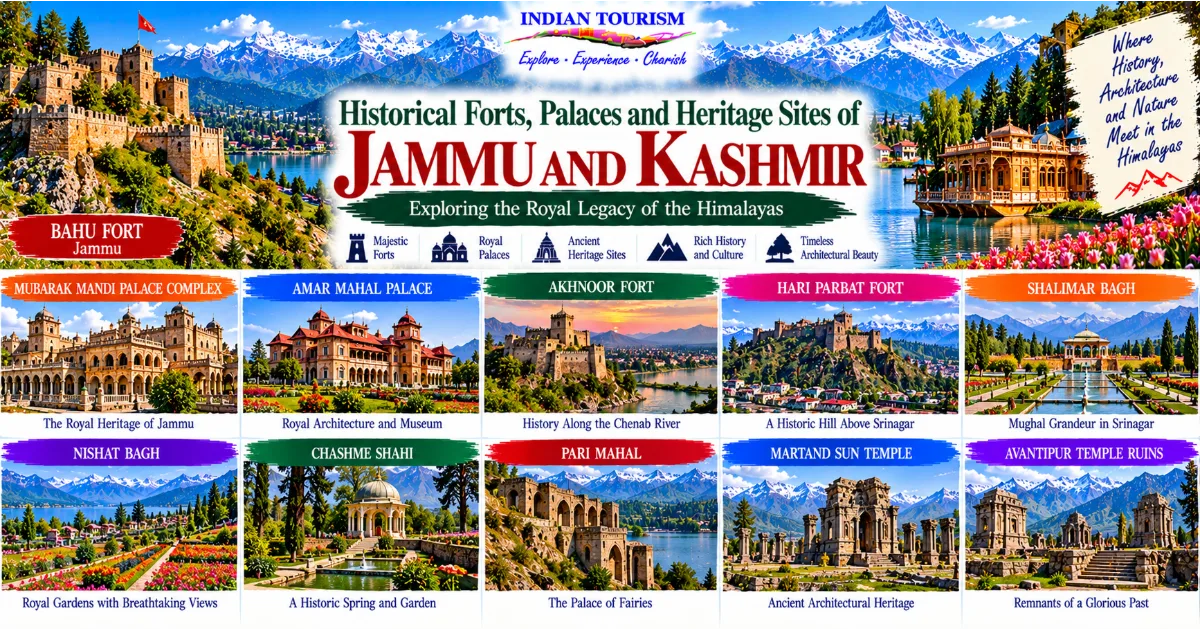
Discovering the Historic Legacy of Jammu and Kashmir
Jammu and Kashmir is renowned for its mountains, lakes, gardens and pilgrimage destinations, but its historical heritage offers another fascinating way to understand the region. Ancient forts, royal palaces, traditional neighbourhoods, historic temples and monumental religious buildings preserve stories of kingdoms, dynasties, artistic traditions and changing political relationships. These structures reveal how rulers governed their territories, how communities developed around important centres and how architecture evolved in response to local materials, geography and cultural influences.
The region's strategic location between the Indian subcontinent and the wider Himalayan landscape contributed to its historical importance. Mountain passes, river valleys and trade routes connected settlements with neighbouring regions, while political centres developed around defensible hills, fertile plains and important religious institutions. Over centuries, different rulers and communities contributed to the architecture and cultural identity of Jammu and Kashmir.
Jammu offers visitors a collection of forts, palaces and religious monuments associated with regional rulers, particularly the Dogra dynasty. Bahu Fort, Mubarak Mandi Palace Complex and Amar Mahal Palace provide insights into the region's royal and architectural history. The Kashmir Valley contains a different but equally rich heritage, including the historic Mughal gardens of Srinagar, the wooden architecture of old religious buildings and the remains of ancient settlements and temples.
These sites should not be viewed only as attractive backdrops for photographs. Their walls, courtyards, halls and decorative details reflect the ambitions of rulers, the skills of artisans and the experiences of communities that lived around them. Some buildings remain active religious institutions, while others function as museums, heritage attractions or protected monuments. Their present-day uses are part of their continuing history.
This guide explores important historical forts, palaces and heritage destinations across Jammu and Kashmir. It explains their background, architectural character, cultural significance and practical considerations for visitors who wish to experience the region through its built heritage.
Bahu Fort: A Historic Landmark Overlooking Jammu
<text color="secondary" size="sm">Location: Jammu city</text>
Bahu Fort is one of the most recognisable historical landmarks in Jammu. Located on an elevated position overlooking the Tawi River, the fort occupies a strategic setting that has long contributed to its importance. Its elevated location provides views of the surrounding urban landscape and helps visitors understand why defensible hilltop sites were valuable to earlier rulers.
The fort is traditionally associated with Bahu Lochan, a figure connected with the early history of Jammu through regional legends. The structure has undergone changes and restoration over time, and its present appearance reflects several periods of development rather than a single moment of construction.
Bahu Fort's position above the river illustrates the relationship between geography and military architecture. A fort placed on elevated ground could provide visibility over the surrounding area and offer advantages in defence. River valleys were also important for settlement, water and movement, making the relationship between the fort and the Tawi significant to understanding the landscape.
Within the fort complex, visitors will find the well-known Bave Wali Mata Temple, which attracts devotees throughout the year. This religious association has helped maintain the site's importance beyond its military history. The fort is therefore both a historical structure and a living spiritual destination.
The surrounding Bagh-e-Bahu area is also popular with visitors. Depending on current arrangements, travellers may combine the fort with nearby gardens and viewpoints, making it a useful part of a Jammu sightseeing itinerary.
Visitors should allow time to explore the setting rather than treating the fort as a quick photographic stop. Its elevated position offers opportunities to appreciate Jammu's relationship with the river and the surrounding hills. Travellers should also follow instructions from site authorities and religious staff, particularly around active worship areas.
Bahu Fort provides an accessible introduction to Jammu's historical landscape. It demonstrates how military structures, religious traditions and the development of a modern city can become closely connected within one place.
Mubarak Mandi Palace Complex: The Royal Heritage of Jammu
Mubarak Mandi Palace Complex is one of the most important historic palace sites in Jammu. Situated in the old part of the city, the complex was associated with the Dogra rulers and served as a major royal residence and administrative centre.
The palace developed over an extended period, with different rulers adding buildings and modifying existing structures. As a result, the complex displays a mixture of architectural influences and building styles. This variety reflects changing tastes, administrative requirements and the resources available to the royal household at different times.
The complex once accommodated royal residences, reception spaces, administrative functions and other activities associated with governance. It was more than a decorative palace. It formed part of the political and social organisation of the kingdom, bringing together the ruler, officials, visitors and the wider machinery of administration.
The architecture is notable for its combination of regional and broader influences. Visitors may observe courtyards, balconies, decorative openings and varied roof forms, although access to individual buildings can depend on restoration work and current conservation arrangements.
The palace's location within old Jammu also provides an opportunity to understand the historical development of the city. Nearby streets and neighbourhoods preserve aspects of the older urban environment, where religious institutions, markets and residential areas grew around important centres.
Mubarak Mandi has faced challenges associated with ageing structures, conservation and the need to balance public access with the protection of historic fabric. Travellers should not assume that every section is open to visitors. Current access arrangements, restoration activity and any safety restrictions should be confirmed before visiting.
A heritage visit is most rewarding when it includes time to appreciate the complex's scale and historical function. The site helps explain the transition from a royal administrative centre to a heritage landmark within a growing modern city.
Mubarak Mandi Palace Complex remains an important destination for anyone interested in the political history, architecture and cultural development of Jammu.
Amar Mahal Palace: Royal Architecture and Museum Heritage
Amar Mahal Palace is another notable heritage destination in Jammu. Located on an elevated site overlooking the Tawi River and the surrounding landscape, the palace is known for its distinctive architectural appearance and its connection with the region's royal history.
The palace was built in the nineteenth century for the Dogra royal family and is associated with European architectural influences. Its exterior, including features reminiscent of a European château, differs from the more traditional forms found in many historic buildings across the region.
The building's design reflects the wider architectural exchanges that took place during the nineteenth and early twentieth centuries, when rulers and wealthy families sometimes incorporated European styles into residences and public buildings. These influences were adapted to local settings rather than simply reproduced in isolation.
Amar Mahal is also associated with museum and cultural activities. Its collections and exhibitions have helped preserve aspects of the region's artistic and historical heritage. Visitors should confirm current opening arrangements and available displays before planning a visit, as museum access and exhibition schedules can change.
The palace's setting provides an opportunity to appreciate the relationship between royal architecture and landscape. Elevated views over the Tawi River and Jammu's surrounding terrain help explain why this part of the city attracted important residences.
Travellers interested in architecture can compare Amar Mahal with Mubarak Mandi Palace Complex. While both are associated with the Dogra royal period, their design and setting reflect different architectural choices and uses.
A visit to Amar Mahal can be combined with other attractions in Jammu, provided sufficient time is allowed for travel between sites. It is particularly suitable for visitors who enjoy historical buildings, museum collections and the study of changing architectural styles.
Amar Mahal demonstrates that Jammu's heritage is not limited to forts and temples. Royal residences and cultural institutions also preserve important evidence of the region's artistic and political history.
Akhnoor Fort: History Along the Chenab River
Akhnoor Fort stands near the Chenab River in the Akhnoor area of Jammu. Its location is significant because rivers have historically influenced settlement, agriculture, transport and strategic control. A fort positioned near a major river could serve defensive and administrative purposes while remaining connected to surrounding settlements.
The fort is associated with the historical development of the Jammu region and the political authorities that controlled this part of the territory. Its setting near the river gives visitors a chance to understand the relationship between built heritage and the natural landscape.
Akhnoor and its surrounding area also have archaeological importance. The broader region contains evidence of ancient settlement and historical activity, reflecting a long human relationship with the Chenab Valley. The precise interpretation of archaeological remains depends on specialist research, so travellers should distinguish established historical information from local legends.
The fort's walls and surviving architectural elements can help visitors imagine how defensive structures functioned in earlier periods. However, the condition of historic masonry may vary, and not all areas are necessarily safe or accessible. Visitors should remain within permitted sections and avoid climbing on unstable structures.
The river landscape adds another dimension to a visit. Observing the relationship between the fort, the riverbank and nearby settlements helps explain why river corridors were important to earlier communities. At the same time, the river should be treated with caution because currents and changing water levels can create hazards.
Akhnoor Fort can form part of a wider heritage journey through the Jammu region. Travellers should confirm current road access, opening arrangements and any restrictions before departure.
The site is particularly valuable for visitors who want to explore historical places beyond Jammu city. It offers a combination of military heritage, river scenery and the broader history of settlement in the region.
Hari Parbat Fort: A Historic Hill Above Srinagar
Hari Parbat is an important hill in Srinagar, associated with fortifications, religious sites and cultural traditions. Its position overlooking parts of the city makes it a significant feature of the urban landscape and provides a useful perspective on the historical geography of the Kashmir Valley.
The fortification on Hari Parbat is associated with different phases of regional rule. The area has a complex history, and the hill has been important to communities with different religious and cultural traditions. This layered heritage is one reason it should be understood as more than a single monument.
The hill is also associated with the Sharika Devi Temple, an important Hindu religious site. Other religious landmarks in the wider area reflect the diversity of Srinagar's historic communities. These associations demonstrate how a single landscape can carry different meanings for different groups.
The fortifications reflect the strategic value of elevated ground. From a military perspective, a hill overlooking a city could help monitor movement and provide a defensive position. From a visitor's perspective, the elevated setting helps explain how the city developed around important geographic features.
Access to particular sections may be restricted or subject to current administrative arrangements. Travellers should confirm which areas are open and follow all instructions concerning entry and safety.
Hari Parbat is best explored with an appreciation of its multiple layers of history. Its fortifications, religious associations and position within Srinagar reveal how political power, sacred geography and urban development have interacted over time.
Visitors should be respectful of active places of worship and should not assume that every section of the hill is open for casual exploration. Local guidance can be useful for understanding the area's history and current access conditions.
Mughal Gardens of Srinagar: Royal Landscapes and Persian Influences
The Mughal gardens of Srinagar are among the region's most celebrated heritage attractions. Shalimar Bagh, Nishat Bagh and Chashme Shahi are particularly well known for their terraced layouts, water channels, fountains and views of Dal Lake and the surrounding mountains.
These gardens reflect the Mughal tradition of creating carefully organised landscapes that combined aesthetic beauty, water management and royal symbolism. Garden design was not merely a matter of planting flowers. The arrangement of terraces, pathways, water features and viewing spaces expressed ideas about order, pleasure and the relationship between rulers and nature.
Shalimar Bagh is associated with the Mughal emperor Jahangir and is traditionally linked with his appreciation of Kashmir. The garden's layout and water features demonstrate the importance of landscape design in royal leisure and representation.
Nishat Bagh is known for its terraces and broad views over Dal Lake. Its setting creates a strong visual relationship between the designed garden and the natural landscape beyond it. The arrangement of levels and water channels guides visitors through different perspectives of the lake and mountains.
Chashme Shahi is a smaller garden associated with a natural spring. Its compact layout and elevated position give it a different character from the larger Mughal gardens. The site demonstrates how water sources and terrain influenced garden design.
These gardens remain popular attractions, particularly during spring and summer. Flowering periods, weather and maintenance can affect the visitor experience, so travellers should check current opening arrangements before visiting.
Visitors should remain on permitted paths, avoid damaging plants and follow the rules governing photography and public behaviour. Gardens are protected heritage landscapes, and their long-term preservation depends on careful maintenance.
The Mughal gardens offer a different kind of historical experience from forts and palaces. Rather than focusing on military defence or royal administration, they reveal how rulers used landscape architecture to express power, refinement and a distinctive vision of beauty.
Pari Mahal: The Palace of Fairies Above Dal Lake
Pari Mahal is a historic terraced structure located on the Zabarwan hillside overlooking Dal Lake and Srinagar. Its elevated position provides wide views of the surrounding landscape, making it one of the region's distinctive architectural and scenic heritage destinations.
The name is often translated as the Palace of Fairies, adding to the site's romantic reputation. Historically, Pari Mahal is associated with the Mughal period and with Dara Shikoh, the eldest son of Shah Jahan. It is commonly linked with scholarly and spiritual activities, including the study of astronomy and related subjects, although individual historical interpretations should be approached carefully.
The structure is arranged across terraces that follow the hillside. This layout demonstrates how architecture can adapt to uneven terrain while creating distinct outdoor spaces. Stone walls, arched openings and the terraced arrangement give the site a different appearance from the more elaborate palace buildings found elsewhere.
Pari Mahal is especially appealing to visitors interested in history, architecture and landscape photography. Its elevated setting creates a strong visual relationship between the historic structure, Dal Lake and the surrounding mountains.
However, the site should not be treated solely as a viewpoint. Its architectural remains are part of a protected heritage landscape, and visitors should avoid climbing on walls, damaging masonry or entering restricted sections.
Opening hours, access and other arrangements may vary, so travellers should check current information before visiting. A visit can be combined with other attractions around Dal Lake, provided enough time is allowed for road travel and exploration.
Pari Mahal illustrates how royal and scholarly activities intersected with landscape design in Kashmir. Its surviving terraces offer a glimpse into the ways historic buildings were positioned to take advantage of the region's natural geography.
Martand Sun Temple: The Archaeological Heritage of Kashmir
The Martand Sun Temple, located near Mattan in the Anantnag district, is one of the most important ancient archaeological sites in Kashmir. Dedicated to Surya, the Hindu solar deity, the temple is associated with the historical development of temple architecture in the region.
The surviving remains are generally associated with the reign of the Karkota ruler Lalitaditya Muktapida in the eighth century. The site reflects a period when Kashmir was an important centre of political power, religious activity and artistic production.
The temple complex once included a central shrine and surrounding architectural elements. Although much of the structure survives only as ruins, the scale and arrangement of the remains provide a sense of its original ambition. Stone columns, wall fragments and the layout of the complex help visitors understand the craftsmanship and planning involved in its construction.
Martand is particularly important because its architecture reflects distinctive regional characteristics. Its design cannot be understood simply as a copy of temple styles found elsewhere in India. Instead, it demonstrates the development of a regional architectural tradition shaped by local materials, artistic influences and historical circumstances.
The site also offers a striking landscape setting. The surrounding valley and mountain views create a powerful contrast with the ancient stone remains. This setting makes the temple interesting to both history enthusiasts and visitors who appreciate archaeological landscapes.
Visitors should remember that Martand is a protected archaeological site. Climbing on the ruins, removing stones or damaging the remains is inappropriate and can cause permanent harm. Travellers should follow the rules displayed at the site and respect any access restrictions.
A visit to Martand Sun Temple can be combined with other destinations in the Anantnag area, depending on transport and available time. A knowledgeable guide can help explain the site's historical context and architectural details.
Martand is an essential destination for understanding Kashmir's ancient heritage. Its remains demonstrate that the region's cultural history extends far beyond the better-known royal gardens and modern tourist attractions.
Avantipur: The Temple Ruins of an Ancient Kashmir Kingdom
Avantipur, also known as Awantipora, contains important archaeological remains associated with the ancient history of Kashmir. The site is particularly known for the ruins of two temples traditionally associated with King Avantivarman, who founded the Utpala dynasty in the ninth century.
The surviving temple complexes provide evidence of the region's architectural and religious traditions during an important period of political development. Although the structures have been damaged over time, their layouts and surviving stonework remain valuable for understanding the history of temple construction in Kashmir.
The two best-known complexes are associated with different deities and are commonly identified as the Avantiswami and Avantishvara temples. Their remains show how sacred architecture was organised around central shrines, courtyards and surrounding structures.
The archaeological landscape illustrates the relationship between political authority and religious patronage. Rulers often supported the construction of temples and other religious institutions, contributing to the development of artistic traditions and settlement centres.
Visitors can observe the scale of the surviving stone structures and the arrangement of architectural elements. The ruins may appear incomplete, but their remaining features provide clues about the original buildings and the craftsmanship of their builders.
Avantipur is particularly suitable for travellers interested in archaeology and ancient history. It offers a contrast to the gardens and palaces of later periods, helping visitors understand that Kashmir's architectural heritage developed over many centuries.
The site is protected and should be treated with care. Visitors should not climb on unstable remains, remove fragments or leave rubbish. Rules governing access and photography should be followed.
A visit to Avantipur can be included in a journey through southern Kashmir, especially when combined with other historical or natural destinations. Allowing time to understand the ruins makes the experience more rewarding than simply stopping for photographs.
The Old City of Srinagar: Traditional Architecture and Urban Heritage
Srinagar's old city contains a rich collection of traditional buildings, religious landmarks, markets and historic neighbourhoods. Its character has developed through centuries of settlement around the Jhelum River and the waterways that connect different parts of the city.
Traditional houses may feature timber construction, carved wooden details, projecting balconies and sloping roofs. The exact form varies according to age, location and the resources available to the original builders. Some buildings preserve older craftsmanship, while others have been altered or replaced as households respond to changing needs.
The city's historic mosques and shrines are also important parts of its architectural landscape. Khanqah-e-Moula, Jamia Masjid and other religious institutions illustrate the relationship between faith, regional building techniques and community life.
Markets and narrow streets reveal how the old city functions as a living urban environment. Shops, workshops and residential buildings exist alongside historic landmarks, and daily activity continues around structures that have been present for generations.
Exploring the old city on foot can be rewarding, especially when accompanied by a knowledgeable local guide. Visitors may learn about traditional construction, craft production, local food and the historical importance of particular neighbourhoods.
However, the old city is not simply an open-air museum. People live and work there, and visitors should respect private property, avoid obstructing narrow streets and ask permission before photographing residents or entering buildings.
Traffic and pedestrian conditions can vary, so comfortable footwear and realistic time planning are advisable. Religious sites may have specific rules concerning clothing, footwear and photography.
Srinagar's old city demonstrates that heritage is not confined to isolated monuments. It also exists in street patterns, building traditions, local businesses and the everyday relationships that connect people with their surroundings.
Dogra Heritage: Understanding the Historical Development of Jammu
The Dogra dynasty played a significant role in the political history of Jammu and Kashmir during the nineteenth and early twentieth centuries. Its legacy is visible in royal residences, administrative buildings, religious patronage and the development of important urban centres.
Maharaja Gulab Singh became a major political figure in the region during the nineteenth century, and the subsequent rule of the Dogra dynasty influenced the development of Jammu and Kashmir as a princely state. The history of this period is complex and should be understood through the broader political circumstances of the time.
Royal architecture provides tangible evidence of this history. Mubarak Mandi Palace Complex illustrates the functions of a royal residence and administrative centre, while Amar Mahal reflects changing architectural preferences and the use of European influences in a regional setting.
Religious patronage was also important to the development of the region's built heritage. Temples and other institutions received support from rulers and local patrons, while older sacred sites continued to serve their communities.
The Dogra period should not be understood only through the achievements of rulers. Historical developments also affected ordinary people, local economies and relationships between different communities. A balanced interpretation considers the political, social and cultural dimensions of the period.
Visitors interested in this history may benefit from exploring several heritage sites rather than relying on a single palace or monument. Comparing architecture, location and function can help explain how political power was expressed through buildings.
Museums and reliable historical interpretation can provide useful context, especially where popular stories and historical evidence differ. Travellers should remain open to the complexity of the past rather than expecting every site to offer a simple narrative.
Dogra heritage remains an important part of Jammu's historical identity, and its buildings provide opportunities to examine how architecture, administration and cultural patronage shaped the region.
Practical Tips for Exploring Historical Sites in Jammu and Kashmir
Planning a heritage journey requires attention to opening hours, access restrictions, transport and the condition of individual sites. Some monuments are managed as museums or established tourist attractions, while others are protected archaeological remains or active religious institutions.
Visitors should confirm current opening arrangements before travelling, particularly when planning to visit palace complexes undergoing conservation or sites with restricted access. Official rules may affect photography, entry to particular areas and the use of equipment.
Comfortable footwear is useful for sites involving uneven stone surfaces, steps, garden paths or archaeological ruins. During summer, sun protection and drinking water may be necessary, while colder seasons require suitable clothing.
A local guide can add value by explaining architectural features, historical context and local traditions. Visitors should choose guides who communicate clearly and distinguish documented history from legend or interpretation.
Allow enough time at each site. A fort, palace or temple complex may contain details that are easy to miss during a hurried visit. Reading available interpretive material and observing how a building relates to its landscape can improve understanding.
Photography should be respectful. Some sites permit photography only in designated areas, and religious institutions may have additional restrictions. Never climb on fragile structures or move objects to create a better photograph.
Finally, remember that heritage conservation depends on visitor behaviour. Avoid littering, damaging surfaces or entering restricted areas. Respect for the site helps preserve its value for future generations.
Conclusion: Exploring the Living History of Jammu and Kashmir
The historical forts, palaces and heritage sites of Jammu and Kashmir reveal a long and varied past shaped by geography, political change, religious traditions and artistic craftsmanship. Bahu Fort and Akhnoor Fort demonstrate the strategic importance of elevated locations and river corridors, while Mubarak Mandi and Amar Mahal preserve aspects of Jammu's royal history.
In Srinagar, Hari Parbat, the Mughal gardens and Pari Mahal reveal the relationship between architecture, landscape and historical power. The Martand Sun Temple and the ruins of Avantipur provide important evidence of ancient Kashmir's religious and architectural traditions. The old city of Srinagar shows how heritage continues within living neighbourhoods, markets and places of worship.
Each destination offers a different perspective on the region. Some preserve royal administration and military history, while others reveal religious patronage, garden design, traditional craftsmanship or the development of urban communities.
Travellers should approach these places with curiosity and respect, confirm current access arrangements and follow conservation rules. Historical structures are irreplaceable, and even small acts of care can contribute to their preservation.
A journey through the heritage of Jammu and Kashmir becomes most rewarding when visitors look beyond the surface of the buildings to consider the people, ideas and historical circumstances that shaped them. By exploring these sites responsibly, travellers can gain a deeper understanding of the region's past and help protect its cultural legacy for future generations.
#IndianTourism #JammuAndKashmir #HistoricalPlaces #HeritageTourism #BahuFort #MubarakMandi #AmarMahalPalace #AkhnoorFort #HariParbat #MughalGardens #PariMahal #MartandSunTemple #Avantipur #SrinagarOldCity #DograHeritage #IndianHistory #CulturalHeritage #ExploreIndia
