
Discovering the Beauty of Himachal Pradesh
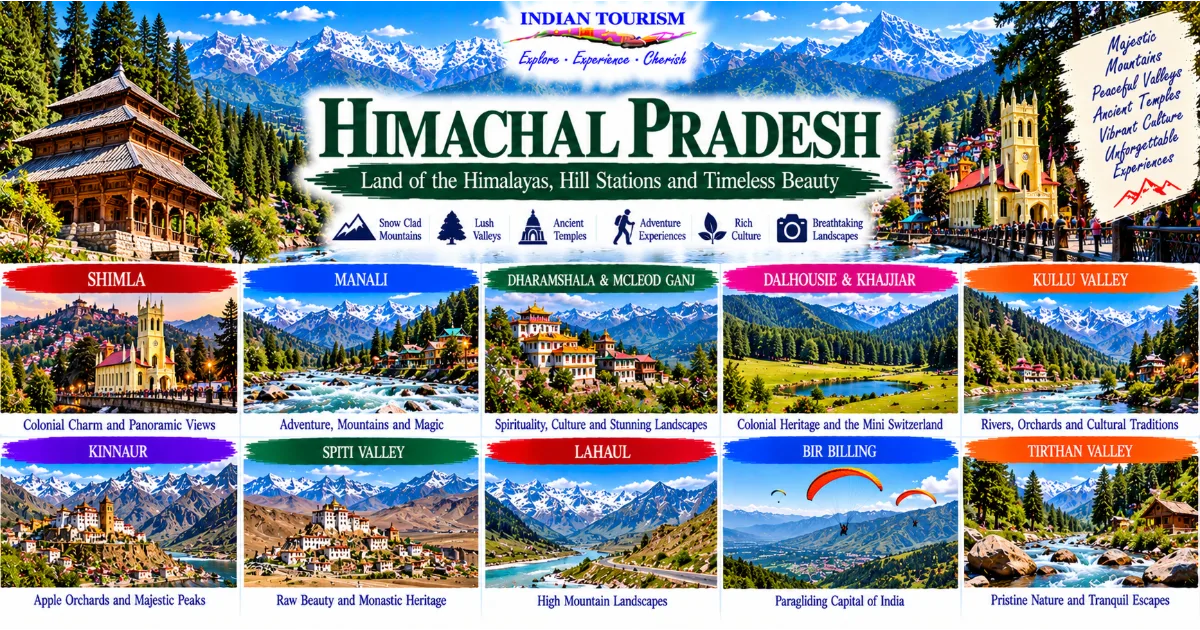
Himachal Pradesh is one of India's most captivating mountain destinations, known for its snow-covered Himalayan peaks, green valleys, pine forests, ancient temples, colonial hill stations, traditional villages and winding mountain roads. Located in northern India, the state offers an extraordinary variety of landscapes and cultural experiences within a relatively compact geographical region. Travellers can explore lively hill towns, peaceful riverside settlements, high-altitude deserts, apple-growing villages, sacred pilgrimage destinations and remote mountain valleys, each offering a distinct experience.
The name Himachal Pradesh reflects its close association with the Himalayas. The state is bordered by Jammu and Kashmir and Ladakh to the north, Punjab to the west, Haryana and Uttarakhand to the south, and Tibet to the east. Its mountainous geography has shaped its climate, settlement patterns, architecture, agriculture, religious traditions and tourism industry. Elevation varies significantly, creating different environments ranging from lower hills and river valleys to high mountain regions where snowfall and glaciers influence travel conditions.
For many visitors, Himachal Pradesh is associated with familiar destinations such as Shimla, Manali, Dharamshala, Dalhousie and Kasauli. However, the state's appeal extends far beyond these popular hill stations. The valleys of Kinnaur, Spiti and Lahaul offer striking mountain scenery and distinctive cultural traditions. Chamba preserves important historical and artistic heritage, while Tirthan Valley and the Great Himalayan National Park region attract visitors interested in nature and responsible outdoor travel. Places such as Bir Billing have developed a reputation for paragliding, while destinations around Solang Valley and Manali are associated with seasonal adventure activities.
Himachal Pradesh is also a state of living traditions. Local fairs, temple festivals, traditional wooden architecture, regional handicrafts, folk music and distinctive food practices remain important parts of community life. Tourism allows visitors to experience these traditions, but it also creates responsibilities. Mountain environments are vulnerable to waste, construction pressure, road congestion and changing weather conditions. Responsible travel is essential for preserving the natural and cultural heritage that makes the state attractive.
This introductory guide explores Himachal Pradesh through its geography, major destinations, cultural traditions, seasonal experiences, adventure tourism, food, accommodation and practical travel planning. It provides the foundation for a state-wide series that will examine individual destinations and regions in greater detail.
Geography and Natural Diversity of Himachal Pradesh
Himachal Pradesh is a mountainous state where altitude plays a major role in shaping the landscape. The terrain includes lower hills, forested slopes, deep river valleys, alpine meadows, snow-covered peaks and high-altitude areas with comparatively dry conditions. These geographical differences create a wide variety of travel experiences and explain why the climate of one destination can differ considerably from another.
The lower hill regions generally experience warmer conditions than the higher mountains. Forests, agricultural settlements and road-connected towns dominate many of these areas. As travellers move towards higher elevations, the landscape changes, with coniferous forests, open meadows, rocky slopes and snow-covered terrain becoming increasingly prominent in suitable seasons.
The state contains several important river systems, including the Sutlej, Beas, Ravi, Chenab and their tributaries. These rivers have shaped valleys, supported agriculture and influenced settlement patterns for centuries. They also contribute to the dramatic scenery that visitors encounter along mountain roads and in riverside towns.
The Beas River is closely associated with the Kullu Valley and the Manali region. The Sutlej passes through parts of Kinnaur and other mountain areas, creating deep valleys and distinctive landscapes. The Ravi is important to the Chamba region, while the Chenab system is associated with the Lahaul and adjoining high mountain areas.
Forest cover is another important feature of Himachal Pradesh. Pine, deodar, oak and other trees are found in different elevation zones, while higher areas support specialised mountain vegetation. These forests provide habitats for wildlife, contribute to watershed protection and form an important part of the state's natural identity.
The diversity of the terrain means that Himachal Pradesh should not be treated as a single uniform destination. Shimla's developed hill-station environment differs from the orchards of Kinnaur, the green landscapes of Kullu and the high-altitude desert scenery of Spiti. Travellers who understand these differences can plan more realistic journeys and choose destinations that suit their interests, available time and comfort with mountain travel.
Shimla: The Historic Hill Station and Capital City
<text color="secondary" size="sm">Region: Southern and western Himalayan hills</text>
Shimla is the capital of Himachal Pradesh and one of India's best-known hill stations. Its history as a major British-era summer capital shaped its architecture, public spaces and urban development. Today, the city combines colonial-era buildings, bustling shopping streets, mountain viewpoints, religious landmarks and modern commercial activity.
The Ridge is one of Shimla's most recognisable public spaces. It provides open views across the surrounding hills and acts as a gathering point for residents and visitors. Nearby, Mall Road is known for shops, cafés, restaurants and pedestrian-friendly sections that encourage visitors to explore the town on foot.
Christ Church, situated near the Ridge, is a prominent landmark associated with Shimla's colonial history. Other historic buildings around the city reflect the architectural and administrative role Shimla once played. Visitors interested in heritage can explore these places while learning how the town developed into an important political centre.
Shimla's appeal changes with the seasons. Spring brings fresh growth and pleasant walking conditions, while summer attracts visitors seeking a cooler alternative to the heat of the plains. Autumn can offer clear views and colourful surroundings, while winter may bring cold weather and occasional snowfall, depending on conditions.
The city is also a gateway to nearby destinations, including Kufri, Narkanda and parts of the wider Shimla district. These places provide opportunities for scenic drives, outdoor activities and visits to apple-growing areas during suitable seasons.
Because Shimla is popular, congestion can be a challenge during holidays and peak summer periods. Travellers should plan accommodation and transport carefully, particularly when arriving by road. Walking distances, steep streets and changes in elevation should also be considered when planning daily sightseeing.
Shimla provides an excellent introduction to Himachal Pradesh, but it represents only one part of the state's diversity. Visitors who continue into other valleys and mountain regions will discover landscapes and cultural traditions that differ substantially from the capital.
Manali: Mountain Scenery, Adventure and Valley Experiences
Manali is one of the most popular destinations in Himachal Pradesh, attracting visitors with its mountain scenery, river landscapes, forests and access to high-altitude routes. Located in the Kullu Valley, it serves as a base for sightseeing, adventure activities and journeys towards the Lahaul region.
The Beas River contributes to Manali's scenic character, while surrounding mountains create opportunities for photography, walking and outdoor exploration. The town has a mixture of traditional settlements, modern hotels, restaurants, shops and tourism services.
Old Manali is known for its cafés, guesthouses and relaxed atmosphere, while the main town provides access to transport, markets and accommodation. Hadimba Devi Temple, set among deodar trees, is one of the region's prominent religious and architectural attractions. The temple's distinctive wooden construction and forest setting make it an important stop for visitors interested in both culture and nature.
Solang Valley, located beyond the main town, is associated with seasonal adventure activities and mountain views. Depending on weather and operating conditions, visitors may find activities such as paragliding, skiing or other recreational experiences. Availability should always be confirmed with authorised operators.
Manali also provides access towards the Atal Tunnel and Lahaul, although road conditions and travel requirements can change according to weather, maintenance and local restrictions. Travellers should never assume that every high-altitude road is open simply because a destination appears accessible on a map.
The area can become crowded during peak holidays, and traffic congestion may affect travel times. Visitors should allow sufficient time for journeys and avoid trying to cover too many distant attractions in a single day.
Manali offers a broad range of experiences, from leisurely sightseeing to demanding outdoor activities. Its popularity makes planning important, but its surrounding valleys and landscapes remain among the major reasons travellers choose Himachal Pradesh.
Dharamshala and McLeod Ganj: Mountains, Monasteries and Tibetan Culture
Dharamshala and McLeod Ganj form one of the most distinctive cultural and tourism areas in Himachal Pradesh. Located in the Kangra region, these destinations are known for mountain views, Tibetan cultural institutions, monasteries, cafés, walking routes and access to the Dhauladhar mountain range.
Dharamshala serves as an important urban centre, while McLeod Ganj has become widely associated with Tibetan Buddhist culture. The area is home to institutions connected with the Tibetan community, including religious centres and cultural organisations. Visitors can learn about Buddhist traditions, Tibetan history and contemporary cultural life through respectful visits to public institutions and museums where available.
Tsuglagkhang Complex is an important religious destination associated with Tibetan Buddhist practice. Visitors should follow the rules of the complex, maintain a respectful atmosphere and understand that it is primarily a place of worship rather than simply a sightseeing attraction.
The surrounding region also offers walking routes, waterfalls and viewpoints, although access and trail conditions depend on weather and season. The Triund trek is a well-known route for visitors seeking mountain scenery, but it requires appropriate preparation, suitable footwear and awareness of changing conditions.
Dharamshala and McLeod Ganj also have a distinctive food culture, including Tibetan dishes such as momos and thukpa alongside Himachali and other Indian cuisines. Small businesses, guesthouses and cafés contribute to the area's visitor experience.
The monsoon season can bring heavy rainfall, slippery paths and landslide risks in parts of the region. Travellers should check local advisories before hiking or undertaking longer road journeys.
These destinations are particularly rewarding for visitors interested in culture, spirituality, walking and mountain landscapes. They also demonstrate the cultural diversity that contributes to Himachal Pradesh's identity.
Dalhousie and Khajjiar: Colonial Charm and Open Meadows
Dalhousie is a hill station in the Chamba district known for its colonial-era architecture, forested slopes and views of the surrounding mountains. Its atmosphere is generally quieter than that of some of Himachal Pradesh's busiest tourist centres, although visitor numbers rise during popular travel periods.
The town developed during the British period and retains architectural features that reflect its history. Churches, old buildings and walking routes contribute to its heritage character. Visitors can enjoy the town through relaxed walks, scenic drives and exploration of its surrounding landscape.
Khajjiar, located within the wider Chamba region, is famous for its open meadow surrounded by forest. The setting has earned it a reputation as one of the state's most attractive natural landscapes. Visitors often come for photography, leisurely walks and the combination of grassland, trees and mountain views.
The area's appearance varies with season. Summer can bring green meadows and pleasant outdoor conditions, while winter may bring cold weather and occasional snow. Rainfall can affect roads and walking surfaces, so conditions should be checked before travelling.
Khajjiar is also associated with the Khajji Nag Temple, which reflects the religious and architectural traditions of the region. Visitors should approach the temple respectfully and follow local customs.
Dalhousie and Khajjiar can be combined in a trip focused on scenic views, heritage and nature. However, travellers should account for mountain road travel and avoid assuming that short distances on a map translate into quick journeys.
The Chamba region offers additional attractions beyond these two popular destinations, including historical temples, local crafts and traditional cultural practices. Exploring further can provide a richer understanding of the region's heritage.
Kullu Valley: Rivers, Orchards and Cultural Traditions
The Kullu Valley is one of Himachal Pradesh's most important tourism regions. Known for its river landscapes, forested slopes, orchards and mountain settlements, the valley offers a mixture of cultural experiences, outdoor recreation and access to neighbouring destinations.
Kullu town serves as a commercial and cultural centre. The wider valley contains villages, agricultural areas and religious sites that reflect the long relationship between communities and the mountain environment.
The Kullu Dussehra festival is one of the region's best-known cultural events. It is associated with local religious traditions and the gathering of deities from surrounding areas. The festival differs in character from Dussehra celebrations in many other parts of India, making it an important example of Himachal Pradesh's distinctive regional customs.
The valley is also known for traditional woollen products and handicrafts. Shawls and other woven items are sold through local markets and craft businesses. Visitors should ask about materials and production methods when purchasing products, particularly when buying expensive items.
Agriculture contributes to the valley's economy, with orchards and other farming activities visible in many areas. Seasonal changes influence the landscape, and visitors may encounter different agricultural activities depending on the time of year.
Outdoor experiences include river views, walking, village visits and adventure activities in suitable locations. Activities should be undertaken through reputable providers and according to current safety requirements.
The Kullu Valley can be a useful base for exploring the wider region, but it should not be treated merely as a transit corridor to Manali. Spending time in the valley itself can reveal a quieter side of Himachal Pradesh's cultural and agricultural life.
Kinnaur: Apple Orchards, Mountain Villages and Sacred Landscapes
Kinnaur is a mountainous district in eastern Himachal Pradesh, known for dramatic landscapes, apple orchards, traditional villages and a distinctive cultural heritage. Its location near the Tibetan Plateau has influenced local architecture, religious traditions, food and patterns of trade.
The district's landscape changes significantly with elevation. Lower areas may support orchards and settlements, while higher regions become increasingly rugged and dry. The Sutlej River passes through parts of Kinnaur, creating deep valleys and dramatic mountain scenery.
Kalpa is a well-known destination for mountain views and traditional village surroundings. Its position provides impressive perspectives of the Kinnaur Kailash range when weather conditions allow. The settlement is also associated with apple cultivation and local cultural traditions.
Sangla Valley is another important destination, known for its scenery, villages and access to the Baspa River landscape. Chitkul, located farther along the valley, attracts travellers interested in remote mountain settlements and views of the surrounding terrain. Road access and conditions should be checked carefully because the region is exposed to weather and geological risks.
Kinnaur's cultural traditions reflect a blend of influences from the wider Himalayan region. Religious institutions, traditional homes and local festivals contribute to its distinctive identity. Visitors should approach these communities with respect and recognise that villages are living places rather than open-air attractions.
Road journeys in Kinnaur can be demanding because of narrow mountain roads, steep terrain and changing conditions. Travellers should avoid rushing, use reliable transport and follow official advisories.
Kinnaur is especially rewarding for visitors who prefer mountain scenery, rural experiences and cultural exploration over crowded commercial centres. Its remote character also makes responsible travel particularly important.
Spiti Valley: High-Altitude Desert Landscapes and Monastic Heritage
Spiti Valley is one of Himachal Pradesh's most distinctive destinations. Located in a high-altitude region with a relatively dry climate, it features barren mountains, wide valleys, traditional settlements and Buddhist monasteries. Its landscapes differ sharply from the green forests and orchards found in many lower parts of the state.
The region's altitude and climate influence almost every aspect of travel. Days can be sunny while nights remain very cold, and weather can change quickly. Travellers must plan carefully, particularly when crossing high mountain passes or travelling on remote roads.
Kaza is an important settlement and a practical base for exploring parts of Spiti. Nearby villages and monasteries provide opportunities to understand the region's Buddhist heritage, architecture and community life.
Key Monastery is one of Spiti's most recognised religious and cultural landmarks. Its position above the surrounding valley makes it visually distinctive, while its continuing religious role gives it importance beyond tourism. Other monasteries and traditional villages contribute to the region's cultural landscape.
Spiti is also associated with high-altitude villages and stark mountain scenery. The experience can be deeply rewarding for travellers who appreciate remote environments, but the journey is not suitable for everyone. Road conditions, limited facilities and altitude-related challenges require careful consideration.
Visitors should allow time to acclimatise, remain alert to symptoms of altitude illness and avoid pushing themselves through demanding journeys when unwell. Reliable local guidance is valuable, particularly for travellers unfamiliar with high-altitude environments.
Spiti's ecological and cultural environments are sensitive to increasing tourism. Visitors should minimise waste, respect religious institutions, support local businesses and avoid disturbing wildlife.
The valley offers a very different view of Himachal Pradesh, demonstrating that the state includes dry high-altitude landscapes as well as green hill stations.
Lahaul: Mountain Valleys Beyond the Atal Tunnel
Lahaul is a high mountain region known for rugged landscapes, river valleys, traditional settlements and a growing range of tourism experiences. Its geography and climate differ from those of the lower Kullu Valley, creating a landscape shaped by high elevation and seasonal access.
The opening of the Atal Tunnel has changed travel access between Manali and parts of Lahaul, although road conditions and local restrictions still influence journeys. The tunnel has made some routes more accessible, but visitors must continue to respect weather warnings and local travel guidance.
Key destinations in the wider region include Sissu and other settlements along the valley. Visitors may enjoy mountain views, waterfalls in suitable seasons, riverside landscapes and opportunities to learn about local traditions.
Lahaul's cultural identity reflects the history of communities living in a high-altitude environment. Architecture, food practices and religious traditions have developed in response to local conditions and interactions with neighbouring Himalayan regions.
Travel facilities may be more limited than in major hill stations. Visitors should confirm accommodation, fuel availability, food options and transport arrangements before undertaking longer journeys.
Weather can change rapidly, and snowfall may affect road access during colder months. Travellers should not assume that a route will remain open throughout the day or season.
Lahaul is an excellent choice for travellers seeking mountain scenery and quieter settlements, but its remoteness requires careful planning. Visitors who prepare well can experience a distinctive part of Himachal Pradesh while respecting the environment and communities that sustain life in the mountains.
Bir Billing: Paragliding and Adventure Tourism
Bir Billing has become one of India's best-known destinations for paragliding. Located in the Kangra region, the area attracts adventure enthusiasts who want to experience mountain views from the air, as well as visitors interested in Tibetan culture, cafés and the surrounding countryside.
Bir is associated with tourism services, accommodation and a relaxed village atmosphere, while Billing serves as a recognised take-off area for paragliding under suitable conditions. The activity depends heavily on weather, wind and operational decisions, so flights should never be assumed to be available on a particular day.
Visitors should choose licensed or otherwise appropriately authorised operators and confirm the qualifications of pilots, safety procedures, equipment checks and insurance arrangements where applicable. The lowest advertised price should not be the only consideration when selecting an adventure provider.
Paragliding is weather-dependent, and responsible operators may cancel flights when conditions are unsafe. Travellers should accept such decisions rather than pressuring operators to proceed.
The wider area also offers walking, cultural sightseeing and opportunities to explore local cafés and businesses. Visitors can enjoy the destination even when flying is unavailable.
Bir Billing demonstrates how adventure tourism can create employment and support local services, but it also requires attention to safety, environmental management and the quality of tourism operations.
For visitors interested in aerial experiences, it can be a memorable part of a Himachal Pradesh journey when undertaken with appropriate preparation and reputable professionals.
Tirthan Valley and the Great Himalayan National Park Region
Tirthan Valley is known for its river landscapes, forested hills, traditional settlements and access to nature-based tourism. It attracts travellers who prefer quieter surroundings, village stays and outdoor experiences rather than busy commercial hill stations.
The Tirthan River provides a central feature of the landscape, while nearby forests and mountain slopes create opportunities for walking and wildlife observation. The region is also associated with the wider Great Himalayan National Park landscape, which protects important mountain ecosystems and biodiversity.
Nature tourism here requires care. Visitors should follow park rules, use authorised guides where required and avoid disturbing wildlife. Entry procedures and access restrictions may apply to protected areas, so current official information should be checked before travelling.
Homestays and small guesthouses can provide opportunities to learn about local food, village life and the challenges of living in a mountain environment. Travellers should respect household customs and recognise that accommodation facilities may differ from those in larger towns.
Walking routes vary in difficulty, and visitors should choose trails according to their ability, available time and weather. Monsoon rainfall can make paths slippery and may increase the risk of landslides or flooding.
Tirthan Valley is well suited to travellers interested in nature, quiet landscapes and responsible tourism. Its appeal lies in the opportunity to slow down, observe the environment and experience a different pace of mountain life.
Temples, Monasteries and Sacred Destinations
Religious traditions form an important part of Himachal Pradesh's cultural landscape. The state contains Hindu temples, Buddhist monasteries, historic shrines and sacred mountain destinations that attract pilgrims as well as cultural travellers.
Temples such as Hadimba Devi Temple in Manali, Jwalamukhi Temple in Kangra, Chintpurni Temple and the hilltop temples of Chamba reflect different architectural forms and religious traditions. Their importance is connected with local histories, devotional practices and the communities that maintain them.
Buddhist monasteries in Spiti and other Himalayan areas preserve religious teachings, artistic traditions and forms of community life associated with Tibetan Buddhism. These institutions may contain murals, sculptures, prayer halls and libraries, although visitor access varies.
Travellers should understand that religious destinations are active places of worship. Appropriate clothing, quiet behaviour and respect for instructions are important. Photography may be restricted in certain areas, and visitors should ask before taking photographs of people or ceremonies.
Pilgrimage periods can bring increased crowds and affect transport and accommodation. Travellers should confirm dates and arrangements before planning a trip around a major religious occasion.
Sacred destinations can also provide insight into the relationship between geography and belief. Mountain temples and monasteries are often situated in places that have particular historical, spiritual or community significance.
Exploring religious heritage respectfully allows visitors to understand the cultural diversity of Himachal Pradesh without reducing sacred sites to sightseeing attractions.
Festivals and Cultural Traditions of Himachal Pradesh
Himachal Pradesh has a rich calendar of festivals and local fairs. These events reflect religious beliefs, agricultural cycles, seasonal change and the traditions of individual valleys and communities.
Kullu Dussehra is among the state's best-known festivals. It is associated with a distinctive gathering of local deities and community celebrations in Kullu. The event provides insight into regional religious traditions and the importance of shared cultural practices.
Minjar Fair in Chamba is another significant celebration, associated with local history, religious traditions and community gatherings. Other regional fairs take place in different districts, each reflecting local customs and historical connections.
Festivals can include processions, music, dancing, traditional clothing, food and the gathering of people from surrounding villages. However, the form and scale of each celebration vary, and visitors should confirm current dates and programmes before travelling.
The state also preserves traditional crafts, weaving, folk music and dance forms. These traditions are not identical across all districts, and their distinctive features often reflect local history and geography.
Visitors can support cultural preservation by purchasing authentic products from responsible local sellers, attending public programmes respectfully and learning about the meaning of local customs.
It is important not to treat festivals merely as performances for tourists. They belong to the communities that celebrate them, and visitors should observe without obstructing ceremonies or invading private spaces.
Cultural tourism is most rewarding when it combines curiosity with respect. Understanding the meaning of a festival can turn a brief visit into a deeper appreciation of the people and traditions of Himachal Pradesh.
Himachali Cuisine: Food Shaped by Mountains and Traditions
Food is an important part of a journey through Himachal Pradesh. The state's cuisine varies by district, elevation, local agriculture and cultural influence. Traditional meals often reflect the availability of grains, pulses, vegetables, dairy products and ingredients that can be stored or prepared in mountain environments.
Dham is one of the state's best-known traditional food traditions. It is associated with festive and community meals, particularly in parts of the region, and may include rice, pulses, curd-based preparations and other dishes depending on local custom. The exact menu varies across districts and occasions.
Siddu is a traditional bread found in parts of Himachal Pradesh. It is commonly associated with wheat-based dough and may contain fillings depending on the recipe. It is often served with accompaniments that vary by household and location.
Other regional foods include dishes prepared with lentils, beans, seasonal vegetables and local dairy products. In higher areas, food traditions may differ because of climate, agricultural conditions and cultural connections with neighbouring Himalayan regions.
Travellers can explore local cuisine through restaurants, small eateries and homestays. Homestays may provide a particularly useful introduction to household food traditions, although meals should be arranged in advance and dietary needs communicated clearly.
Visitors should ask about ingredients if they have allergies or dietary restrictions. Food availability also varies by season and location, particularly in remote valleys where supplies may be limited.
Trying regional food supports local businesses and helps travellers understand the relationship between culture, agriculture and mountain life. Food is not simply a convenience during a trip. It is an important expression of Himachal Pradesh's regional identity.
Handicrafts, Textiles and Local Shopping
Himachal Pradesh is known for traditional crafts and products that reflect its cultural diversity. Woollen shawls, woven textiles, caps, wooden objects, metalwork and other handmade products are available in different parts of the state.
Kullu shawls are among the best-known textile products associated with the region. They are recognised for their patterns and use of woollen materials, although designs and quality vary between producers. Visitors should ask about fibre content, manufacturing methods and care requirements before making a purchase.
Kinnaur and other mountain regions have their own clothing traditions, including distinctive caps and woven products. These items can reflect local identity, although styles vary between communities and occasions.
Wood carving and other decorative crafts can be found in some markets, while local food products such as fruit-based goods may be available in agricultural areas. Availability depends on the season and the particular town.
Responsible shopping means asking clear questions about materials and origin, comparing quality and paying fairly for skilled work. Visitors should avoid assuming that every item marketed as traditional is handmade locally.
Receipts are useful for expensive purchases, and buyers should confirm delivery arrangements when purchasing larger objects. Travellers carrying food or plant products internationally should check applicable customs rules.
Local crafts help preserve skills and support small businesses. By shopping thoughtfully, visitors can take home meaningful reminders of the region while contributing to the communities that maintain its traditions.
Best Time to Visit Himachal Pradesh
Himachal Pradesh can be visited throughout much of the year, but the best time depends on the destination, planned activities and tolerance for cold, rain or crowds.
Spring generally brings fresh growth and changing landscapes. It can be a pleasant period for sightseeing, walking and exploring lower and middle hill destinations, although higher areas may still have snow.
Summer is a popular season for hill stations because temperatures are often more comfortable than in the plains. Shimla, Manali, Dharamshala and other accessible destinations can attract large numbers of visitors, particularly during school holidays. Advance accommodation and transport planning is advisable.
The monsoon season can bring lush vegetation and flowing rivers, but it also increases the risk of landslides, road closures and flooding in some areas. Travellers should monitor official advisories and remain flexible with their itineraries.
Autumn often provides clear mountain views and cooler conditions in many destinations. It can be suitable for sightseeing and photography, although temperatures vary considerably with elevation.
Winter brings snowfall to some higher destinations and creates opportunities for seasonal activities where conditions and facilities permit. However, cold temperatures, snow and road closures can disrupt travel, particularly in high-altitude regions.
There is no single best month for every destination. Travellers should choose dates according to whether they want flowers, green landscapes, snowfall, trekking or cultural events. Current weather and access information should always be checked before departure.
Accommodation and Transport Planning
Himachal Pradesh offers a wide range of accommodation, including hotels, guesthouses, hostels, homestays, resorts and seasonal mountain camps where permitted. The most suitable option depends on the destination, budget, desired comfort and access to transport.
Major towns generally offer more accommodation choices, while remote villages may have fewer facilities. Travellers visiting high-altitude regions should confirm heating, food availability, bathroom facilities and access to medical support rather than assuming that every property offers the same services.
Homestays can provide opportunities to learn about local culture and food, but expectations should be discussed in advance. Facilities may be simpler than those found in large hotels, and weather can affect water, electricity or transport in remote areas.
Road travel is central to exploring Himachal Pradesh. Mountain roads can be narrow, winding and vulnerable to landslides or snowfall. Travel times may be longer than expected, so itineraries should allow for delays.
Public buses connect many towns and villages, while taxis and private vehicles offer greater flexibility. Travellers should choose transport according to the route, road conditions and their comfort with mountain travel.
Rail access serves selected areas, including routes associated with the Kalka-Shimla railway, while larger journeys often combine rail, road and, where available, air travel. The most suitable route depends on the starting point and final destination.
Before travelling, confirm current transport schedules, weather advisories and any access restrictions. Avoid planning several long mountain drives on consecutive days without allowing enough time for rest.
Good planning makes a major difference in Himachal Pradesh. A realistic itinerary provides more time to enjoy destinations and reduces the pressure to travel in unsafe conditions.
Responsible Tourism in the Himalayan Environment
Himachal Pradesh's natural beauty depends on the health of its forests, rivers, meadows and mountain ecosystems. Increasing tourism brings economic opportunities, but it can also place pressure on waste systems, roads, water supplies and local communities.
Visitors should carry reusable items where practical and dispose of waste through appropriate facilities. Rubbish should never be thrown into rivers, forests, meadows or roadside areas. In remote locations, travellers may need to carry waste until suitable disposal facilities are available.
Water conservation is important, particularly in mountain settlements where supplies may be limited or seasonal. Visitors should avoid unnecessary water use and choose accommodation providers that manage resources responsibly.
Wildlife should be observed from a distance, and feeding animals should be avoided unless an authorised programme explicitly permits it. Travellers should stay on established paths and avoid damaging vegetation for photographs.
Adventure activities should be undertaken through reputable providers who follow appropriate safety standards. Visitors should check equipment, qualifications and operating conditions rather than selecting a service only because it is inexpensive.
Respect for local communities is equally important. Ask permission before photographing people, follow religious customs and support legitimate local businesses. Traditional villages are homes and workplaces, not simply attractions.
Responsible tourism also means recognising the limits of a destination. If roads are closed, weather conditions are unsafe or authorities restrict access, travellers should change their plans rather than attempting to bypass instructions.
The future of tourism in Himachal Pradesh depends on balancing visitor experiences with environmental protection and community well-being. Thoughtful choices help preserve the region for residents and future generations.
Conclusion: Begin Your Journey Through Himachal Pradesh
Himachal Pradesh is a destination of remarkable geographical and cultural diversity. Its famous hill stations, including Shimla and Manali, provide accessible introductions to mountain scenery and tourism infrastructure. Dharamshala and McLeod Ganj reveal distinctive cultural and spiritual traditions, while Dalhousie and Khajjiar combine heritage with open landscapes.
The Kullu Valley connects river scenery, orchards and local festivals. Kinnaur offers mountain villages and agricultural landscapes, while Spiti and Lahaul reveal the distinctive character of high-altitude regions. Bir Billing attracts adventure enthusiasts, and Tirthan Valley provides opportunities for quieter nature-based travel.
The state's temples, monasteries, festivals, food traditions and handicrafts add depth to its natural attractions. Exploring these elements helps visitors understand that Himachal Pradesh is not simply a collection of hill stations. It is a living region where communities have adapted to mountain geography over generations.
Planning is essential because altitude, weather and road conditions can change quickly. Travellers should choose destinations that suit their interests, allow realistic travel times and follow official safety guidance. Responsible behaviour is equally important for protecting the environment and respecting local communities.
This article serves as the starting point for the Himachal Pradesh series. The following guides will explore individual destinations and regions in greater depth, covering sightseeing, local culture, seasonal travel, food, accommodation and practical itineraries.
A thoughtful journey through Himachal Pradesh can offer far more than scenic photographs. It can create a deeper appreciation of Himalayan landscapes, regional traditions and the relationship between people and their mountain environment.
#IndianTourism #HimachalPradesh #HimachalTourism #Shimla #Manali #Dharamshala #McLeodGanj #Dalhousie #Khajjiar #KulluValley #Kinnaur #SpitiValley #Lahaul #BirBilling #TirthanValley #HimalayanTourism #MountainTravel #AdventureTourism #CulturalTourism #ResponsibleTourism #ExploreIndia
