
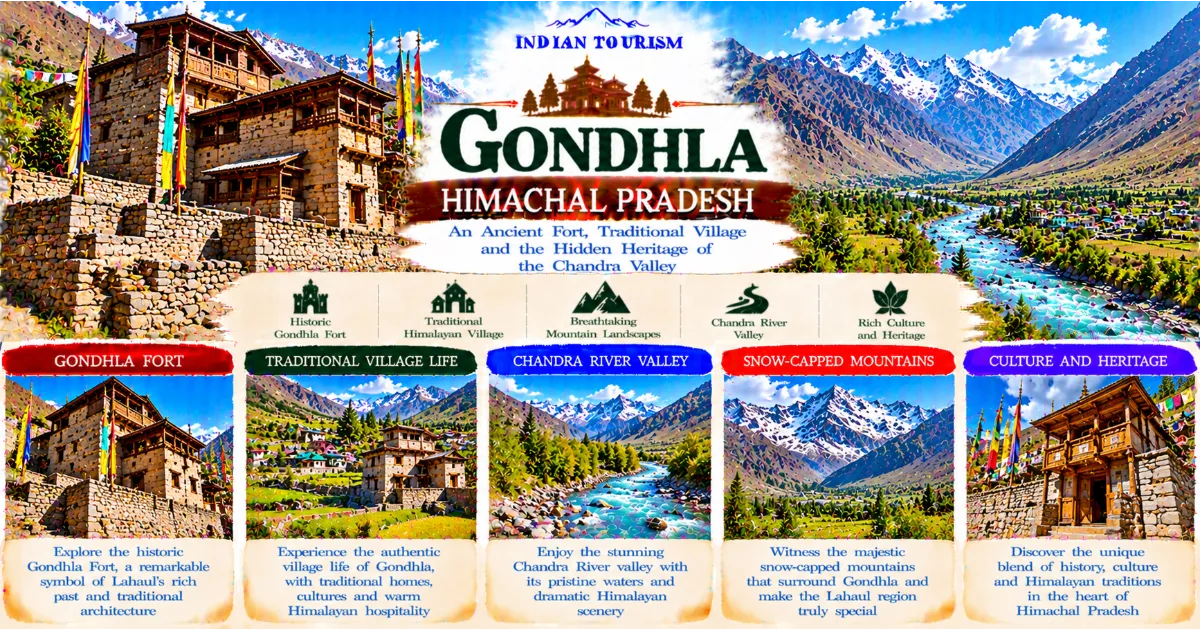
Explore the Quiet Heritage of Gondhla
In the rugged mountains of Lahaul, where the Chandra River flows through a landscape of rocky slopes, cultivated terraces and traditional settlements, lies Gondhla, a village known for its historic fort and distinctive Himalayan character. Located in the Lahaul region of Himachal Pradesh, Gondhla offers travellers an opportunity to discover a quieter side of the state, far removed from the busy shopping streets and crowded viewpoints of its better-known hill stations.
Gondhla is particularly associated with the Gondhla Fort, a historic structure that reflects the political, architectural and cultural history of the wider Lahaul region. The fort stands as a reminder of a time when mountain settlements were connected through trade routes, local power structures and relationships between communities spread across difficult terrain. Its traditional construction and position within the valley make it an interesting destination for visitors who appreciate heritage architecture and the history of Himalayan societies.
The village is also appealing because of its setting. The surrounding mountains provide a dramatic backdrop, while cultivated land and traditional homes reveal how residents have adapted to a high-altitude environment. The Chandra River valley connects the settlement with other parts of Lahaul and forms an important element of the region's geography.
Unlike a destination developed primarily around adventure tourism, Gondhla rewards travellers who enjoy cultural exploration, slow travel and observation. A visit may involve examining historic architecture from permitted viewpoints, walking through publicly accessible village areas, learning about local livelihoods and appreciating the relationship between buildings and the mountain environment.
Gondhla can be included in a broader journey through Lahaul, particularly for travellers exploring the road between Manali, Sissu and Keylong. However, its value should not be measured only by the amount of time required to visit the fort. The village offers a chance to understand the cultural landscape of Lahaul and the ways in which history remains visible in everyday surroundings.
Visitors should plan according to the season, road conditions and the availability of local services. The region experiences cold winters, changing mountain weather and seasonal variations in road access. A respectful and well-prepared visit can make Gondhla a rewarding addition to a journey through Himachal Pradesh.
Where Is Gondhla Located?
Gondhla is situated in the Lahaul region of Himachal Pradesh, within the Chandra River valley. It lies along the wider mountain road corridor connecting settlements in Lahaul with Manali and other parts of the western Himalayas.
The village occupies a landscape shaped by steep mountain slopes, river systems and relatively level areas suitable for settlement and cultivation. Its position reflects a common pattern in Himalayan geography, where communities developed near water sources and routes that connected neighbouring valleys.
Gondhla is often considered as part of a journey through the Lahaul region rather than a standalone resort destination. Travellers exploring Sissu, Keylong and nearby settlements can consider adding the village to their itinerary, provided road conditions and available time permit.
The surrounding terrain influences how visitors should plan their travel. Mountain roads can be winding, and journey times may be longer than expected from map distances alone. Weather, road repairs and seasonal access can also affect the route.
Gondhla is a living village, not an open-air heritage park. Its historic buildings and traditional surroundings exist alongside homes, fields and the daily routines of local residents. Visitors should respect private property and follow any restrictions around historic structures.
Before travelling, confirm the accessibility of the fort and any local guidance concerning visits. Historic buildings may have conservation needs or access limitations, and not every structure should be assumed to be open to the public.
Gondhla Fort: A Historic Landmark of Lahaul
The most prominent heritage attraction associated with Gondhla is its traditional fort, often referred to as Gondhla Fort or Gondhla Castle. It is an important example of the historic architecture found in the Lahaul region and provides insight into the area's earlier political and social organisation.
The fort is commonly described as a multi-storeyed traditional structure built using local materials and regional construction techniques. Its appearance reflects the practical demands of mountain life, where buildings needed to accommodate changing temperatures, limited construction resources and the challenges of a remote location.
Historic forts in Himalayan valleys served purposes that could include residence, administration, storage and the exercise of local authority. Their roles varied according to the period and the political circumstances of the surrounding region. Gondhla Fort should be understood within this broader context rather than treated simply as a military building.
The structure also reveals the importance of architecture as a record of local history. Building forms, materials and placement can provide clues about the resources available to earlier communities and the ways they organised their settlements.
Visitors should view the fort only from permitted areas and avoid entering unsafe or restricted sections. Historic structures can contain fragile floors, unstable walls and features that are not suitable for unrestricted access.
If local interpretation is available, it can help explain the fort's history and architectural details. Travellers should avoid assuming that every feature has a single known meaning, particularly where historical documentation is limited.
Gondhla Fort is valuable because it connects the modern visitor with the built heritage of Lahaul. It reminds us that the region's history includes local leadership, settlement patterns and architectural knowledge as well as religious traditions and trade.
Traditional Architecture and Building Techniques
Gondhla provides an opportunity to observe architectural forms associated with the Lahaul region. Traditional buildings were designed to respond to the local climate, available materials and the practical requirements of mountain life.
Stone and timber have played important roles in regional construction, while earth-based materials may be used in walls and other building elements. The precise construction of individual structures varies according to age, purpose, maintenance and household resources.
Thick walls can provide insulation against cold conditions, while the arrangement of windows and openings reflects the need to balance light, ventilation and temperature. Roof forms must also respond to the weather experienced at a particular elevation.
Traditional architecture is closely connected with local knowledge. Builders worked with materials available in the region and developed techniques suited to the conditions they encountered. Their decisions were shaped by experience as well as practical necessity.
Historic buildings such as Gondhla Fort can therefore be understood as records of engineering and craftsmanship. They show how communities created structures that served social and administrative functions within a challenging environment.
Visitors should avoid touching fragile surfaces, climbing on walls or entering areas that are closed for conservation or safety reasons. Photography should be undertaken from permitted locations, and local guidance should be followed.
For architecture enthusiasts, Gondhla is a reminder that the cultural heritage of Himachal Pradesh extends beyond temples and monasteries. Forts, homes and other traditional buildings also reveal how Himalayan communities organised their lives.
The Chandra River Valley: The Natural Setting of Gondhla
The Chandra River valley forms a major part of the landscape around Gondhla. The river flows through a rugged mountain environment, creating a natural corridor for settlements, roads and agricultural activity.
The valley's appearance changes with the seasons. During warmer months, cultivated areas may become greener, while surrounding slopes retain their rocky character. Snow can remain on higher elevations, creating a strong contrast between the valley floor and the mountain ridges.
The river's flow varies according to snowmelt, rainfall and seasonal conditions. Water levels may rise during periods of increased melt or heavy precipitation, and riverbanks can become unstable. Visitors should observe the river from safe locations and avoid entering the water.
The Chandra River is important not only for its scenery but also for its role in the wider regional environment. River systems support downstream water resources and have influenced the development of settlements throughout the valley.
For photographers, the river provides opportunities to capture broad mountain views, changing light and the relationship between the landscape and human settlement. However, travellers should never stop vehicles in unsafe locations or approach exposed edges for a better photograph.
The valley's natural beauty is closely connected with the lives of local communities. Water, terrain and climate influence where people build homes, cultivate land and travel between settlements.
Gondhla's setting makes it an appealing destination for visitors who want to appreciate the landscape while learning about the history of the people who have lived within it.
Gondhla Village: Everyday Life in Lahaul
Gondhla is a living mountain settlement where traditional buildings, agricultural areas and modern facilities exist alongside one another. Exploring the village provides a chance to see how residents maintain their livelihoods in a region shaped by altitude, cold winters and limited agricultural land.
The arrangement of houses reflects the contours of the valley. Buildings occupy suitable areas near roads, fields and local pathways, while cultivated plots make use of land where soil and water conditions permit farming.
During the warmer months, residents may be occupied with agricultural work, livestock care, household tasks and preparations for the colder season. These routines continue regardless of visitor interest and should be treated respectfully.
Visitors can explore publicly accessible roads and paths, observing the architecture and the relationship between homes and the surrounding mountains. They should not enter private courtyards or photograph residents without permission.
The village may offer opportunities to interact with local businesses or accommodation providers, depending on what is operating during the visit. Supporting these services can help tourism contribute to the local economy.
Travellers should remember that Gondhla is not designed exclusively for visitors. Noise, litter and careless behaviour can affect residents' quality of life. A respectful approach helps ensure that tourism remains compatible with the village's everyday routines.
The most rewarding experiences often come from observing the village patiently and learning about the relationship between its architecture, landscape and local livelihoods.
Agriculture and Traditional Livelihoods Around Gondhla
Agriculture remains important to communities throughout Lahaul, although the high elevation and cold climate create a relatively short growing season. Farming activities are concentrated in the warmer months, when temperatures and water availability allow cultivation.
Crops grown in the wider region can include potatoes, peas, barley and other varieties suited to local conditions. The crops grown in any particular settlement depend on elevation, soil, water availability and market access.
Irrigation is important in parts of Lahaul because rainfall is limited compared with many other areas of Himachal Pradesh. Water channels help distribute water to fields, and their maintenance requires local knowledge and cooperation.
Livestock can also contribute to household livelihoods by providing food, manure and other resources. Grazing patterns and animal care depend on the season and availability of suitable land.
Tourism has introduced additional economic opportunities through accommodation, transport, food services and other small businesses. These activities may supplement traditional livelihoods, although visitor numbers vary according to the season and road accessibility.
Visitors should avoid walking through cultivated fields or interfering with irrigation systems. Agricultural land is an essential resource, not an unrestricted recreational area.
Understanding the role of farming gives visitors a fuller appreciation of Gondhla. The cultivated patches visible within the valley represent careful adaptation to environmental limitations and the knowledge accumulated by generations of local residents.
Historical Trade Routes and the Importance of Lahaul
Lahaul occupies a distinctive position within the western Himalayas. Its valleys connect mountain communities and have historically provided routes for movement between different regions, although travel has always been influenced by geography and seasonal weather.
Mountain passes and river valleys shaped the movement of traders, pilgrims, religious practitioners and local residents. These journeys allowed goods, ideas, artistic traditions and cultural practices to travel between communities.
Settlements in Lahaul developed within this wider network of connections. Their buildings, religious institutions and local traditions reflect both regional characteristics and relationships with neighbouring Himalayan areas.
Gondhla's historic fort provides a starting point for considering how local authority and settlement organisation operated in such a landscape. Structures associated with administration or residence were part of a broader system of relationships involving land, resources and movement through the valley.
It is important not to oversimplify this history. Trade and cultural exchange varied across periods, and different communities maintained their own identities and traditions. The region's history developed through multiple influences rather than a single route or event.
Visitors interested in this subject can benefit from local interpretation and reliable historical material. Where precise details are uncertain, it is better to acknowledge the limits of available information than to assume a particular story is established fact.
Gondhla offers a meaningful setting for understanding how mountain geography influenced the political, economic and cultural life of Lahaul.
Best Time to Visit Gondhla
The most suitable time to visit Gondhla depends on road access, weather and the activities planned. Conditions can vary considerably between seasons, so travellers should check current local information before departure.
Spring: April to May
Spring brings a gradual transition from winter conditions, although temperatures can remain low and snow or ice may affect some roads. The landscape may still appear relatively dry, while higher slopes can retain snow.
Visitors should carry warm clothing and confirm the accessibility of the fort and surrounding areas. Some services may operate on reduced schedules early in the season.
Summer: June to August
Summer is often one of the more practical periods for exploring Lahaul. Road access is generally more favourable than during deep winter, although conditions still depend on weather and maintenance.
The cultivated areas around villages can become greener, creating a contrast with the rocky mountains. This period is suitable for cultural exploration and photography when conditions are favourable.
Rainfall in the wider Himalayan region can still affect roads, including through landslides or damage. Check road advisories rather than assuming that all routes are safe.
Autumn: September to October
Autumn can offer clear mountain views and cooler temperatures. It is a rewarding period for visitors interested in photography and traditional architecture.
As winter approaches, nights become colder and some services may become less frequent. Confirm accommodation and transport arrangements before travelling.
Winter: November to March
Winter brings severe cold and the possibility of snowfall or ice affecting travel. Roads may become difficult or temporarily inaccessible, and services can be limited.
Winter visits require reliable local information and appropriate equipment. Travellers should not assume that the fort or every nearby attraction will be accessible.
For many visitors, summer and early autumn offer the most practical conditions. The final choice should always depend on current weather, road status and local guidance.
How to Reach Gondhla
Gondhla is accessible by road through the Lahaul region. Travel times depend on the starting point, route conditions, traffic and season.
By Road from Manali
Travellers commonly reach Lahaul from Manali through the Atal Tunnel when the route is open. From there, the road continues through the valley towards settlements including Sissu and Keylong, with onward travel depending on the chosen route.
Road conditions can change quickly, so check current information before setting out. Avoid rushing along mountain roads or travelling in unsuitable weather.
By Road from Keylong
Keylong can serve as a useful reference point for exploring Gondhla and other destinations in Lahaul. Confirm the best current route locally and allow sufficient time for the journey.
If you plan to visit several places in one day, consider the actual driving conditions and the time needed for stops rather than relying solely on map distances.
By Bus
Public transport availability can vary according to season and local operating arrangements. Confirm current services and stop locations before planning your visit.
If the fort is some distance from the final bus stop, arrange onward transport in advance.
By Train
Gondhla has no railway station. Travellers arriving by train must continue by road from a suitable rail connection as part of their wider Himachal Pradesh journey.
By Air
There is no airport in Gondhla. Visitors arriving by air need to arrange onward road transport from an airport appropriate to their itinerary.
Local Transport
Taxis and local vehicles may be available, but availability can be limited outside the main travel season. Confirm fares and return arrangements before beginning an excursion.
Mountain journeys require flexibility. Allow extra time for delays and prioritise safe travel over a fixed schedule.
Where to Stay Near Gondhla
Accommodation options in the wider Lahaul region may include guesthouses, small hotels and homestays. Availability and facilities vary, so travellers should confirm arrangements before arriving.
Depending on the itinerary, staying in a larger nearby settlement may provide more choice than staying directly in Gondhla. Keylong and other accessible villages can be considered as bases, subject to current road conditions and the needs of the trip.
Ask accommodation providers about heating, hot water, meals, parking and transport access. These details are especially important in colder months.
Homestays can offer opportunities to learn about local food and household traditions. Visitors should communicate their requirements clearly and respect the routines of the household.
Advance booking is sensible during the main travel season. Outside that period, confirm that your chosen property is operating and accessible.
If you are travelling with older adults or people who have difficulty walking, ask about stairs, room access and the distance to essential services.
Supporting local accommodation providers helps tourism contribute to the community. Use water carefully, dispose of waste responsibly and avoid unnecessary noise.
Food and Local Dining
Food options in Gondhla itself may be limited, depending on the season and the services operating at the time of your visit. Travellers should plan meals with this in mind, particularly if they intend to explore several places in one day.
The wider Lahaul region offers a mixture of familiar North Indian food and dishes influenced by Himalayan and Tibetan culinary traditions. Depending on the establishment, visitors may find soups, noodles, rice, vegetables, breads and warming beverages.
Local menus vary with season and supply availability. Do not assume that every small settlement will offer a large choice of restaurants.
If you have dietary restrictions or allergies, explain them clearly before ordering. Carry suitable snacks for longer road journeys, especially when travelling outside larger towns.
Drink safe water and avoid assuming that untreated stream water is suitable for consumption. The dry mountain climate can make regular hydration important.
Eating at local establishments can support small businesses and provide an opportunity to experience regional hospitality. Avoid leaving food packaging or other rubbish in the village or surrounding landscape.
A One-Day Gondhla Itinerary
A one-day visit can introduce travellers to Gondhla's historic architecture and surrounding landscape.
Begin by travelling to the village at a comfortable pace. Before departure, confirm the road conditions and whether the fort is accessible to visitors.
On arrival, explore the fort from permitted areas. Take time to observe the building's form, materials and relationship with the surrounding settlement. If local interpretation is available, use it to understand the structure's history and architectural significance.
After visiting the fort, walk through publicly accessible parts of the village. Observe the traditional buildings, cultivated areas and mountain scenery without entering private property.
Arrange lunch at a local establishment or in a nearby settlement where suitable options are available. In the afternoon, enjoy the surrounding landscape from a safe viewpoint before beginning the return journey.
Avoid adding distant excursions if they would make the day rushed. Mountain travel is more enjoyable when sufficient time is allowed for road conditions and unexpected delays.
A Three-Day Cultural Journey Through Lahaul
Three days allow visitors to explore Gondhla as part of a wider journey through Lahaul.
On the first day, travel to the region and settle into your accommodation. If you have recently arrived at high elevation, keep activity light and allow time to adjust.
On the second day, visit Gondhla and explore the historic fort if access is permitted. Spend time walking through publicly accessible parts of the village and appreciating the surrounding landscape.
On the third day, consider visiting another accessible settlement or cultural site in the wider Lahaul region. Keylong or Sissu may be suitable depending on your route and current road conditions. Confirm transport arrangements and allow enough time for the return journey.
This itinerary should be adapted to weather, access and personal comfort. Visitors who experience symptoms of altitude illness should avoid strenuous activity and seek appropriate medical guidance.
A Five-Day Lahaul Heritage and Landscape Itinerary
A five-day journey provides more time to explore Lahaul without rushing between destinations.
Spend the first day travelling into the region and resting after arrival. Use the time to become familiar with local services and road conditions.
On the second day, explore Sissu and its accessible natural attractions, depending on current conditions. Keep the schedule flexible and avoid unsafe areas around waterfalls or rivers.
Use the third day for Keylong and its surrounding cultural landscape. If you plan to visit a monastery, confirm access arrangements and follow local rules.
On the fourth day, travel to Gondhla and explore the historic fort and village from permitted areas. Take time to understand the relationship between the architecture, local history and mountain environment.
On the fifth day, begin the next stage of your journey or return along your planned route. Allow additional time for road delays.
This itinerary is a flexible framework rather than a fixed schedule. Actual road access, weather and accommodation availability should determine the final plan.
Photography Tips for Gondhla
Gondhla offers opportunities for photography that combine historic architecture, traditional village life and the surrounding mountain landscape.
Early morning and late afternoon can provide attractive light across the fort and nearby slopes. The changing sunlight reveals the texture of walls, rooftops and the rocky terrain.
Photographers should remain in permitted areas and avoid climbing onto fragile parts of the fort. Historic structures can contain unstable surfaces that are not suitable for unrestricted access.
Landscape photographs can show the relationship between the village and the wider valley. Choose safe viewpoints and never stop a vehicle in a dangerous road location to capture an image.
Ask permission before photographing residents or private homes. Respect any restrictions around religious or culturally sensitive places.
Protect cameras and phones from cold, dust and moisture. Spare batteries can be useful during long days in mountain conditions.
The most meaningful photographs of Gondhla may be those that show the fort within its wider setting. Such images communicate not only the building itself but also the geography and community that give it significance.
Responsible Tourism in Gondhla
Responsible tourism is essential for protecting Gondhla's historic architecture, natural environment and village life.
Treat the fort as a heritage structure rather than a playground. Do not climb on walls, remove materials, scratch surfaces or enter restricted areas.
Carry rubbish back to appropriate disposal points. Avoid leaving plastic bottles, food packaging or other waste along roads and paths.
Respect private property and agricultural land. Ask permission before entering courtyards or photographing residents.
Use water carefully and avoid unnecessary waste. Water resources are important to mountain communities and agriculture.
Support local accommodation, food services and transport providers when possible. Tourism can create economic opportunities when visitors respect local customs and livelihoods.
Follow local guidance about road conditions, weather and safe walking routes. Avoid riverbanks and unstable slopes during or after heavy rainfall.
Responsible travel allows visitors to appreciate Gondhla while helping preserve its historic and cultural value for future generations.
High-Altitude Safety and Practical Travel Advice
Gondhla lies in a high-altitude mountain region, so visitors should take acclimatisation seriously. Some travellers may experience headaches, nausea, dizziness, fatigue or difficulty sleeping after gaining elevation.
Allow time to adjust to the altitude and avoid strenuous activity immediately after arrival. Severe or worsening symptoms, including breathlessness at rest, confusion or difficulty walking normally, require urgent medical attention and appropriate descent.
Carry essential medication and know how to seek help if needed. Medical services may be limited compared with larger towns.
Mountain weather can change rapidly. Carry warm layers even during summer and protect yourself from strong sunlight.
Check road conditions before departure, especially during winter and periods of heavy rain. Carry drinking water, snacks and essential supplies in case of delays.
Avoid unnecessary night driving on unfamiliar mountain roads. Use experienced drivers where appropriate and always wear seat belts.
Keep your itinerary flexible. Delaying a journey because of unsafe conditions is preferable to taking risks in a remote region.
Conclusion: Why Gondhla Deserves a Place on Your Himachal Pradesh Itinerary
Gondhla offers a distinctive way to explore the heritage of Lahaul. Its historic fort, traditional village architecture and dramatic mountain setting provide a different experience from the more commercial destinations of Himachal Pradesh.
The fort is the village's most recognisable landmark, but its importance extends beyond appearance. It provides a starting point for understanding local history, traditional construction methods and the organisation of mountain settlements.
The surrounding Chandra River valley adds another dimension to the visit. Its mountains, water systems and cultivated areas reveal how geography influences settlement and livelihood in the western Himalayas.
Gondhla can be included in a wider Lahaul itinerary alongside destinations such as Sissu and Keylong. A carefully planned journey allows visitors to explore the region without rushing, while supporting local businesses and respecting community life.
Preparation remains important because road access, weather and altitude affect the travel experience. Confirm current conditions, check whether heritage sites are accessible and follow local guidance.
For travellers who appreciate history, architecture and quieter mountain destinations, Gondhla offers a rewarding opportunity to discover another layer of Himachal Pradesh's cultural landscape.
#IndianTourism #Gondhla #GondhlaFort #HimachalPradesh #Lahaul #ChandraValley #HimalayanHeritage #TraditionalArchitecture #MountainVillages #CulturalTourism #ExploreHimachal #ResponsibleTourism #IncredibleIndia
