
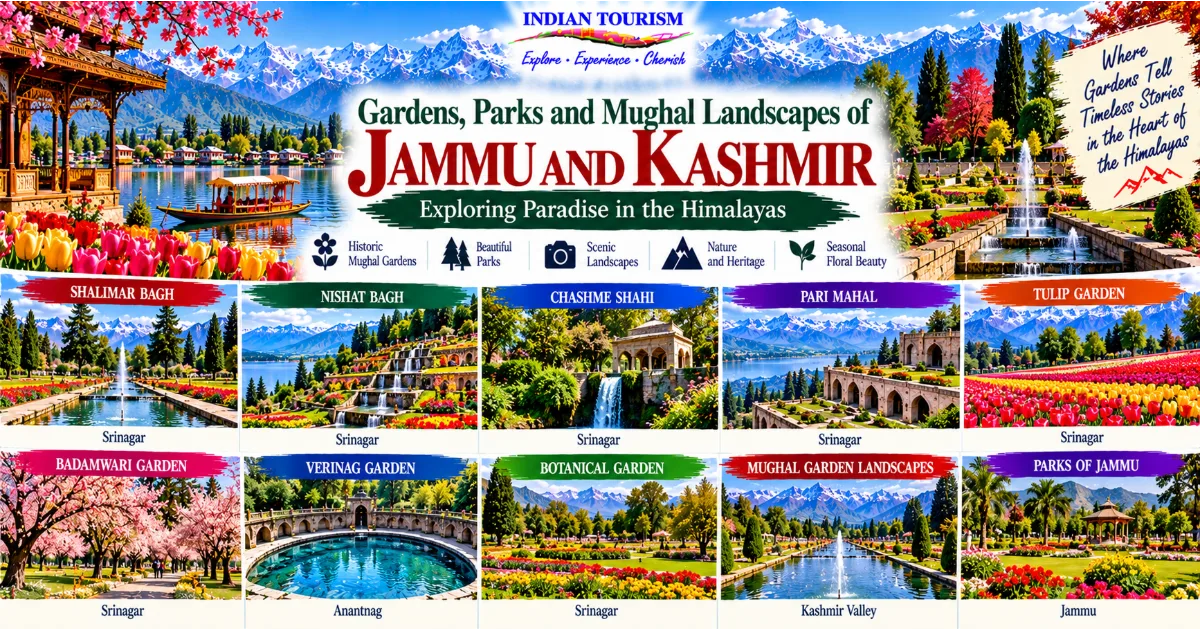
Where Nature, History and Garden Design Come Together
Jammu and Kashmir is famous for its mountains, lakes, rivers and traditional architecture, but its gardens and parks are equally important to the region's identity. Carefully designed Mughal gardens, historic royal landscapes, botanical collections and peaceful public parks offer visitors a different way to experience the beauty of the Himalayas. These green spaces bring together natural scenery, architectural design, cultural history and the everyday life of local communities.
The Kashmir Valley has a particularly strong association with garden culture. The Mughal emperors and their nobles were attracted to the region's cool climate, flowing water, mountain views and fertile landscapes. They developed gardens that combined terraces, fountains, water channels, trees and carefully arranged planting. These spaces were intended to provide comfort and beauty while also expressing ideas about royal power, order and the relationship between human life and nature.
Srinagar is the principal centre for exploring Kashmir's historic gardens. Shalimar Bagh, Nishat Bagh, Chashme Shahi and Pari Mahal are among the best-known destinations for visitors interested in garden architecture. Each offers a different experience, from broad terraced landscapes to smaller gardens built around natural springs. Other green spaces, including botanical gardens and public parks, provide opportunities to appreciate plant diversity and enjoy the region's outdoor environment.
The Jammu region has its own distinctive green landscapes. Forested hills, landscaped public spaces and gardens around historic landmarks offer visitors a different experience from the lake-centred gardens of Srinagar. These destinations can be included in journeys through Jammu city, Patnitop and other parts of the southern Himalayan foothills.
Gardens are more than decorative spaces. They can preserve historic design traditions, provide habitats for birds and insects, support recreation and create peaceful environments within growing towns and cities. Their appearance changes with the seasons, giving travellers reasons to return at different times of the year.
This guide explores the most important gardens and green spaces of Jammu and Kashmir, their historical significance, seasonal appeal and practical travel considerations. It also explains how visitors can enjoy these landscapes while helping protect their heritage and natural environment.
Shalimar Bagh: A Celebrated Example of Mughal Garden Design
Shalimar Bagh is one of Srinagar's most famous historic gardens and an important example of Mughal landscape design in Kashmir. Associated with Emperor Jahangir, the garden was developed during the Mughal period and became part of the royal landscape around Dal Lake. Its terraces, water channels, trees and carefully arranged spaces reflect the principles that shaped many imperial gardens across northern India.
The garden's design creates a sense of progression through a series of landscaped levels. Water moves through channels and fountains, connecting different sections of the garden and providing a cooling effect during warmer weather. Trees and planted areas frame views, while pathways guide visitors through spaces designed for both movement and relaxation.
Water is central to the experience of Shalimar Bagh. In traditional Mughal garden design, flowing water was not simply a practical feature. It also contributed to the atmosphere of the garden and carried symbolic associations with abundance, order and paradise. The sound of fountains and the visual movement of water create a contrast with the surrounding urban environment.
Shalimar Bagh is particularly attractive for visitors interested in architecture, history and landscape photography. The arrangement of terraces and water features offers opportunities to study how designers used elevation and symmetry to organise outdoor space. The garden also provides a useful introduction to the broader history of Mughal influence in Kashmir.
The seasonal appearance of the garden changes considerably. Spring brings fresh growth and flowering plants, while summer offers shade beneath mature trees. Autumn creates warm colours in the foliage, and winter presents a quieter landscape when many plants are dormant. The condition of fountains and other features depends on maintenance and seasonal arrangements.
Visitors should allow time to walk through the garden rather than rushing directly towards the most photographed areas. Reading interpretive information, observing the relationship between terraces and water channels, and considering the views towards the surrounding landscape can make the experience more rewarding.
Shalimar Bagh can be combined with Nishat Bagh, Chashme Shahi and other attractions around Dal Lake. Visiting several gardens in one day is possible, but allowing sufficient time at each location provides a better opportunity to appreciate their individual character.
Nishat Bagh: Terraces, Flowers and Views of Dal Lake
Nishat Bagh is another major Mughal garden in Srinagar, situated along the eastern side of Dal Lake. Its name is commonly associated with joy and delight, an appropriate description for a garden that combines landscaped terraces, flowing water and views of the surrounding mountains.
The garden is traditionally associated with Asif Khan, the brother of Nur Jahan, and dates to the seventeenth century. Its terraced arrangement takes advantage of the sloping terrain, creating a sequence of levels that gradually frame the lake and the landscape beyond.
One of Nishat Bagh's most attractive features is the relationship between the garden and Dal Lake. From different terraces, visitors can look across the water towards the surrounding hills and settlements. This connection between a designed landscape and its natural setting is central to the garden's appeal.
Water channels and fountains form an important part of the layout. The movement of water helps connect the different levels and creates a visual rhythm as visitors walk through the garden. Trees and flowering plants soften the architectural lines and provide seasonal variety.
Spring is a popular time to visit because the garden begins to show fresh growth and colour. Summer is suitable for exploring the terraces and enjoying the shade of trees, although the number of visitors can increase during the main holiday period. Autumn offers a different atmosphere as foliage changes colour.
Nishat Bagh is particularly rewarding for travellers who enjoy photography and landscape design. The combination of water, terraces, mountains and lake views creates a variety of perspectives. Visitors should use established paths and avoid stepping into planted areas to obtain photographs.
The garden can become busy during weekends and public holidays. Travellers who prefer a quieter experience may consider arriving earlier in the day, subject to current opening hours and access arrangements.
Nishat Bagh demonstrates how Mughal garden designers adapted formal principles to the natural geography of Kashmir. Rather than separating the garden from its surroundings, the design uses elevation and views to create a continuous relationship between the built landscape and Dal Lake.
Chashme Shahi: A Garden Built Around a Natural Spring
Chashme Shahi is one of the smaller historic Mughal gardens in Srinagar, but its setting gives it a distinctive character. Located on the slopes above Dal Lake, the garden is associated with a natural spring and is traditionally linked with the Mughal period under Shah Jahan.
The garden is arranged across a hillside, using terraces and water channels to create a compact landscaped environment. Its size differs from the broader layout of Shalimar Bagh and Nishat Bagh, making it a useful destination for visitors interested in how garden design can adapt to a smaller area.
The natural spring is an important feature of the garden's identity. Water has long been central to the design and symbolism of Mughal gardens, and a spring provides a direct connection between the natural landscape and the constructed environment. The arrangement of channels and pools allows visitors to observe how water can become the organising feature of an outdoor space.
Chashme Shahi also offers views across the surrounding landscape. Its elevated position creates opportunities to appreciate the relationship between gardens, mountains and the lake below. Visitors interested in landscape architecture may find it especially rewarding to examine how the designers worked with the hillside rather than attempting to create a completely level site.
The garden is generally suitable for a shorter visit, making it convenient to combine with other attractions around Srinagar. However, visitors should allow time for the steps and sloping paths, particularly if travelling with older relatives or people who have difficulty walking.
Spring and summer are attractive seasons for visiting, although the garden's appearance depends on maintenance, weather and the condition of the planting. Visitors should confirm current access arrangements before travelling.
Chashme Shahi provides an intimate example of the Mughal garden tradition. Its combination of a natural spring, carefully arranged terraces and mountain views shows how a relatively compact landscape can create a memorable experience.
Pari Mahal: A Historic Garden Complex Above the City
Pari Mahal is a historic terraced complex located on the Zabarwan hills above Srinagar. Although it is often described as a garden, it is also an important architectural and historical site. Its stone terraces, arches and elevated location make it one of the distinctive heritage attractions overlooking Dal Lake.
The complex is traditionally associated with Dara Shikoh, the eldest son of Shah Jahan. Its history and original functions have been discussed in relation to the Mughal period, and the surviving structures provide evidence of a planned complex that used the natural slope of the hillside.
Pari Mahal differs from the classic water-centred gardens of the lower slopes. Its terraces create a series of platforms connected by steps and retaining walls. These levels provide views across the surrounding landscape while also demonstrating how architecture can adapt to steep terrain.
The site is particularly attractive to photographers because of its elevated position. Dal Lake, the city and the surrounding mountains can be seen from suitable viewpoints, depending on weather and visibility. The changing light throughout the day can create different moods across the landscape.
Visitors should also pay attention to the surviving architecture. Arches, stonework, walls and the arrangement of terraces reveal the complex's historic character. Understanding these details makes the visit more meaningful than treating the location only as a viewpoint.
The steps and uneven surfaces mean that comfortable footwear is advisable. Travellers with mobility limitations should consider the physical demands of the site before visiting. Access and opening arrangements may change, so current information should be checked in advance.
Pari Mahal can be combined with Chashme Shahi and other attractions overlooking Dal Lake. Allowing time for each destination provides a better understanding of the different ways historic gardens and landscape complexes were designed in Kashmir.
Botanical Gardens of Srinagar: Exploring Plant Diversity
Srinagar's botanical gardens offer a different experience from its historic Mughal landscapes. Rather than concentrating primarily on royal garden design, botanical spaces focus on plant collections, horticultural display and opportunities to observe the diversity of cultivated vegetation.
The Indira Gandhi Memorial Tulip Garden is one of the region's best-known seasonal attractions, while other garden spaces around Srinagar provide opportunities to enjoy lawns, flowerbeds, trees and landscaped paths. These places can be especially rewarding for visitors who want to understand Kashmir's horticultural traditions and the plants suited to its climate.
Botanical gardens can serve several purposes. They provide public recreation, support horticultural education and help visitors learn about plant species and seasonal growth. Their collections may include ornamental flowers, shrubs and trees selected for their appearance, adaptability or educational value.
The best time to visit depends on the garden and the plants being displayed. Some gardens are most attractive during a particular flowering season, while others provide a more consistent green environment across several months. Travellers should confirm seasonal opening arrangements and any special entry procedures before planning a visit.
Visitors can make a botanical garden visit more engaging by observing how plants are grouped, how shade and sunlight influence planting and how water is managed within the landscape. Information boards, where available, can provide useful details about plant names and horticultural practices.
Botanical gardens also face environmental responsibilities. Water use, soil health, waste management and the selection of suitable plants can influence their long-term sustainability. Visitors can support these efforts by remaining on paths, avoiding damage to flowerbeds and following instructions about touching or picking plants.
For families, botanical gardens can offer an educational outdoor experience. Children may enjoy the colours and variety of plants while learning that gardens require careful planning and ongoing maintenance.
These spaces complement Srinagar's historic gardens by showing how the region's relationship with cultivated landscapes continues in modern horticulture and public recreation.
Indira Gandhi Memorial Tulip Garden: A Springtime Attraction
The Indira Gandhi Memorial Tulip Garden, located on the foothills of the Zabarwan range overlooking Dal Lake, is one of Srinagar's most recognised seasonal attractions. It is especially famous for its tulip displays, which create broad fields of colour during the flowering period.
The garden's location gives it a scenic setting. Rows of flowering plants extend across the landscaped slopes, while the surrounding mountains and views towards Dal Lake provide a dramatic background. The combination of flowers, water and mountain scenery makes the garden a popular destination for photographers and visitors travelling to Kashmir in spring.
Tulips are seasonal flowers, and their display depends on weather, temperature and horticultural conditions. The flowering period can vary from year to year, so travellers should check current announcements before planning a trip specifically to see the blooms. Arriving too early or too late can result in a very different experience.
During the main flowering period, visitor numbers can increase substantially. Travellers may need to account for traffic, parking and entry arrangements. Visiting earlier in the day, where permitted, may provide a more comfortable experience and better opportunities for photography.
The garden is designed to showcase cultivated flowers, but its setting also encourages visitors to appreciate the broader landscape of Srinagar. The slopes, lake and mountains provide context for understanding how horticultural attractions can become part of a destination's tourism identity.
Visitors should remain on designated paths and avoid stepping into flowerbeds to obtain photographs. Picking flowers, damaging plants or leaving waste can undermine the work required to maintain the display.
The tulip garden is most suitable for travellers who plan their visit around the flowering season. It can be combined with Shalimar Bagh, Nishat Bagh and other attractions around Dal Lake, although visitors should allow enough time to enjoy the gardens without rushing.
The annual tulip display has become an important part of Srinagar's spring tourism. It demonstrates how horticulture can complement the region's historic garden heritage while attracting visitors to its natural and cultural landscape.
Badamwari Garden: Blossoms and Historic Surroundings
Badamwari Garden is a historic green space in Srinagar known for almond blossoms and its seasonal atmosphere. The garden is associated with the older urban landscape and provides an opportunity to experience a different side of the city's relationship with nature.
Almond trees are especially attractive when they begin to flower, creating delicate displays that signal the arrival of spring. The timing and intensity of the blossoms depend on weather conditions, so visitors should check local updates if the flowering period is the main reason for their visit.
Badamwari is not simply a place for viewing flowers. Its setting and history connect it with Srinagar's urban heritage and the ways public spaces have been used for recreation and seasonal gatherings. Families and local residents may visit the garden during periods when the blossoms are at their best.
The experience differs from visiting the large Mughal gardens. Instead of formal terraces and elaborate water channels, the appeal is closely connected with trees, open spaces and the changing appearance of the season.
Spring is generally the most attractive period for visitors interested in almond blossoms. However, the garden can still provide a pleasant setting at other times, depending on planting and maintenance.
Travellers should respect the garden as a public space. Avoid damaging branches, picking blossoms or leaving litter. During busy periods, keeping paths clear and being considerate of other visitors helps preserve the experience for everyone.
Badamwari can be included in a wider Srinagar itinerary, particularly for travellers exploring the city's older neighbourhoods and historic sites. It provides a reminder that seasonal natural beauty can be an important part of a city's cultural identity.
Verinag Garden: A Historic Landscape Shaped by Water
Verinag, in the Anantnag district, is known for its spring and historic landscaped surroundings. The site is associated with the source of the Jhelum River and represents an important connection between natural water features and formal garden design in Kashmir.
The spring is set within a historic garden environment that includes stonework, pathways and carefully arranged spaces. Water forms the central feature of the landscape, creating a visual and symbolic link between the garden and the wider river system.
Unlike the gardens overlooking Dal Lake, Verinag offers a different geographical setting. It lies in the southern Kashmir region, where the surrounding landscape provides an opportunity to explore historic sites beyond Srinagar's main tourist circuit.
Visitors can observe the relationship between the spring, the garden layout and the surrounding environment. The arrangement of water and stone features illustrates how a natural source can become the centre of a planned landscape.
The site is suitable for travellers interested in history, gardens and water heritage. It can be combined with other destinations in the Anantnag area, depending on transport arrangements and available time.
Visitors should avoid touching or damaging historic stonework, leaving rubbish or entering restricted areas. Water sources and their surroundings require particular care because pollution can affect both the landscape and the communities that depend on them.
Verinag is an example of how natural and designed landscapes can work together. Its historical importance, water features and landscaped setting make it a rewarding destination for those who want to explore Kashmir beyond its most famous gardens.
Garden Landscapes Around Jammu: Green Spaces in the Southern Region
Jammu offers a different garden experience from Srinagar. The city is known for its historic temples, forts and palace complexes, while its public green spaces and landscaped areas provide places for recreation and relaxation.
The warmer climate of Jammu influences the types of plants that thrive and the seasons when outdoor spaces are most comfortable to visit. Shade trees and landscaped areas can be particularly valuable during hotter months, while cooler periods may be more suitable for longer walks.
Visitors can combine green spaces with nearby heritage attractions to create a varied itinerary. Bahu Fort, for example, provides a historical setting overlooking the Tawi River, while other parts of the city offer opportunities to explore its religious and cultural identity.
The experience of gardens in Jammu is shaped by urban life. Public spaces may be used by families, walkers and local residents, and their value extends beyond tourism. They provide areas for exercise, social gatherings and moments of quiet within a busy city.
Travellers should check current access and opening arrangements for individual parks and gardens. Facilities, maintenance schedules and restrictions can vary.
A visit to a garden can also offer an opportunity to observe the city's trees and planting choices. These features help explain how urban environments respond to heat, seasonal rainfall and the need for public shade.
Jammu's green spaces complement the more famous Mughal gardens of the Kashmir Valley. Together, they demonstrate the diversity of outdoor landscapes across the wider region.
The Role of Water in Mughal Garden Design
Water is one of the defining features of many historic gardens in Kashmir. Channels, fountains, pools and natural springs create both visual beauty and a sense of movement. Their placement often reflects a carefully planned relationship between architecture, elevation and planting.
In Mughal garden traditions, water could symbolise abundance, order and paradise. The movement of water through a garden helped organise the landscape and created an atmosphere of calm. It also offered practical benefits by cooling the surroundings and supporting cultivated plants.
The use of terraces allowed designers to work with sloping terrain. Water could move between different levels, connecting the garden's sections and guiding the visitor's experience. Trees and planted areas provided shade, framed views and softened the geometry of the built environment.
Kashmir's natural environment made such designs particularly attractive. Mountain streams, springs and the region's cool climate provided opportunities for landscape planning that would have required different approaches in hotter and drier regions.
However, historic gardens require continuous maintenance. Water channels can become blocked, stonework can deteriorate and planting may change over time. Conservation requires attention to both the visible design and the systems that support it.
Visitors can appreciate these features by observing how water connects the garden's different spaces. Rather than focusing only on flowers or fountains, consider how the garden directs movement and frames views of the surrounding landscape.
Understanding the role of water adds depth to a visit and reveals why Mughal gardens remain important examples of landscape architecture in India.
Seasonal Guide to Visiting Gardens and Parks
Spring is one of the most attractive seasons for garden tourism in the Kashmir Valley. Almond blossoms, tulip displays and fresh growth create colourful landscapes, while moderate temperatures often make outdoor exploration comfortable. The exact timing of flowering displays varies with weather, so visitors should confirm current conditions.
Summer is suitable for exploring many historic gardens. Trees provide shade, and the gardens' water features can create a pleasant environment. However, the main tourist season can bring larger crowds, especially around Dal Lake and Srinagar's most famous gardens.
Autumn offers a different experience. Trees change colour, and the gardens may feel quieter than during the peak spring flowering period. The softer light can also be attractive for photography.
Winter brings cold temperatures and a quieter atmosphere. Some plants become dormant, fountains may operate differently and certain facilities may have seasonal restrictions. Travellers should check current opening hours and conditions before visiting.
The best time for the tulip garden depends on the flowering period, while Badamwari is associated with almond blossoms. Mughal gardens can be appreciated across a broader part of the year, although their appearance changes with the season.
When planning a garden-focused itinerary, consider the weather, opening arrangements and the time needed to move between locations. A smaller number of gardens explored carefully can provide a richer experience than trying to visit every site in one day.
Practical Tips for Exploring Gardens in Jammu and Kashmir
A comfortable garden visit begins with suitable planning. Travellers should check opening hours, entry arrangements and any seasonal restrictions before leaving their accommodation. Special flowering events may attract large crowds and affect transport around popular destinations.
Comfortable walking shoes are useful because historic gardens often contain steps, slopes and uneven paths. Visitors should also carry drinking water and dress according to the season, particularly when exploring elevated locations.
Photography is one of the pleasures of garden tourism, but visitors should respect rules governing equipment and access. Avoid entering flowerbeds, climbing on historic structures or blocking pathways to take pictures.
Families travelling with children should keep them within designated areas and explain why plants and water features should not be disturbed. Gardens can be educational spaces where children learn about plant diversity, history and environmental care.
Visitors interested in history may benefit from a knowledgeable local guide or interpretive material. Understanding who created a garden, how it was designed and why water was important can make the visit more meaningful.
When visiting several gardens in one day, group locations according to their geography. Shalimar Bagh, Nishat Bagh and Chashme Shahi can be combined within a broader Srinagar itinerary, while Verinag requires a separate journey into the southern Kashmir region.
Finally, respect local communities and other visitors. Keep noise at reasonable levels, dispose of rubbish responsibly and follow instructions from garden staff. These simple habits help preserve the atmosphere that makes historic gardens special.
Responsible Tourism and the Conservation of Green Spaces
Gardens and parks require careful management to remain attractive, healthy and historically meaningful. Large visitor numbers can place pressure on lawns, flowerbeds, pathways, water systems and sanitation facilities. Historic structures may also be vulnerable to damage caused by careless behaviour.
Visitors can help by staying on designated paths, avoiding the removal of flowers or plants and disposing of waste in appropriate facilities. Plastic packaging and discarded food can harm wildlife and create additional work for maintenance teams.
Water management is especially important in gardens where fountains and channels form part of the historic design. Pollution, careless use and poor maintenance can affect the quality of the visitor experience and the wider environment.
Responsible tourism also involves recognising that gardens are living spaces used by residents as well as visitors. Public parks may provide areas for exercise, family gatherings and everyday recreation. Travellers should avoid treating local residents as part of a photograph without their permission.
Supporting local guides, food businesses and legitimate transport providers can help spread the benefits of tourism. Visitors should also respect conservation work and avoid entering closed areas.
Climate, seasonal weather and urban development can create additional challenges for gardens and parks. Long-term protection depends on careful maintenance, suitable planting and public awareness.
By behaving responsibly, travellers can help ensure that the gardens of Jammu and Kashmir remain valuable spaces for recreation, heritage education and environmental appreciation.
Conclusion: Discovering the Garden Heritage of Jammu and Kashmir
The gardens and parks of Jammu and Kashmir reveal a remarkable relationship between landscape design, history and natural beauty. Shalimar Bagh and Nishat Bagh demonstrate the grandeur of Mughal garden planning, while Chashme Shahi offers a compact landscape shaped around a natural spring. Pari Mahal combines historic architecture with elevated views, and Verinag connects a significant water source with a carefully designed garden environment.
Srinagar's botanical gardens, the Indira Gandhi Memorial Tulip Garden and Badamwari provide further opportunities to experience the region's horticultural traditions and seasonal beauty. Jammu's green spaces offer a complementary experience, connecting public recreation with the city's historic and cultural landscape.
Each garden has its own character, and the best time to visit depends on the season, flowering displays and personal interests. Spring is particularly rewarding for blossoms, while summer and autumn provide opportunities to explore historic terraces, trees and water features.
These landscapes are also important beyond tourism. They preserve architectural traditions, support plant diversity, offer public recreation and connect communities with their environment. Their continued value depends on careful maintenance and responsible visitor behaviour.
A visit to the gardens of Jammu and Kashmir becomes more meaningful when travellers look beyond the flowers and views. The arrangement of terraces, the movement of water, the choice of plants and the relationship between gardens and mountains all reveal the ideas and skills that shaped these landscapes.
By exploring with curiosity and care, visitors can discover the historical and natural significance of the region's gardens while helping preserve them for future generations.
#IndianTourism #JammuAndKashmir #KashmirGardens #MughalGardens #ShalimarBagh #NishatBagh #ChashmeShahi #PariMahal #TulipGarden #BadamwariGarden #Verinag #SrinagarTourism #GardenTourism #LandscapeArchitecture #KashmirHeritage #NatureTourism #ResponsibleTourism #ExploreIndia
