
Where Nature and Garden Heritage Come Together
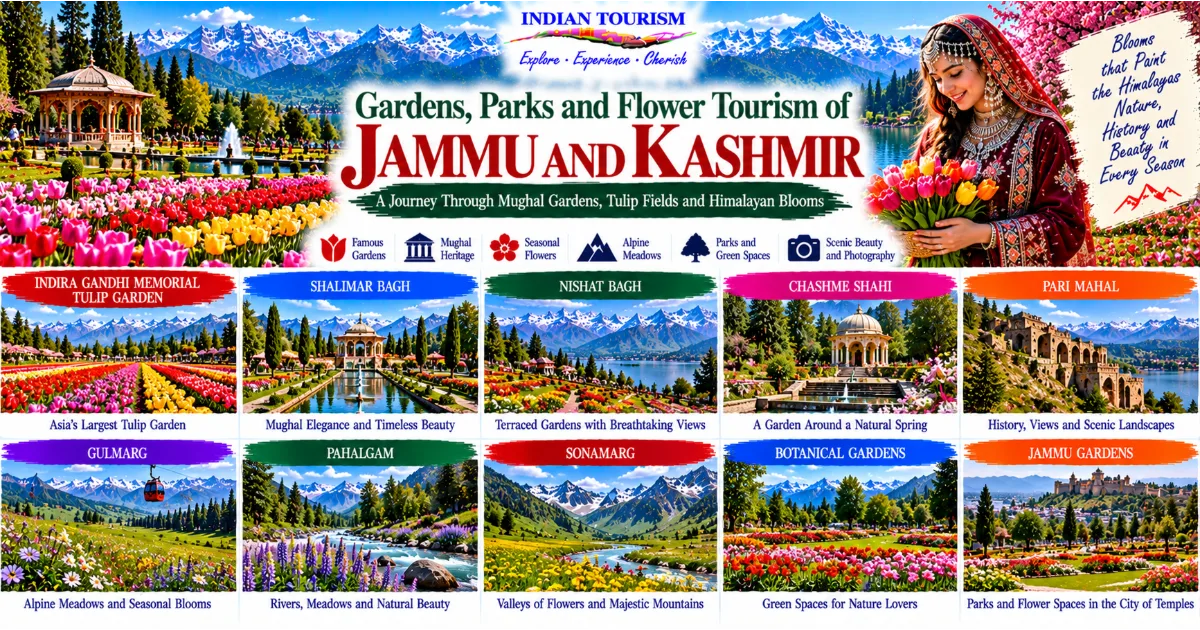
Jammu and Kashmir is famous for its snow-covered mountains, peaceful lakes, green valleys and historic architecture. Among its most beautiful attractions are its gardens and seasonal flower landscapes, where carefully designed spaces and natural vegetation create memorable experiences for visitors. From the historic Mughal gardens of Srinagar to colourful spring flower displays and open meadows surrounded by mountains, the region offers a wide variety of experiences for travellers who appreciate nature, photography, history and outdoor exploration.
Gardens have a special place in the history of Kashmir. During the Mughal period, rulers developed landscaped gardens that combined terraces, water channels, fountains, trees and carefully arranged viewpoints. These gardens reflected ideas about beauty, order and royal leisure, while making use of the valley's natural scenery. Today, historic gardens such as Shalimar Bagh, Nishat Bagh and Chashme Shahi remain important attractions, allowing visitors to appreciate the relationship between architecture, water and landscape design.
Spring brings another dimension to the region's appeal. Flowering trees, tulips, ornamental plants and fresh greenery transform parks and gardens, creating opportunities for photography and relaxed outdoor visits. The Indira Gandhi Memorial Tulip Garden in Srinagar is especially well known for its seasonal flower display, which attracts visitors during the spring flowering period.
Beyond formal gardens, Jammu and Kashmir contains natural meadows, forest clearings and mountain landscapes where wildflowers appear according to elevation, rainfall and seasonal conditions. Places around Pahalgam, Gulmarg and other mountain destinations provide opportunities to enjoy flowering landscapes alongside rivers, forests and snow-covered peaks.
Garden and flower tourism can be enjoyed by a wide range of travellers. Families may prefer accessible gardens and parks, while photographers may plan trips around flowering periods. History enthusiasts can explore Mughal landscape design, and experienced walkers can discover meadows and mountain trails where flowers grow naturally.
This guide explores the major gardens, parks and flower destinations of Jammu and Kashmir, explains their seasonal character and provides practical advice for planning a visit while protecting the natural and cultural landscapes that make the region special.
Indira Gandhi Memorial Tulip Garden: Srinagar's Famous Spring Attraction
The Indira Gandhi Memorial Tulip Garden is one of Srinagar's most celebrated seasonal attractions. Located on the slopes overlooking Dal Lake, the garden offers views of the surrounding mountains and water while displaying large collections of tulips during the spring flowering season.
The garden is designed to showcase rows of tulips in different colours, creating a striking visual landscape. Visitors may see red, yellow, pink, purple, white and other varieties depending on the planting programme and the stage of flowering. The arrangement of flowers across the sloping terrain creates a distinctive setting that combines horticulture with the natural scenery of Kashmir.
The flowering period is seasonal rather than fixed. Temperature, snowfall, rainfall and other weather conditions influence when tulips open and how long the display remains attractive. Some years may bring an earlier flowering period, while colder conditions can delay the season. Travellers should check the current opening dates and flowering updates before making a special journey.
The garden can become busy during the peak flowering period, particularly on weekends and holidays. Visitors who prefer a quieter experience may consider visiting at less crowded times, subject to the garden's current opening arrangements. Allow enough time to walk through the different sections, appreciate the flower displays and enjoy the views.
The garden is especially popular with photographers. Wide views across the flower beds can create attractive compositions, while close-up photography reveals the variety of colours and forms. Visitors should remain on designated paths and avoid stepping into flower beds for photographs.
Families should keep children within permitted areas and explain the importance of protecting plants. Picking flowers, damaging bulbs or walking through planted sections can harm the display and reduce its quality for other visitors.
The Tulip Garden is a seasonal attraction, so it should not be assumed that the full display will be available throughout spring or during other months. Planning around the actual flowering conditions is essential.
For travellers visiting Srinagar during spring, the garden offers a memorable combination of colour, mountain views and horticultural design. It also demonstrates how seasonal flower tourism can support local businesses while creating an important public attraction.
Shalimar Bagh: The Garden of Royal Elegance
Shalimar Bagh is one of the best-known Mughal gardens in Srinagar. Associated with the Mughal emperor Jahangir and his appreciation of Kashmir, the garden represents a tradition of landscape design in which water, terraces, trees and architecture were arranged to create a carefully controlled natural setting.
The garden's layout reflects the Mughal interest in symmetry, movement and visual order. Terraces guide visitors through different levels, while water channels and fountains create connections between the landscape's separate sections. Trees provide shade and structure, and the surrounding scenery contributes to the garden's wider visual character.
Shalimar Bagh is not simply a place filled with flowers. Its importance also lies in its historical design. The arrangement of spaces reflects how gardens were used for royal leisure and how landscape architecture could communicate ideas about refinement, authority and harmony with nature.
The garden changes character through the seasons. Spring brings fresh growth and flowering plants, while summer offers shade and greener surroundings. Autumn introduces warmer colours, and winter creates a quieter atmosphere when many ornamental plants are dormant.
Visitors interested in history should take time to observe the relationship between terraces, water features and the surrounding landscape. A guide or reliable interpretive material can help explain the garden's historical development and architectural details.
Shalimar Bagh can become busy during popular travel periods, especially when the weather is pleasant. Comfortable footwear is useful because exploring the garden involves walking across paths and different levels.
Visitors should respect the historic structures and landscaped areas. Avoid damaging plants, climbing on decorative elements or leaving rubbish behind. Water channels and fountains are part of the garden's heritage and should not be treated as play areas.
Shalimar Bagh offers an opportunity to experience Kashmir's garden heritage through both design and seasonal beauty. It is particularly rewarding for travellers who appreciate the combination of history, horticulture and landscape scenery.
Nishat Bagh: Terraced Gardens Overlooking Dal Lake
Nishat Bagh is another important Mughal garden in Srinagar. Located beside Dal Lake, it is known for its terraced layout and broad views of the water and surrounding mountains.
The garden's design uses changes in elevation to create a sequence of spaces. As visitors move through the terraces, different views of the lake and landscape appear. Water channels and fountains contribute to the arrangement, while trees and planted areas create shade and seasonal colour.
Nishat Bagh demonstrates how Mughal garden designers used the natural terrain to shape the visitor's experience. The slope becomes part of the design rather than an obstacle, allowing the garden to unfold gradually as people move from one level to another.
Spring can bring fresh greenery and flowering plants, while summer often provides a lush environment for walking. Autumn introduces a different palette of colours, and winter offers views of the landscape in a quieter state.
The garden's position beside Dal Lake makes it easy to include in a broader Srinagar itinerary. Visitors can combine a garden visit with suitable waterfront activities or other nearby attractions, depending on the time available.
Photography is a major attraction because the terraces frame views of Dal Lake and the mountains. Visitors should use designated paths and avoid damaging plants or entering restricted sections to obtain a better angle.
Nishat Bagh is a popular heritage site, so crowd levels can vary considerably. Travellers who want time for photography and relaxed exploration should avoid planning too many attractions in a single afternoon.
The garden's value comes from the relationship between landscape design and natural scenery. It offers a clear example of how historic gardens can remain attractive while preserving the ideas and craftsmanship that shaped them centuries ago.
Chashme Shahi: A Garden Built Around a Natural Spring
Chashme Shahi is a historic garden located on the slopes above Dal Lake. It is associated with a natural spring and is known for its compact terraced layout, water features and elevated setting.
Compared with Shalimar Bagh and Nishat Bagh, Chashme Shahi is smaller, but its setting gives it a distinctive character. The garden makes use of the hillside and its water source to create a series of connected spaces. Visitors can appreciate how the design brings together terrain, flowing water and carefully arranged planting.
The garden is associated with the Mughal period and forms part of Srinagar's wider landscape heritage. Its position provides views across the surrounding area, while the spring adds a natural element to the designed environment.
Spring and summer can be pleasant times to explore the garden, although the experience depends on weather and maintenance conditions. The planted areas change through the year, and visitors should not expect the same flower display in every season.
Chashme Shahi can be combined with other nearby attractions, but travellers should allow time for walking and exploring the terraces. Comfortable footwear is recommended, especially for visitors who find steps or uneven paths difficult.
The spring and water features should be treated respectfully. Visitors should follow local rules about access and avoid contaminating or disturbing the water.
Chashme Shahi illustrates how natural water sources influenced historic garden design. Its relatively compact scale also makes it a useful destination for travellers who want to experience Kashmir's Mughal gardens without spending an entire day at one location.
Pari Mahal: Terraced Heritage and Hilltop Views
Pari Mahal is a historic terraced structure located on a hillside overlooking Dal Lake and Srinagar. Although it is not a flower garden in the same sense as the Mughal gardens, its stepped layout, planted surroundings and elevated position make it an important destination for travellers interested in garden heritage and landscape design.
The site is associated with the Mughal period and with Dara Shikoh. Its history is commonly linked with scholarly and spiritual activities. The surviving structure includes terraces and architectural remains that follow the contours of the hillside.
The relationship between architecture and landscape is one of Pari Mahal's defining features. Its elevated position creates wide views of the city and lake, while the terraced arrangement offers a sequence of spaces that can be appreciated from different viewpoints.
The amount of flowering vegetation visible at any particular time depends on season and maintenance. Travellers should visit primarily for the historic structure, the landscape and the views rather than expecting a large seasonal flower display.
Photography is popular at Pari Mahal, particularly when the light is soft and the lake is visible beneath the surrounding hills. Visitors should remain within permitted areas and avoid climbing on walls or fragile structures.
The site can be included in a broader itinerary covering Srinagar's gardens and waterfront attractions. Travellers should confirm current opening arrangements and access rules before visiting.
Pari Mahal demonstrates that garden heritage is not limited to flower beds. Terraces, stonework, elevation and views can all contribute to the experience of a historic landscape.
Botanical and Public Gardens of Srinagar
Srinagar contains public gardens and landscaped areas that provide opportunities for relaxed outdoor visits beyond the most famous Mughal sites. These spaces can be useful for families, travellers seeking a quiet walk and visitors who want to enjoy greenery without committing to a longer excursion.
Public gardens may contain ornamental plants, lawns, trees, flower beds and walking paths. The appearance of these spaces changes through the seasons, and maintenance schedules influence the quality of the displays.
Travellers interested in horticulture can observe how different plants are arranged according to colour, height, flowering period and growing conditions. These gardens may also provide useful examples of how public green spaces serve urban communities by offering places for recreation and rest.
Families should follow local rules concerning picnics, play areas, litter and access to planted sections. Not every landscaped area permits the same activities, so visitors should check signs and instructions.
Public gardens are also valuable for people who want to experience the daily life of Srinagar. Residents may use them for walking, meeting friends or spending time outdoors, especially when the weather is comfortable.
A garden visit can be combined with nearby historical or cultural attractions, depending on the location. However, travellers should confirm current opening times rather than assume that all gardens operate on the same schedule.
Public green spaces play an important role in urban life. Respecting their rules and keeping them clean helps ensure that residents and visitors can continue to enjoy them.
Gulmarg: Alpine Meadows and Seasonal Wildflowers
Gulmarg is best known for its mountain scenery, winter snow and outdoor activities, but its meadows also provide an important seasonal landscape during warmer months. As snow retreats, grassy slopes and open areas develop fresh vegetation, and wildflowers may appear according to local conditions.
The experience in Gulmarg differs from visiting a formal garden. Rather than carefully arranged flower beds, travellers encounter a natural landscape shaped by elevation, weather and grazing or other land uses. The variety and timing of flowering depend on the location and season.
Summer is often a suitable period for exploring accessible meadows and walking routes, although weather can change quickly. Travellers should confirm the availability of activities and the condition of paths before setting out.
Visitors can enjoy photography, nature walks and views of surrounding mountain ranges. Suitable guided walks may help travellers identify local plants and understand how vegetation changes with altitude.
It is important not to pick wildflowers or trample sensitive vegetation for photographs. Mountain ecosystems can be fragile, and damage to plants may take time to recover. Staying on established paths and following local guidance helps protect the landscape.
Gulmarg can also become busy during popular travel periods. Visitors should plan transport and accommodation according to the season and allow extra time when roads are crowded.
For travellers who appreciate flowers in a natural setting, Gulmarg provides a valuable contrast to Srinagar's designed gardens. It combines open meadows, mountain scenery and seasonal plant life in a landscape that changes throughout the year.
Pahalgam: River Valleys, Meadows and Natural Landscapes
Pahalgam is known for its mountain scenery, forests, river views and open meadows. Its natural landscapes offer opportunities to enjoy seasonal greenery and wildflowers, although the exact appearance depends on weather, elevation and the particular area visited.
The Lidder River is one of Pahalgam's defining features. River views, wooded slopes and nearby meadows create a varied environment for outdoor exploration. During warmer months, the landscape can become particularly attractive for walking and photography.
Visitors should distinguish between accessible areas around the main town and more remote mountain routes. Some locations can be reached relatively easily, while others require longer walks or authorised local transport. Access conditions may change according to weather, road maintenance and administrative decisions.
Wildflowers can add colour to open meadows and roadside areas, but their presence varies from year to year. Travellers should avoid expecting a fixed display at a particular date unless current local information supports that expectation.
Nature walks are most rewarding when undertaken at a comfortable pace. Visitors can observe the relationship between vegetation, water and mountain terrain while allowing time to appreciate the wider landscape.
The natural environment should be treated carefully. Avoid littering, damaging plants or disturbing livestock and wildlife. Riverbanks can be slippery, and mountain water can be dangerously cold or fast-moving, so visitors should maintain a safe distance from the river.
Pahalgam is a useful destination for travellers who want to combine floral scenery with broader outdoor experiences. Its landscapes provide a reminder that flower tourism can include natural meadows and river valleys rather than only formal gardens.
Sonamarg: Seasonal Flowers in a High-Mountain Setting
Sonamarg is associated with high mountain scenery, river landscapes and access to alpine environments. During warmer months, parts of the surrounding landscape may develop green meadows and seasonal flowers as snow retreats from lower elevations.
The timing of flowering varies with altitude and weather. Areas that are green in one part of the season may remain snow-covered at another time, so travellers should not assume that every meadow will be in bloom during a visit.
Sonamarg is better suited to travellers who appreciate a combination of mountain scenery and outdoor exploration rather than those seeking formal flower displays. The wider landscape includes steep slopes, open valleys and changing views of surrounding peaks.
Visitors can explore suitable public areas and established walking routes, depending on local access conditions. More remote areas may require guidance, suitable equipment and careful planning.
Weather can change rapidly in the mountains, and temperatures may be low even when the valley below is warm. Travellers should bring appropriate clothing and check conditions before setting out.
Wildflowers should be observed without picking or damaging them. Visitors should also avoid leaving rubbish in meadows or near streams, as waste can harm sensitive mountain environments.
Sonamarg offers an opportunity to appreciate seasonal vegetation as part of a larger Himalayan landscape. Its appeal lies in the combination of mountain views, open spaces and the natural changes that occur as the seasons progress.
Jammu's Gardens and Green Spaces
The Jammu region also offers gardens, parks and landscaped spaces where visitors can enjoy greenery and seasonal planting. The experience differs from Kashmir's lakeside Mughal gardens because Jammu has its own climate, urban development patterns and regional landscape.
Public parks can provide places for walking, relaxation and family outings. Depending on the location, they may include lawns, flowering plants, shaded paths and viewpoints. These spaces are particularly useful for travellers who want a break from crowded markets or historical sightseeing.
The climate of Jammu differs from that of the Kashmir Valley, and seasonal planting schedules may therefore vary. Flowering periods should be checked locally if a visit is planned specifically around a garden display.
Travellers can combine public green spaces with nearby heritage attractions, temples, markets and cultural destinations. The most suitable itinerary depends on the time available and current access arrangements.
Visitors should follow rules concerning picnics, litter and the use of landscaped areas. Plants and lawns can be damaged by heavy foot traffic, and keeping gardens clean helps preserve them for everyone.
Jammu's green spaces demonstrate that garden tourism is not limited to the famous sites of Srinagar. Urban parks can also provide valuable outdoor experiences and opportunities to appreciate regional horticulture.
Best Seasons for Garden and Flower Tourism
The best time to explore gardens and seasonal flowers in Jammu and Kashmir depends on the type of experience a traveller wants.
Spring is especially important for tulips, flowering trees and fresh growth in Srinagar. The Tulip Garden is a seasonal attraction, and the precise flowering window depends on weather conditions. Travellers should check current announcements before booking a trip around the display.
Late spring and summer can be suitable for exploring Mughal gardens, public parks and accessible mountain meadows. Trees provide shade in some locations, while mountain areas offer cooler conditions. Popular destinations may become crowded during holidays, so advance planning is useful.
Summer is often a practical period for exploring accessible parts of Gulmarg, Pahalgam and Sonamarg. However, flowering varies by elevation and weather, and visitors should not assume that every area will display the same plants at the same time.
Autumn provides a different garden experience, with changing leaf colours and cooler temperatures. Some flower displays may be less prominent than in spring, but the landscape can still be attractive for photography and relaxed walks.
Winter offers a quieter experience at many gardens, although some planted areas may be dormant or affected by snow and cold conditions. Visitors should confirm opening arrangements and dress appropriately.
The most reliable approach is to match the destination with the season rather than expecting a single flowering calendar to apply across the region. Local weather and current garden information are valuable when planning a trip.
Photography Tips for Gardens and Flower Landscapes
Gardens and seasonal flower displays provide excellent opportunities for photography, but a few simple choices can make the experience more rewarding.
Early morning and late afternoon often provide softer light than the middle of the day. However, the best time depends on the garden's opening hours, weather and the direction of the light. Visitors should prioritise permitted access and safe movement rather than attempting to reach a closed area for a photograph.
Wide compositions can show the relationship between flower beds, terraces, lakes and mountains. Close-up images can reveal the colour and structure of individual flowers, while photographs of pathways and water features can highlight the design of historic gardens.
Visitors should avoid stepping into flower beds, picking flowers or moving barriers to improve a composition. Tripods and other equipment may be restricted in some locations, so the rules should be checked before use.
When photographing other visitors, ask permission for close-up portraits. Public gardens may be crowded, and people should not be treated as part of a scene without consideration for their privacy.
For natural meadows, remain on established paths and avoid damaging plants. Travellers should never risk slipping near water or standing on unstable ground for a particular view.
Photography is most rewarding when it encourages careful observation. Taking time to appreciate the landscape can create a stronger experience than focusing only on capturing as many images as possible.
Responsible Garden Tourism and Environmental Protection
Gardens and flower landscapes require care because plants, soil and water systems can be damaged by careless visitor behaviour. Responsible tourism helps protect these places while allowing people to enjoy their beauty.
Visitors should remain on designated paths and avoid entering planted sections. Picking flowers, damaging bulbs, breaking branches or removing plants can harm both the current display and future growth.
Waste should be disposed of in appropriate facilities. Plastic packaging, food waste and other rubbish can damage the appearance of gardens and create problems for wildlife. Visitors should carry their rubbish until they can dispose of it properly.
Water features should be treated respectfully. Do not throw objects into channels, fountains or ponds, and follow any restrictions concerning access to water.
In natural meadows and mountain areas, visitors should avoid disturbing wildlife and should not remove wild plants. Some habitats are especially sensitive, and damage may take a long time to recover.
Supporting local businesses can help communities benefit from garden tourism. Visitors may use legitimate local guides, purchase products from nearby businesses and choose accommodation that manages waste responsibly.
Travellers should also recognise that gardens are public and cultural spaces used by residents. Keeping noise under control, respecting other visitors and following local rules help maintain a pleasant environment.
Responsible garden tourism protects more than flowers. It preserves historic design, public green spaces, natural habitats and the quality of experience for future visitors.
Conclusion: Discovering Jammu and Kashmir Through Its Gardens and Flowers
The gardens and flower landscapes of Jammu and Kashmir reveal the region's beauty through a combination of historic design, seasonal colour and natural scenery. The Indira Gandhi Memorial Tulip Garden provides a celebrated spring display, while Shalimar Bagh, Nishat Bagh and Chashme Shahi preserve the Mughal tradition of landscaped gardens shaped by terraces, water and mountain views.
Pari Mahal adds another dimension through its historic structure and elevated setting, while Gulmarg, Pahalgam and Sonamarg offer opportunities to enjoy natural meadows and seasonal vegetation. Gardens and green spaces in Jammu provide further ways to experience the region's outdoor environments.
Every destination has its own seasonal character. Flowering periods depend on weather, altitude and maintenance, so travellers should check current conditions rather than relying on fixed assumptions. Planning around the intended experience makes a visit more enjoyable and reduces the risk of disappointment.
The value of these landscapes extends beyond their appearance. Historic gardens preserve architectural traditions, public parks support urban life and mountain meadows provide habitats for plants and wildlife. Their continued beauty depends on responsible management and respectful visitor behaviour.
By staying on designated paths, avoiding damage to plants, disposing of waste properly and respecting local rules, travellers can help preserve these places for future generations.
A journey through the gardens and flower landscapes of Jammu and Kashmir offers more than attractive photographs. It provides an opportunity to appreciate the relationship between people, horticulture, history and the Himalayan environment. Travelling thoughtfully allows visitors to experience this beauty while helping protect the region's cultural and natural heritage.
#IndianTourism #JammuAndKashmir #KashmirGardens #TulipGarden #IndiraGandhiMemorialTulipGarden #ShalimarBagh #NishatBagh #ChashmeShahi #PariMahal #Gulmarg #Pahalgam #Sonamarg #FlowerTourism #GardenTourism #MughalGardens #SpringInKashmir #NaturePhotography #HimalayanLandscapes #ResponsibleTourism #ExploreIndia
