
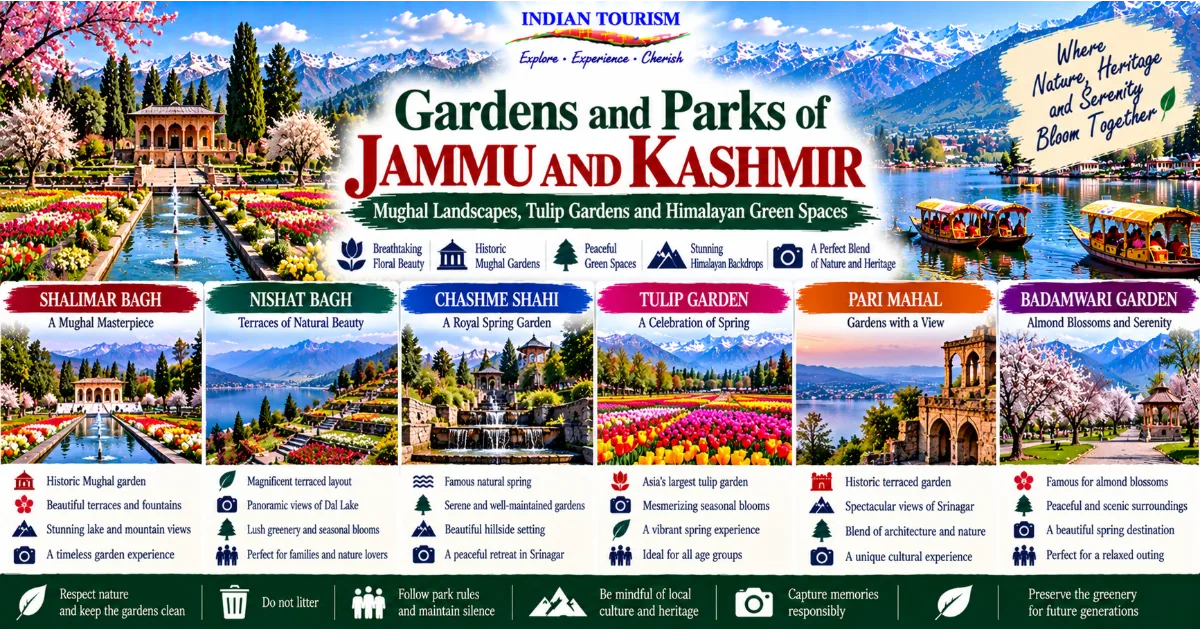
Where Nature and Garden Design Come Together
Jammu and Kashmir is celebrated for its snow-covered mountains, sparkling lakes, flower-filled meadows and traditional settlements. Among its most attractive features are its gardens and parks, which bring together natural beauty, cultural heritage, horticultural traditions and thoughtful landscape design. From the historic Mughal gardens of Srinagar to colourful spring displays at the Tulip Garden and peaceful green spaces across the Jammu region, these destinations offer travellers a refreshing way to explore the region beyond its mountains and lakes.
Gardens have played an important role in Kashmir's cultural history. During the Mughal period, rulers and members of the royal court developed gardens that combined terraces, water channels, fountains, trees and carefully arranged planting. These spaces reflected ideas about beauty, order, leisure and the relationship between architecture and nature. Their design took advantage of the Kashmir Valley's slopes, water sources and mountain views, creating landscapes that remain distinctive today.
Modern gardens and parks offer different experiences. Some are heritage attractions where visitors can study historical design and architecture. Others focus on seasonal flowers, recreation, walking and family outings. Public gardens can provide places for residents to relax, exercise and socialise, while botanical and horticultural spaces can introduce visitors to regional plants and cultivation traditions.
The experience changes with the seasons. Spring brings blossoms and fresh growth, summer creates lush green surroundings, autumn adds warm colours to trees and hills, and winter gives many landscapes a quieter appearance. The exact appearance of a garden depends on its location, altitude, weather and maintenance schedule, so travellers should plan according to the conditions expected during their visit.
This guide explores important gardens and parks in Jammu and Kashmir, explains their cultural and recreational value, and provides practical suggestions for enjoying them responsibly.
Shalimar Bagh: A Masterpiece of Mughal Garden Design
Shalimar Bagh is one of the most celebrated historic gardens in Srinagar. Developed under Mughal Emperor Jahangir in the early seventeenth century, the garden reflects the Mughal interest in combining landscape, architecture, water and carefully planned planting. Its setting near Dal Lake and the surrounding mountain scenery contribute to its enduring appeal.
The garden is arranged across terraces that guide visitors through a sequence of spaces. Water channels, fountains, trees and planted areas create a structured landscape in which each section offers a different perspective. The arrangement demonstrates how Mughal garden designers used changes in elevation and the movement of water to organise the visitor's experience.
Shalimar Bagh was associated with royal leisure and courtly life. Its design reflected the importance of gardens as places for relaxation, formal gatherings and the appreciation of nature. The garden's architecture and planting also expressed a particular aesthetic in which symmetry, water and controlled views were essential elements.
Visitors can explore the terraces at a comfortable pace, observe the relationship between the garden and its surroundings, and photograph the landscape from different viewpoints. The experience varies throughout the year. Spring brings fresh vegetation, summer offers dense greenery, and autumn introduces changing colours that can make the garden particularly attractive.
Shalimar Bagh is more than a beautiful public space. It is an important example of historical landscape design and provides insight into the cultural world of the Mughal period. Visitors who take time to understand its layout will gain a richer experience than those who simply walk through for photographs.
Because the garden is a heritage site, visitors should remain on permitted paths, avoid damaging plants and follow the instructions of site staff. The garden's historic structures and water features require continued maintenance, and respectful behaviour helps protect them for future generations.
Nishat Bagh: Terraces Overlooking Dal Lake
Nishat Bagh is another important Mughal garden in Srinagar, situated beside Dal Lake with the Zabarwan hills rising behind it. Its location creates a striking combination of formal garden design and broad natural views.
The garden is known for its terraced layout, which takes advantage of the slope between the hillside and the lake. As visitors move through the terraces, the changing elevation creates different views of the water, mountains and surrounding landscape. This arrangement demonstrates how Mughal designers adapted garden architecture to the natural topography of Kashmir.
Nishat Bagh was developed during the seventeenth century and is associated with Asif Khan, the brother of Nur Jahan. Its design reflects the broader Mughal tradition of creating gardens that combined horticulture, architecture and landscape planning. Water channels and planted areas contribute to the garden's visual order, while the lake and mountains provide a dramatic backdrop.
The garden can be especially attractive during spring and summer, when vegetation is fresh and the terraces are filled with colour. Autumn offers a different atmosphere as trees change colour and the light becomes softer. Visitors should remember that flowering and foliage vary with the weather and maintenance schedule.
Nishat Bagh is suitable for families, couples, photographers and travellers interested in architecture. The terraced layout includes steps and sloping paths, so visitors with mobility concerns should check access conditions before arriving.
The garden can be combined with a visit to Shalimar Bagh or other attractions around Dal Lake. However, allowing time to sit, observe the scenery and appreciate the layout makes the visit more rewarding than rushing between multiple destinations.
Chashme Shahi: A Garden Built Around a Natural Spring
Chashme Shahi is a smaller Mughal garden in Srinagar, located on the slopes above Dal Lake. It is associated with the Mughal period and is particularly known for its natural spring and compact terraced design.
The garden's layout demonstrates how water could serve as both a practical resource and an essential feature of landscape design. Channels and terraces guide the movement of water through the garden, creating a sequence of spaces that combines architecture with the surrounding hillside.
Its relatively compact scale gives Chashme Shahi a different character from the larger Mughal gardens. Visitors can explore its terraces without needing as much time, although the steps and slopes still require care. The elevated setting offers attractive views of the surrounding landscape, making it a popular stop for visitors exploring Srinagar's historic gardens.
The spring has traditionally been an important feature of the garden's identity. Visitors should follow current instructions concerning water access and should not assume that water from a historical spring is suitable for drinking without official confirmation.
Chashme Shahi can be included in a broader itinerary featuring Pari Mahal and other hillside attractions. Travellers should check opening hours, entry arrangements and road conditions before visiting.
For those interested in the history of garden design, Chashme Shahi offers an opportunity to observe how Mughal landscape planning adapted to natural water sources and uneven terrain. Its smaller scale also allows visitors to focus on the details of the design.
Indira Gandhi Memorial Tulip Garden: A Celebration of Spring
The Indira Gandhi Memorial Tulip Garden in Srinagar is one of Kashmir's most recognisable seasonal attractions. Situated on the foothills of the Zabarwan Range overlooking Dal Lake, the garden is known for its colourful tulip displays and broad views across the surrounding landscape.
The garden becomes particularly popular during the annual Tulip Festival, which celebrates the arrival of spring. Rows of flowering tulips create vivid patterns across the terraced landscape, attracting visitors interested in photography, horticulture and seasonal travel.
The flowering period depends on weather conditions. Temperatures, rainfall and other seasonal factors influence when the tulips bloom and how long the displays remain at their best. Visitors should therefore check current announcements before planning a trip specifically for the flowers.
The garden's appeal extends beyond the tulips themselves. Its setting combines cultivated flower beds with views of the mountains and lake, creating an experience that links horticulture with Kashmir's wider landscape. Spring visitors may also explore other gardens, local markets and cultural attractions in Srinagar.
The Tulip Festival can increase demand for accommodation and transport, particularly during weekends and public holidays. Travellers should consider booking early and arriving at a suitable time to avoid the busiest periods where possible.
Visitors should remain on designated paths and avoid entering flower beds or picking flowers. The displays require considerable work to maintain, and even small acts of damage can affect the experience for other visitors.
The garden is an excellent choice for travellers who want to experience Kashmir during spring. It also provides an opportunity to learn about horticulture, seasonal tourism and the role of gardens in supporting local businesses.
Pari Mahal: Terraced Gardens Above Srinagar
Pari Mahal is a historic garden complex on the Zabarwan hills overlooking Srinagar and Dal Lake. Associated with the Mughal period and traditionally linked with Dara Shikoh, the site combines terraces, masonry structures and views across the surrounding landscape.
Unlike a garden dominated by extensive flower beds, Pari Mahal is notable for its architectural framework and terraced arrangement. The retaining walls and elevated platforms create a series of spaces that follow the hillside, allowing visitors to experience the landscape from different viewpoints.
The complex is historically associated with scholarly and educational activity, although interpretations of its precise uses have developed through historical research and tradition. Its position above Srinagar makes it a valuable destination for travellers interested in the relationship between architecture, landscape and cultural history.
Visitors can explore the permitted areas, observe the stonework and enjoy views of the city and lake. Steps and uneven surfaces may be present, so comfortable footwear is advisable. Travellers with mobility requirements should check access arrangements before visiting.
Pari Mahal can be combined with Chashme Shahi and other attractions on the hills overlooking Dal Lake. It is particularly rewarding for photographers and visitors who appreciate historical structures within natural settings.
The site should be treated as a heritage complex rather than simply a viewpoint. Respecting the structures, avoiding litter and following staff instructions help protect its architectural features.
Badamwari Garden: Almond Blossoms and Spring Traditions
Badamwari Garden, located in the old city area of Srinagar, is known for its almond trees and its association with the arrival of spring. When the trees blossom, the garden becomes an attractive place for visitors who want to experience a seasonal transformation within an urban setting.
The garden's appeal comes from the delicate blossoms, shaded paths and views of the surrounding landscape. Spring flowering creates a different atmosphere from the colourful tulip displays at the larger horticultural garden, offering a more understated experience centred on trees and seasonal change.
Badamwari also has cultural significance because the flowering of almond trees is closely associated with the transition from winter to spring in Kashmir. Seasonal blossoms can become part of local memory, photography and family outings, demonstrating how natural events contribute to a region's cultural identity.
The timing of the blossoms varies according to weather conditions. Warmer periods can bring earlier flowering, while colder weather may delay it. Visitors planning a trip specifically for the almond blossoms should check recent local updates rather than rely on a fixed date from an earlier year.
The garden can be included in a visit to Srinagar's historic neighbourhoods and nearby heritage attractions. Visitors should allow time to explore the surrounding area while remaining respectful of local residents and the everyday activities taking place nearby.
As with other public gardens, responsible behaviour matters. Travellers should avoid damaging branches, picking blossoms or leaving waste behind. The garden is a shared public space, and its beauty depends on both maintenance and visitor care.
Botanical and Public Gardens in Jammu
The Jammu region offers its own range of parks, landscaped areas and public green spaces. These destinations provide opportunities for walking, family outings and relaxation, especially for travellers who want a break from urban sightseeing.
Public gardens in Jammu vary in size, facilities and character. Some are primarily recreational spaces, while others are associated with historic landmarks or provide views of the surrounding hills. Visitors may find walking paths, lawns, planted areas and shaded places to rest, although facilities depend on the individual park.
The city's climate differs from that of the Kashmir Valley, particularly during the hotter months. Spring and the cooler part of the year can be more comfortable for exploring outdoor spaces. During summer, visitors should plan walks for cooler parts of the day, carry drinking water and use sun protection.
Parks also form an important part of urban life. Residents use them for exercise, social gatherings, children's activities and quiet relaxation. Travellers should remember that these spaces serve local communities and should avoid behaviour that disrupts their use.
Visitors interested in plants can use a garden visit to learn about regional horticulture and the challenges of maintaining green spaces in different climates. The types of trees and flowering plants found in Jammu may differ from those common in the Kashmir Valley because of differences in temperature, rainfall and elevation.
Because the names, facilities and opening arrangements of local parks can change, travellers should verify current information before making a special journey to a particular site. A flexible itinerary makes it easier to enjoy the gardens that are accessible during the visit.
Parks and Green Spaces Around Srinagar
Srinagar's gardens are closely associated with the city's lakes, mountains and historic neighbourhoods. In addition to the major Mughal gardens, the city contains public green spaces and landscaped areas that provide opportunities for walking and spending time outdoors.
These spaces offer a different experience from the formal terraces of Shalimar Bagh and Nishat Bagh. Some are designed for recreation and everyday use, while others provide landscaped settings near cultural attractions. Their value lies in making green space accessible to residents and visitors.
A park visit can be a useful way to slow down during a busy travel itinerary. Instead of moving constantly between monuments and markets, travellers can spend time observing local life, enjoying the changing light and appreciating the relationship between the city and its natural surroundings.
Families may prefer parks with open lawns and accessible paths, while photographers may seek locations with views of mountains, trees or nearby water. The suitability of a particular space depends on its facilities, maintenance and current access arrangements.
Visitors should check whether food, sports equipment or other activities are permitted in the park they intend to visit. Keeping noise at a reasonable level, disposing of waste properly and respecting other users contribute to a pleasant experience.
Public green spaces also provide insight into how a city manages its environment. Trees and landscaped areas can offer shade, support biodiversity and improve the experience of walking through urban neighbourhoods.
Seasonal Garden Experiences in Jammu and Kashmir
Each season creates a different garden experience in Jammu and Kashmir. Travellers who understand these seasonal changes can plan visits that match their interests, whether they prefer flowering displays, green landscapes, autumn colours or quiet winter scenery.
Spring is particularly popular for gardens in Srinagar. Almond blossoms, tulips and fresh vegetation make this an attractive period for photography and horticultural visits. The timing of flowering varies from year to year, so visitors should check current conditions before booking travel around a specific display.
Summer offers lush greenery and longer daylight hours. Trees provide shade, and gardens can be pleasant places to spend time outdoors. Popular sites may be busy during holidays, so visiting early in the day can provide a more relaxed experience.
Autumn brings changing colours to many trees and garden landscapes. The softer light and cooler temperatures can make outdoor exploration comfortable, although the appearance of each garden depends on local planting and weather.
Winter offers a quieter experience. Some gardens may have reduced opening hours or limited facilities, and snow or ice can affect paths and roads. Visitors should check conditions before travelling and wear suitable clothing.
The most important principle is to plan according to the garden's actual seasonal features rather than assuming that every destination looks the same throughout the year. A garden known for spring flowers may offer a different experience in autumn, while historic gardens remain interesting because of their layout and architecture.
How to Plan a Garden Tour of Jammu and Kashmir
A well-planned garden tour should group destinations according to location. In Srinagar, visitors can combine Shalimar Bagh, Nishat Bagh and the Tulip Garden within a broader itinerary around Dal Lake and the Zabarwan hills. Chashme Shahi and Pari Mahal can be included on a separate route depending on opening arrangements and travel time.
Badamwari Garden is best considered according to the timing of the almond blossoms. Visitors should verify current flowering conditions before making it the main purpose of a trip.
A visit to Jammu can include public gardens and green spaces alongside the city's forts, temples and palaces. The choice of parks should depend on available time, current facilities and the traveller's interests.
Visitors should avoid scheduling too many destinations in one day. Traffic, entry procedures, photography stops and time spent walking through large gardens can make travel slower than expected. Allowing breaks and keeping some flexibility makes the experience more enjoyable.
Comfortable footwear is useful because many historic gardens contain steps, terraces and uneven paths. Travellers should carry water, sun protection and a light jacket according to the season. People with mobility concerns should check accessibility before visiting sites with steep terrain.
A local guide can add value at historic gardens by explaining their design, historical context and relationship with the surrounding landscape. For public parks, simply spending time observing local life may be enough to create a meaningful experience.
Responsible Garden Tourism and Environmental Care
Gardens and parks are living environments that require ongoing maintenance. Flowers, trees, lawns, water channels and historic structures can be damaged by careless behaviour, while litter and excessive noise reduce the experience for everyone.
Visitors should remain on designated paths and avoid walking through flower beds. Picking flowers, breaking branches or carving names into trees can cause lasting damage. Travellers should use designated waste bins and carry rubbish with them when suitable disposal facilities are not available.
Water features deserve particular care. Visitors should not throw waste into channels or ponds, and should follow restrictions around fountains and historic water systems. These features may be important parts of the garden's design and require careful management.
Supporting local businesses can help communities benefit from tourism. Visitors may choose legitimate guides, local transport providers and regional craft sellers where appropriate. Purchasing authentic local products can support livelihoods connected with the wider tourism economy.
Respect for other visitors is equally important. Gardens are shared spaces, and photography should not obstruct pathways or disturb families and individuals. Drones and commercial photography may be restricted, so visitors should confirm rules before using specialised equipment.
Responsible tourism also includes respecting the historical significance of heritage gardens. Their design, structures and planting arrangements are part of the region's cultural legacy. Protecting these features helps preserve both the visitor experience and the historical value of the sites.
Conclusion: Discover the Green and Cultural Side of Jammu and Kashmir
The gardens and parks of Jammu and Kashmir offer a remarkable combination of natural beauty, cultural history and seasonal experiences. Shalimar Bagh and Nishat Bagh demonstrate the sophistication of Mughal landscape design, while Chashme Shahi reveals how water and hillside terrain can shape a garden. Pari Mahal connects architecture with elevated views, and the Indira Gandhi Memorial Tulip Garden celebrates the arrival of spring through colourful floral displays.
Badamwari Garden provides a more intimate seasonal experience through its almond blossoms, while parks and green spaces in Jammu and Srinagar show how gardens continue to serve everyday community life. Together, these destinations offer travellers opportunities to appreciate horticulture, architecture, landscape and local culture.
The best garden journey is one that allows time for observation rather than treating each location as a quick photograph stop. Understanding the history of a garden, noticing its design and respecting the environment can make the visit far more meaningful.
Travellers should plan according to seasonal conditions, check opening arrangements, wear suitable footwear and follow site rules. Protecting flowers, trees, water features and historic structures is essential for the future of these destinations.
Jammu and Kashmir's gardens reveal a quieter side of the Himalayas, where human creativity and natural beauty have developed together over centuries. By exploring these spaces responsibly, visitors can experience the region's cultural heritage while helping preserve its green landscapes for future generations.
#IndianTourism #JammuAndKashmir #KashmirGardens #MughalGardens #ShalimarBagh #NishatBagh #ChashmeShahi #PariMahal #TulipGarden #BadamwariGarden #SrinagarTourism #JammuTourism #GardenTourism #NatureTravel #HeritageTourism #ExploreIndia
