
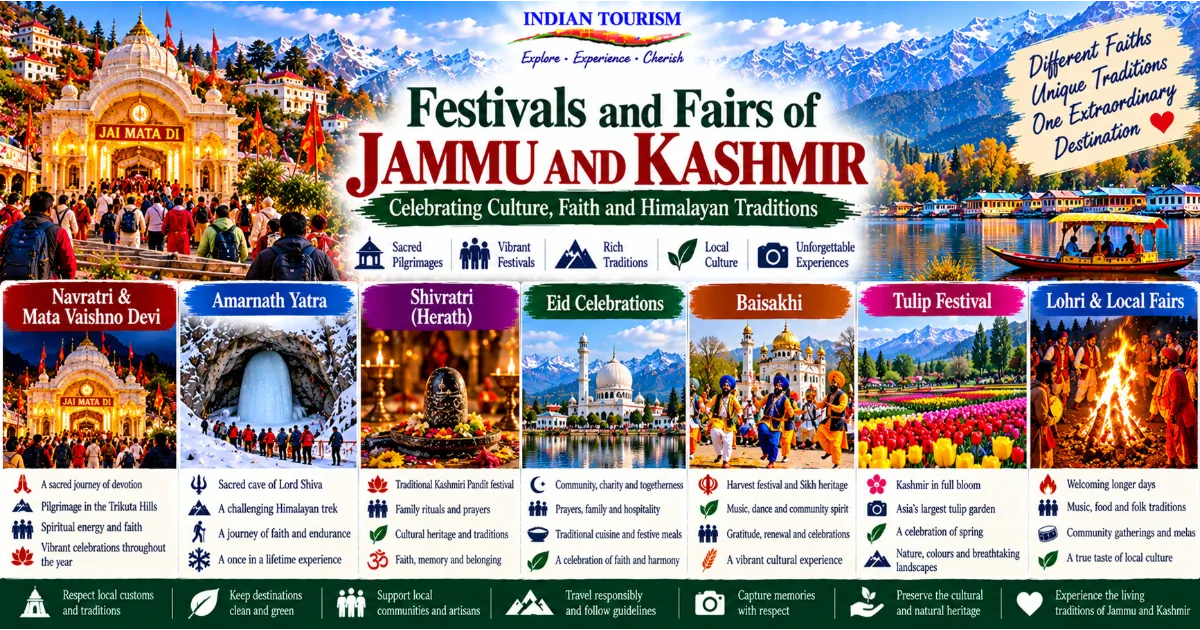
A Region Where Every Season Brings a Celebration
Jammu and Kashmir is a land of remarkable natural beauty, but its cultural richness is equally fascinating. Beyond the snow-covered mountains, beautiful valleys, lakes and traditional villages lies a vibrant calendar of festivals and fairs that brings communities together throughout the year. These celebrations reflect the region's religious diversity, agricultural traditions, seasonal changes, historical experiences, music, food and shared cultural memories. For travellers who want to understand Jammu and Kashmir beyond its famous tourist attractions, attending a local festival can provide a meaningful glimpse into the everyday lives and traditions of its people.
Festivals in Jammu and Kashmir are closely connected with the rhythm of the seasons. Spring brings renewed life to gardens, orchards and agricultural fields, while summer provides opportunities for outdoor gatherings and pilgrimage journeys. Autumn is associated with harvest traditions and changing landscapes, while winter brings its own customs, family gatherings and distinctive food traditions. Religious observances take place throughout the year, creating occasions for prayer, community participation and cultural expression.
The region's festivals are not limited to a single religious or cultural identity. Hindu, Muslim, Sikh and Buddhist traditions have all contributed to its diverse cultural landscape. Celebrations such as Navratri, Eid, Baisakhi, Shivratri, Lohri and the Tulip Festival represent different aspects of this diversity. Some events are primarily religious, others are connected with agriculture or the changing seasons, and several have become important attractions for cultural tourism.
For visitors, these celebrations offer opportunities to experience traditional music, local cuisine, handicrafts, clothing, rituals and hospitality. However, festivals are living cultural occasions rather than performances created exclusively for tourists. Travellers should approach them with respect, follow local customs and remember that the comfort and privacy of participants matter more than obtaining photographs or videos.
This guide explores important festivals and fairs across Jammu and Kashmir, explains their cultural significance and offers practical suggestions for planning a festival-focused journey.
Navratri and the Celebrations of Mata Vaishno Devi
Navratri is among the most important religious celebrations in the Jammu region, where devotion to the goddess has a particularly strong cultural presence. The festival is dedicated to the divine feminine and is observed through prayer, fasting, temple visits and community gatherings. For many devotees, it is a time to renew spiritual commitments and seek blessings for their families.
The city of Katra, which serves as the principal base for the Mata Vaishno Devi pilgrimage, becomes especially active during major Navratri periods. Pilgrims travel from different parts of India to undertake the journey to the shrine in the Trikuta Hills. The atmosphere in the town reflects a combination of religious devotion, organised pilgrimage activity and the hospitality of businesses serving visitors.
During these periods, temples and pilgrimage routes may experience increased crowds. Shops offer devotional items, food establishments serve pilgrims, and accommodation providers receive visitors arriving for the sacred journey. For travellers interested in religious tourism, the experience reveals how faith influences local commerce, transport, hospitality and community life.
Navratri celebrations vary across communities and locations. Some devotees observe fasting, while others participate in prayers, devotional singing and special temple ceremonies. Visitors should avoid assuming that every family follows identical customs. The best way to understand the festival is to observe respectfully and ask appropriate questions when speaking with local residents.
Anyone planning to visit Katra during Navratri should make accommodation and transport arrangements early. Crowds can affect journey times, and pilgrims should follow current instructions issued by the shrine authorities. Those who prefer a quieter experience may choose dates outside the busiest festival periods.
Navratri demonstrates the importance of religious traditions in the Jammu region. It also shows how a festival can connect individual devotion with a much larger network of pilgrimage, hospitality and cultural exchange.
Shivratri in Kashmir: A Celebration of Faith and Family Traditions
Shivratri holds a special place in Kashmiri Hindu tradition. Known locally among Kashmiri Pandits as Herath, the festival is associated with the worship of Lord Shiva and is celebrated through distinctive household rituals, prayers and family gatherings. Its customs reflect a cultural heritage that has been maintained across generations, including by families living outside Kashmir.
The observance is often marked by preparations that begin before the main festival day. Families organise religious items, prepare traditional food and make arrangements for worship. The festival's domestic character is important because it demonstrates how cultural traditions survive not only through public ceremonies but also through practices carried out within households.
For Kashmiri Pandit families, Herath can carry deep emotional meaning. Religious observances may connect people with childhood memories, family histories and the places where earlier generations lived. For those who have relocated from the Valley, celebrating the festival can provide a sense of continuity and belonging.
Visitors interested in understanding Herath should recognise that many of its most meaningful practices take place within private homes. It is not appropriate to expect access to family rituals or to photograph ceremonies without permission. Public temple visits may offer opportunities to observe aspects of the festival, but the customs followed by individual households should be treated with sensitivity.
The wider significance of Shivratri lies in the relationship between faith, memory and cultural identity. Festivals help communities preserve traditions during periods of social change, migration and generational transition. In Jammu and Kashmir, this connection between religion and cultural memory is particularly important.
Travellers can learn about the festival through conversations with knowledgeable community members, cultural programmes and heritage-focused visits. Approaching the subject with genuine curiosity rather than stereotypes allows visitors to appreciate the diversity of Kashmiri religious life.
Eid Celebrations: Community, Charity and Hospitality
Eid is an important celebration for Muslim communities across Jammu and Kashmir. The two major observances, Eid al-Fitr and Eid al-Adha, have different religious contexts but share themes of faith, generosity, family relationships and community participation.
Eid al-Fitr marks the conclusion of Ramadan, the Islamic month of fasting. It is celebrated through special prayers, family visits, festive meals and acts of charity. Before the festival, markets often become busier as families purchase clothing, gifts, sweets and ingredients for traditional dishes. The preparations contribute to a lively atmosphere in towns and cities, including Srinagar and Jammu.
Eid al-Adha commemorates the Islamic tradition of devotion and sacrifice. It is observed through prayer, charitable giving, family gatherings and other religious practices. The festival's meaning extends beyond the visible celebrations, emphasising responsibility, generosity and concern for people in need.
Food is an important part of Eid hospitality. Families may prepare dishes that reflect their regional traditions, and guests are often welcomed with considerable warmth. In Kashmir, festive meals can include local rice preparations, meat dishes, breads and sweets, although menus differ from household to household. The food served during Eid is part of a wider culinary heritage that connects family life with regional identity.
Visitors should understand that Eid is first and foremost a religious celebration. Travel schedules may be affected by prayer times, changes in business hours and family commitments. Some markets and restaurants may be especially busy before the festival, while certain businesses may operate on adjusted schedules during the celebration.
Non-Muslim travellers who happen to visit during Eid can appreciate the public atmosphere while remaining respectful of religious observances. If invited to a family gathering, visitors should follow their hosts' guidance regarding food, clothing and etiquette. Photography should always be handled sensitively, especially during prayer or private family moments.
Eid provides an opportunity to understand the importance of community life in Jammu and Kashmir. Its celebrations reveal how religious practice, hospitality and charity contribute to the social fabric of the region.
Baisakhi: Harvest, Renewal and Sikh Heritage
Baisakhi is celebrated in parts of Jammu and Kashmir and holds particular significance for Sikh communities. It is associated with the spring harvest in northern India and carries major religious importance in Sikh tradition because of its connection with the establishment of the Khalsa by Guru Gobind Singh in 1699.
For agricultural communities, the festival represents a moment of gratitude and hope. The arrival of the harvest season is connected with the hard work of farmers, the changing agricultural landscape and expectations for the future. Celebrations may include visits to gurdwaras, prayers, community meals and cultural gatherings.
In Sikh religious settings, Baisakhi provides an opportunity for worship and remembrance. Devotees gather at gurdwaras, listen to religious teachings and participate in community service. Langar, the shared meal offered in a spirit of equality and service, reflects a central principle of Sikh tradition.
The festival's agricultural dimension also connects it with rural life. Seasonal changes influence work in fields and orchards, while community celebrations reinforce relationships between families and neighbours. Visitors exploring the countryside during spring can gain a better understanding of how agriculture continues to influence regional customs and livelihoods.
Travellers attending Baisakhi celebrations should follow the practices of the gurdwara they visit. Covering the head, removing footwear before entering designated areas and maintaining respectful behaviour are customary expectations in many Sikh religious settings. Visitors should ask before taking photographs, especially where worshippers are praying.
Baisakhi is a reminder that the cultural identity of Jammu and Kashmir includes many traditions that deserve recognition. Its combination of religious remembrance, community service and seasonal celebration makes it a valuable part of the region's festival calendar.
Lohri: Welcoming Longer Days in the Jammu Region
Lohri is a popular winter festival in the Jammu region and other parts of northern India. It is associated with seasonal change, agricultural traditions and the gradual movement towards longer days. The festival is especially familiar in communities where winter gatherings, folk songs and family celebrations form part of local cultural life.
Traditional Lohri celebrations often take place around a communal fire. Families and neighbours gather, share food, sing folk songs and mark the occasion together. The fire has a central symbolic role in many celebrations, representing warmth and the seasonal transition during the colder part of the year.
In some households, Lohri is associated with important family milestones, including the birth of a child or a newly married couple's first festival after marriage. The specific customs vary, but the festival frequently creates an opportunity for relatives and neighbours to meet and exchange good wishes.
Food contributes significantly to the atmosphere. Seasonal ingredients such as sesame seeds, peanuts, jaggery and other traditional snacks are commonly associated with Lohri celebrations in northern India. Local households may add their own regional dishes, reflecting the diversity of food traditions across the Jammu region.
Visitors should remember that the most meaningful Lohri gatherings often take place in homes or neighbourhood settings. Public celebrations may offer opportunities to observe music and dancing, but private family events should not be treated as tourist attractions. Travellers should also follow local fire-safety practices and avoid leaving waste after outdoor gatherings.
For cultural travellers, Lohri offers an opportunity to experience the warmth of community life during winter. It reveals how seasonal changes are expressed through shared meals, folk traditions and family relationships.
The Tulip Festival in Srinagar: Spring in Full Bloom
The Tulip Festival is one of the most visually celebrated spring events in Kashmir. It takes place at the Indira Gandhi Memorial Tulip Garden in Srinagar, where thousands of tulips and other seasonal flowers create colourful displays against the surrounding mountains.
The festival celebrates the arrival of spring and highlights the horticultural appeal of the Kashmir Valley. After the cold winter months, the appearance of blooming flowers attracts visitors who want to experience the region's landscapes during a season of renewal. The garden's terraced setting and views towards the Zabarwan Range make it a popular destination for photographers and nature enthusiasts.
The opening period and duration of the festival depend on weather conditions and the flowering cycle. Warmer or colder temperatures can affect blooming, so the best dates vary from year to year. Visitors should check official announcements before finalising their travel plans rather than assuming that the garden will be at peak bloom on a fixed date.
The Tulip Festival has also become important for local tourism businesses. Hotels, restaurants, transport operators, guides, craft sellers and other service providers can benefit from the arrival of spring visitors. A well-planned trip can combine the garden with other attractions in Srinagar, including lakeside areas, historic gardens and local markets.
The festival provides an opportunity to appreciate Kashmir's horticultural traditions. Gardening, orchard cultivation and the care of plants are closely connected with the region's landscape and seasonal economy. The tulip displays are a public celebration of this relationship between cultivation and natural beauty.
Visitors should help protect the garden by remaining on designated paths, avoiding damage to flower beds and following photography rules. Picking flowers or entering restricted areas can harm the displays and reduce the experience for others.
For travellers seeking a colourful spring holiday, the Tulip Festival can be a highlight of a Kashmir itinerary. It is best enjoyed with realistic expectations because the natural timing of flowering cannot be controlled entirely by tourism schedules.
Baisakhi Melas and Rural Fairs: Celebrating Local Life
Fairs and melas are important expressions of community life in Jammu and Kashmir. Some are connected with religious observances, while others reflect seasonal celebrations, agricultural traditions or local customs. Their scale and character vary considerably, ranging from large gatherings at established pilgrimage centres to smaller events organised by villages and neighbourhood communities.
A traditional mela may include temporary stalls, food vendors, household goods, local crafts and entertainment. In some locations, religious activities form the central focus, while other fairs provide opportunities for people to meet relatives, socialise and purchase items that are not always available in nearby villages.
These gatherings can provide visitors with a more direct experience of local culture than a conventional sightseeing itinerary. The food, conversations, clothing and products on display often reflect the community organising the event. Travellers may discover regional snacks, handmade objects and local practices that are less visible in larger tourist markets.
However, fairs should not be assumed to follow a uniform schedule. Dates can depend on the local religious calendar, agricultural conditions, administrative arrangements and community decisions. Some events are widely publicised, while others are known mainly within the surrounding area.
Visitors planning to attend a local fair should confirm the date and location through reliable local sources. Transport and accommodation may be limited in smaller settlements, so advance planning is useful. Travellers should also be prepared for crowds, temporary traffic changes and basic facilities that may differ from those found in major tourist centres.
Purchasing products directly from local makers and vendors can help support rural livelihoods. Visitors should ask about the origin of handmade goods, pay fair prices and avoid buying items made from protected wildlife or other restricted materials.
The value of a mela lies not only in shopping or entertainment but also in the social relationships it sustains. For visitors, attending respectfully can offer a meaningful introduction to the community traditions that make Jammu and Kashmir culturally distinctive.
Saffron Harvest and Autumn Traditions in Pampore
Autumn in Kashmir is associated with changing foliage, harvest activity and the preparation of agricultural products for the colder months. One of the region's most distinctive agricultural traditions is saffron cultivation in the Pampore area of the Kashmir Valley.
Saffron is a valuable spice obtained from the delicate red stigmas of the crocus flower. Its cultivation requires careful work, and harvesting is labour-intensive. The flowers bloom during a limited period, making the season important for farmers and the communities connected with saffron production.
The sight of saffron flowers emerging from the soil is closely associated with the agricultural identity of Pampore. Visitors interested in rural tourism can learn about the cultivation process, the care required during harvesting and the importance of the crop to local livelihoods. The experience can also provide insight into the challenges faced by farmers, including changing weather, production costs and fluctuations in market demand.
Saffron-related travel is different from attending a large public festival. It is often centred on the agricultural landscape and the seasonal work taking place there. Visitors should therefore confirm whether fields are accessible, whether guided experiences are available and whether farmers are comfortable receiving guests during busy harvesting periods.
Buying saffron requires care because quality and authenticity can vary. Travellers should purchase from reputable sellers, look for clear information about the product and avoid making decisions based only on unusually low prices. Learning about the production process can help visitors appreciate why genuine saffron is valuable.
Autumn also brings the changing colours of chinar trees and a distinctive atmosphere to many parts of the Valley. Combining a visit to Pampore with other seasonal experiences can create a rewarding itinerary, provided travellers allow sufficient time for transport and changing weather conditions.
The saffron harvest demonstrates that cultural tourism is not limited to monuments and religious ceremonies. Agriculture, specialised knowledge and relationships between people and the land are also essential parts of Jammu and Kashmir's heritage.
Hemis Festival and the Buddhist Cultural Connections of Ladakh
Ladakh has a distinct cultural and geographical identity within the wider Himalayan region, and its Buddhist traditions contribute to the diversity of travel experiences associated with the broader Jammu and Kashmir area historically. Since Ladakh became a separate Union Territory in 2019, visitors should plan it as a separate destination from the Union Territory of Jammu and Kashmir.
The Hemis Festival is one of Ladakh's best-known Buddhist celebrations. It takes place at Hemis Monastery and is associated with the remembrance of Guru Padmasambhava, a major figure in Tibetan Buddhist tradition. The festival is known for ceremonial masked dances, traditional clothing, music and religious observances.
The performances are not simply entertainment. Their symbolism is rooted in Buddhist teachings and local religious traditions. The costumes, masks, movements and musical elements contribute to a ritual environment that has been preserved through the monastery's cultural life.
For visitors, the festival offers an opportunity to learn about Himalayan Buddhist heritage. It can also provide context for exploring monasteries, traditional settlements and the distinctive architecture of Ladakh. However, travellers should understand that the ceremonies have religious meaning and should not be approached as theatrical spectacles alone.
The festival dates follow the Tibetan Buddhist calendar and should be confirmed before travel. Because Ladakh is a high-altitude destination, visitors also need to consider acclimatisation, weather, transport availability and the physical demands of travel. The region's conditions differ from those of Srinagar or Jammu, and a journey should be planned accordingly.
Hemis Festival illustrates the importance of understanding geographical distinctions when exploring Himalayan culture. It enriches the wider story of the region's cultural diversity while reminding travellers to respect the boundaries between separate destinations, communities and traditions.
Food, Music and Handicrafts During Festivals
Food is one of the most accessible ways to understand a festival. During celebrations across Jammu and Kashmir, families prepare special dishes, sweet preparations and traditional meals that reflect their community's customs. Although the menu differs by occasion and household, food often serves as a way to welcome guests and strengthen relationships.
Kashmiri cuisine includes dishes shaped by local ingredients, climate and historical influences. Rice, vegetables, breads, meat preparations and seasonal ingredients play important roles in many households. In the Jammu region, Dogra food traditions include a different range of flavours and preparations, reflecting the area's cultural and agricultural history.
Travellers should be aware that festive meals can be closely connected with religious rules and family customs. Asking hosts about ingredients and preparation is helpful for visitors with dietary requirements. It is also important not to assume that one dish represents the entire region or that every family follows the same culinary traditions.
Music and folk performance contribute to the atmosphere of many celebrations. Traditional songs, devotional music, community singing and regional dance forms help transmit stories and cultural values between generations. Some performances take place in public settings, while others belong to particular religious or family occasions.
Handicrafts can also be part of festival markets and local fairs. Visitors may encounter traditional textiles, embroidered products, woodcraft, papier-mache objects and other regional items. Buying directly from artisans where possible can help support craft livelihoods and provide an opportunity to learn about the skills behind each product.
Cultural tourism is most rewarding when visitors look beyond the visible spectacle. Understanding why a dish is prepared, what a song represents or how a craft is made creates a stronger connection with the place being visited.
Best Time to Experience Festivals in Jammu and Kashmir
There is no single best month for every festival in Jammu and Kashmir. The ideal travel period depends on the event, location, weather and personal interests.
Spring is an excellent period for visitors interested in flowers, gardens and the changing landscape. The Tulip Festival in Srinagar is associated with this season, although exact dates depend on flowering conditions. Spring can also be suitable for exploring gardens, historic areas and urban cultural attractions.
Summer offers opportunities to combine sightseeing with selected religious gatherings and pilgrimage journeys. However, the dates of religious festivals change according to their respective calendars, and major pilgrimage routes may operate only during designated periods. Visitors should confirm schedules and official requirements before travelling.
Autumn is particularly attractive for those interested in changing foliage, agricultural traditions and the saffron harvest around Pampore. The weather can vary, so warm clothing and flexible travel arrangements remain important.
Winter provides an opportunity to experience seasonal celebrations such as Lohri in the Jammu region. It can also offer a different perspective on local life, though cold weather, snow and road disruptions may affect travel in some areas.
Festival dates should never be treated as permanently fixed unless the event has an officially confirmed schedule. Lunar calendars, agricultural conditions, weather and administrative arrangements can affect timing. Before booking transport or accommodation, travellers should verify the latest information through organisers or official tourism sources.
Practical Tips for Festival Travellers
Advance planning is particularly important when travelling during major festivals. Accommodation near popular shrines and public celebration areas may become scarce, while transport services can experience increased demand. Booking early and keeping alternative arrangements can reduce stress.
Travellers should also allow extra time for road journeys. Festival crowds, temporary traffic controls and security checks may affect travel, especially around pilgrimage centres. A realistic itinerary should include breaks and should avoid placing several distant destinations on the same day.
Respectful clothing and behaviour are important at religious events. Visitors should follow local guidance concerning head coverings, footwear, photography and entry to sacred areas. If a ceremony is private or restricted, it should not be entered without permission.
Carrying suitable clothing is essential because temperatures can change significantly between regions and seasons. A warm layer, comfortable footwear, drinking water and necessary medicines can make a festival visit more comfortable. Visitors attending high-altitude events should take additional precautions and follow current health and safety advice.
Travellers should use authorised transport services and reliable accommodation providers. They should confirm prices in advance, avoid unsafe shortcuts and follow instructions from local authorities. During crowded events, keeping personal belongings secure and agreeing on a meeting point with family members can be useful.
Photography should always be considerate. Festivals often create colourful scenes, but participants are not simply subjects for pictures. Asking permission before photographing individuals, avoiding intrusive close-ups and respecting restrictions help create a positive relationship between visitors and local communities.
Finally, travellers should be flexible. A ceremony may begin later than expected, weather may affect an outdoor event, or crowds may limit access to a particular area. Patience is an important part of festival travel, and sometimes the most memorable experience comes from spending time observing everyday life rather than following a strict sightseeing schedule.
Responsible Cultural Tourism: Celebrating Without Causing Harm
Festivals attract visitors, generate business and create opportunities for communities to share their traditions. At the same time, large gatherings can place pressure on public spaces, waste-management systems, local roads and the privacy of residents.
Responsible visitors can help reduce these pressures by disposing of rubbish properly, avoiding unnecessary plastic, using designated facilities and respecting local instructions. They should never damage gardens, religious structures, agricultural fields or cultural objects to obtain photographs.
Commercial activity also deserves consideration. Purchasing authentic local products from legitimate vendors can support livelihoods, while bargaining aggressively over small amounts may undermine the value of skilled work. Travellers should be especially cautious about products that claim to be traditional but may have been made using restricted materials or misleading labels.
Cultural sensitivity requires more than following a list of rules. It means recognising that festivals belong to the communities that celebrate them. Visitors should not demand that ceremonies be altered for tourism, interrupt prayer for photographs or assume that every participant is comfortable being filmed.
Local guides and knowledgeable residents can help visitors understand the history and meaning of celebrations. Choosing responsible guides can improve the quality of the experience and ensure that cultural explanations are grounded in local knowledge.
The long-term success of festival tourism depends on maintaining a balance between welcoming visitors and protecting community life. When travellers behave respectfully, festivals can provide economic benefits while preserving the traditions that make them meaningful.
Conclusion: Discover Jammu and Kashmir Through Its Living Traditions
The festivals and fairs of Jammu and Kashmir reveal a cultural landscape shaped by faith, agriculture, seasonal change, family relationships and community participation. Navratri and the Mata Vaishno Devi pilgrimage demonstrate the importance of goddess worship in the Jammu region. Herath reflects the distinctive religious traditions and cultural memory of Kashmiri Pandits. Eid celebrations highlight faith, generosity and hospitality, while Baisakhi and Lohri connect religious and seasonal observances with community life.
The Tulip Festival brings spring into focus through colourful gardens and horticultural traditions, while the saffron harvest around Pampore provides a window into the agricultural heritage of Kashmir. Local melas and rural fairs create opportunities to discover food, crafts and everyday customs. The Hemis Festival in Ladakh offers a further perspective on Himalayan Buddhist culture, while requiring travellers to recognise Ladakh as a separate Union Territory and destination.
These celebrations show that the identity of Jammu and Kashmir cannot be captured through scenery alone. Its cultural richness lies in the traditions maintained by families, religious communities, farmers, artisans and local organisers. Festivals create occasions for these traditions to be shared, remembered and passed to future generations.
For travellers, the best festival journey is one that combines preparation with respect. Confirm dates before booking, understand local customs, support legitimate businesses, protect public spaces and allow time to experience each celebration without rushing. Above all, remember that festivals are meaningful community occasions, not merely attractions on a travel itinerary.
By exploring festivals and fairs responsibly, visitors can discover a deeper side of Jammu and Kashmir, one where faith, hospitality, food, music and seasonal traditions bring the region's cultural heritage to life.
#IndianTourism #JammuAndKashmir #KashmirFestivals #JammuFestivals #TulipFestival #Navratri #Herath #EidCelebrations #Baisakhi #Lohri #KashmirCulture #IndianCulture #CulturalTourism #FestivalTravel #ExploreIndia
