
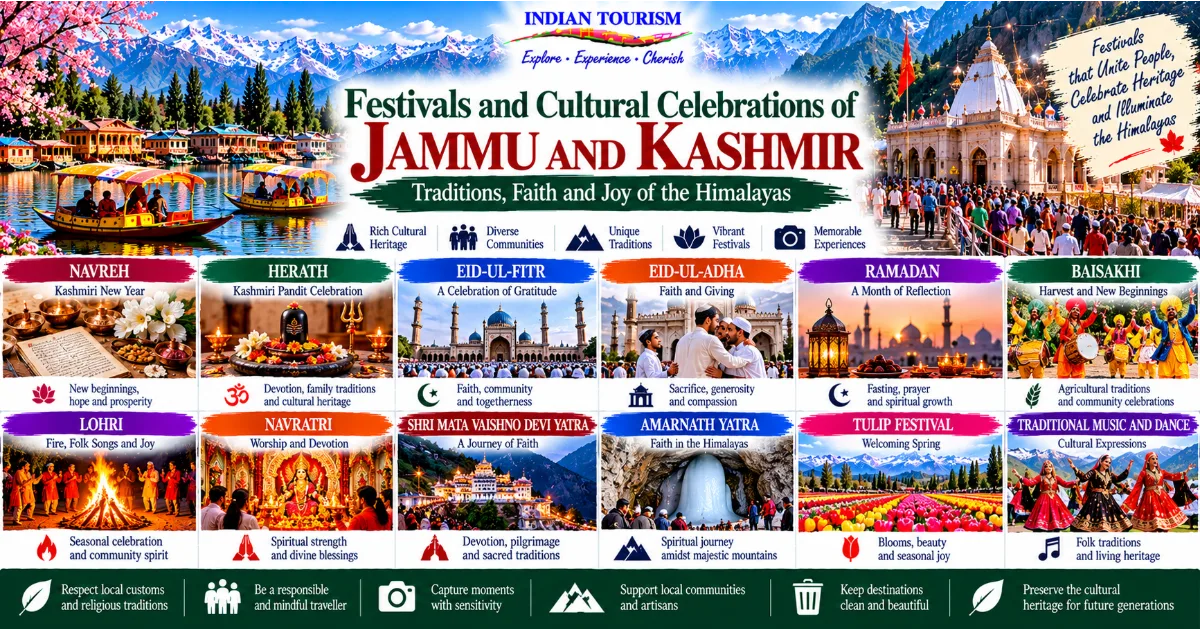
A Region Where Every Festival Tells a Story
Jammu and Kashmir is known for its spectacular mountains, lakes, gardens and historic monuments, but the cultural life of the region is equally fascinating. Throughout the year, festivals and traditional celebrations bring communities together through prayer, music, food, family gatherings, seasonal customs and public festivities. These celebrations reflect the region's diverse religious traditions, agricultural rhythms, historical experiences and strong connections between people and their homeland.
The festivals of Jammu and Kashmir are not simply occasions for entertainment. They preserve stories, strengthen community relationships and pass cultural knowledge from one generation to the next. Some celebrations are associated with the changing seasons, while others commemorate religious events, harvests, historical memories or the beginning of a new year. Visitors who experience these occasions respectfully can gain a deeper understanding of the region beyond its famous tourist attractions.
Jammu and the Kashmir Valley have distinct cultural identities, although they also share traditions of hospitality, family gatherings and community participation. In Jammu, festivals such as Lohri, Baisakhi, Navratri and the celebrations associated with the Shri Mata Vaishno Devi pilgrimage are important parts of the cultural calendar. In the Kashmir Valley, Eid celebrations, Ramadan traditions, Navreh, Herath and seasonal festivals provide opportunities to understand the region's religious and cultural diversity. The annual Tulip Festival in Srinagar adds a modern tourism dimension to the arrival of spring.
The character of a festival may differ from one town or village to another. Food, clothing, songs, rituals and the scale of public celebrations can vary according to local customs and family traditions. This diversity makes festival tourism especially rewarding because it allows visitors to discover how communities express their identities through everyday practices as well as major public events.
Travellers should remember that festivals are primarily meaningful occasions for the communities celebrating them. Some events take place in sacred spaces, some involve fasting or private family rituals, and others attract large public gatherings. Respect for local customs, photography rules, religious practices and crowd management is essential.
This guide explores important festivals and cultural celebrations of Jammu and Kashmir, their significance, the experiences visitors may encounter and practical ways to plan a respectful cultural journey.
Navreh: The Kashmiri New Year
Navreh is an important traditional new year celebration associated with Kashmiri Pandit culture. It marks the beginning of the Kashmiri lunar new year and carries deep cultural and spiritual meaning for families who observe it.
The celebration is connected with renewal, hope, prosperity and the continuity of tradition. Families may prepare special arrangements at home, offer prayers and gather with relatives to welcome the new year. Customs can differ between households, but the underlying theme is the beginning of a new cycle with positive intentions.
One distinctive tradition involves arranging symbolic objects on a tray, which may include items associated with prosperity, knowledge, good fortune and everyday life. The tray is traditionally viewed at the beginning of the new year as a way of welcoming blessings and reflecting on hopes for the months ahead. The precise arrangement and interpretation can vary according to family customs.
Food also plays an important role in family celebrations. Traditional dishes and shared meals create opportunities for relatives to come together and preserve memories associated with earlier generations. For families living away from Kashmir, observing Navreh can also strengthen connections with their cultural roots.
For travellers, Navreh offers an opportunity to learn about the cultural heritage of Kashmiri Pandits. However, many of its most meaningful customs take place within homes and family settings rather than as large public spectacles. Visitors should not assume that private rituals are open to outsiders.
Anyone interested in understanding Navreh can learn through cultural programmes, conversations with willing local hosts and educational activities organised by community groups. Asking thoughtful questions and listening to personal experiences can reveal how the celebration has changed over time while maintaining its essential significance.
Navreh demonstrates that cultural heritage is not preserved only through monuments and museums. It also survives through family rituals, symbolic objects, shared meals and the memories that communities carry with them.
Herath: The Kashmiri Pandit Celebration of Maha Shivaratri
Herath is the traditional Kashmiri Pandit observance of Maha Shivaratri and holds a particularly important place in the community's religious calendar. The celebration is dedicated to Lord Shiva and is associated with devotion, family traditions and the continuity of Kashmiri Hindu culture.
Herath is known for customs that may differ from those followed in other parts of India during Maha Shivaratri. Household rituals, worship arrangements, special foods and family gatherings form important elements of the observance. The exact practices can vary between families, reflecting the diversity of religious traditions within the community.
For many Kashmiri Pandit families, Herath is closely connected with memories of childhood, family homes and ancestral traditions. The preparation of ritual objects and food can involve several family members, allowing younger generations to learn practices from older relatives.
The celebration also carries emotional significance for families whose histories are connected with migration and displacement. Observing traditional customs can provide continuity and reinforce a sense of cultural belonging, even when families live far from their ancestral homes.
Travellers interested in Herath should approach the celebration with sensitivity. Religious rituals may be private, and participation should never be assumed. Visitors can learn about its significance through cultural discussions, published accounts, community events and invitations from hosts who are comfortable sharing their traditions.
Herath illustrates the importance of understanding regional variations within India's religious festivals. A celebration may share a broader religious association with practices elsewhere while retaining its own distinctive customs, terminology and family traditions.
By learning about Herath, visitors can appreciate how Kashmiri Pandit culture has preserved religious practices and family memories through changing historical circumstances.
Eid-ul-Fitr: A Celebration of Gratitude and Community
Eid-ul-Fitr marks the conclusion of Ramadan, the Islamic month of fasting, prayer and reflection. It is one of the most important celebrations for Muslim communities across Jammu and Kashmir.
The festival begins with religious observances and special prayers, followed by visits to relatives, greetings among neighbours and shared meals. Families often prepare traditional dishes and sweets, while children may receive gifts or money as part of family customs.
In the Kashmir Valley, Eid can transform the atmosphere of towns and neighbourhoods. Markets become active in the days leading up to the celebration as families purchase clothing, ingredients, sweets and gifts. Streets and commercial areas may be especially busy before the festival, reflecting the importance of preparation and hospitality.
The spirit of Eid extends beyond celebration. Giving to people in need is an important part of Islamic practice, and charitable giving helps connect the festival with social responsibility. Families may support relatives, neighbours and charitable organisations as part of their observance.
Visitors may notice traditional clothing, festive food and gatherings in public areas, but religious spaces should be approached respectfully. Prayer areas can be crowded, and visitors should follow local guidance about access, clothing and photography.
The exact date of Eid-ul-Fitr depends on the Islamic lunar calendar and the determination of the start of the new month. Travellers planning a visit around Eid should check locally confirmed dates and consider that transport, accommodation and business hours may be affected.
For cultural travellers, Eid offers insight into the importance of faith, family and generosity in the region. It is also an opportunity to appreciate how celebrations can strengthen relationships between neighbours and create a shared atmosphere of goodwill.
Eid-ul-Adha: Faith, Sacrifice and Giving
Eid-ul-Adha is another major Islamic festival observed by Muslim communities throughout Jammu and Kashmir. It commemorates the willingness of Prophet Ibrahim to demonstrate obedience to God and is associated with sacrifice, faith and charitable sharing.
The festival begins with special prayers and family gatherings. Where sacrifice is practised, it follows religious requirements and local regulations. The meat is traditionally shared among family members, relatives and people in need, reinforcing the festival's emphasis on generosity and social responsibility.
In towns and villages, the celebration can bring relatives together from different places. Families prepare meals, exchange greetings and visit one another. Traditional clothing and hospitality contribute to the festive atmosphere, although the details of celebration vary across communities.
Eid-ul-Adha also demonstrates how religious festivals connect spiritual ideas with practical responsibilities. Sharing resources, remembering people who face hardship and maintaining family relationships are important dimensions of the observance.
Visitors should be aware that this is a religious occasion rather than a public performance designed for tourism. Activities connected with sacrifice may be private, and travellers should not photograph them without explicit permission. Respecting local rules and avoiding intrusive behaviour is essential.
The festival follows the Islamic lunar calendar, so its date changes each year according to the Gregorian calendar. Visitors planning travel around the occasion should verify local dates and expect possible changes to business hours and transport demand.
Eid-ul-Adha provides an opportunity to understand the relationship between religious devotion, family life and community welfare in Jammu and Kashmir. Its significance lies not only in the public celebration but also in the values of sacrifice, compassion and generosity that it represents.
Ramadan in Kashmir: A Month of Reflection and Shared Traditions
Ramadan is the ninth month of the Islamic calendar and is observed by Muslims through fasting from dawn to sunset, prayer, reflection and charitable activities. In Jammu and Kashmir, it influences daily routines, family life, markets and community gatherings throughout the month.
Before dawn, families prepare the meal known as suhoor. After sunset, the fast is broken with iftar, often beginning with dates and water before a larger meal. The food served varies according to household preferences and regional traditions, but the gathering itself is an important part of the experience.
In many areas, markets become particularly active near sunset as people purchase ingredients and prepared foods for iftar. The atmosphere may change throughout the day, with businesses adapting their schedules to accommodate fasting and evening activity.
Ramadan is also a time of increased religious observance and charity. Mosques host prayers, families support those in need, and people may devote additional time to reading religious texts and strengthening personal relationships.
For travellers, Ramadan offers an opportunity to understand the region's everyday culture from a different perspective. Visitors should be considerate when eating or drinking in public during fasting hours in communities where this is customary, although local practices and expectations vary. It is sensible to ask accommodation staff about restaurant schedules and meal availability.
The final days of Ramadan can be especially busy as families prepare for Eid-ul-Fitr. Travellers should plan around changing opening hours, transport demand and the possibility of crowded markets.
Ramadan demonstrates that cultural experiences are not limited to a single festival day. Sometimes, the most meaningful way to understand a community is to observe how an entire month changes its daily rhythm, encourages reflection and strengthens relationships.
Baisakhi: Celebrating Spring and Agricultural Traditions
Baisakhi is celebrated in Jammu and other parts of northern India, particularly among communities that associate it with the harvest season and the beginning of a new agricultural cycle. It usually falls in April and has both agricultural and religious significance.
For farming communities, the festival is associated with the arrival of the harvest and gratitude for agricultural work. It can mark a period of celebration after months of cultivation and anticipation. Families may prepare special foods, visit religious sites and participate in local gatherings.
Baisakhi also has major significance in Sikh history. It is associated with the establishment of the Khalsa by Guru Gobind Singh in 1699. Sikh communities observe the occasion through prayers, visits to gurdwaras, community meals and religious programmes.
In Jammu, the festival can be connected with visits to religious places and gatherings near rivers or other traditional meeting points, depending on local customs and arrangements. Celebrations vary between communities and locations, so visitors should confirm the details of any public event they hope to attend.
The festival is a useful opportunity to explore the relationship between agriculture, religion and community identity. It shows how one celebration can hold several layers of meaning, bringing together seasonal traditions and important historical memories.
Visitors should follow the rules of religious sites and dress appropriately when entering gurdwaras or other sacred spaces. Community meals, often known as langar in Sikh tradition, reflect the principle of service and equality, although visitors should follow local guidance when participating.
Baisakhi can be especially interesting for travellers who want to understand the agricultural and religious traditions of the Jammu region beyond its more familiar tourist attractions.
Lohri: Fire, Folk Songs and Winter Celebrations
Lohri is a winter festival widely celebrated in parts of northern India, including Jammu. It is associated with seasonal change, agricultural traditions, community gatherings and the transition towards longer days.
A traditional Lohri celebration often centres on a communal bonfire. Families and neighbours gather, exchange greetings and offer customary items according to local practice. Folk songs, music and dancing may accompany the celebration, creating a lively atmosphere during the winter season.
The festival is particularly associated with celebrations connected to new marriages and the birth of children in some families. These occasions may involve larger gatherings and special attention to the family members being celebrated.
Food is another important element of Lohri. Seasonal snacks and traditional sweets may be shared among relatives and neighbours. The specific foods and customs can differ between households, making the celebration an expression of local and family identity.
In Jammu, Lohri can provide insight into regional folk culture and the importance of seasonal gatherings. Visitors may encounter community events or family celebrations, but private gatherings should not be treated as public attractions.
Anyone attending a public celebration should follow safety guidance around bonfires, respect local customs and avoid leaving litter behind. Photography of participants should be respectful, particularly when children or private family rituals are involved.
Lohri demonstrates how festivals can connect communities with seasonal rhythms and shared memories. Its warmth comes not only from the fire but also from the relationships and traditions that bring people together during winter.
Navratri and the Shri Mata Vaishno Devi Pilgrimage
Navratri is a major Hindu festival dedicated to the worship of the Divine Mother in her various forms. It is observed across Jammu and Kashmir, with particular importance attached to pilgrimage traditions and visits to temples.
One of the region's most prominent religious destinations is Shri Mata Vaishno Devi Shrine near Katra. The pilgrimage attracts devotees throughout the year, with significant increases in visitor numbers during the Navratri periods.
The journey to the shrine is an important part of the religious experience. Pilgrims travel from Katra along the established route, following arrangements provided by the shrine authorities. The journey involves physical effort and may require planning according to the traveller's health, mobility and the prevailing weather.
During Navratri, the atmosphere around Katra and the pilgrimage route can become especially lively. Religious songs, prayers and the movement of pilgrims create a distinctive environment, although the level of activity varies from year to year.
Visitors should register and follow the official procedures in place for the pilgrimage. Current rules, route conditions, accommodation options and transport arrangements should be checked before travelling. Crowds can increase substantially during major religious periods, so additional time should be allowed.
Navratri is also observed through fasting, household worship, temple visits and community celebrations. Practices differ between families and regions, demonstrating the diversity of Hindu religious life.
The pilgrimage is a sacred experience for devotees, and visitors should not treat religious ceremonies as entertainment. Respectful clothing, careful behaviour and adherence to photography rules are important throughout the journey.
For cultural travellers, Navratri offers an opportunity to understand the role of faith and pilgrimage in Jammu's identity. It also demonstrates how religious tourism supports transport, accommodation, food services and other local livelihoods while requiring careful crowd management.
Bahu Mela: A Major Religious Fair in Jammu
Bahu Mela is a religious fair associated with the Bahu Fort area and the Bawey Wali Mata Temple in Jammu. It is generally linked with the Navratri periods, when devotees gather to offer prayers and participate in religious observances.
The fair brings together religious activity and a wider atmosphere of community gathering. Visitors may encounter stalls, food vendors and temporary commercial activity around the event, depending on the arrangements for a particular year.
The setting is historically significant because Bahu Fort overlooks the Tawi River and is one of Jammu's recognised landmarks. The temple within the fort complex attracts devotees, and the fair highlights the continuing relationship between historical sites and living religious traditions.
Bahu Mela can be an opportunity to observe local customs, devotional practices and the role of fairs in community life. However, the event's primary purpose is religious, and visitors should be respectful of worshippers and temple procedures.
Crowds can increase significantly during major observances. Travellers should confirm dates and local arrangements, allow extra time for transport and follow directions from event organisers and security personnel.
Photography should not interfere with prayer or create congestion. Visitors should also be careful with personal belongings in crowded areas and follow any restrictions on bags or other items.
A visit to Bahu Mela can be combined with a broader exploration of Jammu's heritage, but the schedule should remain flexible because large gatherings may affect travel times.
The fair demonstrates how religious celebrations can preserve local traditions while also supporting small businesses and providing opportunities for people from different places to gather.
Amarnath Yatra: Faith and the Himalayan Landscape
The Amarnath Yatra is a major Hindu pilgrimage associated with the Amarnath Cave in the Kashmir Himalayas. The cave is revered by devotees of Lord Shiva, and the pilgrimage traditionally takes place during a limited period in summer, subject to official arrangements and conditions.
The journey is distinctive because it combines religious devotion with travel through high-altitude mountain terrain. Pilgrims must consider weather, elevation, route conditions and physical demands. The experience can be challenging even for people who are accustomed to walking, so careful preparation is essential.
The pilgrimage schedule, registration procedures, permitted routes and medical requirements may change from year to year. Travellers should rely on current official information rather than older travel accounts when planning participation.
The surrounding mountain landscape is visually striking, but the pilgrimage should not be reduced to a sightseeing excursion. For devotees, the journey is a spiritual undertaking, and the rules established to protect pilgrims and the environment must be followed.
Photography may be restricted in certain locations or circumstances. Visitors should obey all instructions from the authorities and avoid taking risks to obtain pictures. High-altitude conditions can change rapidly, and safety should always take priority.
The pilgrimage also demonstrates the importance of coordination between religious institutions, local communities, transport providers, medical services and security arrangements. Large gatherings in mountain environments require careful planning and respect for environmental limits.
For travellers interested in the cultural geography of Jammu and Kashmir, the Amarnath Yatra provides insight into how sacred places, mountain routes and seasonal religious calendars are connected. Those considering the pilgrimage should evaluate their physical readiness and consult appropriate medical professionals when necessary.
Tulip Festival: Welcoming Spring in Srinagar
The Tulip Festival in Srinagar is a major seasonal tourism attraction associated with the blooming of the Indira Gandhi Memorial Tulip Garden. It celebrates the arrival of spring and showcases the colourful displays created through horticultural planning.
The festival draws visitors who want to experience the flowering landscape, photograph the gardens and enjoy the broader atmosphere of spring in Kashmir. The mountain backdrop, views towards Dal Lake and carefully arranged flower beds make it a popular destination for families and photography enthusiasts.
The festival is also important for tourism businesses. Hotels, transport providers, restaurants, guides and local shops may benefit from increased visitor activity during the flowering period. This illustrates how seasonal events can support the wider tourism economy.
The timing of the festival depends on the condition of the flowers and the weather. Travellers should check current announcements before booking a trip specifically for the displays. Flowering may begin earlier or later than expected, and the best viewing period can vary from year to year.
Visitors should remain on designated paths and avoid picking flowers or entering planted areas. Crowds can be substantial during popular days, so arriving early and keeping the itinerary flexible can improve the experience.
The Tulip Festival differs from religious celebrations because its primary public focus is horticulture and tourism, but it still contributes to cultural life by bringing visitors and residents together in a shared seasonal event.
For travellers who enjoy gardens, photography and outdoor experiences, the festival can be a rewarding way to discover Kashmir in spring. It is particularly effective when combined with visits to the Mughal gardens, Dal Lake and other attractions around Srinagar.
Traditional Music, Dance and Folk Celebrations
Music and dance are important parts of the cultural heritage of Jammu and Kashmir. Folk traditions appear during weddings, seasonal festivals, community gatherings and other celebrations, helping preserve local languages, stories and regional identities.
In the Kashmir Valley, traditional musical forms and poetic traditions have long been connected with social gatherings and cultural expression. Instruments, vocal styles and performance practices vary, and some forms are associated with particular occasions or communities.
Rouf is a well-known Kashmiri folk dance traditionally performed by women during festive and social occasions. It is often associated with coordinated movements and singing, creating a performance in which rhythm and collective participation are central.
In Jammu, folk performance traditions include regional dance and music forms associated with different communities and celebrations. Dogri cultural expression includes songs, dances and stories that reflect the landscape, family life and historical memories of the region.
Travellers may encounter cultural performances at festivals, heritage programmes or organised events. The quality and authenticity of a presentation depend on the performers and the context. Visitors interested in these traditions should seek events that involve local artists and provide appropriate information about the performance.
It is important to recognise that traditional music and dance are not merely entertainment products. They can carry personal, religious and community meaning. Performers should be treated respectfully, and photography or recording should follow the event's rules.
Supporting local cultural programmes can help artists maintain their skills and pass them to younger generations. Attending a performance can also provide a deeper understanding of the region than observing its architecture alone.
Local Food and Festive Traditions
Food is an essential part of festivals in Jammu and Kashmir. Special dishes, sweets and shared meals help families express hospitality and maintain connections with their cultural traditions.
In the Kashmir Valley, festive meals may include dishes associated with Kashmiri culinary heritage, while family celebrations can feature recipes that are prepared for particular occasions. The foods served depend on the community, religious observance and family customs.
Wazwan, the elaborate multi-course culinary tradition associated with Kashmiri Muslim culture, is an important part of many wedding and celebratory gatherings. Its preparation involves specialised knowledge, coordination and careful attention to recipes and serving traditions. However, it should not be assumed that every festival meal includes Wazwan.
In Jammu, festive food traditions reflect regional ingredients and the culinary practices of different communities. Seasonal sweets, breads and household dishes may form part of family gatherings, while religious occasions can involve specific dietary customs.
Food markets become especially active before major celebrations. Visitors may encounter vendors selling ingredients, sweets and prepared foods. This can be an opportunity to learn about regional tastes, but travellers should pay attention to hygiene, food storage and individual dietary requirements.
Visitors who receive an invitation to a festive meal should follow the host's guidance about dining customs. Asking politely about ingredients and preparation is appropriate, particularly for people with allergies or dietary restrictions.
Food provides a valuable way to understand cultural traditions because recipes are often preserved within families and communities. Sharing a meal can reveal how hospitality, memory and celebration are connected in everyday life.
Best Time to Experience Festivals in Jammu and Kashmir
Festival tourism requires more planning than ordinary sightseeing because dates often depend on religious calendars, seasonal conditions and official announcements.
Spring is attractive for the Tulip Festival, Navreh and other seasonal experiences. The exact timing of flower displays varies according to weather, so travellers should check current conditions before booking.
Winter is a suitable period for experiencing Lohri and certain religious celebrations, although cold temperatures and possible weather disruptions can affect travel. Visitors should carry suitable clothing and allow flexibility in their itineraries.
Eid celebrations follow the Islamic lunar calendar, meaning their dates move through the Gregorian calendar over time. The locally confirmed date should be checked before arranging travel around Eid-ul-Fitr or Eid-ul-Adha.
Navratri occurs twice in the annual Hindu calendar, with major celebrations associated with pilgrimage and temple visits. The Shri Mata Vaishno Devi pilgrimage can become particularly busy during these periods.
The Amarnath Yatra takes place within a limited summer window, subject to official decisions and prevailing conditions. Registration and route requirements must be checked for the relevant year.
Baisakhi generally falls in April, while local fairs and community celebrations may have their own schedules. Travellers should verify details with reliable local sources rather than assuming that every event follows an identical programme each year.
The best festival itinerary is one that combines the event with sufficient time for travel and rest. Large gatherings may affect transport, accommodation and access to attractions, so early planning is particularly valuable.
Practical Tips for Responsible Festival Tourism
Before travelling, confirm the event's dates, location, public access arrangements and any registration requirements. Religious calendars, weather and official decisions can affect schedules, especially for high-altitude pilgrimages.
Book accommodation and transport in advance when attending major public events. Crowds can increase significantly around Navratri, the Tulip Festival and important religious observances. Travellers should also allow extra time for security checks and road congestion.
Dress appropriately for the setting. Modest clothing is advisable at religious sites, and visitors should follow local guidance regarding footwear, head coverings and other customs.
Ask permission before photographing individuals, private rituals or family gatherings. Some religious sites prohibit photography in particular areas, and those restrictions should always be respected. Avoid using flash or recording equipment in ways that disturb worshippers.
Stay hydrated, carry essential medicines and dress according to the weather. These precautions are particularly important during mountain pilgrimages, where physical exertion and changing conditions can create additional challenges.
Respect local communities by disposing of waste properly, avoiding excessive noise in residential areas and following instructions from event organisers. Large festivals can place pressure on public facilities, so visitors should minimise their environmental impact.
Finally, approach celebrations with curiosity rather than assumptions. Traditions may differ between families, villages and religious communities. Listening to local explanations and recognising these differences helps create a more respectful and rewarding cultural experience.
Conclusion: Discover the Cultural Heart of Jammu and Kashmir
The festivals and cultural celebrations of Jammu and Kashmir reveal a region rich in faith, family traditions, seasonal customs and community life. Navreh and Herath preserve important aspects of Kashmiri Pandit culture, while Eid-ul-Fitr, Eid-ul-Adha and Ramadan demonstrate the significance of devotion, generosity and shared meals in Muslim communities.
Baisakhi and Lohri reflect seasonal and agricultural traditions, while Navratri and the Shri Mata Vaishno Devi pilgrimage highlight the importance of religious travel in Jammu. Bahu Mela connects devotion with a historic landmark, and the Amarnath Yatra demonstrates the enduring relationship between faith and the Himalayan landscape. The Tulip Festival adds a colourful seasonal dimension to Srinagar's tourism calendar.
Traditional music, dance and festive food provide further insight into the region's cultural diversity. These practices are sustained through families, artists, religious institutions and local communities, ensuring that heritage remains part of everyday life rather than simply a memory of the past.
For travellers, festival tourism offers a chance to experience Jammu and Kashmir through its people and traditions. The most meaningful experiences come from careful planning, respectful observation and a willingness to learn. Visitors should verify dates, follow local customs, protect the environment and remember that many celebrations have deep spiritual or personal significance.
Jammu and Kashmir's festivals demonstrate that the region's beauty is not limited to its mountains, lakes and gardens. Its cultural richness is equally important, expressed through songs, prayers, food, family gatherings and celebrations that bring people together across generations.
By exploring these traditions responsibly, travellers can gain a deeper appreciation of the Himalayan region and support the communities that continue to preserve its distinctive cultural heritage.
#IndianTourism #JammuAndKashmir #KashmirCulture #JammuCulture #FestivalsOfIndia #Navreh #Herath #EidInKashmir #Ramadan #Baisakhi #Lohri #Navratri #VaishnoDevi #AmarnathYatra #TulipFestival #CulturalTourism #IndianFestivals #ExploreIndia
