
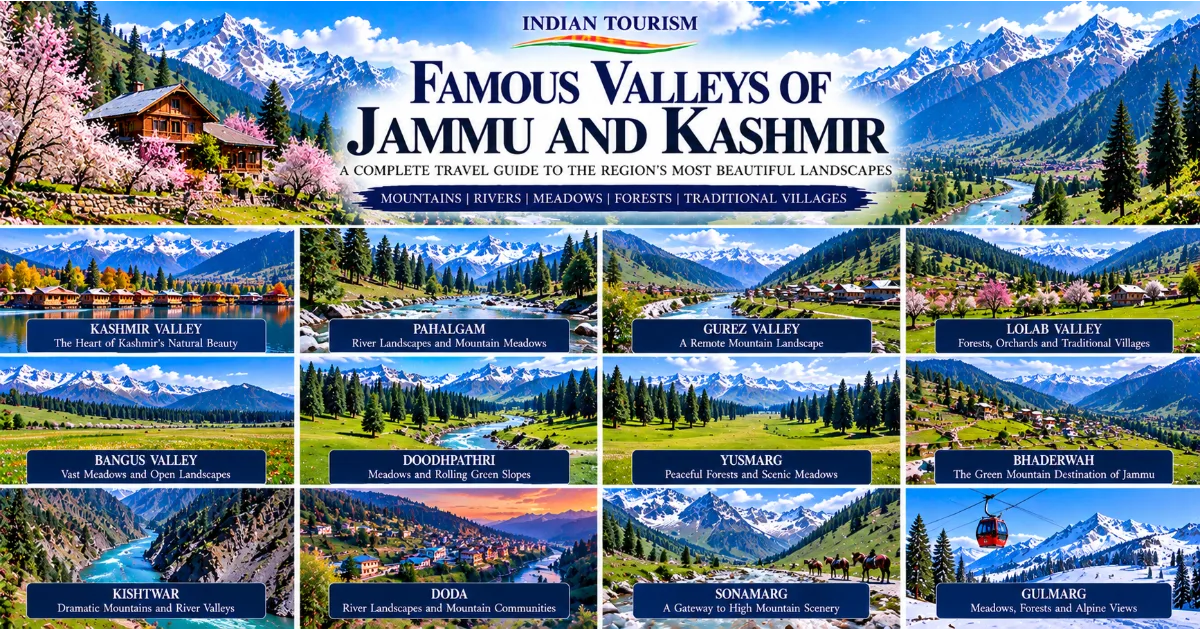
Discovering the Valleys of Jammu and Kashmir
Jammu and Kashmir is a region where dramatic mountains, flowing rivers, green meadows, traditional villages and forest-covered slopes create some of the most memorable landscapes in India. While many travellers associate the region with Srinagar's Dal Lake, the gardens of Kashmir, Gulmarg's snow-covered slopes and the pilgrimage destinations of Jammu, the valleys extending across the region reveal an even wider variety of natural beauty and cultural experiences.
A valley is more than a stretch of land surrounded by mountains. In Jammu and Kashmir, valleys have shaped settlement patterns, agriculture, traditional architecture, trade routes and local lifestyles. Rivers have provided water and fertile land, mountain passes have connected communities, and meadows have supported pastoral activities for generations. The landscape has influenced how people build their homes, celebrate festivals, prepare food and welcome visitors.
The Kashmir Valley is among the best-known geographical regions of northern India. Its lakes, orchards, wetlands, villages and mountain views attract visitors throughout the year. Beyond the main tourist circuit, destinations such as Gurez, Lolab, Bangus, Doodhpathri and Yusmarg offer different experiences of the region's natural environment. In the Jammu division, Bhaderwah, Kishtwar, Doda and other mountain areas provide another perspective, with forested hills, deep river valleys, alpine scenery and traditional settlements.
Each destination has its own character. Some valleys are known for their meadows and grazing grounds, while others are valued for their forests, rivers, waterfalls, orchards or cultural heritage. Some are relatively easy to include in a conventional holiday, while others require longer journeys, advance planning and greater attention to road conditions.
This article introduces the major valleys and scenic mountain destinations of Jammu and Kashmir. It explains what makes each place distinctive, what travellers can experience, which seasons may suit different interests and how to explore these landscapes responsibly.
1. The Kashmir Valley: The Heart of Kashmir's Natural Beauty
The Kashmir Valley is the region's most celebrated geographical landscape. Surrounded by mountain ranges, it contains fertile agricultural land, historic towns, lakes, wetlands, orchards and villages that reflect centuries of cultural development.
Srinagar serves as a major gateway for visitors exploring the valley. Its traditional neighbourhoods, houseboats, historic gardens, markets and waterfront landscapes offer an introduction to Kashmiri life. From the city, travellers can reach a variety of destinations, including Pahalgam, Gulmarg, Sonamarg, Doodhpathri and Yusmarg, although journey times vary according to the destination and road conditions.
The valley changes considerably with the seasons. Spring brings blossoms to orchards and gardens, while summer offers green landscapes and relatively comfortable conditions for sightseeing. Autumn is associated with changing foliage, harvest activities and the colours of chinar trees. Winter can bring snow and freezing temperatures, particularly in higher areas.
Agriculture remains an important part of the landscape. Apple orchards, rice fields, saffron-growing areas and vegetable cultivation contribute to the region's economy and seasonal rhythms. Travellers who visit rural areas may see farming activities that differ according to altitude, climate and local traditions.
The valley also contains important wetlands and lakes that support wildlife and provide ecological benefits. These environments are valuable not only for tourism but also for biodiversity, water management and the livelihoods of surrounding communities.
Visitors should remember that the Kashmir Valley is not a single uniform destination. The experience of travelling around Srinagar differs from a journey into a remote mountain valley or a high-altitude meadow. Choosing destinations according to available time, transport and season makes a trip more rewarding.
For first-time visitors, the Kashmir Valley offers a useful starting point. Those returning for a second or third visit can explore lesser-known destinations to discover a different side of the region.
2. Pahalgam Valley: River Landscapes and Mountain Meadows
Pahalgam is one of the most popular mountain destinations in the Kashmir Valley. Located along the Lidder River, it is known for its forested slopes, mountain scenery, green meadows and access to several outdoor destinations.
The river is central to Pahalgam's landscape. Its clear stretches, rocky banks and changing flow create a scenic setting for walks and photography. The surrounding mountains provide a dramatic backdrop, while pine forests and open grasslands add variety to the scenery.
Pahalgam also serves as a gateway to several well-known locations, including Betaab Valley, Aru Valley and Chandanwari. These destinations have different landscapes and travel requirements. Aru is appreciated for its mountain setting and opportunities for outdoor activities, while Betaab Valley is known for its open scenery and river environment. Access to particular areas may depend on local transport rules, weather and seasonal conditions.
The town is also associated with the Amarnath pilgrimage route, making it significant beyond conventional sightseeing. During the pilgrimage season, movement and accommodation demand can increase, so visitors should plan accordingly.
Summer is popular for green landscapes, sightseeing and outdoor recreation. Autumn offers changing colours and a quieter atmosphere in some periods. Winter can bring snow and cold conditions, although the availability of activities and transport depends on the weather.
Travellers should avoid entering fast-flowing water, especially when river levels are high. Water can appear calm near the bank while becoming dangerous a short distance away. Visitors should follow local instructions and use authorised activity providers for adventure experiences.
Pahalgam is suitable for families, couples, photographers and travellers who want to combine natural scenery with accessible accommodation and local services. It can also be a starting point for exploring quieter mountain areas, provided that visitors plan transport and activity arrangements carefully.
3. Gurez Valley: A Remote Mountain Landscape
Gurez Valley lies in the northern part of the Kashmir region, near the Line of Control. It is known for its mountain scenery, river landscapes, traditional settlements and distinctive cultural identity. Compared with the most frequently visited destinations around Srinagar, Gurez often appeals to travellers seeking a quieter and more remote experience.
The Kishanganga River flows through the valley and contributes to its striking scenery. Mountain slopes rise around the settlements, while meadows, cultivated areas and traditional houses create a landscape that combines natural beauty with everyday rural life.
Dawar is an important settlement in Gurez and often serves as a base for visitors. The surrounding villages offer opportunities to appreciate the valley's architecture, local culture and mountain environment. Travellers should approach village visits respectfully, particularly when photographing residents or private homes.
Gurez is also associated with the Dard-Shina cultural tradition. Local language, music, clothing, food and community customs contribute to its distinct identity. Visitors interested in cultural tourism should seek opportunities to learn from local residents and guides rather than treating the valley only as a scenic backdrop.
The summer months are generally more suitable for travel because winter conditions can make access difficult. Road access is influenced by snow, weather and the condition of mountain routes. Travellers should check current local advice and transport arrangements before setting out.
Because of its sensitive location, Gurez may have specific access requirements. Visitors should verify applicable permissions, identification requirements and travel restrictions with the relevant authorities before planning a trip.
Accommodation and other facilities may be more limited than in major tourist towns. A flexible itinerary, sufficient time for road journeys and advance arrangements can make the experience more comfortable.
Gurez is best suited to travellers who appreciate landscapes, cultural learning and slower journeys. Its remoteness is part of its appeal, but it also means that preparation and respect for local conditions are essential.
4. Lolab Valley: Forests, Orchards and Traditional Villages
Lolab Valley, located in the Kupwara area of northern Kashmir, is known for its green landscapes, forested hills, orchards and rural settlements. It offers an alternative to the more heavily visited tourist centres and can appeal to travellers interested in the relationship between nature and traditional village life.
The valley contains cultivated land, fruit trees and stretches of forest that create a varied landscape. Depending on the season, visitors may see orchards in blossom, green fields, harvest activity or hills changing colour as temperatures fall.
The villages are an important part of the experience. Rather than rushing from one viewpoint to another, travellers can spend time observing the local landscape, visiting legitimate community-run businesses and learning about traditional livelihoods. Photography should be respectful, particularly around homes, schools and private agricultural land.
Lolab is also a useful destination for nature enthusiasts who enjoy gentle walks and scenic drives. However, not every forest track is a designated tourist route. Visitors should ask local guides about safe paths and avoid entering restricted forest areas.
Spring and summer generally provide attractive conditions for enjoying greenery and village scenery. Autumn can be appealing for orchard landscapes and changing foliage. Winter may bring colder weather and difficult travel conditions, depending on elevation and snowfall.
Facilities may differ considerably from those available in Srinagar or Gulmarg. Travellers should confirm accommodation, transport and food options before arrival rather than assuming that every village has extensive tourist services.
Lolab Valley demonstrates that a memorable Kashmir holiday does not always require major commercial attractions. Its appeal lies in open scenery, traditional settlements, forests and the opportunity to experience a slower pace of travel.
5. Bangus Valley: Meadows and Open Mountain Landscapes
Bangus Valley, in the Kupwara region, is known for its expansive meadows and surrounding mountain scenery. Its open grasslands provide a striking contrast to the forested hills and cultivated landscapes found elsewhere in Kashmir.
The valley's meadows are part of a wider mountain environment that supports plants, wildlife and seasonal grazing. Their appearance changes through the year, with greener conditions generally associated with the warmer months and harsher weather affecting higher ground as winter approaches.
Bangus is especially attractive to visitors who enjoy photography, nature observation and wide mountain views. The scale of the landscape can make the destination feel different from a conventional hill station, where accommodation clusters and commercial activities may dominate the visitor experience.
The valley is also environmentally important. Meadows and alpine grasslands can be sensitive to excessive vehicle movement, waste, unregulated camping and damage to vegetation. Visitors should use permitted routes and avoid driving across grasslands simply to obtain a better photograph.
Access conditions require careful attention. Weather, road conditions, local rules and security considerations can affect travel arrangements. Travellers should obtain current information before planning a visit and should not assume that a route shown in an old travel account remains accessible.
Bangus is generally more appropriate for travellers prepared for limited facilities and a more nature-focused experience. It may not suit visitors who require extensive accommodation choices, constant mobile connectivity or a tightly scheduled sightseeing itinerary.
Those who visit should carry back all waste, respect grazing activities and follow local guidance. The destination's appeal depends on the continued health of its natural environment.
6. Doodhpathri: Meadows and Rolling Green Slopes
Doodhpathri is a scenic destination in the Budgam district of Kashmir, recognised for its green meadows, mountain views, streams and surrounding forests. Its name is commonly translated as the Valley of Milk, and local explanations of the name form part of its tourism identity.
The landscape features broad grassy areas and rolling slopes framed by hills. During the warmer months, the meadows can appear intensely green, while the surrounding forest adds depth and contrast to the scenery. Seasonal streams and open views make the area popular for day trips and photography.
Doodhpathri can be a suitable option for travellers who want to experience Kashmir's meadows without planning a long expedition into a remote mountain region. It is often considered as an excursion from Srinagar, although the journey time depends on the starting point, traffic and road conditions.
Visitors can enjoy the scenery through short walks and relaxed exploration. Families should remain mindful of uneven ground, changing weather and the possibility of cold conditions even when the plains are warm.
The best experience depends on the season. Summer generally offers greener meadows, while spring brings fresh vegetation and autumn may produce different colours across the surrounding landscape. Winter conditions can make travel more challenging, and availability of facilities may change.
Visitors should avoid leaving food packaging, plastic bottles or other waste in the grasslands. Meadow ecosystems are vulnerable to damage, and waste can affect wildlife as well as the experience of other travellers.
Doodhpathri is particularly appealing to visitors who prefer open landscapes, relaxed walks and natural scenery. It can be included in a broader Kashmir itinerary while leaving enough time to explore the destination without rushing.
7. Yusmarg: Forests, Meadows and Peaceful Scenery
Yusmarg, located in the Budgam area, is a scenic destination associated with meadows, wooded slopes and views of the surrounding mountains. Its atmosphere can feel quieter than the busiest tourist centres, making it appealing to visitors who prefer walking, photography and time outdoors.
The landscape combines open grassy areas with forested sections. Depending on the season, visitors may find fresh greenery, flowering plants, cool mountain air or autumn colours. The scenery encourages a slower style of tourism in which the journey itself becomes part of the experience.
Yusmarg can be explored through walks and local excursions. Some activities may involve longer routes or travel beyond the main visitor area, so travellers should use local guidance and choose routes appropriate to their fitness and available time.
The destination may also offer opportunities to learn about nearby rural communities and the relationship between mountain environments and traditional livelihoods. Visitors should avoid entering private land without permission and should respect local customs.
Summer is often suitable for enjoying the meadows, while spring and autumn provide different seasonal moods. Weather can change quickly in mountain areas, so carrying suitable clothing is sensible even on a clear day.
Facilities and transport arrangements may be more limited than in larger tourist towns. Visitors should confirm what is available before departure, especially when travelling with children or older family members.
Yusmarg is a rewarding destination for those seeking a peaceful natural setting. Its appeal lies less in elaborate attractions and more in the combination of mountain scenery, meadows and an opportunity to spend time away from busy urban areas.
8. Bhaderwah Valley: The Green Mountain Destination of Jammu
Bhaderwah Valley, in the Doda district of the Jammu division, is known for its green mountains, forested slopes, meadows, streams and scenic villages. Often promoted as a particularly beautiful part of Jammu, it provides a different landscape experience from the more familiar Kashmir Valley destinations.
The area is surrounded by mountain terrain that supports agriculture, forest ecosystems and seasonal outdoor activities. The scenery varies with elevation, allowing visitors to experience cultivated valleys, wooded hills and higher grasslands within a broader regional journey.
Bhaderwah town serves as an important base for exploring the surrounding area. Nearby destinations such as Jai Valley and other mountain locations provide additional opportunities for sightseeing, walking and photography, subject to access and seasonal conditions.
The region's cultural character is another important part of its appeal. Traditional food, local festivals, village life and regional customs contribute to a sense of place that goes beyond the scenery. Visitors can support local communities by choosing locally run accommodation and services where suitable options are available.
Summer is popular for green landscapes and outdoor exploration. Other seasons can bring different experiences, but winter weather and road conditions may affect access to higher areas.
Travellers should plan road journeys carefully because mountain routes may include bends, steep sections and changing weather conditions. It is sensible to allow extra time and avoid driving unfamiliar mountain roads after dark whenever possible.
Bhaderwah is suitable for visitors looking for a combination of natural scenery, rural culture and mountain travel. It also deserves attention from travellers who want to explore the Jammu division beyond its well-known religious and urban destinations.
9. Kishtwar: Dramatic Mountains and River Valleys
Kishtwar is a mountainous district in the Jammu division known for deep valleys, forests, river landscapes and rugged terrain. It offers a more adventurous side of Jammu and Kashmir, with scenery shaped by high mountains and powerful river systems.
The region's landscape includes steep slopes, forested hills and settlements positioned along river corridors. These geographical features have influenced transport, agriculture and the location of communities. They also create challenges for road construction and travel, making journey planning particularly important.
Kishtwar National Park is among the area's important protected landscapes and is associated with mountain ecosystems and wildlife. Access to protected areas may be regulated, and visitors should follow official rules rather than attempting independent entry into restricted zones.
Kishtwar is also known for the wider region's horticulture and agricultural activity. In some areas, saffron cultivation and fruit production contribute to local livelihoods. The relationship between cultivated land and mountain terrain provides insight into how people adapt to different environmental conditions.
For travellers, Kishtwar is best approached as a destination requiring preparation. Road conditions, travel distances, accommodation availability and seasonal weather should all be considered. Some scenic areas may require local guidance or specialised arrangements.
Summer can be suitable for many journeys, although conditions vary by altitude and route. Heavy rain, landslides, snowfall or road maintenance can affect access at different times of the year.
Visitors should respect the region's ecological sensitivity. They should avoid littering, disturbing wildlife or leaving designated roads without appropriate guidance.
Kishtwar is an important part of the broader Jammu and Kashmir tourism story because it shows how varied the region is beyond its major lakes and established hill stations.
10. Doda District: River Landscapes and Mountain Communities
Doda district contains a range of mountain landscapes, river valleys, forests and settlements that offer visitors a different view of the Jammu region. The terrain varies considerably, creating scenic contrasts between river corridors, cultivated slopes and higher mountain areas.
The district's geography has influenced its history and everyday life. Settlements have developed around available water, agricultural land and routes connecting different parts of the mountains. Rivers and streams are essential to the local landscape, while forests and slopes support a range of ecological and economic activities.
Bhaderwah is one of the better-known destinations associated with the district, but the wider area contains additional villages and scenic routes. Travellers who wish to explore beyond the main tourist locations should arrange transport carefully and seek local information about accessible destinations.
Mountain travel in Doda requires attention to road conditions and weather. A short distance on a map may take longer to cover than expected because of bends, elevation changes and the condition of the road. Visitors should avoid making an itinerary so tight that a delay becomes a safety concern.
The district can appeal to travellers interested in photography, cultural learning, road journeys and quiet landscapes. Visitors should remember that rural settlements are living communities, not simply sightseeing locations. Respectful behaviour, responsible photography and support for local businesses can improve the experience for both visitors and residents.
The best time to visit depends on the intended route and activity. Warmer months generally offer more opportunities to explore mountain scenery, while colder periods can bring difficult travel conditions to higher elevations.
Doda's value lies in its variety. It offers an opportunity to understand the natural and cultural diversity of Jammu and Kashmir through a landscape that differs from the classic image of the Kashmir Valley.
11. Sonamarg: A Gateway to High Mountain Scenery
Sonamarg, whose name is commonly interpreted as Meadow of Gold, is a prominent mountain destination in the Kashmir region. Known for its surrounding peaks, open meadows and access to high-altitude landscapes, it is often included in journeys through the eastern part of the Kashmir Valley.
The scenery changes with the seasons. During the warmer months, grasslands and mountain views attract visitors interested in photography, walking and outdoor recreation. Snow remains visible in some higher areas for longer periods, depending on weather and elevation.
Sonamarg is also associated with routes leading towards high mountain passes and trekking areas. Not all such routes are suitable for casual visitors, and access may require permits, specialised equipment or experienced guides. Travellers should never assume that a scenic road or trail is safe simply because it appears in promotional photographs.
The Sind River contributes to the landscape, creating a dramatic setting between mountains and roads. Visitors should exercise caution around the water, especially where currents are strong or banks are unstable.
Because of its elevation and exposure, temperatures can be considerably lower than in the plains. Warm clothing, appropriate footwear and protection from rain are useful even when the weather in Srinagar appears pleasant.
Sonamarg can be included in a wider Kashmir itinerary, but seasonal road access should be checked before departure. Heavy snow, road maintenance and other local conditions may affect travel.
The destination appeals to visitors seeking mountain scenery and access to high-altitude environments. Responsible planning helps ensure that the experience remains enjoyable without underestimating the risks of mountain travel.
12. Gulmarg: Meadows, Forests and Alpine Views
Gulmarg is one of Jammu and Kashmir's most recognisable mountain destinations. It is known for open meadows, forests, snow-covered slopes during winter and expansive views of the surrounding mountain ranges.
In summer, Gulmarg becomes a destination for visitors who enjoy green landscapes, walking and mountain scenery. The meadows provide space for relaxation and photography, while forested sections create opportunities to appreciate the area's natural environment.
Winter transforms the destination into a major snow tourism centre. Skiing and other snow-based activities attract visitors when conditions are suitable, although the availability of specific activities depends on weather, snow cover and operational arrangements.
The Gulmarg Gondola is a well-known attraction that provides access to higher elevations. Visitors should check operating conditions, ticket arrangements, weather restrictions and any relevant safety instructions before travelling. Higher elevations can bring colder temperatures, strong winds and rapidly changing weather.
Gulmarg is also a useful example of the relationship between tourism and environmental management. Large visitor numbers can put pressure on transport, waste collection, vegetation and local services. Travellers should avoid littering and follow designated routes.
The destination is accessible to a wide range of visitors, but the activities selected should match individual ability and weather conditions. Families may prefer relaxed sightseeing, while experienced outdoor enthusiasts may seek specialised activities with qualified providers.
Gulmarg's popularity is understandable, but it is only one part of the region's mountain landscape. Exploring other valleys alongside Gulmarg can provide a broader understanding of the natural diversity of Jammu and Kashmir.
13. Aru Valley: A Peaceful Landscape Near Pahalgam
Aru Valley is a scenic destination near Pahalgam, known for its mountain setting, green meadows, streams and forested surroundings. It is often included in itineraries for visitors who want to explore the natural landscapes beyond the main town.
The valley provides a quieter environment for walking, photography and enjoying the scenery. Its open spaces and surrounding slopes change appearance according to the season, with green conditions generally associated with the warmer months and colder weather affecting higher elevations.
Aru also serves as a starting point for certain trekking routes and mountain excursions. These activities can involve significant changes in elevation and weather, so travellers should use qualified guides when appropriate and choose routes according to their experience.
Visitors who prefer a relaxed trip can spend time enjoying the accessible scenery without attempting a long trek. The key is to avoid treating every mountain destination as a challenge that must be completed through strenuous activity.
Facilities may be more limited than in Pahalgam town. Travellers should confirm transport and service arrangements before arriving, particularly if travelling with young children or older family members.
The valley's environment should be protected from unmanaged tourism. Visitors should avoid disturbing grazing animals, damaging vegetation or leaving waste behind. Campers should use authorised areas and follow local guidance about fires and overnight stays.
Aru Valley is especially suitable for travellers who want to combine a stay in Pahalgam with additional time in a mountain setting. Its scenery provides a useful contrast to the town's busier visitor areas.
14. Scenic Valleys Through the Seasons
The valleys of Jammu and Kashmir do not have one universal best season. The ideal time depends on whether a traveller wants green meadows, autumn colours, snow, wildlife observation, cultural experiences or access to remote mountain routes.
Spring brings fresh vegetation and blossoms to many lower-elevation areas. Orchards and gardens can be particularly attractive during this period, although weather may remain unpredictable and some higher routes may still be affected by snow.
Summer is often suitable for exploring meadows, rural landscapes and destinations at higher elevations. It is also a popular travel period, so accommodation and transport may be in greater demand at well-known locations.
Autumn offers a different visual experience. Changing foliage, harvest activity and cooler temperatures can make the landscape appealing to photographers and travellers who prefer a less summery atmosphere. The exact timing of foliage changes varies with elevation and weather.
Winter introduces snow and colder conditions, especially in mountain areas. Some destinations become attractive for snow-based activities, while others may become difficult or inaccessible. Travellers should distinguish between destinations designed for established winter tourism and remote valleys where severe conditions can create serious risks.
Seasonal planning should include more than choosing a month. Visitors should check road access, weather forecasts, accommodation, local restrictions and the availability of services. Mountain conditions can change quickly, so a flexible itinerary is often safer than a rigid schedule.
Travellers should also recognise that local communities experience these seasons as part of everyday life. Tourism is only one element of the regional economy, and visitors should respect agricultural activities, grazing patterns and local routines.
15. Responsible Tourism in Mountain Valleys
The natural beauty of Jammu and Kashmir's valleys depends on healthy ecosystems and the communities that maintain them. Tourism can create income and employment, but poorly managed visits can also contribute to waste, traffic, vegetation damage and pressure on water resources.
Visitors should carry reusable water bottles where practical, dispose of waste properly and avoid leaving plastic packaging in meadows or along rivers. In remote locations, waste collection may be limited, so carrying rubbish back to a suitable disposal point is especially important.
Wildlife should be observed from a respectful distance. Feeding animals, disturbing nesting areas or attempting to approach wild species for photographs can create risks for both people and animals.
Travellers should use authorised routes and avoid entering restricted forests, protected habitats or sensitive areas without permission. Local advice can help visitors understand which activities are appropriate in a particular location.
Supporting local businesses can spread the economic benefits of tourism. Locally owned accommodation, guides, transport providers and craft sellers may offer valuable services while helping visitors understand regional culture.
Respectful behaviour is important in villages. Travellers should ask permission before photographing people or private property and should avoid disrupting religious activities, schools or agricultural work.
Adventure activities require additional care. River conditions, altitude, cold temperatures and changing weather can create hazards. Visitors should use qualified operators, suitable equipment and realistic assessments of their own abilities.
Responsible tourism is not about avoiding every activity. It is about enjoying the landscape without damaging the natural and cultural resources that make it special.
16. Planning a Multi-Valley Journey
A journey through Jammu and Kashmir can include several valleys, but the most practical itinerary depends on the length of the trip and the season. Trying to visit every destination in a single holiday may result in excessive time on the road and too little time to appreciate each place.
For a first visit, travellers can use Srinagar as a base for selected destinations in the Kashmir Valley. Depending on road conditions and available time, the itinerary may include Pahalgam, Gulmarg and one or two additional scenic areas. The number of excursions should be determined by realistic journey times rather than by the number of places that can be marked on a map.
A longer trip may allow visitors to explore Gurez or other northern destinations, provided that current access requirements and local conditions are checked. Remote valleys should be planned separately when necessary, rather than added as rushed side trips.
Travellers interested in the Jammu division can plan a separate route that includes Bhaderwah, Doda or Kishtwar. These destinations have their own road connections and travel requirements, and a regional itinerary should account for mountain driving conditions.
Accommodation should be booked according to the route, with enough flexibility to accommodate delays. Visitors should confirm whether meals, transport and other essential services are available at smaller destinations.
Packing should reflect the season and elevation. Comfortable walking shoes, warm layers, rain protection and any necessary medication or personal supplies can be useful. Travellers should also carry identification and any required travel documents.
Before leaving, check current transport conditions, local guidance and weather information. Travellers should avoid driving when tired and should not attempt difficult mountain routes after dark simply to maintain a schedule.
A well-planned journey leaves room for unhurried exploration. Spending additional time in one valley can be more rewarding than passing quickly through several destinations.
Conclusion: A Region of Endless Natural and Cultural Diversity
The valleys of Jammu and Kashmir reveal a region with extraordinary geographical variety. The Kashmir Valley offers lakes, orchards and historic settlements, while Pahalgam and Aru provide river landscapes and mountain scenery. Gurez and Lolab introduce visitors to different rural and cultural environments, and Bangus offers expansive meadows and a more remote landscape.
Doodhpathri and Yusmarg are attractive for travellers seeking greenery and peaceful surroundings. In the Jammu division, Bhaderwah, Doda and Kishtwar demonstrate that the region's mountain beauty extends well beyond the destinations most frequently featured in travel promotions. Sonamarg and Gulmarg provide further examples of how elevation, forests, meadows and snow shape the visitor experience.
Every valley has its own seasonal character, accessibility requirements and relationship with local communities. Some destinations suit short sightseeing excursions, while others require more time, advance arrangements and careful preparation. Understanding these differences helps travellers select places that match their interests and travel abilities.
The best way to experience Jammu and Kashmir is to combine scenic exploration with cultural curiosity and responsible behaviour. Visitors can learn from local traditions, support community businesses, protect natural environments and respect the everyday lives of residents.
The region's valleys are not merely beautiful backdrops for photographs. They are living landscapes that support biodiversity, agriculture, cultural traditions and communities. By travelling thoughtfully, visitors can appreciate their beauty while helping preserve the qualities that make Jammu and Kashmir such a remarkable destination.
#IndianTourism #JammuAndKashmir #KashmirValley #GurezValley #LolabValley #BangusValley #Doodhpathri #Yusmarg #Pahalgam #AruValley #Bhaderwah #Kishtwar #Doda #Sonamarg #Gulmarg #MountainDestinations #ValleyTourism #NatureTravel #OffbeatKashmir #ExploreKashmir #ExploreJammu #HimalayanLandscapes #ResponsibleTourism #ExploreIndia

